1. 先搞懂承运商的计费逻辑:实际重 vs 体积重1. Understand Carrier Billing Logic: Actual Weight vs DIM Weight
每家承运商计算运费时,只看一个数字:包裹的计费重量。计费重量就是实际重量和体积重(DIM weight)中较大的那个。承运商使用体积重,是因为空间等于成本。一箱枕头可能只有 3 磅重,但它占的位置和一箱 25 磅的书一样大。Every carrier calculates your shipping cost based on one number: the chargeable weight of your package. The chargeable weight is simply the larger of actual weight and dimensional weight (DIM weight). Carriers use DIM weight because space costs money. A box of pillows might weigh only 3 lbs but take up the same room as a 25-lb box of books.
体积重怎么算How DIM Weight Is Calculated
体积重 =(长 × 宽 × 高)÷ DIM 系数DIM Weight = (Length × Width × Height) ÷ DIM Factor
| 承运商 / 服务Carrier / Service | DIM 系数(英寸³/磅)DIM Factor (in³/lb) | DIM 系数(厘米³/公斤)DIM Factor (cm³/kg) |
|---|---|---|
| FedEx / UPS(美国国内及国际)FedEx / UPS (domestic & international) | 139 | 5,000 |
| USPS(Priority Mail,包裹 > 1,728 立方英寸)USPS (Priority Mail, > 1,728 in³) | 166 | 6,000 |
| DHL Express | 139 | 5,000 |
DIM 系数越小,意味着承运商对体积收得越狠。所以 FedEx 和 UPS 用 139,在体积重上比 USPS 的 166 激进得多。A lower DIM Factor means the carrier charges more for volume. That is why FedEx and UPS, at 139, are more aggressive on DIM pricing than USPS at 166.
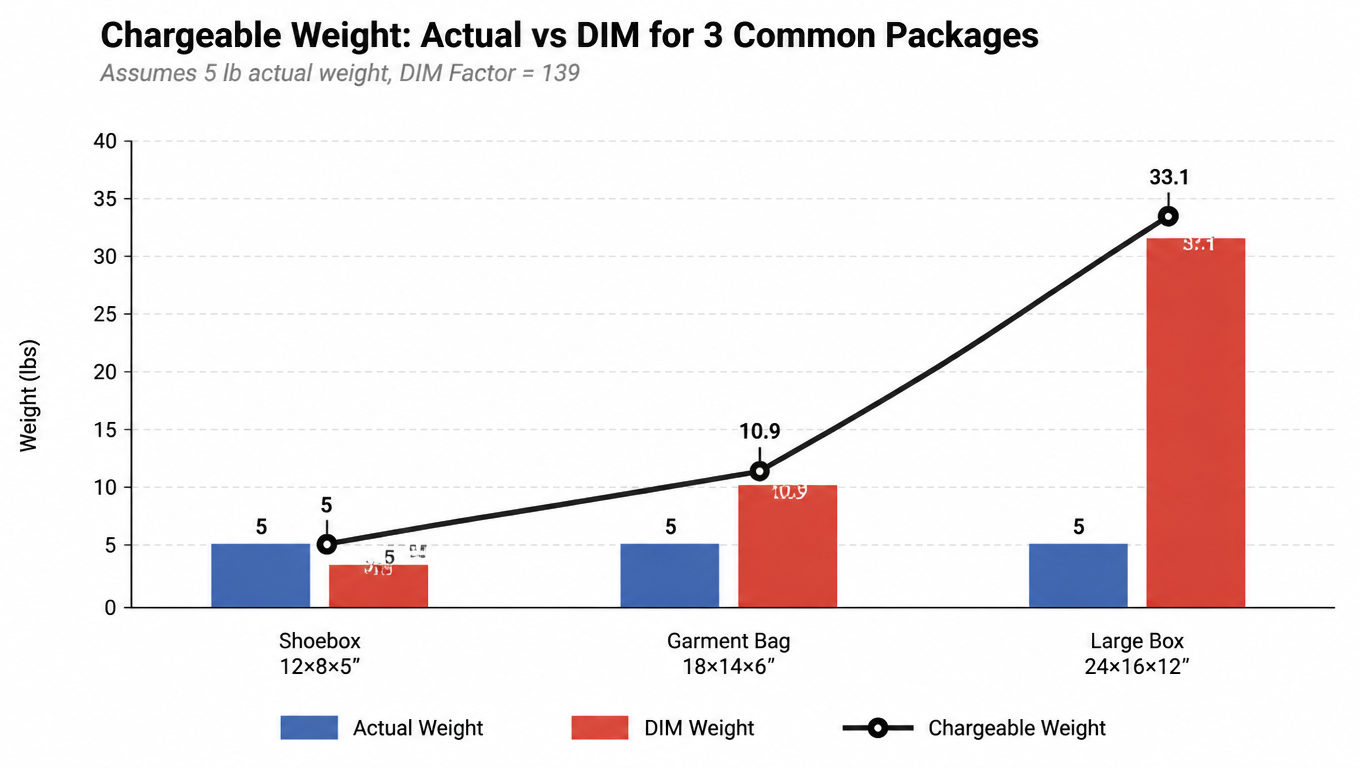
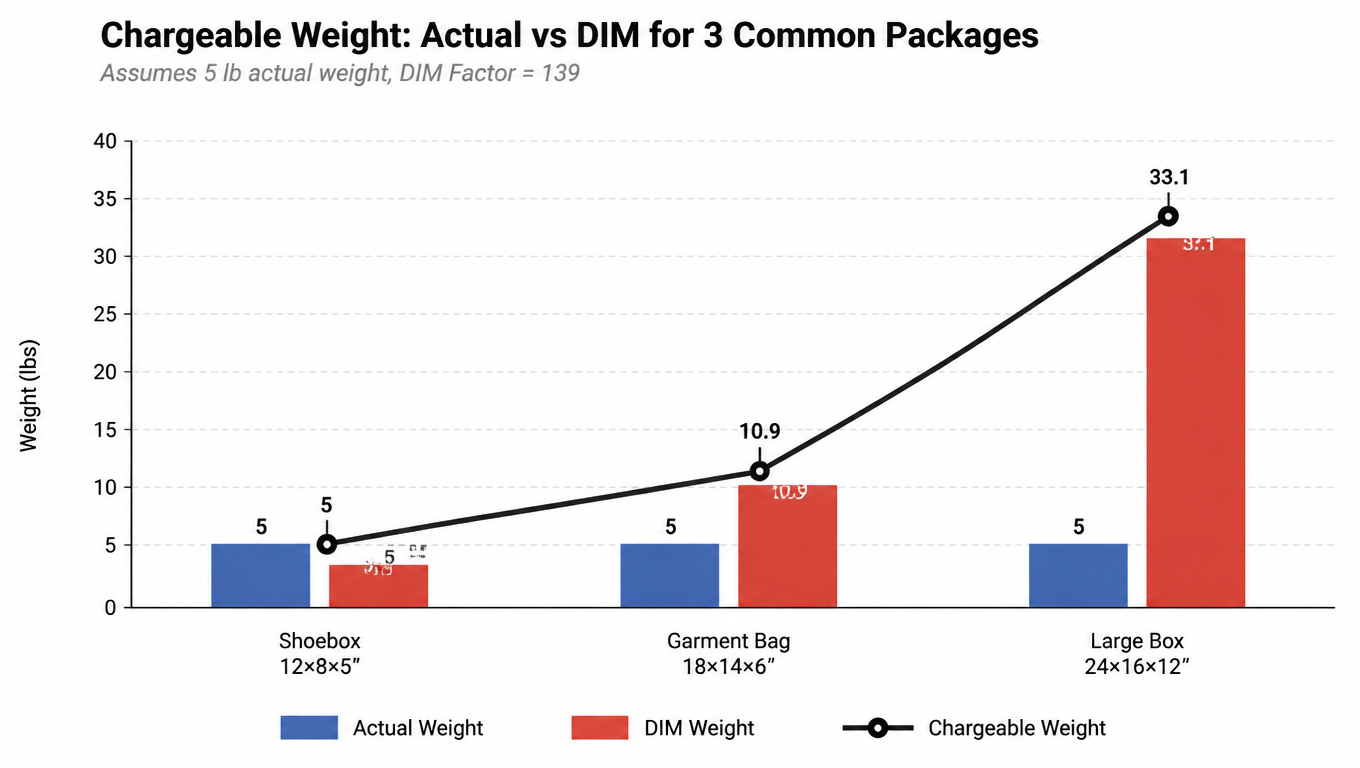
注意:鞋盒按实际重(5 磅)计费,因为体积重更低。但那个大箱子,同样是 5 磅产品在里面,计费重量变成了 33 磅,体积重主导了计费。如果你只看秤上的重量来报价,你少报了将近 6 倍。体积重是沉默的利润杀手:每一次估算,都必须从计算两个重量开始,取大的那个。Notice the shoebox bills at actual weight (5 lbs) because DIM weight is lower. But the large box, same 5 lbs of product inside, bills at 33 lbs. If you only estimated based on the scale, you just under-quoted by a factor of six. DIM weight is the silent margin killer. Every estimate you make must start by calculating both weights and taking the larger.