HS 编码指南HS Code Guide

什么是 HS 编码?新手入门完全指南What Is the HS Code Meaning? A Clear Beginner's Guide

HS 编码是一串全球海关通用的六位数字,用来标识一件商品到底是什么。HS 是 Harmonized System(协调制度)的缩写,全称是 Harmonized Commodity Description and Coding System(商品名称及编码协调制度)。每一票国际货物,从一件跨境电商小包裹到一整柜海运集装箱,商业发票和报关单上都带着一个 HS 编码。如果你填过运单、盯着「HS code」那一栏发呆过,要填的就是这串数字。An HS code is a standardized six-digit number that customs authorities worldwide use to identify what a product is. HS stands for Harmonized System, and the full official name is the Harmonized Commodity Description and Coding System. Every international shipment, from a single e-commerce parcel to a full ocean container, carries an HS code on its commercial invoice and customs declaration. If you have ever filled out a shipping label and stared at a field asking for an HS code, this is the number it wants.

麻烦在于:错码必然带来错的结果。关税算错、货物滞留、罚款追缴,都从一栏填错的编码开始。这篇指南讲清楚 HS 编码到底是什么意思、六位数字是怎么构成的、各国编码有什么差别,以及如何每次都填对,包括一个能自动给商品归类的工具,让你永远不用靠猜。The catch is that a wrong code produces wrong results: miscalculated duties, stuck shipments, and penalties. This guide explains what the code means, how it is built, how national codes differ, and how to get it right every time, including a tool that classifies your products automatically so you never have to guess.

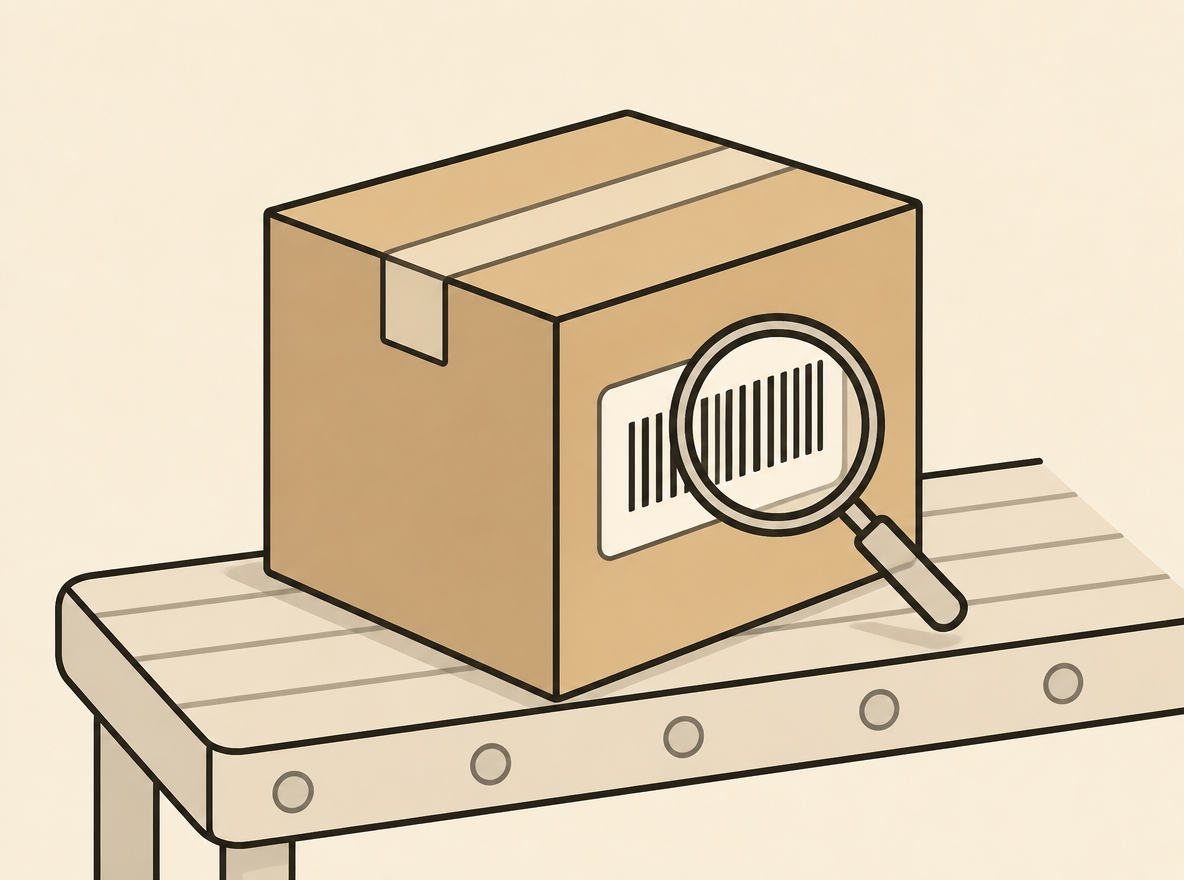
A clean technical illustration of a cardboard parcel with a barcode label on a shipping dock, with a magnifying glass hovering over the label

1. HS 编码到底是什么意思1. HS Code Meaning in Plain English

这套系统由总部位于布鲁塞尔的世界海关组织(WCO)维护,全球 200 多个国家和经济体都在使用。事实上,超过 98% 的国际货物贸易都用 HS 编码归类,这使它成为全球商业中采用范围最广的标准之一。当你在中国的出口单证、美国的进口申报和德国的海关表格上看到同一串六位数字,它们指的都是同一种商品。The system is maintained by the World Customs Organization (WCO) in Brussels and is used by more than 200 countries and economies. In fact, more than 98 percent of international merchandise trade is classified using HS codes, which makes the system one of the most widely adopted standards in global commerce. When you see the same six digits on a Chinese export document, a U.S. import entry, and a German customs form, they all mean the same product.

为什么这很重要?因为每个国家的海关都需要一门共同语言来描述商品。有了统一编码,任何海关官员都能识别箱子里装的是什么,套用正确的税率,执行贸易规则,并统计出准确的数据。HS 编码就是全球海关描述你商品的方式,他们甚至不需要打开箱子。Why does this matter? Because customs in every country needs one shared language to describe goods. With a common code, any customs officer anywhere can identify what is inside a box, apply the correct duty rate, enforce trade rules, and collect accurate statistics. The HS code is how the world's customs desks talk about your product without ever needing to open the box.
2. HS 编码的六位数字是怎么构成的2. How an HS Code Is Structured

HS 编码一共六位数字,每两位一组。第 1、2 位标识章(chapter),第 3、4 位标识品目(heading),第 5、6 位标识子目(subheading)。每一组都把商品的描述收窄一级,从大类一路收窄到具体的商品类别。An HS code is six digits long, and those digits work in three pairs. Positions 1 and 2 identify the chapter, positions 3 and 4 identify the heading, and positions 5 and 6 identify the subheading. Each pair narrows the description of the product by one level, from broad category down to a specific kind of goods.

六位数字之下是四层结构:21 个大类(section)、96 章、约 1,200 个品目、5,000 多个子目。大类把相关的章节归拢在一起(比如纺织原料及纺织制品),章在大类里继续归类,品目和子目一层层往下切,直到每种商品都有自己的精确身份。Underneath the six digits sits a four-level hierarchy: 21 sections, 96 chapters, roughly 1,200 headings, and more than 5,000 subheadings. Sections group related chapters (for example, textiles and textile articles), chapters group related products within a section, and headings and subheadings keep dividing products until each gets its own precise identity.

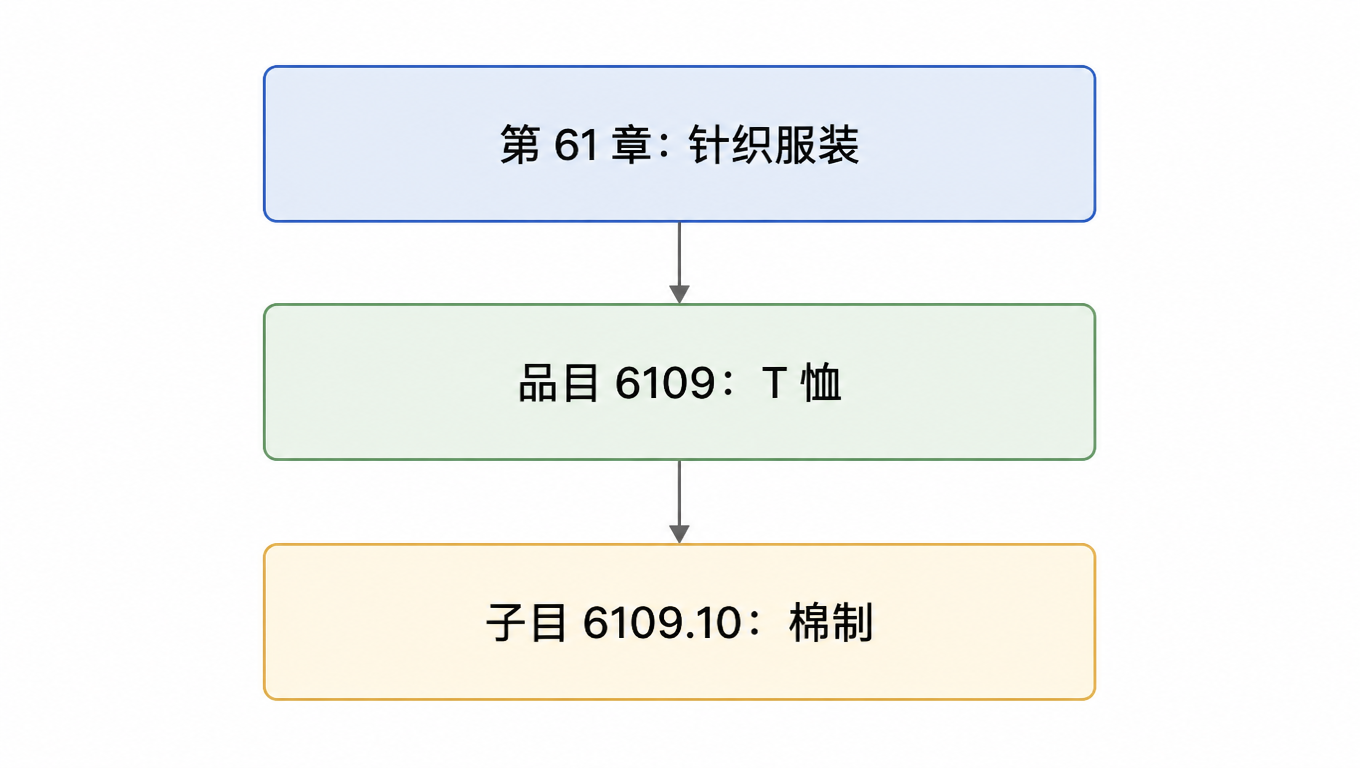
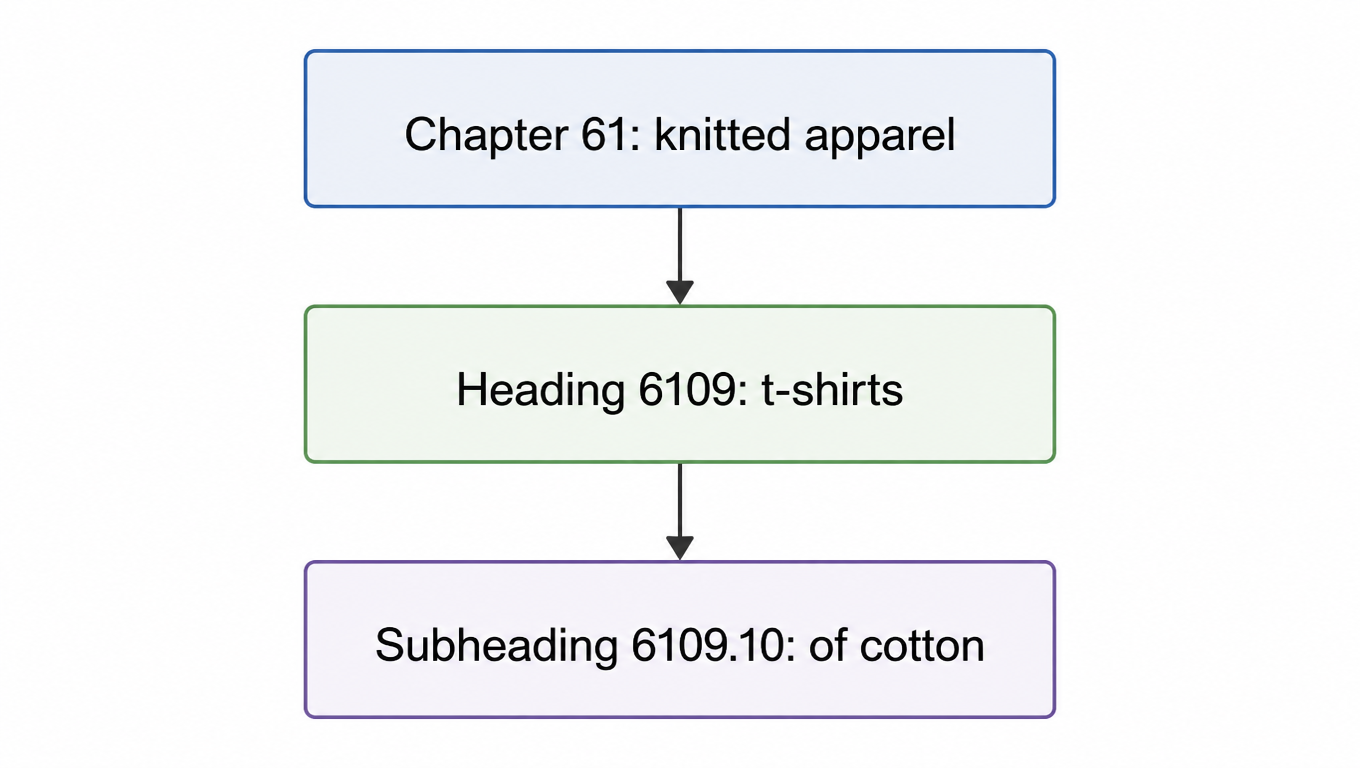
举个具体的例子。一件纯棉 T 恤,它的六位编码是 6109.10。前两位 61,把它放进第 61 章,也就是针织或钩编的服装。中间两位 6109,是 T 恤、汗衫和其他背心的品目。最后两位 6109.10,是棉制 T 恤的子目。把面料换成涤纶,后两位就会变,因为海关把两种 T 恤当成不同的商品。A concrete example makes this clear. Take a plain cotton t-shirt. Its six-digit code is 6109.10. The first pair, 61, places it in chapter 61, which covers articles of apparel made from knitted or crocheted fabric. The middle pair, 6109, is the heading for t-shirts, singlets, and other vests. The final pair, 6109.10, is the subheading for t-shirts of cotton. Change the fabric to polyester and the last two digits change too, because customs treats the two shirts differently.

HS 编码结构拆解:第 61 章针织服装 → 品目 6109 T 恤 → 子目 6109.10 棉制HS code structure: Chapter 61 knitted apparel to Heading 6109 t-shirts to Subheading 6109.10 of cotton

对比一下,一只蓝牙音箱这样的电子产品,落在第 85 章,也就是电机、电气设备那一章。单看章,海关已经能知道箱子里大概是什么。每多一位数字,画面就更精确一分,你的货品落在哪一条关税税号下也就更明确。自动归类工具会替你读完整套六位结构,这些细微差别不需要装进你的脑子里。For comparison, an e-commerce gadget like a Bluetooth speaker lives somewhere in chapter 85, the chapter for electrical machinery and equipment. The chapter alone already tells customs a great deal about what is in the box. Every additional digit narrows the picture further, and with it narrows the exact duty line your shipment will be taxed under. An automated classifier reads all six digits of the structure for you, so the finer distinctions never have to live in your head.

3. HS、HTS 与 Schedule B:你实际需要哪个编码3. HS vs HTS vs Schedule B: Which Code Do You Actually Need?

六位 HS 编码是国际底座,但通常不是全部。各国会在六位后面加上自己的数字,一般加到第 8 位或第 10 位,形成带有本国税率和统计口径的关税税号。前六位全球一致,后面的部分属于各国自己的地盘。The six-digit HS code is the international foundation, but it is rarely the whole story. Countries take the six-digit code and add their own digits, usually to the 8th or 10th position, to create national tariff lines that carry their specific duty rates and statistical categories. The first six digits stay the same everywhere; what comes after them is national territory.

在美国,进口商用的是 10 位协调关税表,通常叫 HTS,由美国国际贸易委员会发布、美国海关与边境保护局(CBP)管理。出口商用的是另一套 10 位编码,叫 Schedule B,由美国人口普查局维护,用来统计美国出口了什么。两套表前六位与国际 HS 一致,后四位分道扬镳。In the United States, importers use the 10-digit Harmonized Tariff Schedule, commonly called the HTS, which is published by the U.S. International Trade Commission and administered by U.S. Customs and Border Protection. Exporters use a different 10-digit schedule, the Schedule B, maintained by the U.S. Census Bureau, which tracks what the country ships out. Both share the same first six digits with the international HS, then diverge in the final four.

其他国家也一样,各自加后缀。欧盟通过 TARIC 系统加数字,中国有自己的 10 位本国税则,等等。实际后果是:所谓「正确的编码」取决于货往哪去、是进口还是出口。用错表,比如拿欧盟风格的编码去申报美国进口,就会得到错误的税率,还会让海关官员一头雾水。这也是为什么一个懂各国编码扩展的工具值得拥有:同一个商品描述,可以同时给出美国、欧盟、中国等地的正确编码,你不需要背任何一国的税则。Other countries do the same thing with their own suffixes. The European Union adds digits through its TARIC system, China maintains its own 10-digit national schedule, and so on. The practical consequence is that "the right code" depends on where the goods are going and in which direction. Using the wrong table, such as filing a U.S. import with an EU-style code, means the wrong duty rate and a very confused customs officer. This is also why a tool that understands each country's extension matters: one product description can yield the correct code for the U.S., the EU, China, and beyond, without you memorizing a single national schedule.

4. 为什么 HS 编码不能填错4. Why the Right HS Code Matters

HS 编码不只是描述商品,它直接决定你交多少税、货能不能顺利清关。海关用编码套用税率、核查限制、统计贸易数据。几个数字的差别,可能把商品从 0 关税的税号推到要交好几个百分点关税的税号,一整柜货下来,这个差别就是真金白银。The HS code does not just describe your product; it decides what you pay and whether your shipment clears. Customs uses the code to apply the duty rate, check for restrictions, and collect trade statistics. A difference of a few digits can move a product from a 0 percent duty line to a line with several percentage points of duty, and on a container of goods that difference is real money.

填错编码会引发一连串后果。关税算错,要么少缴(海关迟早会找回来),要么多缴(吃掉你的利润)。清关期间货物滞留,海关要求补充资料。在美国,归类错误的民事罚款随主观意图升级,从过失到重大过失再到欺诈,而且按货值计算,货量一大就非常疼。反复出错还会让公司进入海关的审计视野。A wrong code triggers a chain of consequences. Duties get miscalculated, either underpaid (which customs will come back for) or overpaid (which eats your margin). Shipments stall in clearance while officers request more information. In the United States, civil penalties for misclassification scale with intent, from negligence up through gross negligence and fraud, and they are calculated against the value of the goods, which makes them painful at scale. Repeat problems can also put a company on customs' radar for audits.

日常运营里也一样。商业发票上有一行归类错了,整柜货可能卡在港口等海关核查,仓储费和滞箱费一路累积。对电商卖家来说,一个小包裹编码填错,可能被拦截、延误甚至退回,这比罚款更糟:你失去的是一个客户。从一开始就归类正确,才能避开事后追缴关税、拒付和靠猜带来的审计风险。The stakes show up in daily operations too. One misclassified line in a commercial invoice can hold an entire container at the port while the discrepancy is resolved, racking up storage and demurrage fees. For e-commerce sellers, a wrong code on a single parcel can get it flagged, delayed, or returned to sender, which is worse than a fine: it is a lost customer. Getting classification right from day one avoids retroactive duty assessments, chargebacks, and the audit risk that comes with guessing.

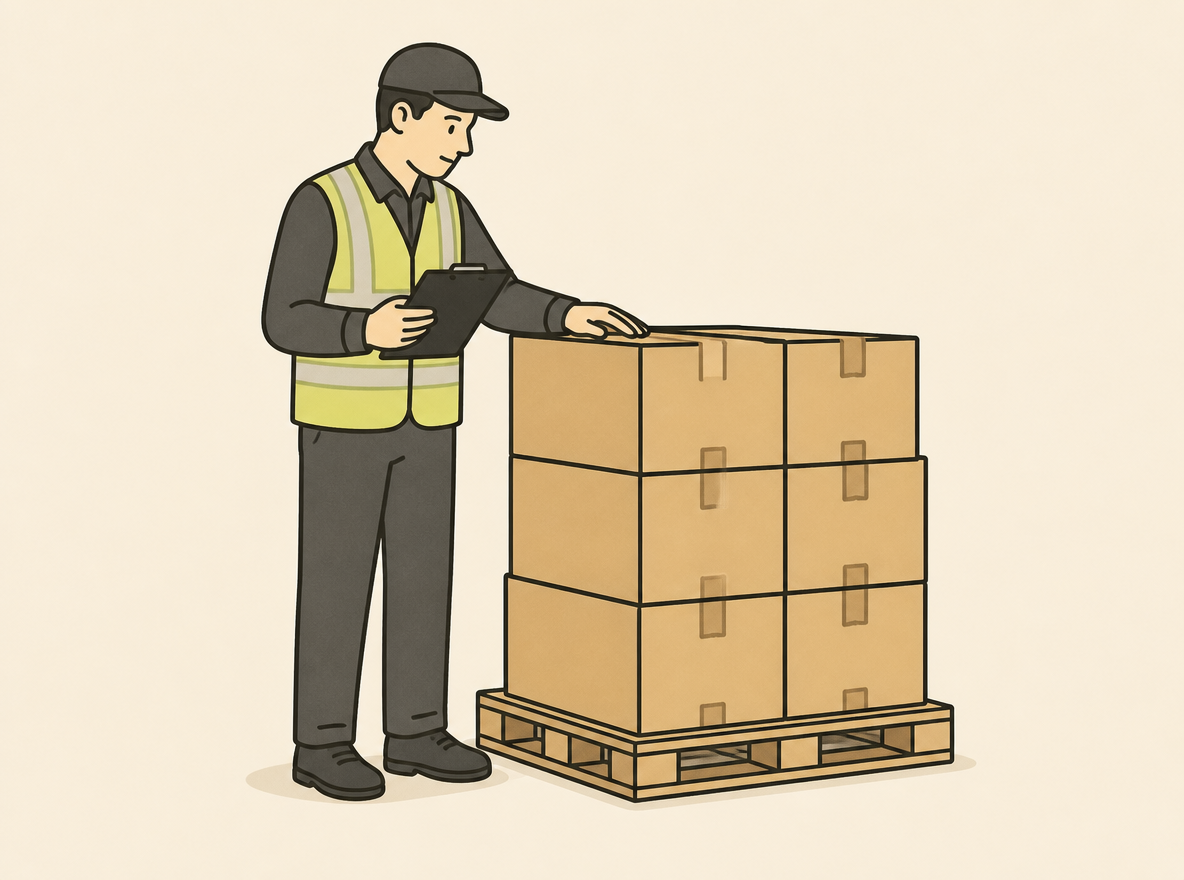
A customs officer in a high-vis vest inspects stacked cardboard boxes on a pallet inside a cargo warehouse

5. 新手最常犯的 5 个归类错误5. The 5 Most Common HS Code Mistakes Beginners Make

绝大多数归类错误并不稀奇,就是新手们反复犯的五个老毛病。知道它们,就治好了一半。Most classification errors are not exotic; they are the same five habits repeated by beginners everywhere. Knowing them is half the fix.

  • 凭关键词猜,而不是读商品本身。搜个「cable」就点第一条结果,完全不管这根线是什么材质、干什么用。决定编码的是商品的材质和功能,不是它的营销名字。Guessing from keywords instead of reading the product. Typing "cable" into a search and taking the first result ignores what the cable is actually made of and what it does. The material and function of a product decide its code, not its marketing name.
  • 直接套用别国的编码。在中国出口单证上找到的编码,不自动等于美国进口申报的编码。六位核心可能一致,但关税税号、也就是税率,可能完全不同。Copying a code from another country's schedule. A code found on a Chinese export form is not automatically valid on a U.S. import entry. The six-digit core may match, but the tariff line, and therefore the duty rate, may not.
  • 五年修订周期后还在用过时编码。WCO 每五年修订一次 HS,各国税则跟着更新。2021 年正确的编码,在这一版里可能已经移动、合并或拆分了。Using an outdated code after the five-year revision cycle. The WCO revises the HS every five years, and the national schedules follow. Codes that were correct in 2021 may have moved, merged, or split in the current edition.
  • 无视材质构成和功能规则。当一件商品可以归入好几个品目时(比如一部分塑料一部分金属的手机壳),由归类总规则(GRI)决定哪个品目胜出。新手跳过这些规则,凭感觉挑一个。Ignoring material composition and function rules. The General Rules of Interpretation (GRI) decide which heading wins when a product could plausibly fit several, for example a phone case that is part plastic and part metal. Beginners skip these rules and pick the heading that feels right.
  • 抄竞品 listing 上的编码,不去核实。竞品可能也是错的,抄他们的错误不会分担他们的风险,只会把错误变成两份。Copying a competitor's listing code without verifying it. The competitor may be wrong too, and copying their mistake does not transfer their risk; it doubles it.

这五个错误,恰恰是自动归类工具专门要消灭的:它读完整商品描述而不是关键词,基于核实过、实时更新的各国税则数据库,并且每一票货都按同一套规则归类,而不是只在你有时间小心的时候。Every one of these mistakes is exactly what an automated classifier is built to prevent: it reads the full product description instead of keywords, works from a verified, up-to-date database of each country's schedule, and applies the classification rules consistently on every shipment, not just on the days you have time to be careful.

6. 如何快速正确地查到 HS 编码6. How to Find Your HS Code (Fast and Correctly)

对结构清晰的商品,官方免费工具就够用了。美国进口商可以在 hts.usitc.gov 查 HTS,出口商可以在人口普查局网站查 Schedule B。两个工具都支持关键词搜索、逐章下钻、查看每条税号的税率。对定义明确的商品,几分钟就能查完。For a straightforward product, the official free tools are good enough. U.S. importers can search the HTS at hts.usitc.gov, and exporters can search the Schedule B on the Census Bureau's site. Both let you type keywords, drill through chapters, and read the duty rates attached to each line. For a clearly defined product, this takes a few minutes.

麻烦出现在商品不清晰的时候。混合材质、多功能设备、找不到合适品目的全新产品,能把新手拖进几个小时的搜索。这时候归类规则才真正派上用场:归类总规则决定哪个品目适用,WCO 的归类注释(Explanatory Notes)解释每个品目该怎么理解。学会把它们读到能可靠归类的程度,是一门真功夫,而这门功夫大多数卖家从一开始就不想学。The trouble starts when the product is not straightforward. Mixed materials, multi-function devices, and genuinely new products with no obvious heading send beginners into hours of searching. That is when the classification rules earn their keep: the General Rules of Interpretation decide which heading applies, and the WCO's Explanatory Notes explain how each heading should be interpreted. Learning to read them well enough to classify reliably is a real skill, and it is a skill most sellers never wanted to acquire in the first place.

这正是自动化发挥价值的地方。不用为每个 SKU 去啃 GRI 和归类注释,你只需描述商品、附一张照片,AI 分类器几秒内返回候选编码和置信度。得到的结果和规则推出来的答案一致,却省掉一下午的检索。而且这个工具直接嵌在发货流程里,编码自动跟着进报关单证,答案和单证一步到位。This is precisely where automation earns its place. Instead of reading GRI rules and Explanatory Notes for every SKU, you describe the product, add a photo, and an AI classifier returns candidate codes with confidence scores in seconds. The result is the same answer the rules would produce, without the afternoon of research. And because the tool is built into the shipping workflow, the code rides along automatically into the customs documents, so the answer and the paperwork happen in one step.

7. 跳过猜谜:用平台自动归类7. Skip the Guesswork: Auto-Classify with Our Platform

到这里,猜谜环节正式结束。我们的平台从一段商品描述和一张商品照片开始归类:你输入商品是什么,AI 对照税则数据库,返回最合适的 HS 候选编码,每个都带置信度,你可以清楚看到某个编码为什么被选中。This is the part where the guesswork ends. Our platform classifies products from a simple description and a product image: you enter what the item is, and the AI matches it against the tariff schedules to return the best HS candidates, each with a confidence score so you can see exactly why a code was chosen.

覆盖范围涵盖跨境卖家真正会碰到的税则:美国进口用的 HTS、出口用的 Schedule B,加上欧盟、中国和其他主要市场。各国的扩展位自动处理,同一个商品描述,无论发往洛杉矶、伦敦还是深圳,都得到正确的编码。你不需要记住哪个国家加几位。Coverage spans the schedules that actually matter to cross-border sellers: the U.S. HTS for imports, Schedule B for exports, plus the EU, China, and other major markets. The national extensions are handled automatically, so the same product description yields the correct code whether you are shipping to Los Angeles, London, or Shenzhen. You never need to remember which country adds which digits.

分类器直接嵌入发货流程,不是挂在另一个网站上。确认编码后,它会跟着整票货的数据自动写入商业发票、报关单和面单。什么都不用重新输入,系统之间也不会丢字段。The classifier is embedded directly in the shipping workflow, not bolted on as a separate website. Once you confirm the code, it flows into the commercial invoice, the customs declaration, and the shipping labels with the rest of the shipment data. Nothing gets retyped, and nothing gets dropped between systems.

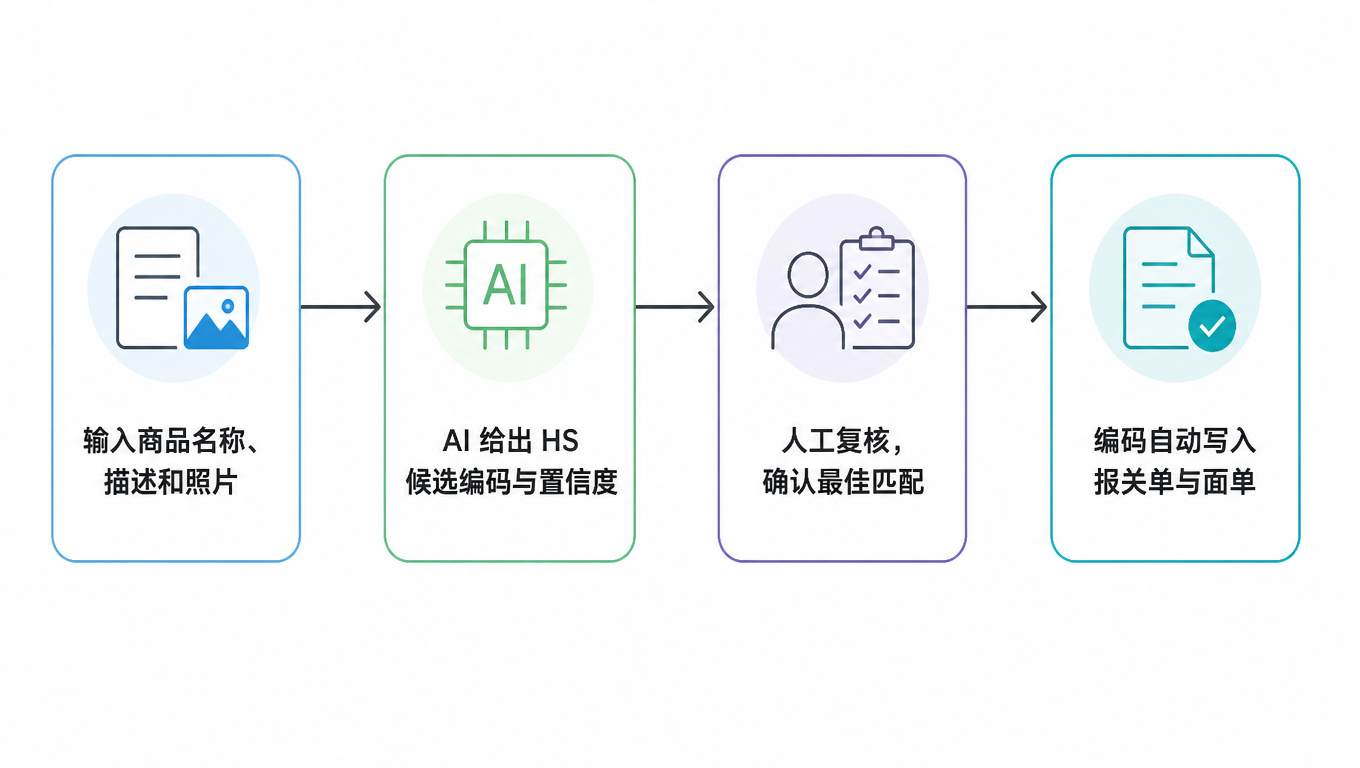
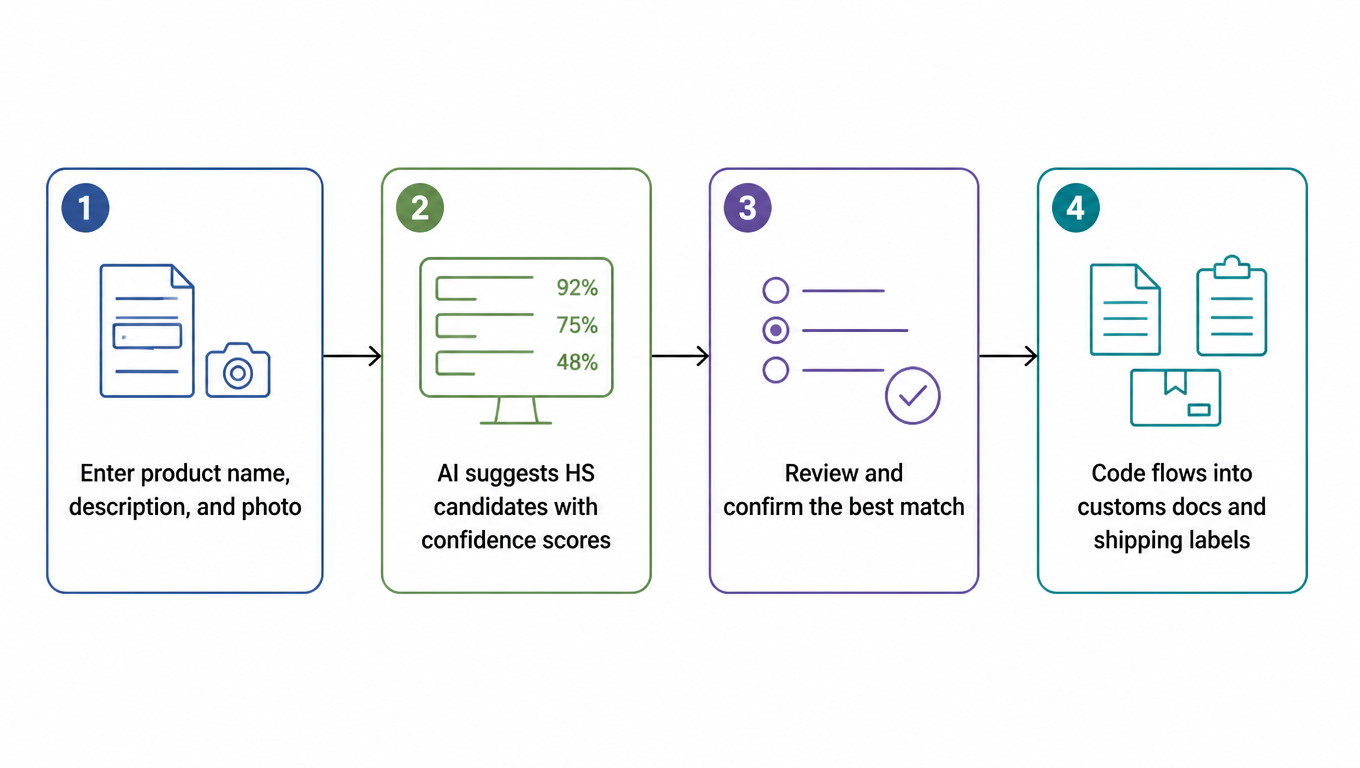
自动归类流程:输入商品名称、描述和照片 → AI 给出 HS 候选编码与置信度 → 人工复核确认最佳匹配 → 编码自动写入报关单与面单Auto-classification flow: enter product name, description, and photo, AI suggests HS candidates with confidence scores, review and confirm the best match, the code flows into customs docs and shipping labels

人工复核始终留在流程里,最终申报在发出前一定经过确认。下一票货就试试。不需要任何关税专业知识,你拿到的编码,就是海关期待看到的那个。A human review step stays in the loop, so the final filing is always confirmed before it ships. Try it on your next shipment. No tariff expertise required, and the code you get is the code customs expects to see.

常见问题Frequently Asked Questions

所有国家都用同一个 HS 编码吗?Do all countries use the same HS code?

前六位全球一致,因为它们来自 WCO 维护的国际 HS。各国再在后面加自己的数字用于关税和统计,所以某国的 8 位或 10 位编码在另一国可能不存在。对比时用六位,申报时用本国税号。The first six digits are identical worldwide, because they come from the international HS maintained by the WCO. Countries then add their own digits for tariff and statistical purposes, so an 8- or 10-digit code from one country may not exist in another. Compare on the six-digit level; file on the national level.

填错 HS 编码会怎样?What happens if I use the wrong HS code?

关税算错,清关变慢(海关要调查),如果错误看起来是故意的还会有罚款。严重时货物被扣留,反复出错会触发审计。按美国法律,民事罚款按货值计算并随主观意图升级,所以代价随货量增长。Duties get miscalculated, clearance slows down while customs investigates, and penalties can follow if the mistake looks intentional. In serious cases the shipment is held, and repeated errors can trigger audits. Under U.S. law, civil penalties are calculated against the value of the merchandise and scale with intent, so the cost grows with the size of your shipments.

HS 编码多久更新一次?How often is the HS updated?

WCO 每五年修订一次协调制度。当前版本是 HS 2022,下一版 HS 2027 将于 2027 年 1 月 1 日生效。每次修订后各国税则跟着更新,这就是为什么几年前核实的编码值得重新查一遍。The WCO revises the Harmonized System every five years. The current edition is HS 2022, and the next one, HS 2027, takes effect on January 1, 2027. After each revision, national schedules update too, which is why codes you verified years ago deserve a re-check.

每票货物都要填 HS 编码吗?Do I need an HS code for every shipment?

是的。每一票国际货物,不管是包裹还是集装箱,商业发票和报关单上都需要 HS 编码。从一开始就填对,货物才能顺畅流转,关税账单才能准确。Yes. Every international shipment needs an HS code on its commercial invoice and customs declaration, whether it is a parcel or a container. Getting them right from the start is what keeps shipments moving and duty bills accurate.

准备好告别 HS 编码的猜测了吗?Ready to stop guessing on HS codes?

easyshippingx 从商品描述和照片自动给出 HS 候选编码与置信度,覆盖美国 HTS、Schedule B 以及欧盟、中国等主要市场,编码自动写入报关单和面单。填对编码,从下一票开始。easyshippingx classifies your products from a description and photo, returning HS candidates with confidence scores across the U.S. HTS, Schedule B, the EU, China, and other major markets. The code flows straight into your customs documents and shipping labels. Get it right, starting with your next shipment.

Get Rate Comparison
Get Rate Comparison