海外仓尾程物流成本优化:中小 3PL 的承运商比价、路由与附加费避坑Last-Mile Parcel Cost Optimization for 3PLs: Carrier Comparison, Routing, and Surcharge Avoidance
对做跨境生意的中小 3PL 和海外仓来说,尾程是账上最大的变量。这篇文章不谈头程,不谈清关,只讲一件事:美国海外仓发全美尾程,怎么把每一票的成本压下来。你会看到承运商价格结构怎么拆、比价怎么比、路由怎么定、附加费漏在哪里,以及一套能长期运转的成本优化机制。For small and mid-sized 3PLs and overseas warehouses serving cross-border sellers, last-mile delivery is the biggest variable on the books. This guide skips first-mile and customs to focus on one thing: how to push down the cost of every parcel moving from a US warehouse to a US doorstep. You will see how carrier price structures work, how to compare total cost, how to route each parcel, where surcharges leak, and how to build a cost-optimization system that keeps running month after month.
一、尾程成本是 3PL 的利润命脉1. Last-Mile Cost Is the Profit Lifeline of a 3PL
头程成本在订舱时就是明牌,一票多少钱、什么时效,谈完就固定了;尾程不一样,它每天都在变。承运商调价、燃油附加费波动、这票超尺寸、那票进偏远区,都会改变单票成本。日票量几百上千票的仓,尾程账单每个月都在跳。First-mile cost is written in stone the moment you book: the price and transit time per shipment are locked in after negotiation. Last-mile is different. It changes every day. Carrier rate changes, fuel surcharge swings, an oversized box here, a remote zip code there, all of it moves the per-parcel cost. For a warehouse shipping a few hundred to a few thousand parcels a day, the last-mile bill jumps around every single month.
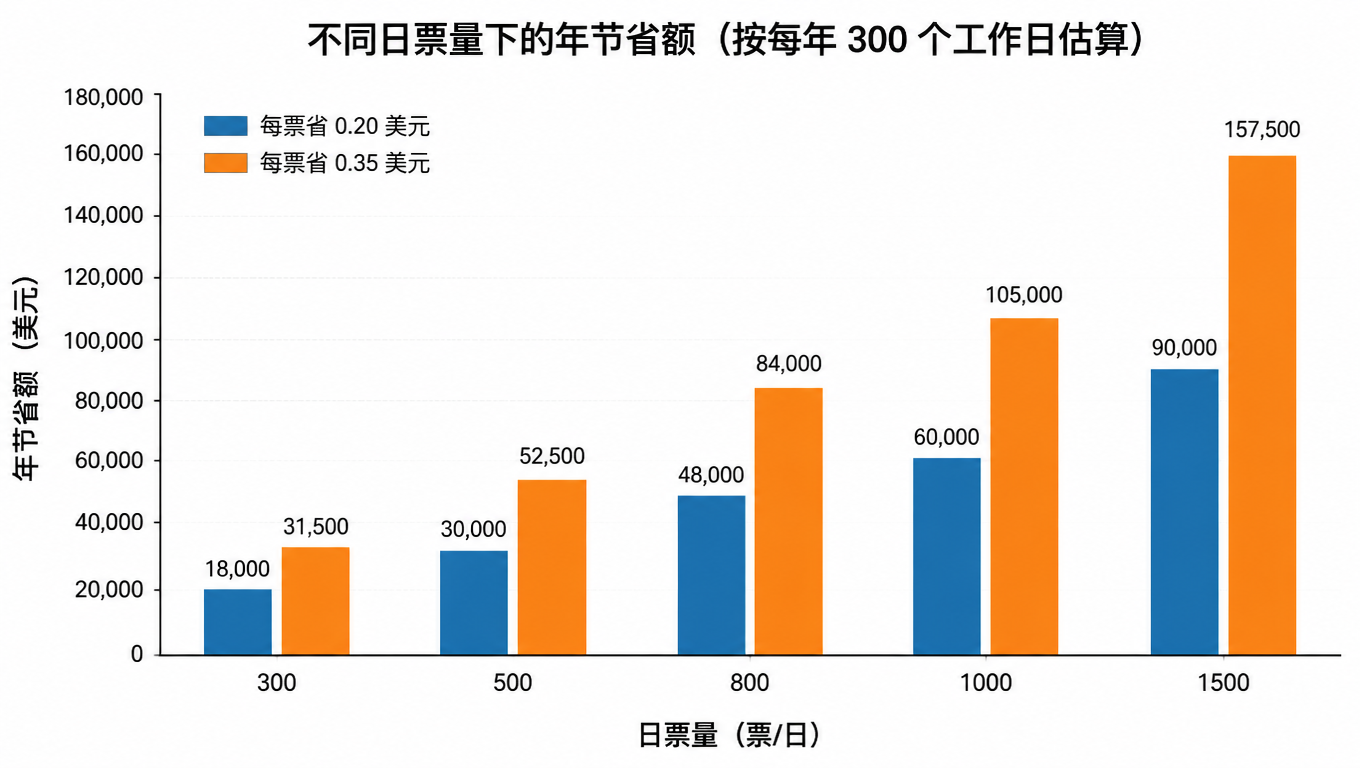
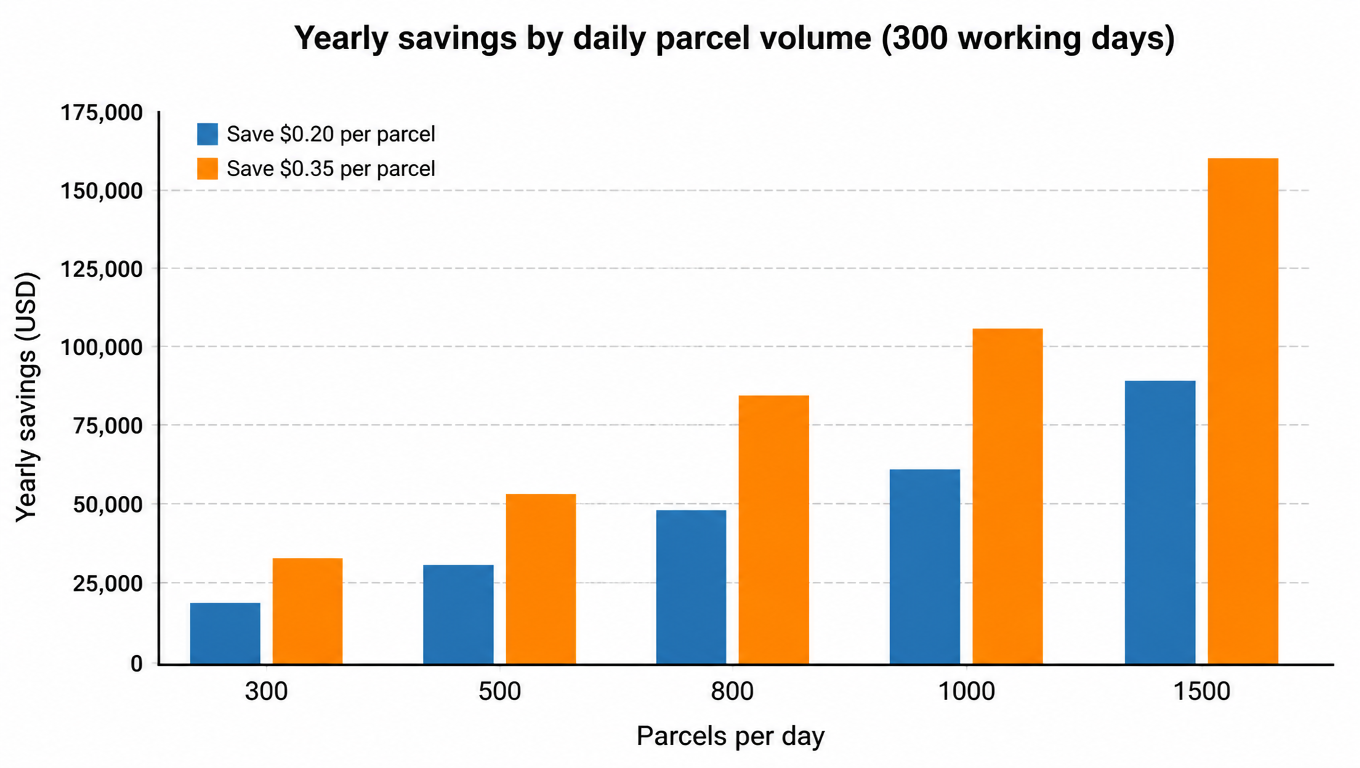
关键不是省下某一个大数字,而是把每一票的尾程成本压下去一点点。一天 1000 票、一年 300 个工作日就是 30 万票,每票省 0.2 美元,一年就是 6 万美元。对单票毛利只有 1 到 3 美元的 3PL 来说,这 6 万美元往往就是利润和亏损的分界线。The goal is not one big saving; it is shaving a little off every parcel. At 1,000 parcels a day and 300 working days a year, that is 300,000 parcels. Saving $0.20 each is $60,000 a year. For a 3PL making only $1 to $3 gross margin per parcel, that $60,000 is often the line between profit and loss.
更重要的是,尾程成本直接写进你的报价。你比同行低 0.3 美元一票,就能把同样的利润变成更有竞争力的价格,或者把省下来的钱留进自己口袋。成本优化不是财务部门的报表游戏,它是销售部门的定价武器。More importantly, last-mile cost is written directly into your pricing. If you are $0.30 per parcel cheaper than a competitor, you can turn the same margin into a more competitive quote, or keep the savings for yourself. Cost optimization is not a finance-department reporting exercise; it is a pricing weapon for your sales team.
二、承运商价格结构拆解:传统三巨头 + 新兴尾程网络2. Carrier Price Structures: The Big Three Plus Emerging Last-Mile Networks
先看清楚这张牌桌上都有谁。USPS 的 Ground Advantage 是 2023 年 7 月整合 Parcel Select Ground 和 First-Class Package 后推出的产品,按重量加距离分区计价,1 磅以内的轻件、短途派送最便宜,是轻小件的价格锚点。First, know who sits at the table. USPS Ground Advantage launched in July 2023, consolidating Parcel Select Ground and First-Class Package, and prices by weight plus distance zone. Light parcels under 1 lb on short hauls are its cheapest lane, which makes it the price anchor for small parcels.
UPS 的牌是 Ground 加 Ground Saver 的组合。Ground 是标准商务件,时效稳定;Ground Saver 是经济件,前身是 SurePost。2024 年底起 UPS 结束与 USPS 的长期合作,最后一公里改由自有网络派送,PO Box 和 APO 等地址一度不再覆盖;2025 年双方又达成新的协议,恢复了部分地址的 USPS 交接。FedEx 类似,Ground 之外有 Ground Economy,前身是 SmartPost,2021 年改名后也告别了 USPS 最后一公里。两家都对每周结算量给折扣,票量越集中,单价越低。UPS plays the Ground plus Ground Saver combination. Ground is the standard commercial product with dependable transit times; Ground Saver is the economy tier, formerly SurePost. At the end of 2024 UPS ended its long-standing handoff to USPS and began delivering the last mile on its own network, which briefly left addresses like PO Boxes and APO uncovered; in 2025 the two sides reached a new agreement restoring USPS handoff for some addresses. FedEx works the same way: Ground plus Ground Economy, formerly SmartPost, rebranded in 2021 and no longer using USPS for the last mile. Both carriers discount against weekly settlement volume, so the more concentrated your volume, the lower the unit price.
传统三巨头之外,这两年冒出一批专门服务跨境轻小件的新兴尾程网络。它们没有三巨头几十年的历史包袱,价格结构和产品逻辑都围绕跨境电商轻小件重新设计。UniUni 成立于 2019 年,是最早把众包模式大规模用在北美尾程的公司之一:超过 10 万名 gig 司机,从 100 多个分拣仓出发,服务 Temu、Shein、AliExpress、亚马逊、eBay、TikTok Shop 和大量北美本土商家。它的自研平台用 AI 为司机做路线和派送点优化,号称派送速度接近 DHL、价格不到一半,并把零意外附加费直接写进卖点。Beyond the big three, a crop of emerging last-mile networks built specifically for cross-border small parcels has appeared over the last couple of years. They carry none of the big three's decades of legacy, and their price structures and product logic are designed from scratch around lightweight e-commerce parcels. UniUni, founded in 2019, was one of the first to apply the crowdsourced model to North American last mile at scale: more than 100,000 gig drivers operating out of 100-plus sortation centers, serving Temu, Shein, AliExpress, Amazon, eBay, TikTok Shop, and many North American merchants. Its self-built platform uses AI to optimize driver routes and stop sequences, and it claims delivery speed close to DHL at less than half the price, with zero surprise surcharges as a headline promise.
在美国市场,UniUni 是铺开最快的新兴网络。2025 年初它只覆盖约 50% 的美国人口,一年内铺到 65%,加上加拿大侧 80% 的覆盖,一共触及北美 500 多座城市;纽约、芝加哥、洛杉矶这些枢纽,包裹从到达扫描到派送完成通常不超过 24 小时。它的美国模式是两条腿走路:长途干线借助 UPS、FedEx、USPS 的全国运力,最后一公里交给自己的 gig 司机和 DSP(配送服务伙伴),成本因此能压到传统经济件之下,日派送量已超过 100 万票,2022 到 2025 年间收入增长超过 2000%。2025 年它还上线了美加跨境一单到底服务:美国取件、清关、加拿大末端派送全程自己完成,不再需要第三方中转。2026 年 5 月,它正在筹备通过并购交易在多伦多交易所上市,估值约 14 亿加元(约合 10 亿美元),是新兴网络里跑得最快的一家。In the US market UniUni is the fastest-scaling of the emerging networks. At the start of 2025 it covered only about 50% of the US population; within a year that reached 65%, and with roughly 80% coverage on the Canadian side the network now touches more than 500 cities across North America. At hubs like New York, Chicago, and Los Angeles, parcels typically go from arrival scan to delivered in under 24 hours. Its US model runs on two legs: long-haul trunking rides the national networks of UPS, FedEx, and USPS, while the last mile is handled by its own gig drivers and DSP (delivery service partner) teams. That keeps cost below traditional economy products; it now delivers more than 1 million parcels a day, and revenue grew more than 2,000% between 2022 and 2025. In 2025 it also launched a US-to-Canada one-tracking-number service: pickup in the US, customs clearance, and Canadian delivery all handled in-house with no third-party handoff. In May 2026 it was preparing to go public on the Toronto Stock Exchange through an acquisition deal at a valuation of roughly C$1.4 billion (about US$1 billion), making it the fastest-moving of the emerging networks.
GOFO Express 走的是另一条路:自建美国最后一公里网络,在主要口岸和城市布分拣中心,再与各地本地派送伙伴(DSP)合作完成末端派送。它覆盖 47 个州、1.2 万多个邮编,触及约 75% 的美国人口,并延伸到波多黎各等传统网络服务不足的地区,覆盖范围还在持续扩张。GOFO 专攻轻小件跨境包裹,与 Temu、Shein、TikTok Shop 深度合作,支持带电产品,这些品类三巨头的经济件通常不愿意碰。价格上它按发货量阶梯报价、量大价优,小包裹起步价可低至 3 美元以下,单件限重约 20 磅。两家放在一起,正好覆盖了新兴网络的两种典型打法:UniUni 用众包轻资产快速铺开,GOFO 用自建网络深耕覆盖。GOFO Express takes the other route: a self-built US last-mile network with sortation centers at major gateways and cities, completing delivery through partnerships with local DSPs. It covers 47 states and more than 12,000 zip codes, reaching roughly 75% of the US population, with reach extending into areas the legacy networks underserve, including Puerto Rico, and it keeps expanding. GOFO focuses on lightweight cross-border parcels and works deeply with Temu, Shein, and TikTok Shop, and it accepts battery-containing products, a category the big three's economy products generally avoid. Pricing is tiered by volume: the more you ship, the better the rate, with small-parcel entry pricing below $3 and a per-parcel weight cap around 20 lb. Put the two side by side and you get the two classic plays in emerging networks: UniUni scales fast on a lightweight crowdsourced model, GOFO deepens coverage on a self-built network.
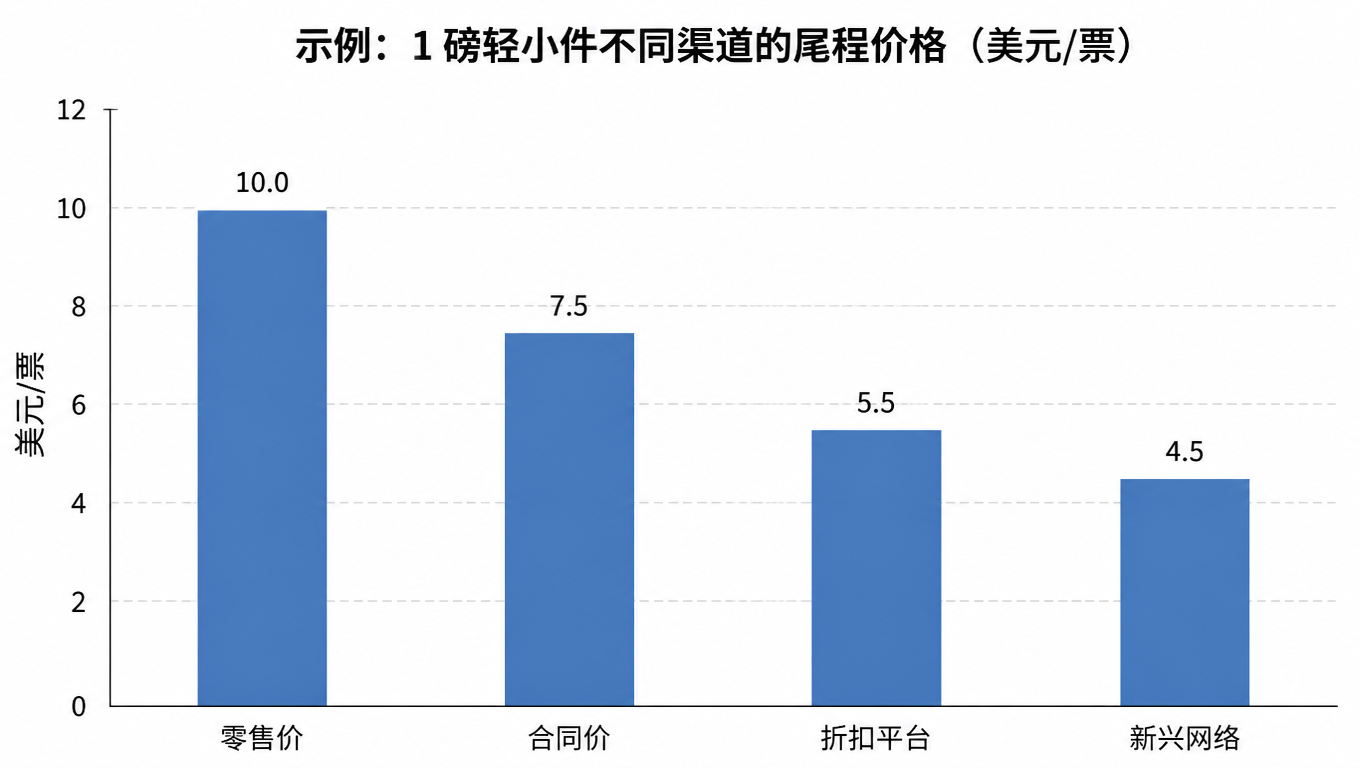
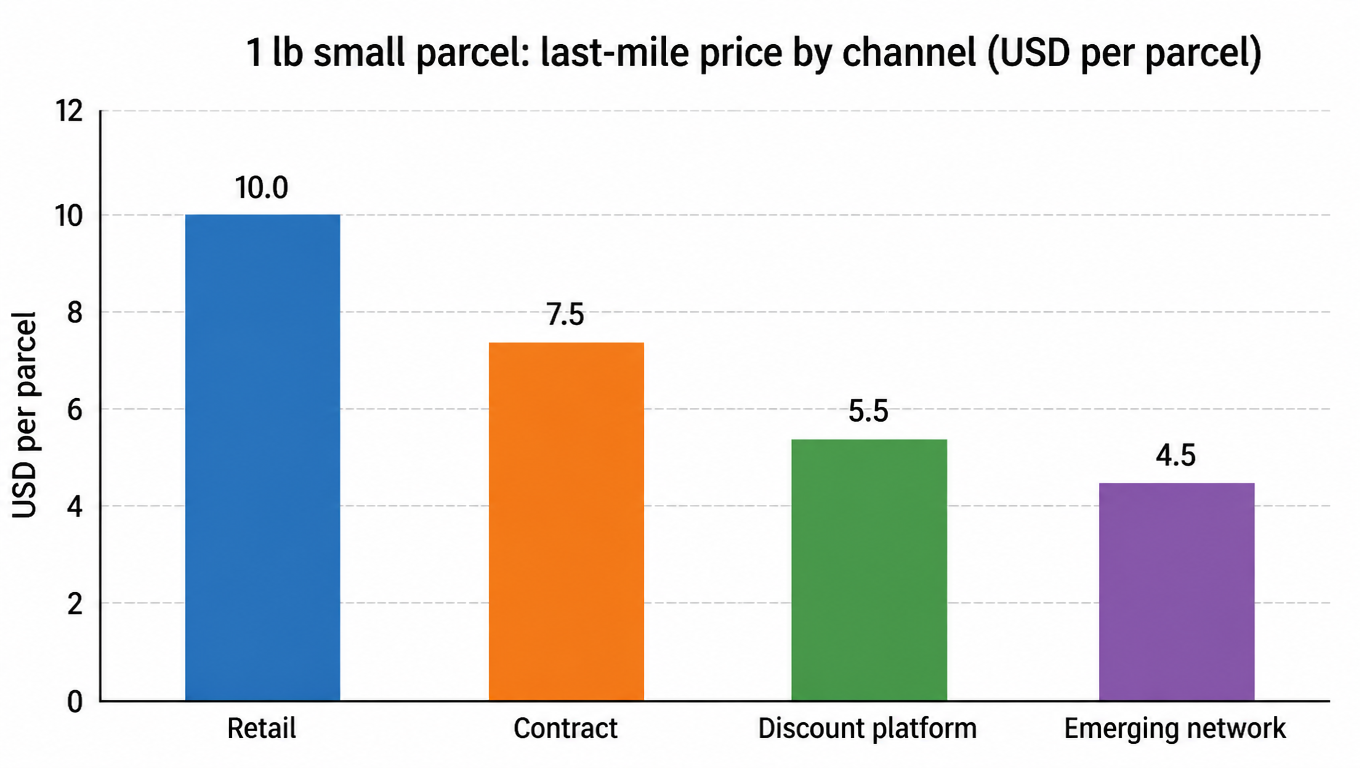
把渠道拉平看,同一票货的价差远比想象中大。以一件零售价 10 美元的 1 磅轻小件为例:谈过合同的可能 7.5 美元,通过 Shippo、EasyPost、Pirate Ship 这类折扣平台能压到 5.5 美元左右,走新兴网络可能只要 4.5 美元。最便宜和最贵的渠道相差超过一半。零售价、合同价、折扣平台、新兴网络,四个层级价差可以到 40% 到 80%。Level the playing field and the spread on the same parcel is far bigger than most people assume. Take a 1 lb small parcel with a $10 retail price: a negotiated contract might bring it to $7.50, a discount platform like Shippo, EasyPost, or Pirate Ship can get it to around $5.50, and an emerging network may charge just $4.50. The gap between the most expensive and cheapest channel is more than half. Across the four tiers of retail, contract, discount platform, and emerging network, the spread can reach 40% to 80%.
三、多承运商比价:从看单价到看全成本3. Comparing Carriers: From Sticker Price to Total Cost
比价最忌讳只看基础运费。全成本等于基础运费加燃油附加费,加各类附加费,再加退回和改址费用。燃油附加费每周都在动,附加费藏在账单明细里,只看单价会让比较结果严重失真。真正要比的是每票落地成本。The worst way to compare rates is to look at base freight only. Total cost equals base freight plus fuel surcharge, plus every accessorial, plus return and address-correction fees. Fuel moves weekly and surcharges hide in invoice line items, so comparing list prices alone produces badly distorted results. What you actually want to compare is the landed cost per parcel.
把包裹分桶,建一张报价矩阵。按重量段、尺寸、区域、服务等级四个维度切分,每个桶里拉齐所有承运商的报价,包括新兴网络。你会发现没有一家全赢:USPS 赢在轻件短途,UPS 赢在商务重件和时效,FedEx 在中件区间有竞争力,新兴网络在轻小件上便宜得明显。你的矩阵里每个格子应该自动指向最便宜的承运商。Bucket your parcels and build a rate matrix. Split by four dimensions: weight band, size, zone, and service level. In every bucket, line up quotes from all carriers, emerging networks included. You will find that nobody wins everywhere: USPS wins light parcels on short hauls, UPS wins commercial heavy parcels and transit reliability, FedEx is competitive in the mid-weight range, and the emerging networks are clearly cheaper on small parcels. Every cell of your matrix should point automatically to the cheapest carrier.
人工比价在日票量几百上千票时撑不住。用 rate shopping API,比如 EasyPost、Shippo 或各家承运商自己的接口,把矩阵变成系统调用,每票实时取价。比价从每周一次的手工活,变成每次出库自动发生的动作。Manual comparison cannot survive a few hundred to a few thousand parcels a day. Use a rate shopping API such as EasyPost, Shippo, or the carriers' own interfaces to turn the matrix into system calls that pull live pricing per parcel. Comparison stops being a weekly manual chore and becomes an automatic step in every dispatch.
四、路由选择:把每一票包裹送到对的承运商4. Routing: Getting Every Parcel to the Right Carrier
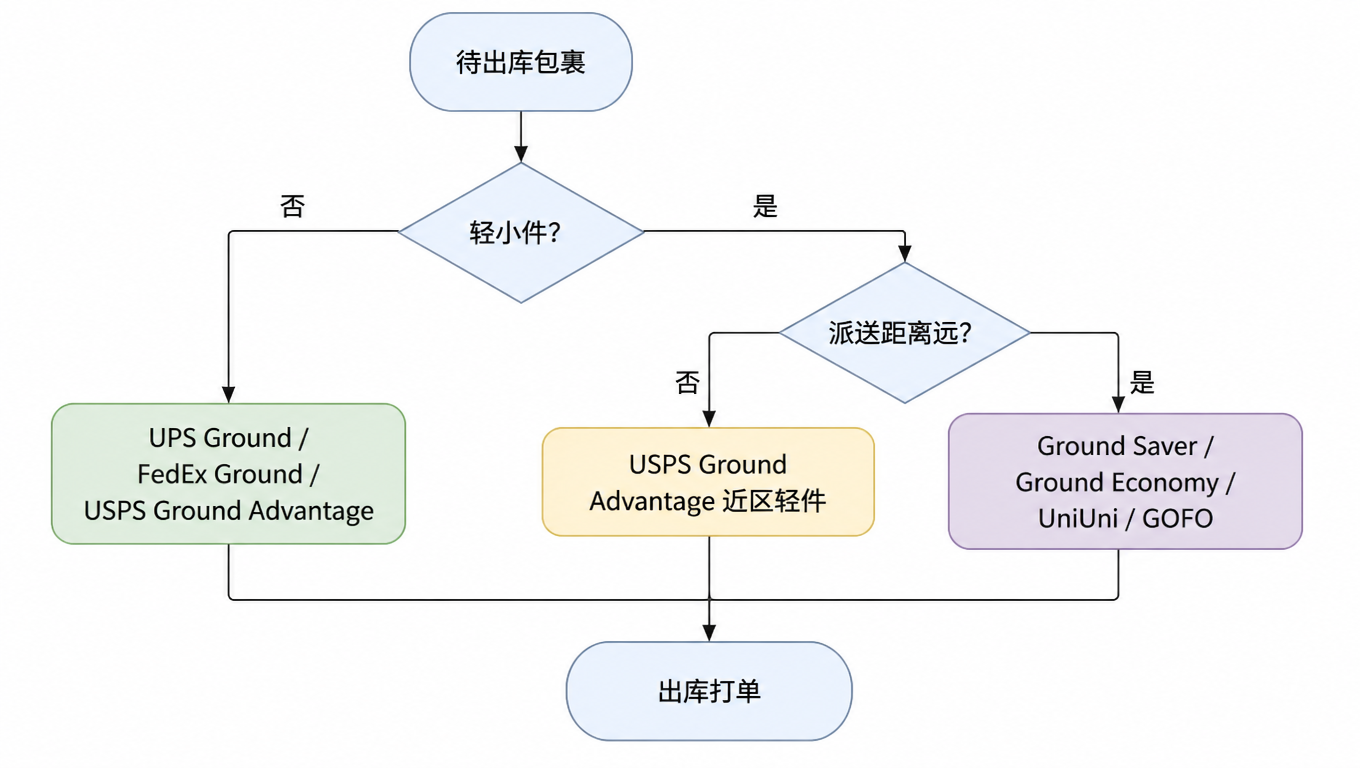
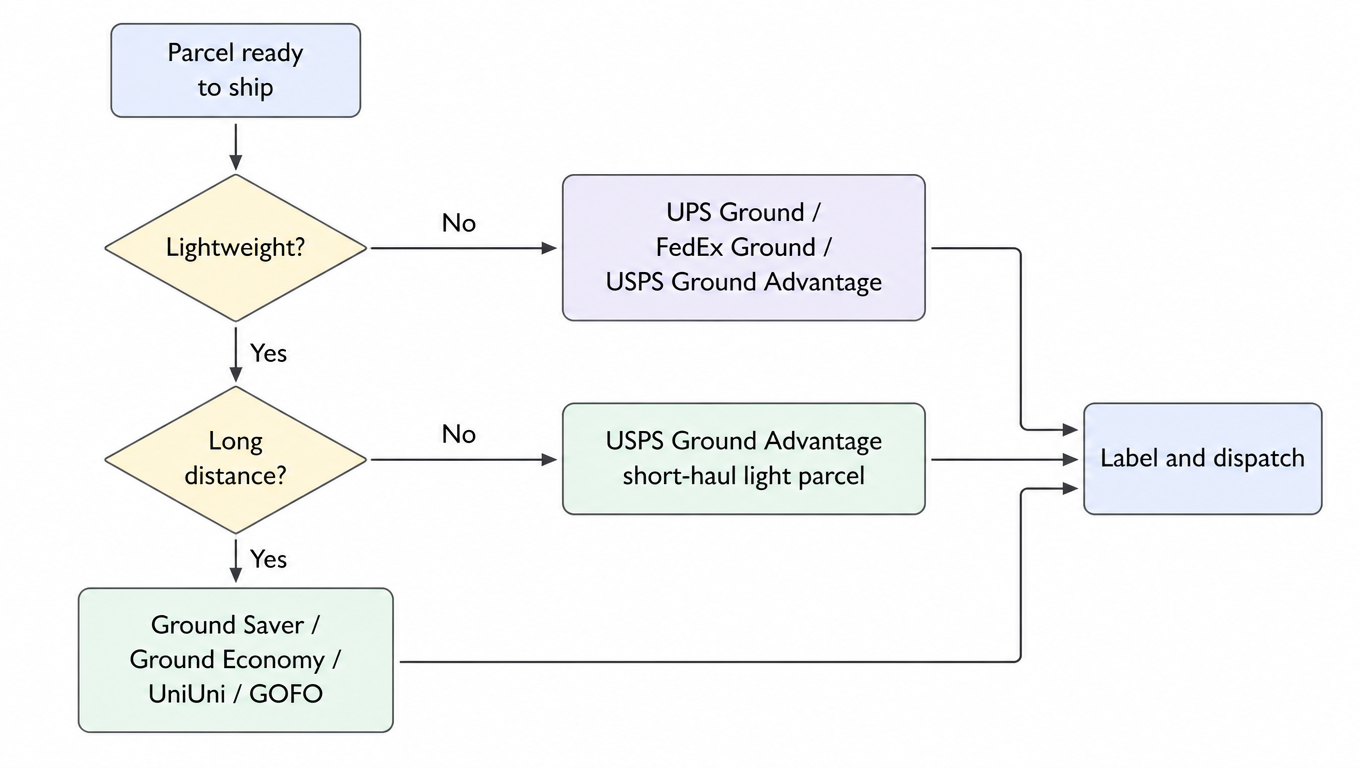
拿到报价矩阵,下一步是把每一票送到对的承运商,这叫路由。一条朴素的规则是:轻件远距走经济件或聚合网络,重件近区走 Ground。1 磅以内的轻小件发到远区,USPS 和 UPS 的 zone 价格会明显抬升,这时候 Ground Economy、Ground Saver、UniUni、GOFO 这类以轻小件为生的网络反而更划算;近区重件则用 Ground,时效好,价格也可控。Once you have the rate matrix, the next step is routing: sending every parcel to the right carrier. The simple rule is: light parcels over long distances go to economy or aggregator networks, heavy parcels over short distances go to Ground. When a sub-1 lb parcel ships to a distant zone, USPS and UPS zone pricing climbs steeply, and networks built for small parcels like Ground Economy, Ground Saver, UniUni, and GOFO become the better deal. For heavy parcels in nearby zones, Ground wins on both transit time and price.
zone 是理解路由的关键。USPS、UPS、FedEx 的价目表都按距离分 1 到 8 区,越远单价越高。远区是经济件和新兴网络的天下,近区是 Ground 的主场。把远区轻件从 Ground 挪到聚合网络,单票能省 1 到 2 美元,这是矩阵里最大的一个省钱缺口。Zone is the key to routing. USPS, UPS, and FedEx rate tables all divide distance into zones 1 through 8, and the farther the zone, the higher the per-parcel price. Far zones belong to economy products and emerging networks; near zones belong to Ground. Moving a far-zone light parcel from Ground to an aggregator network saves $1 to $2 per parcel, the single biggest saving opportunity in the matrix.
但路由不能只看价。gig 网络的妥投率、异常件处理、赔偿流程和三巨头还有差距,时效要求高的订单、高价值包裹、地址难派的区域,宁可多花一点走 Ground。路由规则里要把时效、货值、区域可靠性这些维度一起写进去。Routing cannot be price-only, though. Gig networks still trail the big three on successful-delivery rates, exception handling, and claims processes. For orders with strict transit promises, high-value parcels, and hard-to-deliver areas, it is worth paying a little more for Ground. Write transit requirements, parcel value, and regional reliability into your routing rules alongside price.
出库节奏也影响成本。把一天的发货集中成几个波次,同一承运商的每周票量更集中,结算折扣就更高。分批零散发和集中波次发,尾程单价可能差出几个百分点。Dispatch rhythm affects cost too. Consolidating the day's shipments into a few waves concentrates weekly volume with each carrier, which lifts settlement discounts. Shipping in dribs and drabs versus consolidated waves can move the last-mile unit price by several percentage points.
五、附加费避坑:钱都漏在哪些地方5. Surcharge Avoidance: Where the Money Leaks
附加费是尾程账单里漏水最严重的地方。第一类是体积重。UPS 和 FedEx 用长乘宽乘高除以 139 算体积重,轻泡货按体积重计费;超过尺寸上限还有 oversize、large package 附加费。一件塞满气泡膜的大箱子,运费可能比实际重量该付的高出一倍。Surcharges are where last-mile bills leak the most. The first category is dimensional weight. UPS and FedEx compute DIM weight as length times width times height divided by 139, so light bulky goods bill on volume; exceed the size caps and oversize and large-package surcharges stack on top. A big box stuffed with bubble wrap can cost twice what its actual weight should justify.
第二类是地址和投递类附加费。住宅区附加费、偏远区附加费,还有地址修正费,地址写错一改就要十几美元。第三类是燃油附加费,各家每周的燃油费率不同、基线也不同,波动起来一票差出几毛钱。The second category is address and delivery surcharges: residential delivery, remote-area fees, and address correction, where a single corrected address can cost over ten dollars. The third is fuel: each carrier publishes a different weekly fuel percentage on a different baseline, and swings can move a parcel by tens of cents.
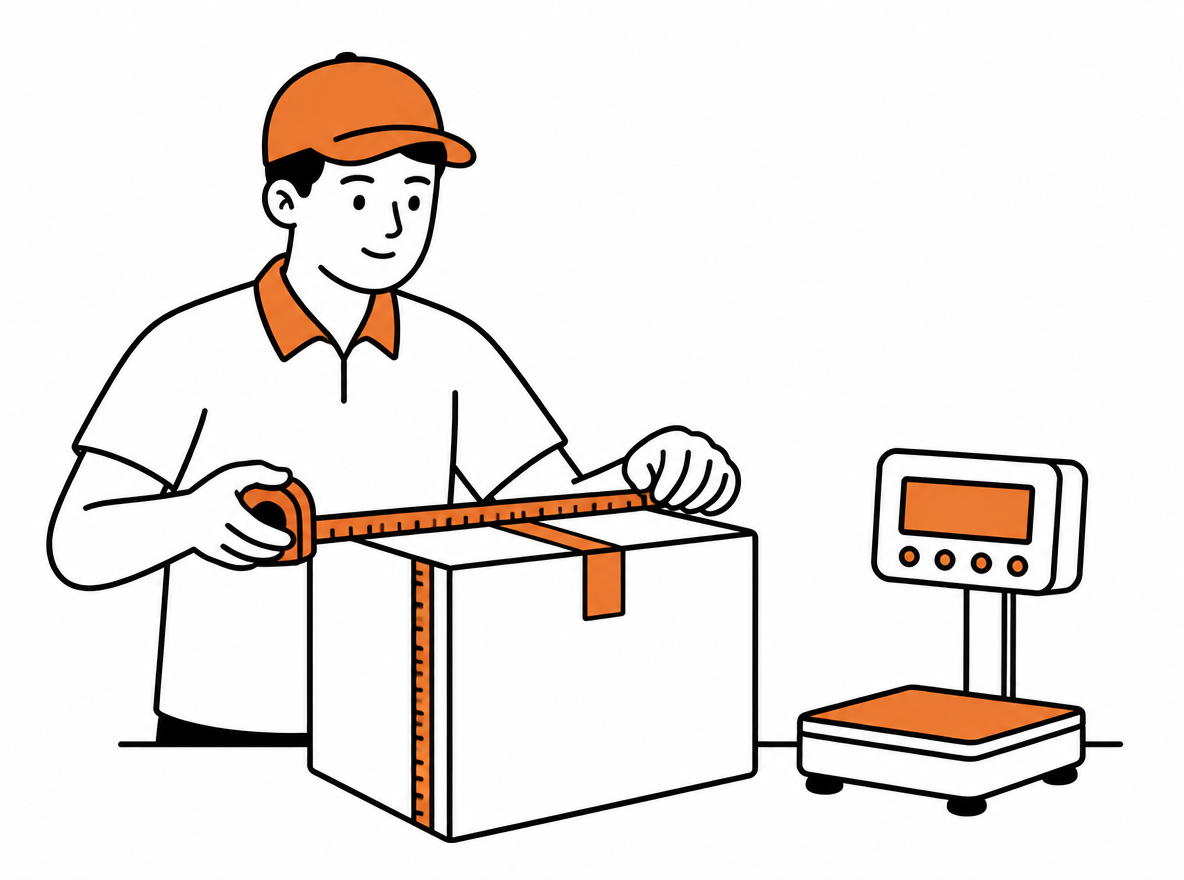
超重件是另一个坑。70 磅以上、150 磅以上的档位价差明显,不规则包裹还要额外收费。省钱最朴素的办法在打包环节:装箱尺寸是免费的省钱空间。换小一号箱子、去掉多余缓冲、把轻泡货压紧实,DIM 降下来,就可能直接跨过一条附加费线。Heavy parcels are another trap. The rate steps above 70 lb and 150 lb jump sharply, and irregular packages trigger additional fees. The most basic fix lives in the packing station: box size is free money. Use a smaller box, cut excess cushioning, and compress bulky goods so DIM weight drops, and you may cross below an entire surcharge threshold.
把三巨头的附加费丛林和新兴网络的简单计费放一起看,差距更明显。UniUni 把零意外附加费直接写进卖点,GOFO 的折扣结构也简单得多。附加费越透明的承运商,账单越可预测,越好做成本预算。Set the big three's surcharge jungle next to the emerging networks' simple pricing and the gap is obvious. UniUni literally advertises zero surprise surcharges, and GOFO's discount structure is far simpler. The more transparent the carrier's fees, the more predictable the invoice, and the easier cost budgeting becomes.
六、用系统和数据把成本优化固化6. Institutionalizing Cost Optimization with Systems and Data
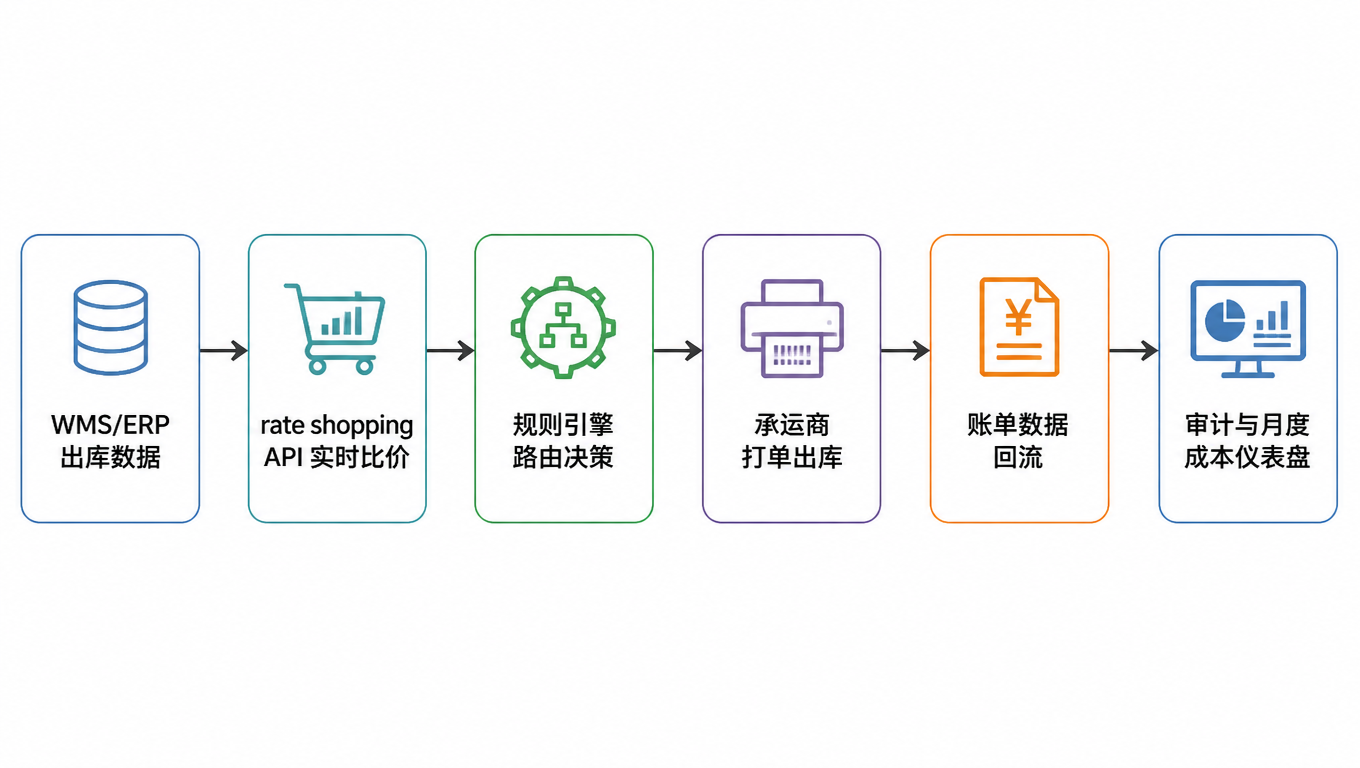
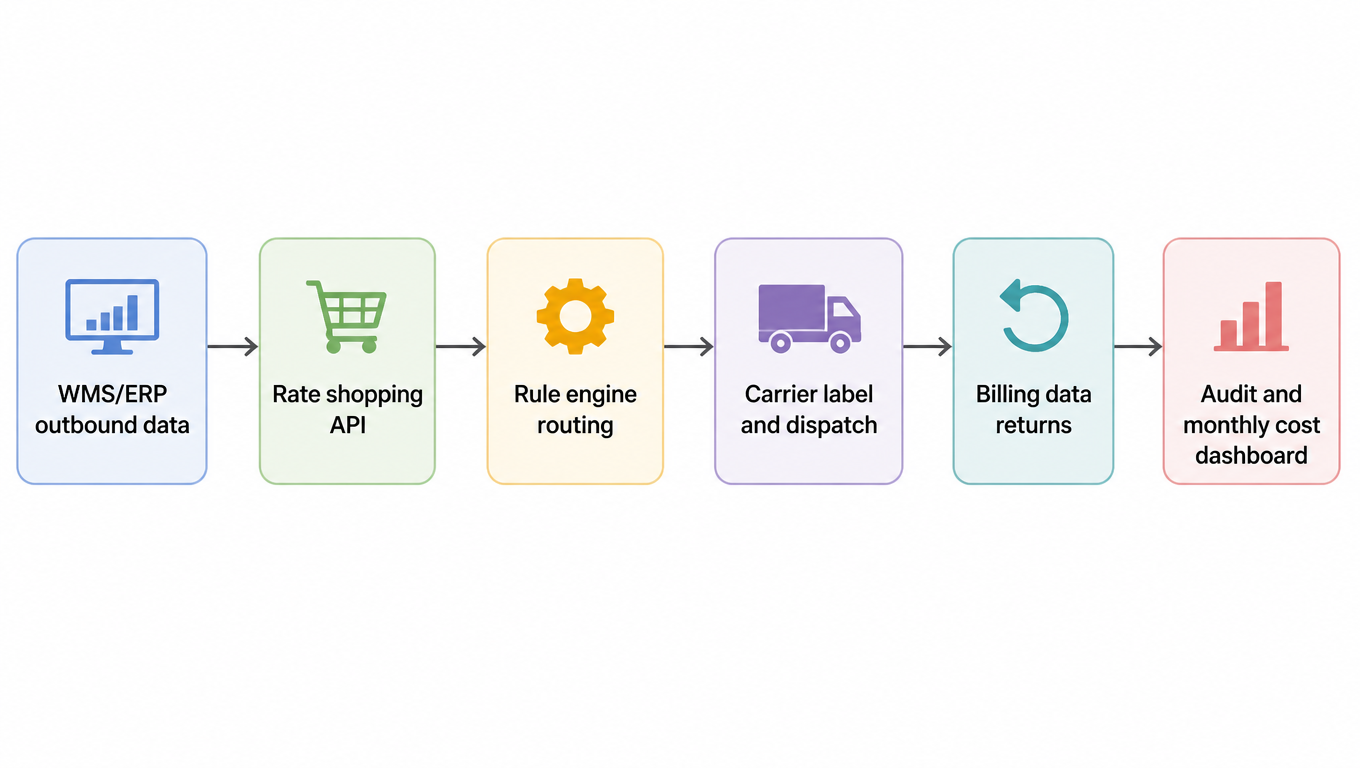
成本优化要变成日常动作,必须靠系统固化。rate shopping API 加规则引擎,每次出库自动实时比价、按规则路由,人肉比价彻底退出流程。规则引擎把你在矩阵和路由里总结的经验变成代码,每一票都执行同一套最优决策。For cost optimization to become a daily habit, it has to be built into systems. A rate shopping API plus a rule engine compares prices and routes every dispatch automatically, pushing manual comparison out of the process entirely. The rule engine turns the experience encoded in your matrix and routing rules into code, so every parcel executes the same optimal decision.
账单审计是回血手段。把承运商账单和出库数据逐票核对,重点看计费重量和实际重量是否一致,附加费有没有被误加。账单一出来就能发现多收,按季度和承运商对账,追回的退款直接回到利润。Billing audits are how you claw money back. Match carrier invoices against outbound data parcel by parcel, focusing on whether billed weight matches actual weight and whether surcharges were applied correctly. Overcharges get caught the moment the invoice lands; reconcile quarterly per carrier, and every refund goes straight back to the bottom line.
数据要能看得见。月度成本仪表盘,单票成本、附加费占比、区域分布、承运商占比,全部按月可视化。哪家承运商悄悄涨了价、哪个区域的单票成本异常,一眼就能看出来。这套数据流从 WMS 和 ERP 的出库数据开始,经比价、路由、打单、账单,回到仪表盘,形成闭环。And the data has to be visible. A monthly cost dashboard visualizes per-parcel cost, surcharge share, zone distribution, and carrier mix every month. A carrier quietly raising rates, or a region with abnormal per-parcel cost, becomes visible at a glance. The data flow starts with outbound records from your WMS and ERP, moves through rate shopping, routing, labeling, and billing, and returns to the dashboard, closing the loop.
七、每月/每季度成本优化清单7. The Monthly, Quarterly, and Yearly Cost-Optimization Checklist
最后给一张可以照着执行的清单。月度:跑一遍账单审计,核对计费重量和实际重量,排查附加费异常,跟踪燃油费率变化。这些是每月固定动作,花半天时间就能做完。Here is a checklist you can actually run. Monthly: run a billing audit, check billed weight against actual weight, hunt down surcharge anomalies, and track fuel rate changes. These are fixed monthly actions that take about half a day.
季度:重跑报价矩阵,把各家最新价目表拉齐;找承运商重谈合同,票量涨了,折扣该跟着涨;评估有没有新增承运商或聚合服务值得引入。季度是调整合同结构的节奏。Quarterly: rebuild the rate matrix with the latest carrier tariffs, renegotiate contracts since growing volume should mean growing discounts, and evaluate whether any new carrier or aggregator service is worth adding. The quarter is the rhythm for reshaping your contract structure.
年度:做承运商绩效回顾,妥投率、丢失率、投诉率、价格四张表放一起看,决定明年主推谁、淘汰谁。成本优化不是一次性工程,而是月、季、年三个节奏循环的持续动作,每一票省下的钱都直接进利润。Yearly: run a full carrier performance review with four tables side by side, successful-delivery rate, loss rate, complaint rate, and price, and decide who gets the volume next year and who gets cut. Cost optimization is not a one-time project; it is a continuous loop on three rhythms, monthly, quarterly, and yearly, and every dollar saved on a parcel lands directly in profit.
常见问题FAQ
轻小件上通常便宜 20% 到 40% 甚至更多。以 1 磅件为例,零售价 10 美元,新兴网络可能只要 4.5 美元。但便宜有前提:时效、覆盖和妥投率还在追赶期,高价值、时效敏感或地址难派的货仍建议走 Ground,用规则路由按包裹画像决策。On small parcels they are usually 20% to 40% cheaper, sometimes more. For a 1 lb parcel, the retail price is $10 while an emerging network may charge just $4.5. The savings come with caveats: transit reliability, coverage, and successful-delivery rates are still catching up, so high-value, time-sensitive, or hard-to-deliver shipments should stay on Ground, decided per parcel by routing rules.
从打包环节下手:换小一号箱子、去掉多余缓冲、把轻泡货压紧实,让体积重降下来。出库前用 DIM 计算校验,凡是要跨过 oversize 或 large package 门槛的包装,先调整再打单,这是完全免费的省钱空间。Start at the packing station: use a smaller box, cut excess cushioning, and compress bulky goods so DIM weight drops. Run a DIM check before labeling, and rework any packaging that crosses an oversize or large-package threshold. It is entirely free money.
不是。PO Box、APO 等地址,偏远区,时效承诺高的订单,高价值包裹,以及需要三巨头赔偿流程的场景,都还要保留 Ground 选项。正确做法是规则路由:每个包裹按重量、区域、货值、时效要求自动决定走哪家,而不是一刀切。No. PO Box and APO addresses, remote zones, strict transit promises, high-value parcels, and situations that need the big three's claims process all still warrant Ground. The right answer is rule-based routing: each parcel decides its carrier automatically by weight, zone, value, and transit requirement, never a one-size-fits-all.
建议按季度。每季度重跑报价矩阵、把最新价目表拉齐;票量涨了,就带着数据找承运商谈更高折扣;年度再做承运商绩效回顾,决定明年主推谁、淘汰谁。Quarterly is the right rhythm. Rebuild the rate matrix each quarter with current tariffs; when volume grows, take the data to carriers and negotiate higher discounts; and run a yearly performance review to decide who gets the volume next year and who gets cut.