一、为什么承运商数量现在成了增长问题1. Why Carrier Count Is Now a Growth Problem
3PL 能发哪些承运商,过去只是一个安静的运营细节,今天它是销售对话的核心。零售商规定供应商只能用哪些承运商,电商平台把订单路由到自己的合作承运商,DTC 品牌带着自己的尾程网络上门,期待你直接接入。当潜在客户问"你们能发 X 承运商吗",这个答案决定你赢不赢得下这个客户,而不只是要不要多做一点工程。The carriers a 3PL can ship with used to be a quiet operational detail. Today it is a sales conversation. Retailers mandate which carriers their vendors can use. Marketplaces route orders through preferred partners. Drop-shippers show up with their own last-mile networks and expect you to plug in. When a prospect asks, "Can you ship with carrier X?", the answer decides whether you win the account, not whether you do a little extra engineering.
说"不能"是有代价的。一个接不了客户现有承运商的 3PL,等于要求客户改变自己的业务来迁就 3PL。很少会有客户愿意这么做。这个需求会转向名单上的下一家 3PL,生意也跟着走了。Saying no has a price. A 3PL that cannot support the carrier a shipper already uses is asking that shipper to change its business to fit the 3PL. Few shippers will. The request goes to the next 3PL on the list, and the deal goes with it.
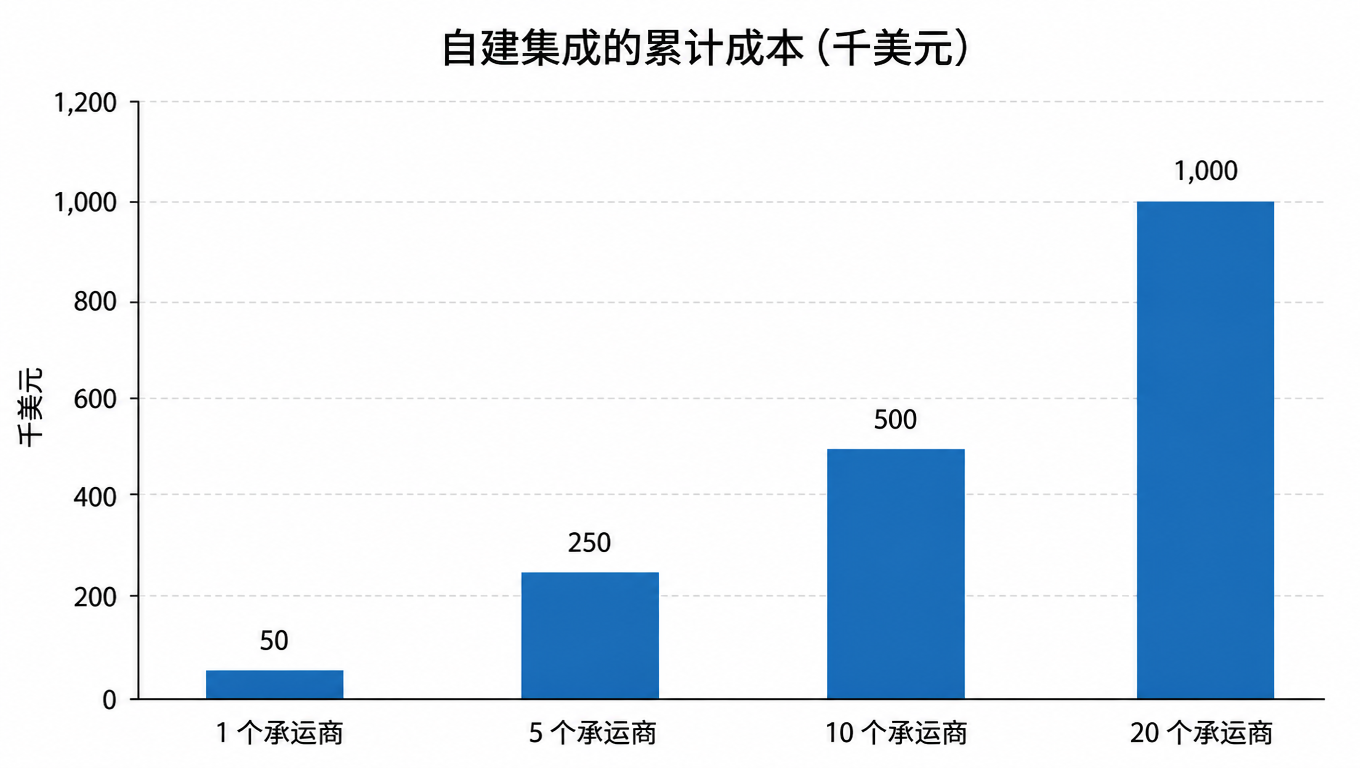
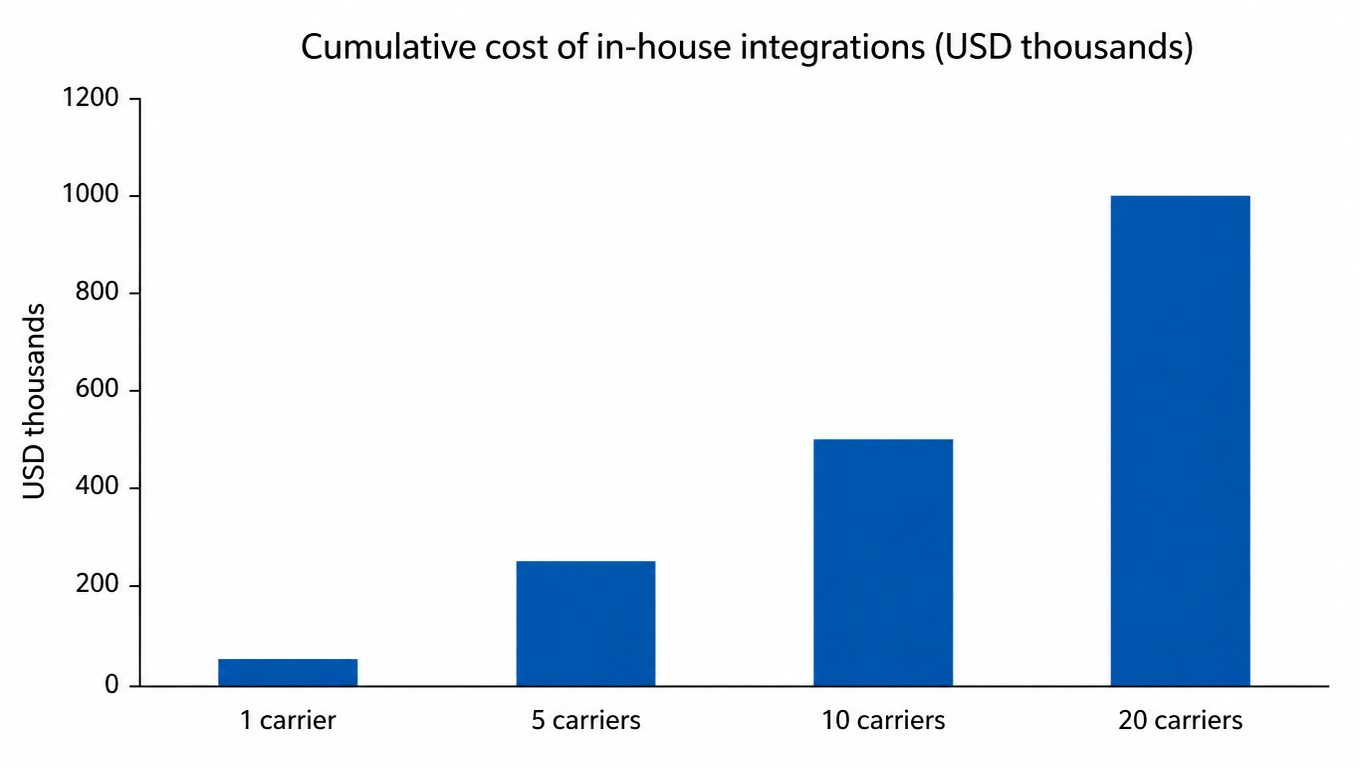
更多的承运商曾经意味着更多的工程。每接一个新承运商都是一个独立项目:自己的 API 文档、沙箱、认证和测试周期。销售团队可以靠服务赢单,但交付管道的速度取决于开发排期。这才是真正的瓶颈:不是找不到想要更多承运商的客户,而是集成建得不够快,没法对客户说"能"。More carriers used to mean more engineering. Every new carrier was its own project: its own API docs, sandbox, certification, and test cycle. The sales team could win on service, but the delivery pipeline moved at the speed of the dev backlog. That is the real bottleneck now. It is no longer finding customers who want more carriers; it is building the integrations fast enough to say yes.