为什么物流问题总被误诊Why Shipping Problems Get Misdiagnosed
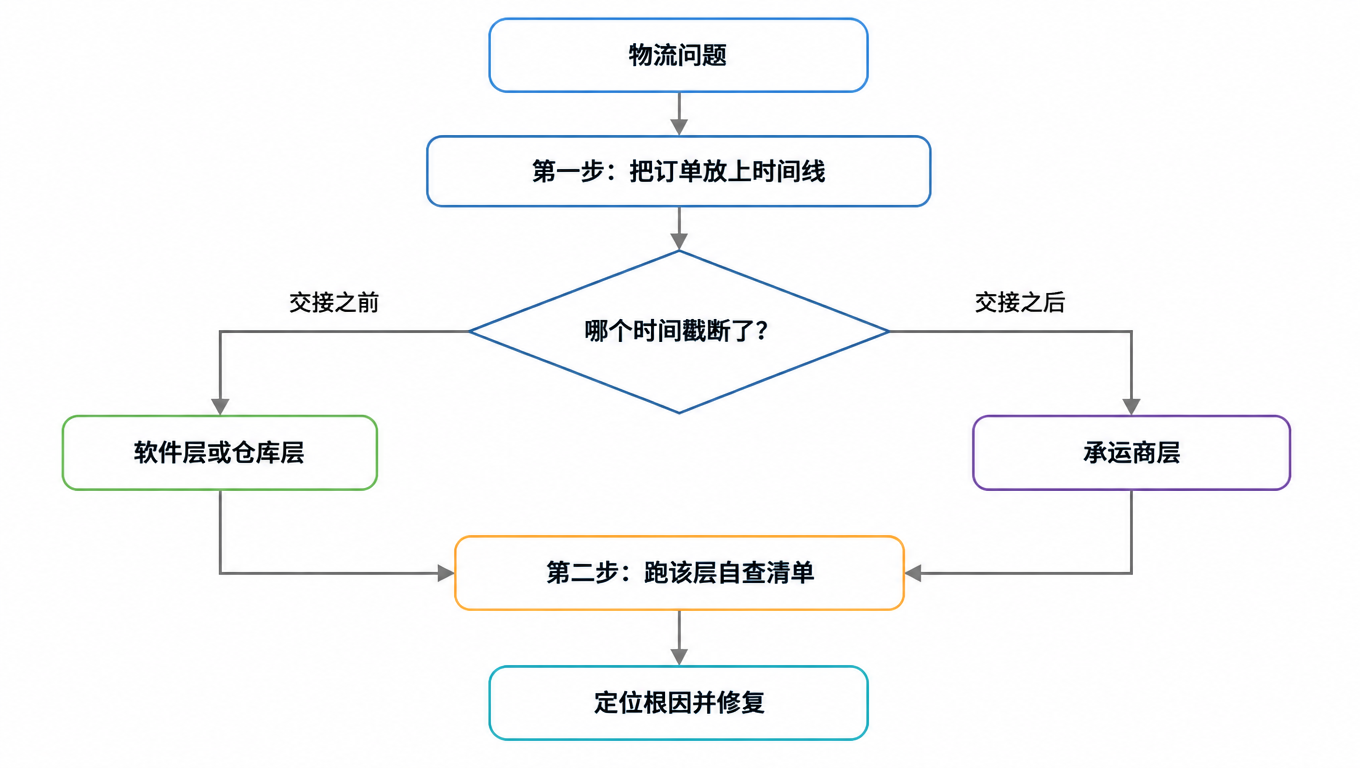
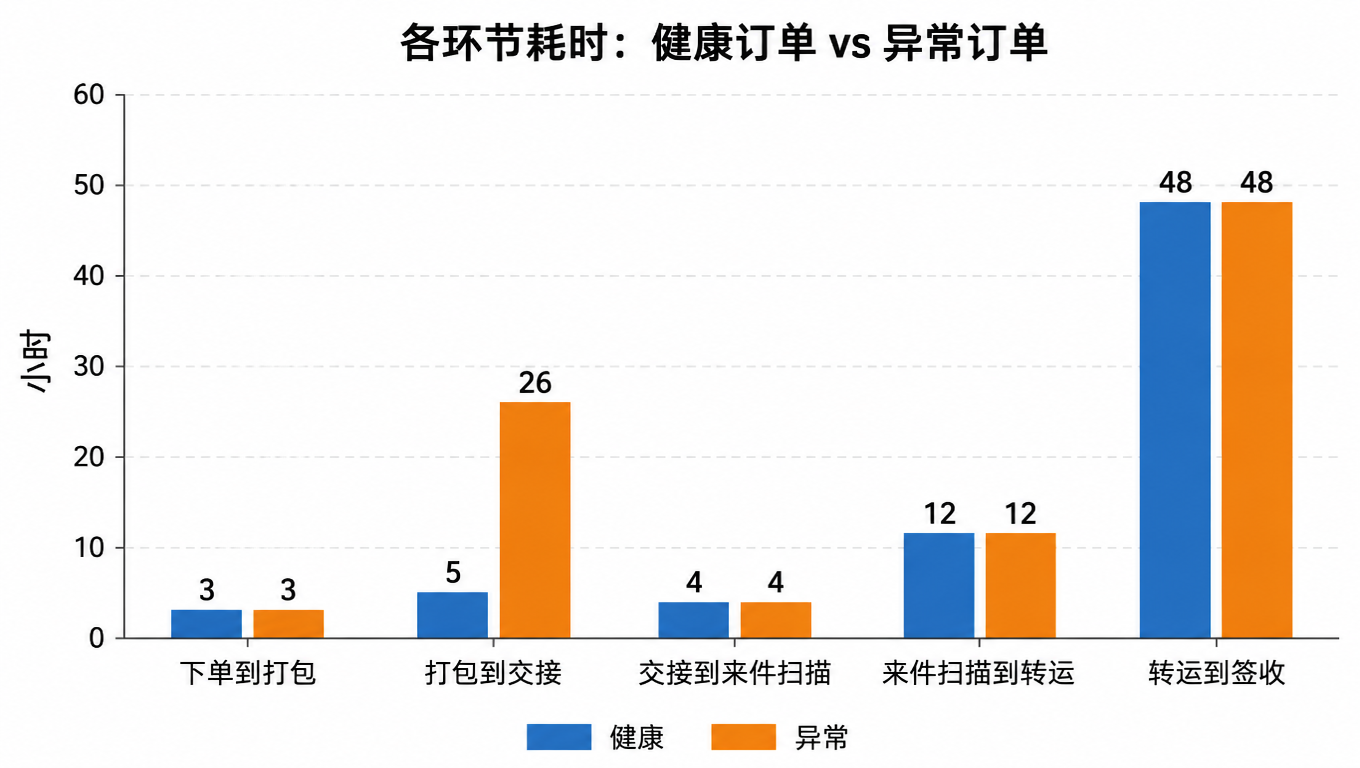
物流问题被误诊的第一个原因是甩锅三角。客户看到包裹迟到,怪店铺;店铺看着追踪页显示包裹「已在承运商手里」,怪承运商;承运商查自己的扫描记录,看到取件来晚了或者面单生成错了,怪仓库或软件。每一方都有干净的数据证明自己这一步没问题,每一方都有把手指向外的动机,因为没人想让退款从自己的利润里出。The first reason shipping problems get misdiagnosed is the blame triangle. The customer sees a late package and blames the store. The store looks at the tracking page, sees the package "with carrier," and blames the carrier. The carrier checks its own scans, sees a pickup that happened late or a label that was generated wrong, and blames the warehouse or the software. Every party has clean data showing its own step was fine, and every party has an incentive to point outward, because nobody wants the refund to come out of their margin.
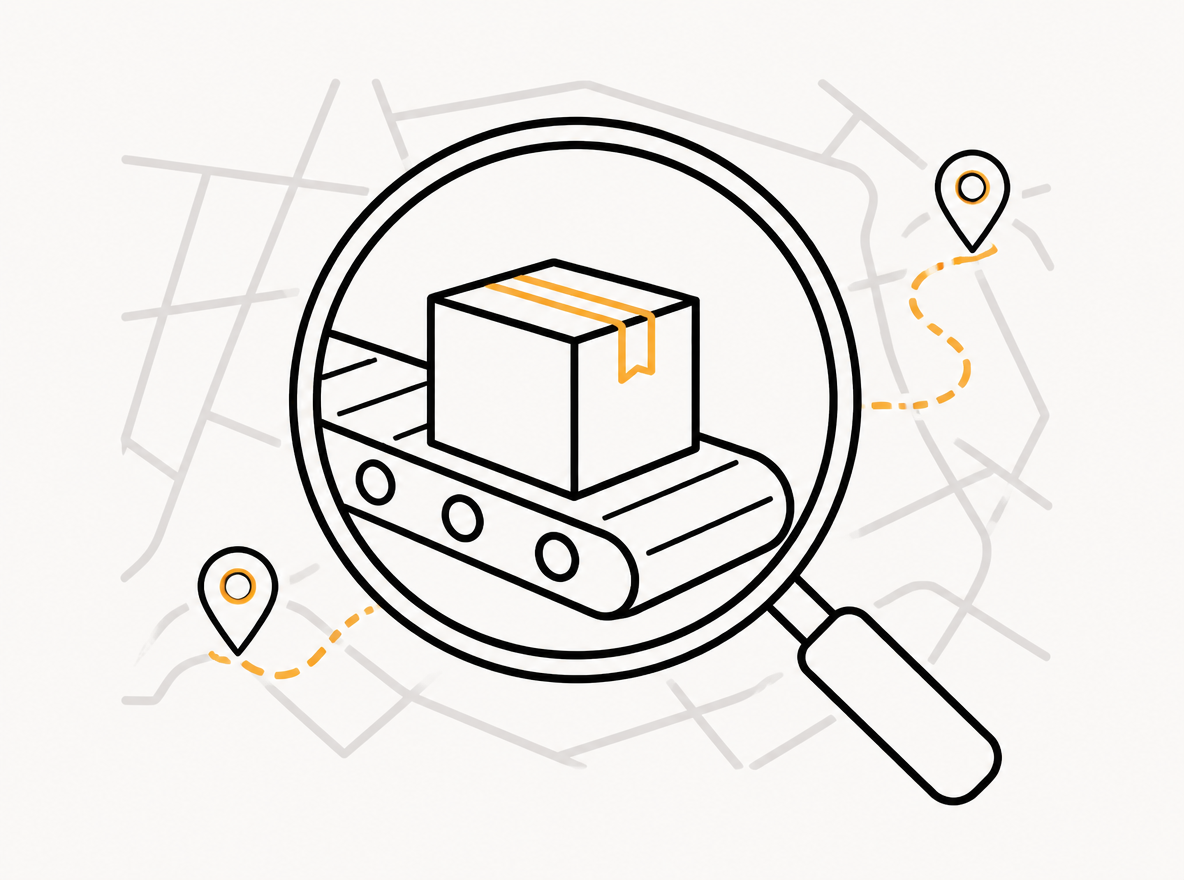
第二个原因是那套经典打法:退款、道歉、怪承运商、等下一个事故、再来一遍。退款保住了这一单的客户,但根因没动,下周同一个故障还会重演。这套打法永远修不好任何东西,因为它从不定位断点,只是为症状买单然后继续。The second reason is the classic playbook: refund the customer, apologize, blame the carrier, wait for the next incident, repeat. A refund keeps the customer for this one order, but the root cause is untouched, so the same failure resurfaces next week. The playbook never fixes anything because it never locates the breakpoint; it just pays for the symptom and moves on.
误诊的成本会快速复利。每一起事故都等于一笔退款,加上分摊在邮件、在线聊天和升级流程上的客服工时。一部分受影响的客户会留下差评,或者干脆流失。对一个月发几千单的品牌来说,2% 的迟到率就是每周几十起事故,每一起都要把同一个甩锅三角重新吵一遍。更糟的是,误诊会拖延真正的修复:一个软件改一行配置就能解决、一天就能修完的问题,会悄悄跑上好几个月。The cost of misdiagnosis compounds quickly. Each incident costs a refund plus support hours spread across email, chat, and escalation. A percentage of affected customers leave a bad review or churn entirely. For a brand doing a few thousand orders a month, a late rate of even 2 percent means dozens of incidents every week, and each one re-litigates the same blame triangle. Worse, misdiagnosis delays the real fix: a problem that a one-day software configuration change would solve quietly runs for months.
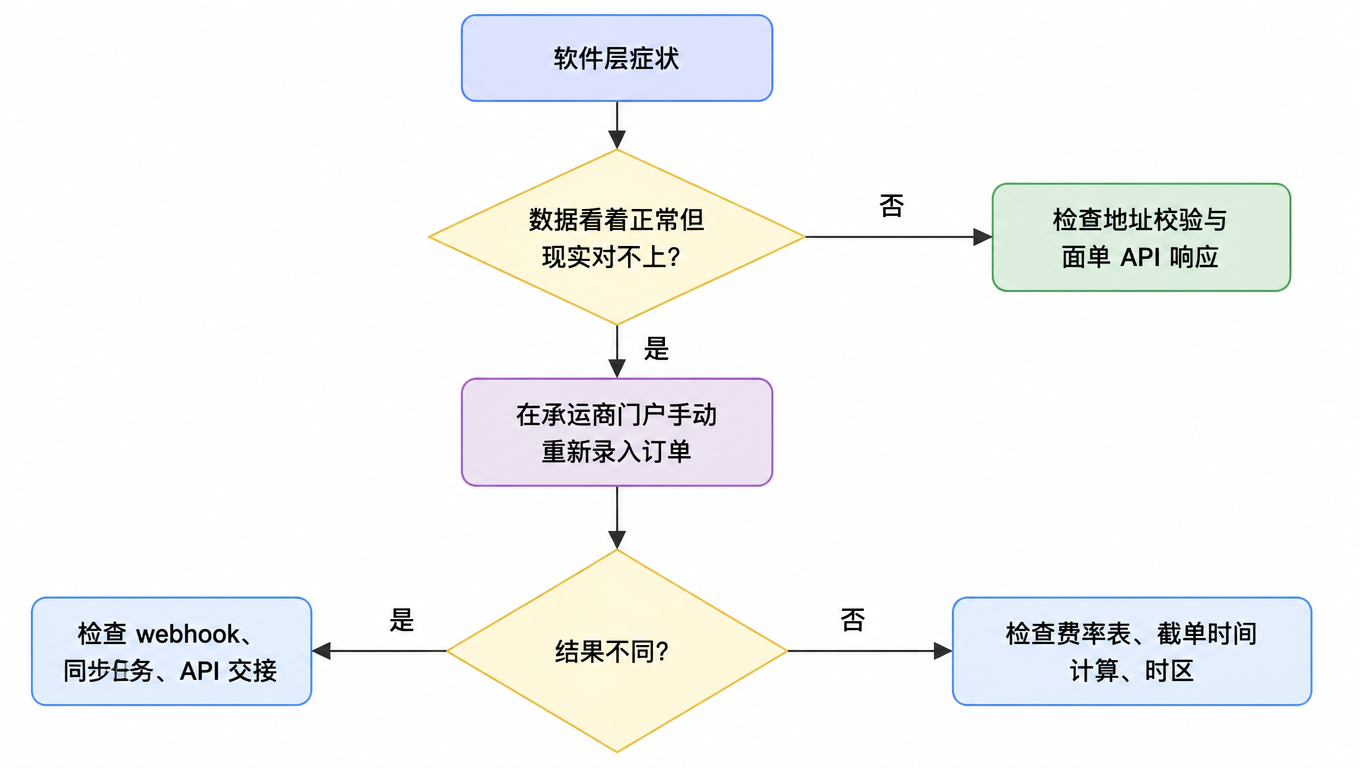
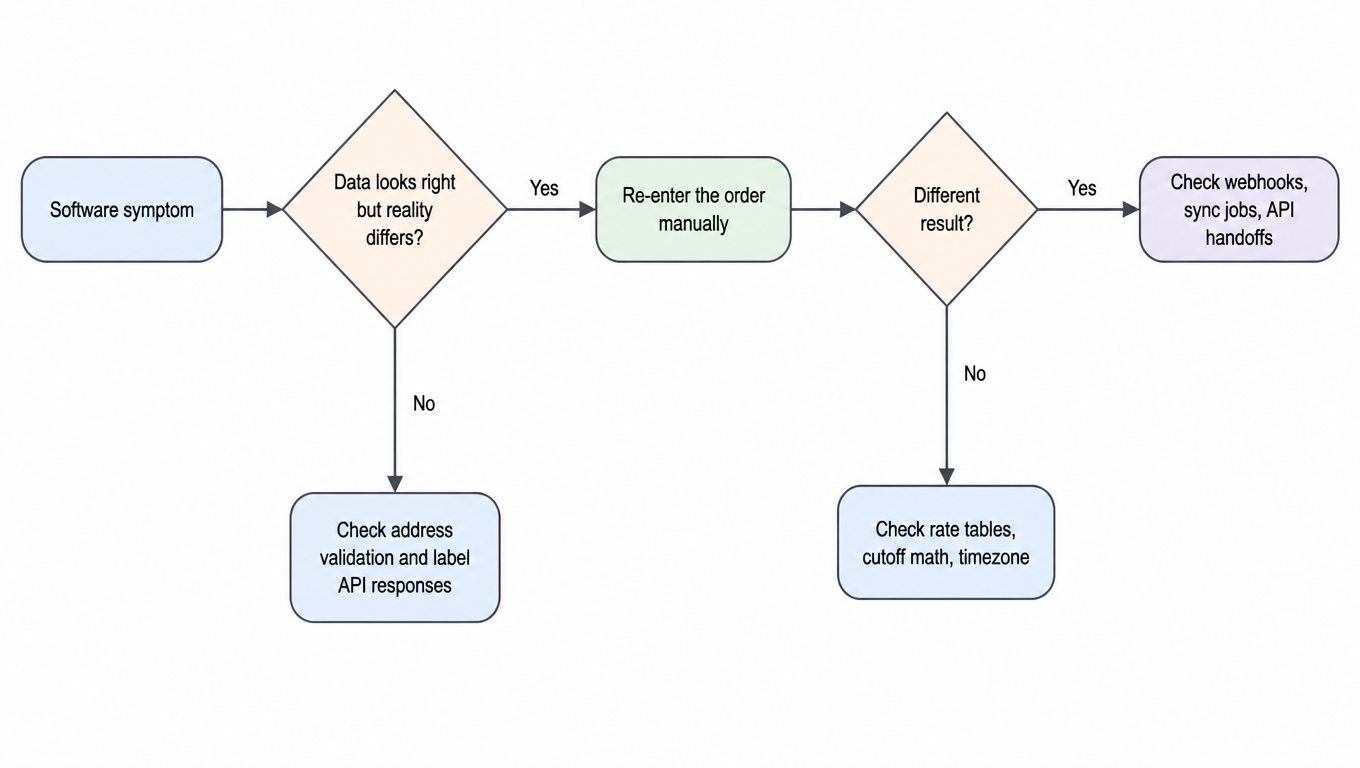
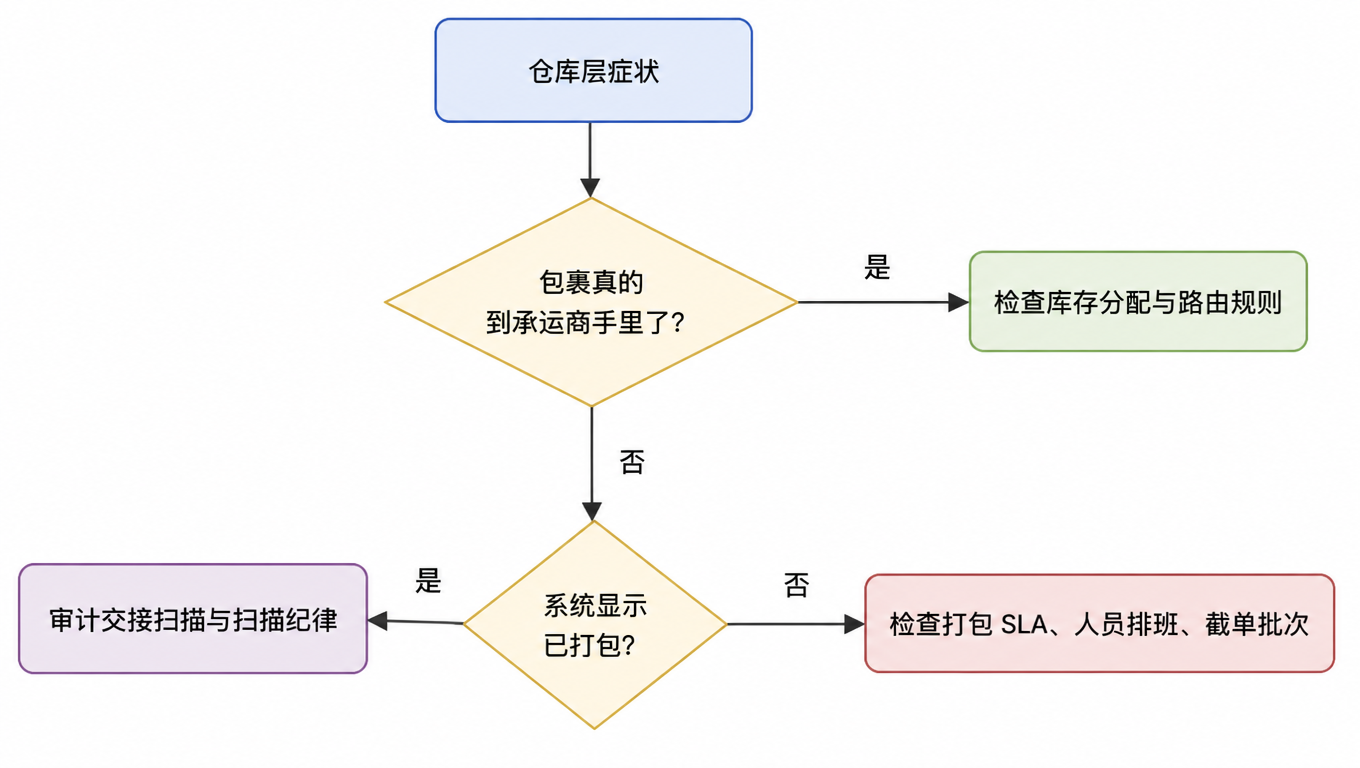
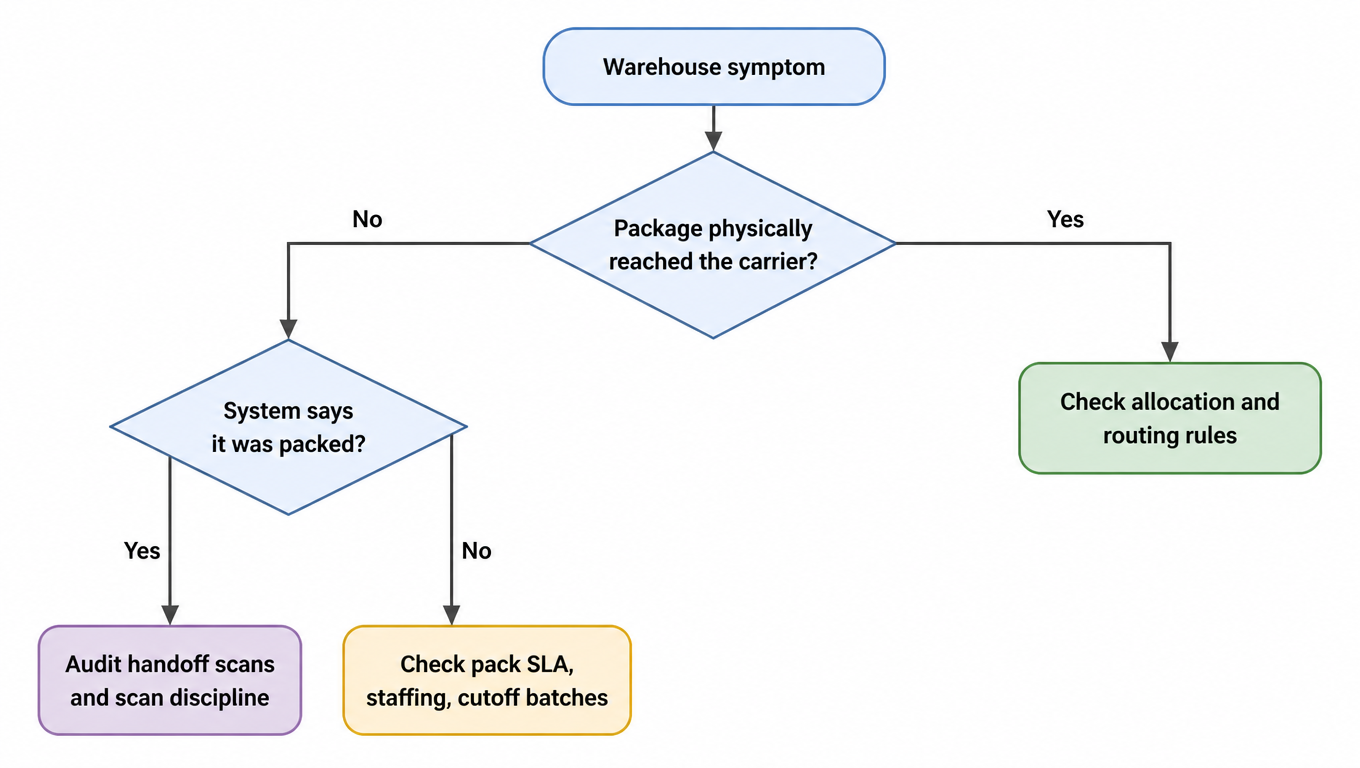
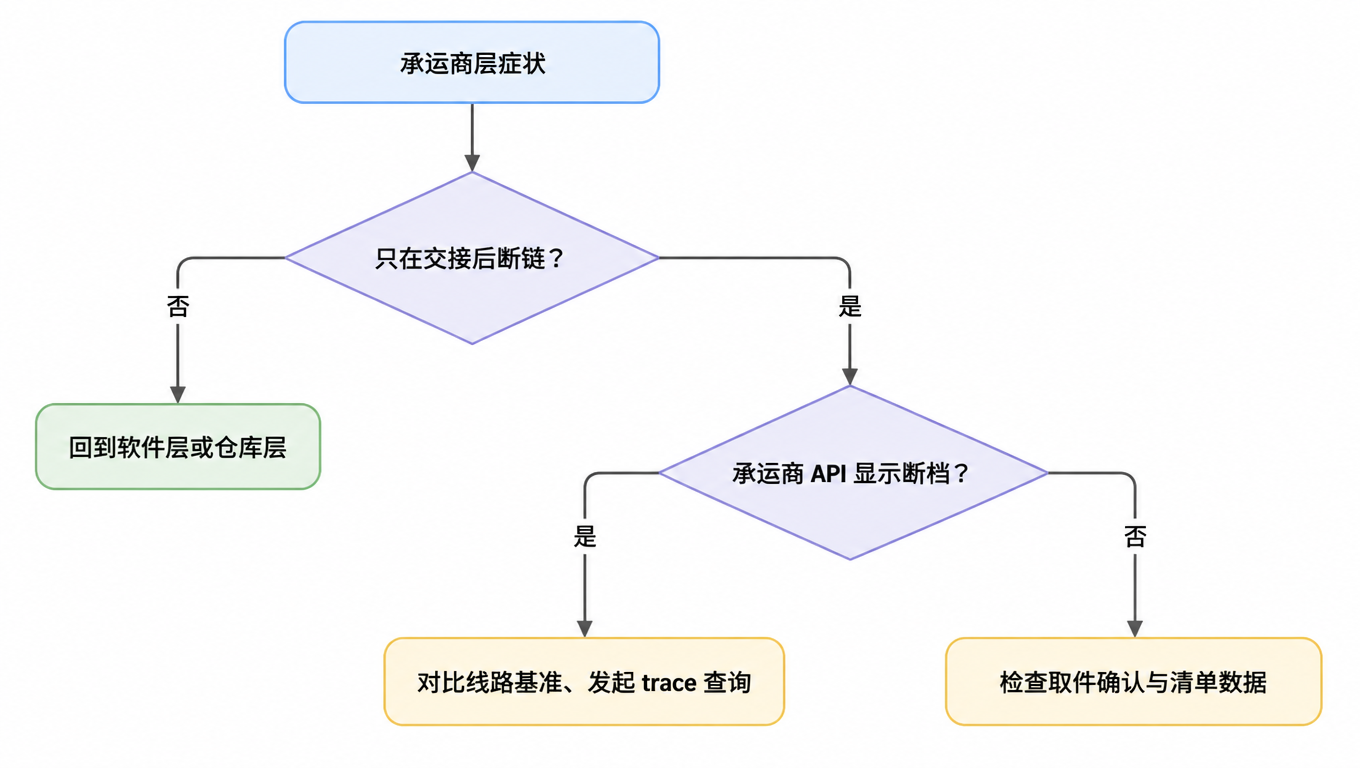
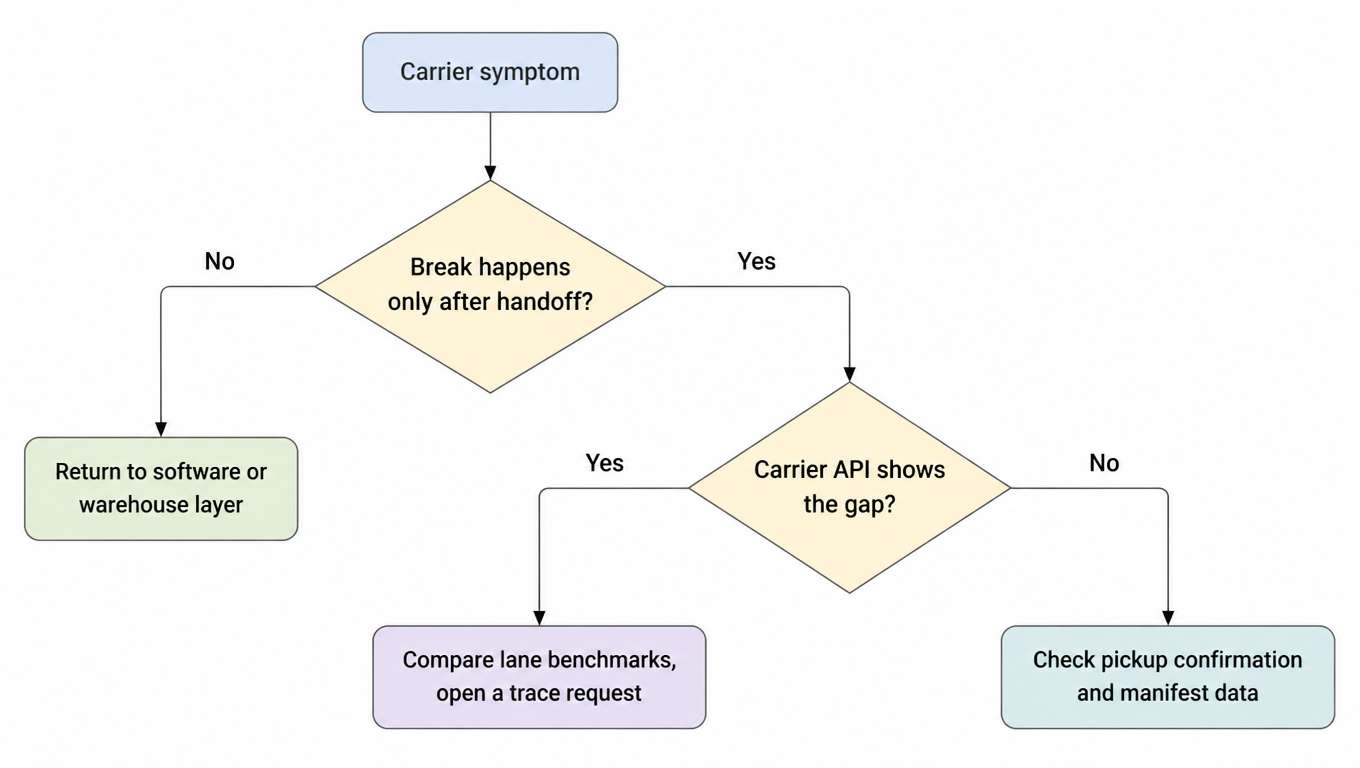
这也是「干脆换承运商」经常失灵的原因。如果断点在软件层,比如一个会把追踪号弄坏的面单生成器,或者在仓库层,比如一个跳过扫描的打包团队,那么新承运商继承的是同一套坏输入。追踪页换了个颜色,问题一个没少。你只是换了箱子上的标签,没有修那台造标签的机器。This is also why "just switch carriers" usually fails. If the breakpoint lives in the software layer, like a label generator that mangles tracking numbers, or in the warehouse, like a pack team that skips scans, the new carrier inherits the exact same broken inputs. The tracking page changes color, the problem does not. You only fixed the label on the box, not the machine that makes the label.