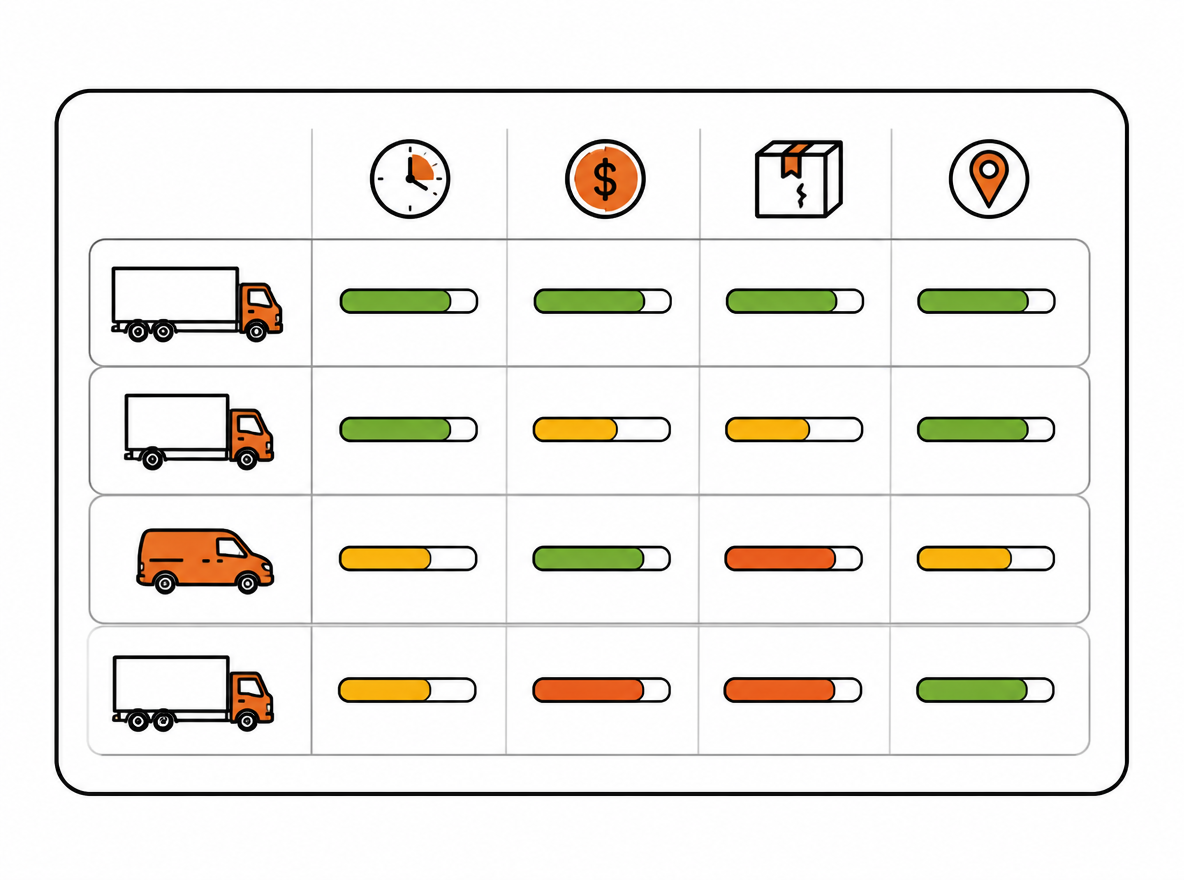
为什么你的承运商组合需要计分卡Why Your Carrier Mix Needs a Scorecard
一旦你同时跑多家承运商,每一单都面临选择问题:这一票给谁?默认答案全都错,而且错误会叠加。按牌价费率选,忽略了附加费、燃油调整和住宅派送费落到发票上之后承运商实际收的钱;按习惯选,忽略了承运商在变:线路重组、枢纽拥堵、区域承运商被收购后服务质量漂移;按投诉量选,忽略了投诉晚到好几周,那时钱已经花了,顾客已经留了一星差评。The moment you run more than one carrier, you have a selection problem on every single order. Which one gets this shipment? The default answers are all wrong in ways that compound. Picking by sticker rate ignores what the carrier actually charges once surcharges, fuel adjustments, and residential delivery fees land on the invoice. Picking by habit ignores that carriers change: routes get reorganized, hubs get congested, regional players get acquired and their service quality drifts. Picking by complaint volume ignores that complaints arrive weeks late, after the money is already spent and the customer already left a one-star review.
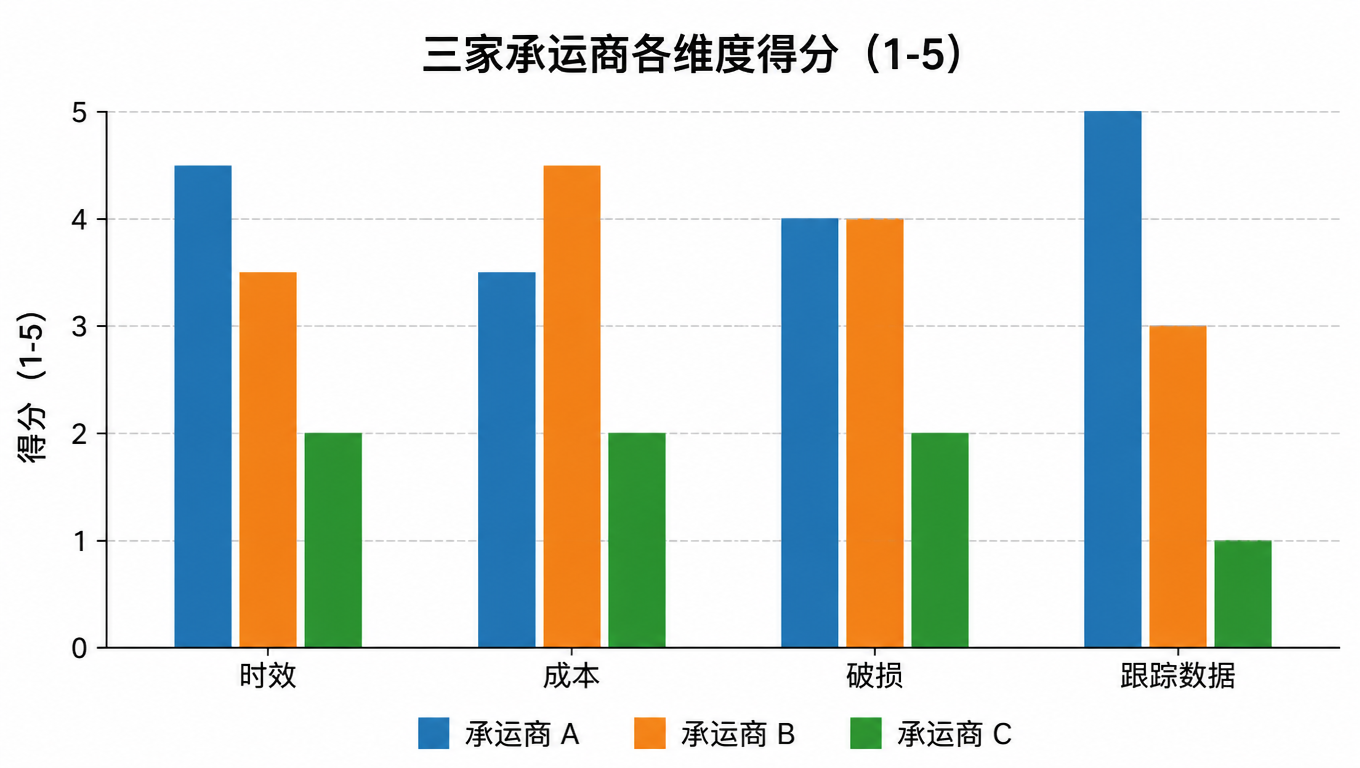
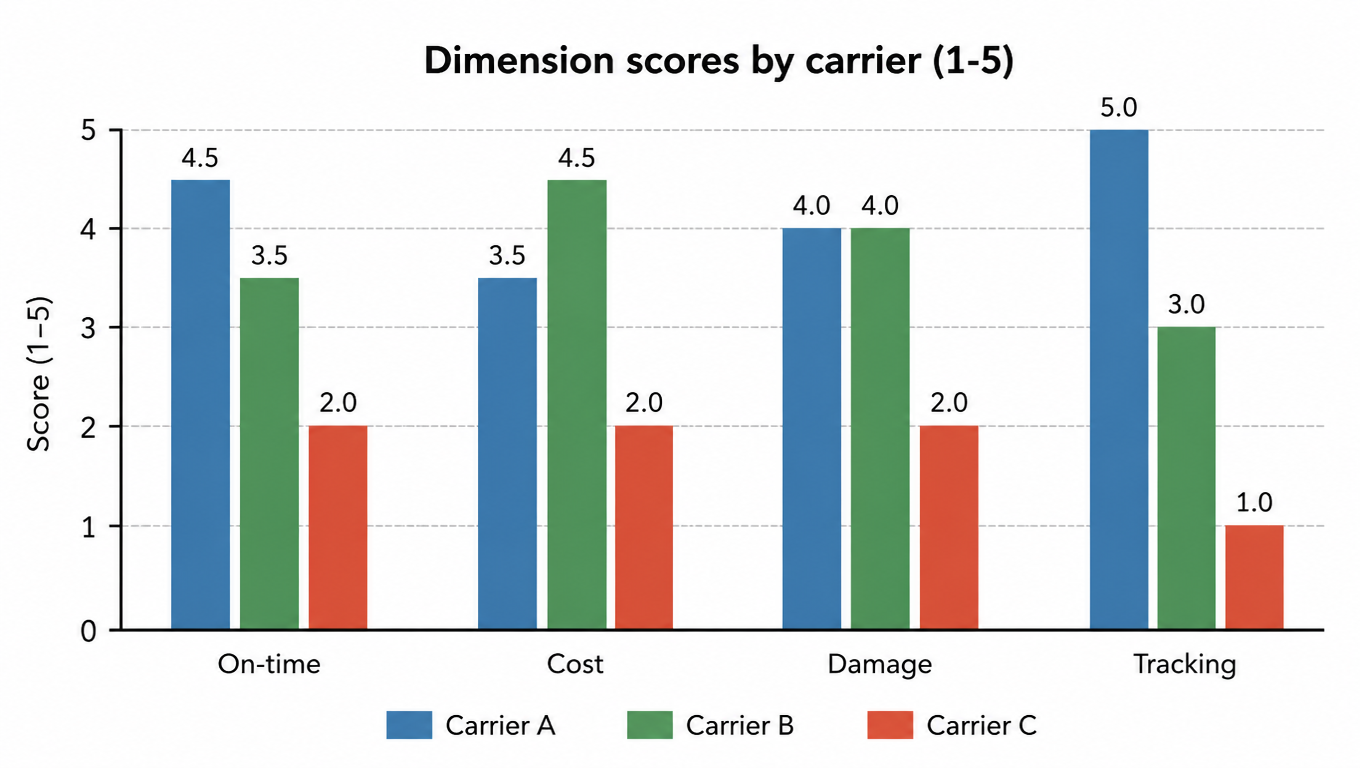
便宜承运商的真实成本在发票之外。预算型承运商每件 5.50 美元,看起来比全国性承运商的 7.00 美元划算得多,直到你把附加费、破损理赔、触发平台 chargeback 的晚到件,以及回答「我的包裹在哪」客服工单花掉的时间全加上。本文案例里,线路上最便宜的承运商恰恰是时效最差、破损最差、跟踪数据也最差的一家。牌价把这些全藏起来了。The real cost of the cheap carrier shows up off the invoice. The budget carrier at $5.50 a parcel looks like a steal next to $7.00 from the national player, until you add the surcharges, the claims for damaged goods, the late deliveries that trigger chargebacks from your marketplace, and the support hours spent answering "where is my package" tickets. On the worked example in this article, the cheapest carrier on the lane is also the worst on time, the worst on damage, and the worst on tracking data. The sticker price hides all of it.
计分卡不存在的第二个、也更隐蔽的原因是数据分散。准时扫描在承运商 A 的门户里,发票在承运商 B 的,理赔在第三家,而实际付了多少钱的真相躺在财务系统里。大多数组织里没有任何一个人同时打开这四个视图,所以没人看得见这笔权衡。计分卡把数据逼进同一张表,这是任何值得做的决策的前提。There is a second, less obvious reason scorecards fail to exist: the data is scattered. On-time scans live in one carrier portal, invoices in another, claims in a third, and the truth about what you actually paid sits in the finance system. No single person in most organizations has all four views open at once, so nobody can see the trade-off. The scorecard forces the data into one table, which is the precondition for any decision worth making.
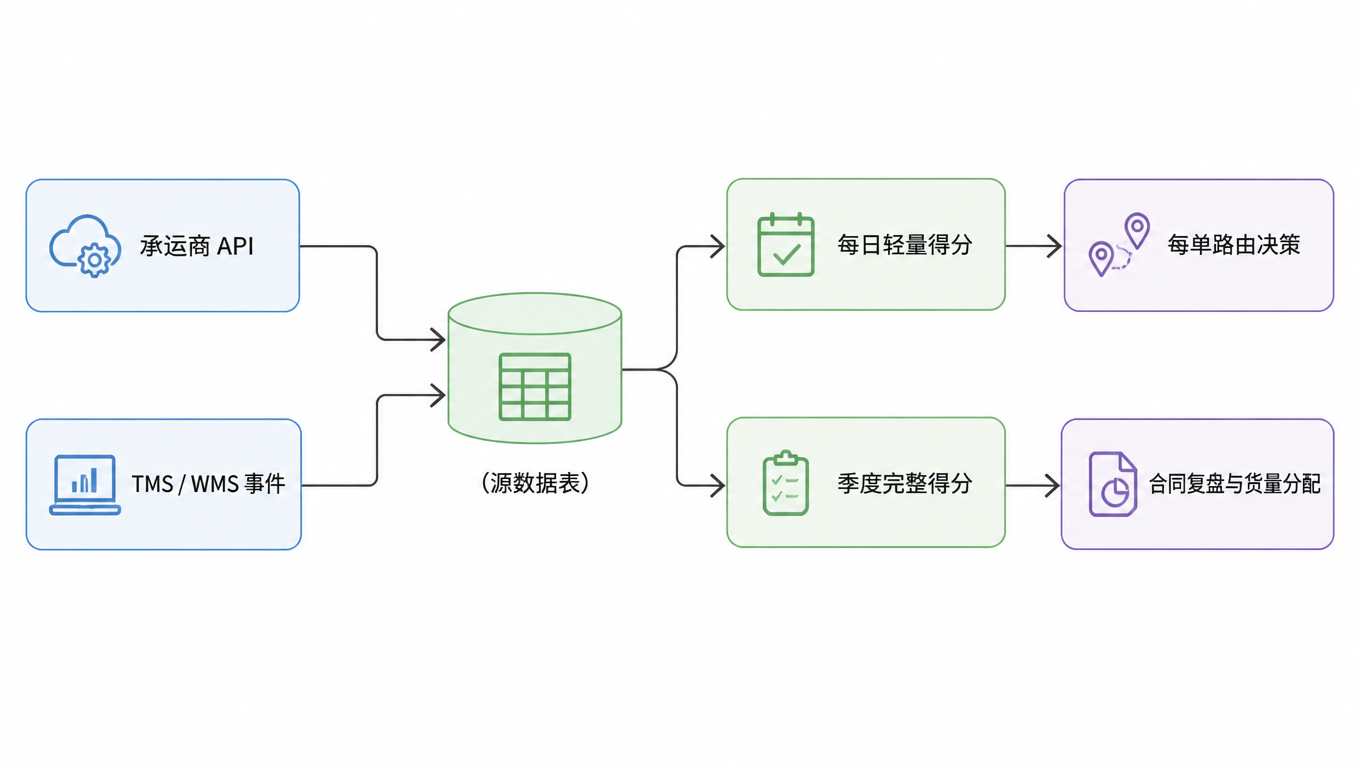
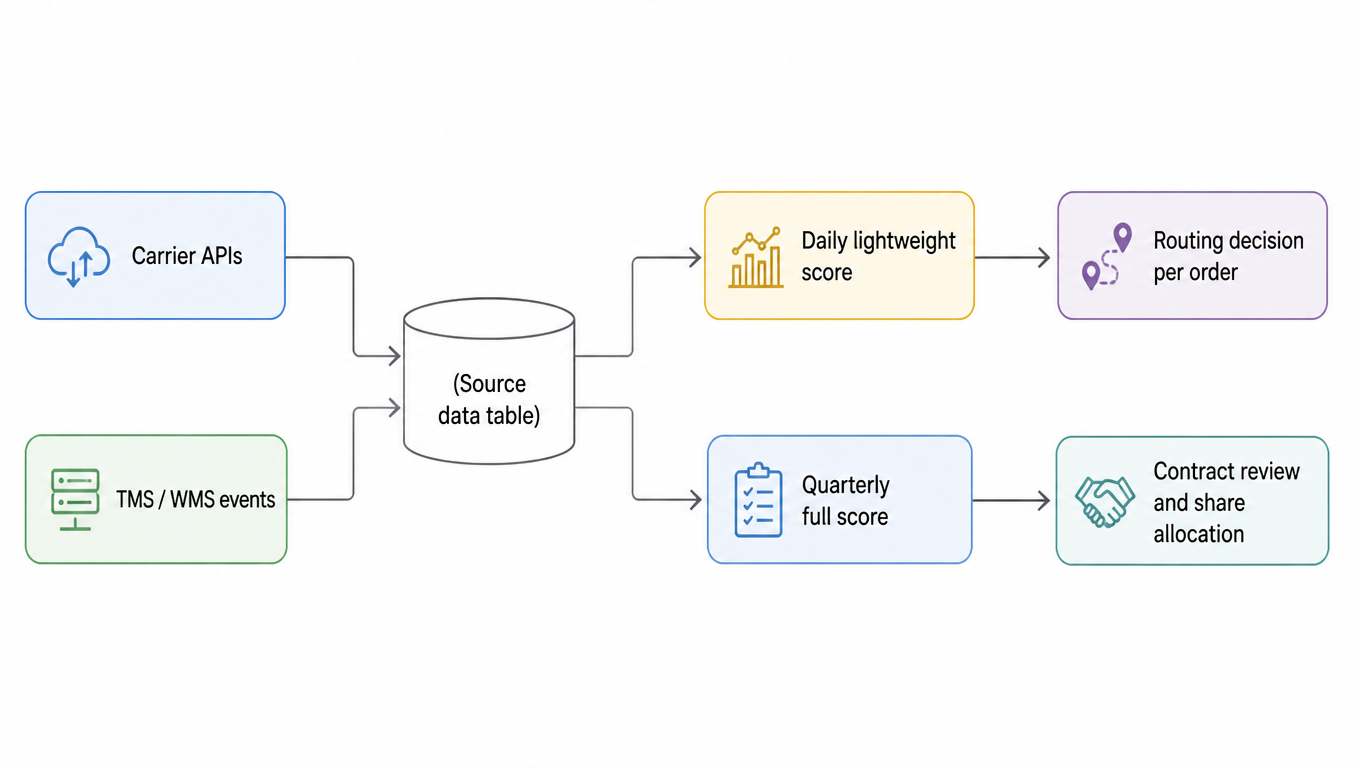
这一切都不需要昂贵的软件。承运商通过 API 发来的数据和 TMS 事件就能喂满一张源数据表,一张搭得好的电子表格就能完成打分。难的不是工具,而是决定衡量什么、分数意味着什么。这正是本文其余部分要讲的。None of this requires expensive software. The data your carriers already send you through APIs and your TMS events can feed a single source table, and a well-built spreadsheet can do the scoring. The hard part is not the tooling, it is deciding what to measure and what the score means. That is what the rest of this article covers.