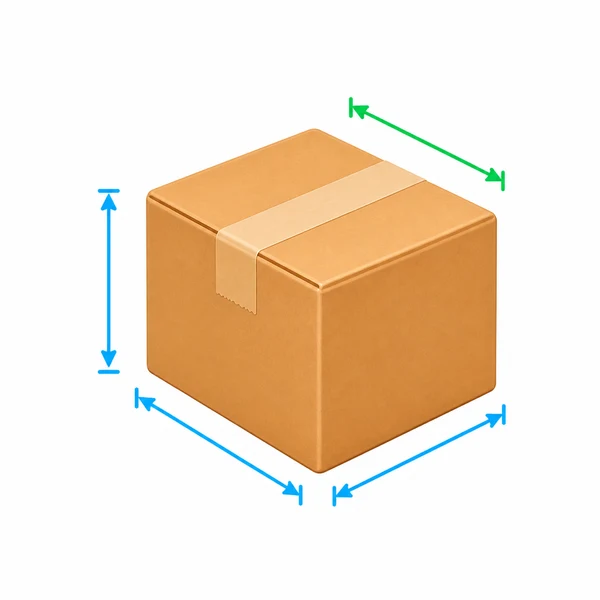
1 Package Visualization
The box updates dynamically based on your current length, width, and height inputs.
Use our DIM (Dimensional Weight) calculator to compare actual weight vs. dimensional weight and find the billable weight for better shipping rate decisions.
The box updates dynamically based on your current length, width, and height inputs.
DIM Factor Used: 139
Dimensional weight (also called volumetric weight) estimates shipping weight from parcel size. Carriers use it to account for vehicle and sortation space, not only physical mass.
For eCommerce and 3PL teams, this means oversized but lightweight parcels can be billed higher than expected if package dimensions are not optimized.
Billable weight is the greater of actual weight and DIM weight. If package volume creates a larger DIM value, carriers usually bill using DIM weight.
Billable Weight Rule The greater of actual weight and dimensional weight
Carrier and service-level DIM factors can differ from common industry approximations.
View DIM Factor TableThese are common industry approximations. Actual DIM factors may differ by carrier and service.
| DIM Factor (in³/lb) | DIM Factor (cm³/kg) |
|---|---|
| 139 | 5000 |
| 166 | 6000 |
| 194 | 7000 |
| 220 | 8000 |
| 250 | 9000 |
Carriers usually bill by the greater of actual weight and dimensional weight, so parcel size directly affects billable weight.
| Formula mode | Calculation |
|---|---|
| inch / lb | DIM Weight (lb) = (Length × Width × Height) ÷ DIM Factor |
| cm / kg | DIM Weight (kg) = (Length × Width × Height) ÷ DIM Factor |
Actual weight is the physical scale weight, while DIM weight is calculated from package size. Billing usually uses the larger value.
Billable weight is max(actual weight, dimensional weight). Use this value as your primary cost reference.
Dimensional weight is a billing method based on parcel volume instead of actual weight.
Use Length × Width × Height ÷ DIM Factor, then compare against actual weight in carrier billing rules.
Actual weight is measured on a scale, while dimensional weight is calculated from package dimensions and DIM factor. Billing usually uses the higher value.
Carriers usually compare actual and dimensional weight, then charge based on the higher value.
Start with common presets, then confirm the exact DIM factor from your carrier and service policy.
139 is a widely used reference factor in U.S. parcel services, but the final DIM factor depends on carrier and service type.
Yes. In most logistics contexts, dimensional weight and volumetric weight refer to the same billing concept.
No. DIM factors can vary by carrier, service, destination, and contract terms, so confirm with the active billing policy.
Submit your shipment info and our DIM experts will give a more precise rate comparison recommendation.