物流指南Logistics Guide

履约业务如何差异化:细分、数据与技术栈打法How to Differentiate Your Fulfillment Business

走进任何三家履约中心,你听到的报价几乎一样:仓储、拣货打包、发货、退换货,价格都很有竞争力。菜单相同,因为运营相同。这篇文章讲的是怎么跳出这个死循环:不靠更长的服务菜单,而靠更清晰的定位,选一个细分市场、用数据和技术栈挖护城河、用增值服务把客户留住,成为少数人的首选,而不是所有人的备选。Walk into any three fulfillment centers and you will hear the same pitch: warehousing, pick and pack, shipping, returns, all at competitive rates. The menu is identical because the operations are identical. This article is about escaping that trap, not with a longer service menu but with sharper positioning: pick a niche, build a moat with data and your tech stack, keep customers with value-add services, and become the first choice for a few instead of the fallback for everyone.

一张现代履约中心的宽幅照片:拣货员与传送带运送包裹,天窗洒下温暖的日光
差异化不是做得更多,而是为少数人做到最好Differentiation is not doing more; it is being the best for a few

为什么履约行业变成红海:价格战的死循环Why Fulfillment Has Become a Red Ocean: The Price-War Trap

走进任何三家履约中心,你听到的报价几乎一样:仓储、拣货打包、发货、退换货,价格都很有竞争力。菜单相同,因为运营相同。靠价格竞争的中型 3PL,卖的是和隔壁仓库一模一样的商品,只是更便宜。Walk into any three fulfillment centers and you will hear the same pitch: warehousing, pick and pack, shipping, returns, all at competitive rates. The menu is identical because the operations are identical. A mid-size 3PL that competes on price is offering the exact same commodity as the warehouse down the street, only cheaper.

价格战是个难以挣脱的陷阱。毛利被压缩,你就没有余力投资那些能让你与众不同的工具;更低的报价一到客户邮箱,客户就流失。增长来自比下一个仓库报价更低,而每一单胜利都让毛利更薄。与此同时,头部玩家靠规模不断摊薄成本,优势越拉越大。Price competition creates a trap that is hard to escape. Margins compress, so you cannot invest in the tools that would make you different. Customers churn the moment a cheaper quote lands in their inbox. Growth comes from outbidding the next warehouse, and every win makes your margins a little thinner. Meanwhile the biggest players keep adding scale, and their cost advantage only widens.

出路不是更长的服务菜单,而是更清晰地定义「你为谁服务、解决什么问题」。履约行业的差异化很少来自「做更多事」,而是成为某一类客户的理所当然之选,对其他所有人则明确说不。The way out is not a longer service menu. It is a sharper definition of who you serve and what problem you solve for them. Differentiation in fulfillment is rarely about doing more things. It is about being the obvious choice for one type of customer, and quietly wrong for everyone else.
第一步:选细分市场,别做「万能 3PL」Step 1: Pick a Niche, Don't Be a Generalist 3PL

万能定位是隐形杀手。「我们什么都能做」听起来是优点,行为上却是缺点:客户听到的是「你们什么都做不好」,而且他们通常是对的。当所有选项看起来一样,买家就按价格决策,而价格恰恰是你无法持续赢的战场。The generalist positioning is a silent killer. "We can do everything" sounds like a strength and behaves like a weakness: prospects hear "we are not the best at anything," and they are right. When every option looks the same, buyers decide on price, and price is the one game you cannot win sustainably.

细分市场把战场缩小到你真正能赢的地方。三个维度值得考虑。品类:大件、美妆、保健品、服饰,各有各的包装、合规和承运商讲究。客户类型:DTC 品牌、平台卖家、跨境卖家,订单结构和服务预期各不相同。地理:一张比全国承运商更快触达本地的区域网络,把「离得近」变成可衡量的优势。A niche narrows the field to where you can actually win. Three dimensions are worth considering. Category specialization: large and bulky goods, beauty, supplements, apparel, each with its own packaging, compliance, and carrier quirks. Customer type: DTC brands, marketplace sellers, or cross-border sellers, each with different order profiles and service expectations. Geography: a regional network that delivers faster into your own backyard than national carriers can, which turns proximity into a measurable advantage.

判断一个细分是否值得做,问三个问题。痛点够不够尖锐,买家是不是在主动找专家?市场够不够大,能支撑你增长几年而不是几个月?这个细分里的客户愿不愿意为专业付溢价,还是仍然只看价格?三个都答「是」,就是值得拿下的细分;任何一个答「否」,继续找。The test for any niche is the same three questions. Is the pain acute enough that buyers are actively looking for a specialist? Is the market big enough to support your growth for years, not months? Are customers in it willing to pay a premium for expertise, or will they still shop on price? If all three answers are yes, you have found a segment worth owning. If any answer is no, keep looking.

第二步:把运营数据变成卖点Step 2: Turn Operational Data Into a Selling Point

没人因为你的仓库有 20 万平方英尺就选你。客户看的是结果:准时送达、低破损、库存准确、出问题时响应快。面积是投入,准时率是产出,而产出才是你客户的客户能感受到的东西。Nobody ever chose a 3PL because the warehouse was 200,000 square feet. Customers choose on outcomes: on-time delivery, low damage, accurate inventory, fast response when something goes wrong. Square footage is an input. On-time rate is an output, and outputs are what your customers' customers feel.

用三种具体方式让数据说话。把 SLA 承诺写进报价单,而不是埋在合同里。给每个客户开一个实时看板,库存、在途订单、发货进度自己就能看,不用发邮件问你。每月发一份结构化报告,把原始数字翻译成他们生意的故事:发了什么、哪些准时到了、什么坏了、你修了什么。Lead with data in three concrete ways. Publish SLA commitments in your quote packet, not buried in the contract. Give every client a real-time dashboard where they can see inventory, open orders, and shipments without emailing you. Ship a structured monthly report that turns raw numbers into the story of their business: what shipped, what arrived on time, what broke, what you fixed.

然后把数字变成价值故事。「准时率 98.7%」是一个统计数字;「十单里有九单在客户预期的时间内到达,剩下那一单我们在变成投诉之前就标记出来」是一个留下来的理由。同一个指标,讲成客户的结果,就是把大宗报价变成溢价关系的关键。Then convert the number into a value story. "98.7% on-time rate" is a statistic. "Nine out of ten orders arrive when your customer expects them, and we flag the other one before it becomes a complaint" is a reason to stay. The same metric, told as the customer's outcome, is what turns a commodity bid into a premium relationship.

第三步:用技术栈挖护城河Step 3: Build a Moat With Your Tech Stack

中型 3PL 能挖的最深的护城河是集成的广度:从一个系统能对接的每一个承运商、能以合约费率触达的每一个区域、当一家承运商掉链子时能切过去的每一条尾程网络。客户买的不是「我们用软件」,而是那个结果:运费更低、派送选项更多、服务故障更少、不被单一承运商绑架。The deepest moat a mid-size 3PL can dig is breadth of integration. Every carrier you can talk to from one system, every region you can reach at negotiated contract rates, every last-mile network you can switch to when one carrier disappoints. The customer does not buy "we use software." They buy the outcome: cheaper shipping, more delivery options, fewer service failures, and no lock-in to a single carrier's whims.

第二层是客户门户。实时可见性既是运营差异,也是体验差异。客户自己在门户里查库存、审批订单、拉报表,就消除了履约关系里最常见的摩擦:等答案。控制感加透明度,让客户感觉自己是伙伴,而不只是被服务。The second layer is the client portal. Real-time visibility is an experience difference as much as an operational one. A portal where clients check inventory, approve orders, and pull reports themselves removes the most common friction in a fulfillment relationship: waiting for answers. Control plus transparency is what makes a client feel partnered instead of served.

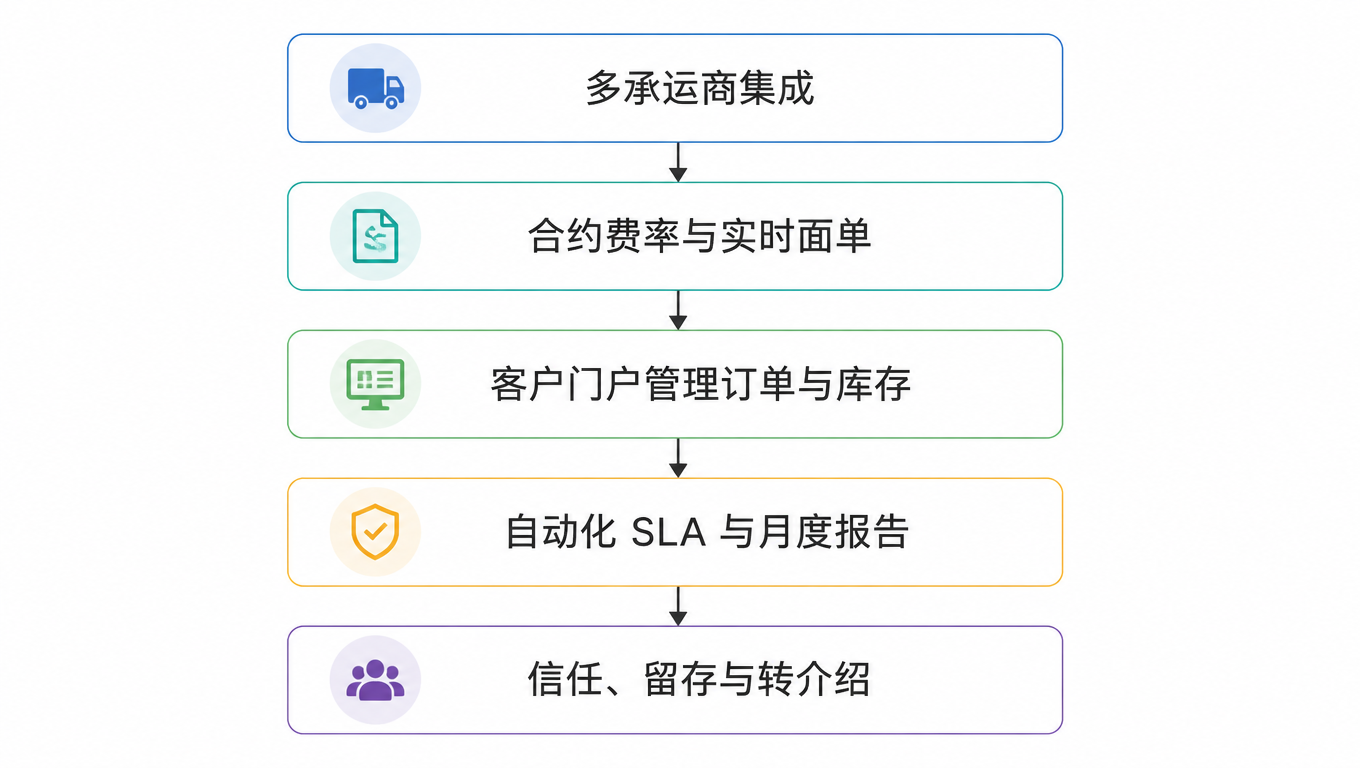
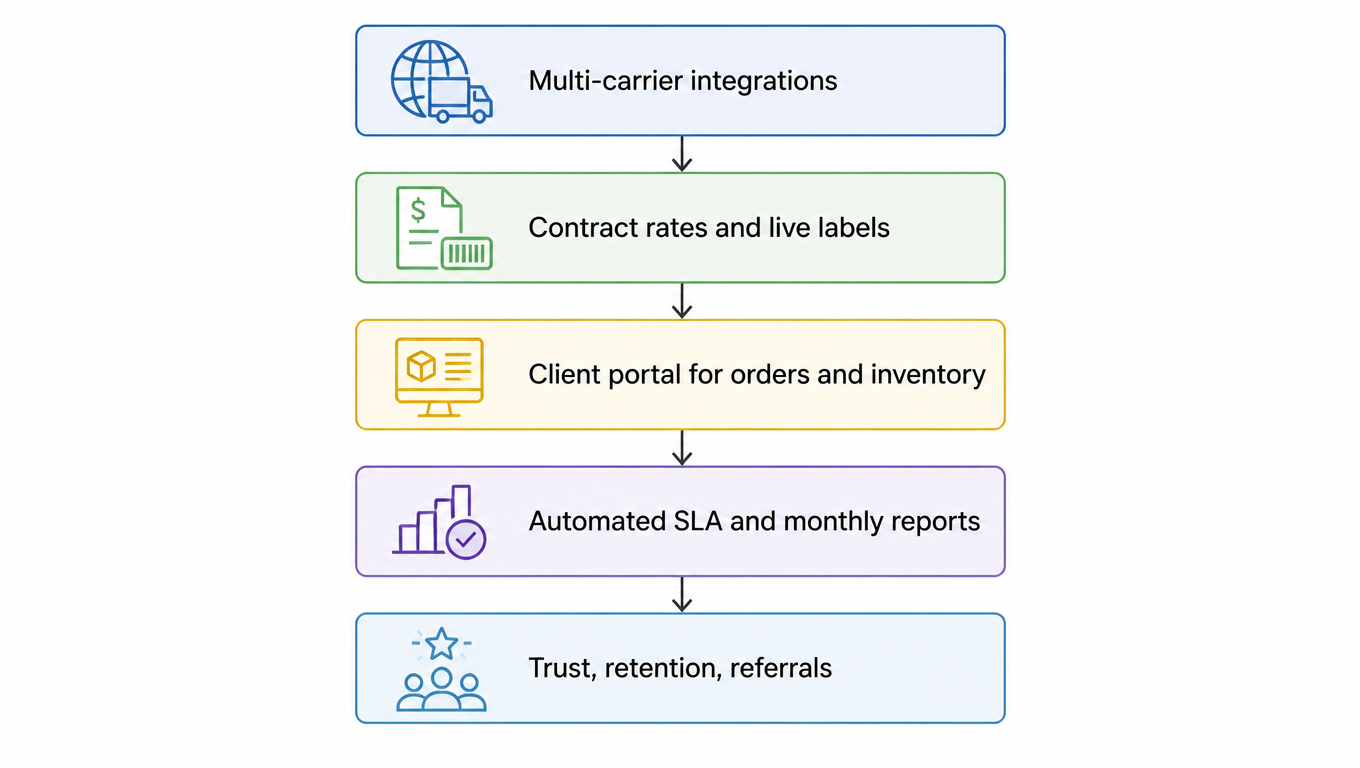
流程图:多承运商集成到合约费率与实时面单,到客户门户管理订单与库存,到自动化 SLA 与月度报告,最终带来信任、留存与转介绍Flowchart: multi-carrier integrations lead to contract rates and live labels, to a client portal for orders and inventory, to automated SLAs and monthly reports, and finally to trust, retention, and referrals
技术栈如何一层层通向信任与留存How the tech stack builds toward trust and retention

自建还是外购,对大多数中型运营商来说答案很清楚。自建集成层需要一支工程师团队、数年的维护,还要不断追赶承运商 API 的变化。买成熟的技术接进自己的运营,更快到达护城河,也让你专注在客户真正付费的那件事上:服务。只自建你的细分市场确实买不到的东西。The buy-versus-build question resolves itself for most mid-size operators. Building an integration layer in-house takes a team of engineers, years of maintenance, and constant catch-up as carriers change their APIs. Buying proven, integrated technology and plugging it into your operations gets you to the moat faster and keeps you focused on the one thing customers actually pay for: service. Build only what your niche genuinely cannot buy.

第四步:增值服务与「粘性设计」Step 4: Value-Add Services and "Stickiness by Design"

最赚钱的服务,往往是竞争对手从没报过价的服务。订阅盒的定制包装、礼品卡与贺卡、季节性活动的组套(kitting)、多渠道库存同步,让一个品牌用同一份库存同时卖自己的官网、亚马逊和 TikTok。每一件都为特定细分解决真实问题,毛利也比单纯的拣货打包好看。The most profitable services are the ones your competitors never quoted. Custom packaging for subscription boxes, gift messaging and inserts, kitting for seasonal launches, multi-channel inventory sync so a brand can sell on its site, Amazon, and TikTok from one pool of stock. Each one solves a real problem for a specific niche, and each one carries better margins than a pick and pack.

设计这些服务时只盯一个目标:抬高客户的切换成本。当品牌的包装、订阅、组套流程和库存同步全部接进你的系统,搬到更便宜的仓库意味着全部重来。这不是你要强行执行的锁定,而只是「方便」的算术,也是「每个季度被换掉的供应商」和「每年被续约的伙伴」之间的区别。Design these services with one goal in mind: raise the customer's switching cost. When a brand's packaging, subscriptions, kitting flows, and inventory sync are all wired into your systems, moving to a cheaper warehouse means rebuilding all of it. That is not a lock-in you have to enforce. It is simply the arithmetic of convenience, and it is the difference between a vendor that gets replaced every quarter and a partner that gets renewed every year.

关系跟着服务一起变。通用型 3PL 卖的是交易:我们存、我们发、这是账单。专家型 3PL 卖的是运营伙伴关系:我们替你运营供应链里触达客户的那一段,并用它的表现来考核我们。一旦你为结果而不是动作负责,价格就不再是话题。The relationship shift follows the service shift. A generalist sells a transaction: we store, we ship, here is the invoice. A specialist sells an operating partnership: we run the part of your supply chain that touches your customers, and we are measured on how well it performs. Once you are accountable for outcomes instead of activities, price stops being the conversation.

落地:三步走行动计划Action Plan: A Three-Step Playbook

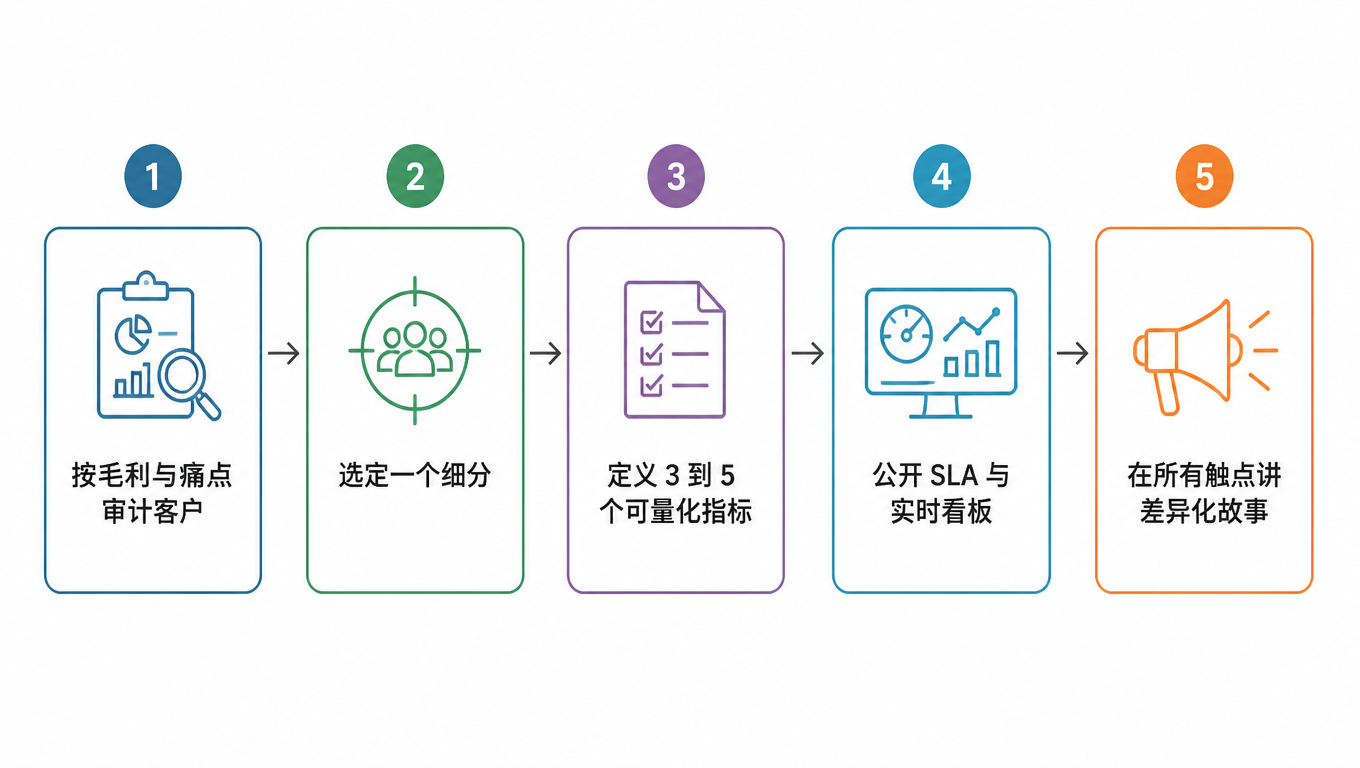
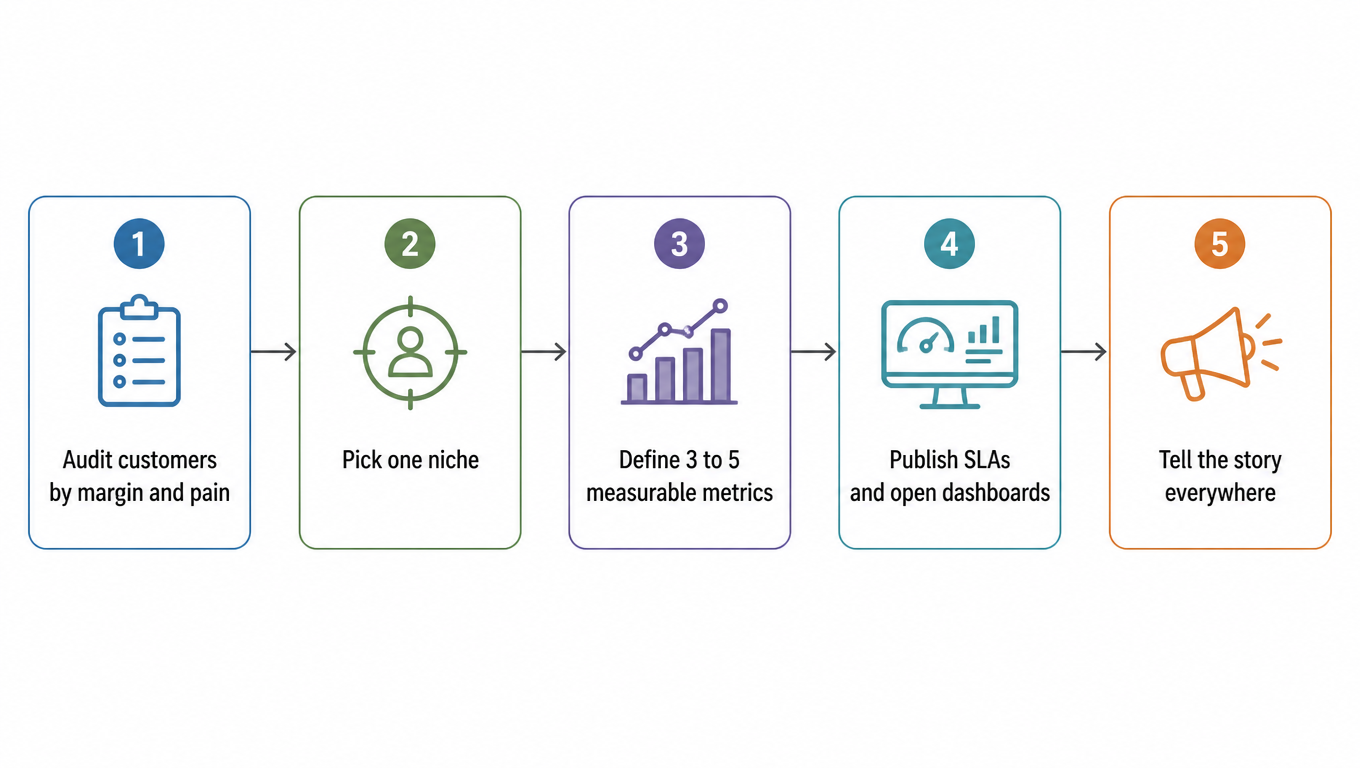
从审计开始,而不是从换招牌开始。把现有客户列出来,按毛利、流失风险、履约问题有多痛来分群。你通常会找到一个已经不成比例地赚钱或忠诚的客群,那就是藏在你眼皮底下的细分。选中它,更多是一个决定,而不是一次发现。Start with an audit, not a rebrand. List your current customers and segment them by margin, churn risk, and how painful their fulfillment problems are. You will usually find a cluster that is already disproportionately profitable or loyal. That cluster is your niche, hiding in plain sight, and picking it is mostly a decision, not a discovery.

流程图:按毛利与痛点审计客户,选定一个细分,定义 3 到 5 个可量化指标,公开 SLA 与实时看板,最后在所有触点讲差异化故事Flowchart: audit customers by margin and pain, pick one niche, define 3 to 5 measurable metrics, publish SLAs and open dashboards, then tell the story everywhere
三步走:审计、量化、讲出去Three steps: audit, quantify, tell the story

第二步,定义三到五个能证明你差异化的指标,并开始公开它们:准时率、库存准确率、破损率、响应时间、净留存。公开的 SLA 承诺逼你进步,也让销售有具体的东西可以捍卫。第三步,在所有客户能遇见你的地方讲这个故事:展示细分专业度的博客文章、量化客户成果的案例页、以及以指标而不是价格开头的报价单。Second, define three to five metrics that prove your differentiation, and start publishing them. On-time rate, inventory accuracy, damage rate, response time, net retention. Public SLA commitments force you to improve and give salespeople something concrete to defend. Third, tell the story everywhere a prospect meets you: blog posts that show your niche expertise, case study pages that quantify client outcomes, and a quote packet that leads with your metrics instead of your rates.

结论:差异化是持续动作,不是一次性定位Conclusion: Differentiation Is a Habit, Not a One-Time Positioning

市场模仿得很快。这个季度你发明的包装,明年就是入场券;你今天占下的细分,季末就会招来三个模仿者。把差异化当成一种习惯:重新审计你的细分、刷新你的指标、在你最好的客户开口问第二次之前,就加上他们下一个需要的服务。在红海里原地不动,就是下沉。Markets copy fast. The packaging you invented this quarter will be table stakes next year, and the niche you own today will attract three imitators before the season ends. Treat differentiation as a habit: re-audit your niche, refresh your metrics, and add the next service your best customers ask for before they ask twice. Standing still in a red ocean is how you sink.

选择成为少数人的首选,而不是所有人的备选。这句话就是全部战略。专家型服务商把市场里很窄的一块服务到极致,价格话题自然消失,这是任何降价都撼动不了的位置。Choose to be the first choice for a few, not the fallback for everyone. That sentence is the whole strategy. A specialist serves a narrow slice of the market so well that the price conversation disappears, and that is a position no amount of rate cutting can touch.

常见问题FAQ

三个测试题:痛点够不够尖锐、市场够不够大、客户愿不愿意为专业付溢价。维度可以从品类(大件、美妆、保健品)、客户类型(DTC 品牌、平台卖家、跨境卖家)和地理(区域网络)里选。先审计现有客户,那个「已经不成比例地赚钱或忠诚」的客群,就是你的细分。Three test questions: is the pain acute enough, is the market big enough, and will customers pay a premium for expertise? Pick a dimension from category (bulky goods, beauty, supplements), customer type (DTC brands, marketplace sellers, cross-border sellers), or geography (a regional network). Audit your existing customers first: the cluster that is already disproportionately profitable or loyal is your niche.
不需要。对多数中型 3PL,自建集成层意味着养一支工程师团队、数年的维护,还要不断追赶承运商 API 的变化。买成熟技术接进自己的运营,更快到达护城河,也让你专注在客户真正付费的服务上。只自建你的细分市场确实买不到的东西。No. For most mid-size operators, building an integration layer in-house means a team of engineers, years of maintenance, and constant catch-up as carriers change their APIs. Buying proven, integrated technology gets you to the moat faster and keeps you focused on the service customers actually pay for. Build only what your niche genuinely cannot buy.
公开承诺反而逼你进步:它给你一个必须达成的标准,也给销售一个具体的卖点。关键是选对指标(准时率、库存准确率、破损率、响应时间),用真实数据说话,并准备好 SLA 未达成时的补救流程。Publishing commitments forces you to improve and gives salespeople something concrete to defend. The key is picking the right metrics (on-time rate, inventory accuracy, damage rate, response time), backing them with real data, and having a remediation process ready when an SLA is missed.
别在价格上拼。大玩家靠规模摊薄成本,价格战你赢不了。把战场换到他们不容易覆盖的地方:细分行业的专业度、公开透明的数据、能抬高切换成本的增值服务。做少数人的首选,而不是所有人的备选。Don't fight on price. Big players win price wars through scale. Move the battle to ground they cannot easily cover: category expertise, transparent data, and value-add services that raise switching costs. Be the first choice for a few, not the fallback for everyone.
Get Rate Comparison
Get Rate Comparison