3PL 指南3PL Guide

履约中心如何帮客户降低小包裹运费How Fulfillment Centers Can Reduce Parcel Shipping Costs for Their Clients

2026 年,UPS 和 FedEx 连续第三年上调小包裹运费,USPS 又加了一笔临时涨幅。对中小品牌来说,运费账单涨得比销售额还快;对履约中心来说,把涨价原样转嫁给客户,正在变成流失客户的元凶。这篇文章讲一家典型中型 3PL 如何在 18 个月里完成转型:从"按价签收"变成"帮客户省钱的物流顾问"。In 2026, UPS and FedEx raised parcel rates for a third consecutive year, and the USPS piled a temporary increase on top. For small brands, shipping bills are growing faster than sales. For fulfillment centers, passing the increase straight through to clients is turning into a churn machine. This article follows a typical mid-size 3PL through an 18-month transformation: from taking rates as given to becoming the logistics advisor that shows up with a smaller bill.

全文给出五个可落地的省钱策略:多承运商比价、聚合议价、包装工程、分仓跳区、最后一公里重建。每个策略都讲清楚机制、数据和坑在哪里;后半部分讲怎么把这套能力变成销售话术和获客武器。所有数字来自 2026 年官方调价公告与行业基准,并以一家融合真实 3PL 做法的复合主角贯穿全文。The guide covers five strategies that actually cut client shipping bills: multi-carrier routing, aggregated pricing, packaging engineering, zone skipping, and last-mile rebuilds. Each one gets its mechanics, its numbers, and its traps. The second half shows how to turn the capability into a sales pitch and a customer-acquisition weapon. Every figure comes from 2026 rate announcements and industry benchmarks, told through a composite protagonist built from real 3PL practices.

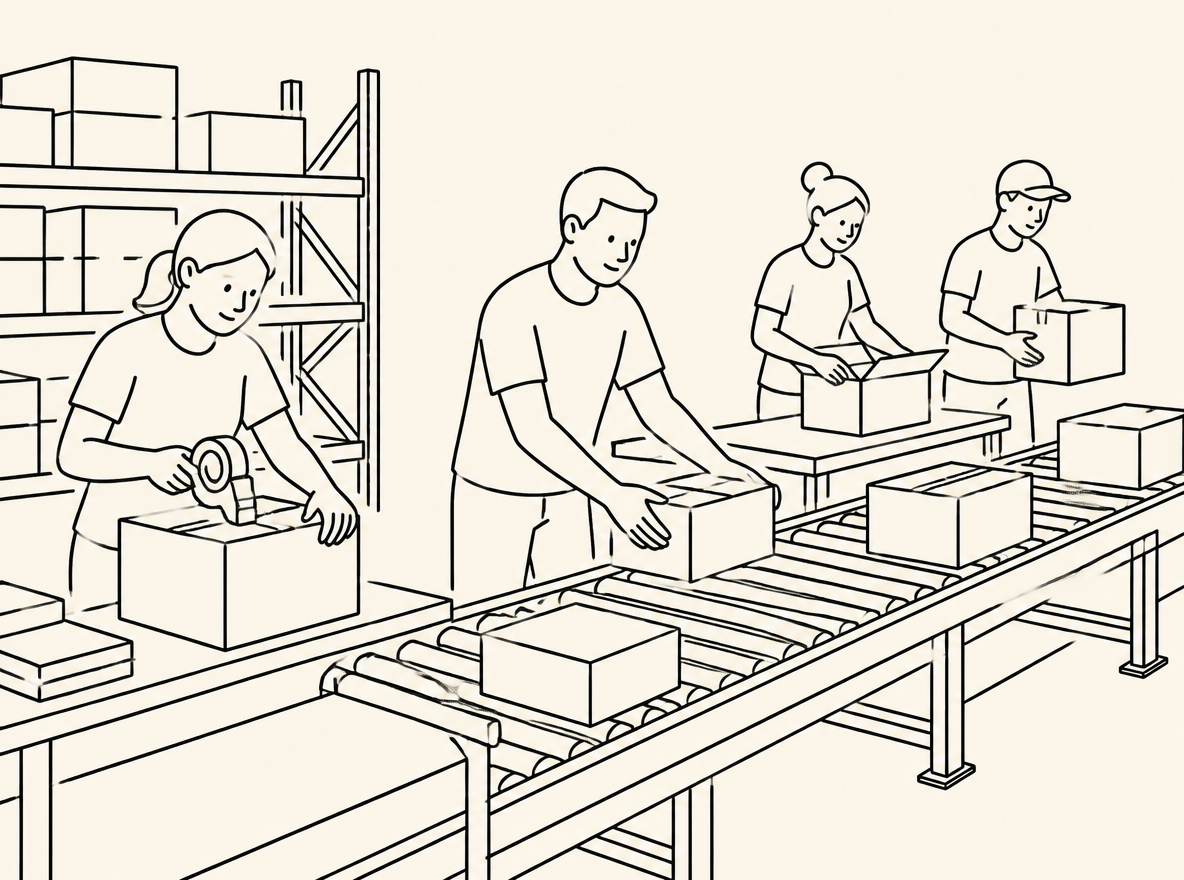
Packing stations and workers moving parcels on a conveyor inside a mid-size fulfillment center
发货区是运费成本真正发生的地方The shipping floor is where parcel costs actually happen

一、警报:客户带着账单走了1. The Wake-Up Call

2026 年 1 月,一家跟了 Heartland Fulfillment 四年的护肤品牌提出解约。这个品牌每月从 Heartland 位于俄亥俄州哥伦布附近的 6 万平方英尺仓库发出约 4000 个包裹,老板的话很直接:2026 年承运商涨价被原样转到了账单上,他们的落地运费一年涨了约 9%,自己的利润已经扛不住再涨一次。In January 2026, a skincare brand that had been with Heartland Fulfillment for four years gave its notice. The brand shipped about 4,000 parcels a month out of Heartland's 60,000-square-foot facility near Columbus, Ohio, and its owner was blunt: the 2026 carrier rate increase had been passed straight through to the invoice, their landed shipping cost was up roughly 9% year over year, and their own margins could not absorb another one.

Heartland 是中型第三方履约中心的复合形象,做法取材自 ShipBob、Verde、Cahoot 等真实服务商,本文所有数字都来自 2026 年官方调价公告和行业基准。这位品牌老板的抱怨并不少见。UPS 和 FedEx 连续第三年上调小包裹运费,平均涨幅 5.9%(UPS 于 12 月 22 日生效,FedEx 于 1 月 5 日生效)。[^1] USPS 又从 4 月 26 日起临时加收 8%,持续到 2027 年 1 月 17 日。[^2]Heartland is a composite of mid-size third-party fulfillment centers, built from the practices of real providers such as ShipBob, Verde, and Cahoot, and every figure in this article comes from 2026 rate announcements and industry benchmarks. The skincare owner's complaint was not unusual. UPS and FedEx raised parcel rates for a third consecutive year, with average increases of 5.9% (UPS effective December 22, FedEx effective January 5).[^1] The USPS added a temporary 8% increase starting April 26 that runs through January 17, 2027.[^2]
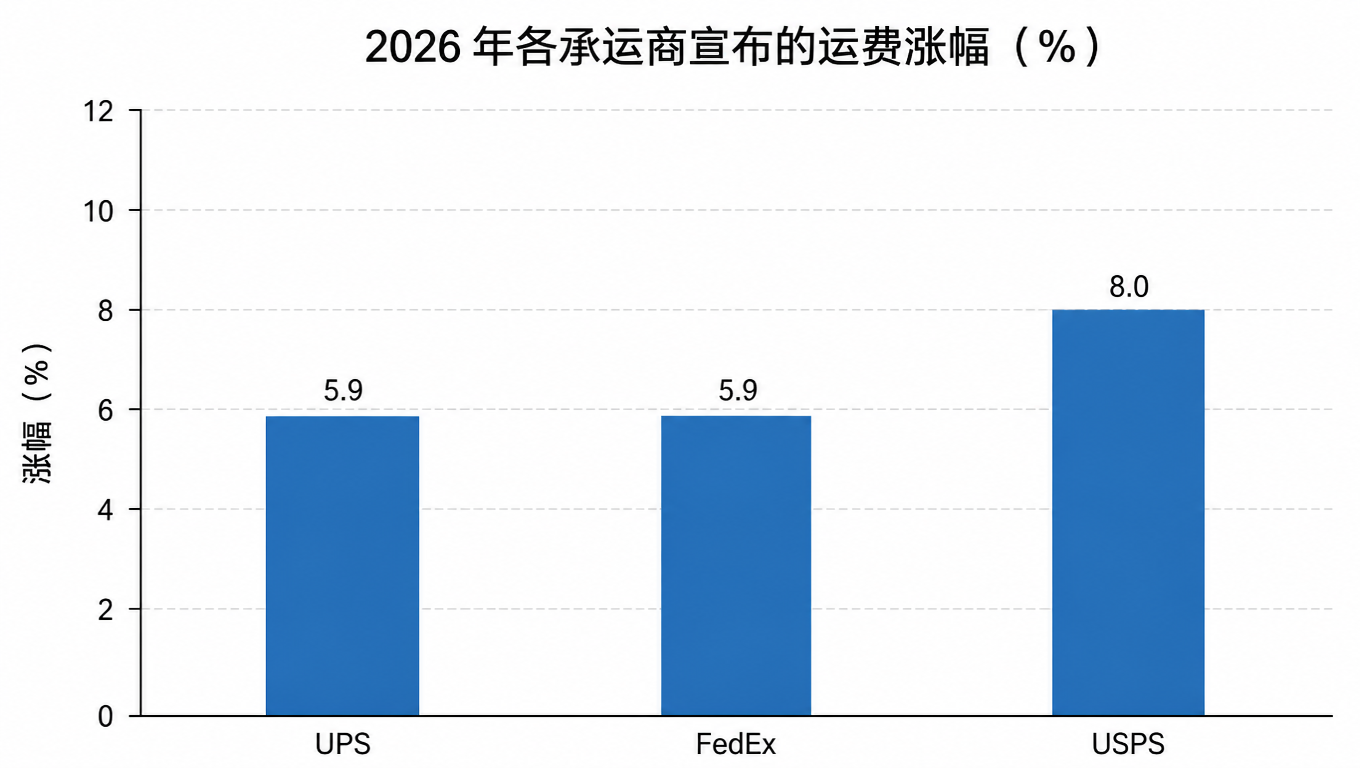
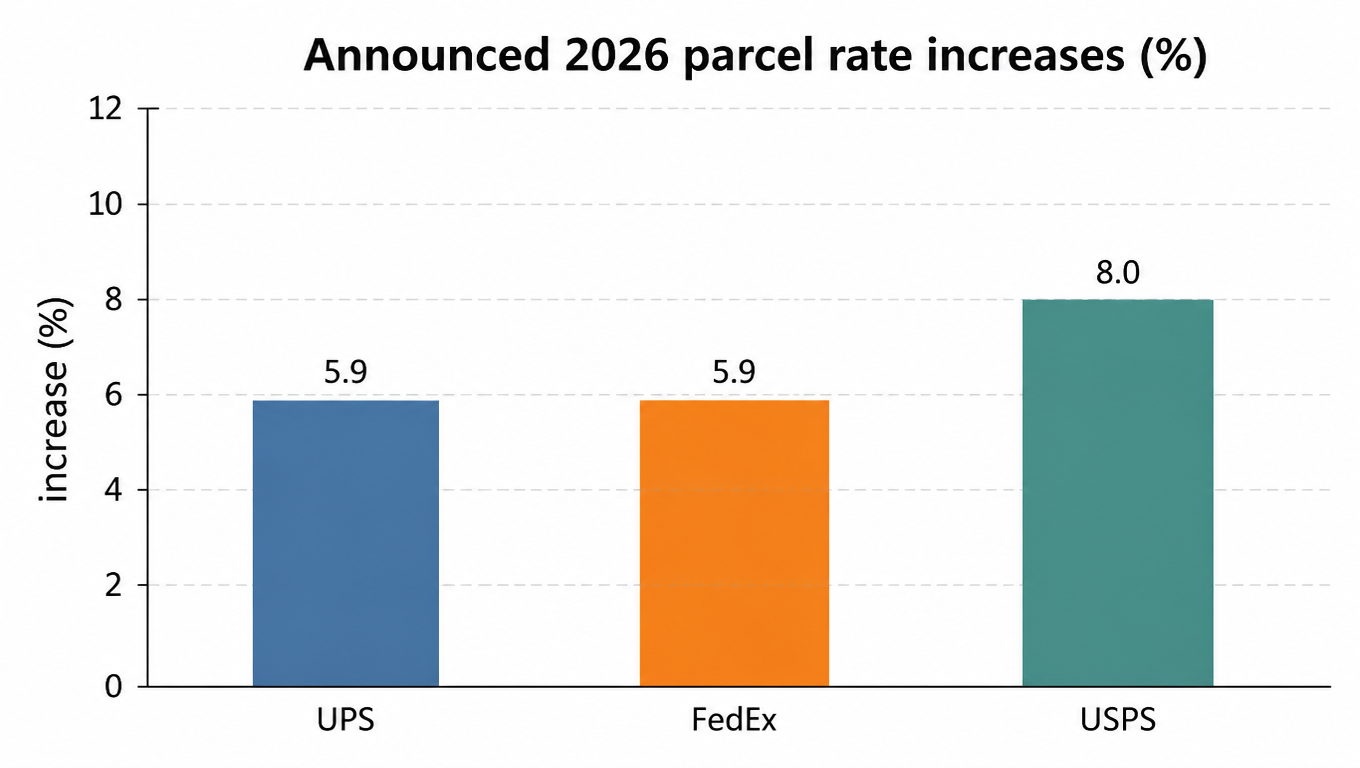
2026 年各承运商宣布的运费涨幅柱状图:UPS 5.9%、FedEx 5.9%、USPS 8%Bar chart of announced 2026 parcel rate increases: UPS 5.9%, FedEx 5.9%, USPS 8%
2026 年三大承运商集体涨价All three major carriers raised rates in 2026

多年来 Heartland 一直按旧模式运营:承运商涨价,它就给客户账单加同样的金额。中心并没有从涨价中获利,但也从来没有尝试去降低底层成本。在客户眼里,它变成了"涨价传声筒",那个把坏消息写进账单的公司。品牌最终转投了一家承诺"研究一下运费这一项"的竞争对手。For years Heartland had operated on the old model: when a carrier raised rates, it raised client invoices by the same amount. The center was not profiting from the increase, but it had also never tried to reduce the underlying cost. In the client's eyes it had become the rate increase messenger, the company that delivers bad news in a bill. The brand left for a competitor that promised to "look at the shipping line item."

这个承诺就是整篇文章。在这个环境下,能留住客户、能赢得新客户的履约中心,都把运费当成一项可以工程化改造的成本,而不是一张转嫁出去的账单。接下来的一年里,Heartland 围绕五个策略重建了自己,降低了客户的实际运费,然后把这项能力变成了自己最强的销售武器。That promise is the whole story. Fulfillment centers that keep clients and win new ones in this environment treat shipping as a cost they can engineer, not a bill they pass on. Over the next year Heartland rebuilt itself around five strategies that reduced what its clients paid to ship, then turned that capability into its strongest sales pitch.
二、策略一:别再用一张价目表发所有货2. Strategy One: Stop Shipping on a Single Rate Card

Heartland 的第一个问题是结构性的:一份承运商合同、一张价目表,套用到每一个包裹,不管目的地、重量还是时效等级。解法是一套多承运商比价引擎:实时用所有合格承运商给每笔订单报价,在满足客户时效要求的前提下路由到最便宜的选择。过去跟着全国性巨头跨州跑的包裹,开始走那些在同一条线路上更快也更便宜的区域承运商。Heartland's first problem was structural: one carrier contract, one rate card, applied to every parcel regardless of destination, weight, or service level. The fix was a multi-carrier rating engine that prices each order against every qualified carrier in real time and routes it to the cheapest option that still meets the client's service requirements. Parcels that used to travel cross-country with the national incumbent started moving through carriers that were faster and cheaper for those lanes.

最大的节省来自区域承运商。OnTrac、GLS、Spee-Dee、LSO 这类网络在其覆盖区内通常比全国性承运商便宜 10-35%,快 1-2 天。[^3] 对俄亥俄的中心来说,这意味着发往中西部和东北部的大部分包裹不再付全国性价格。节省还会叠加,因为区域承运商的附加费更少:很多区域没有住宅投递附加费,没有周末取件费,燃油公式也更简单。The biggest unlocked savings came from regional carriers. Networks such as OnTrac, GLS, Spee-Dee, and LSO typically run 10-35% cheaper than the national carriers and deliver 1-2 days faster within their coverage zones.[^3] For a center in Ohio, that means most parcels to the Midwest and Northeast stop paying national rates. The savings compound because regional carriers often have fewer accessorial fees: no residential delivery surcharge in many zones, no weekend pickup fees, simpler fuel formulas.

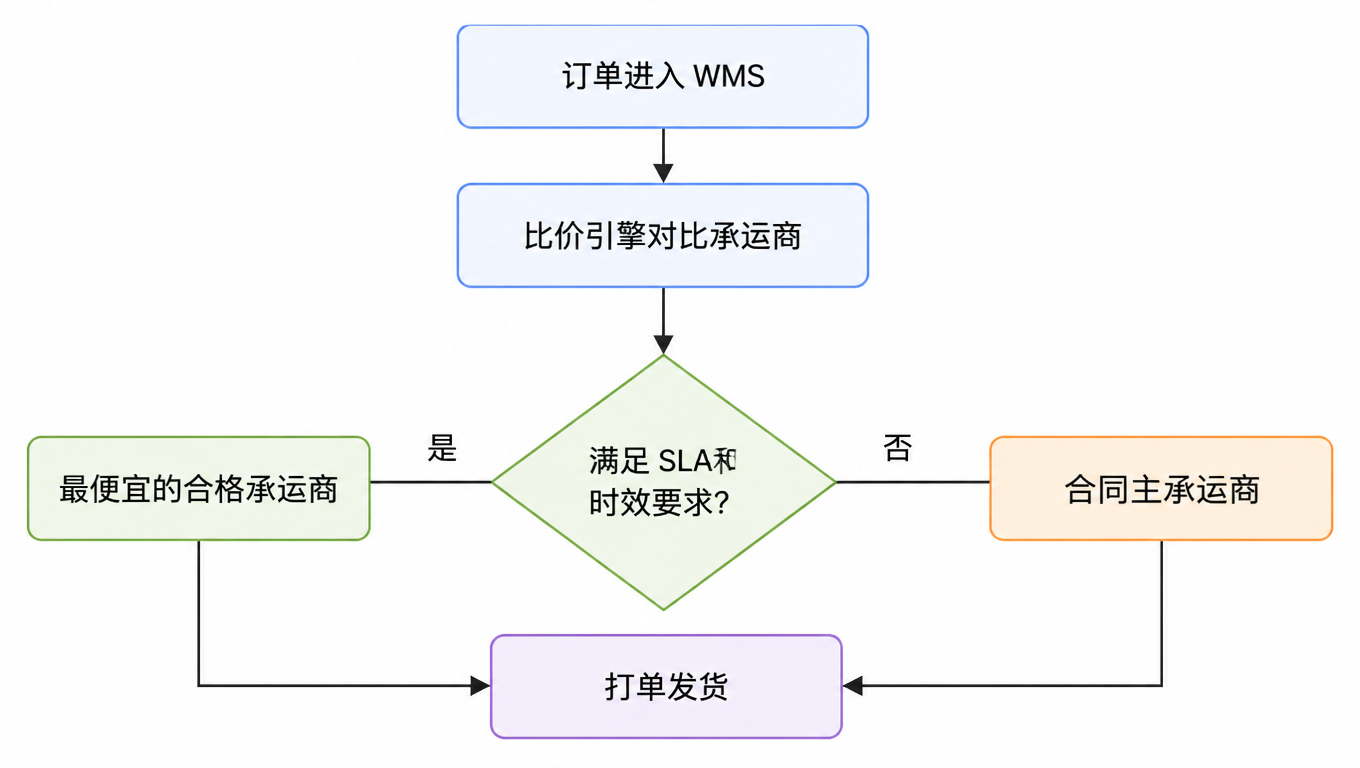
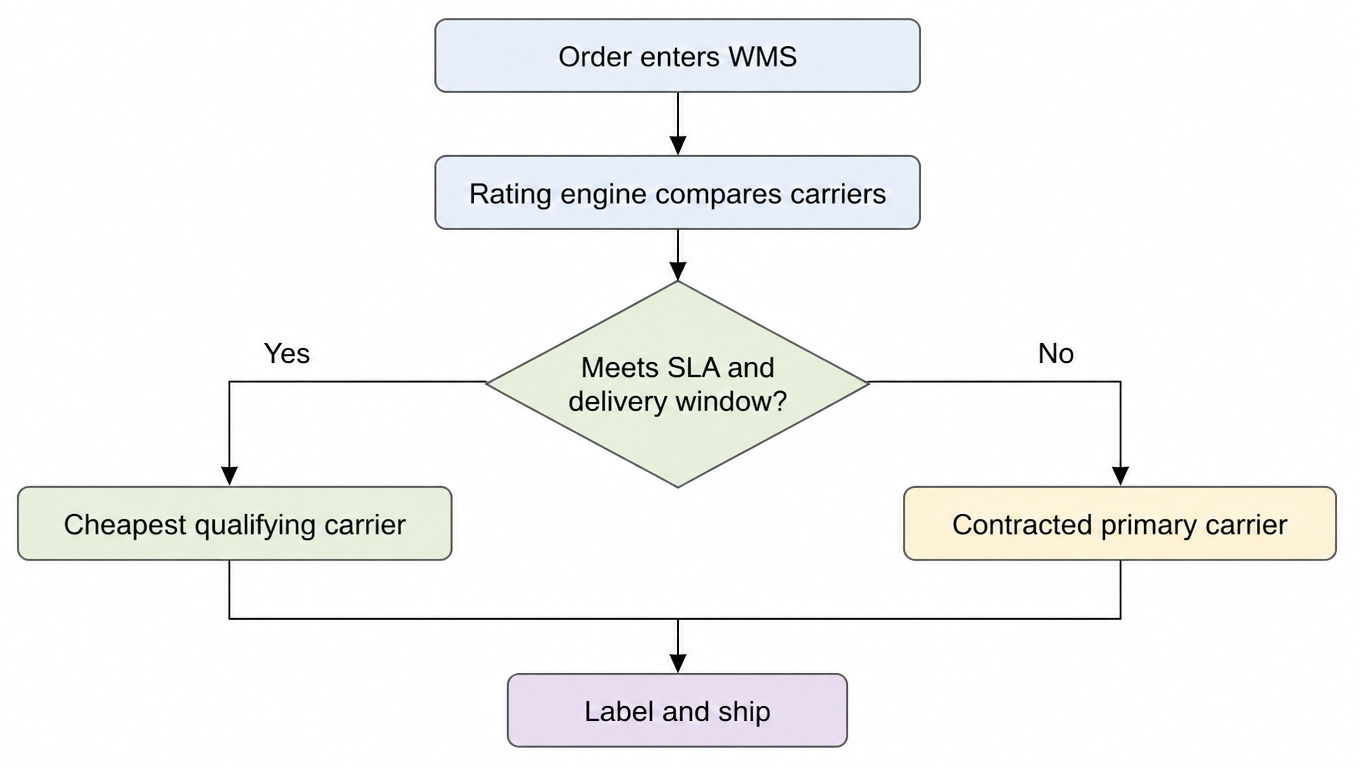
机制比价目表更重要。一套健康的多承运商配置要有合同最低货量,让中心始终有资格拿到最好的折扣档;有软路由规则,把目标份额的货量导向优先承运商;有硬规则,用在那些差价决定胜负的区域或时效等级。还要检查周末覆盖,因为一个便宜但周六送不到的承运商会毁掉两天达的承诺。下面的路由逻辑就是这个样子。The mechanics matter more than the rate sheet. A healthy multi-carrier setup has contract minimums that keep the center eligible for the best tiers, soft routing rules that steer a target share of volume toward preferred carriers, and hard rules for zones or service levels where the difference is decisive. It also checks weekend coverage, because a cheaper carrier that cannot deliver on Saturday breaks a two-day promise. The routing logic below is the shape of it.

多承运商路由流程图:订单进入 WMS,比价引擎对比承运商,满足 SLA 则选最便宜的合格承运商,否则用合同主承运商,最后打单发货Flowchart of multi-carrier routing: order enters WMS, rating engine compares carriers, cheapest qualifying carrier if SLA is met, otherwise contracted primary carrier, then label and ship
价格优化只能在服务约束内进行Price optimization only works inside service constraints

陷阱是只盯着每件包裹的最低费率,忽略投递风险。一个便宜 20% 但经常晚到的承运商,流失客户的速度会比节省建立信任更快。Heartland 在引擎里设置了 SLA 护栏:任何低于服务门槛的承运商,无论价格如何都被排除在路由之外。价格优化只能在服务约束内进行,而这正是客户真正付费买的东西。The trap is chasing the lowest rate per parcel while ignoring delivery risk. A carrier that is 20% cheaper but routinely delivers late will cost the center clients faster than the savings build trust. Heartland kept SLA guardrails in the engine: any carrier below a service threshold is excluded from routing regardless of price. Price optimization only works inside service constraints, and that is the discipline clients are actually paying for.

三、策略二:把货量变成议价筹码3. Strategy Two: Turn Volume into Leverage

这里有一笔让人不舒服的小包裹定价算术。直接跟全国性承运商签约的小企业,往往比企业协商价多付 60-89%[^4],因为承运商按议价能力定价,而一个月只发几百个包裹的 DTC 品牌毫无议价能力。一月离开的那个品牌,正是顶着直签价又赶上转嫁涨价,落地成本才会涨得那么快。Here is the uncomfortable arithmetic of parcel pricing. Small businesses that sign directly with national carriers often pay 60-89% more than enterprise-negotiated rates,[^4] because carriers price by leverage, and a direct-to-consumer brand shipping a few hundred parcels a month has none. The brand that left Heartland in January was paying direct rates on top of a pass-through increase, which is why its landed cost jumped so fast.

履约中心改变了这个等式,因为它不是一个客户在发货,而是四十个客户的货量在发货。Heartland 把所有客户的包裹并成一个谈判池,让全国性承运商、区域网络和整合商对着整本账投标。这正是第三方物流整体能为客户省下 15-40% 的原因:聚合议价、共享技术、多承运商比价,这些是单一品牌永远凑不齐的。[^5]A fulfillment center changes that equation, because it does not ship one client's volume; it ships forty clients' volume. Heartland aggregated every client's parcels into a single negotiating pool and let the national carriers, regional networks, and consolidators bid on the whole book. That is how third-party logistics providers overall deliver 15-40% savings for their clients, through aggregated pricing, shared technology, and multi-carrier comparison that a single brand could never assemble alone.[^5]

机制很直白,但需要纪律:按线路做年度货量预测,让中心能给承运商承诺真实数字;做正式 RFP,邀请所有合格承运商对聚合货量投标;签阶梯折扣合同,奖励增长而不是惩罚增长。纪律的另一半是透明。聪明的中心会告诉每个客户,他们的包裹适用哪些费率、池子怎么构成,因为不透明正是旧转嫁模式变成留存问题的根源。The mechanics are straightforward but require discipline: annual volume forecasts per lane so the center can promise carriers real numbers, a formal RFP that invites every qualified carrier to bid on the aggregated book, and tiered discount contracts that reward growth instead of punishing it. The other half of the discipline is transparency. The smart centers tell each client exactly which rates apply to their parcels and how the pool is structured, because opacity is what turned the old pass-through model into a retention problem.

真实服务商就把卖点建在这上面。ShipBob 和 Verde 都把"谈好的、透明的承运商价格"当作品牌选择他们的核心理由。Heartland 的版本更简单:第一轮重新谈判后,它把每个客户各区域的实际费率,和客户直签小企业合同会付的价格并排公布。客户不需要表格也能看懂。有的中心把谈下来的节省留一部分做毛利,有的 100% 让利、靠工程服务收费。两种模式都成立,只要客户看得见中心的利益和自己的利益是一致的。Real providers built their pitch on this. ShipBob and Verde, for example, market negotiated, transparent carrier pricing as a core reason brands fulfill with them rather than shipping solo. Heartland's version was simpler: after the first renegotiation, it published each client's effective rate per zone next to what that client would pay on a direct small-business contract. The clients did not need a spreadsheet to see the point. Some centers keep a share of the negotiated savings as margin; others pass 100% through and charge for the engineering work. Either model works, as long as the client can see that the center's interests and their own are aligned.

四、策略三:改造包装,而不是只谈价格4. Strategy Three: Engineer the Box, Not Just the Price

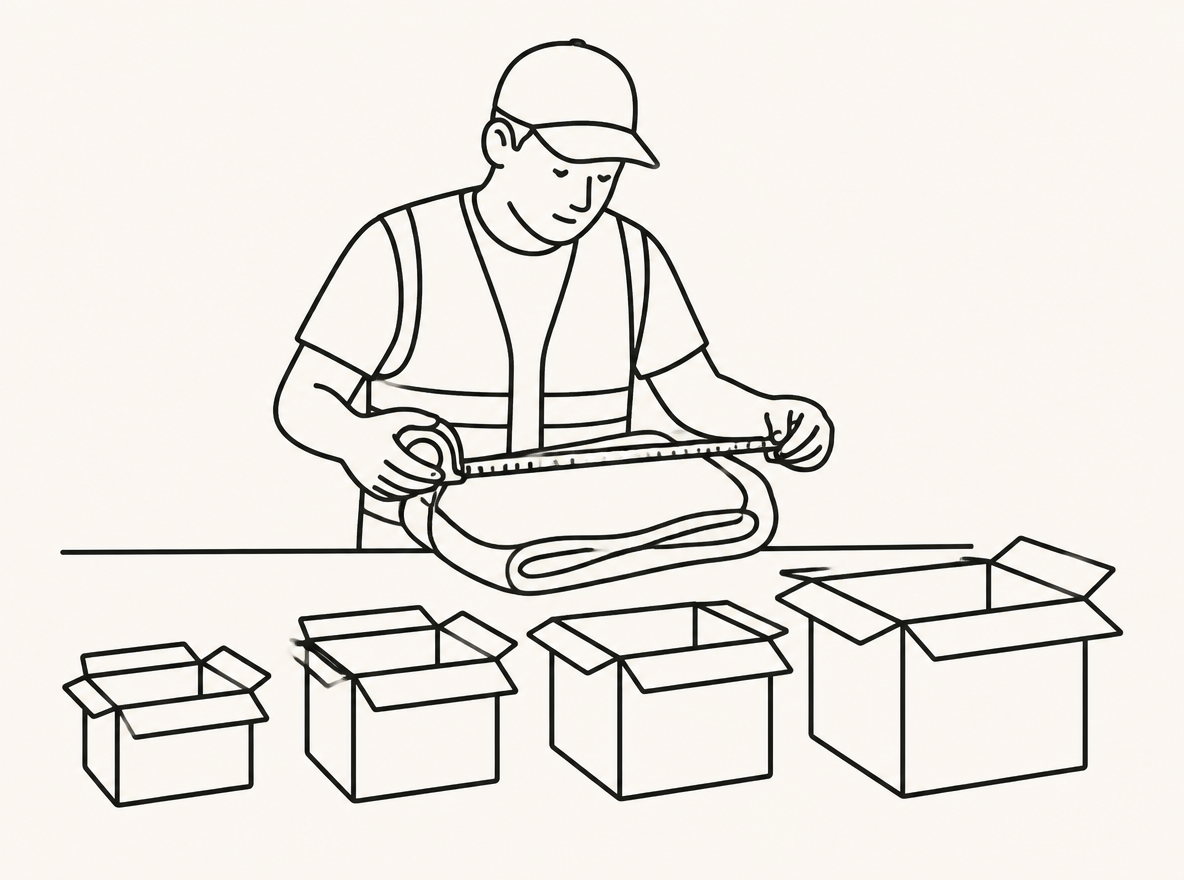
运费只是账单的一半。承运商按实际重量和体积重中的较大者收费,体积重是长×宽×高除以一个除数。这条规则悄悄让又轻又大的包裹比按实际重量计费贵 40-200%。[^6] 一条 3 磅的毛毯装进 22×18×6 英寸的纸箱,按体积重要算约 17 磅,客户为根本没寄过的空气付了钱。Rates are only half the bill. Carriers charge by the greater of actual weight or dimensional weight, which is length times width times height divided by a carrier divisor. That rule quietly inflates lightweight, bulky parcels by 40-200% versus actual-weight pricing.[^6] A 3-pound weighted blanket shipped in a 22x18x6-inch carton bills at roughly 17 pounds of dimensional weight, so the client pays for air it never asked to ship.

解法是包装工程。Heartland 从包装审计开始:量每个 SKU、挑战每个箱型、质疑每块填充物。毛毯客户的答案是改用快递袋而不是纸箱,包裹直接落到实际重量,运费这一项砍掉一半以上。其他 SKU 换成了刚好装得下的纸箱、更少的填充,或者用信封代替纸箱。产品一点没变,账单全变了。The fix is packaging engineering. Heartland started with a packaging audit: every SKU measured, every box size challenged, every filler questioned. For the blanket client, the answer was a poly bag instead of a carton, which dropped the parcel to actual weight and cut the shipping line item by more than half. For other SKUs it was right-sized cartons, fewer void fill, or a mailer where a box had been used. None of it changes the product; all of it changes the bill.

A warehouse operator measuring a product against a range of cardboard boxes to choose the smallest fitting carton
合适的箱子,是运费账单上最容易被忽视的省钱开关The right box is the most overlooked savings switch on a shipping bill

一次性修复和持久节省的区别在 WMS。包装工程师一周能改完五十个 SKU,但如果装箱规则只存在人的脑子里,旺季一来就守不住。Heartland 把按 SKU 的装箱规则写进了仓库管理系统,临时请来的假期打包工扫到毛毯就知道该用袋子,每次都对,不需要培训。中心还跟每个客户约定包装节省怎么分,把内部优化变成了客户自己损益表上一笔看得见的收益。The difference between a one-time fix and a durable saving is the WMS. A packaging engineer can resize fifty SKUs in a week, but if the boxing rules live only in people's heads they will not survive peak season. Heartland encoded per-SKU boxing rules in its warehouse management system, so a temporary holiday packer scanning a weighted blanket is told to use the bag, every time, with no training required. The center also agreed with each client on how packaging savings are shared, which turned an internal optimization into a visible benefit on the client's own P&L.

陷阱是把包装当项目而不是当系统。一次性的改动在十一月悄悄回退,因为那时全是新工人、一切求快。能守住节省的中心,是把规则写进软件、每月按 SKU 量平均体积重、把包装当成常设的成本控制职能,而不是一周的审计。The trap is treating packaging as a project instead of a system. One-off changes quietly revert during November when labor is new and speed is everything. The centers that keep the savings are the ones that put the rule in the software, measure the average dim weight per SKU monthly, and treat packaging as a standing cost-control function rather than a one-week audit.

五、策略四:分仓跳区,让包裹少走远路5. Strategy Four: Skip Zones with Distributed Inventory

小包裹费率随区域距离上涨。从俄亥俄发往加州的包裹,计费区域比发往宾夕法尼亚高得多,这个价差就是第四个策略的立足点。当中心把库存拆到两个或更多节点,每笔订单从最近的节点发出,大部分包裹只走短途,分仓加跳区的组合在密度足以撑起第二个仓库之后,最多能砍掉 20-30% 的运费。[^7]Parcel rates rise with zone distance. A parcel traveling from Ohio to California is billed at a much higher zone than one traveling to Pennsylvania, and that spread is where the fourth strategy lives. When a center splits inventory across two or more nodes and routes each order from the closest node, most parcels ship short distances, and the combination of zone skipping and distributed inventory can cut shipping costs by 20-30% once density is high enough to justify the second location.[^7]

代价是真实的,而且不只是房租。第二个节点意味着双份库存、额外的仓储费、更多的入仓运费,还有把两栋楼都运营好的成本。对 Heartland 来说,一开始只有一家客户的账算得过来:一家西海岸品牌,西海岸订单多到能让西节点忙起来。中心跟客户谈好分仓方案,挪了一部分库存到西边,那个客户的区域分布立刻大变。时效同时改善,品牌的顾客免费享受了更快的到货。The trade-off is real, and it is not just about rent. A second node means duplicate stock, additional storage fees, more inbound freight, and the operational cost of running two buildings well. For Heartland the math only worked for one client at first: a west-coast brand with enough west-coast orders to keep a west node busy. The center negotiated the split with the client, moved a slice of inventory west, and watched the zone profile of that client's book shift dramatically. Transit times improved at the same time, which made the brand's customers happier for free.

机制是分析先行,动工在后。Heartland 先做发货密度分析,画出客户订单实际去向,找出第二个节点下会重新分区的线路,再把双份库存的增量成本跟运费节省做模型对比。拆单规则决定一笔订单从 A 节点还是 B 节点发出,中心还把多节点仓储写进客户协议,而不是默默吞掉多出来的仓储成本。The mechanics are analytical before they are physical. Heartland ran a shipment-density analysis to map where its clients' orders actually went, identified the lanes that would re-zone under a second node, and modeled the incremental cost of duplicate stock against the rate savings. Split-order rules then decided when an order ships from node A versus node B, and the center negotiated multi-node storage into the client agreement instead of absorbing the extra warehousing cost silently.

陷阱是在货量撑起来之前就分仓。密度不足的第二个节点照样付整栋楼的房租,短距离省下的钱被双份库存、死库存和两座吃不饱的仓库吃掉。跳区是密度生意。做得好的中心从一家客户、一条线路起步,证明模型,数字一直成立才扩大。The trap is splitting inventory before volume justifies it. A second node with thin density still pays rent on the whole building, and the savings from shorter zones get eaten by duplicate stock, dead inventory, and two under-used facilities. Zone skipping is a density play. The centers that do it well start with one client and one lane, prove the model, and scale it only when the numbers keep working.

六、策略五:重建最后一公里6. Strategy Five: Rebuild the Last Mile

价目表上最便宜的选择不一定便宜。USPS SurePost 这类混合产品基础费率低,因为包裹从全国性承运商转交邮政网络完成最后投递,但省下的钱都藏在细则里:时效慢 1-3 天,转交期间追踪静默,住宅、偏远和超尺寸附加费层层叠加。[^8] 等到混合包裹把所有费用加载完,可能跟地面包裹差不多贵,服务还更差。The cheap option on the rate card is not always cheap. Hybrid products in the USPS SurePost family offer a low base rate because the parcel is handed off from a national carrier to the postal network for final delivery, but the savings come with costs that hide in the fine print: slower transit by one to three days, tracking that goes quiet during the handoff, and accessorial surcharges that stack on residential, extended-area, and oversized parcels.[^8] By the time a hybrid parcel has been fully loaded, it can cost nearly what a ground parcel costs, with worse service.

Heartland 的最后一公里重建从混合产品伤害最大的区域开始:短途本地和区域线路,在那里转交只添延误、没有价格好处。这些线路上,区域最后一公里网络和包裹整合商接手。区域承运商更快,因为包裹从不转手;更便宜,因为附加费结构更简单。中心还试了包裹整合商,把许多发货方的货量拼成整车运到枢纽再本地分拆,在人口密集的都市市场尤其好用。Heartland's last-mile rebuild started in the zones where hybrid products were doing the most damage: short local and regional lanes where the handoff added delay for no price benefit. There, regional last-mile networks and parcel consolidators took over. The regional carriers were faster on those lanes because they never handed the parcel off, and cheaper because their accessorial structure is simpler. The center also tested parcel consolidators that batch many shippers' volume into full truckloads to a hub, then split it locally, which works especially well for dense metro markets.

纪律是一张评估矩阵,不是拍脑袋。对每个区域,Heartland 按基础费率、时效、追踪质量、覆盖、附加费暴露给每个最后一公里选项打分,然后按总成本而不是挂牌价把货量路由给赢家。承运商一改价格或覆盖就要重跑矩阵,而这很频繁。The discipline is an evaluation matrix, not a gut call. For every zone, Heartland scored each last-mile option on base rate, transit time, tracking quality, coverage, and accessorial exposure, then routed volume to the option that won the zone on total cost, not sticker price. The matrix gets re-run whenever a carrier changes its pricing or coverage, which is often.

陷阱是把一个区域切给覆盖零散的区域承运商。在俄亥俄很优秀的网络,到了隔壁州可能很薄,覆盖薄就意味着投递承诺落空、顾客发火。路由任何货量之前,中心先核实到 ZIP 级别的覆盖,每个区域都留一个备选承运商。最后一公里是顾客真正体验包裹旅程的部分,服务质量没有商量余地。The trap is switching a zone to a regional carrier where its coverage is patchy. A network that is excellent in Ohio can be thin in a neighboring state, and thin coverage means missed delivery promises and angry customers. Before routing any volume, the center verifies coverage down to the ZIP level and keeps a fallback carrier in every zone. Last mile is the part of the parcel journey customers actually experience, so service quality is not optional.

七、销售转型:卖省钱,而不是卖发货7. The Sales Pivot: Sell Savings, Not Shipping

第一年结束时,Heartland 拥有了以前从没有过的东西:一套关于它为客户损益表做什么的可复述故事。销售团队不再说"我们发货便宜",开始说"我们能证明帮你省了多少"。这是完全不同的对话,也是承运商全线涨价的年份里客户真正想听的对话。By the end of the first year, Heartland had something it had never had before: a repeatable story about what it does for client P&Ls. The sales team stopped pitching "we ship cheap" and started pitching "we can prove what we saved you." That is a different conversation entirely, and it is the one prospects want to have in a year when every carrier raised rates.

工具很简单。每个客户每月收到一份节省报告,把通过 Heartland 实际付的钱,和旧方案或直签小企业合同会付的钱并排对比。每个客户有一个仪表盘,显示承运商组合、平均体积重、区域分布和当月节省。每份报价现在都列明客户可以预期的三条省钱路径:承运商组合优化、包装工程、区域分布。三条都不是承诺,三条都是中心已经在为现有客户跑的机制。The tools are simple. Every client gets a monthly savings report that compares what they actually paid through Heartland against what they would have paid on their old arrangement or on a direct small-business contract. Every client gets a dashboard showing carrier mix, average dim weight, zone profile, and the month's savings. Every quote now includes three savings paths the prospect can expect: carrier mix optimization, packaging engineering, and zone distribution. None of the three is a promise; all three are the mechanics the center already runs for existing clients.

行业数字给销售团队开场白,当作背景而不是承诺。3PL 通过聚合议价省下的 15-40%、小企业直签多付的 60-89%、体积重带来的 40-200% 波动,都是真实的公开基准,能让潜在客户停下来想。销售开口说"你的运费这一项可能背着 20-40% 可避免的成本,我们做个审计就能找出来",这不是在承诺结果,是在承诺一个流程。The industry numbers give the sales team its opening lines, used as context rather than commitments. The 15-40% range that 3PLs deliver on aggregated pricing, the 60-89% penalty small businesses pay on direct rates, and the 40-200% swings from dimensional weight are all real, published benchmarks that make a prospect stop and think. A seller who opens with "your shipping line item is probably carrying 20-40% of avoidable cost, and we can find it in an audit" is not promising a result; they are promising a process.

就是这套话术帮 Heartland 拿下了第一个以省钱为先导的客户:"我们不给你报一个固定节省数字,因为谁这么报都是在猜。我们审计你的包裹画像,给你的线路和 SKU 建模,告诉你钱在哪。如果什么都没找到,你只损失一周。如果找到了,你就拥有了一套新的成本结构。"客户签约,是因为中心愿意在要合同之前先证明自己的说法,这正是旧价目表模式永远做不到的。That is the talk track that won Heartland its first savings-led client: "We won't quote you a fixed savings number, because anyone who does is guessing. We'll audit your parcel profile, model your lanes and your SKUs, and show you where the money is. If we find nothing, you've lost a week. If we find something, you've found a new cost structure." The prospect signed because the center was willing to prove the claim before asking for the contract, which is exactly what the old rate-card model could never do.

八、转型带来了什么(以及怎么起步)8. What the Pivot Bought Them (and How to Start)

护肤品牌离开十八个月后,Heartland 的数字讲了故事。客户流失率大幅下降,因为一个能降低客户运费账单的中心,比一个只存箱子的中心难离开得多。转介绍成了最大的新客来源,因为省钱是客户会讲给同阶段创始人的故事。毛利结构也变了:中心现在对工程服务收费,并保留一部分谈下来的节省,收入不再那么依赖仓储费,更多依赖它真正能产出的结果。Eighteen months after the skincare brand left, Heartland's numbers told the story. Client churn had dropped sharply, because a center that reduces the client's shipping bill is far harder to leave than one that merely stores boxes. Referrals had become the largest source of new business, because savings is a story clients tell other founders at the same stage. And the margin mix had shifted: the center now charges for the engineering work and keeps a share of negotiated savings, so its revenue is less dependent on storage fees and more dependent on outcomes it can actually produce.

这一切都不需要巨额预算。Heartland 走的路线图可以装进九十天,从数据开始。None of it required a giant budget. The roadmap Heartland followed fits into ninety days and starts with data.

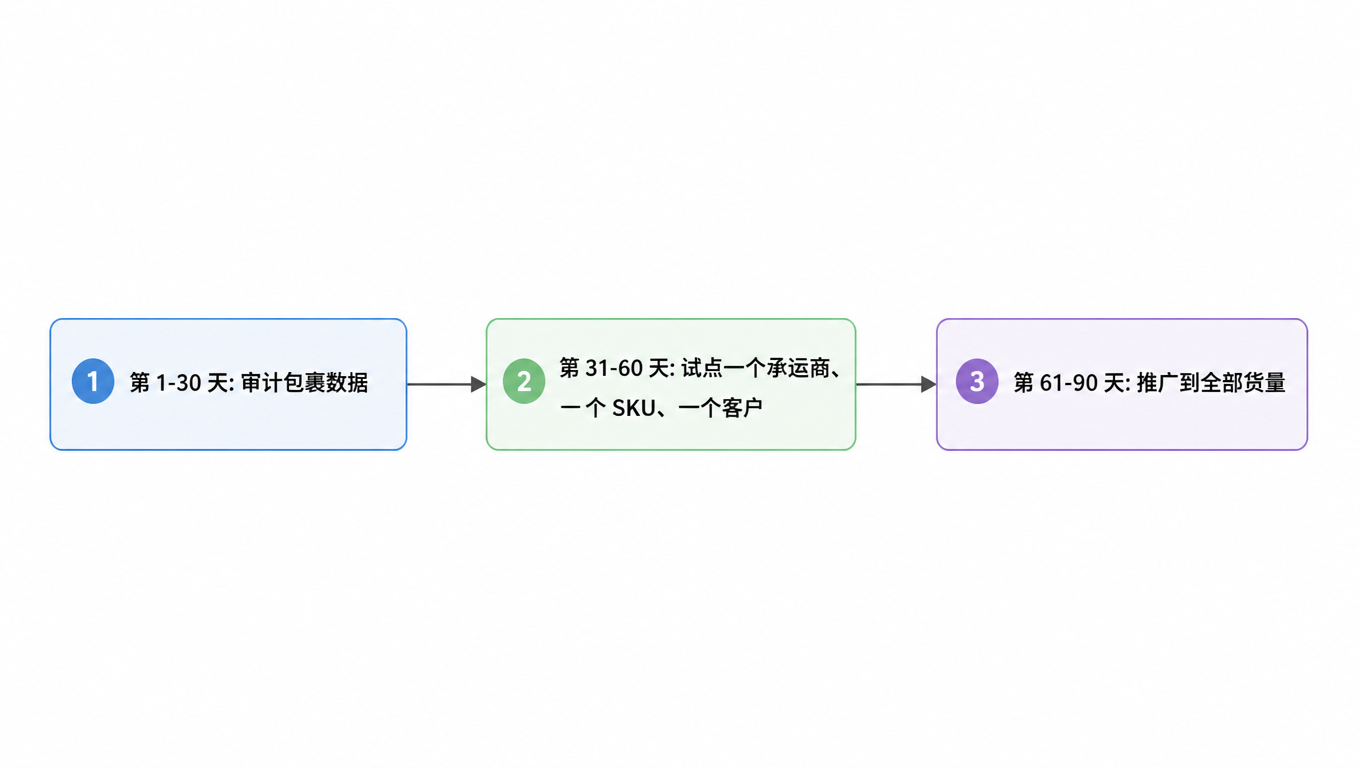
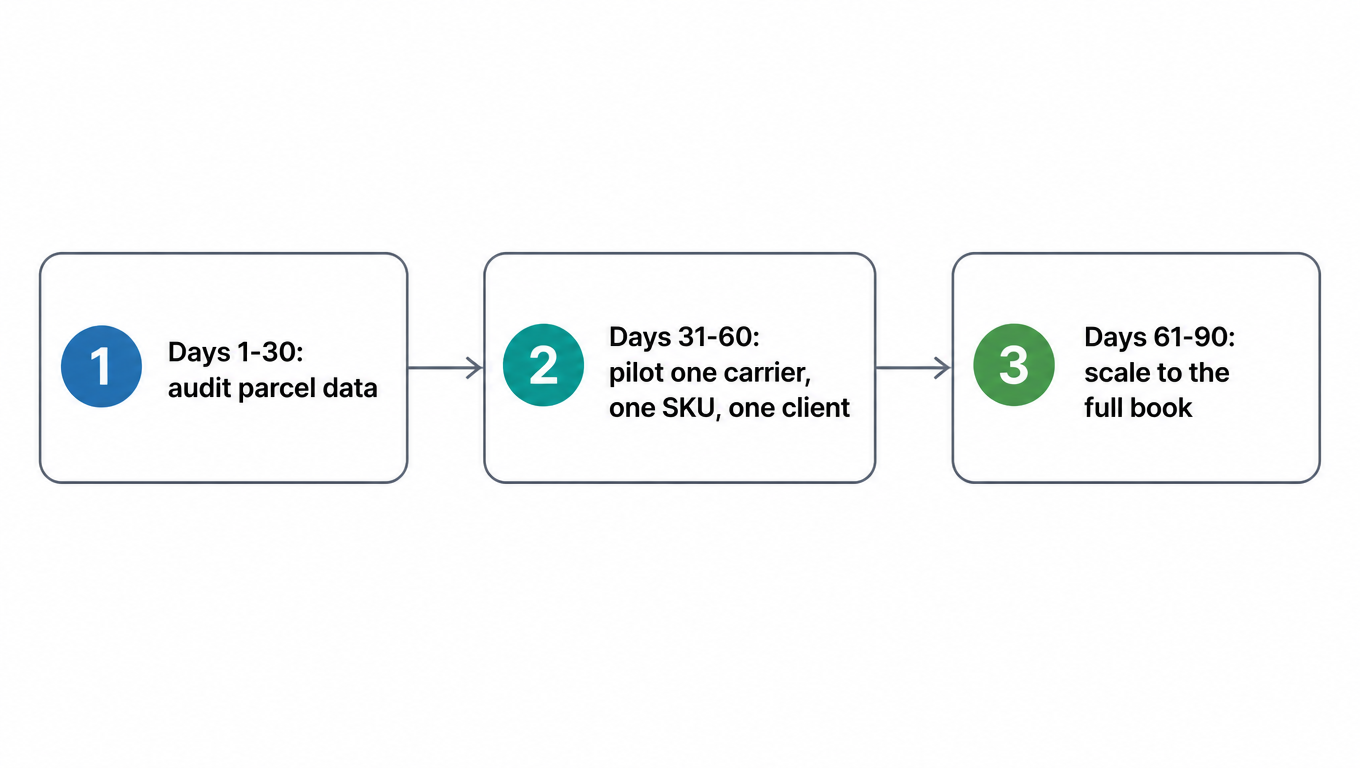
90 天路线流程图:第 1-30 天审计包裹数据,第 31-60 天试点一个承运商、一个 SKU、一个客户,第 61-90 天推广到全部货量Flowchart of a 90-day roadmap: days 1-30 audit parcel data, days 31-60 pilot one carrier, one SKU, one client, days 61-90 scale to the full book
90 天路线图:审计、试点、规模化A 90-day roadmap: audit, pilot, scale

头三十天是审计:拉出每个客户的包裹级数据,模拟多承运商组合、合适包装和区域分布在上季度能省多少。第二个三十天是试点:重新谈判或新增一家承运商,改一个 SKU 的包装,给一家愿意配合的客户完整跑一遍,让节省在对外宣称之前先是真的。最后三十天是规模化:固化路由规则、锁定 WMS 装箱规则、搭好月度节省报告,把模型推广到整本账,同时销售开始用数字开场。The first thirty days are an audit: pull every client's parcel-level data, model what a multi-carrier mix, right-sized packaging, and zone distribution would have saved over the last quarter. The second thirty days are a pilot: renegotiate or add one carrier, resize one SKU's packaging, and run the whole thing for one willing client so the savings are real before they are claimed. The final thirty days are scale: encode the routing rules, lock the WMS boxing rules, build the monthly savings report, and roll the model across the book while sales starts leading with the numbers.

结尾的教训,是护肤品牌老板一月教给 Heartland 的。当履约中心把运费当成可以工程化改造的成本,它就不再是涨价传声筒,而是那个拿着更小账单出现的人。这不是定价策略,而是留存策略、转介绍引擎和销售话术,三合一。想明白这一点的中心,不仅会活过下一次涨价,还会成为客户要感谢的那一个。The closing lesson is the one the skincare owner taught Heartland in January. When a fulfillment center treats shipping as a cost to be engineered, it stops being the rate increase messenger and becomes the person who shows up with a smaller bill. That is not a pricing strategy; it is a retention strategy, a referral engine, and a sales pitch all at once. The centers that figure this out will not just survive the next rate increase. They will be the ones their clients thank for it.

常见问题FAQ

行业基准是 15-40%,来源是聚合议价、多承运商比价和共享技术。区域承运商在其覆盖区内便宜 10-35%,包装工程能消掉轻泡货 40-200% 的体积重溢价,分仓跳区在密度足够时省 20-30%。具体数字取决于客户的包裹画像,所以领先的中心先做审计再承诺,而不是报一个固定数字。The industry benchmark is 15-40%, driven by aggregated pricing, multi-carrier comparison, and shared technology. Regional carriers run 10-35% cheaper inside their coverage zones, packaging engineering removes the 40-200% dimensional-weight premium on bulky lightweight parcels, and zone skipping saves 20-30% once density justifies a second node. The exact number depends on the client's parcel profile, which is why leading centers audit first and commit later instead of quoting a fixed figure.
小企业直签通常比企业协商价多付 60-89%,因为承运商按议价能力定价。履约中心把几十家客户的货量并成一个谈判池,能拿到单一品牌永远拿不到的企业级折扣,还能叠加多承运商比价、包装工程和分仓这些直签客户自己很难独立做的优化。关键在于透明:客户看得见自己的实际费率比直签低多少,这个关系才留得住。Small businesses signing directly with national carriers typically pay 60-89% more than enterprise-negotiated rates, because carriers price by leverage. A fulfillment center pools dozens of clients' volume into one negotiating block and earns enterprise-level discounts no single brand could reach, then stacks multi-carrier routing, packaging engineering, and zone distribution on top, optimizations a direct shipper can rarely do alone. Transparency is what holds it together: clients can see their effective rates versus what a direct contract would cost.
不需要巨额预算,90 天路线图就够了:前 30 天做包裹数据审计,中间 30 天拿一个承运商、一个 SKU、一个客户试点,让节省先变成真的,最后 30 天固化路由和装箱规则、搭好月度节省报告,并让销售用数字开场。真正需要的不是预算,是把运费当成可工程化成本对待的纪律。It does not require a giant budget. A 90-day roadmap is enough: audit parcel data in the first 30 days, pilot one carrier, one SKU, and one client in the next 30 so the savings become real before they are claimed, then encode routing and boxing rules, build the monthly savings report, and let sales lead with the numbers in the final 30. What it really takes is not budget but the discipline to treat shipping as an engineered cost.

准备好把"省钱"变成你的销售话术了吗?Ready to make savings your pitch?

EasyShippingX 用多承运商比价、自有账号运价直通和区域承运商接入,帮履约中心把省钱能力变成获客武器:对每个包裹实时选最便宜且达标的承运商,把你的谈判运价直通到底,让客户看得见自己省了多少。EasyShippingX gives fulfillment centers the multi-carrier rating, own-account rate pass-through, and regional carrier access that turn cost reduction into a customer-acquisition weapon: route every parcel to the cheapest carrier that meets the SLA, pass your negotiated rates straight through, and show every client exactly what they saved.

Get Rate Comparison
Get Rate Comparison