为什么 FBM 规模化是「速度与灵活性」的战争Why Scaling FBM Is a War of Speed and Flexibility
Amazon 平台上,第三方卖家贡献了约六成的销量[^1],其中超过三分之一的卖家至少部分使用 FBM 履约[^2]。这意味着「从 100 单做到 10,000 单」不是少数人的问题,而是上百万卖家共同的增长命题。FBM 相对 FBA 的护城河是结构性的:发货时效由自己掌握,客户催单时可以当天拦截;旺季容量有弹性,不需要提前几个月锁仓;库存资金占用低,卖不动可以随时调价清货;SKU 和包装灵活,改产品、加赠品、换箱规都不需要过平台那一关。这些优势在 100 单时是本能,在 5,000 单时则要靠设计才能保住。Third-party sellers account for roughly 60 percent of Amazon's sales[^1], and more than one in three of them fulfills at least part of their volume with FBM[^2]. So going from 100 to 10,000 orders a day is not a niche problem, it is the shared growth question of millions of sellers. FBM's moat versus FBA is structural: ship times are in your hands and you can intercept an order the day a customer is chasing it; peak capacity has room to stretch without locking down warehouse space months ahead; inventory ties up less cash and can be priced down and cleared when it stops moving; SKUs and packaging stay flexible, so changing a product, adding a freebie, or switching box sizes does not require going through the platform. These advantages are instinct at 100 orders a day. At 5,000 they only survive by design.
规模化的隐性代价恰恰出现在优势的反面。流程变多,决策变慢;SKU 变多,库存错配;承运商从一家变三家,单点依赖变成多点管理;团队从 3 个人变 30 个人,创始人从「亲自打包」变成「到处救火」。每一步扩张都在消耗速度,而速度正是你区别于 FBA 卖家、区别于大品牌直营店的东西。The hidden cost of scaling sits on the flip side of these advantages. More processes slow decisions down. More SKUs mean inventory mismatches. One carrier becomes three, and a single point of dependency becomes multi-vendor management. A team of 3 becomes a team of 30, and the founder goes from packing boxes to putting out fires. Every step of growth consumes speed, and speed is exactly what separates you from FBA sellers and from brand-owned stores.
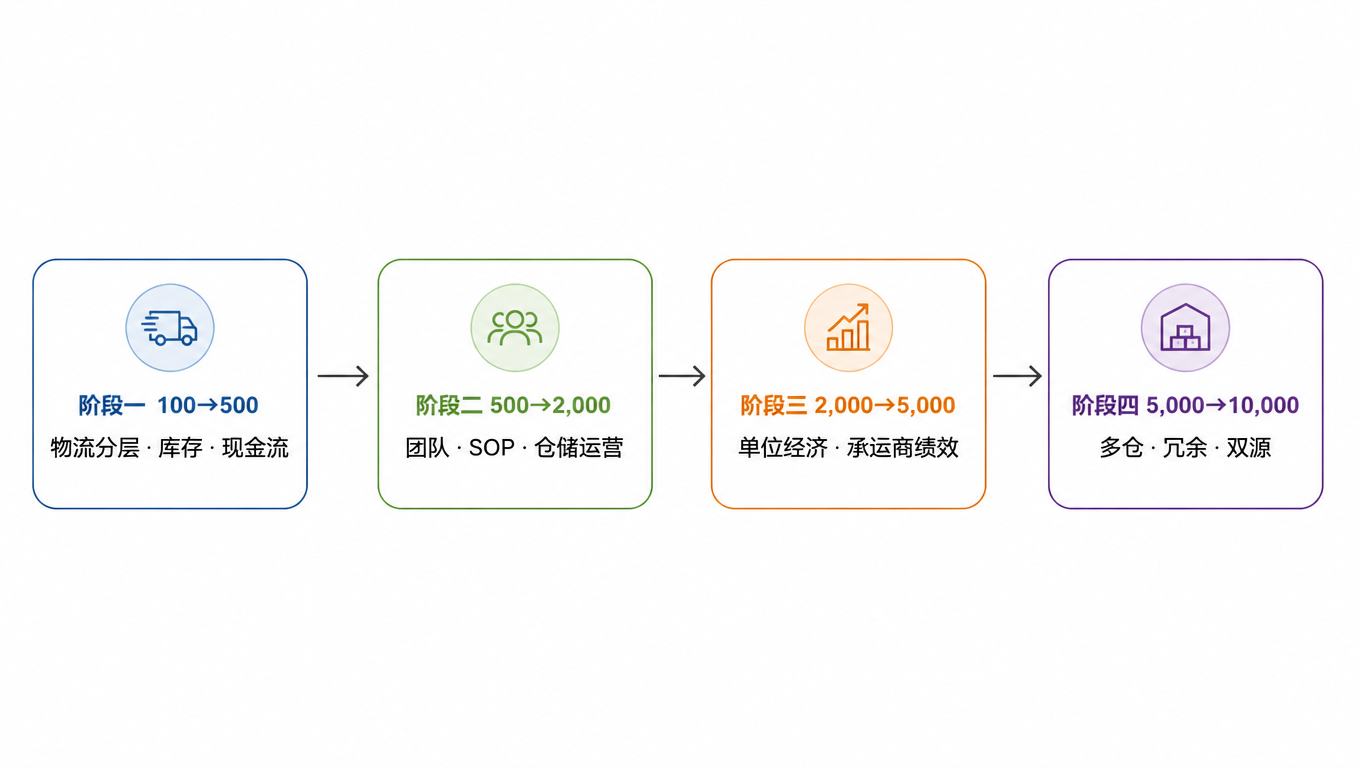
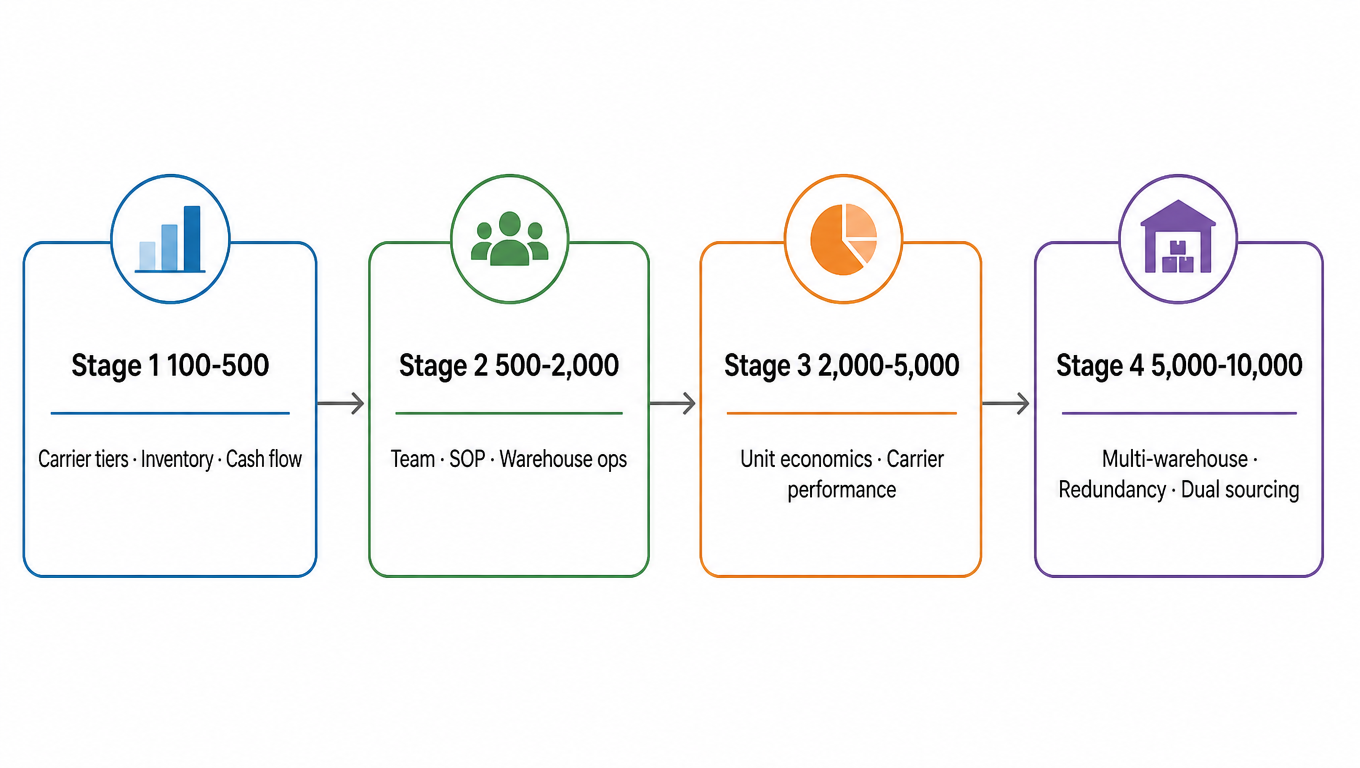
所以核心判断只有一句:规模化,是把拍脑袋变成可预测的系统,但系统不能以牺牲速度为代价。四个阶段的演进路径如下:So the core judgment is one sentence: scaling means turning gut calls into a predictable system, but the system must not come at the cost of speed. The four stages look like this: