为什么要多承运商(单承运商的风险)Why Multi-Carrier? The Risk of a Single Carrier
FBM 卖家对配送表现负直接责任。订单发出后,承运商的扫描是否及时、包裹是否按时送达、追踪信息是否完整,都会反映到亚马逊的卖家绩效指标里,进而影响账号健康,严重时会被限流甚至停售。而承运商的运力,恰恰是卖家控制不了的部分。FBM sellers are directly responsible for delivery performance. After an order ships, whether the carrier scans on time, whether the package arrives on schedule, and whether tracking is complete all show up in Amazon's seller performance metrics, which affect account health and, in serious cases, lead to listing suppression or suspension. Carrier capacity is exactly the part the seller cannot control.
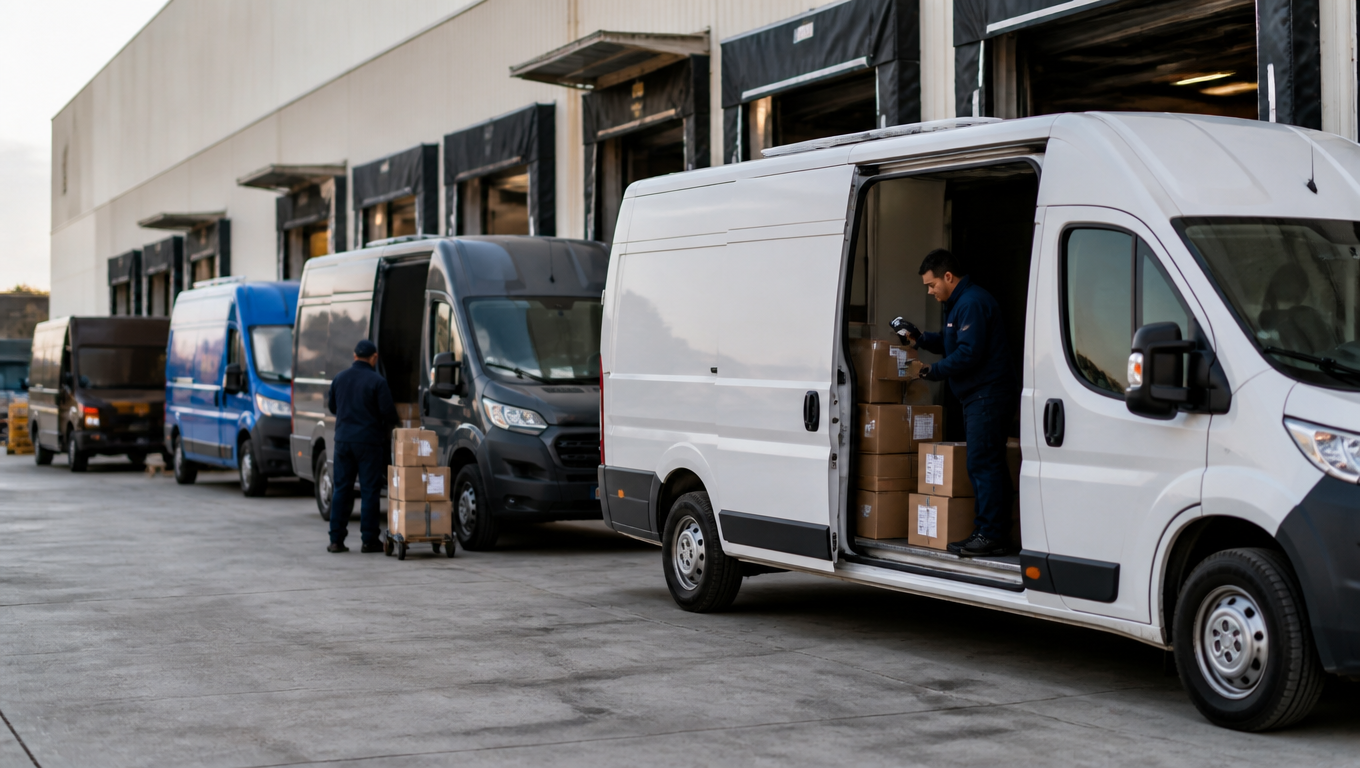
单承运商意味着单点故障。旺季爆仓是每年都会上演的场景:UPS、FedEx 在高峰期加收附加费,USPS 假日季件量激增,转运时间被拉长[^2];更别提区域性天气停运、承运商内部服务波动这类突发状况。当唯一的承运商掉链子,代价是全方位的:绩效扣分、客诉上升、退款增加,而这些损失远大于换一个承运商省下的那点运费。A single carrier means a single point of failure. Peak-season congestion plays out every year: UPS and FedEx add surcharges during the holidays, USPS volume spikes and transit times stretch[^2], not to mention regional weather shutdowns and internal carrier disruptions. When your only carrier stumbles, the cost is everywhere: performance hits, rising complaints, more refunds. Those losses dwarf the few dollars a single carrier saved you.
3PL 代发货场景下,问题还要再放大一层。一个海外仓同时服务几十个 FBM 卖家,每个客户的合同里 SLA、账单方式、标签品牌都不一样。单一承运商不可能同时满足所有客户的时效承诺和成本要求,比如有的客户要求全美 2 天达,有的客户只在乎便宜。对 3PL 来说,多承运商不是优化选项,是服务能力的基础设施。For a 3PL fulfilling on behalf of sellers, the problem scales up another level. One warehouse serves dozens of FBM sellers at once, each with different SLAs, billing setups, and label branding in their contracts. No single carrier can satisfy every client's transit promise and cost requirement at the same time. One client wants 2-day delivery nationwide; another only cares about cheap. For a 3PL, multi-carrier is not an optimization option, it is the infrastructure of its service capability.
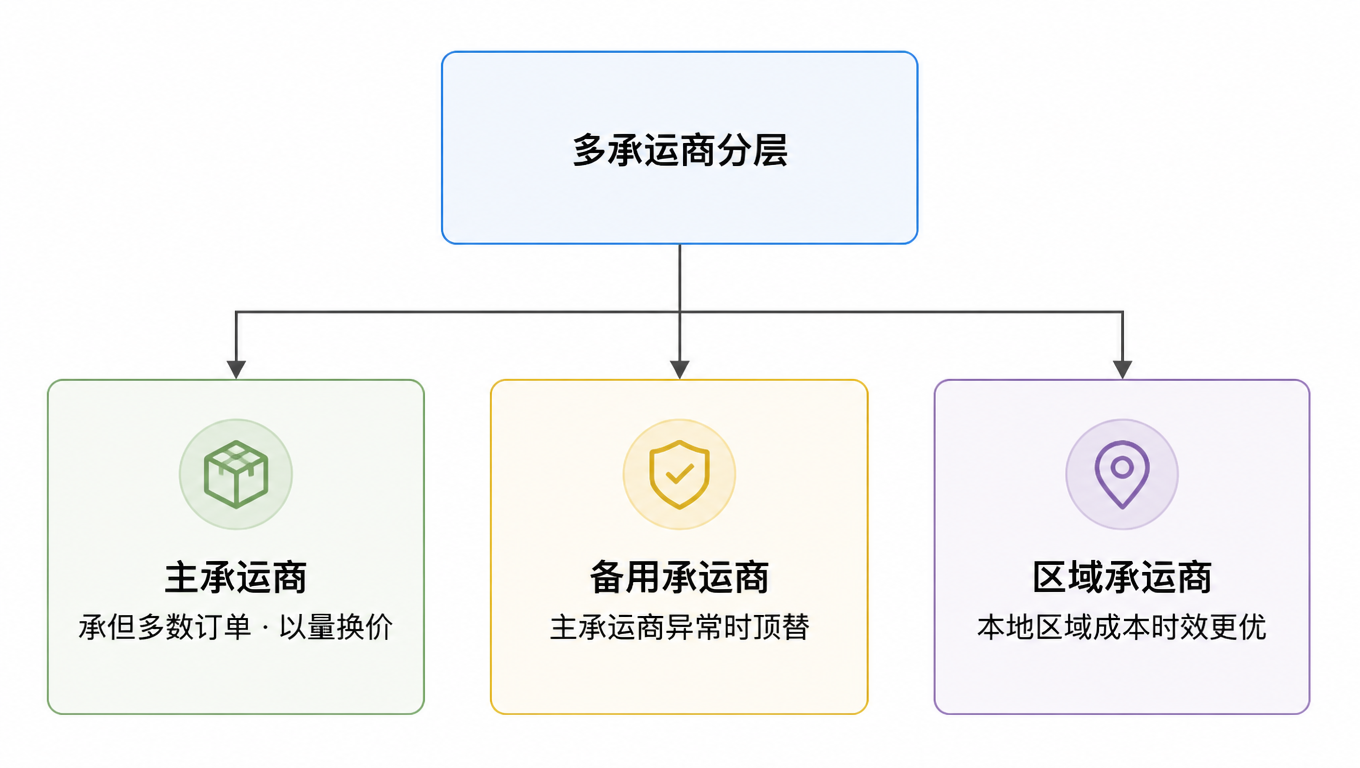
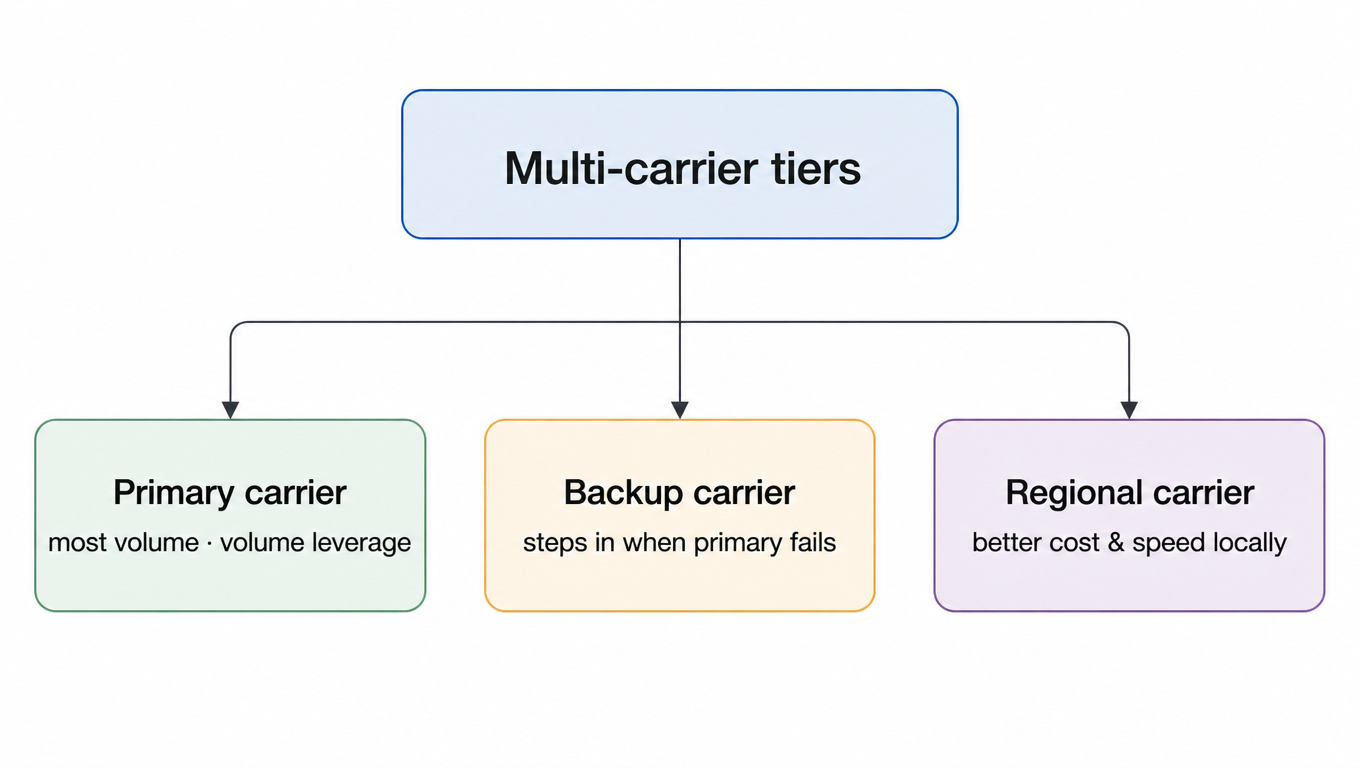
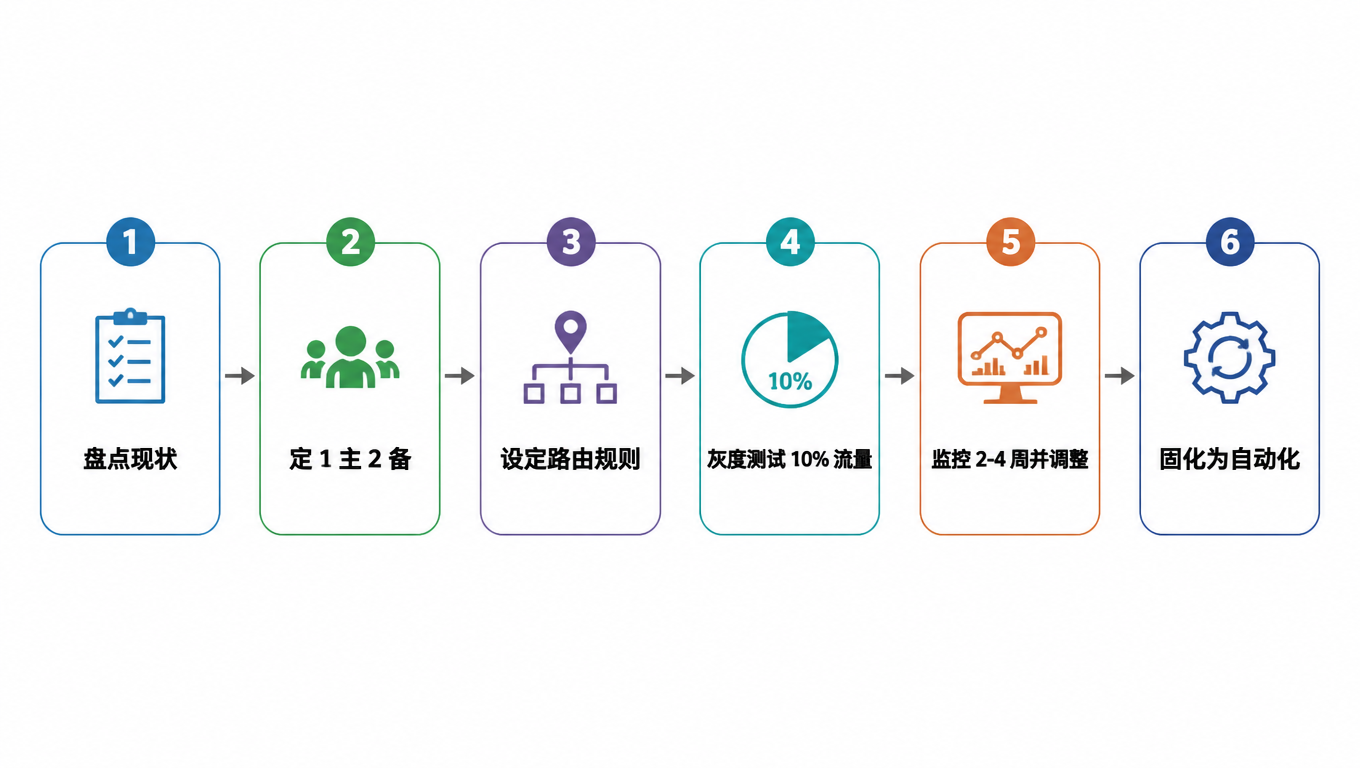
需要澄清的是,多承运商不等于「到处开户」。开五六个账户、订单量被摊薄,结果是谁都不给你好价,管理成本却翻倍。真正的多承运商策略是有取舍的冗余:每一层承运商都有明确角色,合在一起才构成完整的配送能力。To be clear, multi-carrier is not the same as opening accounts everywhere. If you open five or six accounts, your volume gets diluted, nobody gives you a good rate, and management costs double. A real multi-carrier strategy is deliberate redundancy: every tier has a clear role, and together they form complete delivery capability.