区域快递如何优化 3PL 的派送网络How Regional Parcel Carriers Can Improve a 3PL's Delivery Network
每年一月,3PL 经营者都会经历同样的循环:全国承运商宣布年度费率上调,附加费清单变得更厚,财务团队默默重算明年的尾程账单。基础费率上涨、住宅附加费、每周燃油附加费和旺季附加费叠加在一起,UPS 或 FedEx 单件包裹的「全包」成本涨幅,已经快过大多数 3PL 能转嫁给客户的速度。Every January, the same ritual plays out for 3PL operators: the national carriers announce their annual general rate increase, the surcharge schedule gets thicker, and the finance team quietly recalculates what next year's last-mile bill will look like. Between base-rate increases, residential surcharges, weekly fuel surcharges and peak-season add-ons, the "all-in" cost of shipping a parcel with UPS or FedEx has climbed faster than most 3PLs can pass through to their shipper clients.
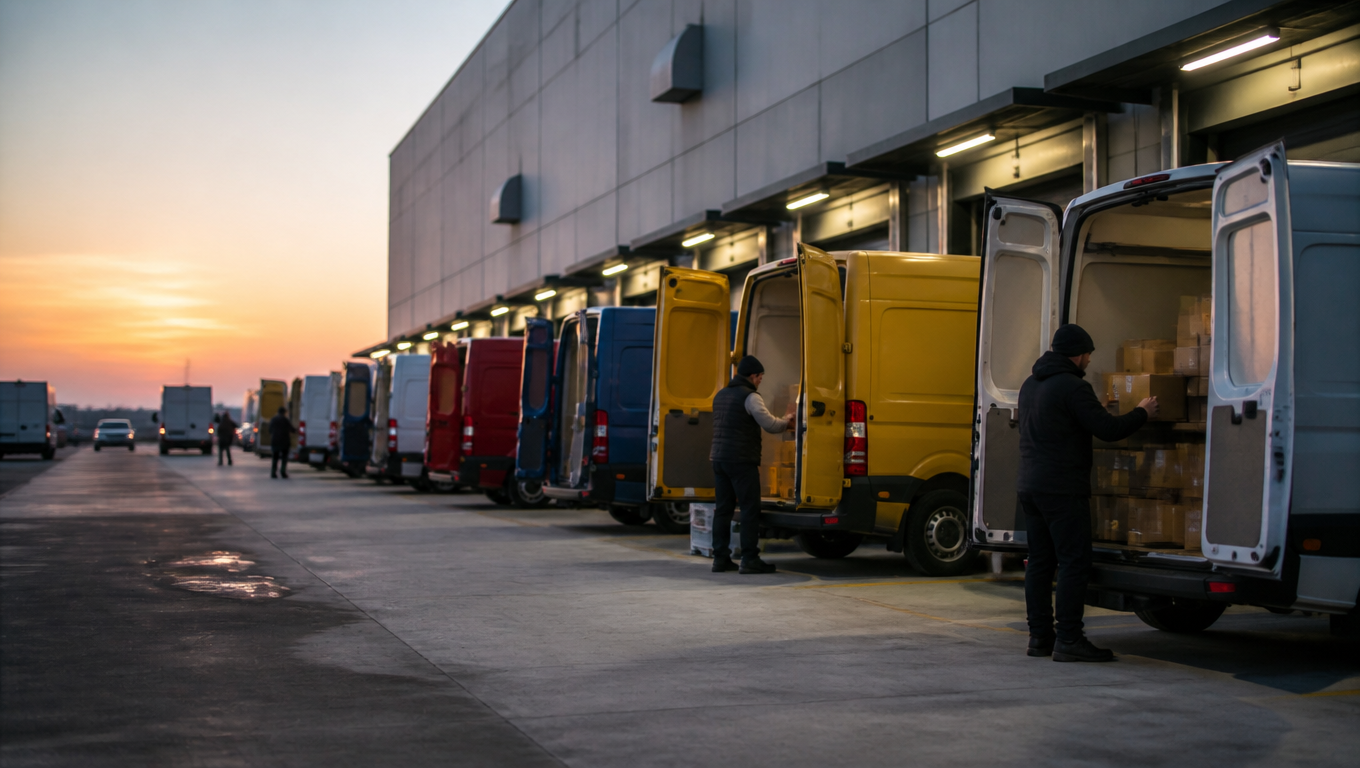
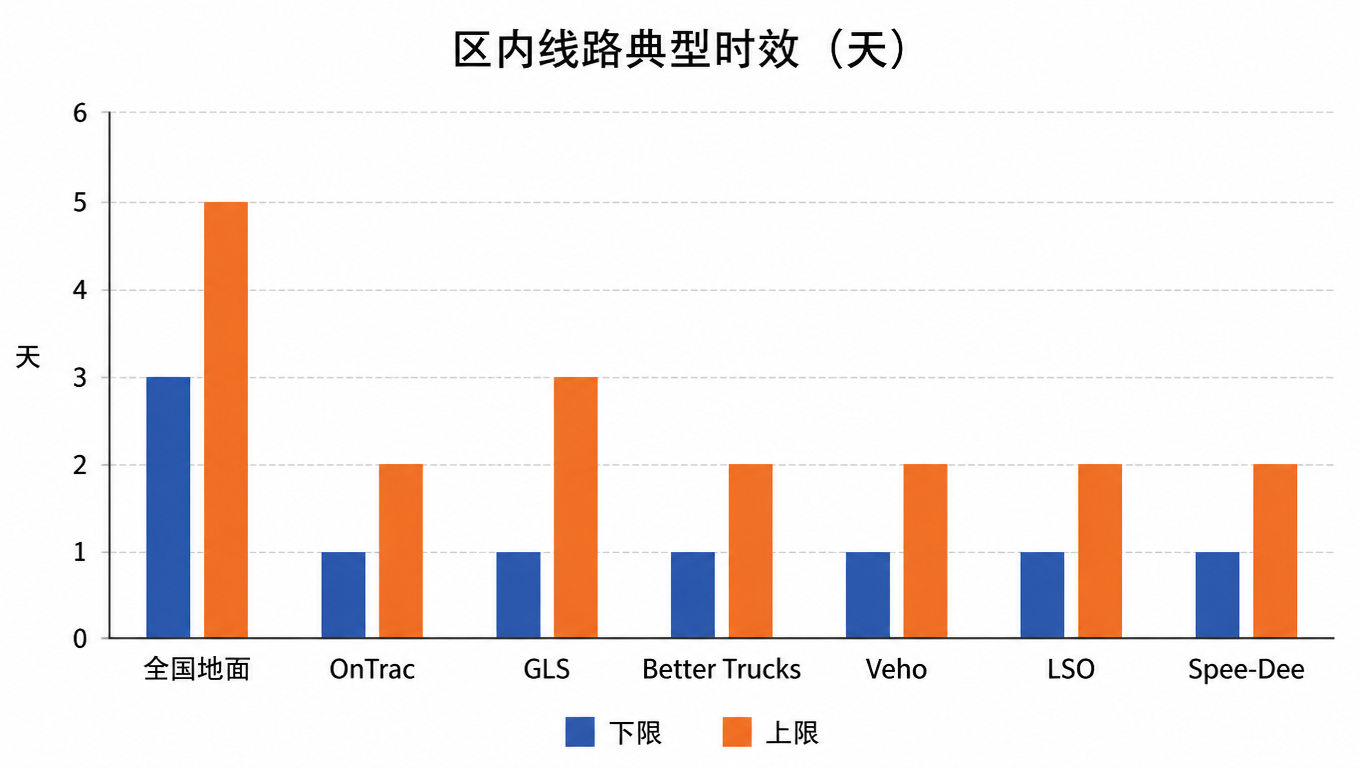
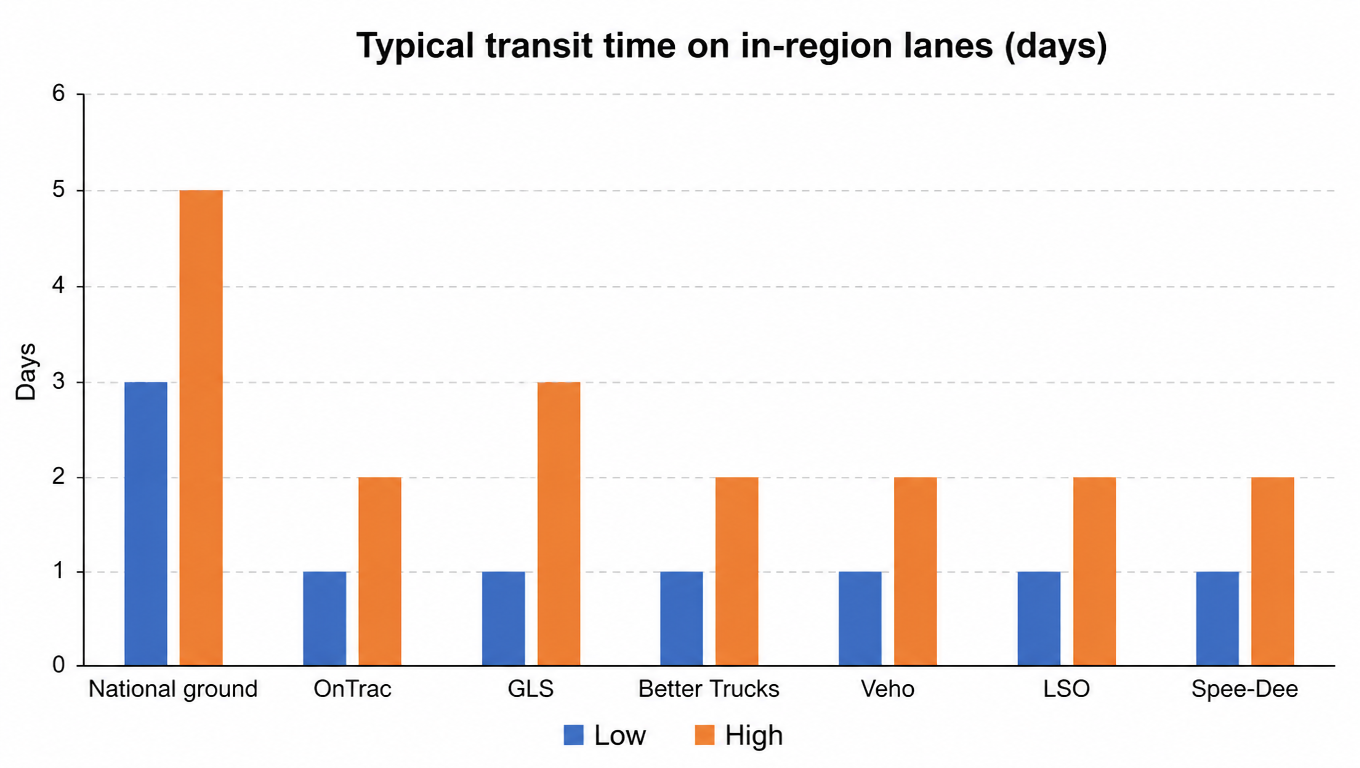
有一个成熟却被大多数 3PL 低估的替代方案:区域快递。OnTrac、GLS、Better Trucks、Veho、LSO、Spee-Dee 这些玩家,加上 UniUni、GOFO、SpeedX、SwiftX 这批电商原生新势力,在各自覆盖区内提供同级别的住宅派送,价格通常比全国地面服务低 10% 到 35%,覆盖线路的时效快 1 到 2 天。对运输支出是最大可变成本的 3PL 来说,这个差距不是四舍五入的误差,而是一个利润杠杆。There is a well-established alternative that most 3PLs underuse: regional parcel carriers. Players like OnTrac, GLS, Better Trucks, Veho, LSO and Spee-Dee, plus a new generation of e-commerce-native carriers such as UniUni, GOFO, SpeedX and SwiftX, offer comparable residential delivery inside their footprints at prices typically 10 to 35 percent below national ground, with transit times 1 to 2 days faster on covered lanes. For a 3PL whose transport spend is its largest variable cost, that gap is not a rounding error. It is a margin lever.
这篇文章写给桌子两边的读者:想要落地细节的运营者,和需要商业论证的决策者。内容涵盖降本从何而来、重要的区域快递逐一介绍、用你自己的账单数据算 ROI 的框架、混合网络设计与六步迁移路线图,最后是一份周一早上就能交给团队的行动清单。This guide is written for both sides of the table: operators who want the mechanics, and decision-makers who need the business case. It covers where the savings actually come from, profiles the regional carriers that matter, gives you a framework to compute ROI from your own billing data, walks through a hybrid network design and a six-step migration playbook, and ends with an action checklist you can hand to your team on Monday morning.
区域快递在覆盖区内用密度换成本,是全国承运商之外被低估的第二张牌Regional carriers trade density for cost inside their footprints, the underused second card next to national ground
一、3PL 为什么要重新审视尾程1. Why 3PLs Are Rethinking the Last Mile
成本压力是结构性的,不是周期性的。UPS 在 2024 和 2025 年连续两年将基础费率上调约 5.9%,FedEx 也在两年内同步上调 5.9%。在此基础上还有附加费:全国地面服务每件约 6.50 美元的住宅派送附加费、每周随柴油价格重算的燃油附加费,以及假日旺季每件加收数美元的旺季附加费。大件与超大件附加费单件就能加上 50 美元以上。The cost pressure is structural, not cyclical. UPS raised base rates about 5.9 percent in both 2024 and 2025, and FedEx matched with 5.9 percent increases in both years as well. On top of those come the surcharges: a residential delivery surcharge of roughly $6.50 per package on national ground services, a fuel surcharge that recalculates weekly against diesel prices, and peak-season demand surcharges that add dollars per package during the holiday window. Large-package and oversize surcharges can add $50 or more on a single box.
对 3PL 来说,这层层叠加成结构性的利润挤压。包裹运输通常是履约型 3PL 成本结构中最大的一项。3PL 在这块运费上赚的加价通常很薄,往往只有个位数到低双位数百分比。这意味着运输成本降低 10%,几乎无摩擦地直接流向利润底线,而想在加价端实现同样的改善,则需要把加价翻倍甚至三倍。尾程是钱所在的地方,也是钱漏掉的地方。For a 3PL, this compounds into a structural margin squeeze. Parcel transport is typically the single largest line item in a fulfillment 3PL's cost structure. The markup a 3PL earns on that freight is usually thin, often in the single digits to low teens. That means a 10 percent reduction in transport cost flows through to the bottom line with almost no friction, while the same improvement on the margin side would require doubling or tripling the markup. Last-mile is where the money is, and it is also where the money leaks.
与此同时,区域快递这一侧已经悄悄认真起来。LaserShip 在 2021 年以 13 亿美元收购 OnTrac,2022 年两网并网,合并后的公司如今以 OnTrac 之名覆盖 35 个州;Better Trucks 自 2023 年以来覆盖范围大约翻倍;Veho 已成长为一个全国规模、拥有品牌零售客户的次日达网络;GLS 正通过伙伴承运商从其西部大本营向东推进。「全国一定更好」的旧假设正在瓦解,数据支持一个更精准的答案:取决于线路。Meanwhile the regional side of the industry has quietly gotten serious. LaserShip acquired OnTrac for $1.3 billion in 2021, linked the two networks in 2022, and the combined company now operates as OnTrac across 35 states; Better Trucks has roughly doubled its footprint since 2023; Veho has grown into a national-scale next-day network with brand-name retail clients; GLS is pushing east from its western stronghold through partner carriers. The old assumption that "national is always better" is breaking down, and the data now supports a more surgical answer: it depends on the lane.
二、降本到底从哪来2. Where the Savings Actually Come From
第一个降本来源是费率结构本身。全国地面服务按分区定价,一件从纽约发往加州的包裹要付 zone 8 的费率,为的是养活一个跨州干线网络。区域快递为同一区域内的运输报价时,给的是 zone 1 或 zone 2 的经济账:运输距离短得多,分拣交接一两次而不是三四次,费率里不含长途干线运输。半径更短意味着单件干线成本更低,区域快递把其中相当一部分以更低的基础费率让利给客户。The first source of savings is the rate structure itself. National ground pricing is zone-based, and a parcel moving from New York to California pays zone 8 rates that fund a cross-country linehaul network. A regional carrier pricing that same in-region movement is quoting zone 1 or zone 2 economics: a much shorter haul, one or two sort handoffs instead of three or four, and no long-haul trucking embedded in the rate. Shorter radius means lower linehaul cost per parcel, and regional carriers pass a meaningful share of that back in the form of lower base rates.
第二个来源是密度。区域快递把派送点集中在紧凑的地理范围内,路线更短、每英里停靠点更多、每停靠点成本更低。这正是亚马逊自建派送网络赖以成立的密度经济学,也是区域快递能把住宅派送定价压到全国承运商之下的原因,后者必须把零散停靠点织进全国路线网络。The second source is density. A regional carrier concentrates its stops inside a compact geography, so routes are shorter, stops per mile are higher, and the cost per stop falls. This is the same density economics that makes Amazon's own delivery network work, and it is why a regional carrier can price residential delivery below a national carrier that must thread individual stops through a nationwide route network.
第三个来源,往往也是账单上最大的一项,是附加费结构。全国地面服务每件加收 6.50 美元住宅附加费、每周燃油附加费和旺季附加费,而大多数区域快递报的是全包价:住宅派送包含在基础费率里,燃油按平价或很低的百分比计算,旺季附加费常常完全没有。2026 年时代的一张全国地面账单,附加费在基础费率之上能加出双位数百分比;一张区域快递账单通常没有这一整套。The third source, and often the biggest on an invoice, is the surcharge profile. Where national ground tacks on a $6.50 residential surcharge per package, a weekly fuel surcharge and peak add-ons, most regional carriers quote all-in pricing: residential delivery is included, fuel is priced flat or at a much lower percentage, and peak surcharges are often absent entirely. A 2026-era national ground invoice can carry surcharges that add double-digit percentages on top of base rate; a regional invoice typically carries none of that stack.
第四个来源是时效,它容易被低估,因为它不出现在运费账单上。区域快递在覆盖线路上快 1 到 2 天,更快的派送可衡量地改善下游结果:退货更少、派送体验评价更好、客服压力更低、复购率更高。对既拼服务又拼价格的 3PL 来说,一天的时效差在碰费率卡之前就已经值真金白银。The fourth source is time, and it is easy to undervalue because it does not show up on the freight bill. Regional carriers deliver 1 to 2 days faster on covered lanes, and faster delivery measurably improves outcomes downstream: fewer returns, better delivery experience reviews, lower customer-service load and higher repeat purchase rates. For a 3PL that competes on service as much as price, a day of transit is worth real money even before you touch the rate card.
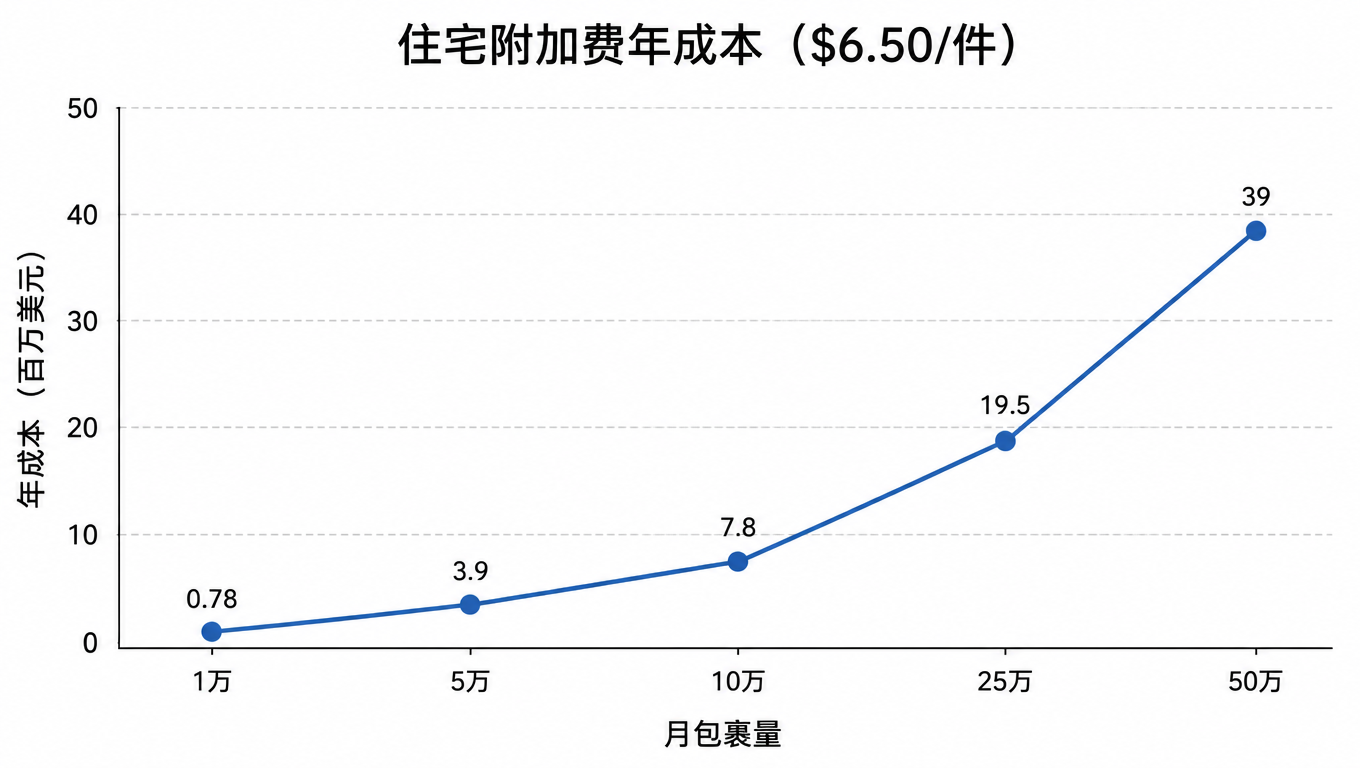
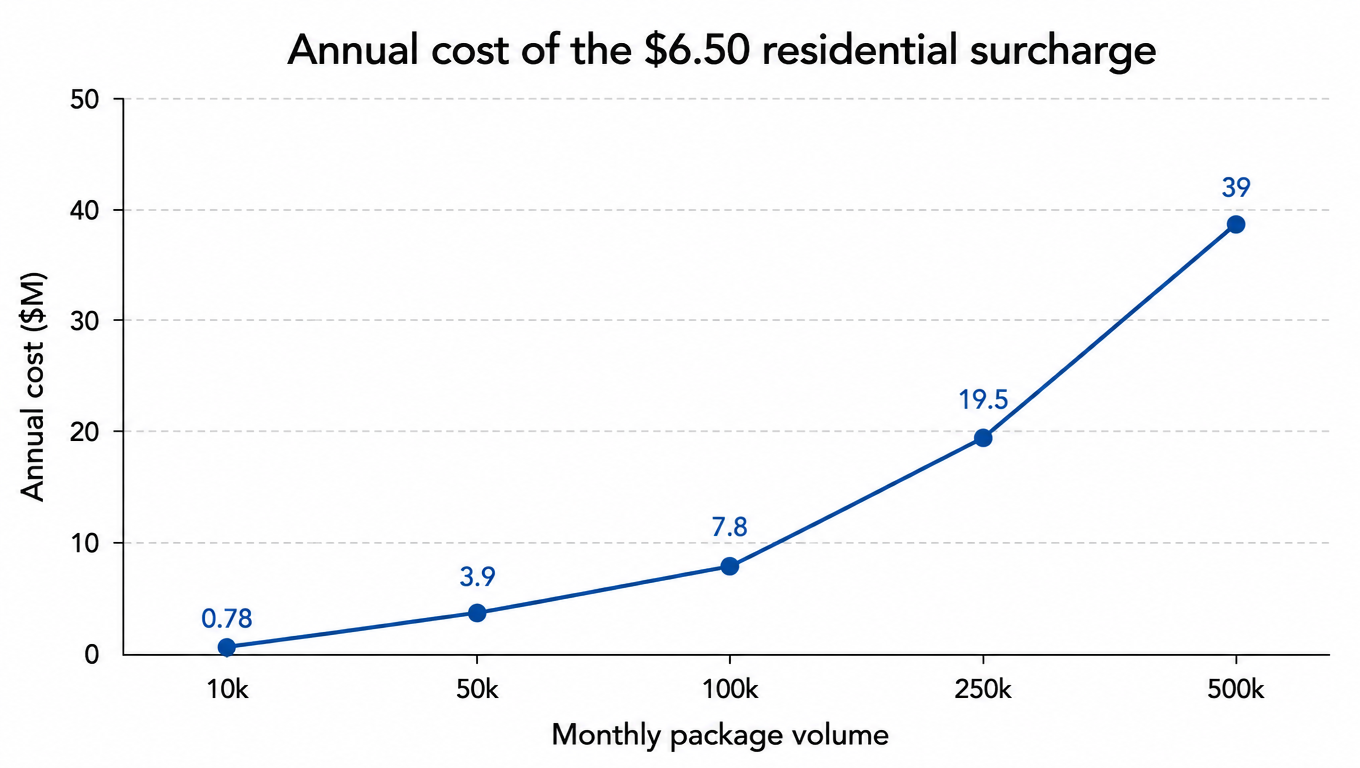
想看清附加费叠加本身有多大,算一笔住宅附加费的账。每月 1 万件住宅包裹、每件 6.50 美元,一年就是 78 万美元。每月 10 万件,就是 780 万美元。这笔钱买到的服务组件,大多数区域快递直接包含在基础费率里。To see how the surcharge stack alone scales, run the residential surcharge math. At 10,000 residential packages a month, $6.50 per package is $780,000 a year. At 100,000 packages a month it is $7.8 million. That is money spent for a service component most regional carriers simply include in the base rate.
住宅附加费单一项,就能吃掉一年几十万美元The residential surcharge alone can eat hundreds of thousands of dollars a year
三、区域快递版图3. The Regional Carrier Landscape
OnTrac 是这一组里最大的玩家,也是最容易的起点。它覆盖 35 个州加华盛顿特区,触达超过 70% 的美国人口;行业对比显示,在其覆盖线路上比全国地面服务快约 1.9 天。它每周七天运营,覆盖超过 75% 的服务区域,这对期待周末派送更新的零售商很重要。它的定价是全包的:没有住宅附加费,大多数服务没有旺季附加费。OnTrac is the largest of the group and the easiest place to start. Operating across 35 states plus Washington DC, it reaches more than 70 percent of the US population, and industry comparisons put it about 1.9 days faster than national ground on the lanes it covers. It runs seven-day-a-week operations across more than 75 percent of its footprint, which matters for retailers whose customers expect weekend delivery updates. Its pricing is all-in: no residential surcharge, no peak surcharge on most services.
GLS 是西部专家。它自营网络覆盖西部八个州,通过 Better Trucks、LSO、Courier Express 等区域承运商的伙伴关系,向东延伸到德克萨斯、伊利诺伊、威斯康星、俄亥俄、佐治亚和佛罗里达。这个伙伴模式值得理解:GLS 能报出全国级别的覆盖,而实际尾程由各区域的专家执行。GLS is the Western specialist. Its own network covers eight western states, and through partnerships with regional carriers such as Better Trucks, LSO and Courier Express it extends east into Texas, Illinois, Wisconsin, Ohio, Georgia and Florida. That partner model is worth understanding, because it means GLS can quote a national-style footprint while the actual final mile is executed by specialists in each region.
Better Trucks 2019 年创立于芝加哥,是快速增长的住宅派送专家。它自 2023 年以来覆盖范围大约翻倍,新增超过 1,100 个邮编,并已进入佛罗里达和佐治亚。它专注电商包裹的次日达,以可见性和技术作为卖点,对客户要求里程碑级追踪的 3PL 来说很契合。Better Trucks, founded in Chicago in 2019, is the fast-growing residential specialist. It has roughly doubled its coverage since 2023, adding more than 1,100 ZIP codes, and has expanded into Florida and Georgia. It focuses on next-day delivery for e-commerce parcels and markets itself on visibility and technology, which makes it a natural fit for 3PLs whose clients expect milestone-level tracking.
Veho 在超过 50 个美国市场运营次日达和两日达派送,客户包括 Macy's、Lululemon 和 Sephora,Flexport、ShipBob、Stord 等 3PL 也是它的合作伙伴。它围绕高端住宅派送构建网络,是这一组里品牌感最强的玩家,当你的客户在意开箱体验时这是优势。Veho operates next-day and two-day delivery across more than 50 US markets, with customers including Macy's, Lululemon and Sephora, and counts 3PLs such as Flexport, ShipBob and Stord among its partners. It built its network around premium residential delivery and is the most brand-heavy player in this group, which can be an advantage when your shipper clients care about the unboxing experience.
然后是深耕区域的专业选手。LSO 覆盖整个德州,派送触达 100% 的德州人口,并延伸到俄克拉荷马和路易斯安那。Spee-Dee 从威斯康星中部的基地出发,服务明尼苏达、威斯康星、爱荷华、伊利诺伊、南达科他和北达科他全境。这些承运商不上头条,但在各自主场,它们往往提供这篇文章里所有人中最优的费率、时效和密度组合,因为那些线路它们已经跑了数十年。Then there are the deep regional specialists. LSO covers all of Texas, delivering to 100 percent of the Texas population, and reaches into Oklahoma and Louisiana. Spee-Dee serves all of Minnesota, Wisconsin, Iowa, Illinois, South Dakota and North Dakota out of its base in central Wisconsin. These carriers do not make headlines, but inside their home geographies they often offer the best combination of rate, transit and density of anyone in this article, because they have been running those routes for decades.
在覆盖线路上,区域快递普遍比全国地面快 1 到 2 天On covered lanes, regional carriers run 1 to 2 days faster than national ground
最后是一批围绕高量电商成长起来的新世代承运商,这些名字你的很多客户自己收到的包裹上就有。UniUni 是其中最大的:覆盖约 80% 的加拿大人口和 60% 以上的美国人口,目标 2026 年底前把美国覆盖推进到 70%,通过 10 万多名司机的网络日处理超过 100 万件包裹。GOFO Express 2023 年创立、总部在洛杉矶,已经覆盖 47 个州、12,000 多个邮编和约 75% 的美国人口。SpeedX 宣称 95% 的准点率,在美加提供次日达和两日达,2026 年与多承运商软件提供商 ProShip 合作,触达 12,000 多个邮编和 1.75 亿人。SwiftX 是四家中最年轻的,2025 年 5 月起扩张全国网络,主打无隐藏费用。这些承运商为电商而生,常常以激进的定价换货量,值得纳入任何区域评估,但要拿出对待任何年轻网络同样的尽职:核实覆盖、测试线路、盯紧财务稳定性。Finally, a new generation of carriers has grown up around high-volume e-commerce, and these are the names many of your shipper clients already recognize from their own parcels. UniUni is the largest of the group: it reaches about 80 percent of Canada and more than 60 percent of the US population, has stated a goal of pushing US coverage to 70 percent by late 2026, and processes over a million parcels a day through a network of more than 100,000 drivers. GOFO Express, launched in 2023 and headquartered in Los Angeles, already covers 47 states, more than 12,000 ZIP codes and about 75 percent of the US population. SpeedX markets a 95 percent on-time record with next-day and two-day service across the US and Canada, and in 2026 partnered with multi-carrier software provider ProShip to reach more than 12,000 ZIP codes and 175 million people. SwiftX, the youngest of the four, has been expanding its national footprint since May 2025 with an explicit no-hidden-fees pricing pitch. These carriers are purpose-built for e-commerce and often price aggressively to win volume, which makes them worth adding to any regional evaluation, with the same diligence you would apply to any young network: verify coverage, test lanes, watch financial stability.
在基于这些信息构建策略之前有一个提醒:这个版图变化很快。OnTrac 的 35 州覆盖、Better Trucks 的扩张速度、GLS 的伙伴名单都是 2026 年年中的快照。把每一个覆盖声明当作合同谈判的起点,而不是永久事实。One caveat before you build a strategy on any of this: the landscape moves fast. OnTrac's 35-state footprint, Better Trucks' expansion pace and GLS's partner list are all snapshots as of mid-2026. Treat every coverage claim as a starting point for the contract conversation, not as a permanent fact.
四、什么时候划算:ROI 框架4. When It Pays Off: An ROI Framework
区域快递并非普遍更便宜,它们是在密度高的地方更便宜。ROI 的问题在于你的货量结构与它们的覆盖结构是否匹配,而答案可以用你自己的账单数据算出来。Regional carriers are not universally cheaper; they are cheaper where they are dense. The ROI question is whether your volume profile matches their footprint profile, and the answer is computable from your own billing data.
有利的画像长这样。货量高度集中在一个区域:如果 60% 或以上的包裹落在单一区域快递的覆盖内,你就有了建立专属区域合作关系的密度。有意义的日均货量门槛:大多数区域快递对区内日均 500 到 1,000 件才会认真报价,最好的费率往往伴随货量承诺。以及住宅占比高的结构:住宅地面包裹上的节省最大,因为那是全国附加费叠加咬得最狠的地方。The favorable profile looks like this. A high share of your volume concentrated in one region: if 60 percent or more of your parcels land inside a single regional footprint, you have the density to justify a dedicated regional relationship. A meaningful daily volume threshold: most regional carriers price seriously at 500 to 1,000 parcels per day in-region, and their best rates come with volume commitments. And a residential-heavy mix: the savings are largest on residential ground parcels, because that is where the national surcharge stack bites hardest.
不利的画像正好相反。如果你的货量均匀分散在全部八个分区,任何单一区域快递都只能覆盖一小片,集成成本摊在太少的合格货量上。如果你的客户发往偏远、乡村或非本土地区,区域覆盖结束的地方全国承运商接棒。如果你的货是超大件、异形件或需要定时派送窗口,大多数区域快递并不擅长。如果你的客户需要真正的全国次日达,只有 Veho 式网络接近。The unfavorable profile is the mirror image. If your volume is spread uniformly across all eight zones, no single regional carrier can cover more than a slice, and the integration cost is spread over too little eligible volume. If your shipper clients ship to remote, rural or non-contiguous geographies, regional footprints end and national carriers take over anyway. If your freight is oversized, irregular or requires time-definite delivery windows, most regionals are not built for it. And if your clients need true national next-day, only Veho-style networks come close.
方法分四步。第一步,拉出十二个月的账单数据,把每个目的邮编对照各候选承运商公布的覆盖范围。第二步,算出你当前的单件全包成本,基础费率加每一项附加费,只算覆盖范围内的线路。第三步,按低于全包成本 10% 到 35% 建模区域费率,只应用到合格货量上。第四步,加上定性收益:更快的时效、更少的退货,以及手握全国地面服务替代方案带来的谈判筹码。The method has four steps. First, pull twelve months of billing data and map every destination ZIP against each candidate carrier's published footprint. Second, compute your current all-in cost per parcel, base rate plus every surcharge, for the lanes inside those footprints. Third, model the regional rate at 10 to 35 percent below that all-in number, applied only to the eligible volume. Fourth, add the qualitative upside: faster transit, fewer returns and the negotiating leverage of having a credible alternative to national ground.
一个算例让规模变得具体。一家 3PL 每月发 12 万件、平均全包成本 8.50 美元,尾程月支出约 102 万美元。如果其中 30% 落在单一区域覆盖内,区域费率在这些包裹上省 20%,每月节省约 6.1 万美元,一年约 73.4 万美元。A worked example makes the scale concrete. A 3PL moving 120,000 parcels a month at an average all-in cost of $8.50 spends about $1.02 million monthly on last mile. If 30 percent of that volume lands inside one regional footprint, and the regional rate saves 20 percent on those parcels, the savings are roughly $61,000 a month, about $734,000 a year.
切换的一次性成本,API 集成、面单更换、测试和合约工作,对中型 3PL 通常在 3 万到 8 万美元之间。对照一年 73.4 万美元的节省,回本周期以周计而不是以年计。真正的约束很少是钱,而是在不中断服务的前提下跑完迁移的运营纪律。The one-time cost of the switch, API integration, label changes, testing and contract work, typically lands between $30,000 and $80,000 for a mid-size 3PL. Against $734,000 a year in savings, the payback is measured in weeks, not years. The real constraint is rarely the money; it is the operational discipline to run the migration without disrupting service.
五、混合网络设计:全国干线 + 区域尾程5. Hybrid Network Design: National Linehaul + Regional Final Mile
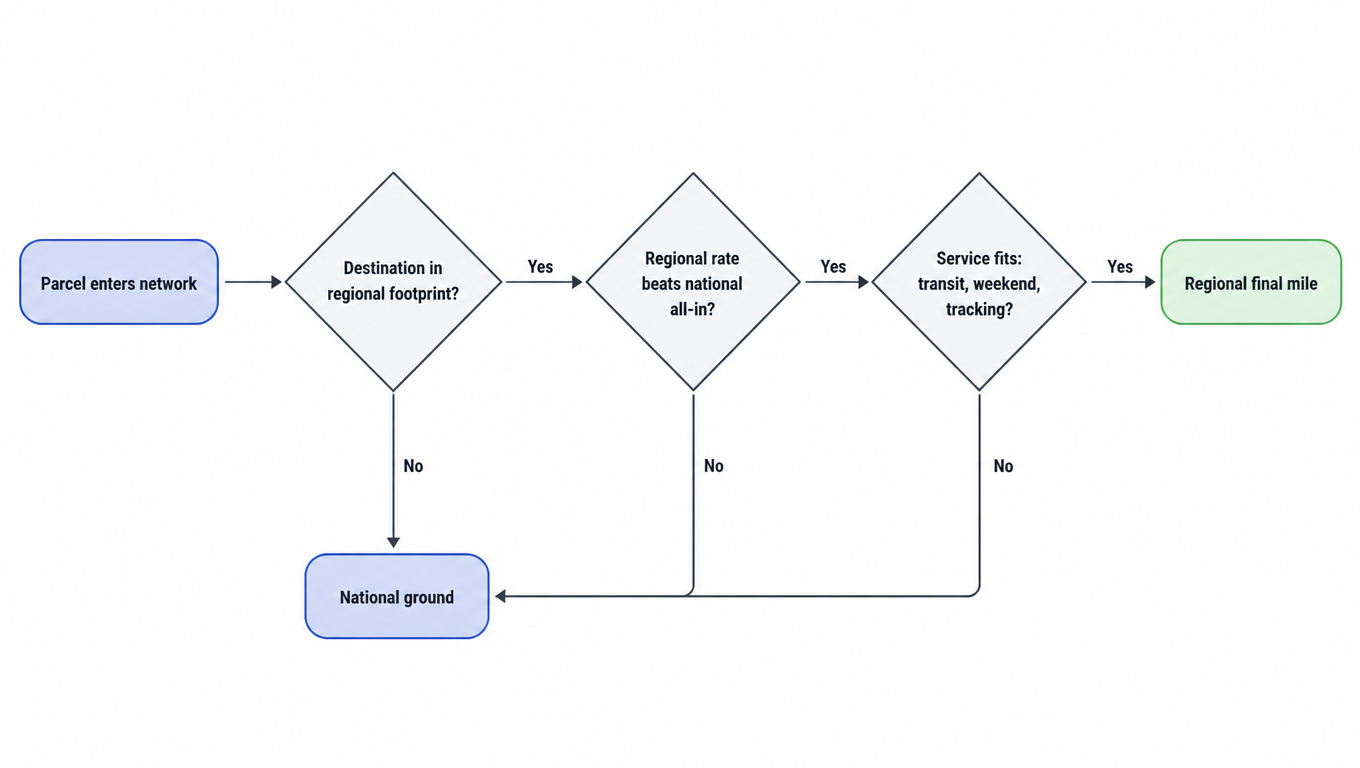
制胜架构不是「全部切换成区域快递」,而是让每种承运商各展所长的混合。默认设计按分区拆流:跨区包裹走全国地面网络,它在规模化的长途干线运输上无可匹敌;区内包裹交给区域快递做尾程,那是全国网络单件成本最贵的一段。The winning architecture is not "switch everything to regional." It is a hybrid that plays each carrier type to its strength. The default design splits the flow by zone: cross-region parcels travel through the national ground network, which is unbeatable for long-haul linehaul at scale, while in-region parcels hand off to the regional carrier for the final mile, where the national network is most expensive per stop.
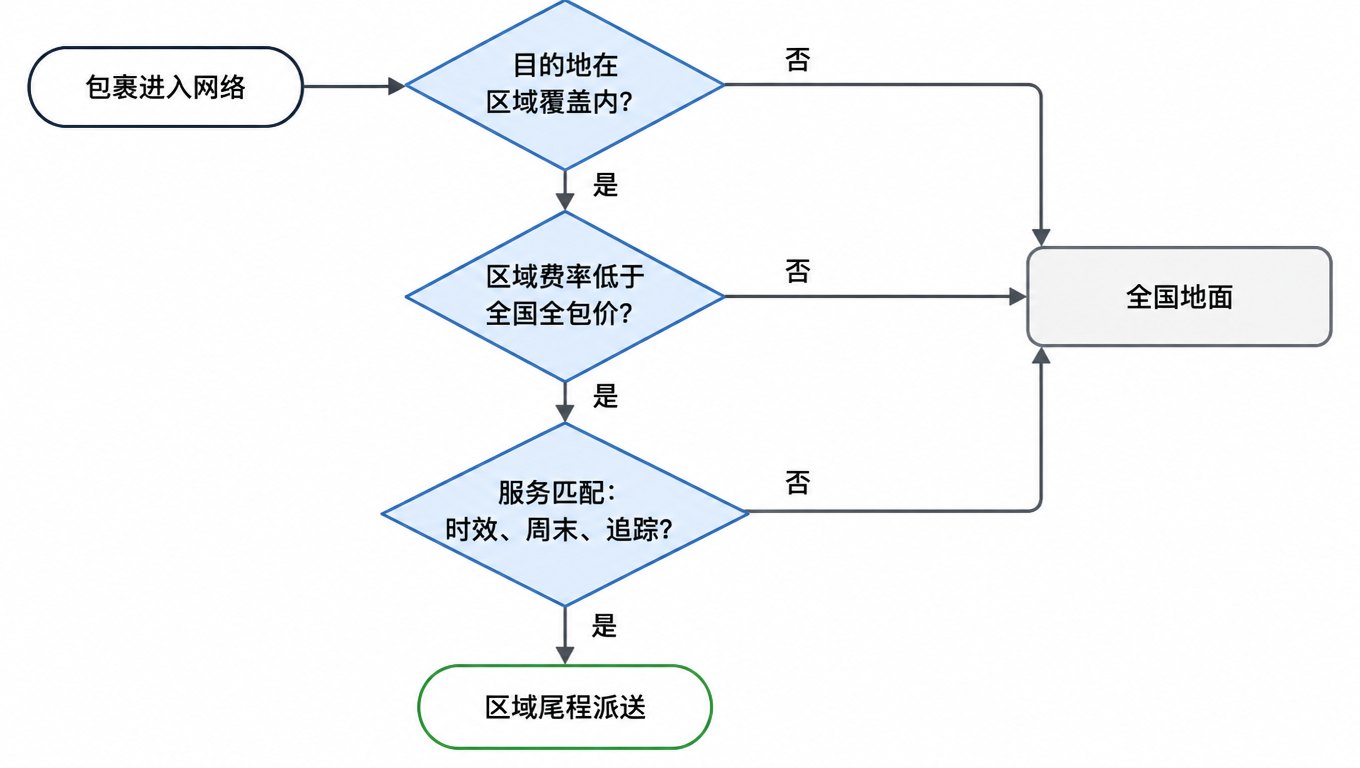
实际操作中每个包裹要做两个路由决策。第一个是地理判断:目的地是否落在区域覆盖内且时效可接受?第二个是经济判断:在这条线路上、以这个货量,区域费率是否真的低于全国全包价?达拉斯的 3PL 发到达拉斯消费者手里的包裹几乎自动走区域;发往俄勒冈波特兰的同一件包裹,则先走全国地面到区域枢纽再交接。In practice this means two routing decisions per parcel. The first is geographic: does the destination fall inside a regional footprint with acceptable transit? The second is economic: on this lane, at this volume, does the regional rate actually beat national all-in? A parcel from a Dallas 3PL to a Dallas consumer is a near-automatic regional move; the same parcel to Portland, Oregon rides national ground to a regional hub and hands off there.
这种多承运商路由在现代化物流平台上已是标准做法。EasyPost、Shippo、ShipStation 这类工具支持按线路配置承运商规则,货量足够的 3PL 通常直接和各区域快递谈 API 直连。集成工作真实但有限:承运商入驻、面单格式、条码标准、追踪数据和异常处理,每个新承运商一套,然后路由引擎为每个包裹挑选正确的那家。This kind of multi-carrier routing is standard practice with modern shipping platforms. Tools like EasyPost, Shippo and ShipStation support per-lane carrier rules, and 3PLs with enough volume typically negotiate direct API connections with each regional carrier. The integration work is real but bounded: carrier onboarding, label formats, barcode standards, tracking feeds and exception handling for each new carrier, then the routing engine picks the right one per parcel.
拆分发货策略值得专门设计。一个订单的多个箱子可以智能拆分:区内箱走区域快递,跨州箱走全国网络,即使两个承运商运输同一票货,客户看到的仍是整合的追踪体验。这正是 3PL 的立身之本,也是大多数单承运商货主做不到的事。Split-shipment strategy deserves explicit design. A single order with multiple boxes can be split across carriers intelligently: the in-region box goes regional, the cross-country box goes national, and the customer gets one consolidated tracking experience even though two carriers moved the shipment. This is where a 3PL earns its keep, and it is exactly what most single-carrier shippers cannot do.
每个包裹的路由决策:覆盖、费率、服务三项都过才走区域Per-parcel routing: footprint, rate, and service fit all gate the regional move
同样的逻辑延伸到服务特性。区域快递越来越多地提供周末派送,这对电商是真正的差异化:一件在周末会躺在全国网络里的包裹,在区域覆盖内周六就能派送。如果周末派送对你的客户很重要,把它写进路由规则,而不是事后才想。The same logic extends to service features. Regional carriers increasingly offer weekend delivery, which is a genuine differentiator for e-commerce: a parcel that would sit in a national network over the weekend moves on a Saturday in a regional footprint. If weekend delivery matters to your shipper clients, build it into the routing rules rather than treating it as an afterthought.
六、迁移路线图:从评估到上线6. The Migration Playbook: From Evaluation to Go-Live
第一步是数据审计。拉出十二个月的账单和发货历史,用 ROI 框架建立邮编到覆盖范围的映射。交付物是一份区域快递可行的线路清单,每条线路带上当前单件全包成本。这里的坑是跳过附加费计算:只看基础费率对比会美化全国承运商,因为 6.50 美元住宅附加费、燃油和旺季附加费才是真实差距所在。验收标准:你能说出节省最多的前十名线路,并为每个数字辩护。Step one is the data audit. Pull twelve months of billing and shipment history, and build the ZIP-to-footprint map from the ROI framework. The deliverable is a list of lanes where regional is viable, with current all-in cost per parcel on each. The pitfall here is skipping the surcharge math: base-rate comparisons flatter the national carrier, because the $6.50 residential surcharge, fuel and peak add-ons are where the real gap lives. Acceptance criterion: you can name the top ten lanes by savings and defend each number.
迁移从审计开始:先搞清每个包裹的真实成本,再谈换承运商The migration starts with an audit: know what each parcel actually costs before you switch carriers
第二步是合约谈判。请每家区域快递按你真实的线路结构报全包费率,把附加费清单白纸黑字拿到:住宅、燃油、旺季、周末、大件。这里的坑是接受一个好看的标题费率,然后发现附加费叠加重新制造了全国承运商的问题。验收标准:一份针对你线路的书面全包费率卡,至少有效十二个月,没有意外收费项。Step two is contract negotiation. Ask each regional carrier for an all-in rate quote on your actual lane mix, and get the surcharge schedule in writing: residential, fuel, peak, weekend, large package. The pitfall is accepting a headline rate that looks great and then discovering a surcharge stack that recreates the national problem. Acceptance criterion: a written all-in rate card for your lanes, valid for at least twelve months, with no surprise line items.
第三步是集成。连接承运商 API,把面单和条码映射到现有技术栈,把追踪数据接进客户可见的追踪页面,配置路由引擎的线路规则。这里的坑是把区域面单当成即插即用:每家承运商有自己的面单和条码标准,搞错就会产生扫不了的包裹和失败的首次派送。验收标准:一件测试包裹从你的 WMS 到承运商最终扫描全程正确,每家入驻承运商都过一遍。Step three is integration. Connect the carrier's API, map labels and barcodes to your existing stack, wire tracking feeds into your client-facing tracking pages, and configure the routing engine's lane rules. The pitfall is treating regional labels as drop-in replacements; each carrier has its own label and barcode standards, and getting this wrong produces unscannable parcels and failed first attempts. Acceptance criterion: a test parcel scans correctly end to end, from your WMS to the carrier's final scan, on every carrier you onboard.
第四步是试点。在几条高节省线路上每天跑 50 到 100 件,持续两到四周。对比同线路全国基线的时效、准时率、异常率和理赔。这里的坑是在网络还没在正常负载下证明自己之前就冲进旺季。验收标准:试点准时率不低于全国基线,零系统性扫描或面单问题。Step four is the pilot. Run 50 to 100 parcels a day on a handful of high-savings lanes for two to four weeks. Measure transit time, on-time percentage, exception rate and claims against the same lanes' national baseline. The pitfall is launching on peak volume before the network has proven itself at normal load. Acceptance criterion: pilot on-time percentage at or above the national baseline, with zero systemic scan or label issues.
第五步是分阶段放量。一个区域一个区域地扩展,从第一步前十名清单里的线路开始。这里的坑是一次切换整个区域,然后在边缘发现覆盖空洞;分波次扩展,让每一波的教训喂给下一波。验收标准:过渡期间没有任何客户经历服务回退。Step five is the phased rollout. Expand region by region, starting with the lanes from step one's top-ten list. The pitfall is switching a whole region at once and discovering a coverage gap at the edges; expand in waves so each wave's learnings inform the next. Acceptance criterion: no shipper client experiences a service regression during the transition.
第六步是监控。为每家承运商建立周度记分卡:单件成本、时效、准时率、异常率、每千件理赔数、周末派送表现。这里的坑是假设初始费率永远不变;在合约续签时重看记分卡,每年重跑 ROI 模型。验收标准:记分卡存在、每周复盘、直接喂给明年的承运商决策。Step six is monitoring. Stand up a weekly scorecard per carrier: cost per parcel, transit time, on-time percentage, exception rate, claims per 1,000 parcels, and weekend-delivery performance. The pitfall is assuming the initial rates hold forever; revisit the scorecard at contract renewal and re-run the ROI model annually. Acceptance criterion: the scorecard exists, is reviewed weekly, and feeds directly into next year's carrier decisions.
七、陷阱与规避7. Pitfalls and How to Avoid Them
覆盖空洞是最常见的失败模式。区域覆盖有边缘,一件刚好在覆盖边缘外的包裹,如果路由规则没有显式处理,会悄悄落回昂贵的全国运输。解决办法是三层兜底:首选区域、有第二区域就用第二区域、最后是全国地面,由路由引擎强制顺序。绝不让一家区域快递成为某条线路的唯一选项。Coverage gaps are the most common failure mode. Regional footprints have edges, and a parcel just outside the footprint can silently fall back to an expensive national move if your routing rules do not handle it explicitly. The fix is a three-tier fallback: primary regional, secondary regional where one exists, then national ground, with the routing engine enforcing the order. Never let a regional carrier be the only option on a lane.
追踪可见性是第二个陷阱。区域快递的追踪基础设施比以前好了,但仍不如全国地面成熟,看不到里程碑扫描的客户会打你的客服电话。解决办法是契约化的:要求承运商通过 API 暴露里程碑级追踪,把这些事件接进客户可见的追踪页,让体验无论哪家承运商承运都一致。另外把周末和节假日服务承诺白纸黑字确认;一家声称周末派送但周六不扫描的承运商,会悄悄打破你的服务承诺。Tracking visibility is the second trap. Regional tracking infrastructure is better than it used to be but still less mature than national ground, and a shipper client who cannot see milestone scans will call your support team. The fix is contractual: require the carrier to expose milestone-level tracking via API, and wire those events into your client-facing tracking page so the experience is identical regardless of which carrier moved the parcel. Also verify weekend and holiday service commitments in writing; a carrier that claims weekend delivery but does not scan on Saturdays will quietly break your service promises.
退货是第三个陷阱。出库网络和退货网络是两个问题,很多区域快递的退货覆盖比派送覆盖小。只能去几个地点退货的客户不会有好的体验。解决办法是单独设计逆向物流:出库走区域强项,退货走投递密度足够的全国网络,各自配清晰的路由规则。Returns are the third trap. The outbound network and the returns network are different problems, and many regional carriers have smaller returns footprints than their delivery footprints. A customer who can only drop off a return at a handful of locations will not have a good experience. The fix is to design the reverse logistics separately: regional outbound where it is strong, national returns where the drop-off density requires it, and clear routing rules for each.
最后,把承运商稳定性当作要管理的风险。区域行业在整合:LaserShip 2021 年以 13 亿美元收购 OnTrac,覆盖、定价和服务在那次过渡中发生了实质性变化。一家融资失败或被收购的承运商,可能一夜之间改变覆盖、定价或服务。解决办法是多元化:在你的覆盖范围内至少用两家区域快递,谈判服务和费率变化的合约保护条款,像关注自己客户那样关注承运商的财务状况。Finally, treat carrier stability as a risk to be managed. The regional sector consolidates: LaserShip acquired OnTrac for $1.3 billion in 2021, and coverage, pricing and service changed materially through that transition. A carrier that loses funding or gets acquired can change coverage, pricing or service overnight. The fix is diversification: use at least two regional carriers across your footprint, negotiate contract protections for service and rate changes, and watch the financial health of your carriers the way you watch your own clients.
八、给决策者的行动清单8. Action Checklist for Decision-Makers
拉出十二个月账单数据,按线路计算单件全包成本,基础费率加每一项附加费。Pull twelve months of billing data and compute all-in cost per parcel by lane, base rate plus every surcharge.
把目的邮编对照 OnTrac、GLS、Better Trucks、Veho、LSO、Spee-Dee、UniUni、GOFO、SpeedX、SwiftX 的覆盖范围。Map destination ZIPs against the footprints of OnTrac, GLS, Better Trucks, Veho, LSO, Spee-Dee, UniUni, GOFO, SpeedX and SwiftX.
跑 ROI 模型:只把 10% 到 35% 的节省应用到覆盖内的合格货量。Run the ROI model: apply 10 to 35 percent savings to the eligible in-footprint volume only.
验证有利画像:区域集中度 60% 以上、区内日均 500 到 1,000 件、住宅占比高。Validate the favorable profile: regional concentration of 60 percent or more, 500 to 1,000 parcels per day in-region, residential-heavy mix.
从至少两家区域快递拿到带完整附加费清单的书面全包费率卡。Get written all-in rate cards with the full surcharge schedule from at least two regional carriers.
设计混合网络:跨区走全国干线,区内走区域尾程,配三层兜底规则。Design the hybrid: cross-region via national linehaul, in-region via regional final mile, with three-tier fallback rules.
接通追踪 API,让客户可见的追踪无论哪家承运商都保持里程碑级。Wire tracking APIs so client-facing tracking stays milestone-level regardless of carrier.
任何区域级切换前,先每天试点 50 到 100 件、持续两到四周。Pilot on 50 to 100 parcels a day for two to four weeks before any region-wide switch.
一个区域一个区域放量,然后建立周度承运商记分卡。Roll out region by region, then stand up a weekly carrier scorecard.
每年重跑 ROI 模型,合约续签时重新谈判。Re-run the ROI model annually and renegotiate at contract renewal.
支持区域快递的论据不是反对全国地面。它是支持精准。全国承运商仍然拥有长途、偏远线路和定时派送。但在区域快递密度高的线路上,它通常便宜 10% 到 35%、快 1 到 2 天,而且没有那套已经悄悄成为全国承运商利润引擎的附加费叠加。对 3PL 来说,这个组合不是边角优化,而是「把费率上涨转嫁给客户」和「真正帮客户降本」之间的区别,后者是每年一月大承运商涨价的市场里,赢得客户唯一持久的方式。The case for regional parcel carriers is not an argument against national ground. It is an argument for precision. National carriers still own the long haul, the remote lane and the time-definite delivery. But on the lanes where a regional carrier is dense, it is typically 10 to 35 percent cheaper, 1 to 2 days faster, and free of the surcharge stack that has quietly become the national carriers' profit engine. For a 3PL, that combination is not a niche optimization. It is the difference between passing along rate increases and actually reducing your shipper clients' costs, which is the only durable way to win their business in a market where the big carriers raise prices every January.
在覆盖线路上通常便宜 10% 到 35%,快 1 到 2 天,而且大多数报全包价,没有住宅、燃油和旺季附加费叠加。前提是货量密度与覆盖范围匹配;密度不够的区域,全国承运商仍然更划算。On covered lanes they are typically 10 to 35 percent cheaper and 1 to 2 days faster, and most quote all-in pricing without the residential, fuel, and peak surcharge stack. The catch is density: only where your volume matches their footprint does the math win; elsewhere national ground still makes sense.
用你自己的账单数据算:拉十二个月账单,按线路算单件全包成本,把目的邮编对照候选承运商覆盖范围。有利画像:区域集中度 60% 以上、区内日均 500 到 1,000 件、住宅占比高。Compute it from your own billing data: pull twelve months of invoices, calculate all-in per-parcel cost by lane, and map destination ZIPs against candidate footprints. The favorable profile: 60 percent or more of volume in one region, 500 to 1,000 parcels per day in-region, and a residential-heavy mix.
覆盖线路上时效通常更快,快 1 到 2 天,部分还提供周末派送。追踪基础设施不如全国地面成熟,但可以在合约里要求里程碑级追踪 API,并接进你自己的客户追踪页,让体验保持一致。On covered lanes transit is usually faster, 1 to 2 days, and some offer weekend delivery. Tracking infrastructure is less mature than national ground, but you can contract for milestone-level tracking via API and wire it into your own client-facing tracking page so the experience stays consistent.
按分区拆流:跨区包裹走全国地面干线,区内包裹交给区域快递做尾程;每条线路配三层兜底(首选区域、备选区域、全国地面),先在少数高节省线路试点两到四周,再逐区域放量。Split by zone: cross-region parcels ride national ground linehaul, in-region parcels hand off to regional carriers for the final mile; every lane gets a three-tier fallback (primary regional, secondary regional, national ground). Pilot on a few high-savings lanes for two to four weeks, then roll out region by region.
想让每个包裹都用最便宜的合格运价发出去?Ready to route every parcel at the cheapest qualified rate?
EasyShippingX 帮你落地混合派送网络:全国承运商与区域快递统一接入、按线路配置路由规则、实时比价并对比全包成本、附加费集中管理。自有账号运价直通,OnTrac、GLS、Better Trucks、Veho、UniUni、GOFO、SpeedX、SwiftX 等区域承运商随时可配。EasyShippingX helps you run the hybrid: national and regional carriers in one integration, per-lane routing rules, real-time rate shopping with all-in cost comparison, and accessorials managed in one place. Your own-account rates pass through, and regional carriers like OnTrac, GLS, Better Trucks, Veho, UniUni, GOFO, SpeedX, and SwiftX are ready to configure.