3PL 指南3PL Guide

USPS 与区域快递怎么选:3PL 实操指南USPS vs Regional Carriers: A Practical Guide for 3PLs

每个发货周,3PL 运营都要做同一个决定,而且一天要做几千次:这个包裹交给 USPS,还是交给区域快递?答案曾经很简单。轻的和远途的交给 USPS,区域快递只接自家覆盖范围内的重货。这个二元格局已经不存在了。混合服务把最后一公里交回 USPS,新一代区域快递运营着覆盖全美的自有网络,旺季附加费每年秋天都会重新洗牌一次成本账。Every shipping week, a 3PL operator makes the same decision thousands of times: hand this parcel to USPS, or to a regional carrier? The answer used to be simple. USPS took the light stuff and the long lanes; regional carriers took heavier parcels in their own footprint. That binary is gone. Hybrid services hand the final mile back to USPS, next-generation regionals run their own nationwide networks, and peak surcharges reshuffle the math every fall.

本指南从四个维度对比这两类承运商:费率、时效、丢件率、旺季表现。前半部分是战略,后半部分是运营细节,最后一部分给你一套本周就能上线的路由框架。This guide compares the two categories across four dimensions: rates, transit time, loss rate, and peak season performance. The first half is strategy, the second half is operations, and the last section gives you a routing framework you can implement this week.

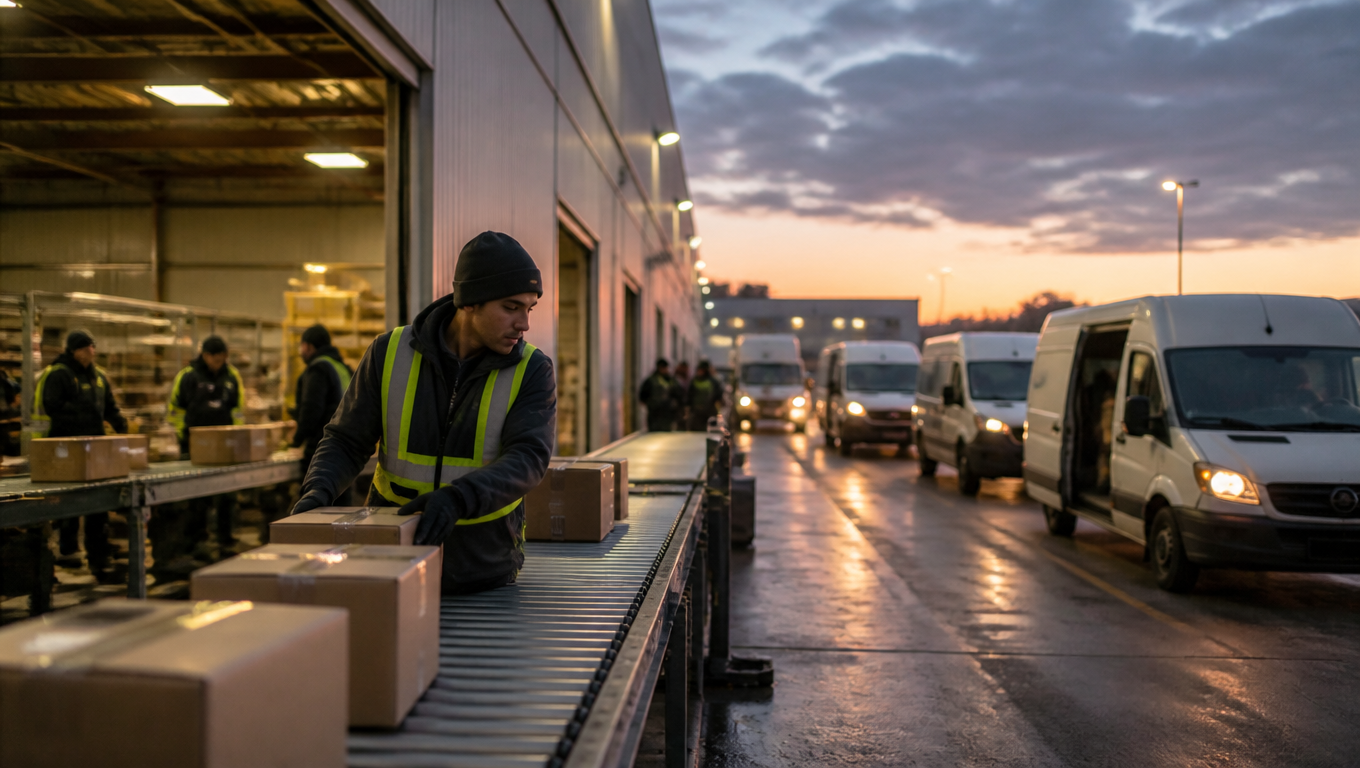
A regional parcel sort facility at dawn, workers loading boxes onto a conveyor line with delivery vans waiting outside
区域快递的分拣中心天不亮就开始运转,这是和 USPS 竞争最激烈的地方A regional sort facility running before dawn, where the fight with USPS is fiercest

一、为什么现在值得重看这个对比1. Why This Comparison Matters Now

三股力量汇合,让 USPS 与区域快递的选择值得重新审视。Three forces have converged to make the USPS-versus-regional decision worth re-examining.

第一,区域快递正在抢走真实份额。随着 2020 年代电商量增长,OnTrac、Veho(原 LaserShip)和一批技术驱动的新网络在高人口走廊建起密度,开始赢下那些过去默认交给 USPS 的包裹。当单件成本随密度下降,区域内线路就成了价格战场。First, regional carriers are taking real share. As ecommerce volume grew through the 2020s, OnTrac, Veho (formerly LaserShip), and a new wave of tech-forward networks built density in high-population corridors and started winning parcels that used to default to USPS. When a carrier's per-package cost drops with density, the in-region lane becomes a price battleground.

第二,USPS 的费率一直在涨。邮政署年复一年上调商业费率,每个旺季都会带来一轮新的假日附加费。对利润很薄的 3PL 来说,数万件包裹上的每件附加费不是噪声,而是一个值得用路由绕开的成本项。Second, USPS pricing keeps moving up. The Postal Service has raised commercial rates year after year, and each peak season brings a new round of holiday surcharges on commercial parcels. For a 3PL running thin margins, a per-parcel surcharge across tens of thousands of packages is not noise. It is a line item worth routing around.

第三,选项变多了。今天的 3PL 可以在 USPS 核心产品、混合服务(UPS SurePost、FedEx Ground Economy、DHL eCommerce)、传统区域快递(OnTrac、Veho)和新一代区域网络(UniUni、GOFO、SwiftX Express、SpeedX)之间选择。选项更多意味着决策不再是二选一。赢家是按线路混用模式的 3PL,而不是押注单一承运商的 3PL。Third, the menu got bigger. A 3PL today can choose between USPS core products, hybrid services (UPS SurePost, FedEx Ground Economy, DHL eCommerce), traditional regionals (OnTrac, Veho), and next-generation regionals (UniUni, GOFO, SwiftX Express, SpeedX). More options means the decision is no longer binary. The winners are the 3PLs that mix modes per lane rather than committing to a single carrier.
二、两类承运商怎么分2. How the Two Categories Break Down

在比较任何东西之前,先要有一张干净的版图,因为"区域快递"这个词现在涵盖了两个差异很大的群体。Before comparing anything, you need a clean map of the field, because "regional carrier" now covers two very different groups.

USPS 核心产品。First-Class Package Service 处理不超过 15.99 盎司的包裹,覆盖大多数轻量电商订单。Priority Mail 承诺 1 到 3 天送达,限重 70 磅。Parcel Select 是走量产品:发货方或集货商把包裹运一段,最后一公里交给 USPS,是许多大型电商项目的骨干。USPS core products. First-Class Package Service handles parcels up to 15.99 oz, which covers most lightweight ecommerce orders. Priority Mail promises 1 to 3 day delivery for packages up to 70 lb. Parcel Select is the high-volume product: a shipper or consolidator moves the parcel partway, and USPS carries out the final mile. It is the backbone for many large ecommerce programs.

混合服务。UPS SurePost、FedEx Ground Economy、DHL eCommerce 和 UPS Mail Innovations 的工作原理相同:大型综合承运商或集货商负责干线运输,最后一公里交给 USPS。权衡很简单,比 Priority Mail 便宜,但要等更久,通常 2 到 7 天。Hybrid services. UPS SurePost, FedEx Ground Economy, DHL eCommerce, and UPS Mail Innovations all work the same way: a big integrator or consolidator handles the linehaul, then hands the parcel to USPS for the final mile. The trade is simple. You pay less than Priority Mail, and you wait longer, typically 2 to 7 days.

传统区域快递。OnTrac 和 Veho(吸收了 LaserShip 网络)在划定覆盖区内用自有派送车队运营,承诺区内 1 到 3 天送达。Traditional regionals. OnTrac and Veho (which absorbed the LaserShip network) run their own delivery fleets across a defined footprint, promising 1 to 3 day service within it.

新一代区域网络。UniUni、GOFO、SwiftX Express 和 SpeedX 是美国境内尾程派送网络,不是跨境直发服务商。UniUni 起家于加拿大,正在全美扩张。GOFO 在美西和加州建立了密度。SwiftX Express 正在快速铺开全美覆盖。SpeedX 把自己定位为技术驱动的电商尾程承运商。每一家都在自己服务的区域内运营自有派送业务。Next-generation regionals. UniUni, GOFO, SwiftX Express, and SpeedX are US domestic last-mile networks, not cross-border direct carriers. UniUni started in Canada and has been expanding across the US. GOFO built density in the West and California. SwiftX Express has been rolling out nationwide coverage. SpeedX positions itself as a tech-driven ecommerce last-mile carrier. Each runs its own delivery operation in the regions it serves.

产品/线路Product / lane 干线Linehaul 最后一公里Last mile 典型用途Typical use case
USPS First-Class / PriorityUSPS First-Class / PriorityUSPSUSPSUSPSUSPS轻量且快,全国可达Lightweight and fast, nationwide
USPS Parcel SelectUSPS Parcel Select发货方/集货商Shipper / consolidatorUSPSUSPS大规模轻量走量High-volume lightweight at scale
UPS SurePostUPS SurePostUPSUPSUSPSUSPS比 Priority 便宜,更慢Cheaper than Priority, slower
FedEx Ground EconomyFedEx Ground EconomyFedExFedExUSPS / 本地USPS / local电商轻量件Ecommerce lightweight
DHL eCommerce / UPS Mail InnovationsDHL eCommerce / UPS Mail InnovationsDHL / UPSDHL / UPSUSPSUSPS跨境 + 境内大规模走量High-volume international + domestic
OnTrac / VehoOnTrac / Veho自有网络Own network自有网络Own network区内 1 到 3 天In-region 1-3 day
UniUni / GOFO / SwiftX / SpeedXUniUni / GOFO / SwiftX / SpeedX自有网络Own network自有网络Own network区内电商尾程In-region ecommerce last mile

三、费率对比3. Rate Comparison

费率是两类承运商差异最大的维度,而且规律按重量和距离分化。Rates are where the categories diverge most sharply, and the pattern breaks down by weight and by distance.

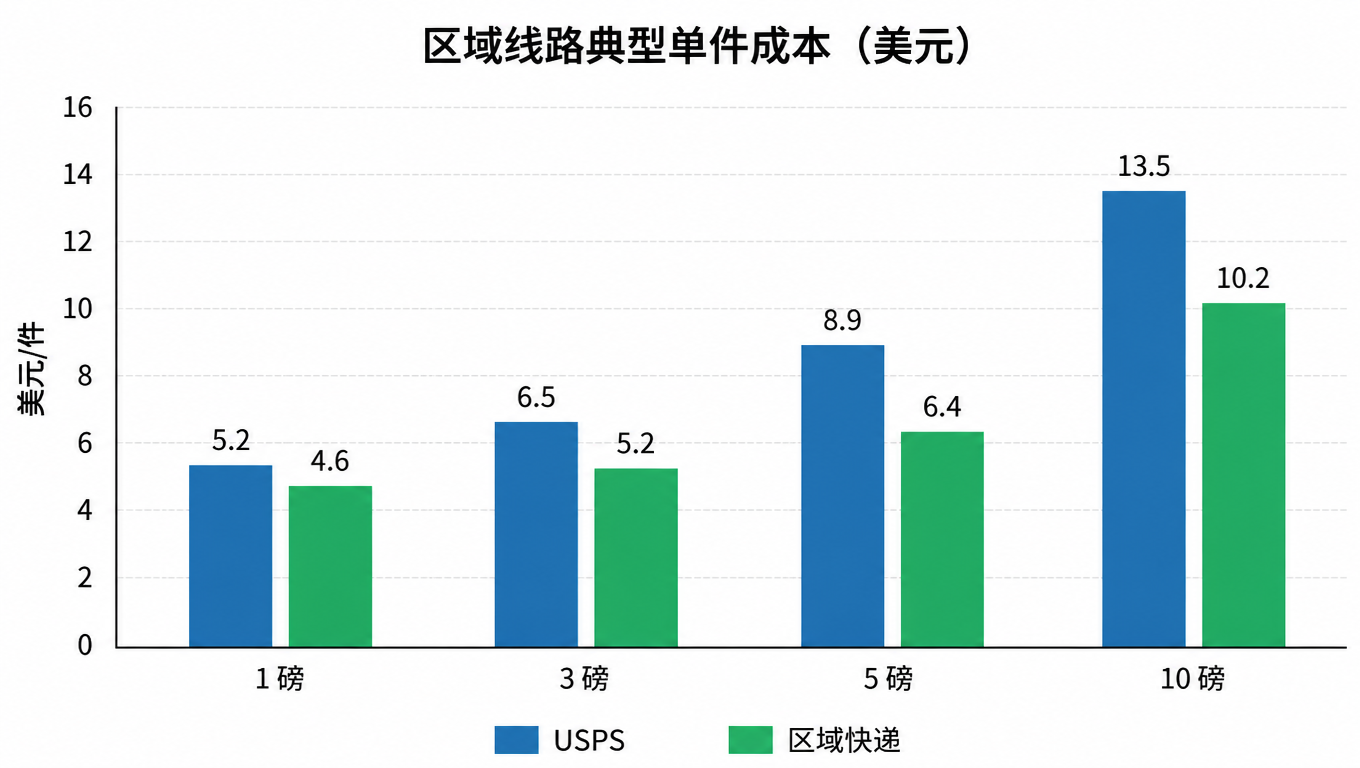
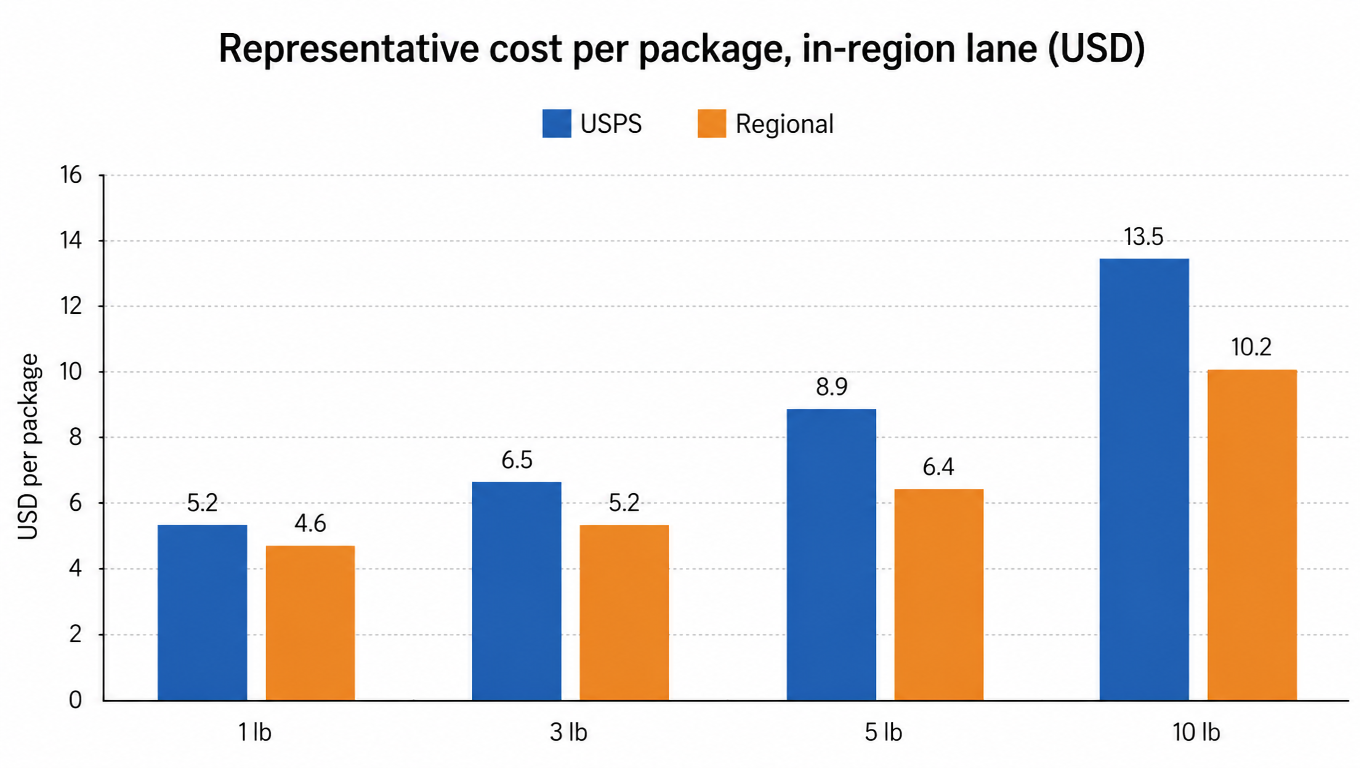
重量段。1 磅以下的轻量件,USPS 和区域快递的价差很小,区域内线路上常常不到 1 美元。First-Class Package Service 在这个重量段很有竞争力,为省 1 美元换承运商可能不值得做集成工作。从 1 到 5 磅开始画面变化,区域网络在这里建立真实优势,5 磅以上优势进一步拉大。在典型区域内线路上用有代表性的商业费率看,3 磅包裹 USPS Parcel Select 约 6.50 美元,区域快递约 5.20 美元;5 磅时差距扩大到约 8.90 美元对 6.40 美元。把这些当作对比用的典型值,不是报价,因为合约和分区会改变它们。Weight bands. On lightweight parcels under 1 lb, the rate gap between USPS and the regionals is small, often under a dollar on an in-region lane. First-Class Package Service is aggressive at this weight, and switching carriers for a dollar's worth of savings may not justify the integration work. The picture changes from about 1 to 5 lb, where regional networks build a real advantage, and widens again above 5 lb. On a typical in-region lane with representative commercial pricing, a 3 lb parcel runs about $6.50 with USPS Parcel Select and about $5.20 with a regional carrier; at 5 lb the gap grows to roughly $8.90 versus $6.40. Treat these as typical numbers for comparison, not quotes, since contracts and zones shift them.

区域线路典型单件成本柱状图:1 磅、3 磅、5 磅、10 磅,USPS 与区域快递的美元/件对比Bar chart of representative cost per package on an in-region lane: 1 lb, 3 lb, 5 lb, 10 lb, USPS vs regional (USD per package)
重量越大,区域快递的价差优势越明显The heavier the parcel, the wider the regional rate advantage

距离。USPS 按分区定价,First-Class 和 Parcel Select 费率在长途跨州线路上仍有竞争力,因为网络是全美通用的。区域快递是为短途密度而建的。洛杉矶到旧金山、达拉斯到休斯顿、芝加哥到密尔沃基,这些线路正是区域快递在价格和速度上双双打败 USPS 的地方。把同一个包裹发到对岸,优势就翻回 USPS 一边。Distance. USPS prices by zone, and its First-Class and Parcel Select rates stay competitive on long, cross-country lanes because the network is universal. Regionals are built for short-haul density. A lane from Los Angeles to San Francisco, from Dallas to Houston, or from Chicago to Milwaukee is exactly where a regional carrier beats USPS on both price and speed. Send that same parcel to the opposite coast and the advantage flips back to USPS.

偏远和无法分区地址。USPS 按分区费率投递到全美每一个住宅和邮政信箱地址。区域快递只为自己覆盖的派送范围定价,有些对偏远邮编、乡村线路或服务区外的地址收取附加费。如果你的量里有相当一部分落在乡村或难达邮编,要把这点算进对比里,因为区域快递的"省"可能一条线路一条线路地蒸发。Remote and non-zoneable addresses. USPS delivers to every residential and PO box address in the country at zone-based rates. Regionals price for their served footprint, and some charge extras for remote ZIPs, rural routes, or addresses outside their standard service area. If a meaningful share of your volume lands in rural or hard-to-reach ZIPs, factor that into the comparison, because the regional "savings" can evaporate lane by lane.

混合服务居中。SurePost 和 Ground Economy 在轻量件上比 Priority Mail 便宜一大截,代价是更慢、更不可预测的时效。当客户能接受 3 到 7 天、省钱比速度更重要时,它们就是正确的工具。Hybrids sit in the middle. SurePost and Ground Economy undercut Priority Mail by a meaningful margin on lightweight parcels, at the cost of slower, less predictable delivery. They are the right tool when a customer will accept 3 to 7 days and the savings matter more than the speed.

四、时效对比4. Transit Time Comparison

看时钟,两类承运商沿着城市与乡村的分界线干净地分成两半。On the clock, the two categories split cleanly along the urban-rural line.

城市核心。在高密度都市走廊,区域快递的 2 日达覆盖在区内线路上已经持平或超过 USPS。OnTrac 和 Veho 承诺覆盖区内 1 到 3 天,新一代网络(UniUni、GOFO、SwiftX、SpeedX)在服务的大都市建起了 2 到 3 天覆盖。当包裹起点和终点都在同一区域,区域快递通常就是时效板上最快的选项。Urban cores. In high-density metro corridors, regional 2-day coverage now matches or beats USPS on in-region lanes. OnTrac and Veho promise 1 to 3 day service within their footprint, and the next-gen networks (UniUni, GOFO, SwiftX, SpeedX) have built 2 to 3 day coverage across the metros they serve. When a parcel originates and terminates in the same region, the regional carrier is typically the fastest option on the board.

乡村和偏远。都市以外仍是 USPS 通用网络的主场。它数以万计的派送线路触达每个角落,分区时效标准在那些区域快递不服务、或要额外收费且承诺更慢的线路上依然成立。Rural and remote. The USPS universal network still wins outside the metros. Its tens of thousands of delivery routes reach everywhere, and its zone-based transit standards hold up on lanes a regional carrier either does not serve or serves with an extra fee and a slower promise.

周末和晚间派送。这是一个真正能让 3PL 意外的地方。多家区域网络周日和晚间派送,压缩了周五下单消费者的实际感知时效。USPS 商业产品大多周一至周六派送,所以周五的订单用 USPS 会有明显更长的"体感"时效窗口。Weekend and evening delivery. This is a genuine differentiator that keeps catching 3PLs by surprise. Several regional networks deliver on Sundays and into the evening, which compresses effective transit time for consumers who order on Friday. USPS commercial products mostly deliver Monday through Saturday, so a Friday order has a materially longer "feels like" transit window with USPS.

服务层级并排看。OnTrac 和 Veho:覆盖区内 1 到 3 天。UniUni、GOFO、SwiftX、SpeedX:服务的大都市 2 到 3 天。SurePost、Ground Economy、DHL eCommerce:2 到 7 天,USPS 交接会多出一两天的波动。First-Class:按分区 1 到 5 天。Priority:1 到 3 天。Parcel Select:USPS 最慢的选项,2 到 8 天,所以它配非紧急走量。Service tiers, side by side. OnTrac and Veho: 1 to 3 days in footprint. UniUni, GOFO, SwiftX, SpeedX: 2 to 3 days across served metros. SurePost, Ground Economy, DHL eCommerce: 2 to 7 days, with the USPS handoff adding a day or two of variance. First-Class: 1 to 5 days by zone. Priority: 1 to 3 days. Parcel Select: the slowest USPS option at 2 to 8 days, which is why it pairs with non-urgent volume.

五、丢件率与妥投质量5. Loss Rate and Delivery Quality

这是区域快递历史上最弱、而现在差距收得最快的维度。This is the dimension where regionals have historically been the weakest, and where the gap is closing fastest.

异常率。区域快递背过异常率高于 USPS 的名声,而且理由充分:网络更薄、运营更新、流程更不成熟。这个名声在最好的网络里已经过时了。Veho 和新一代承运商从零开始建立了异常处理、改派和派送时间窗工具,网络越新,越激进地向 3PL 推销自己的扫描和异常数据。正确的问题不是"区域快递更差吗",而是"这家承运商在这条线路上的异常率是多少",而答案现在就在你的发货数据里,不在名声里。Exception rates. Regional carriers have carried a reputation for higher exception rates than USPS, and for good reason: thinner networks, newer operations, and less mature processes. That reputation is now outdated in the best networks. Veho and the next-gen carriers have built exception handling, rerouting, and delivery-window tooling from the ground up, and the newer the network, the more aggressively it markets its scan and exception data to 3PLs. The right question is not "are regionals worse?" but "what is this carrier's exception rate on this lane?" and the answer is now available in your shipment data, not in reputation.

照片签收和派送时间窗。大多数区域快递提供照片签收和承诺派送时间窗,有些还提供精确到两小时的实时跟踪。USPS 提供派送扫描,部分产品也越来越多地提供照片证据,但它不会像现代区域快递那样承诺时间窗。如果你的客户在意"到底几点到",这是区域快递的优势。Photo proof and delivery windows. Most regional carriers provide photo proof of delivery and committed delivery windows, sometimes with live tracking down to a two-hour slot. USPS provides delivery scans and, increasingly, photo evidence on some products, but it does not commit to time windows the way a modern regional can. If your customers care about "when exactly will it arrive," that is a regional advantage.

索赔。USPS 索赔是固定费率、流程简单明了,有一套漫长而为人熟知的流程和固定限额。区域快递的索赔流程因承运商而异,但多数现代网络因为数字跟踪异常,处理索赔更快。运营上重要的不是索赔表格,而是产生索赔的异常率,而那取决于你审计哪家承运商。Claims. USPS claims are flat-rate and straightforward to file, with a long, well-known process and fixed limits. Regional claims processes vary by carrier, but most modern networks handle claims faster because they track exceptions digitally. What matters operationally is not the claims form, it is the exception rate that generates claims, and that favors whichever carrier you audit.

"已妥投"意味着什么。扫描的含义不同。USPS 的派送扫描总体可靠,但停留在路边级别。区域快递越来越多地使用地理围栏扫描,确认司机在派送半径内,能更早抓住错投。实际效果:地理围栏扫描在"客户说没收到"的纠纷里保护你,有些区域快递处理这类纠纷比 USPS 更快。What "delivered" means. Scans differ in meaning. USPS delivery scans are generally reliable but curb-level. Regional carriers increasingly use geofenced scans that confirm the driver is within the delivery radius, which catches misdeliveries earlier. The practical effect: a geofenced scan protects you in the "customer says it never arrived" dispute, and some regionals resolve those faster than USPS does.

六、旺季表现6. Peak Season Performance

旺季是每年做决定的地方,因为 11 月和 12 月可能占 3PL 全年量的 30% 到 40%。Peak is where the yearly decision gets made, because November and December can be 30 to 40 percent of a 3PL's annual volume.

USPS 旺季附加费。最近每个假日季,USPS 都会对商业产品加收每件附加费,按产品和重量通常在 0.25 到 0.75 美元之间。对一年走百万件的 3PL,这是集中在八周里的六位数成本项。它同时也是固定、可预测的成本,所以是可路由的。USPS peak surcharges. Every recent holiday season, USPS has applied per-parcel surcharges on commercial products, typically in the $0.25 to $0.75 range depending on product and weight. For a 3PL moving a million parcels a year, that is a six-figure line item concentrated in eight weeks. It is also a fixed, predictable cost, which makes it routable.

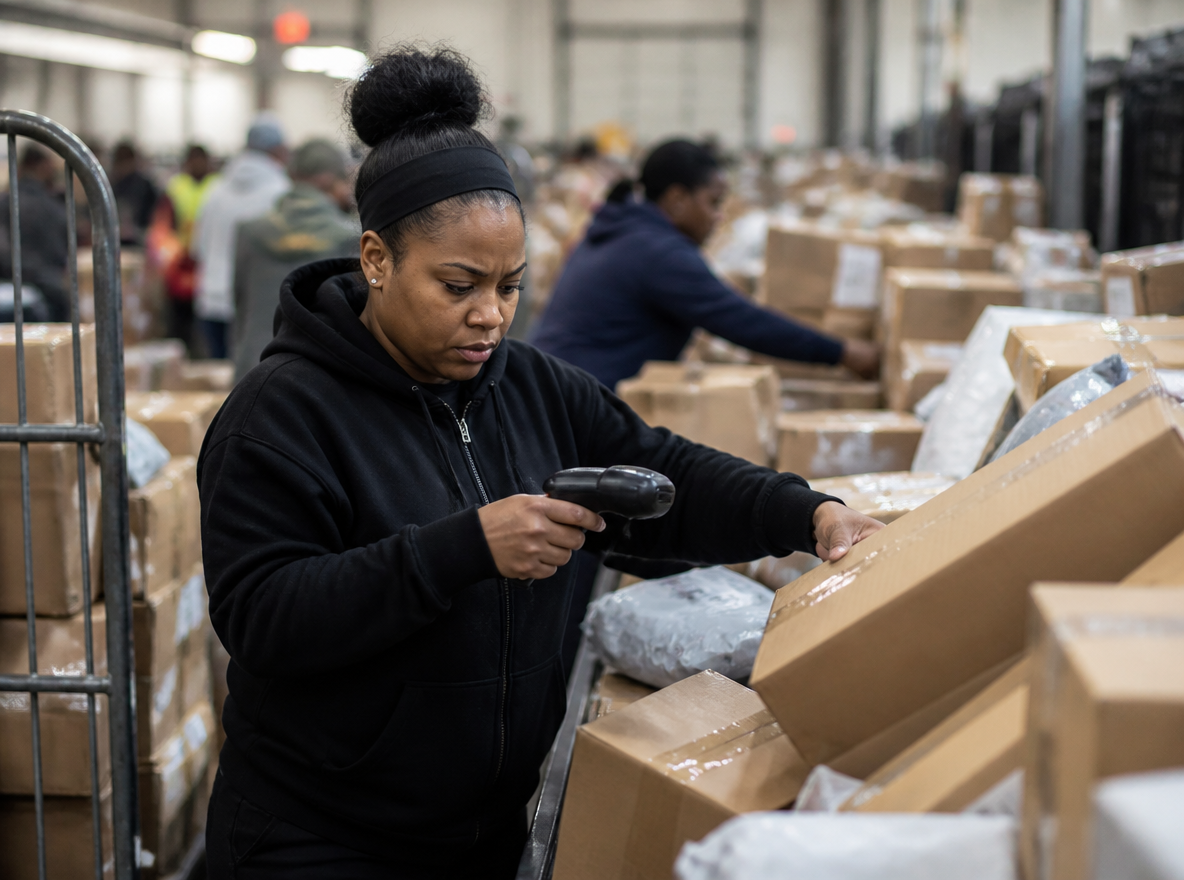
Overflowing parcel sort lines in a warehouse during the holiday rush, workers scanning boxes with handheld devices
旺季运力靠提前锁定,不靠临时抢Peak capacity is secured in advance, not grabbed at the last minute

区域快递的运力。区域快递的瓶颈不是价格,是运力。按平均周需求设计的网络会限制接收量,多家会在旺季前暂停或限制新接入,以保护老客户的时效。实操法则:想在 11 月有区域运力,9 月就要通过合约量承诺和提前 onboarding 把它锁下来。Regional capacity. The constraint on regionals is not price, it is capacity. Networks sized for average-week demand cap the volume they accept, and several pause or restrict new onboarding in the run-up to peak to protect service for existing customers. The practical rule: if you want regional capacity in November, you secure it in September, through contract volume commitments and early onboarding.

截单时间。区域快递的揽收截单时间常常比 USPS 的截止时间晚,有时晚几个小时。旺季里,今天揽到的每一件都是明天兑现的承诺,更晚的截单是真实的运营资产。Cutoff times. Regional pickup cutoffs are often later in the day than USPS drop-dead times, sometimes by several hours. During peak, when every parcel picked up today is a promise met tomorrow, a later cutoff is a real operational asset.

周末运营日。多家区域网络在旺季跑周末分拣和派送,等于不加卡车就多出了派送运力。USPS 在假日期间给许多大都市增加周日包裹派送,但大多数商业产品周六仍是常态。综合效果:混合组合,区域快递负责区内和周末线路、USPS 负责其余,比任何单一类别都能更好地摊平旺季高峰。Weekend operating days. Several regional networks run weekend sort and delivery during peak, effectively adding delivery capacity without adding trucks. USPS adds Sunday parcel delivery in many metros during the holidays, but Saturday remains the norm for most commercial products. The combined effect is that a hybrid mix, regionals for in-region and weekend lanes plus USPS for the rest, flattens your peak surge better than either category alone.

七、搭建混合路由策略7. Building a Hybrid Routing Strategy

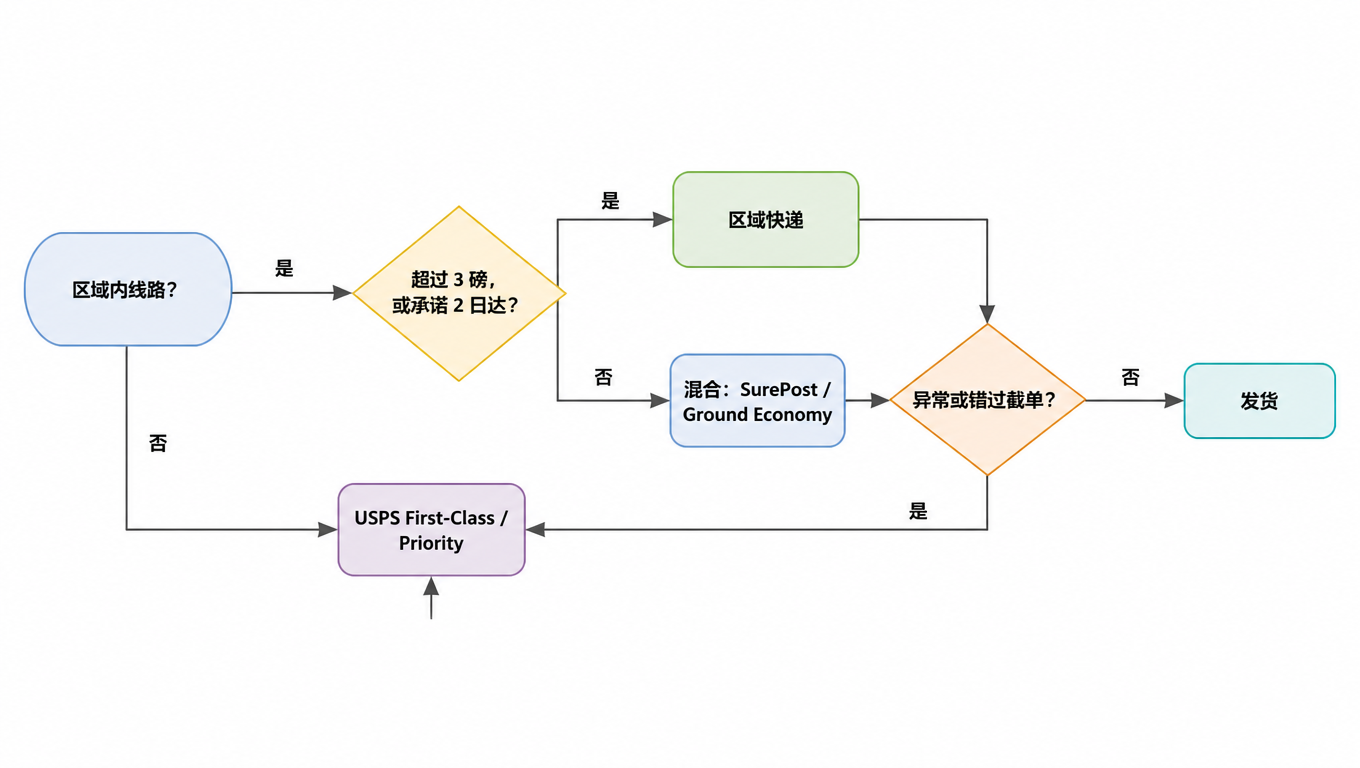
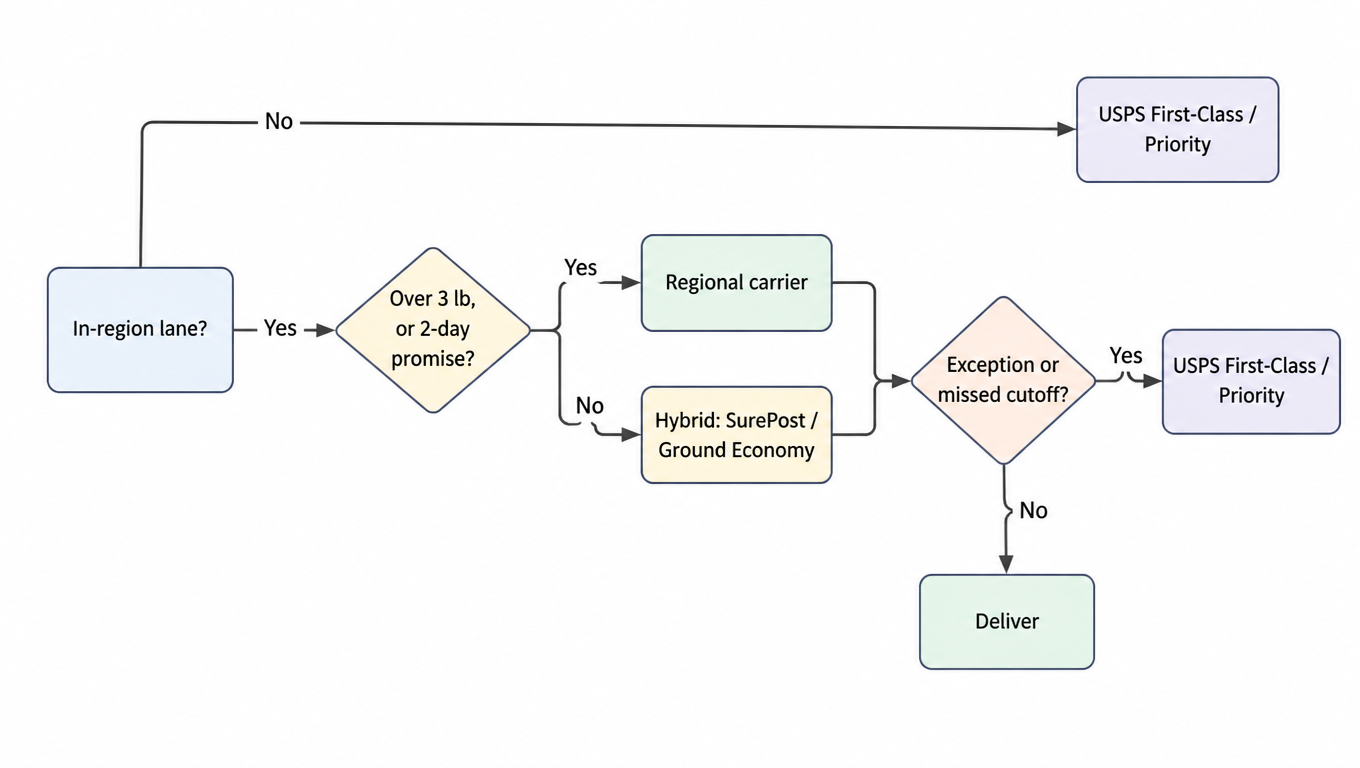
策略问题有一个机械式的答案:你不是选一家承运商,你是选一条规则。The strategy question has a mechanical answer: you do not choose a carrier, you choose a rule.

决策标准。四个输入驱动每一个线路决策:包裹重量、目的地区域(区内与否)、对客户承诺的时效、是否旺季。客户合同里的服务水平承诺压在上面。这就是全部模型。Decision criteria. Four inputs drive every lane decision: package weight, destination zone (in-region or not), promised transit time to the customer, and whether it is peak. Service-level commitments from your customer contracts sit on top. That is the whole model.

路由决策流程图:区域内线路?否走 USPS;是则看是否超过 3 磅或承诺 2 日达,是走区域快递,否则走混合服务;异常或错过截单则回退 USPSRouting decision flowchart: in-region lane? No goes to USPS First-Class/Priority; Yes then over 3 lb or 2-day promise? Yes goes to regional carrier, No goes to hybrid; exception or missed cutoff falls back to USPS
路由规则用四个输入判断,回退 USPS 是规则不是救火Four inputs drive the rule; falling back to USPS is a rule, not a fire drill

下面的决策表把这些标准变成具体的路由规则。The decision table below turns those criteria into concrete routing rules.

线路画像Lane profile 推荐承运商Recommended carrier 为什么Why
1 磅以下,区内,承诺 2 日达Under 1 lb, in-region, 2-day promise区域快递Regional carrier费率有竞争力,时效最快Competitive rate, fastest transit
1 磅以下,区内,无速度承诺Under 1 lb, in-region, no speed promise混合(SurePost / Ground Economy)Hybrid (SurePost / Ground Economy)最便宜,慢可接受Cheapest option, slow is acceptable
1 磅以下,跨州Under 1 lb, cross-countryUSPS First-ClassUSPS First-Class通用网络,分区费率Universal network, zone-based rate
1 到 5 磅,区内1 to 5 lb, in-region区域快递Regional carrier这个重量段价差最大Biggest rate gap in this band
1 到 5 磅,跨州1 to 5 lb, cross-countryUSPS Priority / Parcel SelectUSPS Priority / Parcel Select距离一远区域优势就消失Regional advantage disappears with distance
5 磅以上,区内Over 5 lb, in-region区域快递Regional carrier成本差距最大Widest cost gap
乡村或偏远邮编Rural or remote ZIPsUSPSUSPS通用覆盖,无偏远附加费Universal coverage, no remote surcharge
旺季,区内,已锁定运力Peak season, in-region, secured capacity区域快递Regional carrier高峰前已锁定运力Capacity locked before the surge
旺季,未锁定运力Peak season, no secured capacityUSPSUSPS保证收货,只是加附加费Guaranteed acceptance at surcharge

实操路由配置。在你的发货平台里,把这些规则表达为基于分区的运价询价:用始发地和目的地邮编算出区内标记,套用重量和时效过滤,让运价引擎挑最便宜的合格承运商。再建回退逻辑,区域快递拒标签、错过截单或清单失败时,包裹自动转 USPS。回退应该是规则,不是救火。Practical routing setup. In your shipping platform, express these rules as zone-based rate shopping: compute the in-region flag from origin and destination ZIPs, apply the weight and promise filters, and let the rate engine pick the cheapest eligible carrier. Build fallback logic so that if a regional carrier rejects a label, misses a cutoff, or the manifest fails, the parcel routes to USPS automatically. Fallback should be a rule, not a fire drill.

度量与调优。规则跑起来之后,按承运商、按线路跟踪三个数字:准时率、单件成本、异常率。旺季前跑一轮四周的线路级测试,跨承运商组合比较这三个指标,用数据在运价询价里升降承运商。这个循环把静态的承运商合约变成运营优势,因为每个季度费率和线路都在变,组合也应该跟着变。Measuring and tuning. Once the rules run, track three numbers per carrier per lane: on-time percentage, cost per package, and exception rate. Run a four-week lane-level test before peak, compare the three metrics across your carrier mix, and promote or demote carriers in the rate shop based on the data. This is the loop that turns a static carrier contract into an operating advantage, because every quarter, rates and lanes change, and the mix should change with them.

八、结论与行动清单8. Conclusion and Action Checklist

短版本:USPS 赢在轻和远,区域快递赢在重和近,混合服务赢在便宜和慢。如果只记一句话,记这句。The short version: USPS wins light and far, regionals win heavy and near, hybrids win cheap and slow. If you can only remember one sentence, remember that one.

长版本是一张清单。The longer version is a checklist.

  1. 审计当前承运商组合。拉出上季度按线路分的量,看看 USPS 在哪些区内线路上背着本不必背的重量。Audit your current carrier mix. Pull last quarter's volume by lane and see where USPS is carrying in-region weight it does not need to carry.
  2. 跑四周线路级测试。把有代表性的包裹放到区域快递或混合承运商上,走你的头部区内线路,对照 USPS 跟踪准时率、成本和异常。Run a four-week lane-level test. Put representative parcels on a regional or hybrid carrier for your top in-region lanes, and track on-time percentage, cost, and exceptions against USPS.
  3. 设置回退规则。确保每一条走区域快递的线路都有自动的 USPS 回退,应对异常和错过截单。Set fallback rules. Make sure every regional-shipped lane has an automatic USPS fallback for exceptions and missed cutoffs.
  4. 旺季前复核。9 月锁定区域运力承诺,重算旺季附加费影响,在量上来之前更新路由规则。Re-check before peak. Secure regional capacity commitments in September, recalculate the peak surcharge impact, and update the routing rules before the volume spike.
  5. 每季度复核。费率、线路和承运商覆盖都在变。第一季度赢的组合不会自动在第三季度赢。Review quarterly. Rates, lanes, and carrier footprints change. The mix that wins in Q1 is not automatically the mix that wins in Q3.

你选哪些承运商,不如你围绕它们搭的系统重要。按线路路由、按承运商度量、按季度再平衡的 3PL,会赢过挑一家承运商然后祈祷的 3PL,无论那家承运商站在 USPS 与区域快递分界线的哪一边。The carriers you choose matter less than the system you build around them. A 3PL that routes by lane, measures per carrier, and rebalances quarterly will beat a 3PL that picks one carrier and hopes, regardless of which side of the USPS-versus-regional line that carrier sits on.

常见问题FAQ

差异按重量和距离分化。1 磅以下的轻量件,区域内线路价差常常不到 1 美元;1 到 5 磅区域网络开始建立真实优势,5 磅以上优势最大。在典型区域内线路上,3 磅包裹 USPS Parcel Select 约 6.50 美元、区域快递约 5.20 美元,5 磅时约 8.90 美元对 6.40 美元。但跨州线路和乡村地址优势会翻回 USPS,因为它的网络是全美通用的。The gap splits by weight and distance. Under 1 lb on an in-region lane, the difference is often under a dollar. From 1 to 5 lb regionals build a real advantage, widest above 5 lb. On a typical in-region lane, a 3 lb parcel runs about $6.50 with USPS Parcel Select and about $5.20 with a regional; at 5 lb it is roughly $8.90 versus $6.40. On cross-country lanes and rural addresses the advantage flips back to USPS, because its network is universal.
历史上确实如此,但这个名声在最好的网络里已经过时。Veho 和新一代承运商从零建立了异常处理、改派和时间窗工具,网络越新越主动向 3PL 提供扫描和异常数据。正确的问题不是"区域快递更差吗",而是"这家承运商在这条线路上的异常率是多少",答案在你自己的发货数据里。区域快递还越来越多地使用地理围栏派送扫描,在"客户说没收到"的纠纷里能保护你。Historically yes, but that reputation is outdated in the best networks. Veho and the next-gen carriers built exception handling, rerouting, and window tooling from the ground up, and the newer the network, the more aggressively it shares scan and exception data with 3PLs. The right question is not "are regionals worse?" but "what is this carrier's exception rate on this lane?" and the answer is in your own shipment data. Regionals also increasingly use geofenced delivery scans that protect you in "customer says it never arrived" disputes.
混合服务的逻辑是干线交给大承运商、最后一公里交给 USPS:比 Priority Mail 便宜一大截,但要等更久且时效更不可预测。当客户能接受 3 到 7 天、省钱比速度更重要时就用它。典型的场景是 1 磅以下、区内、没有速度承诺的订单,作为最便宜选项。Hybrids hand the linehaul to a big integrator and the final mile to USPS: meaningfully cheaper than Priority Mail, but slower and less predictable. Use them when the customer will accept 3 to 7 days and savings matter more than speed. The typical case is an under-1 lb, in-region order with no speed promise, where they are the cheapest option.
区域快递的旺季瓶颈不是价格,是运力。网络按平均周需求设计,会限制接收量,多家在旺季前暂停或限制新接入以保护老客户时效。实操法则:想在 11 月有区域运力,9 月就要通过合约量承诺和提前 onboarding 锁下来。没锁运力的线路旺季就回退 USPS,保证收货,代价是附加费。The peak constraint on regionals is not price, it is capacity. Networks sized for average-week demand cap volume and several pause or restrict new onboarding before peak to protect existing customers. The practical rule: if you want regional capacity in November, secure it in September through contract volume commitments and early onboarding. Lanes without secured capacity fall back to USPS during peak, which guarantees acceptance at a surcharge.

让路由规则替你做决定?Ready to let routing rules decide for you?

EasyShippingX 帮你同时接通 USPS 折扣费率与区域承运商选项:自有账号运价直通,USPS、UniUni、GOFO、SwiftX、SpeedX 等随时可用,按线路、按重量、按时效的混合路由一套配置跑通,回退逻辑开箱即用。EasyShippingX connects USPS discount rates and regional carrier options in one place: your own-account rates pass through, USPS, UniUni, GOFO, SwiftX, and SpeedX are ready to go, and lane-based hybrid routing with automatic fallback is configuration, not a project.

Get Rate Comparison
Get Rate Comparison