3PL 自动化3PL Automation

3PL 自动化该从哪下手?六个烧钱的人工环节及解法What Should a 3PL Automate First? Six Costly Manual Failures and Their Fixes

大多数 3PL 买软件的顺序是错的。他们从最容易演示的工具入手:这里装一个好看的数据看板,那里配一台标签打印机,然后把它接到那些真正在烧钱的人工流程上。结果是自动化预算花在了错误的地方,同样的错误照旧发生,只是发生得更快了。Most 3PLs buy software in the wrong order. They start with whichever tool is easiest to demo, a shiny dashboard here, a label printer there, and then bolt it onto the manual processes that are actually burning money. The result is an automation budget spent in the wrong places while the same errors keep happening, just faster.

该先问的不是「买哪个工具」,而是「先改哪个流程」。用一条简单的公式给每个手工故障打分:错误成本乘以发生频率,再除以自动化的成本。得分最高的环节就是起点,因为它们会为下一轮修复买单。这就是「自动化该从哪下手」的真正含义:在招更多人、买更多产能之前,先找到那条昂贵的手工循环,把它关掉。The right first question is not "which tool" but "which process". Rank every manual failure with a simple formula: the cost of the error multiplied by how often it happens, divided by the cost to automate it. The failures that score highest are where you start, because they fund the next round of fixes. This is what "automate first" really means: before you hire more people or buy more capacity, find the expensive manual loop and close it.

自动化是会复利的。每修好一个流程,修下一个的成本就更低:为订单建的集成,退货时能直接复用;为异常写的通知逻辑,就是客户真的会打开的那封跟踪邮件。这篇文章带你过一遍典型 3PL 里最贵的六个手工故障,每个都配自动化解法和一张速算 ROI,让你在买任何东西之前先把机会算清楚。Automation compounds. Every process you fix lowers the cost of fixing the next one: the integration you build for orders becomes the integration you reuse for returns, and the notification logic you build for exceptions becomes the tracking email customers actually open. This article walks through the six most expensive manual failures in a typical 3PL, each with its automation fix and a back-of-envelope ROI, so you can size the opportunity before you buy anything.

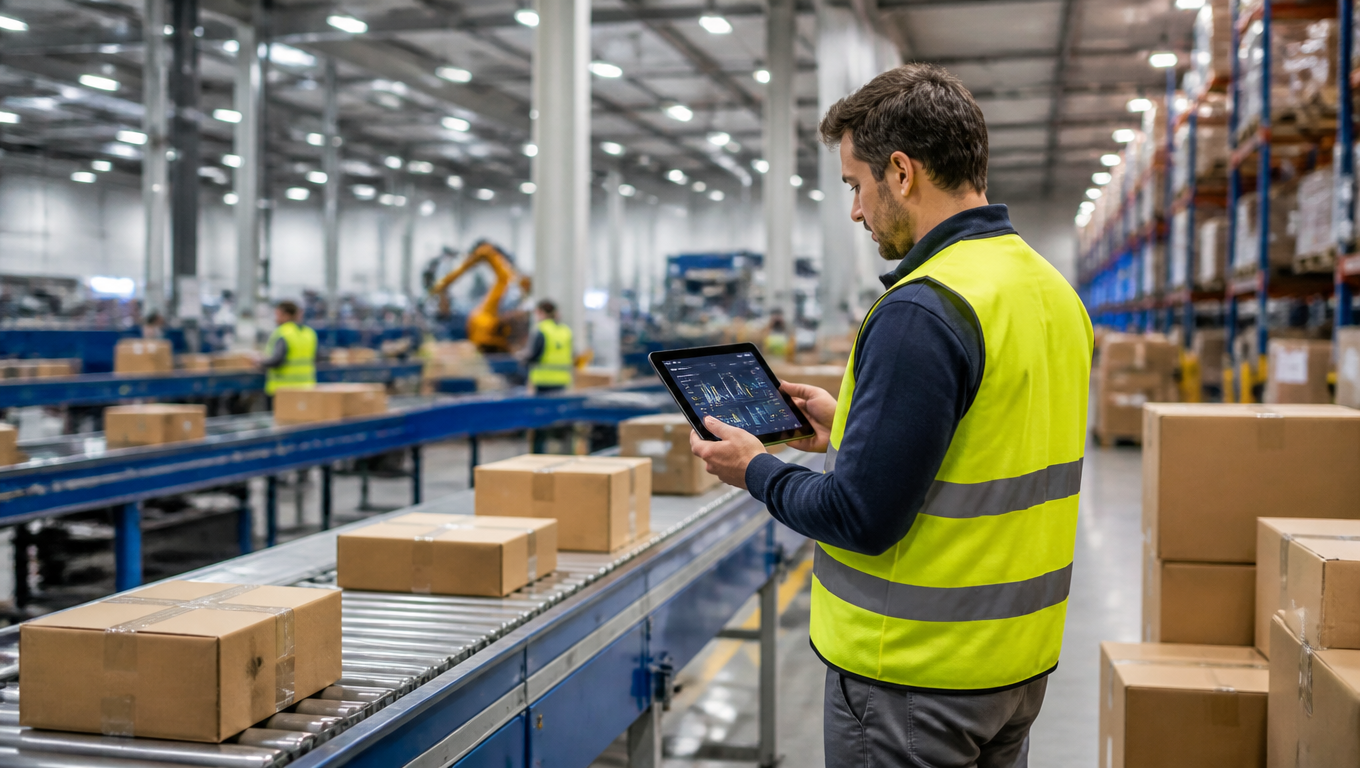
3PL 运营经理身穿安全背心,在明亮的分拣中心里用平板查看运营看板,身旁是码放的包裹和传送带
自动化不是一次性项目,而是一个会复利的习惯Automation is not a one-time project; it is a compounding habit

痛点 1:订单碎片化与手工录入Pain Point 1: Order Fragmentation and Manual Entry

订单从五个方向涌进来:邮件、EDI、电子表格、电商平台和客户门户。中间坐着一个把订单重新敲进 WMS 的人。每一次敲键都是一次引入错误的机会,而每个错误都会一路向下传导:拣错 SKU、包错包裹、寄错地址。问题偏偏在你最扛不住的时候变严重,因为旺季里订单量和订单错误率是一起上升的。Orders arrive from five directions: email, EDI, spreadsheets, marketplaces, and client portals. Somewhere in the middle sits a person re-keying them into the WMS. Every keystroke is a chance to introduce an error, and every error travels downstream: the wrong SKU gets picked, the wrong parcel gets built, the wrong address gets shipped. The problem gets worse exactly when you can least afford it, because order volume and order error rates rise together in a peak.

手工数据录入的行业基准错误率在 1% 左右。听起来不大,直到你给一次纠错算账:重新拣货、重新发货、加上客户好感的损失,纠正一单的成本通常在 50 美元上下。按每天 500 单算,1% 就是每天 5 单出错,大约每天 250 美元,一年超过 6 万美元,这还没算人工本身。Benchmarks for manual data entry put error rates around 1 percent. That sounds small until you price a correction. Between re-picks, re-ships, and lost customer goodwill, a single corrected order typically costs in the $50 range. At 500 orders a day, 1 percent is 5 bad orders a day, roughly $250 a day and more than $60,000 a year, before the labor itself is counted.

解法是 API/EDI 订单集成:实时接收订单,在入口处就把关,SKU 存在、数量合理、地址完整。没有重复录入,没有半夜的批量上传,没有夹在每张订单中间的人。The fix is API/EDI order integration that ingests orders in real time and validates them at the door: the SKU exists, the quantity is sane, the address is complete. No re-keying, no midnight batch uploads, no human in the middle of every order.

对每天 500 单的运营,集成每天省下 2 到 3 小时的录入人工,并彻底拆掉错误管道。按每小时 25 美元算,光人工一年就是 1.5 万到 2 万美元,上面那些纠错成本也根本不会发生。这就是为什么订单接入几乎总是第一个要修的地方:实施便宜,而且它触达仓里流动的每一张订单。For a 500-order-per-day operation, integration saves 2 to 3 hours of data-entry labor a day and removes the error pipeline entirely. At $25 an hour that is roughly $15,000 to $20,000 a year in labor alone, and the error costs above never materialize. This is why order ingestion is almost always the first fix: cheap to implement, and it touches every order that moves through the building.
痛点 2:地址与面单错误Pain Point 2: Address and Label Errors

每一个打错的街道号、漏掉的公寓号、或错的邮编,都会变成承运商的一笔更正费,外加一次给客户的延迟派送。承运商的地址更正费一般在每票 17 到 25 美元,尺寸或重量更正更贵,因为除了更正费,还会重置谈好的费率。Every mis-typed street number, missing apartment, or wrong ZIP becomes a correction fee at the carrier plus a late delivery to the customer. Carrier address-correction fees typically run $17 to $25 per parcel, and size or weight corrections are worse, because they reset the negotiated rate on top of the fee.

哪怕只有 1% 的错误地址率,1000 票的日单量也是每天 10 次更正。每次 17 到 25 美元,就是每月 3400 到 5000 美元、每年 4 万到 6 万美元,这还只是费用本身,没算随之而来的延迟派送扣款和一颗星差评。Even a 1 percent bad-address rate at a 1,000-parcel operation is 10 corrections a day. At $17 to $25 each, that is $3,400 to $5,000 a month and $40,000 to $60,000 a year, purely in fees, before the delayed-delivery chargebacks and the one-star reviews that follow.

两个自动化能解决大部分问题。下单入口的地址校验在面单生成之前就拦住拼写错误和缺失字段;承运商选择规则再自动把正确的包裹路由到正确的服务,让奇形怪状或超大的箱子不再贴上它扛不住的便宜面单。Two automations kill most of this. Address validation at order entry catches typos and missing fields before a label exists. Carrier-selection rules then route the right parcel to the right service automatically, so the odd-shaped or oversized box stops getting the cheap label it cannot survive.

哪怕只拦住一半的错误地址,这个修复一个月就能回本。地址校验是一次配置变更,不是一个项目。它是六个修复里 ROI 最干净的一个。Catch even half the bad addresses and this fix pays for itself in a month. Address validation is a configuration change, not a project. It is the cleanest ROI of all six fixes.

痛点 3:库存数字悄悄漂移Pain Point 3: Inventory Numbers That Drift

WMS 显示 300 件,货架上只有 240 件。没人知道漂移是什么时候发生的,因为它是用一小步一小步没有记录的方式发生的:一次手忙脚乱补掉的错拣、一件没扫码就上架的退货、一次为了让流水线继续转下去的调整。The WMS says 300 units. The shelf has 240. Nobody knows when the drift happened, because it happened in small unrecorded steps: a mis-pick fixed by hand, a return shelved without a scan, an adjustment made just to keep things moving.

数据很清醒。58% 的零售商库存准确率低于 80%。缺货会吃掉 1% 到 3% 的销售额,大约三分之一的顾客在遇到缺货时会流失到别家。对 3PL 来说,库存数字不对意味着对客户许下错误的承诺,而错误的承诺就是丢客户的方式。The numbers are sobering. 58 percent of retailers report inventory accuracy below 80 percent. Stockouts cost 1 to 3 percent of sales, and about a third of shoppers who hit a stockout defect to another seller. For a 3PL, bad counts mean wrong promises to clients, and wrong promises are how you lose accounts.

解法很朴素但有效:每一次触碰都扫码,WMS 和销售渠道实时同步,循环盘点按计划执行,快动品每周点、慢动品每月或每季度点,而不是把所有东西攒到一年一次的大盘点里。The fix is boring and it works: barcode scanning on every touch, real-time sync between the WMS and the sales channels, and cycle counting on a schedule, so fast movers get counted weekly and slow movers monthly or quarterly, instead of everything waiting for one big annual shock.

在 200 万美元规模的运营里,哪怕只挽回 1% 的流失销售,一年就是 2 万美元,这还没算你避免的积压库存减值、保住的客户留存。它不是这份清单上最激动人心的自动化,但绝对是最可靠的之一。Recovering even 1 percent of lost sales on a $2 million operation is $20,000 a year, before the overstock write-offs you avoid and the client retention you keep. Not the most exciting automation on this list, but one of the most reliable.

痛点 4:异常件总得有人盯着Pain Point 4: Exceptions That Someone Has to Babysit

仓里总有一个人整天刷着承运商门户。一件卡在途中的包裹、一次派送失败、一个服务故障:每件事都躺在一封邮件里或一个门户页面上,直到有人注意到它,然后等一个人来拿主意。赶上糟糕的日子,那个人请假了,异常就等到了明天。Somewhere in the building, someone refreshes carrier portals all day. A parcel stuck in transit, a failed delivery, a service failure: each one lives in an email thread or a portal screen until a human notices it, and then it waits for a human to decide what to do. On a bad day, that human is out sick and the exceptions wait for tomorrow.

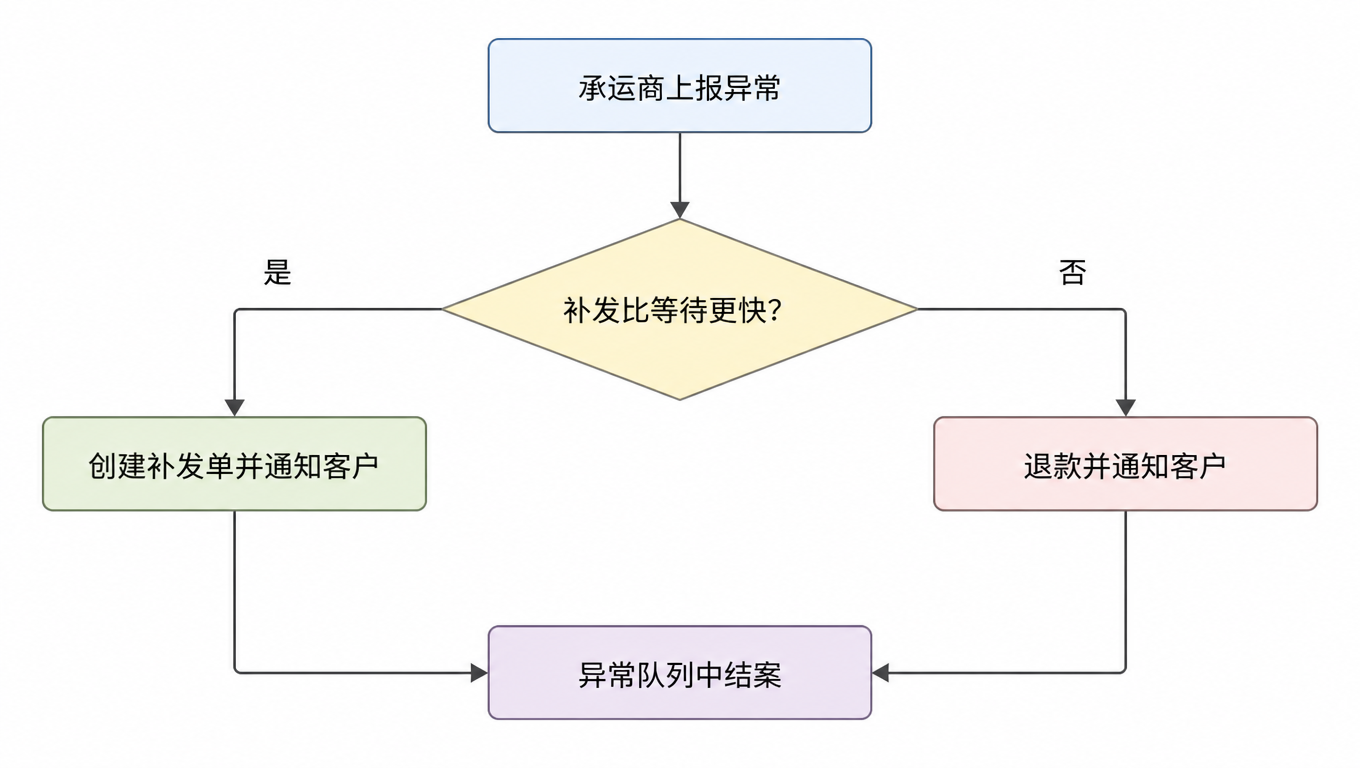
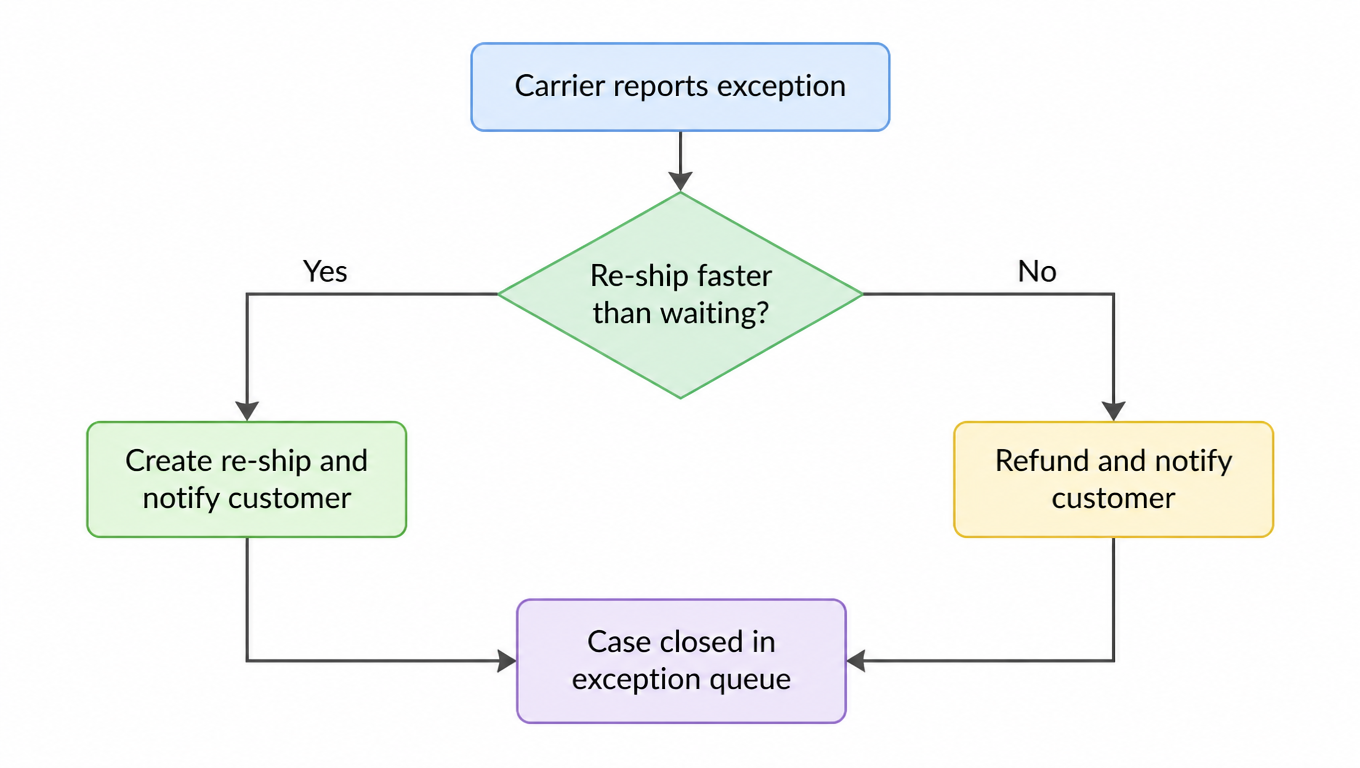
解法是异常队列:从承运商数据流里自动识别故障,给每个异常分流。如果补发一单比等那件破损包裹更快送到客户手上,就创建补发单并通知;否则就退款并通知。决策逻辑很简单,而且它从不睡觉。The fix is an exception queue that auto-detects failures from carrier feeds and routes each one. If a re-ship gets the customer their order faster than waiting on the damaged parcel, create the re-ship and notify; otherwise, refund and notify. The decision logic is simple, and it never sleeps.

决策流程图:承运商上报异常后,判断补发是否比等待更快,是则创建补发单并通知,否则退款并通知,最后在异常队列中结案Decision flow: carrier reports an exception, decide whether a re-ship arrives faster than waiting, create re-ship and notify or refund and notify, case closed in the exception queue
异常分流逻辑很简单:补发更快就补发,否则退款,全部在队列里结案The routing logic is simple: re-ship if it is faster, refund otherwise, and close every case in the queue

上了这套系统的运营反馈,异常处理人工下降 70% 到 80%,响应时间从小时级降到分钟级。隐藏的收益是你永远看不到的那些:滞留库存的仓储费变少、差评变少、本来该退款却补发出去的订单变少。Operations that put this in place report exception-handling labor down 70 to 80 percent and response times down from hours to minutes. The hidden wins are the ones you never see: fewer storage fees on stranded inventory, fewer negative reviews, fewer reships that should have been refunds.

痛点 5:从不核对的运费账单Pain Point 5: Freight Invoices That Never Get Checked

运费账单都是自动支付的,因为审计账单是某个人的兼职,而不是任何人的全职。计价错误、附加费、重复收费:这些东西月复一月地从账上溜过去。Freight invoices are paid on autopilot because auditing them is somebody's part-time job and nobody's full-time job. Rating errors, accessorials, duplicate charges: all of it slips through, month after month.

行业审计一致发现 3% 到 7% 的运费发票上有错误。从不审计的运营,等于悄悄多付年运费支出的 3% 到 5%。这笔钱不是一次性大错丢掉的,它是从几百个小错里漏掉的。Industry audits consistently find errors on 3 to 7 percent of freight invoices. Operations that never audit quietly overpay by 3 to 5 percent of annual freight spend. The money is not lost in one big mistake; it leaks out in hundreds of small ones.

自动运费审计工作流对照谈好的费率标记差异,并自动发起索赔;退款工作流闭环,追踪每一笔索赔直到信用额度真正到账。Automated freight-audit workflows flag discrepancies against the negotiated rates and file claims automatically. Refund workflows close the loop by tracking each claim until the credit actually lands.

一年运费 100 万美元的 3PL,每年能追回 3 万美元以上,通常是支出的 3% 到 5%,几乎不花人工。这是捡回来的钱:服务反正都送达了,多收的纯粹是漏损。A 3PL moving $1 million a year in freight recovers $30,000 or more annually, often 3 to 5 percent of spend, with almost no labor. This is found money: the service was delivered either way, and the overcharge was pure leakage.

痛点 6:吃掉客服预算的 WISMOPain Point 6: WISMO That Eats the Support Budget

「我的订单到哪了?」是电商物流里最贵的一句话。客户会问,是因为没人告诉过他们。每一张工单算上客服查询的时间,成本在 5 到 22 美元,而 WISMO(我的订单到哪了)占了大多数发货方客服量的 40% 左右。"Where is my order?" is the most expensive question in e-commerce logistics. Customers ask because nobody told them. Each ticket costs $5 to $22 by the time a support agent looks it up, and WISMO makes up around 40 percent of support volume at most shippers.

解法是让答案自动出现。主动跟踪通知在每个关键节点告诉客户进度,自助查询页面在没有人介入的情况下回答问题。客服团队不再反复回答同一个问题,转而处理那些真正需要人的异常。The fix is to make the answer automatic. Proactive tracking notifications tell the customer at every milestone, and a self-serve tracking page answers the question without a human. The support team stops re-answering the same question and starts handling the exceptions that actually need a person.

拿一个月 1 万单的运营举例,每 20 单就有 1 单生成 WISMO 工单:每月 500 张工单,每张平均 15 美元,就是每月 7500 美元、每年 9 万美元,还没算每个没被回答的问题背后潜藏的流失风险。Take a 10,000-order-per-month operation where 1 in 20 orders generates a WISMO ticket: 500 tickets a month at an average of $15 each is $7,500 a month, $90,000 a year, before the churn risk that every unanswered question carries.

三周落地清单The 3-Week Execution Checklist

这六个修复没有一个需要六个月的转型。下面的排序把快速、高确定性的收益放在前面,让每个修复为下一个买单。None of these fixes requires a six-month transformation. The sequencing below front-loads the fast, high-confidence wins and lets each fix pay for the next.

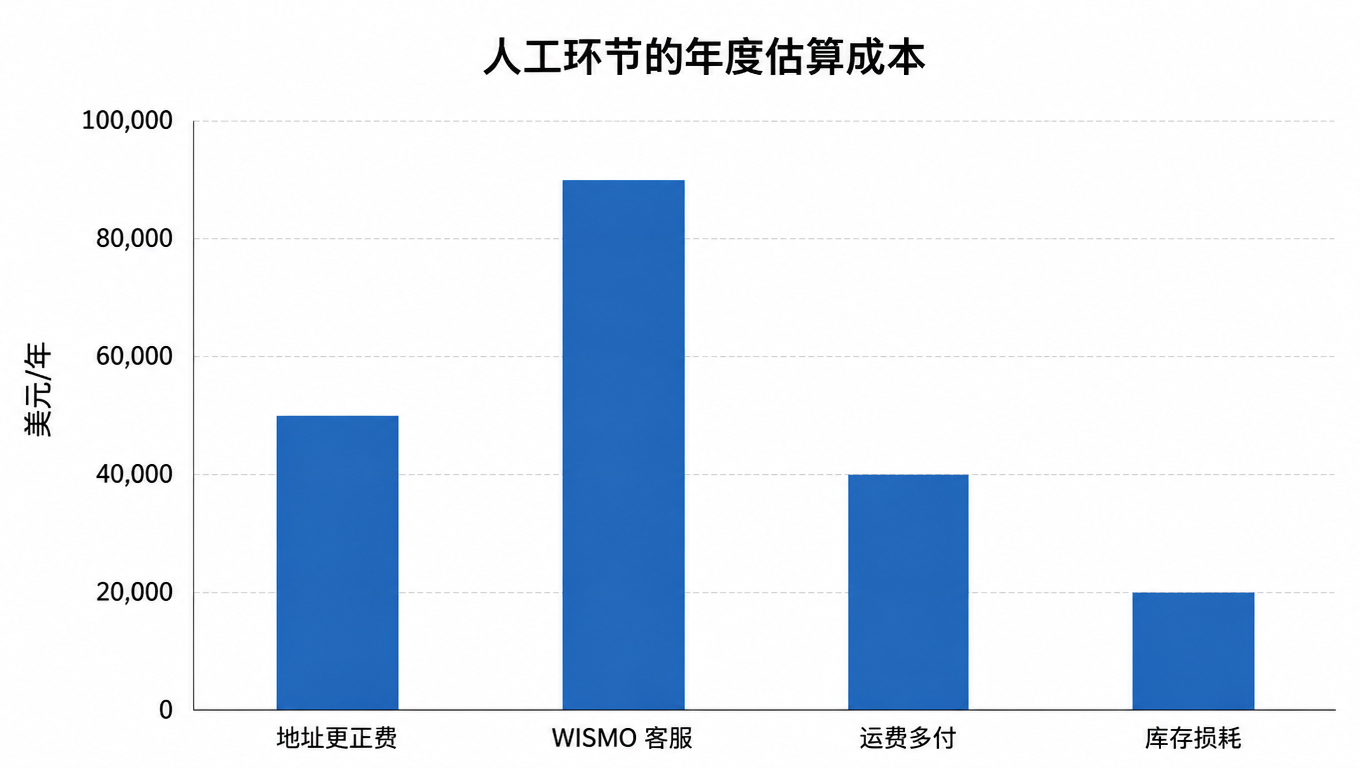
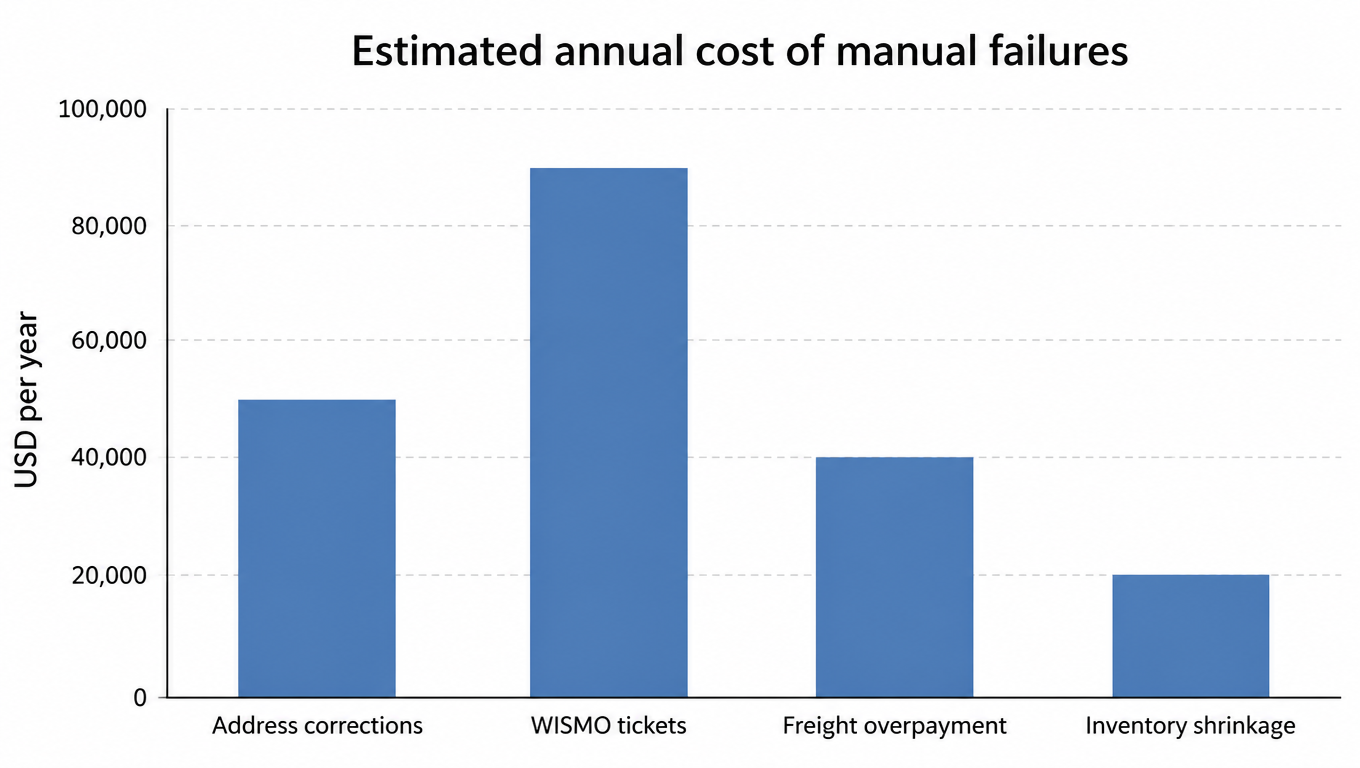
先把机会算清楚,顺序就自然浮现。用这篇文章的货量假设,四个最干净的数字一年加起来大约是 20 万美元:地址更正费约 5 万、WISMO 成本 9 万、运费多付 4 万、库存损耗至少 2 万。手工录入和异常盯守同样真实,但它们更适合用小时而不是美元来衡量。Sizing the opportunity first makes the sequence obvious. Using the volume assumptions in this article, the four cleanest numbers stack up to roughly $200,000 a year: about $50,000 in address-correction fees, $90,000 in WISMO costs, $40,000 in freight overpayment, and at least $20,000 in inventory shrinkage. Manual entry and exception babysitting are just as real, but they are better measured in hours than in dollars.

柱状图:人工环节的年度估算成本,地址更正费约 5 万美元,WISMO 客服 9 万,运费多付 4 万,库存损耗 2 万Bar chart of estimated annual cost of manual failures: address corrections 50k, WISMO tickets 90k, freight overpayment 40k, inventory shrinkage 20k USD
四个最干净的金额一年合计约 20 万美元(按本文货量假设估算)The four cleanest numbers stack up to roughly $200,000 a year (estimated on this article's volume assumptions)
  • 第 1 周:修订单接入和地址校验。痛点 1 和 2 都是配置级改动,而且都触达每一张订单。它们是最快的收益,也是数学最干净的两个。Week 1: fix order ingestion and address validation. Pain points 1 and 2 are configuration-level changes, and both touch every order. They are the fastest wins and the ones with the cleanest math.
  • 第 2 周:搭起异常队列,启动运费审计。痛点 4 和 5 都跑在你已有的数据上:承运商数据流和最近 90 天的发票。同一周把队列对准承运商,把审计开在最近的账单上。Week 2: stand up the exception queue and start freight audit. Pain points 4 and 5 both run off data you already have: carrier feeds and the last 90 days of invoices. Point the queue at the carriers and start the audit on recent invoices in the same week.
  • 第 3 周:推行扫码和跟踪通知。痛点 3 和 6 是行为改变,所以放在最后。扫码和循环盘点需要团队改变习惯,主动跟踪通知需要模板和触发逻辑到位。Week 3: roll out scanning and tracking notifications. Pain points 3 and 6 are the behavioral changes, so they go last. Scanning and cycle counting need the team to change habits, and proactive tracking notifications need the templates and trigger logic to be right.

每个修复盯一个指标 30 天:订单录入错误率、地址更正费、库存准确率、异常解决时长、发票错误率、每千单客服工单数。如果指标不动,说明修复没起作用,而你在 30 天里就能发现,而不是等上 12 个月。让运营负责人每周用 30 分钟对着指标复盘,把「指标不动」当成深挖修复的信号,而不是翻篇的理由。Track one metric per fix for 30 days: order-entry error rate, address-correction fees, inventory accuracy, exception resolution time, invoice error rate, and support tickets per 1,000 orders. If a metric does not move, the fix is not working, and you find out in 30 days instead of 12 months. Have the operations lead run a 30-minute weekly review against the metrics, and treat a metric that does not move as a signal to dig into the fix, not to move on.

自动化不是一次性项目,它是一个会复利的习惯。先做上面这六个修复,后面六个会更便宜:集成模式、通知逻辑、队列纪律都会延续下去。按痛点排序自动化、而不是按演示排期的 3PL,才是赢下复利游戏的那一个。Automation is not a one-time project; it is a compounding habit. Start with the six fixes above, and the next six get cheaper: the integration patterns, the notification logic, and the queue discipline all carry over. The 3PL that sequences automation by pain point instead of by demo schedule is the one that wins the compounding game.

要点清单Key Takeaways

  • 该先问的不是「买哪个工具」而是「改哪个流程」:用「错误成本 × 发生频率 ÷ 实施成本」给每个手工故障排序,得分最高的先修。The first question is not "which tool" but "which process": rank manual failures by error cost times frequency divided by implementation cost, and start with the highest score.
  • 订单接入和地址校验是配置级改动、触达每一张订单,通常是 ROI 最干净、回本最快的前两个修复。Order ingestion and address validation are configuration-level changes that touch every order, usually the cleanest, fastest-ROI first fixes.
  • 58% 的零售商库存准确率低于 80%,缺货吃掉 1% 到 3% 的销售额;扫码、实时同步、循环盘点是最可靠的自动化之一。58 percent of retailers report inventory accuracy below 80 percent and stockouts cost 1 to 3 percent of sales; scanning, real-time sync, and cycle counting are among the most reliable automations.
  • 异常队列把异常处理人工降 70% 到 80%、响应从小时级降到分钟级;运费审计在 3% 到 7% 的发票上找错,每年可追回运费支出的 3% 到 5%。Exception queues cut exception-handling labor 70 to 80 percent and response times from hours to minutes; freight audits find errors on 3 to 7 percent of invoices and can recover 3 to 5 percent of annual freight spend.
  • WISMO 占客服量约 40%,主动通知加自助查询每月能省下数千美元,同时降低流失风险。WISMO makes up about 40 percent of support volume; proactive notifications plus self-serve tracking save thousands a month and reduce churn risk.
  • 用三周落地:第一周订单与地址,第二周异常队列与运费审计,第三周扫码与跟踪通知;每个修复盯一个指标 30 天。Run the rollout in three weeks: orders and addresses first, then exceptions and freight audit, then scanning and notifications; track one metric per fix for 30 days.

常见问题FAQ

从订单接入和地址校验开始。它们是配置级改动,触达每一张订单,ROI 最干净:订单集成拆掉约 1% 错误率背后每单约 50 美元的纠错成本,地址校验能拦掉大部分每票 17 到 25 美元的承运商更正费。先用「错误成本 × 发生频率 ÷ 实施成本」给你的流程排序,得分最高的两个几乎总是它们。Start with order ingestion and address validation. They are configuration-level changes that touch every order and have the cleanest ROI: order integration removes the roughly 1 percent error rate with its $50 per-correction cost, and address validation eliminates most of the $17-25 per-parcel carrier correction fees. Rank your processes with error cost times frequency divided by implementation cost, and those two almost always score highest.
行业基准错误率约 1%,每单纠错成本(重拣、重发、客户好感损失)约 50 美元。每天 500 单的运营,一年就是 6 万美元以上的纯纠错成本,还没算录入人工:集成后每天省 2 到 3 小时,一年又是 1.5 万到 2 万美元。Benchmarks put manual entry error rates around 1 percent and each correction, re-pick, re-ship, and lost goodwill, around $50. At 500 orders a day that is over $60,000 a year in correction costs alone, before labor: integration saves 2 to 3 hours of entry work a day, another $15,000 to $20,000 a year.
公式只有三个变量:错误成本、发生频率、实施成本。成本高、频率高、实施便宜的排前面。按这个顺序,六个痛点里订单接入、地址校验、运费审计几乎总是最先回本的,因为它们要么触达每一张订单,要么直接对着钱工作。Three variables: error cost, frequency, and implementation cost. High cost, high frequency, cheap to implement goes first. By that ranking, order ingestion, address validation, and freight audit almost always pay back first, because they touch every order or work directly against money.
值得。行业审计发现 3% 到 7% 的运费发票上有错误,从不审计的运营每年多付运费支出的 3% 到 5%。一年运费 100 万美元的 3PL,自动审计每年能追回 3 万美元以上,几乎不花人工。Yes. Industry audits find errors on 3 to 7 percent of freight invoices, and operations that never audit overpay 3 to 5 percent of annual freight spend. A 3PL moving $1 million a year in freight typically recovers $30,000 or more with almost no labor.
用三周落地:第一周订单接入和地址校验(配置级,回本最快),第二周异常队列和运费审计,第三周扫码和跟踪通知(需要团队改习惯,放最后)。每个修复盯一个指标 30 天,指标不动就深挖修复本身。Three weeks to roll out: week one for order ingestion and address validation (configuration-level, fastest payback), week two for the exception queue and freight audit, week three for scanning and tracking notifications (behavioral, so last). Track one metric per fix for 30 days; if a metric does not move, dig into the fix.
Get Rate Comparison
Get Rate Comparison