电商物流指南Ecommerce Shipping Guide

从结账到送达:物流如何塑造电商客户忠诚度From Checkout to Delivery: How Shipping Shapes Ecommerce Customer Loyalty

客户忠诚度并不止于结账。对电商品牌而言,售后体验决定了一位首单买家是否会成为回头客。每一笔订单其实包含两个时刻:点击购买的那一刻,和收到包裹的那一刻。只做好第一个时刻而忽略第二个,等于把增长留在桌上,因为忠诚度恰恰是在第二个时刻建立的。这篇文章把从结账承诺到复购的整条链路拆成八个环节,每个环节给出数据与可执行对策,最后附一张十项自查清单。Customer loyalty does not end at checkout. For ecommerce brands, the post-purchase experience decides whether a first-time buyer becomes a repeat customer. Every order is really two moments: the click to buy, and the experience of receiving it. Brands that nail the first moment and ignore the second leave growth on the table, because the second moment is where loyalty is actually built. This article breaks the full chain from checkout promise to repeat purchase into eight stages, with data and concrete actions for each, plus a 10-point self-audit checklist.

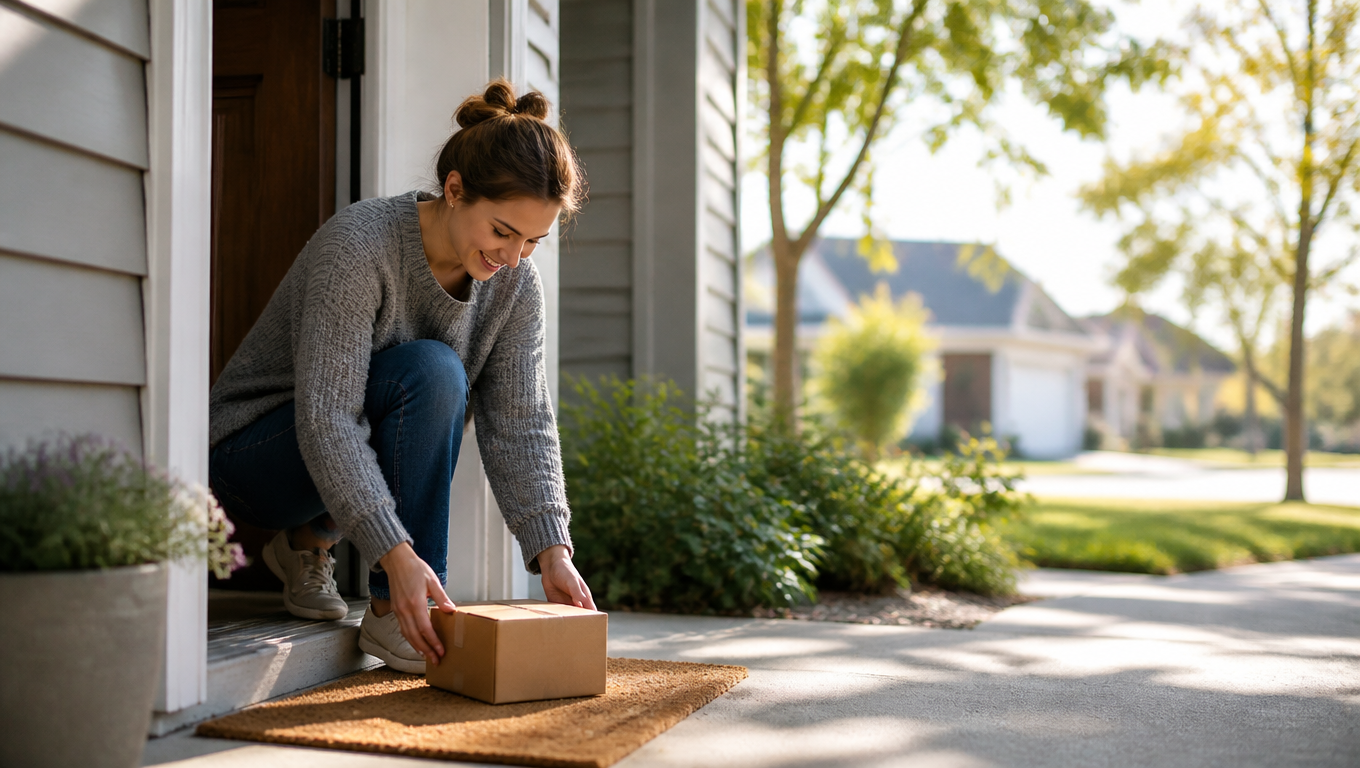
阳光明媚的郊区门廊前,一位顾客收到一个小巧的品牌电商快递箱,氛围温暖可信
第二个时刻,收到包裹的时刻,才是忠诚度真正建立的地方The second moment, receiving the package, is where loyalty is actually built

为什么物流是忠诚度问题:先把经济账算清Why shipping is a loyalty problem: the economics first

经济账让这件事变得紧迫。Bain & Company 的留存研究显示,客户留存率提高 5%,利润可提升 25% 至 95%;获取一个新客户的成本是留住一个老客户的 5 到 7 倍[1]。当物流在悄悄决定谁回来复购时,它就不再是一条成本线,而是一个增长杠杆。但忠诚度其实开始得更早。在买家点击购买之前,他们就在读你结账页上的承诺:免邮门槛、预计送达日期、配送选项、加急配送和退货政策。合在一起,这就是你的配送承诺(delivery promise),也是整个售后体验将要被评判的标准。所以第一步不是选承运商,而是决定你要承诺什么。The economics make this urgent. Bain & Company's retention research found that a 5 percent increase in customer retention can lift profits by 25 to 95 percent, and acquiring a new customer costs five to seven times more than keeping an existing one[1]. When shipping quietly decides who comes back, it stops being a cost line and becomes a growth lever. But loyalty starts even earlier. Before a shopper ever clicks buy, they read the promises on your checkout page: free shipping thresholds, estimated delivery dates, shipping options, expedited shipping, and the return policy. Taken together, these are your delivery promise, the standard against which the entire post-purchase experience will be judged. So the first step is not picking a carrier. It is deciding what you will promise.
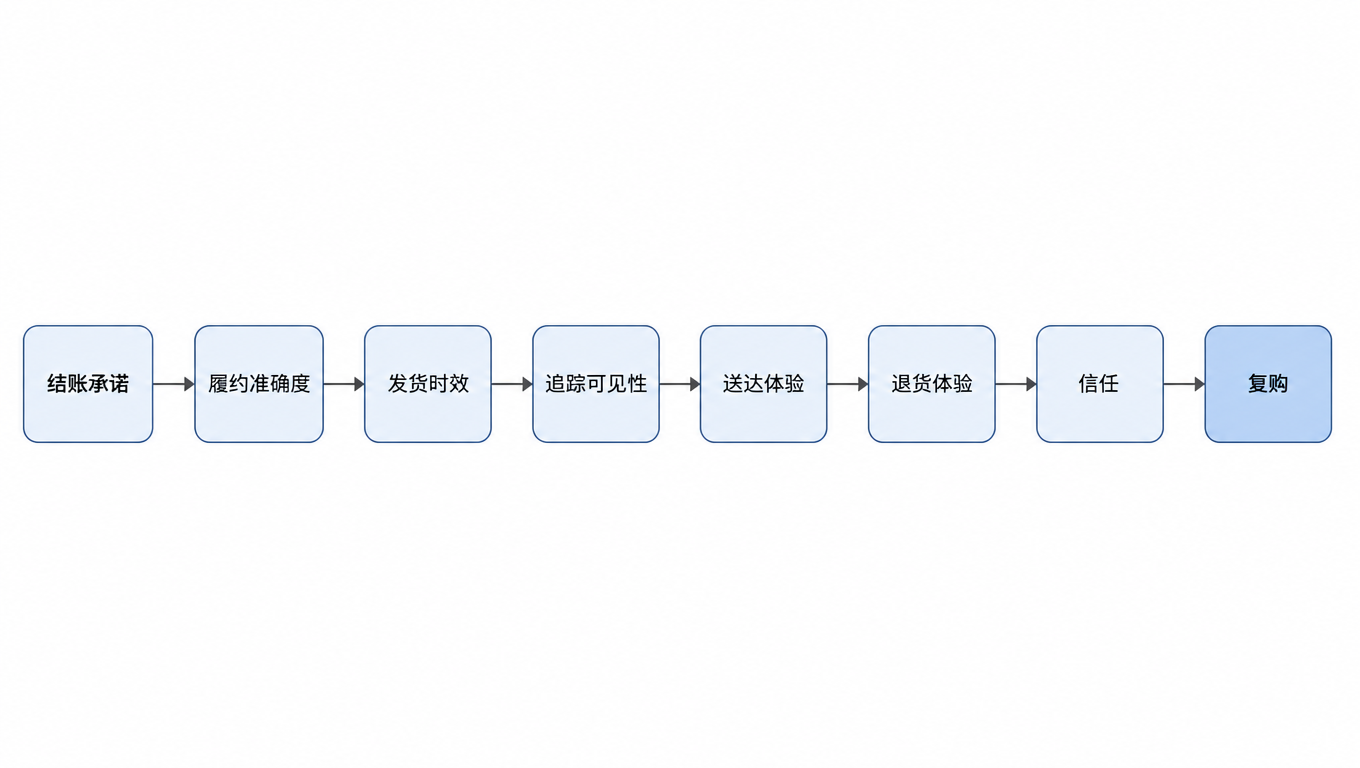
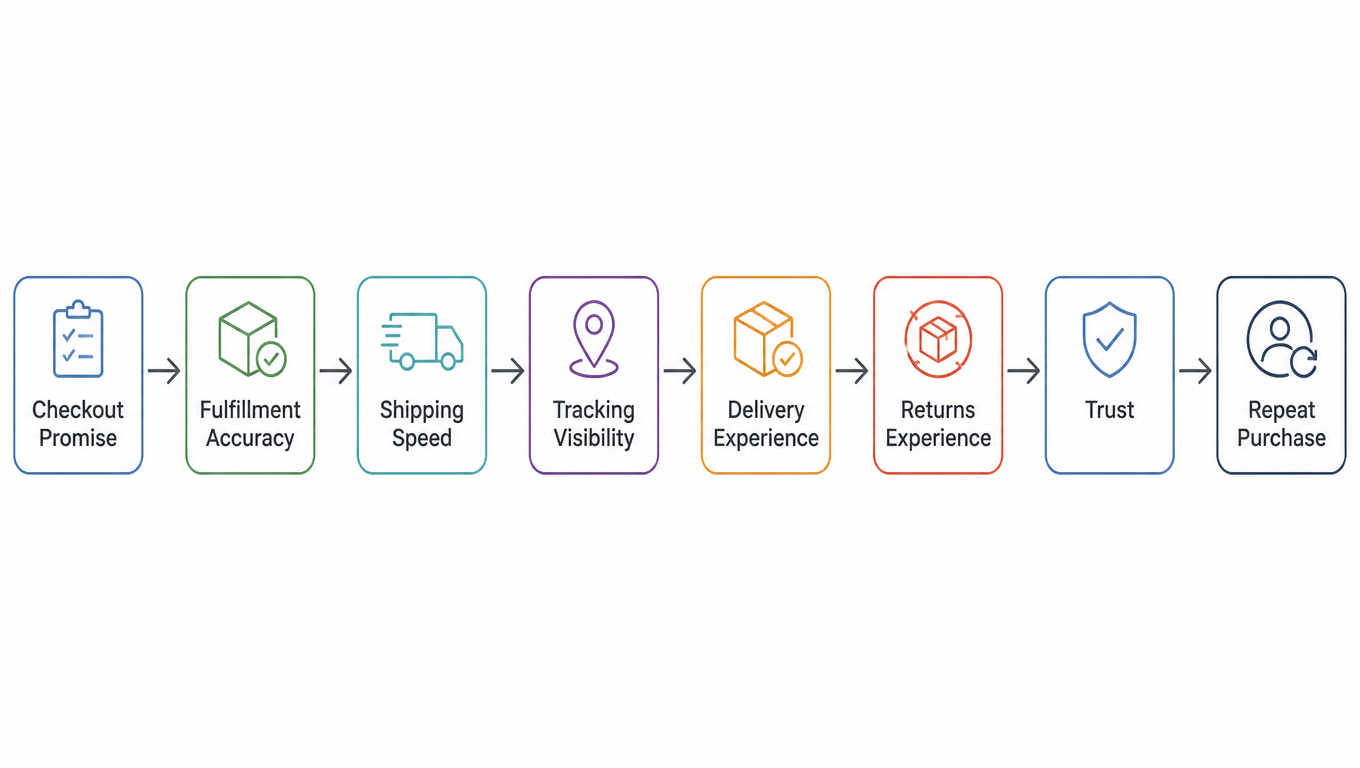
忠诚链路图:结账承诺 → 履约准确度 → 发货时效 → 追踪可见性 → 送达体验 → 退货体验 → 信任 → 复购Loyalty chain: Checkout Promise → Fulfillment Accuracy → Shipping Speed → Tracking Visibility → Delivery Experience → Returns Experience → Trust → Repeat Purchase
八个环节从结账承诺一路通向复购:前六步是操作环节,信任在前六步中累积,复购是经济结果Eight links run from the checkout promise to repeat purchase: the first six are operational, trust accumulates across them, and repeat purchase is the economic outcome

1. 结账承诺:忠诚度从结账之前就开始了1. The Checkout Promise: loyalty starts before checkout

当买家走到结账页,他们不只是在选择支付方式,而是在读你的物流故事:运费是否免费、满多少免邮、包裹承诺何时送达、有哪些配送选项、能否加急、想退货怎么办。这些都不是装饰,而是一份契约,而且买家会拿它来要求你兑现。结账时做出的承诺,由品牌自己负责。如果结账页写着「周二送达」,包裹却在周五才到,客户不会想「承运商晚了三天」,他们会想「这个品牌违背了承诺」。那句话里没有承运商的名字,只有你的。When a shopper reaches checkout, they are not just choosing a payment method. They are reading your shipping story: whether shipping is free and above what order value, when the package is promised to arrive, which delivery options exist, whether expedited shipping is available, and what happens if they want a return. None of this is decoration. It is a contract, and shoppers hold you to it. A promise made at checkout is a promise the brand owns. If your checkout says "Arrives Tuesday" and the package lands on Friday, the customer does not think "the carrier was three days late." They think "this brand broke its promise." The carrier's name is nowhere in that sentence. Yours is.

风险在订单下单之前就看得见。Baymard Institute 基于多年大规模可用性研究的结账数据显示,48% 的美国购物者因为最后一步追加的额外费用(运费、税费、手续费)而弃购[2]。UPS 的 Pulse of the Online Shopper 调查中,73% 的购物者表示运费会影响他们的购买决策[3]。意外越小,他们走得越快。The stakes are visible before the order is even placed. Baymard Institute's checkout research, built on years of large-scale usability studies, finds that 48 percent of US shoppers abandon a cart because of extra costs: shipping, taxes, and fees added at the last step[2]. In UPS's Pulse of the Online Shopper survey, 73 percent of shoppers say shipping costs influence whether they buy[3]. The cheaper the surprise, the faster they leave.

对策:在最后一步之前显示实时准确的运费;给出你能真正兑现的送达日期;定价透明,从购物车到确认页总价保持稳定。结账时每一个意外费用,都是一次在订单存在之前就违背的承诺。Actions: show real-time, accurate shipping rates before the final step. Quote delivery dates you can actually hit. Price transparently, and keep the total stable from cart to confirmation. Every surprise fee at checkout is a promise broken before the order even exists.

2. 履约准确度:承运商再准时,也救不回发错的订单2. Fulfillment Accuracy

承诺之后是仓库,准确度在这里决定:正确的 SKU、正确的尺码、正确的数量、无破损、包装良好。听起来很简单,也确实简单,这正是错误如此伤人的原因。承运商可以完全准时,却仍然送出一段糟糕的体验,因为箱子里装的是错的东西。公式很简单:配送体验 = 履约质量 + 运输质量。你可以把第二项做到完美,却在第一项上翻车。履约错误还要付出三倍代价:一次退货、一次客服沟通、一条差评,全部来自同一笔订单。After the promise comes the warehouse, where accuracy is decided: the right SKU, the right size, the right quantity, undamaged, and packed well. It sounds basic, and it is, which is exactly why errors are so damaging. A carrier can be perfectly on time and still deliver a ruined experience, because the box contains the wrong item. The formula is simple: delivery experience equals fulfillment quality plus transportation quality. You can be flawless at the second and fail at the first. Fulfillment errors are also expensive three times over: a return, a support conversation, and a bad review, all from one order.

专业履约运营的准确率在 90% 以上。顶级 3PL 更进一步:例如 ShipBob 就把 99.9%+ 的订单准确率作为公开承诺的标准[4]。99% 和 100% 之间的差距在百分比上很小,但对那个收到错误 SKU 的客户来说,这就是他们体验的 100%。根据 NRF 的退货数据,发错货与破损商品也一直位列线上订单退货的主要原因[5]Professional fulfillment operations quote accuracy in the high 90s. Top 3PLs go further: ShipBob, for example, publishes 99.9+ percent order accuracy as its standard promise[4]. The gap between 99 percent and 100 percent is small in percentage terms, but for the customer who receives a wrong SKU, it is 100 percent of their experience. Wrong and damaged items also rank consistently among the top reasons customers return online orders, per National Retail Federation returns data[5].

对策:在流程中内置拣货校验(扫描、核对、打包);打面单前校验收货地址;保持店铺与仓库之间的库存实时同步。如果外包,选择一家把准确率当作产品、而不是后台细节来对待的 3PL。Actions: build pick verification into your process (scan, match, pack), validate shipping addresses before labels are created, and keep inventory counts in sync between storefront and warehouse. If you outsource, choose a 3PL that treats accuracy as a product, not a back-office detail.

3. 发货时效:承诺的兑现度,胜过单纯的速度3. Shipping Speed: promise accuracy beats raw speed

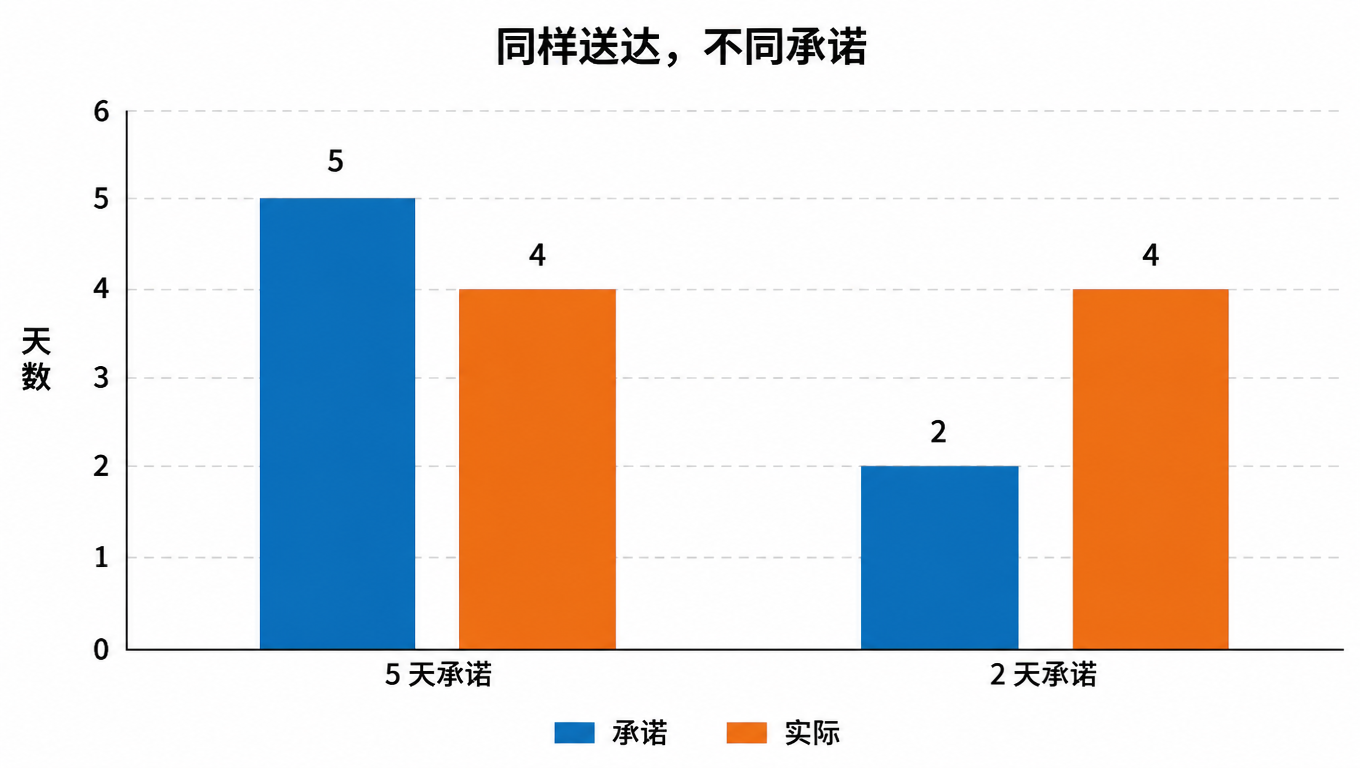
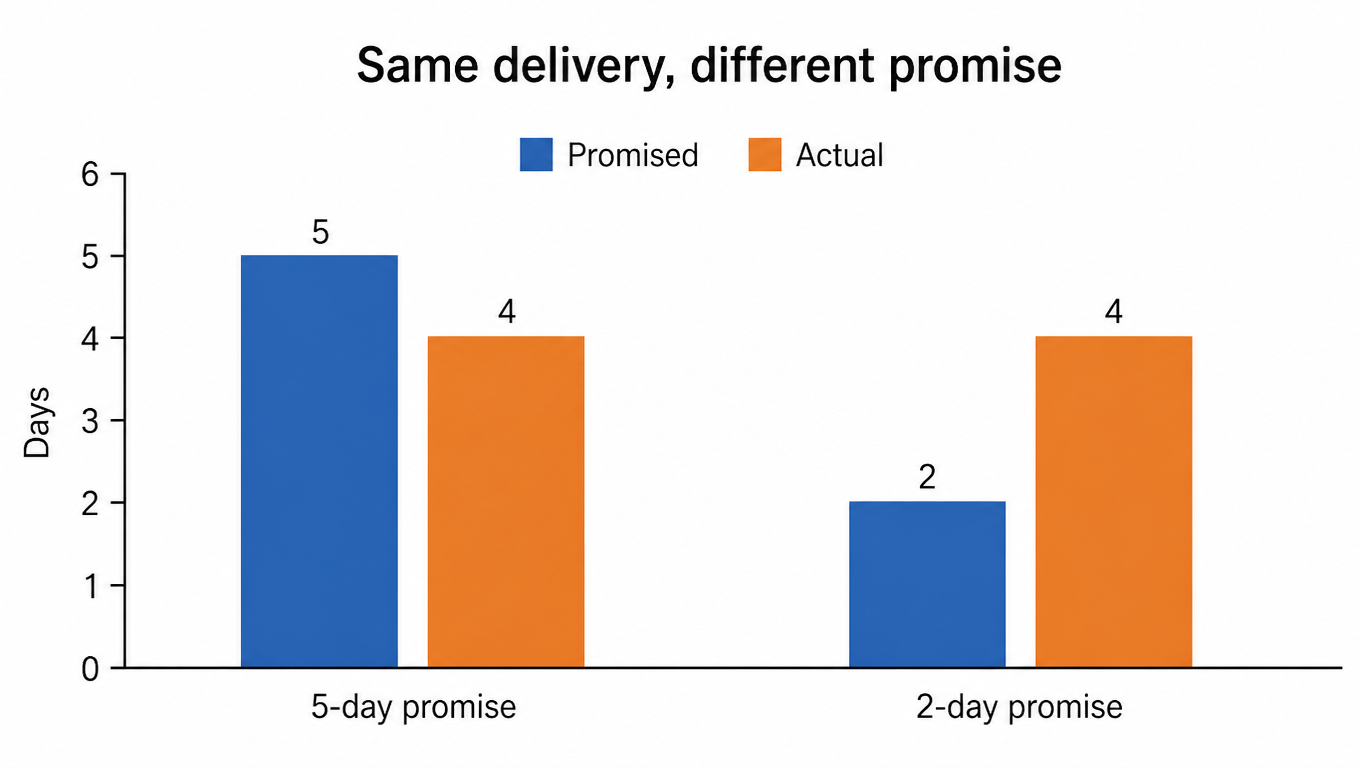
速度是大多数品牌最执着的话题,也最常搞错。假设很简单:越快越好。现实更有意思:购物者真正想要的不是最快的配送,而是被承诺的配送。设想两种场景。你承诺 5 天,包裹 4 天就到了,客户很惊喜,你超出了承诺。现在承诺 2 天,4 天才到。实际送达同样是 4 天,客户却生气了,因为你没有兑现承诺。差别不在速度,而在承诺的兑现度(promise accuracy)。这正是整篇讨论的决策级内容:可靠的配送承诺,可能比单纯提供最快的配送选项更重要。一个经常爽约的快速选项,比一个总能按报价日期送达的慢速选项,更快地侵蚀信任。Speed is the topic most brands fixate on, and the one they most often get wrong. The assumption is simple: faster is better. The reality is more interesting. Shoppers do not primarily want the fastest delivery. They want the delivery they were promised. Consider two scenarios. You promise five days and the package arrives in four. The customer is delighted; you beat your promise. Now promise two days and deliver in four. The same actual delivery, four days, and the customer is angry, because you missed your promise. The difference is not speed. It is promise accuracy. This is the decision content of the whole discussion: reliable delivery promises can matter more than simply offering the fastest shipping option. A fast option that is frequently missed erodes trust faster than a slower option that always lands on the date you quoted.

柱状图:同样的实际送达天数(4 天),5 天承诺让客户惊喜,2 天承诺让客户失望Bar chart: the same actual delivery (4 days) delights when the promise was 5 days and disappoints when the promise was 2 days
实际送达都是 4 天,客户的感受截然相反The same four-day delivery feels completely different depending on the promise

Amazon 效应是真实的。Amazon 用两日达 Prime 培养了两代购物者,2019 年把 Prime 的标准承诺升级为一日达[6],全球会员超过 2 亿[7]。但小品牌不需要复制 Amazon 的网络才能竞争。它需要诚实的送达日期、让这些日期能兑现的备货策略(值得时就跨区域仓分仓),以及从不过度承诺的结账文案。当更快真的负担得起时,区域承运商可以不带全国性承运商的价签做到。The Amazon effect is real. Amazon trained two generations of shoppers on two-day Prime delivery, moved Prime's standard promise to one day in 2019[6], and has more than 200 million members worldwide[7]. But a small brand does not need to match Amazon's network to compete. It needs honest delivery dates, a stocking strategy that makes those dates achievable (split inventory across regional warehouses when it pays off), and checkout copy that never over-promises. When faster is genuinely affordable, regional carriers can deliver it without national-carrier pricing.

4. 追踪可见性:追踪是客户体验,不是物流数据4. Tracking Visibility: tracking is customer experience, not logistics data

在仓库和门口之间是追踪,这是客户实时体验的那段旅程。好的追踪回答三个问题:我的订单到哪了?什么时候到?有问题吗?如果客户一眼就能回答这三个问题,他们就保持平静;如果回答不了,焦虑就开始了。失败的路径很熟悉:追踪三天没动静,客户开始问「我的东西呢」,开客服工单,失去信心,其中一部分人留下差评或申请退款。行业估算认为「我的订单到哪了」(WISMO)咨询占电商客服量的 60% 到 70%。每一次沉默都是一次小额的信任取款。链条是:追踪可见性创造客户信心,沉默摧毁它。Between the warehouse and the doorstep sits tracking, the part of the journey your customer experiences in real time. Good tracking answers three questions: where is my order, when will it arrive, and is there a problem? If the customer can answer all three at a glance, they stay calm. If they cannot, anxiety starts. The failure mode is familiar. Tracking goes silent for three days, the customer starts asking "where is my stuff," they open a support ticket, they lose confidence, and a percentage of them leaves a bad review or asks for a refund. Industry estimates put "where is my order" inquiries at 60 to 70 percent of ecommerce support volume. Each silence is a small trust withdrawal. The chain runs: tracking visibility creates customer confidence, and silence destroys it.

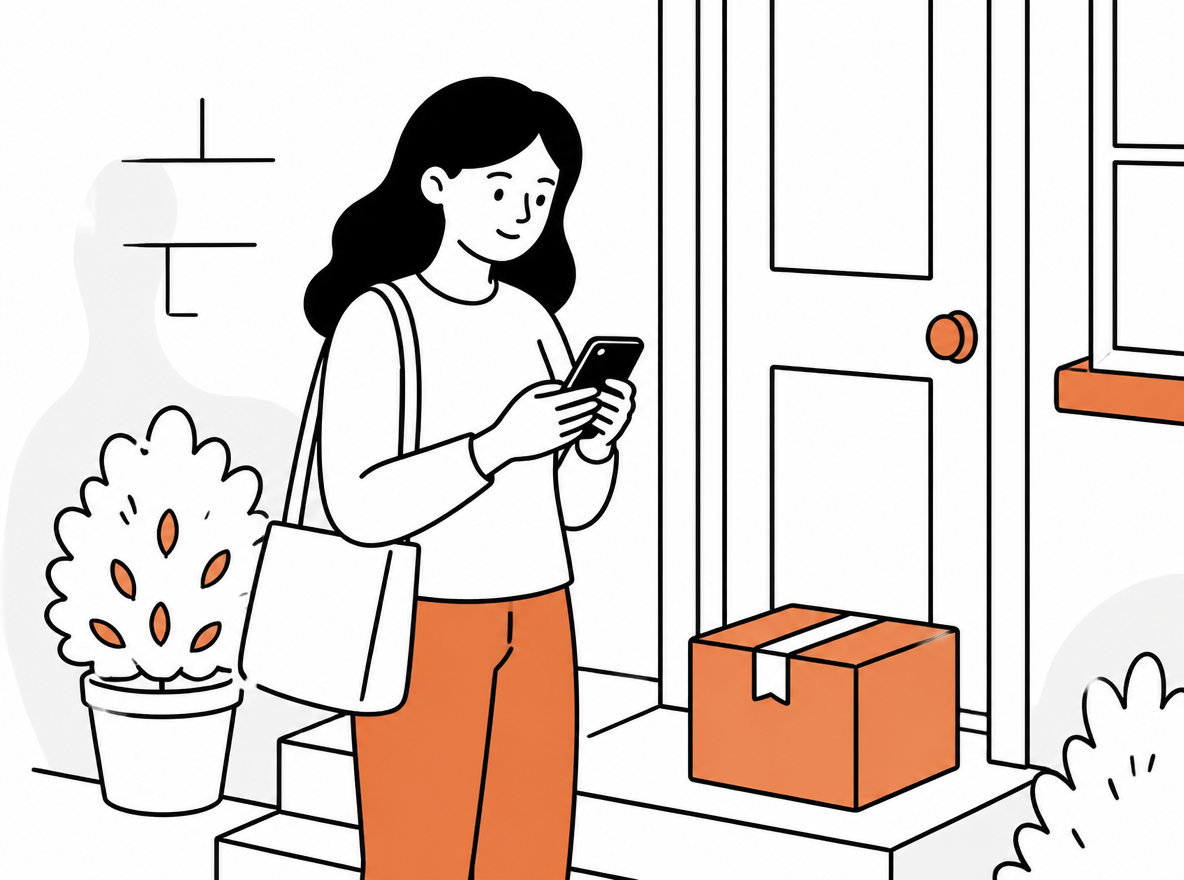
柔和日光下,一位购物者站在门口看手机查物流,旁边的台阶上放着一个快递箱
客户实时体验的是追踪,而不是面单Customers experience tracking in real time; the label is just data

Narvar 的售后研究一再发现,购物者期待的是主动更新,而不是自己追着追踪页看[8]。标准不是「存在一个追踪号」,而是「品牌在我开口之前就告诉我发生了什么」。Narvar's post-purchase research consistently finds that shoppers expect proactive updates rather than having to chase the tracking page themselves[8]. The bar is not "a tracking number exists." It is "the brand tells me what is happening before I have to ask."

对策:建立带有你品牌风格、而不是承运商风格的品牌追踪页;在关键时刻主动推送短信和邮件;突出显示预计送达日期;异常发生时,在客户自己发现之前立刻告知,并给出下一步。多承运商追踪、追踪不可用时怎么办、异常管理与送达证明(POD),这些机制正是体验输赢之处。Actions: build a branded tracking page that carries your look, not the carrier's. Send proactive SMS and email updates at the moments that matter. Show the estimated delivery date prominently. And when an exception happens, tell the customer immediately, with the next step, before they discover it themselves. The mechanics of this, multi-carrier tracking, what to do when tracking is unavailable, exception management, and proof of delivery, are where the experience is won or lost.

5. 送达体验:每一次异常都是一次信任时刻5. Delivery Experience: every exception is a trust moment

最后一公里是物理世界接触品牌的地方:准时送达、送到正确的地点、无破损、不丢失、不被退回、有送达证明、不从门廊被偷走。每一个都是一次信任被确认或受损的时刻。重点不是解释这些物流概念,而是从客户的角度看每一个。包裹丢失对他们来说不是物流事件,而是承诺被违背;派送失败不是快递员的问题,而是「我的订单没来」;门廊盗窃不是社区问题,而是「我付了钱,什么都没收到」。每一次异常都是一次信任时刻,而买单的是品牌。The last mile is where the physical world touches your brand: delivered on time, delivered to the right location, undamaged, not lost, not returned to sender, with proof of delivery, and not stolen from the porch. Each of these is a moment in which trust is either confirmed or damaged. The point is not to explain these logistics terms. It is to see each one from the customer's side. A lost parcel is not a logistics event to them, it is a broken promise. A failed delivery is not a courier issue, it is "my order never came." Porch theft is not a neighborhood problem, it is "I paid and got nothing." Every exception is a trust moment, and the brand is the one that pays for it.

这就是核心句:客户从品牌购买,而不是从承运商购买。承运商出错时,购物者不会打电话给承运商,他们会找卖家。这就是为什么选择承运商本质上是一个客户体验决策:最便宜的选项,只有在不让你丢客户时才便宜。数据也支持这一点。MetaPack 的配送研究显示,96% 的消费者表示配送体验会影响他们是否再次与某零售商购物,84% 表示一次糟糕的配送体验会阻止他们再次购买[9]。门廊盗窃也不是边缘问题:SafeWise 估算 2023 年美国约有 1.19 亿个包裹在门口被盗[10]That is the core line: customers buy from the brand, not from the carrier. When the carrier messes up, the shopper does not call the carrier. They contact the seller. This is why carrier selection is really a customer experience decision. The cheapest option is only cheap if it does not cost you customers. The data backs it up. MetaPack's delivery research found that 96 percent of consumers say the delivery experience influences whether they shop with a retailer again, and 84 percent say a poor delivery experience would stop them from shopping with that retailer again[9]. Porch theft is not a fringe problem either: SafeWise estimates roughly 119 million packages were stolen from US doorsteps in 2023[10].

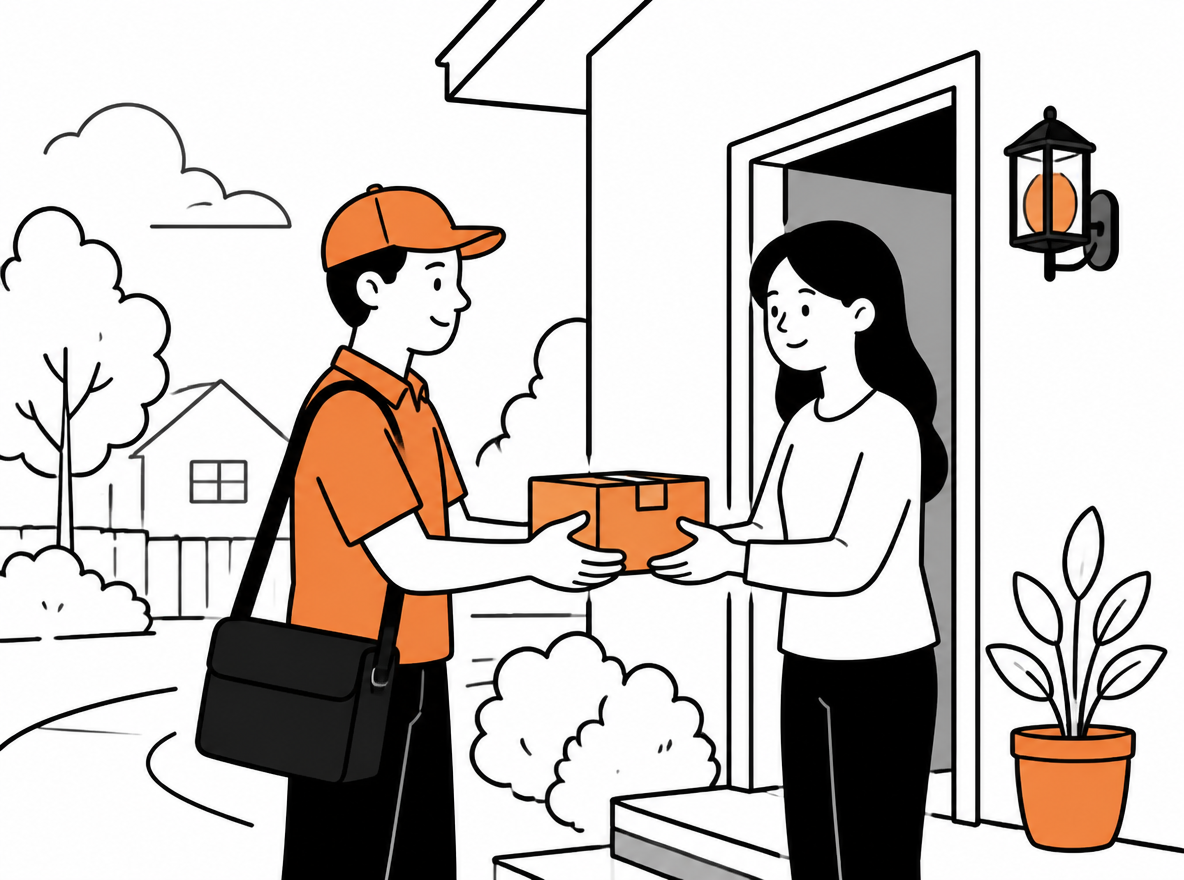
午后,快递员在住宅门口把一个包裹递给客户,郊区街道,自然光,氛围友好平静
客户记住的是品牌,不是承运商Customers remember the brand, not the carrier

对策:选择与你的承诺匹配的末端配送组合;在需要之前就建好异常预案;在可用时提供配送指令和送达证明;为门廊盗窃提供选项,例如签名签收或自提点。Actions: choose a last-mile mix that matches your promise, build exception playbooks before you need them, offer delivery instructions and proof of delivery where available, and give customers options for porch theft, such as signature or pickup.

6. 退货体验:退货是忠诚度的第二次机会6. Returns Experience: a return is loyalty's second chance

大多数品牌把退货当作一笔损失的销售。更有用的视角:退货是第二次客户体验时刻。第一次体验是购买和配送,第二次是退货和退款。处理得糟,它可以抹掉第一次体验建立的善意;处理得好,它可以保住这段关系。摩擦点是可预测的:申请难、标签麻烦、退货追踪不清晰、退款慢。每一处都在告诉客户:钱已经花了,这个品牌不再关心你了。这就是他们决定是否还会回来的时刻。Most brands treat a return as a lost sale. The more useful view: a return is a second customer experience moment. The first experience was purchase and delivery. The second is return and refund. Done badly, it can erase the goodwill the first experience built. Done well, it can save the relationship. The friction points are predictable: hard to request, label hassle, unclear return tracking, slow refunds. Every one of them tells the customer the brand does not care about them anymore, now that the money is already spent. That is the moment they decide whether they will ever come back.

退货也远非罕见:NRF 数据显示线上订单的退货率大约是门店购物的两倍[5],所以这是一段标准旅程,而不是边缘情况。证据也是一边倒的:Narvar 的退货研究显示,96% 退货体验非常顺畅的购物者表示会再次向该零售商购买[8]。退货不是关系的终点,它常常是关系最诚实的考验,因为它发生在品牌在这笔交易上已无利可图的时候。Zappos 的品牌就建立在这上面:双向免运费、365 天退货窗口[11],还有著名的 10 小时客服电话,因为它明白一次顺畅的退货比获取一个新客户更便宜。Chewy 把同样的逻辑用在宠物用品上,很多情况下不要求退回商品就直接退款[12],把慷慨的退货变成了复购机器。Returns are also far from rare: NRF data shows online orders are returned at roughly double the rate of in-store purchases[5], so this is a standard journey, not an edge case. And the evidence on handling is one-sided. Narvar's returns research found that 96 percent of shoppers who had a very smooth return experience said they would buy from that retailer again[8]. A return is not the end of the relationship. It is often the most honest test of it, because it happens when the brand has nothing left to gain from the transaction itself. Zappos built its brand on exactly this. Free shipping both ways, a 365-day return window[11], and famously a 10-hour customer service call, because it understood that a smooth return is cheaper than acquiring a new customer. Chewy took the same logic to pet supplies, crediting returns without asking for the product back in many cases[12], and turned generous returns into a repeat-purchase machine.

对策:默认提供预付退货标签;投递点靠近客户住所;扫描即退款,而不是等箱子回到仓库;退货柜台不审问。一次顺畅的退货,比获取一个新客户更便宜。Actions: prepaid return labels as the default, drop-off points close to where customers live, refunds issued when the scan happens rather than when the box reaches the warehouse, and no interrogation at the return desk. A smooth return is cheaper than acquiring a new customer.

7. 忠诚度经济学:从单次发货成本,到单次留住的客户成本7. Loyalty Economics: from cost per shipment to cost per retained customer

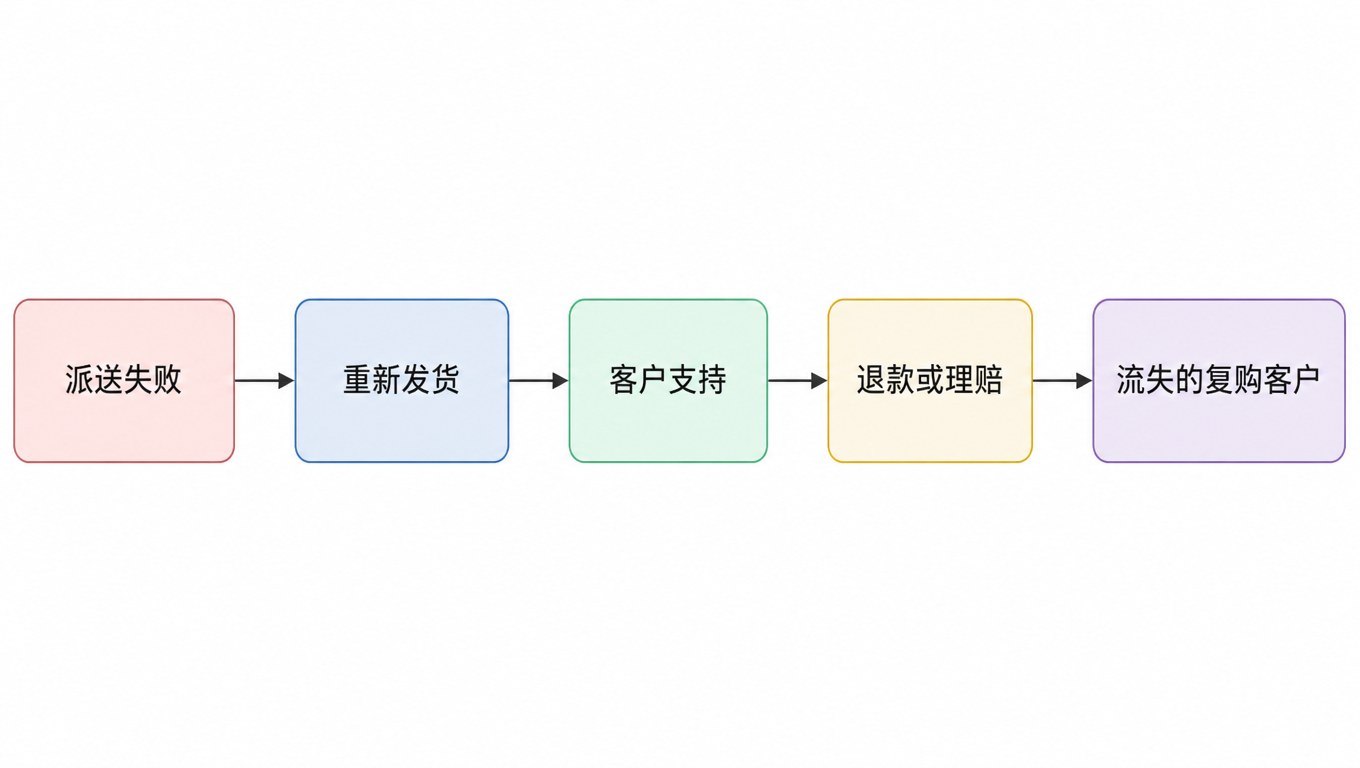
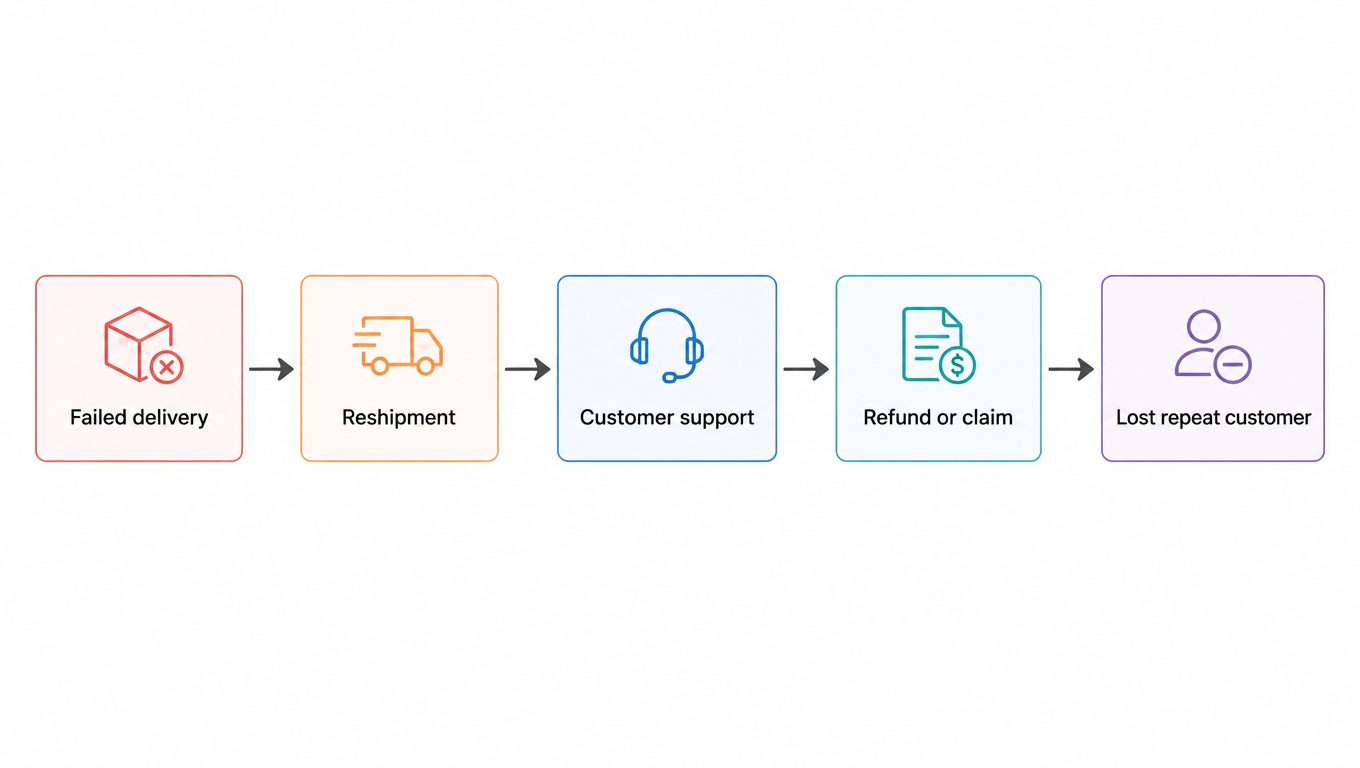
如果数字算不过来,以上一切都没有意义,所以我们来谈钱。承运商 A 每单 3.50 美元,承运商 B 每单 3.90 美元。只看单价的决策会选 A,然后继续。问题是单价只是成本中看得见的部分。真实的成本栈从单价结束的地方开始:失败的派送需要重新派送,丢失或破损包裹的补发,回答「我的订单到哪了」工单的客服时间,退款和理赔,以及那个安静的一项:再也不会下单的客户。更便宜的运费如果带来更多这些成本,就不是更便宜,而是昂贵的折扣。None of this matters if the numbers do not work, so let us talk money. Carrier A charges $3.50 per shipment. Carrier B charges $3.90. A rate-only analysis picks Carrier A and moves on. The problem is that the rate is only the visible part of the cost. The real cost stack starts where the rate ends: failed deliveries that must be redelivered, reshipments of lost or damaged parcels, customer support time spent answering "where is my order" tickets, refunds and claims, and the quiet one, the customer who never orders again. Cheaper freight that generates more of these is not cheaper. It is an expensive discount.

成本链图:派送失败 → 重新发货 → 客户支持 → 退款或理赔 → 流失的复购客户Cost chain diagram: failed delivery → reshipment → customer support → refund or claim → lost repeat customer
一次异常派送的成本,会沿着链条一路滚到流失一个回头客One failed delivery rolls down the chain all the way to a lost repeat customer

这就是升级:从「单次成功送达成本」(cost per successful delivery)升级到「单次留住的客户成本」(cost per retained customer)。不是伪造一个有精确数字的行业公式,而是一种思考方式。在一单能带来差评、退款和一个流失回头客的货上省下几分钱运费,是电商里最差的交易;一个稍贵一点但派送干净的承运商,是在买你的下一单。留存数学也支持这一点:Bain & Company 的研究发现,客户留存率提高 5%,利润提升 25% 至 95%[1];忠诚度研究通常把回头客的终身价值定在一次购买客户的 2 到 3 倍。当 0.40 美元的承运商差价可能让你失去一位 200 美元的回头客时,价目表就不再是全部故事。This is the upgrade: from cost per successful delivery to cost per retained customer. Not as a fake industry formula with a precise number, but as a way of thinking. A few cents of freight saved on a shipment that produces a bad review, a refund, and a lost repeat customer is the worst trade in ecommerce. A slightly more expensive carrier that delivers cleanly is buying the next order. The retention math reinforces it. Bain & Company's research found that a 5 percent increase in customer retention lifts profits by 25 to 95 percent[1], and loyalty studies typically put repeat-customer lifetime value at two to three times that of one-time buyers. When a $0.40 carrier difference can cost you a $200 repeat customer, the rate sheet stops being the whole story.

对策:记录异常成本,而不只是承运商单价;把可靠性放进承运商决策的权重,而不只是价格;把物流指标接到留存指标上,让物流不再是成本中心,而成为衡量增长的一部分。Actions: track exception costs, not just carrier rates. Put reliability into the carrier decision weight, not only price. And connect logistics metrics to retention metrics, so shipping stops being a cost center and becomes part of how you measure growth.

8. 不同业务模式,忠诚驱动因素不同8. Different business models, different loyalty drivers

对每个电商品牌来说,这条链路都是一样的,但每个环节的分量随业务模式而变。对 Shopify 或 DTC 品牌,品牌体验就是一切:追踪、包装和退货都是品牌触点,客户会用所有这些来评判品牌。这就是为什么 Warby Parker 把免费退货和在家试戴变成品牌承诺的一部分[14],Allbirds 每单都提供免费退货[15]:对 DTC 品牌来说,包裹就是门店。The chain is the same for every ecommerce brand, but the weight of each link changes with the business model. For a Shopify or DTC brand, brand experience is everything. Tracking, packaging, and returns are all brand touchpoints, and the customer will judge the brand on all of them. That is why Warby Parker made free returns and home try-on part of its brand promise[14], and why Allbirds offers free returns on every order[15]: for a DTC brand, the box is the store.

对 Amazon 卖家,平台又加了一层约束。Amazon 把配送承诺、追踪要求和卖家表现作为硬性指标执行:有效追踪率高于 95%,迟发率低于 4%,大多数类目的订单缺陷率低于 1%[13]。一个迟到或没有追踪的订单不只是让客户失望,还会打击你的账户健康。忠诚度仍然重要,但合规优先。For an Amazon seller, the marketplace adds another layer. Amazon enforces delivery promises, tracking requirements, and seller performance as hard metrics: a valid tracking rate above 95 percent, a late shipment rate below 4 percent, and an order defect rate under 1 percent in most categories[13]. A late or untracked shipment does not just disappoint a customer, it hits your account health. Loyalty still matters, but compliance comes first.

对 3PL 或履约中心,购物者不是你的客户,但你的表现就是品牌客户的客户的配送体验。你是别人承诺里的引擎:当你客户的客户回来时,你的客户也会回来,激励最终对齐。记住这句收尾:a 3PL may be invisible to the shopper, but its performance is visible in every delivery experience(3PL 对购物者可能是隐形的,但它的表现在每一次配送体验里都可见)。For a 3PL or fulfillment center, the shopper is not your customer, but your performance is the delivery experience your client's customer feels. You are the engine inside someone else's promise. When your client's shopper comes back, your client comes back, and the incentives finally align. Keep the closing line: a 3PL may be invisible to the shopper, but its performance is visible in every delivery experience.

结尾:十项忠诚度自查清单Conclusion: the 10-point loyalty checklist

这里是整条链,变成一张十项清单,你可以拿来对照自己的运营。它不需要全国性配送网络,需要的是你能兑现的承诺,以及一支把每一次异常都当作信任时刻的团队。Here is the whole chain, turned into a ten-item checklist you can run your operation against. None of it requires a national delivery network. It requires promises you can keep, and a team that treats every exception as a trust moment.

  1. 结账时运费透明,没有意外费用。Shipping costs are transparent at checkout, with no surprise fees.
  2. 每一个预计送达日期都是你能真正兑现的。Every estimated delivery date is one you can actually hit.
  3. 拣货与打包校验,让发错 SKU 和缺件成为罕见事件。Pick and pack verification keeps wrong SKUs and missing items rare.
  4. 主动的追踪通知在客户开口之前送达。Proactive tracking notifications reach the customer before they ask.
  5. 品牌追踪页回答「到哪了、何时到、有没有问题」。A branded tracking page answers where, when, and is there a problem.
  6. 末端承运商组合与你做出的承诺匹配。Your last-mile carrier mix matches the promise you made.
  7. 退货容易:预付标签、就近投递、快速退款。Returns are easy: prepaid label, close drop-off, fast refund.
  8. 破损、丢失和派送失败都有现成的异常预案。Exception playbooks exist for damage, loss, and failed delivery.
  9. 送达后的跟进闭环,收获评价。Post-delivery follow-up closes the loop and harvests reviews.
  10. 复购机制(免邮门槛、补货提醒)把一次好送达变成下一单。Repeat-purchase mechanics (free shipping thresholds, replenishment reminders) turn a good delivery into the next order.

常见问题FAQ

能,而且影响很大。MetaPack 的配送研究发现,96% 的消费者表示配送体验会影响他们是否再次购物,84% 表示一次糟糕的配送体验会让他们不再回头。留存经济账同样支持:客户留存率提高 5%,利润可提升 25% 至 95%。物流不是后台成本,它是复购率的制造机。Yes, and more than most brands assume. MetaPack found that 96 percent of consumers say the delivery experience influences whether they shop with a retailer again, and 84 percent say a poor delivery experience would stop them. The retention math agrees: a 5 percent increase in retention can lift profits by 25 to 95 percent. Shipping is not a back-office cost; it is a repeat-purchase machine.
对结账转化来说,免邮更关键:Baymard 数据显示 48% 的美国购物者因为结账时追加的额外费用而弃购,运费是头号原因。但对复购来说,关键是承诺兑现:承诺 5 天、4 天到是惊喜;承诺 2 天、4 天到是愤怒。先让免邮门槛可负担,再让送达日期可兑现,最后才谈更快。For checkout conversion, free shipping wins: Baymard finds 48 percent of US shoppers abandon a cart over extra costs, with shipping the top offender. For repeat purchase, promise accuracy matters more: promising 5 days and delivering in 4 delights, promising 2 days and delivering in 4 enrages. Make the free shipping threshold affordable first, then make delivery dates achievable, and only then chase faster.
不需要复制 Amazon 的网络。三个杠杆:一是只承诺你能兑现的送达日期,从不过度承诺;二是备货策略支撑承诺,值得时跨区域仓分仓;三是用区域承运商和主动追踪把末端体验做扎实。承诺的可靠性比速度更能建立信任。You do not need Amazon's network. Three levers: quote only delivery dates you can actually hit, and never over-promise at checkout; make your stocking strategy back the promise, splitting inventory across regional warehouses when it pays off; and use regional carriers plus proactive tracking to make the last mile solid. Promise reliability builds trust faster than raw speed.
它不是一个有标准数字的行业公式,而是一种思考方式:承运商的单价只是成本中看得见的部分,背后还有失败派送、补发、客服、退款理赔,以及那个最贵的一项:不再回来的客户。0.40 美元的承运商差价,可能让你失去一位 200 美元的回头客。选承运商时把可靠性和留存放进权重,而不只是价格。It is not an industry formula with a standard number; it is a way of thinking. The carrier rate is only the visible part of the cost, behind it sit failed deliveries, reshipments, support, refunds, and the most expensive item of all, the customer who never returns. A $0.40 carrier difference can cost you a $200 repeat customer. Put reliability and retention into carrier selection, not just price.

不想让物流悄悄决定谁回来复购?Do not want shipping to quietly decide who comes back?

EasyShippingX 把跨承运商比价、品牌化追踪与异常管理固化到你的发货流程里,让每一次送达都为下一单加分,而不是减分。EasyShippingX bakes cross-carrier rate comparison, branded tracking, and exception management into your shipping flow, so every delivery earns the next order instead of costing it.

Get Rate Comparison
Get Rate Comparison