团队管理Team Management

如何管理发货团队:3PL 老板的运营手册How to Manage a Shipping Team: The 3PL Owner's Playbook

如果你经营一家正在成长的 3PL 或海外仓,你的瓶颈早已不是箱子,而是团队。只有两个员工的时候,靠眼睛盯就能管:每一张订单、每一家承运商、每一个问题,在冒出来之前你都知道。到了八个人的规模,同样的管法意味着赶不上截单、错拣要等客户气冲冲来投诉你才知道、以及整个生意只有你一个人知道是怎么运转的。这份手册讲的就是从「看着干」到「管着干」的转变。If you run a growing 3PL or overseas warehouse, your bottleneck stopped being boxes and became the team. At two employees you could manage by eyeballing: you knew every order, every carrier, every problem before it surfaced. At eight, the same style means missed cutoffs, mispicks you hear about from angry customers, and a business where only you know how anything works. This playbook is the shift from watching to managing.

它覆盖把一群好员工变成一支发货团队所需要的八件事:怎么搭建团队、怎么设计组织、经理到底干什么、让流程可复制的 SOP、告诉你该看哪里的 KPI 树、提早暴露问题的看板、推动团队前进的 OKR、以及让一切保持诚实的周会。你不需要八件事一次性全上。先从最痛的两件开始,再逐步铺开。读完你手里就是一套能直接落地的一月执行顺序。It covers the eight pieces that turn a group of good workers into a shipping team: how to build it, how to structure it, what the manager actually does, the SOPs that make it repeatable, the KPI tree that tells you where to look, the dashboard that shows problems early, the OKRs that move it forward, and the weekly meeting that keeps it honest. You do not need all eight at once. Start with the two that hurt most, then build out from there. By the end you have a one-month execution order you can start on Monday.

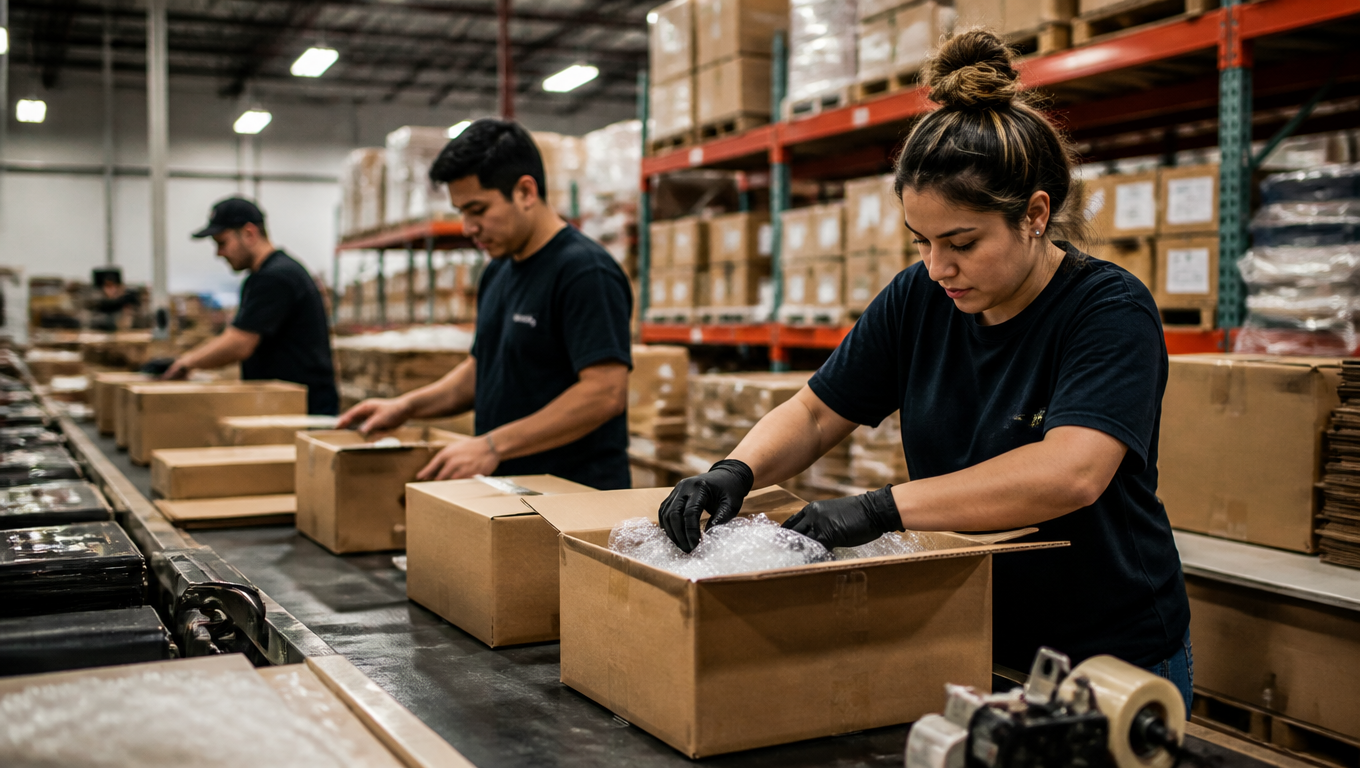
忙碌的小型 3PL 仓库内景:三名工人在明亮的灯光下沿打包线拣货打包,身后货架堆满纸箱
从「自己扛」到「团队扛」的转变,从这里开始The shift from doing it yourself to building a team that runs itself

怎么搭建发货团队How to Build a Shipping Team

老板最容易犯的第一个错误,是团队还值不值得管的时候就先招了个经理。经验法则:如果有一件事你本人一个月里每周要亲手做超过两次,那件事就是一个岗位,而这个岗位不该是你的。因为自己埋头打包而错过截单、客户直接给你发邮件、承运商索赔吃掉你的利润,这些信号都说明下一招是招一个干活的人,不是招一个管人的人。The first mistake most owners make is hiring a manager before they have a team worth managing. The rule of thumb: if you personally do the same task more than twice a week for a month, that task is a job, and the job should not be yours. Missed cutoffs because you are stuck packing, customers emailing you directly, and carrier claims eating your margin are all signs that the next hire is an operator, not a boss.

前三个人按有意的顺序来。第一个是带班操作员,一个全能的熟手,能拣货、能打包、能自己搞定承运商后台,不用你手把手。第二个是另一个操作员,用来覆盖第二班次或高峰期的货量,保证一个人请假时运营照样转。第三个是协调员,负责收货入库、库存盘点、行政杂务,这些是正在悄悄掐死你的工作。专职的仓库经理要到团队超过六七个人之后才值得招,因为在那之前,一个得力的带班操作员就能以操作员的工资干经理的活。The first three hires come in a deliberate order. First, a lead operator, an all-rounder who can pick, pack, and navigate the carrier portals without hand-holding. Second, another operator to cover the second shift or the volume peaks, so the operation survives when one person is out. Third, a coordinator who owns inbound, inventory counts, and admin, which is the work quietly strangling you. A dedicated shipping manager only makes sense once you are past roughly six or eight people, because until then a strong lead operator does the manager's job at operator pay.

找到靠谱的拣货员和打包员是本地生意:招聘网站、本地移民社区,最重要的是你现有员工的推荐,他们拿自己的名声在担保。仓库岗位招人,要看能预测第 20 周的信号,而不是第 1 周的。面试守时、对不懂的事诚实、推荐人说「可靠、每次都来」,比一份写满从没碰过的仓库软件的简历值钱得多。在这个规模,可靠比速度重要,因为一次错拣丢掉的是一张订单和那个客户。Finding reliable pickers and packers is a local game: job boards, local immigrant communities, and above all referrals from your current staff, whose reputation is on the line. For warehouse roles, hire for signals that predict week 20, not week 1. Punctuality at the interview, honesty about what they do not know, and a reference who says "reliable, shows up" are worth more than a resume full of warehouse apps they have never touched. At this scale, reliability beats speed, because one mispick costs you the order and the customer.

入职培训和交叉培训是你保持「小而稳」的办法。每个关键职能都要有第二个会做的人:3PL 里不允许有单点故障,否则故障一来就是客户的 Q4。从入职第一天就交叉培训拣货、打包、打标签,并且用你的 SOP 当培训教材,这样新员工学到的流程跟写下来的一字不差,而不是靠教他的人凭记忆讲的。Onboarding and cross-training are how you stay small-proof. Every critical function needs a second trained person: there is no single point of failure in a 3PL, or the failure is a client's Q4. Cross-train picking, packing, and label printing from day one, and use your SOPs as the training document, so a new hire learns the process exactly as written, not as the person teaching them remembers it.
发货团队的组织架构Shipping Org Structure

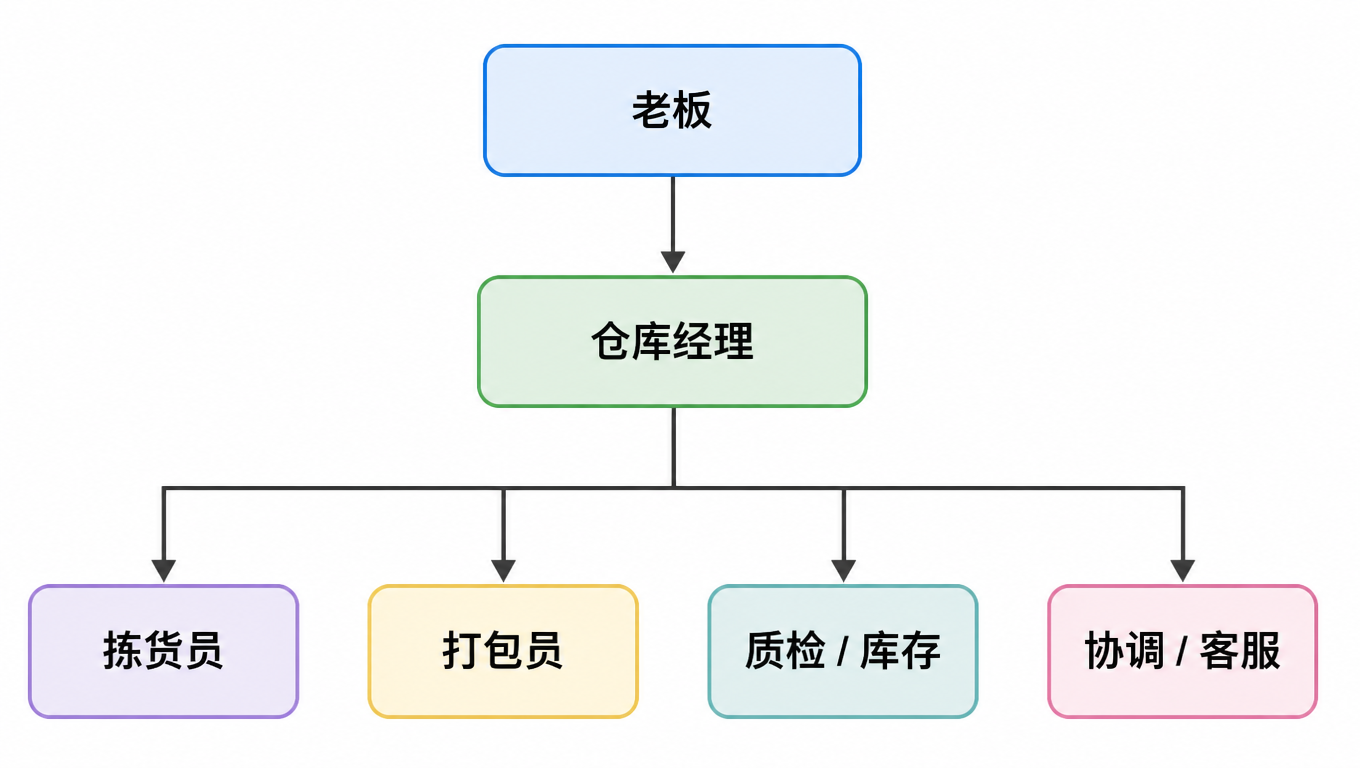
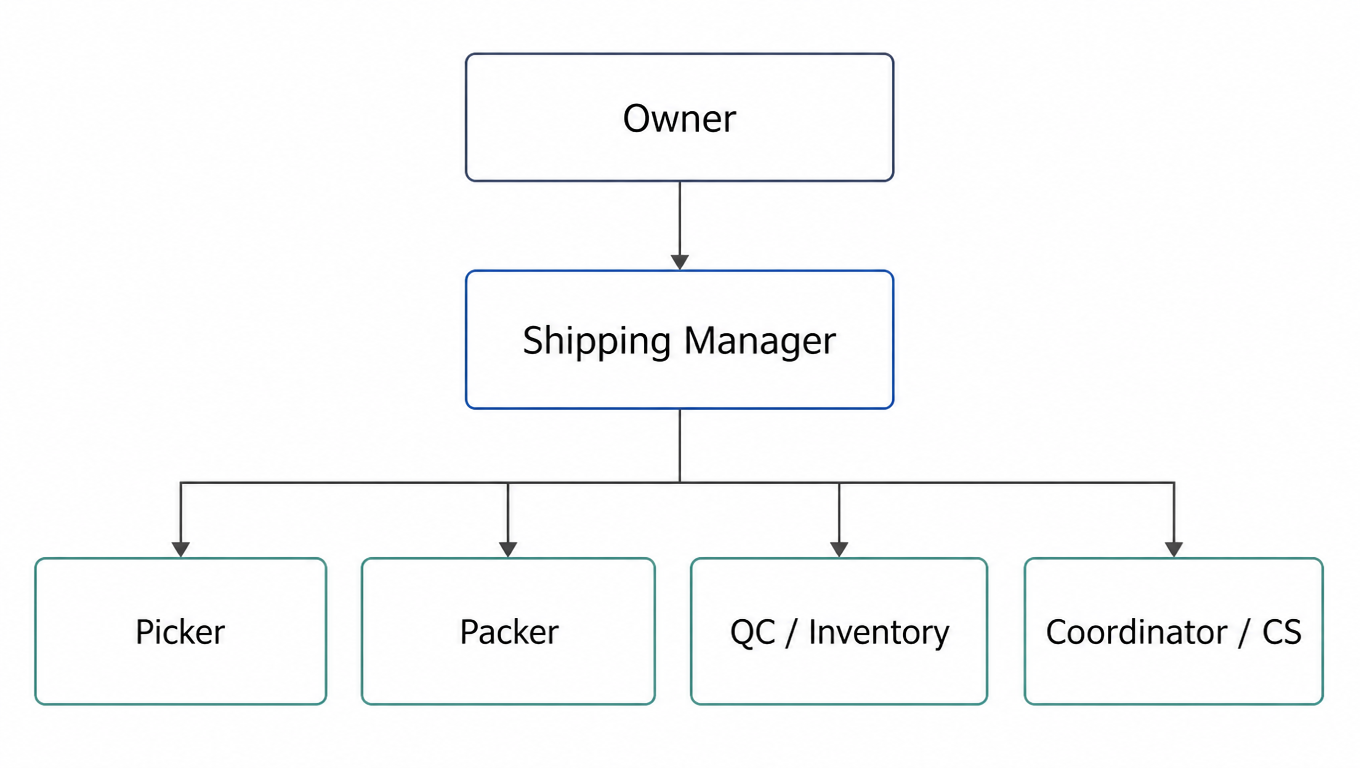
在几十人以下的 3PL 里,组织架构几乎必然是扁平的:老板、一个仓库经理、下面几个专员。再高一层都是你养不起的闲职、不需要的官僚。下面这张图就是这个规模的标准形状。In most 3PLs below a few dozen people, the org chart is flat by necessity: owner, one shipping manager, and specialists below. Anything taller is overhead you cannot afford and bureaucracy you do not need. The chart below is the standard shape at this size.

扁平组织架构图:老板下辖仓库经理,经理下辖拣货、打包、质检/库存、协调/客服四个职能Flat org chart: owner above one shipping manager, who runs picking, packing, QC/inventory, and coordination/CS
扁平组织:老板、一个仓库经理、几个多面手专员A flat org: owner, one shipping manager, and multi-hat specialists

一个经理能有效带 6 到 10 个操作员,但前提是流程有文档。如果经理的直接下属超过八个,就加一个向经理汇报的班组长。这个规模几乎永远不需要第二个经理;你需要的是地板上多一双手,以及一个大脑在管地板。One manager can effectively run 6 to 10 operators, but only if the process is documented. If the manager's direct reports push past eight, add a shift lead who reports to the manager. You almost never need a second manager at this size; you need a second pair of hands on the floor and one brain running the floor.

这个规模下,岗位是帽子,不是部门。拣货、打包、质检、库存、客服、行政,同一顶帽子经常一次戴两三顶。重要的不是你有几个头衔,而是每个职能都有一个具名的负责人。当一件货出错发出去时,不是「团队」掉的链子,而是负责质检的那个人掉的。所有权,才是把一群员工变成一支团队的东西。At this scale roles are hats, not departments. Picking, packing, QC, inventory, customer service, and admin get worn two or three at a time by the same person. What matters is not how many titles you have but that every function has a named owner. When a box goes out wrong, "the team" did not drop it; the person who owns QC did. Ownership is what turns a group of workers into a team.

两个结构性的触发信号要盯住。如果日发货量超过一个班次能扛的极限,先为第二个班次加一个班组长,而不是先加经理。如果你的经理一周有一半以上的时间在做操作员的活,或者他是唯一会开门、唯一接电话的人,那就提拔或招一个在他之上的人,因为瓶颈已经从地板转移到了管理这一层。Two structural triggers to watch. If daily volume exceeds what one shift can carry, add a shift lead for the second shift before you add a manager. If your manager spends more than half the week doing operator work, or is the only person who can open the door and answer the phones, promote or hire above them, because the bottleneck has moved from the floor to the management layer.

仓库经理的职责Shipping Manager Responsibilities

仓库经理真正重要的只有一件事:没有你也能把团队带起来。检验方法残酷但有用:如果你离开两个星期,会不会出乱子?会,那你还没有经理,只有一个挂着职衔的高级操作员。The shipping manager has exactly one job that matters: run the team without you. The test is brutal and useful: if you left for two weeks, would anything break? If yes, you do not have a manager yet, you have a senior operator with a title.

核心职责包括:按预期货量排班和配人、兑现 SLA 和截单承诺、对发出的订单抽样质检、维护承运商关系和索赔、让库存准确率保持诚实、每周向上汇报数字。注意这里没有什么:经理不是最牛的拣货员,不是打包线的救火队员,也不是你的私人助理。如果经理的手一周有超过几个小时在线干活,你提拔错了人。经理的工作是让团队的产出可预测,而你身在系统里的时候是看不见系统的。The core duties are scheduling and staffing against expected volume, hitting SLA and cutoff commitments, sampling QC on outgoing orders, managing carrier relationships and claims, keeping inventory accuracy honest, and reporting the numbers upward every week. Note what is missing: the manager is not the best picker, is not the packing-line safety valve, and is not your personal assistant. If the manager's hands are on the line more than a few hours a week, you promoted the wrong person. The manager's job is to make the team's output predictable, and you cannot see the system while you are inside it.

经理的一周有固定的节奏,最后落在三份交付物上。每周五一份一页纸的报告,写清看板数字和变化。一次周会,团队一起看同一组数字。以及每两周与每个操作员 15 分钟的一对一,问题往往在这里先冒头,而不是变成索赔之后。如果经理只来得及做其中一件,那就做一对一,因为员工会告诉经理那些永远不会告诉你的事。The manager's week has a rhythm, and it ends in three deliverables. A one-page report every Friday with the dashboard numbers and what changed. A weekly review meeting where the team looks at the same numbers together. And a 15-minute one-on-one with each operator every couple of weeks, which is where problems surface before they become claims. If the manager has time for only one of these, it is the one-on-ones, because people tell the manager what they will never tell you.

发货 SOPShipping SOP

SOP 是 3PL 之所以是 3PL 的东西。客户看不见你的团队、你的 WMS、你的好心;他们只看到箱子是不是准时、是不是正确到达。SOP 让任意两天产出同样的结果,不管那天是谁在干活。在这个规模,SOP 还能降低培训成本、消化人员流动、当大客户问你们怎么运作时让你的运营经得起审计。SOPs are what make a 3PL a 3PL. A customer cannot see your team, your WMS, or your goodwill; they see whether the box arrives on time and correct. SOPs are how any two days produce the same output, regardless of who is working them. At this size, SOPs also cut training cost, absorb turnover, and make your operation auditable when a big client asks how you work.

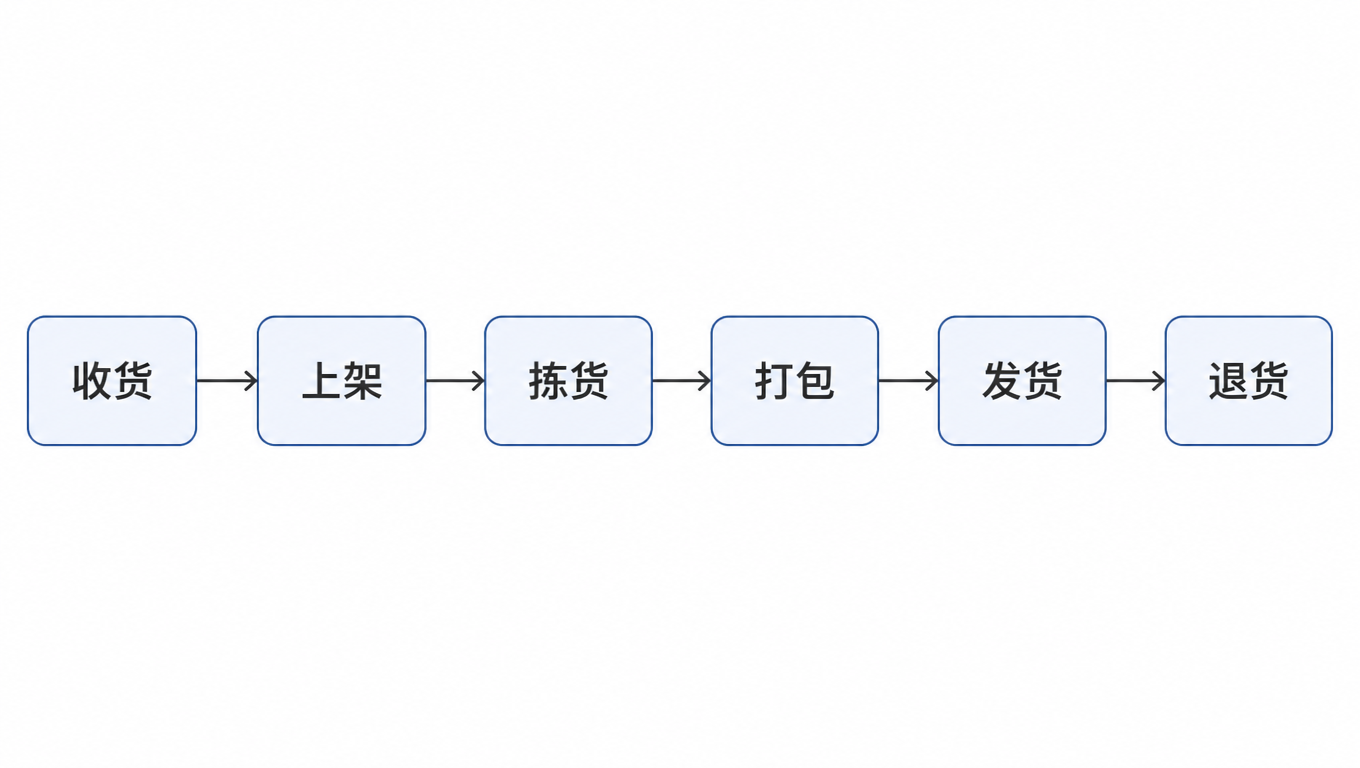
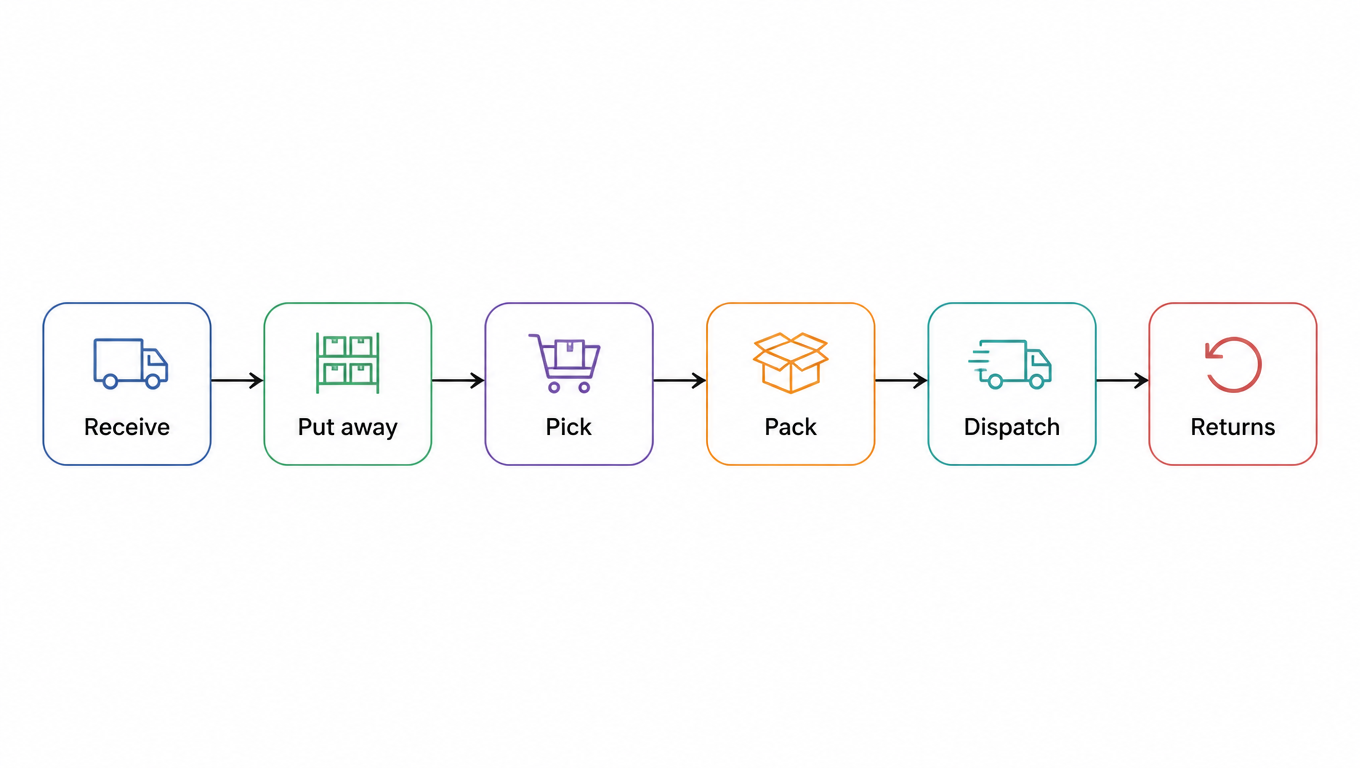
核心 SOP 覆盖整条链:收货、上架、拣货、打包、发货、退货。下图就是这条链路。The core SOP set covers the full chain: receiving, putaway, picking, packing, dispatch, and returns. The flow below is that chain.

SOP 流程链:收货、上架、拣货、打包、发货、退货SOP flow chain: receive, put away, pick, pack, dispatch, returns
核心 SOP 覆盖整条链:收货、上架、拣货、打包、发货、退货The core SOP set covers the full chain: receiving, putaway, picking, packing, dispatch, returns

一页纸的 SOP 有五个部分:标题、一句话的用途、零背景知识的新员工也能照着做的编号步骤、针对最常出问题的三件事的例外规则、以及带版本日期的具名负责人。用一句话写清为什么,因为人只遵守他们理解的规则。用一张正确贴标位置的照片,而不是一段描述它的文字。并且保持一页;如果要两页,那是两个流程。A one-page SOP has five parts: a title, a one-line purpose, numbered steps a new hire can follow with zero context, exception rules for the three things that go wrong most often, and a named owner with a version date. Write the why in one line, because people follow rules they understand. Use a photo of the correct label placement instead of a paragraph describing it. And keep it to one page; if it takes two, it is two processes.

版本控制是每个人都跳过、之后都后悔的部分。每个版本盖日期戳,每个 SOP 有一个负责人,每季度带着团队把整套过一遍,他们发现不对的地方当场改。没人遵守的 SOP 是文档债,季度评审就是那笔防止它利滚利的利息。Version control is the part everyone skips and regrets. Date-stamp every version, give each SOP one owner, and review the whole set with the team once a quarter, editing in front of them when they find something wrong. An SOP nobody follows is documentation debt, and the quarterly review is the interest payment that keeps it from compounding.

发货 KPI 树Shipping KPI Tree

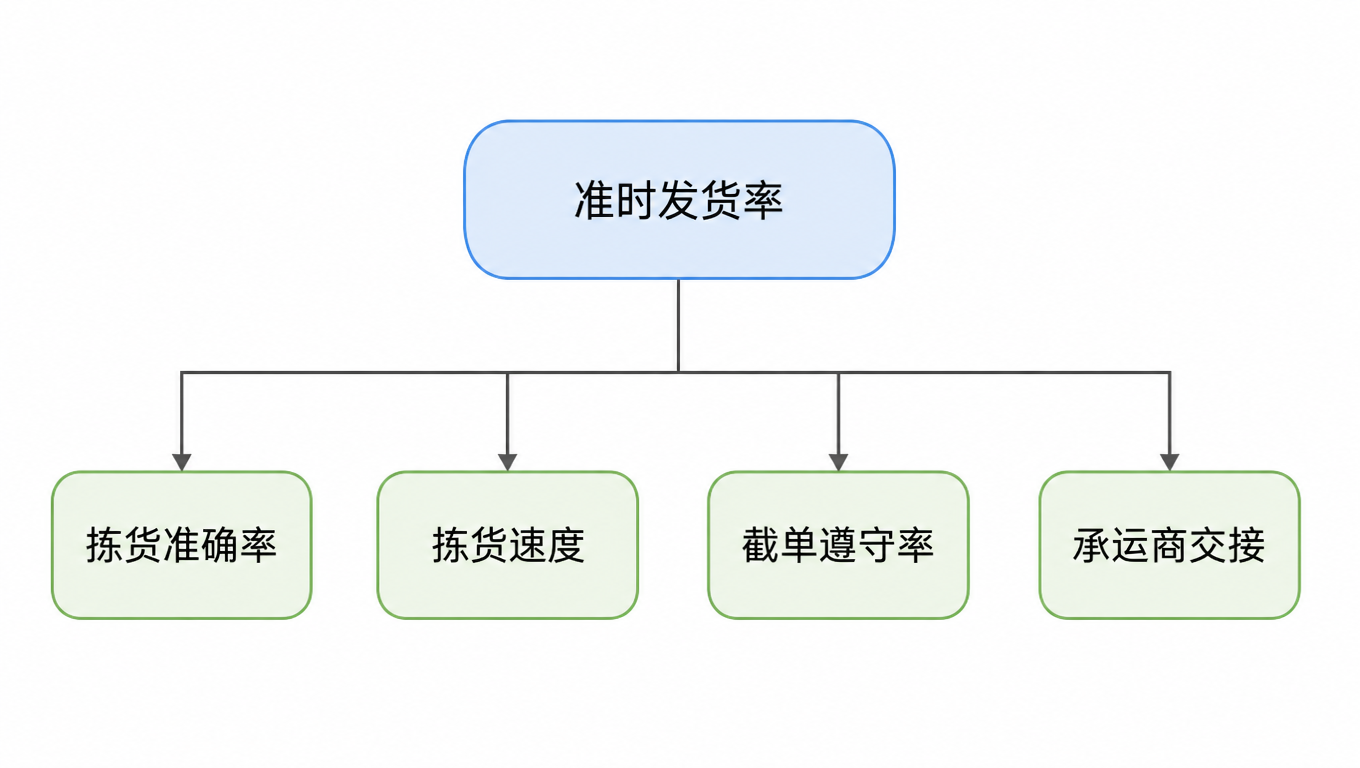
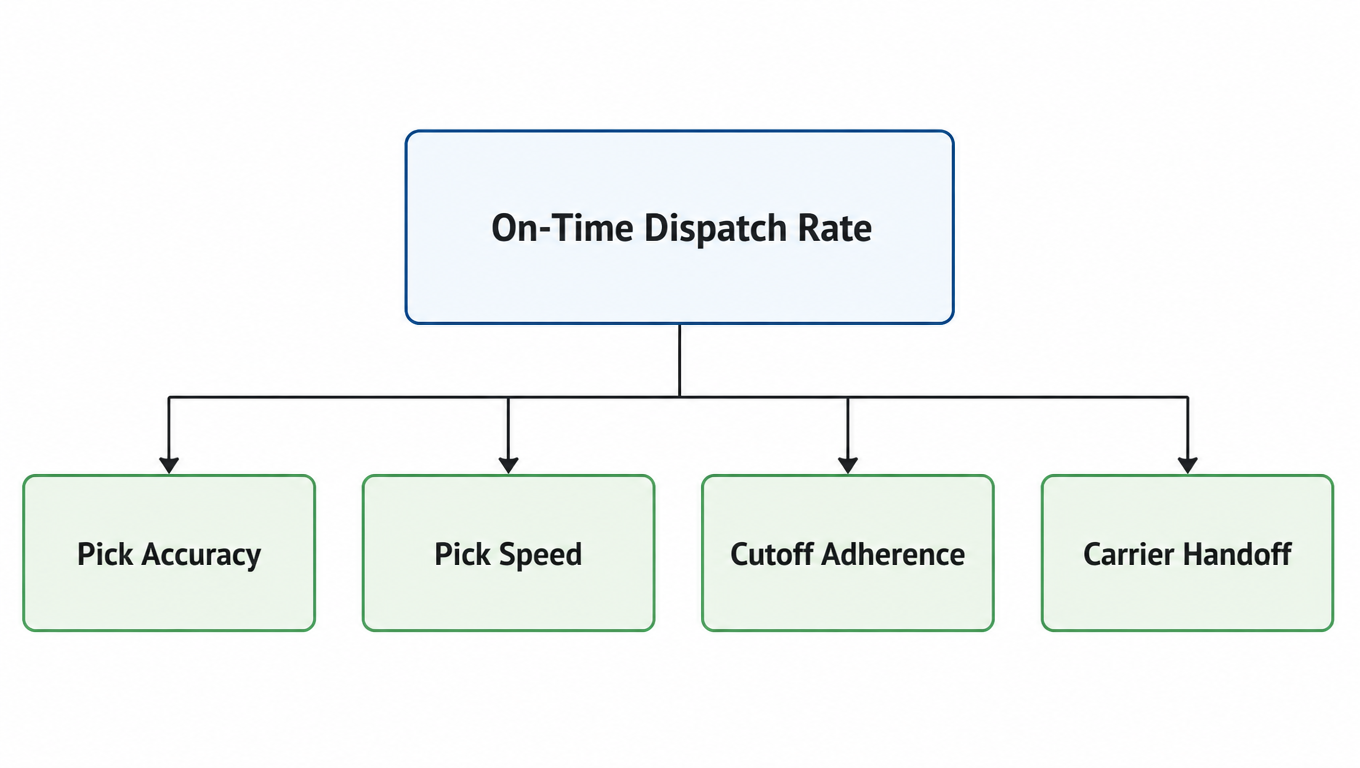
这个规模下,塞满 20 个指标的看板等于什么都看不见。解法是 KPI 树:树根一个总指标,分解成推动它的少数几个驱动因素,这样数字变红时你早就知道该看哪里。对 3PL 来说,总指标是准时发货率,它往下拆成拣货准确率、拣货速度、截单遵守率、承运商交接可靠性。At this size, a dashboard full of 20 metrics is a way to see nothing. The fix is a KPI tree: one top metric at the root, decomposed into the few drivers that move it, so when the number goes red you already know where to look. For a 3PL, the top metric is on-time dispatch rate, which breaks down into picking accuracy, picking speed, cutoff adherence, and carrier handoff reliability.

KPI 树:准时发货率为根,拆出拣货准确率、拣货速度、截单遵守率、承运商交接四个分支KPI tree: on-time dispatch rate at the root, branching into pick accuracy, pick speed, cutoff adherence, and carrier handoff
KPI 树:准时发货率拆成四个驱动因素The KPI tree: on-time dispatch decomposed into four drivers

小型发货团队最该盯的五个 KPI:准时发货率、拣货准确率、人均每小时订单数、库存准确率、每周漏截单次数。其余都是背景信息,不是管理。跳过设备利用率百分比、单均成本(货量不够大时这个数字没有意义),以及任何你这周不打算采取行动的指标。一个你不每天看的 KPI 只是装饰。The five KPIs that matter most for a small shipping team: on-time dispatch rate, pick accuracy, orders per person-hour, inventory accuracy, and cutoffs missed per week. Everything else is context, not management. Skip utilization percentages, cost per order until you have enough volume for the number to mean anything, and any metric you are not prepared to act on this week. A KPI you do not look at daily is decoration.

发货看板Shipping Dashboard

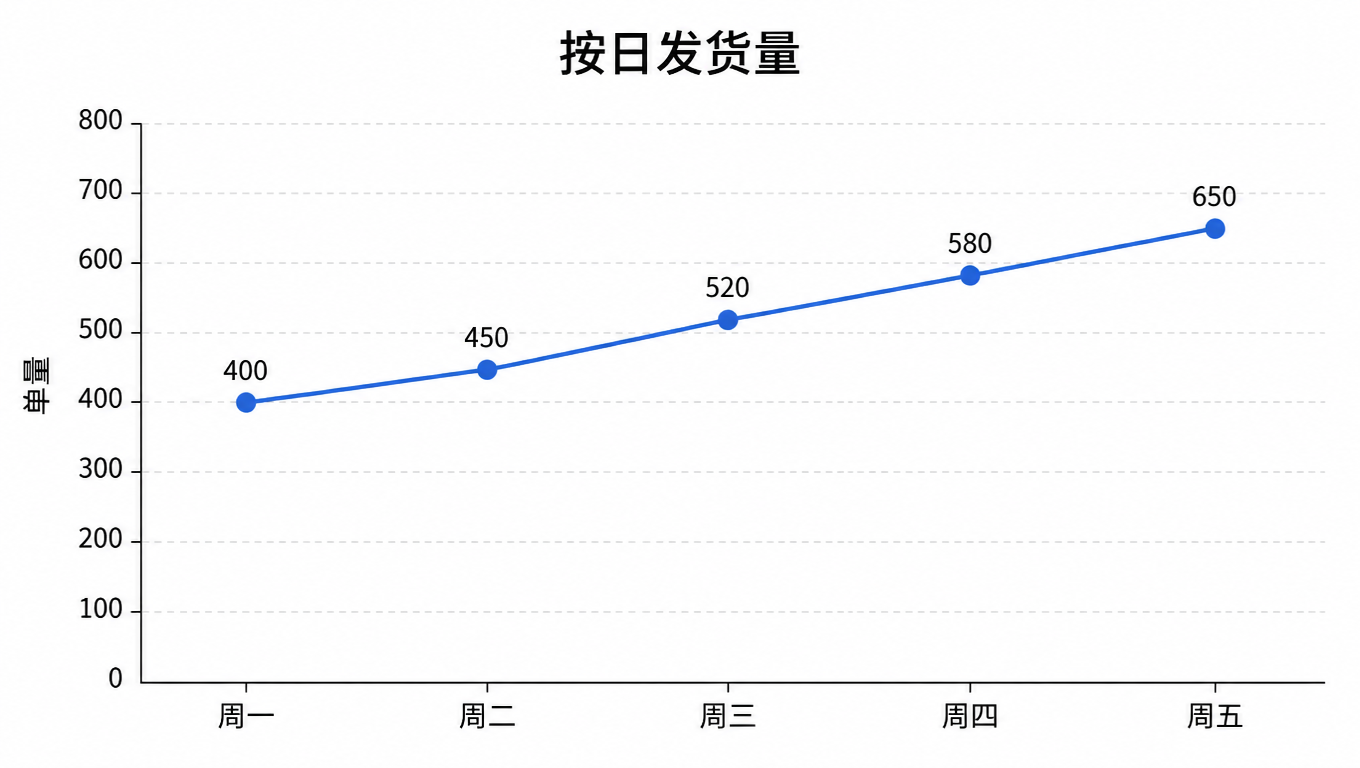
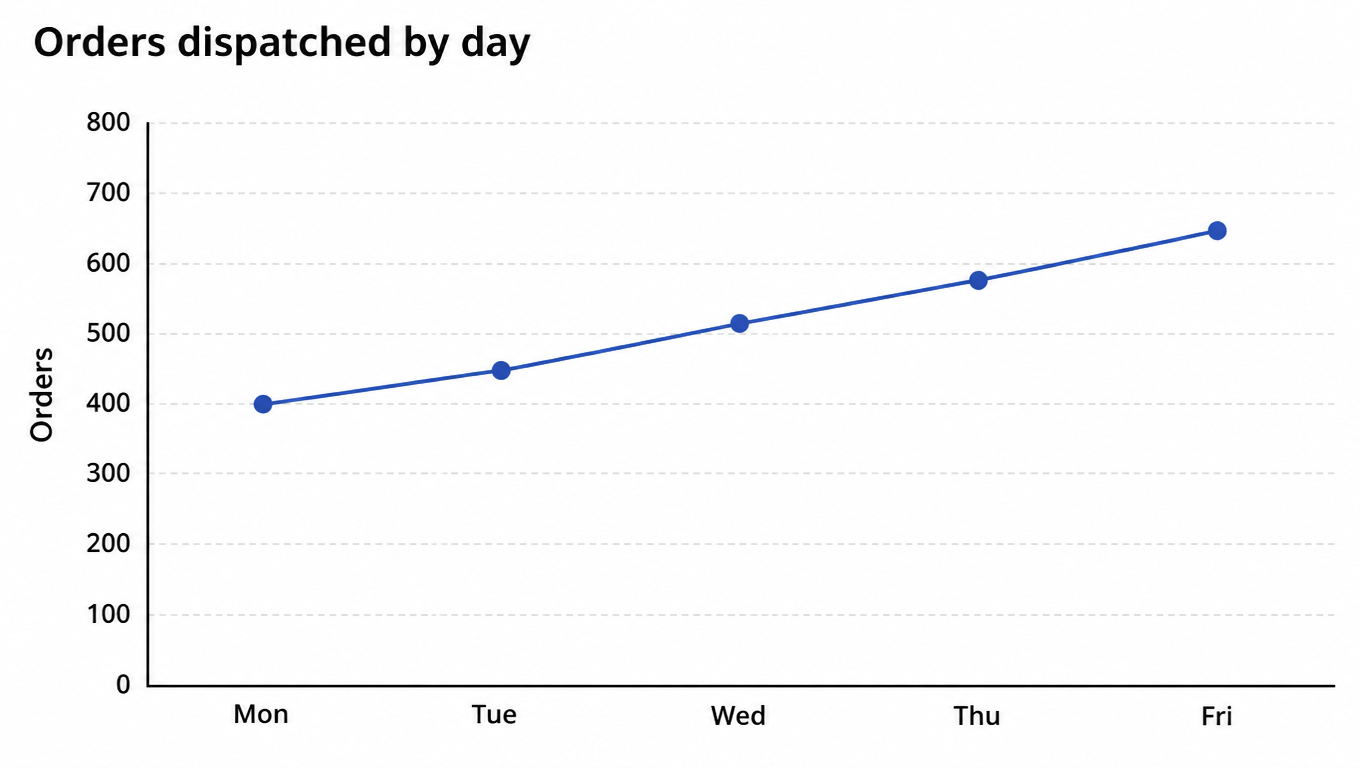
看板的存在是为了让问题赶在客户之前被你看见。它是健康检查,不是报表:一组小数字,在固定时间更新,告诉你今天是否正常。假设你仓库的典型一周从周一的约 400 单涨到周五的 650 单,趋势大致如下图。The dashboard exists to show you problems before customers do. It is a health check, not a report: a small set of numbers, updated at fixed times, that tell you whether today is normal. Say a typical week at your warehouse runs from about 400 orders on Monday to 650 by Friday; the trend looks roughly like the chart below.

折线图:按日发货量,周一约 400 单逐渐涨到周五 650 单Line chart of orders dispatched by day, from about 400 on Monday to 650 by Friday
典型一周:从周一约 400 单涨到周五 650 单A typical week: from about 400 orders Monday to 650 by Friday

五个每日数字:进单、出单、准时率、未清积压、错拣或索赔。每个回答一个问题:我们跟得上吗,我们在兑现 SLA 吗,活干对了吗?周度视图加上单均成本、承运商表现、加班工时,利润就是在这里悄悄漏掉的。The five daily numbers are orders in, orders out, on-time percentage, open backlog, and mispicks or claims. Each answers one question: are we keeping up, are we meeting SLA, and is the work right? The weekly view adds cost per order, carrier performance, and overtime hours, which is where margin quietly leaks.

从电子表格开始,别上软件。一天在三个固定时间更新的 Google Sheet,胜过一张没人更新的漂亮看板,因为价值在看,不在图。只有当维护表格每天超过 15 分钟时,才上 WMS 报表,而且永远别让工具成为跳过每日一看的借口。Start with a spreadsheet, not software. A Google Sheet updated at three fixed times a day beats a beautiful dashboard nobody updates, because the value is in the looking, not the chart. Add WMS reporting only when the sheet is taking more than 15 minutes a day to maintain, and never let the tool become an excuse to skip the daily look.

发货 OKRShipping OKRs

KPI 和 OKR 回答的是不同的问题。KPI 是健康检查:它告诉你别变差。OKR 是一笔赌注:它告诉你这个季度必须显著变好的东西是什么。你可以有一个完美的 KPI 周,同时仍在漂移,这正是季度 OKR 要解决的场景。KPIs and OKRs answer different questions. A KPI is a health check: it tells you not to get worse. An OKR is a bet: it tells you what has to get meaningfully better this quarter. You can have a perfect KPI week and still be drifting, which is exactly the situation a quarterly OKR is for.

一个这个规模的 3PL 的完整例子。目标:季度末把准时发货率做到 99%。关键结果:错拣率从 1.2% 降到 0.4%、每周漏截单从三次降到零、给全部八名操作员交叉培训收货,让人员覆盖不再是单点风险。三个关键结果,每个可衡量,每个有人认领。One worked example for a 3PL at this size. Objective: reach 99 percent on-time dispatch by the end of the quarter. Key results: cut mispicks from 1.2 percent to 0.4 percent, reduce cutoff misses from three per week to zero, and cross-train all eight operators on receiving so coverage stops being a one-person risk. Three key results, each measurable, each owned by someone.

规则让它保持轻量。每季度两到三个目标,一页纸,不做打分表演。每周例会花十分钟看进度,季度末回顾。这个规模下,OKR 的职责是聚焦,不是流程;如果写它要花掉超过一顿午饭的时间,它就太重了。The rules keep it small. Two or three objectives per quarter, one page, no scoring theater. Review progress in ten minutes of the weekly meeting and revisit at quarter end. At this scale, the OKR's job is focus, not process; if writing it takes longer than a lunch break, it is too heavy.

发货周会Shipping Weekly Meeting

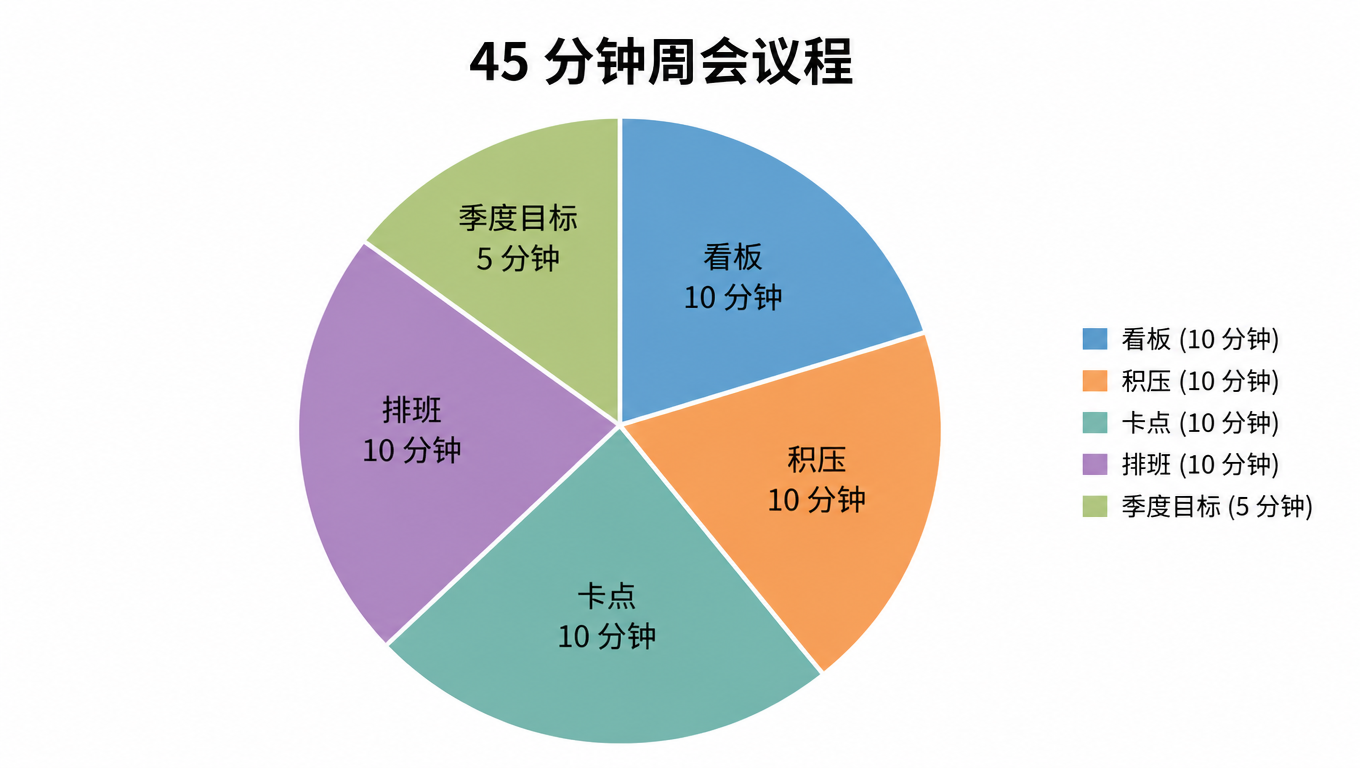
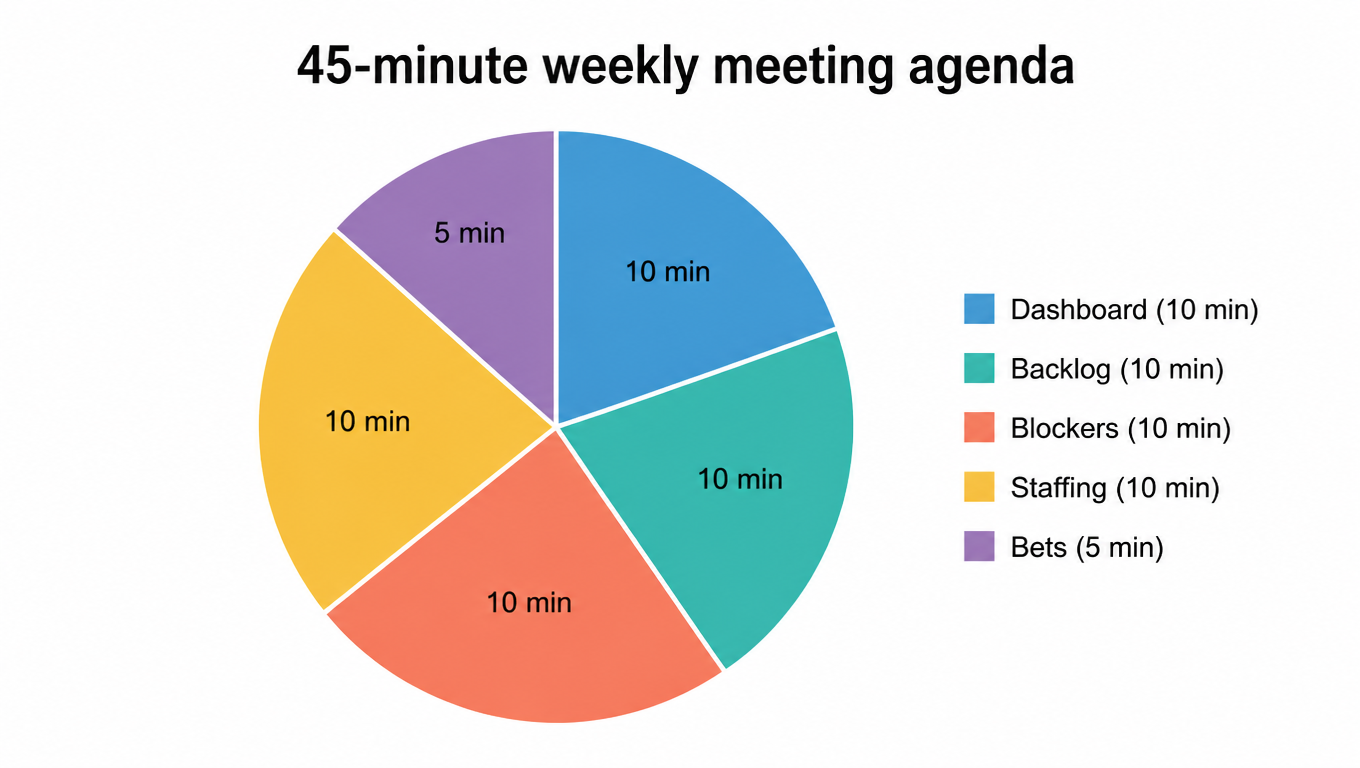
周会是所有其他环节汇合的地方,45 分钟足够,只要议程固定。下面这张饼图展示了时间分配:10 分钟看板、10 分钟积压、10 分钟卡点、10 分钟排班与人员、5 分钟季度目标。The weekly meeting is where everything else comes together, and 45 minutes is enough if the agenda is fixed. The pie below shows the allocation: 10 minutes on the dashboard, 10 on the backlog, 10 on blockers, 10 on staffing and scheduling, and 5 on the quarter's bets.

饼图:45 分钟周会议程,看板 10、积压 10、卡点 10、排班 10、季度目标 5Pie chart of the 45-minute weekly meeting agenda: dashboard 10, backlog 10, blockers 10, staffing 10, bets 5
45 分钟周会议程的时间分配How the 45-minute weekly meeting allocates its time
小型物流团队围在白板前,板上是手写的数字和一张简单的图表,经理在明亮的办公室里指着白板
数据先行、不追责、记录决定,会议才有意义Data first, no blame, decisions recorded, or the meeting did not happen

三条规则让会议有用。数据先行:数字先上板,观点后上,这样大家争的是事实,不是彼此。不追责:一次漏截单是流程失败,不是人失败,而且团队要把这句话说出来。记录决定:一个人把每个行动项连同负责人和日期写下来,否则这会议等于没开。Three rules keep the meeting useful. Data first: numbers go on the board before opinions do, so the conversation argues with the facts, not with each other. No blame: a missed cutoff is a failed process, not a failed person, and the team says so out loud. Decisions recorded: one person writes down every action item with an owner and a date, or the meeting did not happen.

把每日站会跟周会分开。站会 15 分钟,站着开:昨天的数字、今天的计划、谁需要帮忙。周会就是上面那五项议程,坐着开,45 分钟。如果把两者合并,站会会变成一小时,而周会永远不会开。两场都开,按这个节奏,管理层就不再是你了。Keep the daily huddle separate from the weekly review. The huddle is 15 minutes, standing: yesterday's numbers, today's plan, who needs help. The weekly review is the five-item agenda above, sitting down, 45 minutes. If you merge them, the huddle becomes an hour and the review never happens. Run both, in that rhythm, and the management layer stops being you.

这就是全部手册:搭建、组织、经理、SOP、KPI 树、看板、OKR、周会。如果这个月只做一件事,把核心 SOP 写出来,因为它让其他每一件都更便宜。如果做两件,加上每日看板。其他都可以再等一个月,但一支能自己运转的团队,才是你唯一能卖出去的生意,所以从这里开始。That is the whole playbook: build, structure, manager, SOP, KPI tree, dashboard, OKRs, weekly meeting. If you do one thing this month, write the core SOPs, because they make every other piece cheaper. If you do two, add the daily dashboard. Everything else can wait a month, but the team that runs itself is the only business you can ever sell, so start there.

要点清单Key Takeaways

  • 先招干活的人,再招管人的人:前三个人是带班操作员、第二个操作员、协调员,经理等到六七人之后再说。Hire operators before you hire a manager: the first three hires are a lead operator, a second operator, and a coordinator; the manager comes after six or eight people.
  • 保持扁平:一个经理带 6 到 10 个操作员,直接下属超过八个才加班组长,这个规模不需要第二个经理。Keep the org flat: one manager runs 6 to 10 operators, a shift lead appears only past eight direct reports, and a second manager is almost never needed.
  • 经理唯一的职责是没有你也能带好团队;经理的手不该常在线干活,检验标准是你离开两周会不会出乱子。The manager's one job is to run the team without you; the manager's hands should rarely touch the line, and the test is whether anything breaks when you leave for two weeks.
  • 为收货、上架、拣货、打包、发货、退货各写一页纸 SOP,每季度带团队过一遍,当场改。Write one-page SOPs for receiving, putaway, picking, packing, dispatch, and returns, and review them with the team quarterly, editing in front of them.
  • 从唯一总指标(准时发货率)往下拆 KPI 树,每天盯五个看板数字,一个你不每天看的 KPI 只是装饰。Build a KPI tree from one top metric (on-time dispatch) and watch the five daily dashboard numbers; a KPI you do not look at daily is decoration.
  • 开 45 分钟议程固定的周会,并把 15 分钟每日站会单独保留:数据先行、不追责、记录决定。Run a 45-minute weekly review with a fixed agenda and keep the 15-minute daily huddle separate: data first, no blame, decisions recorded.

常见问题FAQ

团队超过六七个人之后。在那之前,一个得力的带班操作员就能以操作员的工资干经理的活。真正的检验:如果你离开两个星期,会不会出乱子?会,那就该招或提拔经理了。Once you are past roughly six or eight people. Before that, a strong lead operator does the manager's job at operator pay. The real test: if you left for two weeks, would anything break? If yes, hire or promote a manager.
6 到 10 个操作员,前提是流程有文档。直接下属超过八个,先加一个向经理汇报的班组长,而不是加第二个经理。Six to ten operators, but only if the process is documented. Past eight direct reports, add a shift lead who reports to the manager before you add a second manager.
准时发货率、拣货准确率、人均每小时订单数、库存准确率、每周漏截单次数。其余都是背景信息;一个你不每天看的 KPI 只是装饰。On-time dispatch rate, pick accuracy, orders per person-hour, inventory accuracy, and cutoffs missed per week. Everything else is context; a KPI you do not look at daily is decoration.
每季度一次,带着整个团队过,他们发现不对的地方当场改。没人遵守的 SOP 是文档债,季度评审就是防止它利滚利的利息。Once a quarter, with the whole team, editing in front of them when they find something wrong. An SOP nobody follows is documentation debt, and the quarterly review is the interest payment that keeps it from compounding.
站会 15 分钟、站着开,讲昨天的数字、今天的计划、谁需要帮忙。周会 45 分钟、坐着开,议程固定五项:看板、积压、卡点、排班、季度目标。把两者合并,站会会变成一小时,周会永远不会开。The huddle is 15 minutes, standing, about yesterday's numbers, today's plan, and who needs help. The weekly review is 45 minutes, sitting, with a fixed five-item agenda: dashboard, backlog, blockers, staffing, and the quarter's bets. If you merge them, the huddle becomes an hour and the review never happens.
Get Rate Comparison
Get Rate Comparison