为什么你还在手动查 5 个承运商官网Why You're Still Checking 5 Carrier Sites
手动比价的动机是诚实的:费率真的因承运商、分区、重量和服务档次而不同,谁都不想为可以更便宜发出的包裹多付钱。所以你去查,这是在乎毛利的人的本能,只不过用的是最没效率的工具:你自己的手指。The instinct behind manual comparison is honest. Rates genuinely differ by carrier, by zone, by weight, and by service, and nobody wants to overpay on a shipment they could have shipped cheaper. So you check, the honest instinct of someone who cares about margins, applied with the most inefficient tool available: your own fingers.
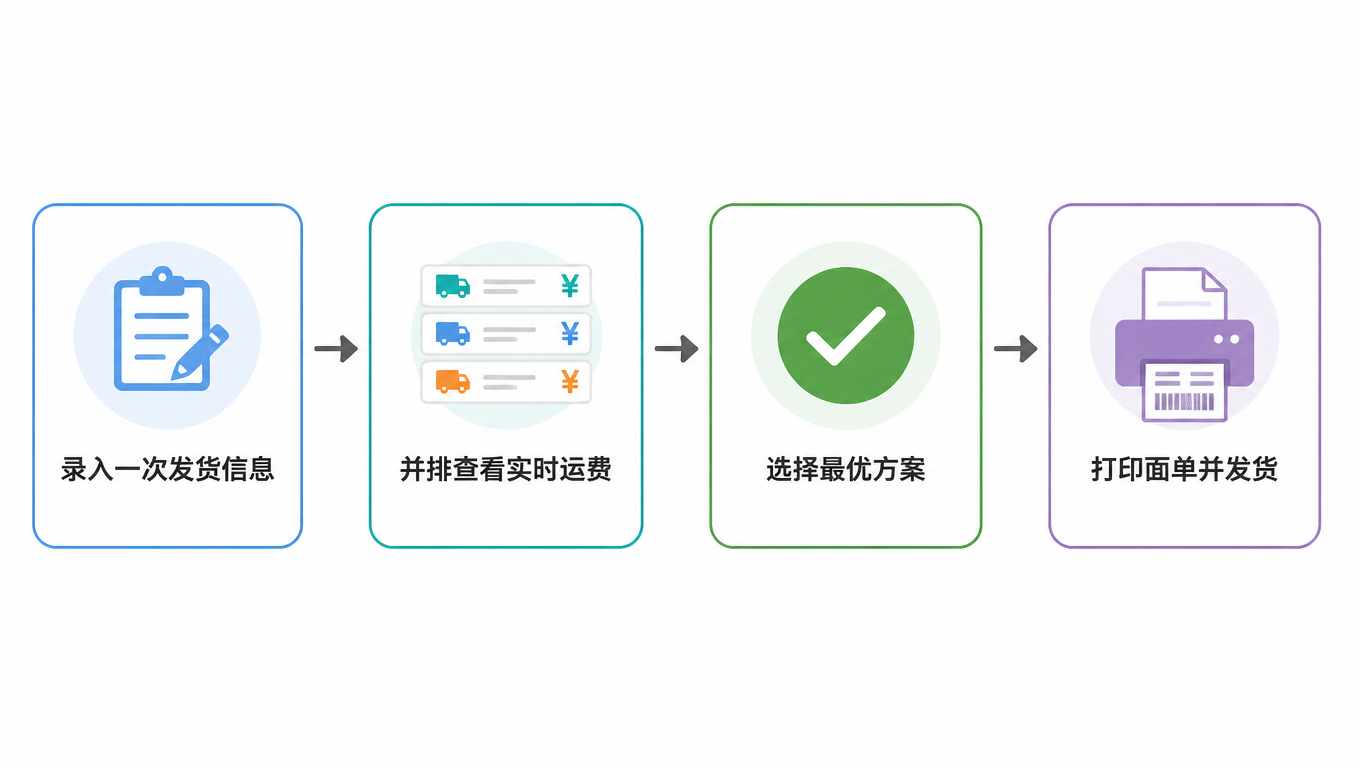
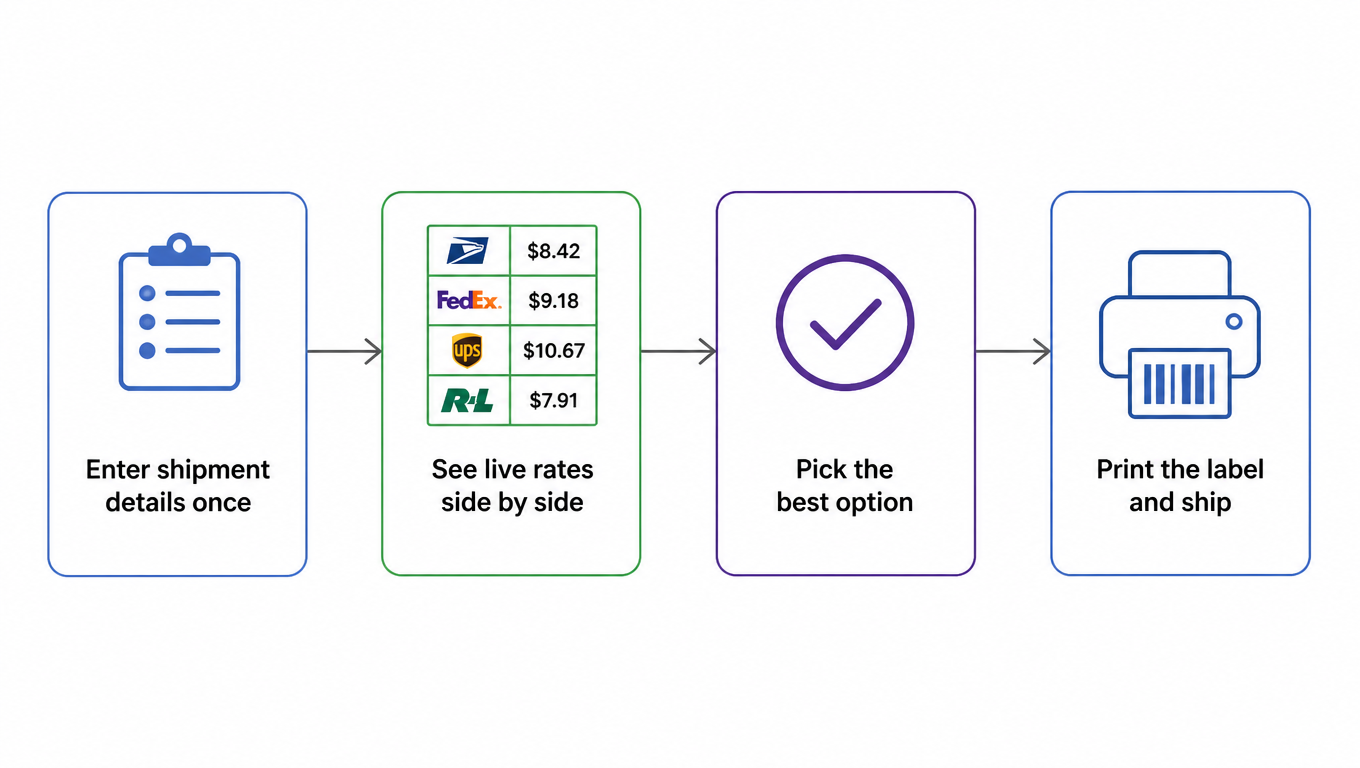
问题在于这个习惯无法规模化。一天发几单的卖家可以承受这套仪式,一天推 60、100、300 单的仓库不行。每一单都意味着把同样的地址和重量重新输进不同的表单,而重复输入正是错误发生的地方。比错一个重量,要么多付面单钱,要么包裹已经发出去了,之后再来一张账单调整。The problem is that the habit does not scale. A seller shipping a few parcels a week can afford the ritual. A warehouse pushing 60, 100, or 300 shipments a day cannot. Every shipment means retyping the same addresses and weights into a different form, and retyping is exactly where mistakes happen. Compare a wrong weight and you either overpay for the label or get hit with a billing adjustment later, after the package is already gone.
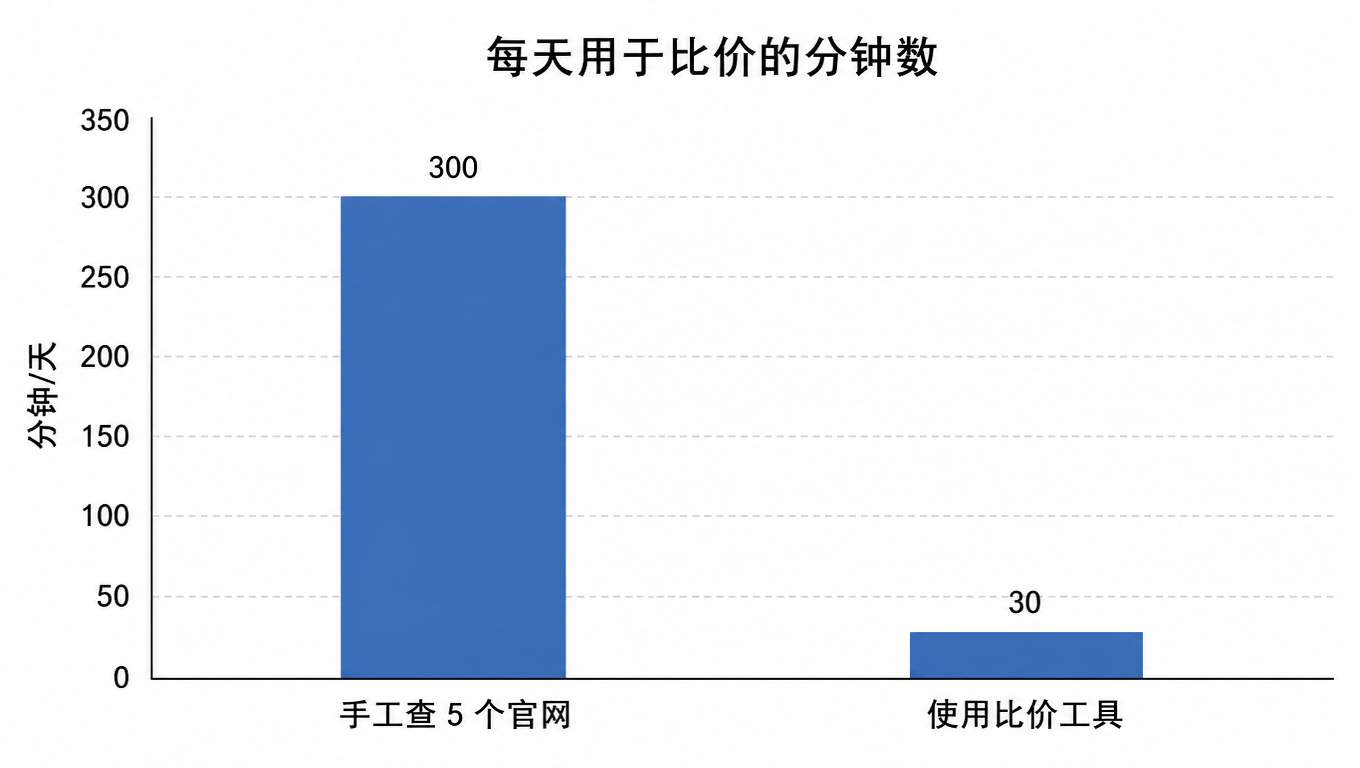
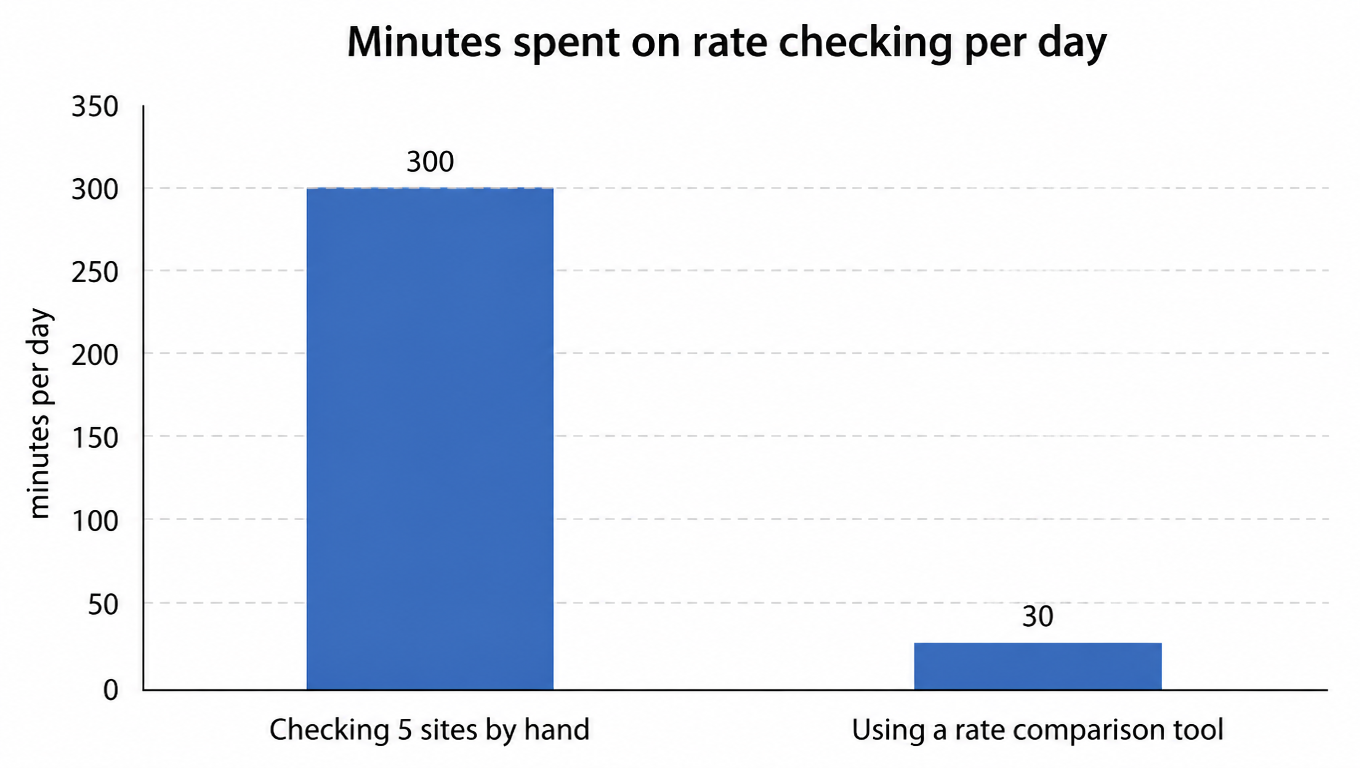
还有一笔更安静的成本:时间本身。每单花五分钟在标签页之间跳来跳去,就是本该用于打包、拣货或回客户邮件的五分钟。乘上一天的出货量,它就不再是小麻烦,而是一个隐形的全职员工。There is also a quieter cost: the time itself. Five minutes of tab-hopping per shipment is five minutes that could have gone to packing, picking, or answering a customer email. Multiply it across a day of shipments and it stops being a small annoyance and starts being a missing employee.