一、为什么会有重量调整,又为什么大多数人不去申诉1. Why Weight Adjustments Happen, and Why Most Go Unchallenged
承运商并不按面单上你申报的重量计费,而是按实际重量和体积重中较大者计费,体积重(DIM weight)就是包裹体积除以服务特定的除数:UPS 和 FedEx 多数境内服务是 139 [^1][^2],USPS 对超过 1 立方英尺的包裹是 166 [^3]。一只实际 8 磅、尺寸 18 x 14 x 12 英寸的箱子,体积重是 3,024 / 139 = 21.8 磅,进位到 22 磅。承运商按 22 磅收费,因为这只箱子占据的卡车空间比它的物理重量所暗示的更多。Carriers do not bill you on the weight you declare on the label. They bill the greater of the actual weight and the dimensional weight, commonly called DIM weight. DIM weight is the parcel's volume in cubic inches divided by a service-specific divisor: 139 for most UPS and FedEx domestic services [^1][^2], 166 for USPS parcels over one cubic foot [^3]. A box that weighs 8 lb but measures 18 by 14 by 12 in has a DIM weight of 3,024 / 139 = 21.8 lb, which rounds up to 22 lb. The carrier charges 22 lb, because the box occupies more truck space than its physical weight suggests.
调整之所以发生,是因为承运商会在分拣网络里重新称重、重新测量包裹,通常使用自动化体积测量仪和动态秤,结果在发货几天或几周后落到你的账单上。到账的是一行带调整代码、带新计费重量的条目,挂在一票你也许早已划上句号的运单上。大多数账单在没人读那些行的情况下就被付掉了。The adjustment happens because carriers re-weigh and re-measure parcels in their sortation networks, often with automated dimensioners and in-motion scales, and the result lands on your invoice days or weeks after the shipment date. What arrives is a line item with an adjustment code and a new billed weight, attached to a shipment you may have already written off as done. Most invoices are paid without anyone reading those lines.
调整是承运商一条众所周知的收入流,其中一部分是错的:体积测量仪把箱盖读成箱子的一部分、两个包裹被扫成一个、费率表套错了分区、同一个包裹被调整了两次。当你签下货量合同时,重量复检是承运商留在手里的标准机制。这种不对称是结构性的:承运商审计每一件包裹,而大多数发货人一件都不审计。Adjustments are a known revenue stream for carriers, and a share of them are wrong. Dimensioners misread a flap, two parcels scan as one, a rate table is applied to the wrong zone, a parcel is adjusted twice. When you negotiate a volume contract, weight re-inspection is a standard mechanism the carrier keeps in reserve. The asymmetry is structural: the carrier audits every parcel, and most shippers audit none.
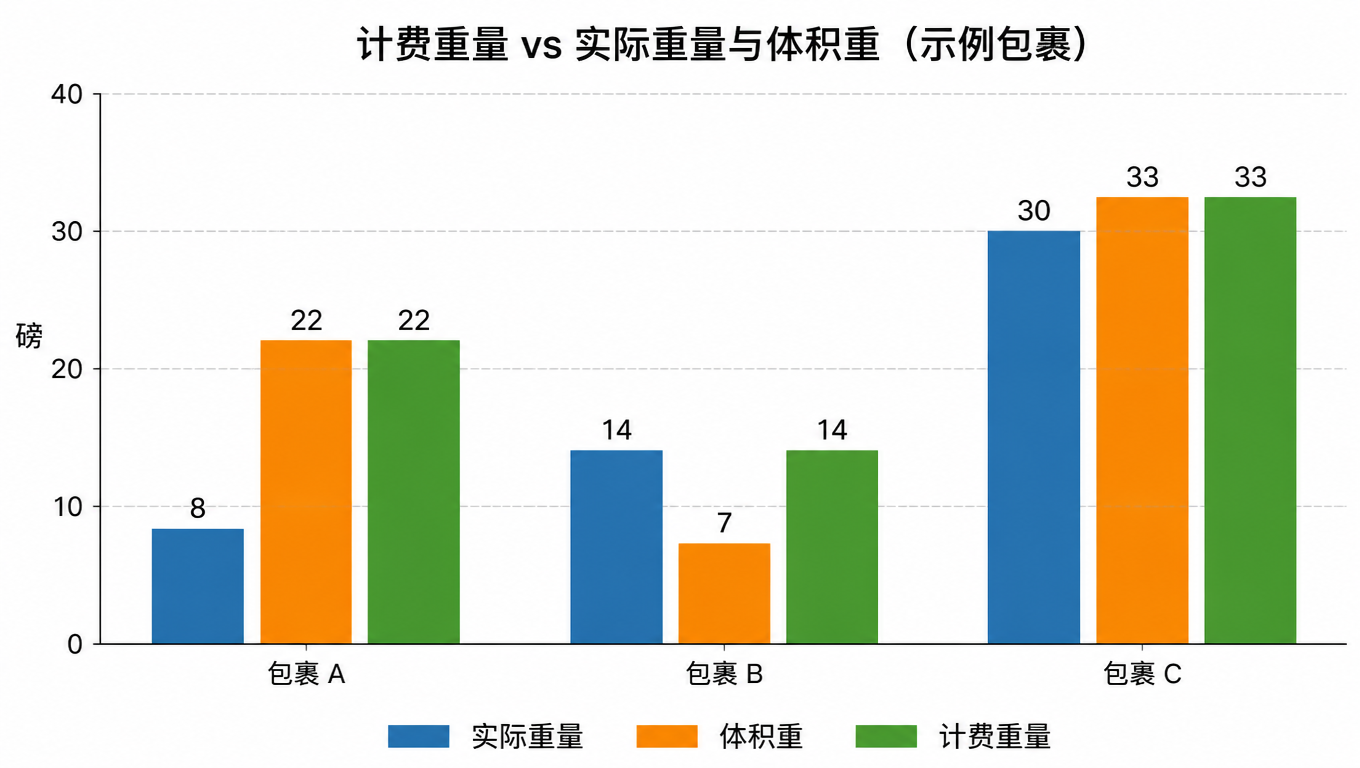
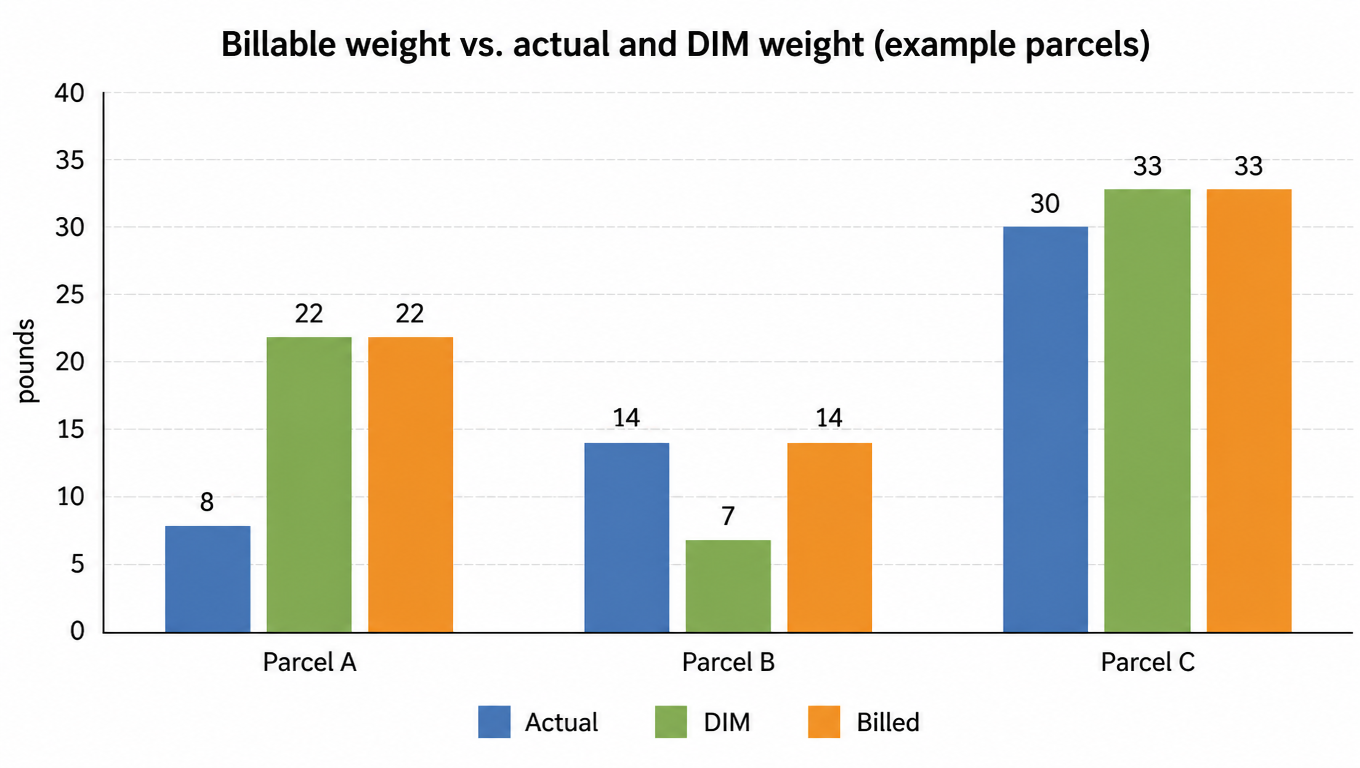
金额小,是没人去争的原因。单个包裹涨 3 磅只是几美元的事;一个季度几千个包裹就是另一回事。如果你的运费支出里有哪怕 1% 到 2% 漏进了无人过问的调整,而典型的调整又偏高,这笔漏损会悄悄复利。看一周里三个示例包裹:包裹 A 实际 8 磅、尺寸 18 x 14 x 12 英寸,按 22 磅体积重计费;包裹 B 实际 14 磅、尺寸 12 x 10 x 8 英寸,按 14 磅计费;包裹 C 实际 30 磅、尺寸 20 x 16 x 14 英寸,按 33 磅计费。每个例子里计费重量都是两者中较大者,这是正确的计费做法。争议的问题是另一个:这个计费重量,是不是你包裹真实的数据?要回答它,你得知道调整从哪来,并且有能证明它的记录。Small amounts are why nobody fights. A 3 lb jump on one parcel is a few dollars; on thousands of parcels a quarter, it is a different story. If even 1 to 2 percent of your freight spend leaks to unreviewed adjustments, and the typical adjustment is overstated, the leak compounds quietly. Consider three example parcels from a single week. Parcel A weighs 8 lb actual, measures 18 x 14 x 12 in, and bills at its 22 lb DIM weight. Parcel B weighs 14 lb actual, measures 12 x 10 x 8 in, and bills at 14 lb. Parcel C weighs 30 lb actual, measures 20 x 16 x 14 in, and bills at 33 lb. In each case the billed weight is the greater of the two, which is correct billing practice. The dispute question is different: is the billed weight the number your parcel actually was? Answering that requires knowing where the adjustment came from and having records that can prove it.