3PL 指南3PL Guide

德州履约中心如何构建更优的承运商策略How Texas Fulfillment Centers Can Build a Better Parcel Carrier Strategy

德州是本土面积第二大的州,人口却集中在四个相距遥远的都会区:达拉斯-沃斯堡、休斯顿、奥斯汀和圣安东尼奥。对履约中心运营者来说,这片地理既是礼物也是诅咒。礼物是覆盖面:一座州中部的仓库可以同时服务东西两岸。诅咒是成本:260,000 平方英里的牧场、小镇和远郊地带,会让任何没为这条线路精心挑选过的承运商吃尽苦头。Texas is the second-largest state in the country by landmass, yet its population clusters into four far-flung metros: Dallas-Fort Worth, Houston, Austin, and San Antonio. For a fulfillment center operator, that geography is a blessing and a curse. The blessing is reach: a warehouse in the middle of the state can serve both coasts. The curse is cost: the last mile across 260,000 square miles of ranchland, small towns, and exurbs punishes any carrier that was not chosen for the route.

大多数运营者犯的错误是单一承运商、单一费率的心态。签一份全国合同,凭习惯把所有货都走它,然后默默消化低效。在德州,这套做法失败得比全美任何地方都响。偏远 ZIP 又慢又贵,旺季压垮网络,续约时手里毫无筹码。解法不是找一家更便宜的单承运商,而是刻意搭配的组合:全国性承运商管长途和时效件,区域承运商管德州最擅长的区域友好地面线路,USPS 管农村尾程。这篇指南讲清楚组合为什么成立、怎么设计、怎么按数据而不是按习惯路由、怎么谈费率,以及怎么建立风险预案。The mistake most operators make is a one-carrier, one-rate mindset. They sign a single national contract, route everything through it out of habit, and eat the inefficiency in silence. In Texas, that approach fails louder than anywhere else in the country. Rural ZIP codes get slow and expensive, peak season breaks the network, and the operator holds zero leverage at renewal time. The fix is not a cheaper single carrier. It is a deliberate mix: national carriers for long-haul and time-sensitive freight, regional carriers for the zone-friendly ground lanes Texas is built for, and USPS for the rural tail end. This guide walks through why the mix works, how to design it, how to route by data instead of habit, how to negotiate the rates, and how to build the risk playbook around it.

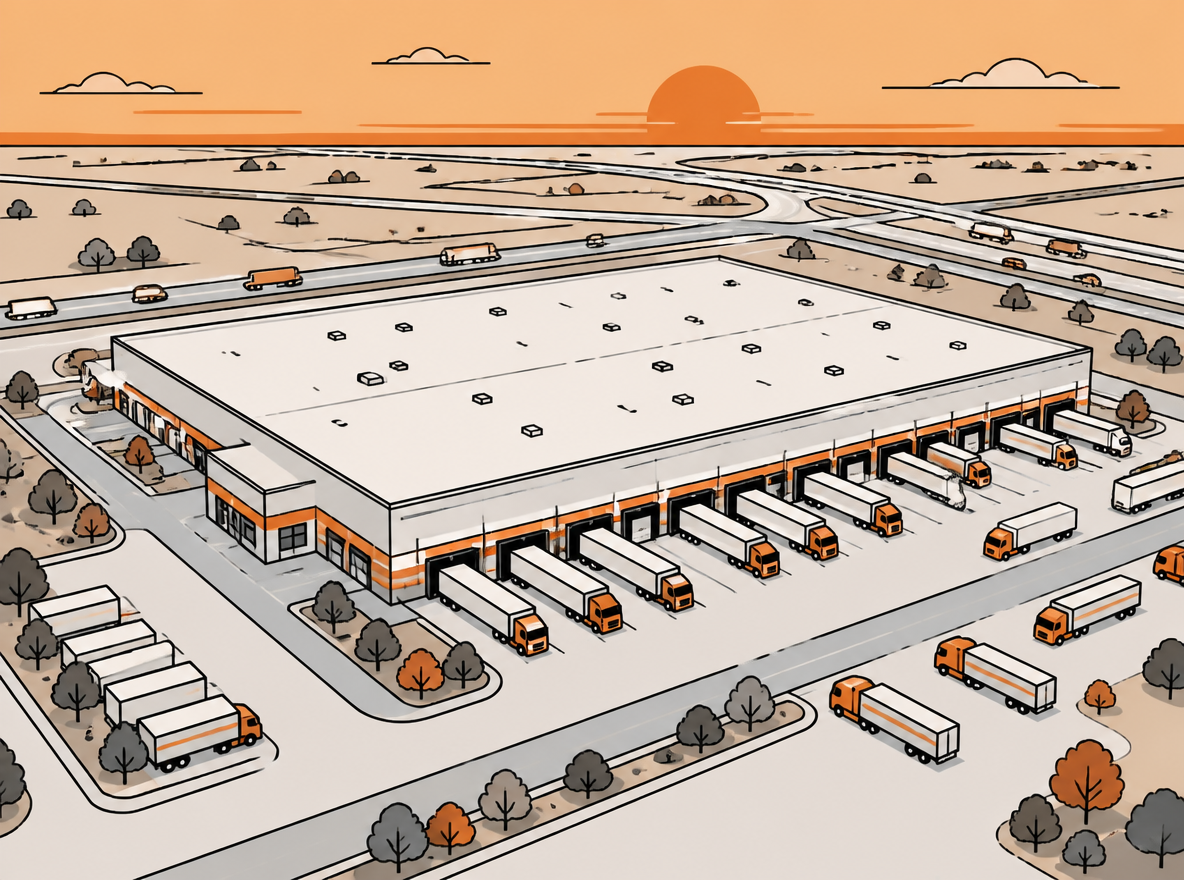
Aerial view of a large Texas fulfillment center at dusk, rows of loading docks and delivery trucks lined up, highway corridors stretching to the horizon
德州履约中心的区位优势,从货场延伸到高速走廊A Texas fulfillment center's geographic advantage runs from the dock to the highway corridor

一、为什么是德州?地理区位优势1. Why Texas? The Geographic Advantage

德州紧邻美国本土的地理中心,州的物流基础设施就建立在这个事实上。三条州际走廊 I-35、I-10 和 I-20 贯穿全州,把它和中部、西海岸、墨西哥湾和东南部连在一起。单是达拉斯-沃斯堡就是全国的铁路十字路口和重要的国际航空货运枢纽,这意味着德州履约中心可以在不切换物流生态的前提下处理小包裹、零担、整车和加急空运。这套基础设施,就是为什么一座居中位置的德州仓库用地面运输能在两天内触达约 93% 的美国人口。[^1]Texas sits close to the geographic center of the contiguous United States, and the state's logistics infrastructure is built around that fact. Three interstate corridors, I-35, I-10, and I-20, cross the state and connect it to the Midwest, the West Coast, the Gulf, and the Southeast. Dallas-Fort Worth alone is a national railroad crossroads and a major international air-cargo hub, which means a Texas fulfillment center can move parcels, LTL, full truckload, and expedited air freight without switching logistics ecosystems. That infrastructure is why a centrally located Texas warehouse can reach roughly 93% of the U.S. population within two days by ground.[^1]

第二个优势是分区分布,钱就在这里。计费区是围绕发货 ZIP 的同心距离带,每跨一个区成本就涨一截。从德州出发,全美最大的消费州落在出奇友好的计费区里:德州到加州是 5-6 区,而不是东西海岸之间那种 8 区。[^2] 一个广为引用的例子给了具体数字:一家企业把履约从洛杉矶搬到达拉斯,平均计费区从约 5.5 降到 3.8,相当于每个包裹省约 2 到 4 美元。[^3] 这不是四舍五入的误差。每月一万个包裹,光是分区就能省下 2 万到 4 万美元。The second advantage is zone distribution, and this is where the money is. Shipping zones are concentric distance bands around the origin ZIP code, and every zone step adds cost. From a Texas origin, the country's biggest consumer states sit in surprisingly friendly zones: Texas-to-California is a zone 5-6 route, not the zone 8 that a coast-to-coast shipment would earn.[^2] One widely cited example puts numbers on it: a business moving its fulfillment from Los Angeles to Dallas shifts its average zone from about 5.5 down to 3.8, which translates to roughly $2 to $4 saved per package.[^3] That is not a rounding error. On 10,000 packages a month, it is $20,000 to $40,000 a month in zone savings alone.
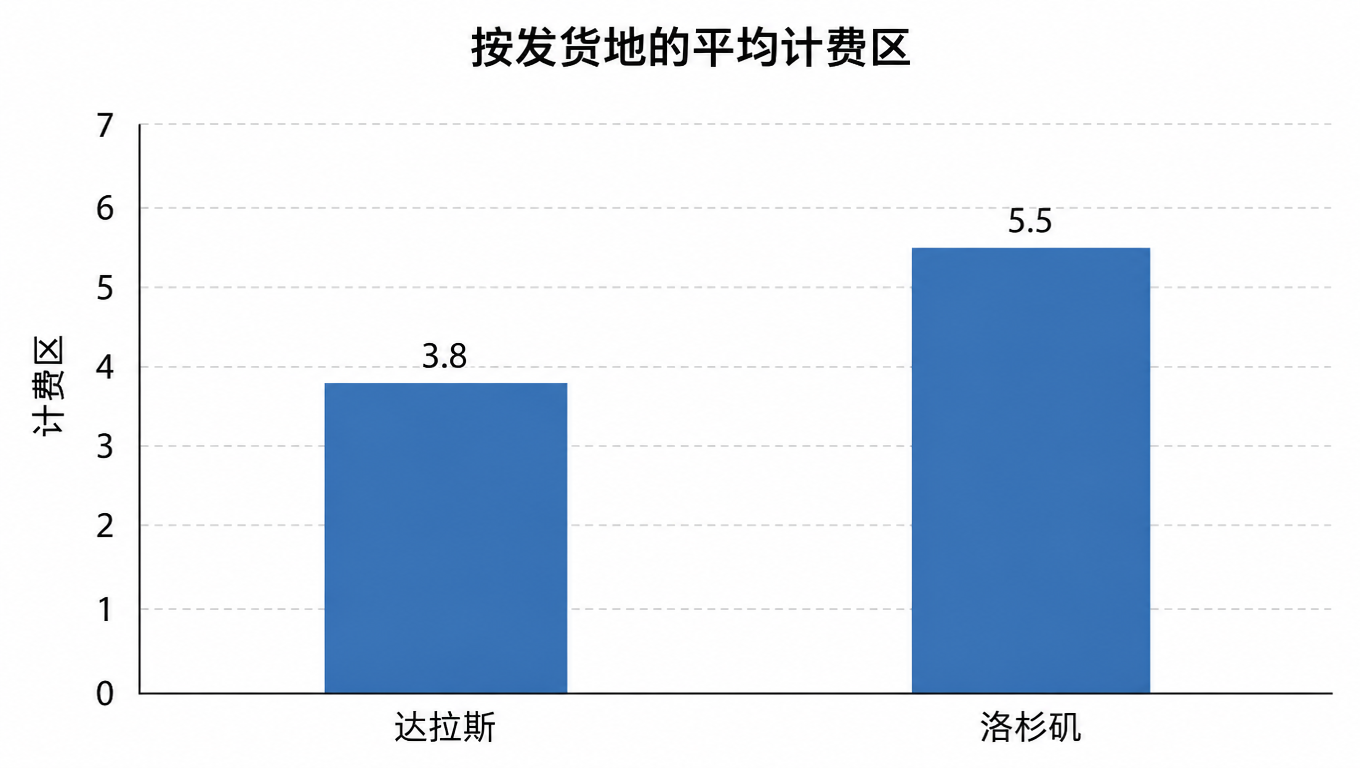
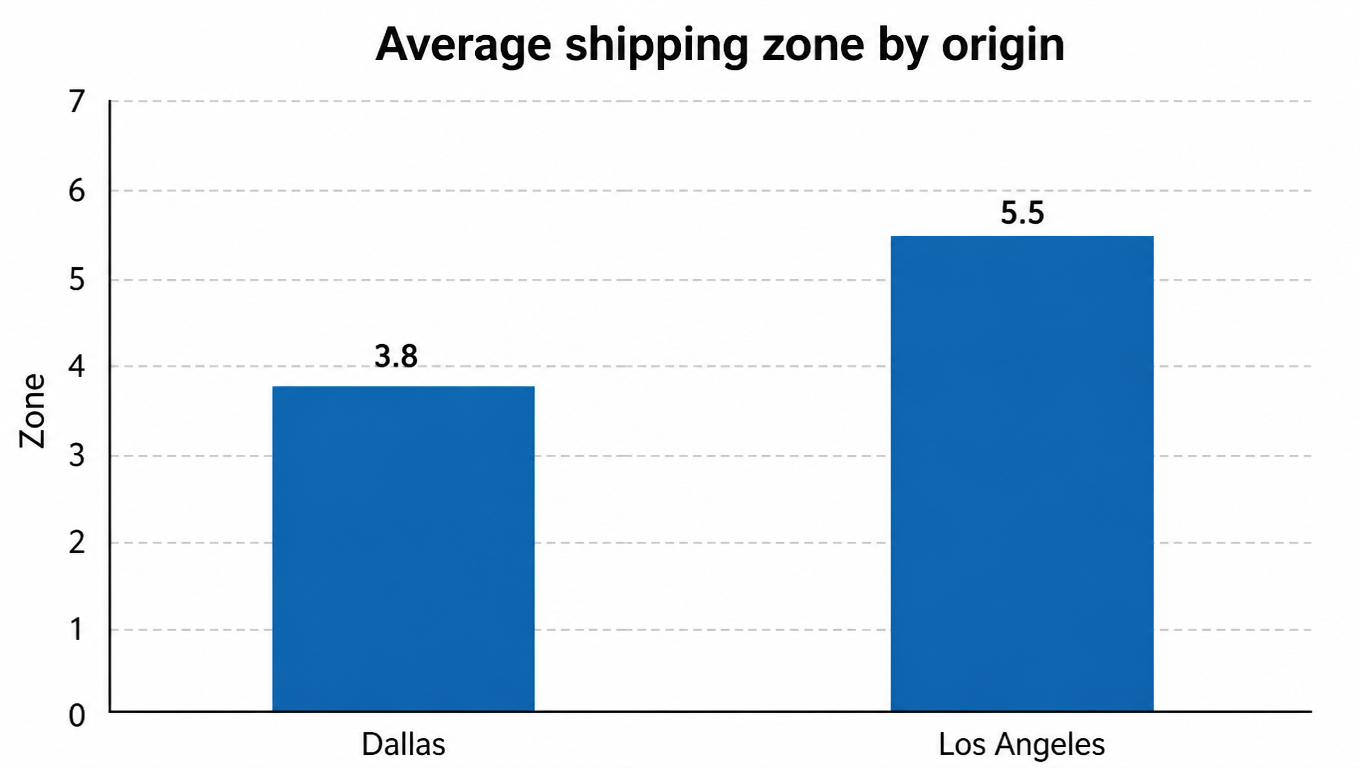
按发货地的平均计费区柱状图:达拉斯 3.8,洛杉矶 5.5Bar chart of average shipping zone by origin: Dallas 3.8, Los Angeles 5.5
搬到达拉斯,平均计费区从 5.5 降到 3.8Moving to Dallas drops the average zone from 5.5 to 3.8

第三个优势由前两个推出:东西海岸的覆盖面,却不用付东西海岸的成本。从德州出发,西海岸、中西部和东南部都在可行的计费区带内,没有一个是极端的 8 区长途。芝加哥和丹佛地面 1 到 2 天,加州落在 5-6 区,东海岸停留在中间区段。[^2] 因此一座德州仓库可以用单一地址服务全美,平均区成本是单点东西海岸仓库做不到的。The third advantage follows from the first two: coast-to-coast reach without coast-to-coast cost. From Texas, the West Coast, the Midwest, and the Southeast are all within a workable zone band, and none of them is an extreme zone 8 haul. Chicago and Denver are one to two days by ground, California lands in zone 5-6, and the Eastern Seaboard stays in the mid zones.[^2] A single Texas location can therefore serve the whole country at an average zone cost that a single East Coast or West Coast location cannot match.

这是好消息,也正因如此,这篇指南的其余部分才重要。德州的体量是双刃剑。同一片广阔地带,给了你到芝加哥的 2 区,也给了你全国性承运商把时效承诺拖到一周、每磅价格暴涨的 ZIP。地理优势只有围绕它工程化承运商组合才兑现,这正是接下来几节的内容。That is the good news, and it is exactly why the rest of this guide matters. Texas's size cuts both ways. The same sprawl that gives you zone 2 to Chicago gives you ZIP codes where a national carrier's transit promise stretches to a week and the rate per pound balloons. The geographic advantage only pays off if the carrier mix is engineered around it, which is what the next sections are about.
二、为什么单一承运商是个陷阱2. Why a Single-Carrier Strategy Is a Trap

单一全国承运商合同看起来很省心:一张价目表、一个门户、一张发票。这种省心以四种叠加的方式变得昂贵。A single national carrier contract feels simple: one rate card, one portal, one invoice. The simplicity is expensive in four compounding ways.

费率锁定。全国承运商的折扣是针对你的货量谈定的,然后在合同期内冻结。市场转软、区域承运商开了更便宜的线路、或者竞争对手签了更好的协议,你都得继续付旧数字。第一天看起来很聪明的合同,到第九个月就成了负债。Rate lock-in. National carrier discounts are negotiated against your volume and then frozen for the contract term. If the market softens, if a regional carrier opens a cheaper lane, or if a competitor signs a better deal, you keep paying the old number. The contract that felt smart on day one is a liability by month nine.

服务集中风险。一次罢工、一次网络故障、一场横穿德州潘汉德尔的冰暴,你的整个出货就停摆。2023 年 8 月,行业离全国 UPS 罢工只差几天;[^4] 把货量集中在那一家的运营者,那一周都在赶制一套多元化组合本可避免的应急方案。单一承运商就是单一故障点,而在小包裹行业,这个风险按你无法控制的时间表兑现。Service concentration risk. One strike, one network outage, one ice storm across the Texas Panhandle, and your entire outbound operation stalls. In August 2023 the industry came within days of a national UPS strike;[^4] operators who had concentrated volume there spent that week building emergency plans that a diversified mix would have made unnecessary. A single carrier is a single point of failure, and in parcel shipping that risk materializes on a schedule you do not control.

区域盲区。全国承运商在人口密集区跑着密集高效的网络,在农村地区则是稀疏昂贵的网络。在偏远 ZIP 占比可观的一个州,这意味着最难触达的客户付得最多,而全国承运商没有动力去改变。你在为区域和邮政网络能更好更便宜送达的服务,付着被计费区抬高价格的钱。Regional blind spots. National carriers run dense, efficient networks in population centers and thin, expensive ones in rural areas. In a state where a meaningful share of ZIP codes are rural, that means the customers who are hardest to reach also cost the most, and the national carrier has no incentive to fix it. You are paying zone-inflated rates for service that regional and postal networks deliver better and cheaper.

失去筹码。集中在一家承运商的货量,是你无法威胁要搬走的货量。续约时,承运商知道你无处可去,折扣对话只有一种走向。多元化不只是运营对冲,它是谈判桌上唯一的真筹码。Lost leverage. Volume concentrated with one carrier is volume you cannot threaten to move. At renewal, the carrier knows you have nowhere else to go, and the discount conversation goes exactly one way. Diversification is not just an operational hedge, it is the only real bargaining chip you have at the table.

三、承运商组合怎么搭3. Building the Carrier Mix

解法是三种角色的组合,每种承运商只做它结构上最擅长的事,别的事不碰。The fix is a three-role mix, where each carrier type does what it is structurally best at and nothing else.

全国性承运商(UPS 和 FedEx)负责长途、时效件和商业件:加急服务、周末承诺,以及期待品牌制服快递员的商业地址。它们的网络全美最全,贵价服务就该用它们。National carriers (UPS and FedEx) handle long-haul, time-sensitive, and commercial deliveries: expedited services, weekend commitments, and business addresses where a branded courier is expected. Their networks are the most comprehensive in the country, and for premium service they are the right tool.

区域承运商接走德州天然大量产生的区域友好地面线路。Lone Star Overnight 是德州本土的区域承运商,[^6] OnTrac 和 Better Trucks 覆盖西部和西南部,[^7][^8] Spee-Dee 服务中西部。[^9] 区域承运商网络更短更密,在自己地盘里价格压过全国巨头,时效还常常更快。对德州履约中心来说,州内和相邻州线路是天然的区域甜区。Regional carriers take the zone-friendly ground lanes that Texas creates in abundance. Lone Star Overnight is Texas's homegrown regional,[^6] OnTrac and Better Trucks cover the West and Southwest,[^7][^8] and Spee-Dee serves the Midwest.[^9] Regional carriers run shorter, denser networks, so they undercut the nationals on price while often beating them on transit time in their own footprint. For a Texas fulfillment center, the intra-Texas and neighboring-state lanes are the natural regional sweet spot.

USPS 接走农村尾程:偏远 ZIP、PO Box 和邮政网络全覆盖优势无可匹敌的轻件。没有任何私营承运商能以合理价格服务德州每一个地址,USPS 正是这类场景指定的最后一公里。USPS takes the rural tail: remote ZIP codes, PO boxes, and lightweight parcels where the postal network's universal reach is unmatched. No private carrier serves every address in Texas at a sane price, and USPS is the designated last-mile for exactly those cases.

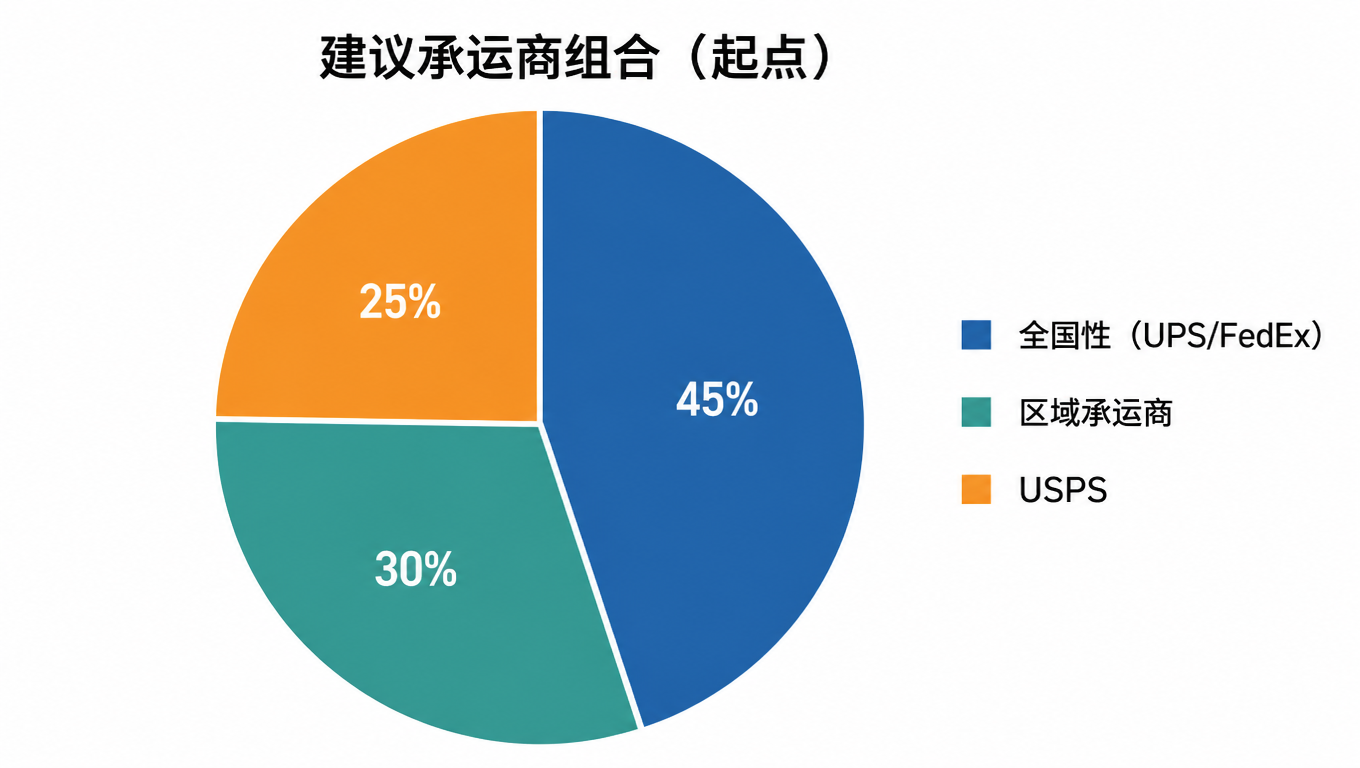
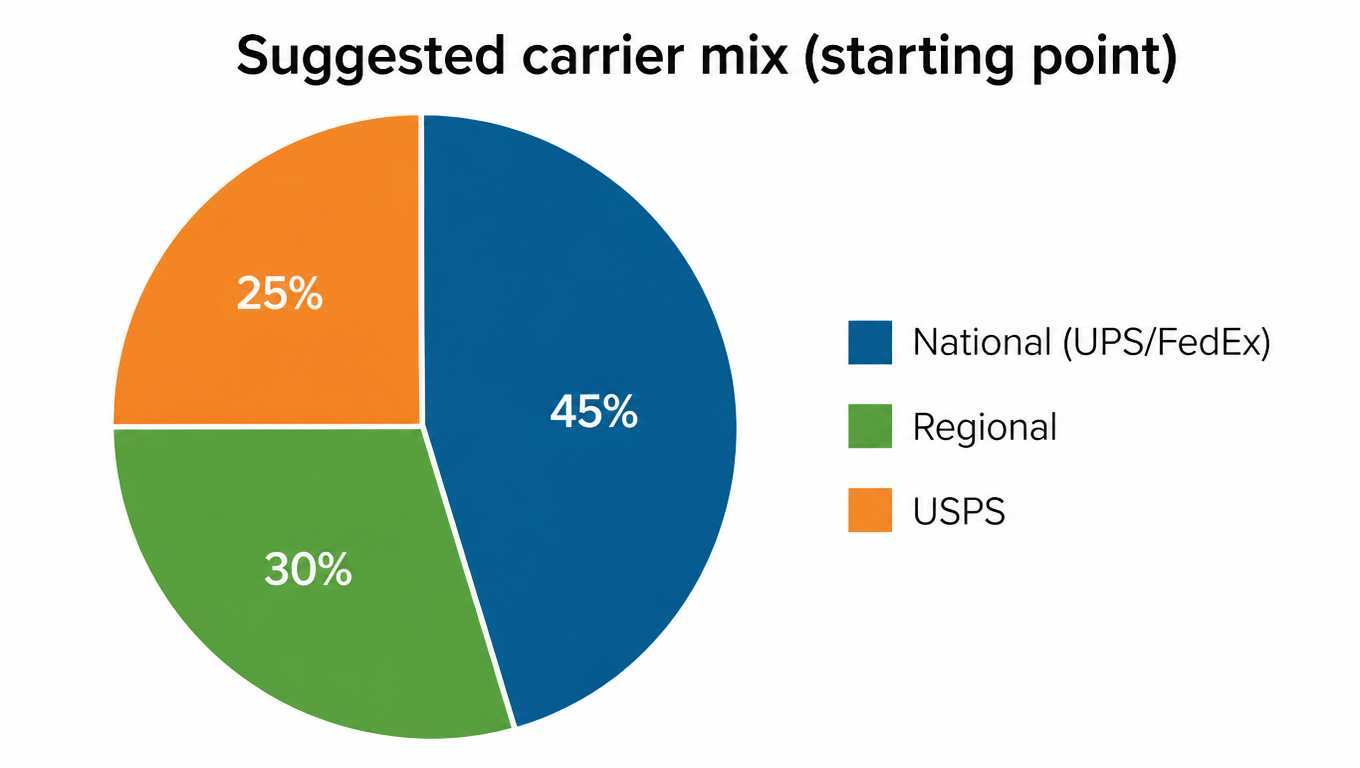
一个合理的起点组合按包裹数算约是 45% 全国、30% 区域、25% USPS,但把这些数字当作起点假设,而不是目标。你仓库的正确比例取决于真实的目的地构成,每季度都应该用数据重新校准。A reasonable starting mix looks like 45% national, 30% regional, and 25% USPS by parcel count, but treat those numbers as a starting hypothesis, not a target. The right split for your facility depends on your actual destination mix, and it should be recalibrated from data every quarter.

建议承运商组合饼图:全国性 45%,区域承运商 30%,USPS 25%Pie chart of a suggested carrier mix: national 45%, regional 30%, USPS 25%
45/30/25 是起点假设,不是目标45/30/25 is a starting hypothesis, not a target

两条结构规则让组合有韧性。第一,每个角色至少两家承运商,一主一备,这样没有哪份合同能挟持你的运营。第二,明确交接:哪些线路归哪家承运商,什么触发切换。模糊的多元化,让承运商在每条线路上重叠,悄悄就变成了根本没有多元化。Two structural rules make the mix resilient. First, every role needs at least two carriers, a primary and a backup, so no single contract can hold your operation hostage. Second, define the handoff explicitly: which lanes belong to which carrier, and what triggers a shift. Vague diversification, where carriers overlap on every lane, quietly becomes no diversification at all.

四、按数据路由,不凭习惯4. Route by Data, Not by Habit

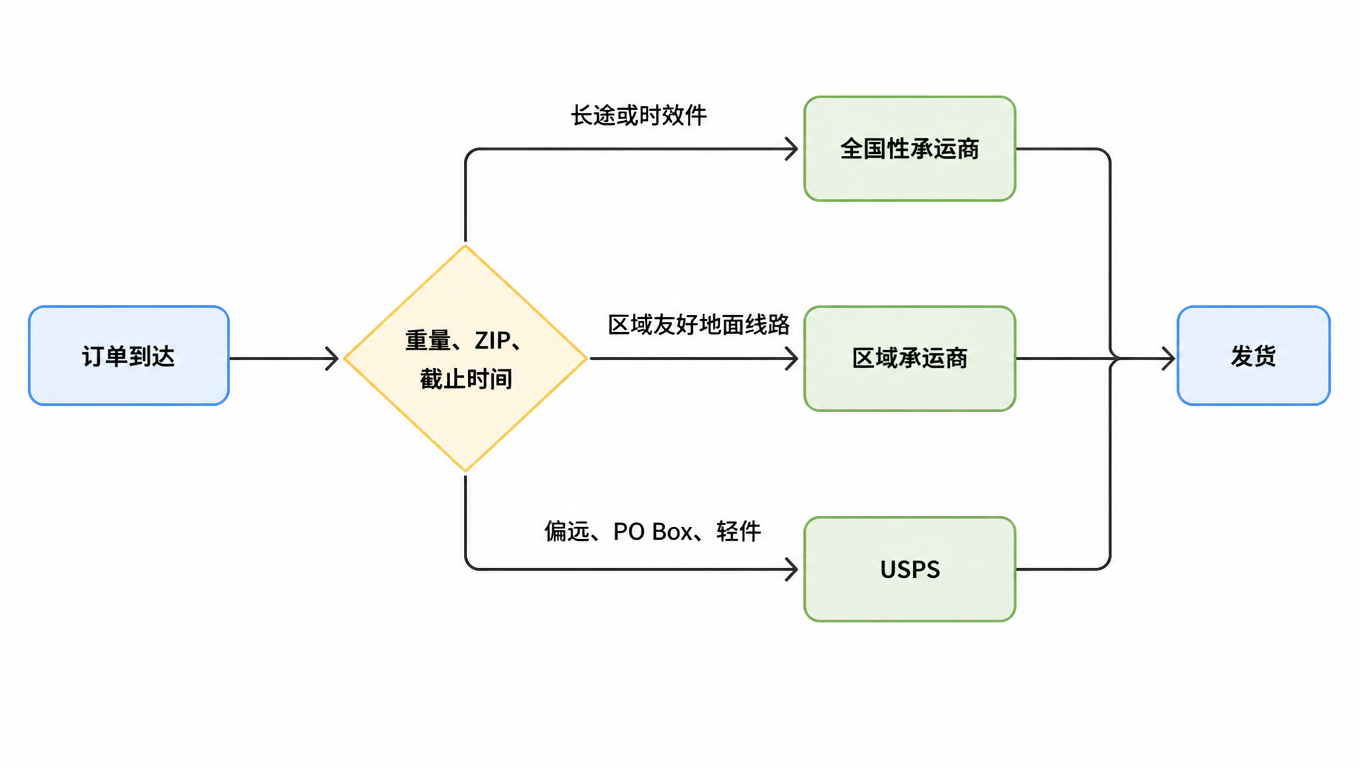
承运商组合只有在路由决策按件、按数学而不是按习惯做时才兑现。决策输入很简单:包裹重量、发货和目的 ZIP、所需服务等级、投递截止时间。输出是满足承诺的最便宜承运商。在德州,这笔计算波动极大。一个 2 磅的盒子从达拉斯到奥斯汀,区域承运商闭眼拿下。同一个盒子到西德州一个牧场 ZIP,是 USPS 的活。周五一个 40 磅的盒子到曼哈顿,是全国承运商的活。习惯把三者走同样的路,其中两件多付了钱。A carrier mix only pays off if the routing decision is made per package, by math, instead of per habit. The decision inputs are simple: package weight, origin and destination ZIP, service level required, and delivery deadline. The output is the cheapest carrier that still meets the promise. In Texas, that calculation swings widely. A 2-pound box from Dallas to Austin is a regional slam dunk. The same box to a ranch ZIP in West Texas is a USPS job. A 40-pound box to Manhattan on a Friday is a national carrier job. Habit routes all three the same way and overpays on two of them.

ZIP 级路由规则把这种判断变成系统能执行的东西。把目的 ZIP 分档:人口密集都会区、中型城市、城郊边缘、农村。每档指定默认承运商和触发覆盖的条件。然后把谈好的费率表和时效数据喂给发货系统,让系统逐单比较各承运商的落地成本,实时选出赢家。这不是什么新奇技术,任何现代多承运商发货平台都能做,它消除了人默认选熟悉品牌 logo 的倾向。ZIP-level routing rules turn that judgment into something a system can execute. Classify your destination ZIPs into tiers: dense metro, mid-tier city, suburban fringe, and rural. Assign each tier a default carrier and a trigger for override. Then feed your negotiated rate tables and transit-time data into a shipping system that compares, per order, the landed cost across carriers and picks the winner in real time. This is not exotic technology; any modern multi-carrier shipping platform does it, and it removes the human tendency to default to the familiar logo.

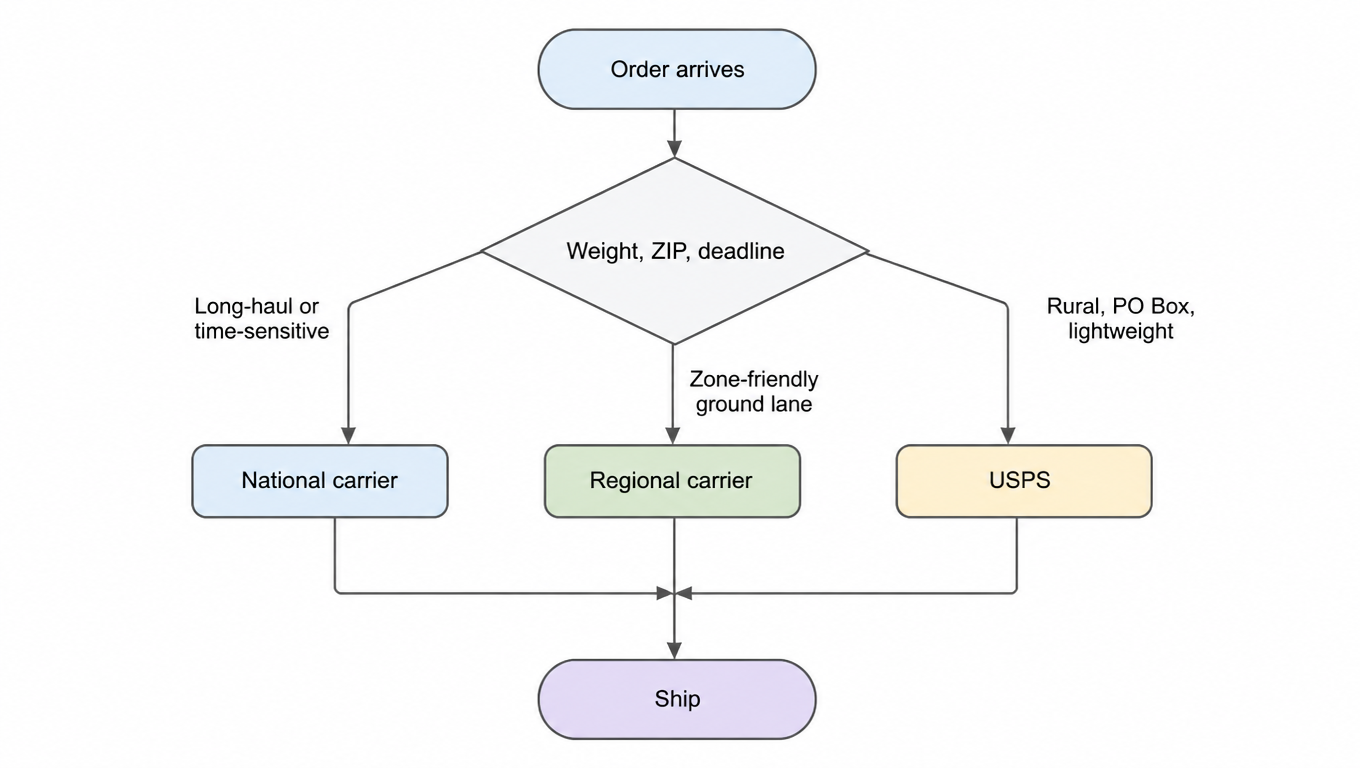
路由决策流程图:订单到达,按重量、ZIP 和截止时间分流到全国性承运商、区域承运商或 USPS,然后发货Flowchart of routing decisions: order arrives, splits by weight, ZIP, and deadline to a national carrier, regional carrier, or USPS, then ships
每笔订单按属性路由到对应的承运商角色Route each order to its carrier role by the order's own attributes

同一份数据反过来校准组合本身。每个月,按承运商和按线路复盘每包成本、准时率和破损率。一月还占着奥斯汀线路的区域承运商,六月可能因为一次调价就丢了它。组合是活的系统,不是签完就完的合同,月度复盘是让它保持诚实的机制。The same data closes the loop on the mix itself. Every month, review cost per package, on-time percentage, and damage rate by carrier and by lane. The regional carrier that owned your Austin lanes in January may lose them to a rate change in June. The mix is a living system, not a signed contract, and the monthly review is what keeps it honest.

五、谈判费率:谈得下来的价格5. Negotiating Rates That Stick

有了可信的多承运商姿态,你终于有了筹码,谈判变成另一种运动。先从全国巨头开始。UPS 和 FedEx 的折扣按你的包裹量和你的替代选项定价,所以两样都带到桌上来:你真实的发货画像,以及在你发货最多的线路上压过它们地面价的区域报价。锚定你实际发的货,而不是去年的折扣,并争取 GRI 上限,即年度常规调价能抬升你实际成本的天花板。上限是可以谈的,三年合同里它比任何单一折扣点都值钱。With a credible multi-carrier posture, you finally have leverage, and negotiation becomes a different sport. Start with the nationals. UPS and FedEx discounts are priced against your parcel volume and your alternative options, so bring both to the table: your actual shipment profile, and the regional quotes that undercut their ground rates on the lanes you ship most. Anchor on what you ship, not on last year's discount, and push for a GRI cap, a ceiling on how much the annual general rate increase can raise your effective cost. The cap is negotiable, and it is worth more over a three-year contract than any single discount point.

区域承运商在自己线路上通常报出比全国地面价低 10-20% 的价格,[^5] 它们愿意摆出来,因为成本结构确实更低。要避开的坑是一刀切报价。要线路级或区域级报价,让你没货量的区域留在报价之外。把弱线路捆进来的区域报价,不过是你为强线路多付的折扣。Regional carriers typically quote 10-20% below national ground rates on their own lanes,[^5] and they are willing to show it because their cost structure is genuinely lower. The trap to avoid is a one-size quote. Ask for lane-specific or region-specific pricing instead, and let the regions where you have no volume stay out of the quote. A regional quote that bundles your weak lanes is just a discount you pay for in the strong ones.

然后是合同细节,承运商在这里把头条费率之后的钱赚回去。盯四个条款:燃油附加费的基数和是否封顶、服务承诺及退款怎么申请、最低货量承诺及其罚则、旺季附加费。一个低基础费率加不封顶燃油附加费,比一个合理基础费率加理性附加费更贵。合同签完还要审账单。计费错误、未申请的退款、错加的附加费是稳定的小漏;每月按合同条款审一次,通常收回的比审计成本多。Then the contract details, where carriers make their money back after the headline rate. Watch four clauses: fuel surcharge basis and whether it is capped, the service guarantee and how refunds are claimed, the minimum volume commitment and its penalty, and peak-season surcharges. A low base rate with an uncapped fuel surcharge is a higher bill than a fair base rate with a sane surcharge. And once the contract is signed, audit the invoice. Billing errors, unclaimed refunds, and misapplied surcharges are a steady drip; a monthly audit against your negotiated terms typically recovers more than the audit costs.

六、风险预案:承运商失灵时6. The Risk Playbook: When Carriers Fail

假定中断会发生,因为它一定会来。预案分三层。Assume disruption, because it will come. The playbook has three layers.

中断响应。在出任何事之前就定好:主承运商倒了,每家备用承运商接管哪些线路,切换多快发生。罢工、极端天气、网络故障,触发的应该是一套写好的故障切换,而不是周二早上的手忙脚乱。如果你的组合里每个角色都有一主一备,响应只是一次路由规则变更,而不是一场危机。Interruption response. Define, before anything breaks, which backup carrier takes over each lane if the primary goes down, and how fast the shift happens. Strike, extreme weather, or a network outage should trigger a scripted failover, not a Tuesday-morning scramble. If your mix already has a primary and a backup in every role, the response is a routing rule change, not a crisis.

旺季容量。十月到十二月是网络拥堵、附加费翻倍的时候。提前跟你要用的承运商锁定容量,把货量摊到整周而不是全挤在周一发,让区域承运商在自己线路上吸收高峰。能把单一全国合同熔化的旺季,在三张网络分担时只是例行公事。Peak capacity. October through December is when networks choke and surcharges multiply. Lock capacity early with the carriers you intend to use, spread volume across the week instead of shipping everything Monday, and let the regional carriers absorb the surge on their own lanes. A peak that would melt a single national contract becomes routine when three networks share the load.

绩效监控。在仪表盘上按承运商、按线路跟踪准时率、破损率和每包成本,设阈值触发器。承运商跌破标准满一个定义周期,触发器就把线路切给备用承运商,并开启重谈对话。仪表盘把风险预案从文档变成行为。Performance monitoring. Track on-time percentage, damage rate, and cost per package on a dashboard, by carrier and by lane, with threshold triggers. When a carrier misses the bar for a defined period, the trigger flips the lane to the backup and starts the conversation about renegotiation. The dashboard is what turns the risk playbook from a document into a behavior.

七、90 天落地路线图7. A 90-Day Roadmap

这些都不需要一整年。一个有纪律的运营者可以在九十天内重建策略。None of this needs a year. A deliberate operator can rebuild the strategy in ninety days.

  • 第 1-14 天,数据盘点。拉六个月的发货记录:重量、ZIP、服务等级、承运商、成本、准时表现。按线路和档位切分。这是后面每个决策的地基。Days 1-14, data inventory. Pull six months of shipments: weight, ZIP, service level, carrier, cost, and on-time performance. Segment by lane and tier. This is the baseline every later decision stands on.
  • 第 15-42 天,设计组合。给 ZIP 分档,起草路由规则,按真实目的地数据而不是模板搭目标组合。Days 15-42, design the mix. Classify ZIP tiers, draft the routing rules, and build the target mix from your actual destination data, not from a template.
  • 第 43-70 天,谈判签约。带着数据见全国巨头,拿线路级区域报价,按条款清单和 GRI 上限签约。Days 43-70, negotiate and sign. Take the data to the nationals, get lane-specific regional quotes, and sign contracts with the clause checklist and a GRI cap.
  • 第 71-90 天,按数据路由。把费率表和路由规则配进发货系统,对照旧流程影子运行,然后切换。Days 71-90, route by data. Configure the shipping system with rate tables and routing rules, run it in shadow mode against your old process, then flip the switch.
  • 第 91 天起,月度监控。复盘每包成本、准时率和集中度,每季度重新校准组合。Day 91 onward, monitor monthly. Review cost per package, on-time percentage, and concentration ratio, and recalibrate the mix every quarter.

判断策略是否有效的三个指标:每包成本、准时率、承运商集中度,即前两大承运商持有的货量占比。当每包成本下行、准时率守住目标、集中度低于让你担心的水平,组合就在干活。The three metrics that tell you whether the strategy is working are cost per package, on-time percentage, and carrier concentration, the share of volume held by your top two carriers. When cost per package trends down, on-time holds above target, and concentration stays below a level that worries you, the mix is doing its job.

德州奖励按线路而不是按品牌思考的运营者。地理给了你覆盖全美 93% 人口的两日达、两岸友好的计费区,以及为州内线路而生的区域承运商生态。按数据路由、把风险摊到三种网络类型的运营者,保住了这些优势。把一切押在一个品牌上的运营者,为省心付两次钱,一次在费率里,一次在风险里。搭好组合,从强势地位谈判,让数据选承运商。Texas rewards operators who think in lanes instead of logos. The geography hands you a two-day reach over 93% of the country, friendly zones on both coasts, and a regional carrier ecosystem built for the state's own lanes. The operator who routes by data and spreads risk across three network types gets to keep those advantages. The operator who bets everything on one logo pays for the convenience twice, once in rates and once in risk. Build the mix, negotiate from strength, and let the data pick the carrier.

常见问题FAQ

区域承运商在自己线路上通常比全国地面价低 10-20%;把履约从洛杉矶搬到达拉斯平均把计费区从 5.5 降到 3.8,每包省约 2-4 美元;再叠加费率谈判的 GRI 上限和月度账单审计,一个 45/30/25 的起点组合通常能让每包成本下探两位数百分比。具体数字取决于目的地构成,所以先用数据盘点再承诺。Regional carriers typically quote 10-20% below national ground rates on their own lanes; moving fulfillment from Los Angeles to Dallas drops the average zone from about 5.5 to 3.8, roughly $2-4 per parcel; stack a negotiated GRI cap and monthly invoice audits on top, and a 45/30/25 starting mix usually pushes cost per parcel down by a double-digit percentage. The exact number depends on your destination mix, so run the data inventory before promising anything.
一个合理的起点是包裹数 45% 全国、30% 区域、25% USPS,但它只是起点假设。正确的比例取决于你的目的地构成:农村尾程重就多给 USPS,区域友好线路多就多给区域承运商。每季度用数据重新校准,每个角色都保持一主一备,避免任何单一合同挟持运营。A reasonable starting point is 45% national, 30% regional, and 25% USPS by parcel count, but treat it as a hypothesis, not a target. The right split depends on your destination mix: heavy rural tail means more USPS, more zone-friendly lanes means more regional. Recalibrate from data every quarter and keep a primary and backup in every role so no single contract can hold the operation hostage.
90 天:前 14 天做数据盘点,接下来 28 天设计组合和路由规则,再 28 天谈判签约,最后 20 天配置系统、影子运行并切换,之后进入月度监控、季度重校。瓶颈不是预算,而是先把六个月的发货数据拉出来。Ninety days: 14 for the data inventory, 28 to design the mix and routing rules, 28 to negotiate and sign, and 20 to configure the system, run it in shadow mode, and flip the switch, then monthly monitoring and quarterly recalibration. The bottleneck is not budget; it is pulling six months of shipment data.

准备好把多承运商策略变成日常运营了吗?Ready to make the multi-carrier mix routine?

EasyShippingX 用多承运商比价、自有账号运价直通和区域承运商接入,帮德州履约中心把这篇指南变成日常运营:对每个包裹实时选最便宜且达标的承运商,把你的谈判运价直通到底,让组合、路由和账单审计都跑在一个系统里。EasyShippingX gives Texas fulfillment centers the multi-carrier rating, own-account rate pass-through, and regional carrier access that make this guide routine: route every parcel to the cheapest carrier that meets the SLA, pass your negotiated rates straight through, and run the mix, routing, and invoice audits in one system.

Get Rate Comparison
Get Rate Comparison