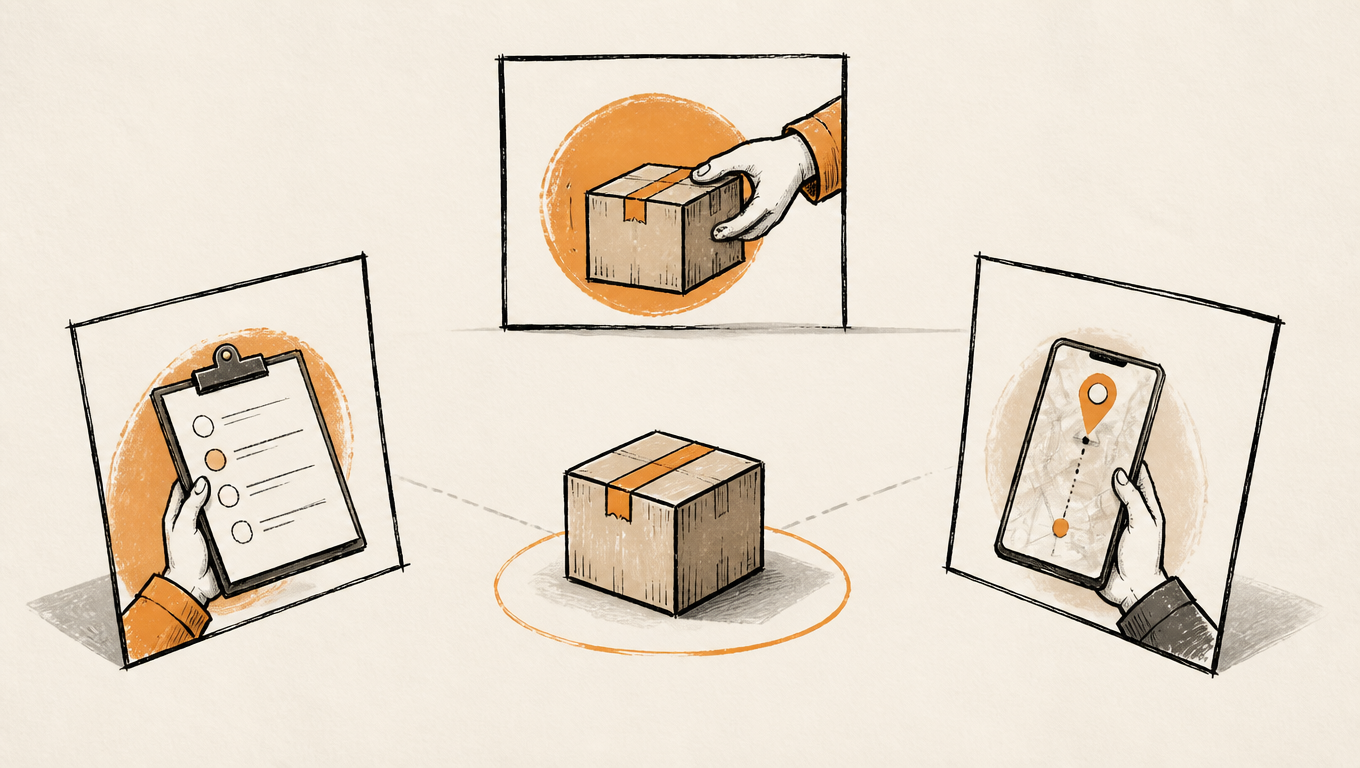
为什么多承运商轨迹容易断裂Why multi-carrier tracking breaks without a system
典型场景是深圳仓发货后,国内快递先完成揽收和转运,包裹进入货代集货仓后换成国际运单,再由目的国承运商完成末端派送。客户最早拿到的国内运单可能在“已交付代理”后停止更新,但包裹其实已经进入下一段运输。这个空窗期正是查单咨询、差评和退款焦虑集中爆发的地方。A common flow starts with a Shenzhen warehouse pickup, moves through a domestic carrier, hands off to a forwarder, receives an international waybill, and then enters a destination last-mile network. The first domestic tracking number may stop at "delivered to agent" even while the parcel is moving to the next leg. That visibility gap is where support tickets, bad reviews, and refund anxiety concentrate.
| 断点Break point | 常见表现Typical symptom | 需要的能力Required capability |
|---|---|---|
| 国内转国际Domestic to international | 国内单号停止更新,国际单号尚未激活。The domestic number stops updating before the international number activates. | 提前关联新旧运单号,并向客户解释交接空窗。Pre-link successor tracking numbers and explain the handoff window. |
| 状态语言不一致Status language mismatch | 同一个“已签收”状态在不同承运商和国家显示不同语言。The same delivered event appears in different languages and labels. | 把原始承运状态映射成统一状态集合。Normalize raw carrier events into one standard status set. |
| 退货轨迹割裂Return tracking split | 退货单号与原订单脱节,客服需要人工交叉核对。Return tracking numbers are disconnected from the original outbound order. | 把出库、退货和退款处理放进同一订单链路。Connect outbound, return, and refund handling in one order record. |