贸易术语Incoterms

Incoterms DDP vs DAP:2026 中美贸易完整实战手册Incoterms DDP vs DAP: The 2026 US-China Playbook

2026 年,做中美贸易的人忽然发现,报价单上的一个术语缩写,可能决定整单生意的盈亏。年初还畅通无阻的 de minimis 免税通道被无限期暂停,沿用多年的 T86 小额清关机制在 5 月 2 日被正式废除,301 关税之外,7 月又新增了 12.5% 的强制劳动关税。关税成本不再是一个可以「到货再说」的变量,而是一笔必须在发货前就算清的硬支出。In 2026, anyone doing US-China trade has noticed that one abbreviation on a quote can decide whether an order makes money or loses it. The de minimis duty-free lane that was wide open at the start of the year is now suspended indefinitely, the T86 small-parcel clearance mechanism was formally abolished on May 2, and July added a 12.5% forced-labor tariff on top of Section 301 duties. Duty is no longer a variable you can defer until arrival; it is a hard cost you have to price before the shipment leaves.

这笔钱由谁承担,正是 DDP 与 DAP 这两个 Incoterms 术语要回答的问题。过去它们是合同里不起眼的三个字母,如今却成了中美买卖双方之间最敏感的谈判焦点:包不包税、谁来清关、风险在哪一刻转移,直接决定报价的竞争力与利润的底线。Who carries that bill is exactly the question the two Incoterms, DDP and DAP, are designed to answer. They used to be three unremarkable letters in a contract; today they are the most sensitive negotiation point between US and Chinese buyers and sellers. Whether the price includes duty, who clears customs, and when risk transfers now decide how competitive your quote is and how thin your margin can go.

这篇是一份 2026 年中美贸易的完整实战手册:从定义与区别讲起,梳理最新的关税政策,拆解小包 DDP 的实操细节,分析 B2B 场景下 DAP 的优势,最后给你一张可以直接用的决策速查表。This is a complete 2026 US-China trade playbook: it starts with definitions and the difference between the two terms, walks through the latest tariff policy, breaks down small-parcel DDP in practice, covers when DAP is the safer B2B move, and ends with a decision quick-reference table you can use directly.

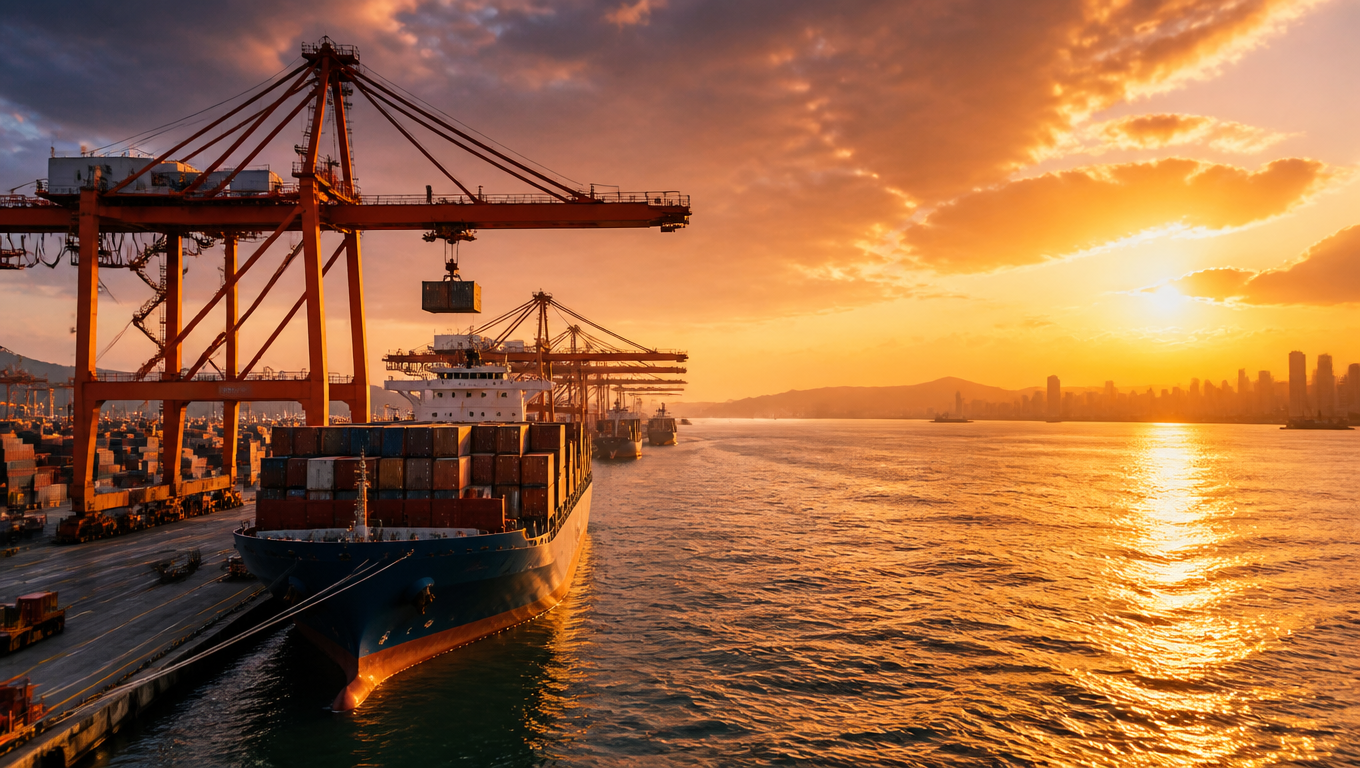
夕照下的国际货运港口全景,巨型龙门起重机正在吊装集装箱,一艘货轮停靠在码头边,海面上泛起金色波光
谁承担关税,决定整单盈亏Who carries the duty decides whether the order makes money

DDP 和 DAP 是什么:Incoterms 2020 定位What DDP and DAP Are: Their Place in Incoterms 2020

Incoterms 是国际商会发布的贸易术语标准,2020 版共 11 个术语,按卖方义务从轻到重排列。E 组只有 EXW(工厂交货),卖方义务最轻;F 组和 C 组主要划分运费与保险的分担;真正决定「送到哪里、谁来清关」的,是 D 组到达类术语,包含 DAP、DPU 和 DDP。Incoterms are the international trade terms published by the International Chamber of Commerce. The 2020 edition has 11 terms, ordered from the lightest to the heaviest seller obligation. Group E has only EXW (Ex Works), where the seller's obligation is lightest. Groups F and C mainly divide freight and insurance between the parties. What actually decides "where the goods are delivered and who clears customs" is the D group of arrival terms: DAP, DPU, and DDP.

DDP,全称 Delivered Duty Paid,意为「完税后交货」。卖方要承担把货物送到买方指定地点的全部费用与风险,包括国际运费、保险,以及最关键的进口清关与关税。货物抵达目的地、交由买方处置时,风险才完成转移。换句话说,卖方一手包办到「税后到手」。DDP stands for Delivered Duty Paid. The seller bears all costs and risks of getting the goods to the buyer's named place, including international freight, insurance, and the critical piece: import clearance and the duty itself. Risk transfers only when the goods arrive at the destination and are placed at the buyer's disposal. In other words, the seller handles everything up to "in your hands, duty paid."

DAP,全称 Delivered at Place,意为「目的地交货」。卖方同样负责把货运到指定地点并承担运输途中的风险,但进口清关和关税缴纳由买方负责。货到了,税的事,买方自己办。DAP stands for Delivered at Place. The seller also gets the goods to the named destination and bears the risk during transit, but import clearance and duty payment are the buyer's job. The goods arrive; the tax side is on the buyer.

30 秒理解版:DDP 相当于「包邮包税送到门口」,买家什么都不用操心;DAP 相当于「送到门口,但税你自己交」。两者只差一个环节,恰恰是 2026 年最贵的一个环节。The 30-second version: DDP is "delivered to your door, duty included," and the buyer does not have to think about anything. DAP is "delivered to your door, but you handle the tax." The two terms differ by exactly one step, and it happens to be the most expensive step in 2026.
核心区别一张表The Core Difference in One Table

DDP 与 DAP 在风险转移上几乎一致,都在货物抵达指定地点、交由买方处置时完成转移,运输途中的损毁风险都由卖方承担。真正的分野在清关与费用:进口清关的手续、关税的缴纳、清关行的费用,DDP 全归卖方,DAP 全归买方。DDP and DAP transfer risk at almost the same point: when the goods arrive at the named place and are placed at the buyer's disposal, with the seller bearing the risk of damage during transit. The real difference is clearance and money: import clearance, duty payment, and broker fees are all on the seller under DDP and all on the buyer under DAP.

把四个常见术语放在一起看,边界更清楚。Putting the four most common terms side by side makes the boundaries clearer.

维度DimensionDDPDDPDAPDAPEXWEXWFOBFOB
风险转移点Risk transfer point目的地买方处置时At destination, when placed at buyer's disposal目的地买方处置时At destination, when placed at buyer's disposal工厂交货时At the factory装运港上船时On board at the port of shipment
国际运费International freight卖方Seller卖方Seller买方Buyer买方Buyer
保险Insurance卖方(建议)Seller (recommended)卖方(建议)Seller (recommended)买方自理Buyer买方自理Buyer
出口清关Export clearance卖方Seller卖方Seller买方Buyer卖方Seller
进口清关Import clearance卖方Seller买方Buyer买方Buyer买方Buyer
关税缴纳Duty payment卖方Seller买方Buyer买方Buyer买方Buyer
卸货费用Unloading cost买方Buyer买方Buyer买方Buyer买方Buyer

从 EXW 到 DDP,卖方义务逐渐加码,报价自然水涨船高。选哪个,本质上是「谁更有能力、更有意愿承担清关与关税」的问题,而不是术语本身谁更高级。Moving from EXW to DDP, the seller's obligations grow step by step, and so does the quote. Choosing between them is really a question of who is better able and more willing to handle clearance and duty, not of which term sounds more sophisticated.

2026 关税新规:为什么 DDP 变难了The 2026 Tariff Changes: Why DDP Got Harder

2026 年的关税环境,是过去十年里变化最剧烈的一年。曾经支撑中美小包生意的 de minimis 800 美元免税通道,在 6 月被无限期暂停;与之配套的 T86 小额清关机制,也在 5 月 2 日被正式废除。小额包裹不再能走简化申报,一律转入正式报关流程,单票的清关成本与时间都明显上升。The 2026 tariff environment is the most volatile in a decade. The de minimis $800 duty-free lane that once supported the US-China small-parcel business was suspended indefinitely in June, and its companion, the T86 small-parcel clearance mechanism, was formally abolished on May 2. Small parcels can no longer use simplified entry; they all move into formal entry, and both the cost and the time per shipment have risen noticeably.

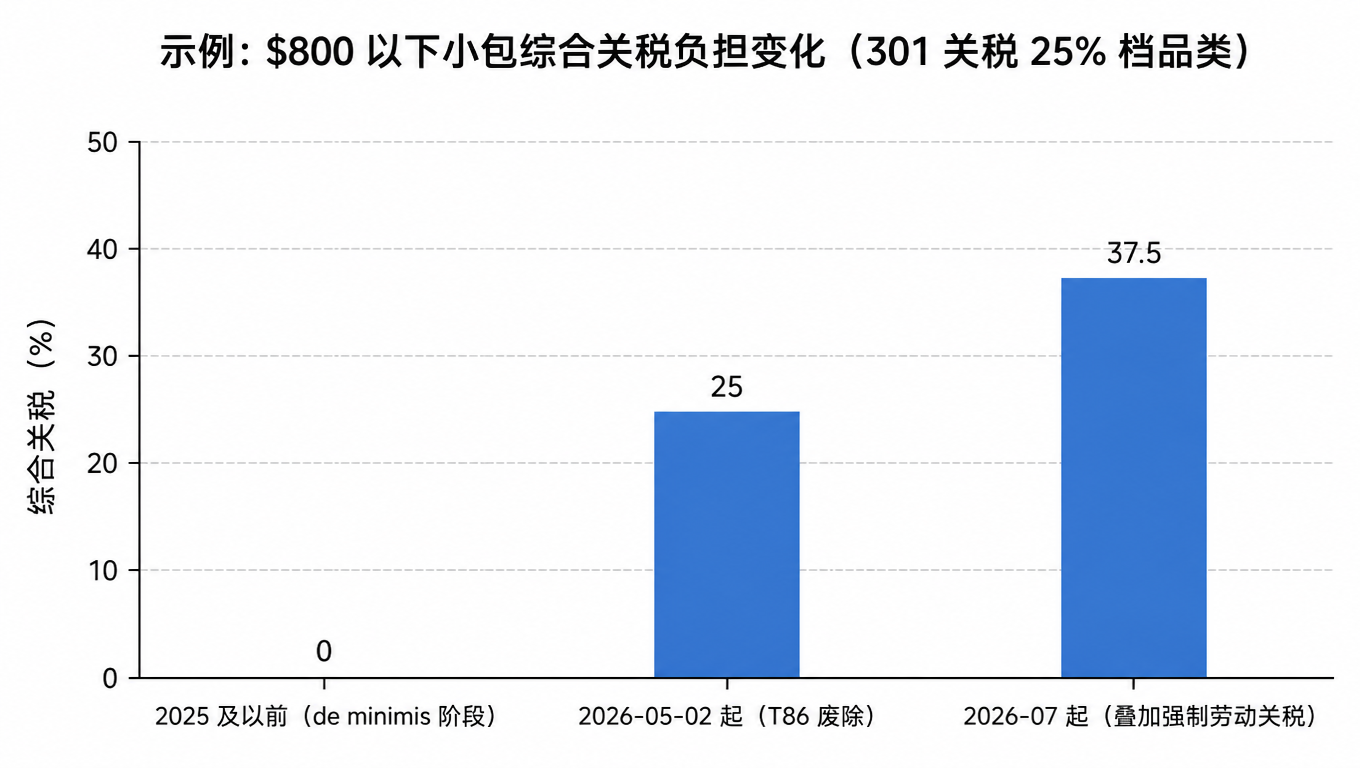
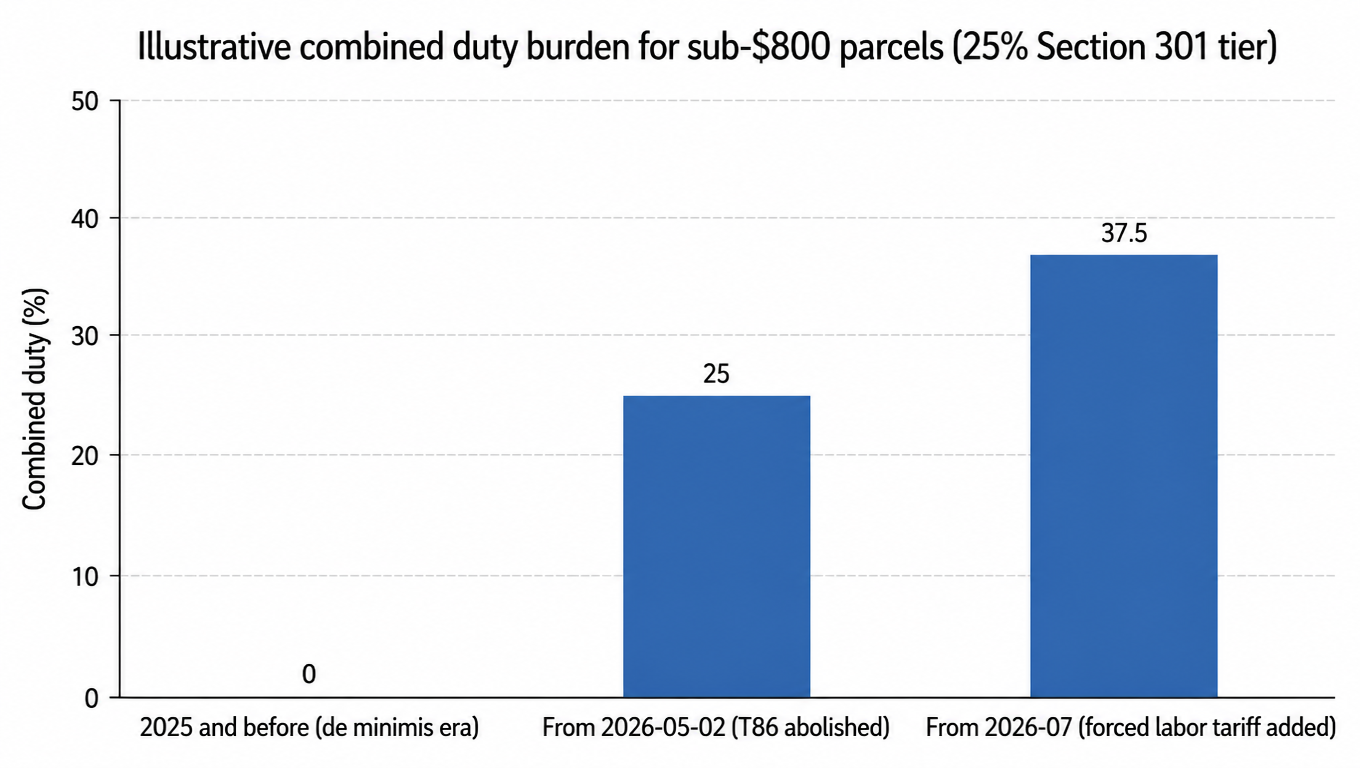
与此同时,针对中国商品的 301 关税(25% 或 7.5%,视品类而定)之外,2026 年 7 月起又叠加了 12.5% 的强制劳动关税。以一个落在 25% 档的品类为例,仅这两项叠加就已到 37.5%,若品类还有基础关税,综合负担更高。具体税率必须以商品 HS 编码在海关系统查询为准,下面这张图直观展示了小包关税负担的变化。On top of Section 301 duties on Chinese goods (25% or 7.5% depending on the category), a 12.5% forced-labor tariff was added from July 2026. For a product in the 25% tier, those two items alone add up to 37.5%, and if the category also carries a base tariff, the total burden is even higher. The exact rate must always be checked against the product's HS code in the customs system. The chart below shows how the small-parcel duty burden has changed.

示例:800 美元以下小包综合关税负担变化:de minimis 阶段 0%,T86 废除后 25%,叠加强制劳动关税后 37.5%Illustrative combined duty burden for sub-$800 parcels: 0% in the de minimis era, 25% after T86 was abolished, 37.5% after the forced-labor tariff
示例:$800 以下小包综合关税负担变化(301 关税 25% 档品类)Illustrative combined duty burden for sub-$800 parcels (25% Section 301 tier)

政策变化对 DDP 最直接的影响是:卖方报价里的关税成本变得难以预测。税率可以随行政令变动,清关行费用因正式报关而上涨,汇率也在波动,一票货从下单到清关往往跨越多周,报价时估算的税额可能已经过时。对 DAP 的影响则是:关税成本直接落到美国买方头上,收到「货到付税」账单的买家,要么拒收,要么要求降价补偿,退货与纠纷的风险显著上升。The most direct effect on DDP: the duty cost inside a seller's quote has become hard to predict. Rates can change with an executive order, broker fees are up because of formal entry, and exchange rates move. A shipment can take weeks from order to clearance, so the duty estimated at quote time can already be stale. For DAP, the effect is that the duty lands directly on the US buyer. A buyer who gets a "pay duty on delivery" bill will either refuse the parcel or demand a discount, so returns and disputes rise sharply.

中美小包 DDP 实操拆解Small-Parcel DDP in Practice

2026 年做小包 DDP,第一步是算清关税。用商品 HS 编码查询适用税率,把基础关税、301 关税、新增的强制劳动关税逐项叠加,再按「货值加运费」作为计税基础估算。注意 2026 年多数小包已无 de minimis 庇护,别再默认 800 美元以下的包裹免税。The first step in small-parcel DDP in 2026 is calculating the duty. Look up the applicable rate by the product's HS code, stack the base tariff, Section 301, and the new forced-labor tariff one by one, and use value plus freight as the tax base. Note that most small parcels no longer have de minimis protection in 2026, so stop assuming packages under $800 are duty-free.

第二步是选清关方式。有美国 EIN(雇主识别号)或 ITIN 的卖家,可以直接委托美国持牌清关行;没有资质的,用平台或货代内置的清关服务更省事。关键是把「谁作为进口商」写清楚:DDP 下卖方是事实上的进口商,报关文件、关税支付、潜在查验都挂在卖方名下,这个身份不能含糊。The second step is choosing the clearance route. Sellers with a US EIN or ITIN can work directly with a licensed US customs broker; those without can use the built-in clearance service of their platform or freight forwarder, which is simpler. The key is to write down who the importer of record is. Under DDP the seller is the de facto importer: the entry documents, duty payment, and any inspection exposure sit with the seller. That identity cannot be vague.

文件方面,商业发票要写清品名、HS 编码、单价、总价与贸易术语,装箱单核对数量与重量,再附上清关授权委托书。发票上的价格尤其要经得起查验,低报是海关的重点打击对象。平台视角下,eBay、Shopify 卖家多用承运商内置清关(如 DDP 服务),Temu、SHEIN 类全托管模式则把清关与关税统一打包进采购价,卖家只需把货交给平台,但这部分成本最终都会体现在报价里。On documents, the commercial invoice must state the product name, HS code, unit price, total value, and the Incoterm. The packing list reconciles quantity and weight, and a clearance authorization letter is attached. The price on the invoice especially has to survive scrutiny, because under-declaration is a prime customs target. From the platform angle, eBay and Shopify sellers mostly use carrier-built-in clearance (DDP services), while fully managed models like Temu and SHEIN bundle clearance and duty into the procurement price: the seller just hands the goods to the platform, but that cost eventually shows up in the quote anyway.

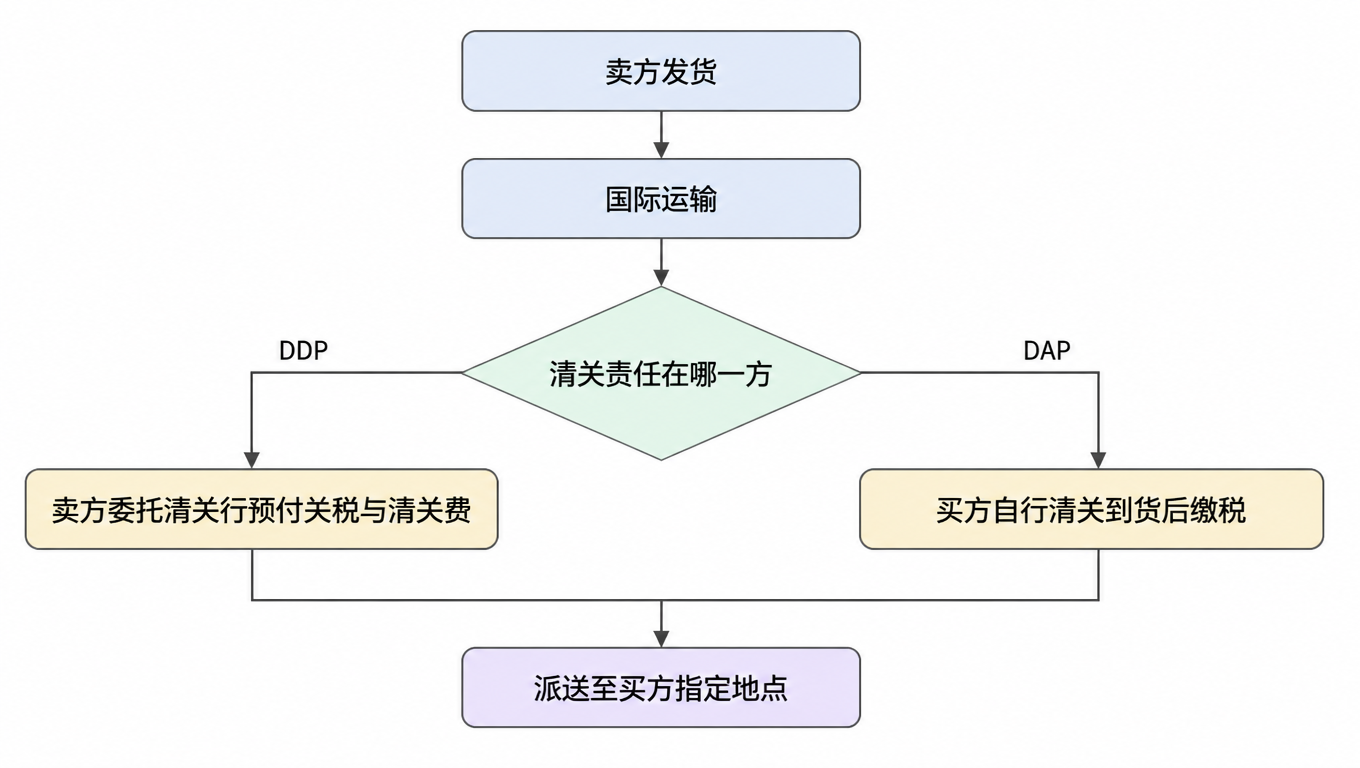
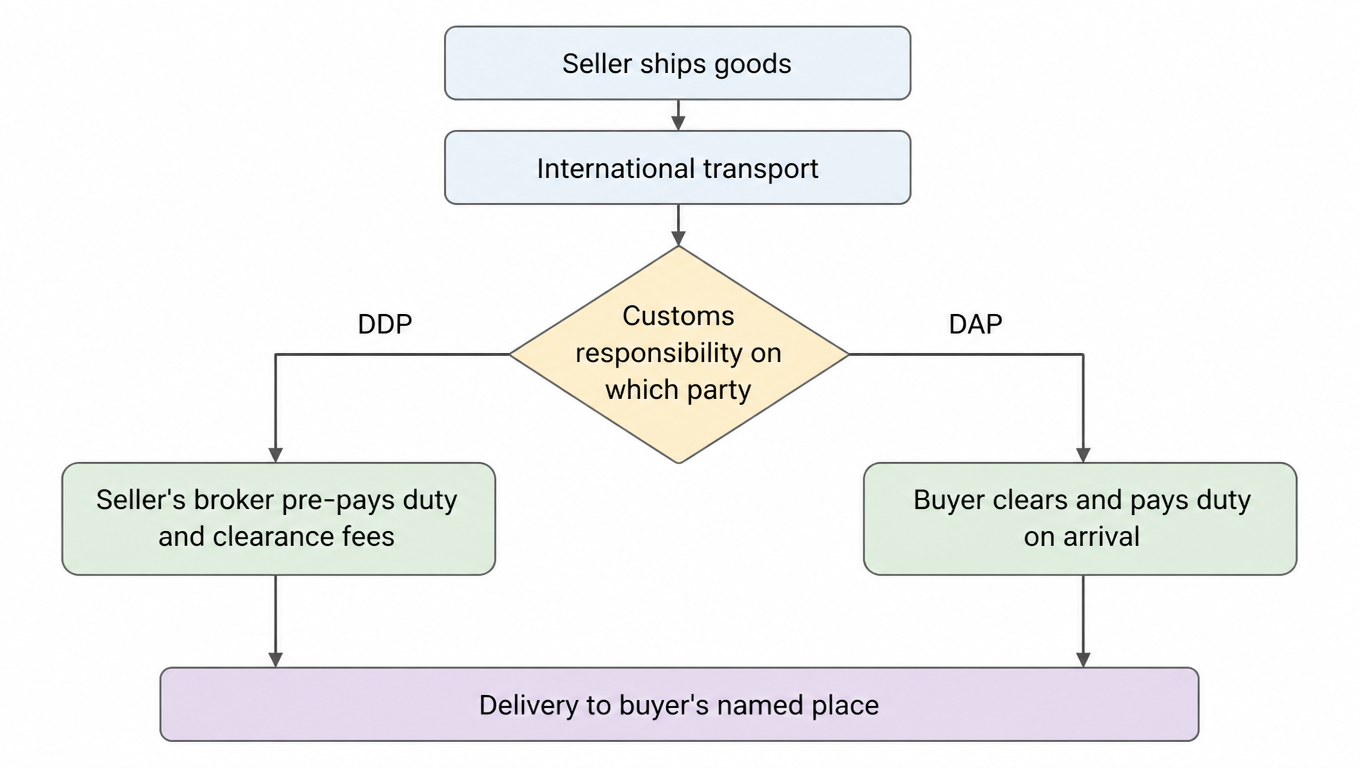
最后是报价模型:DDP 报价 = 货价 + 国际运费 + 关税估算 + 清关费 + 尾程派送 + 利润缓冲。缓冲比例建议按关税估算的 10% 到 15% 预留,因为税率与汇率在发货到清关之间可能变化。宁可报价略高,也不要到港后发现税比货贵。整个流程的责任划分可以这样看。Finally, the quoting model: DDP price = goods + international freight + duty estimate + clearance fee + last-mile delivery + margin buffer. Reserve a buffer of 10% to 15% of the duty estimate, because rates and exchange rates can shift between dispatch and clearance. Better to quote slightly high than to discover at the port that the tax is worth more than the goods. The division of responsibility across the whole flow looks like this.

流程图:卖方发货、国际运输、清关责任在哪一方:DDP 由卖方委托清关行预付关税与清关费,DAP 由买方自行清关到货后缴税,最终都派送至买方指定地点Flow: seller ships, international transport, where does customs responsibility sit: DDP seller's broker pre-pays duty and clearance fees, DAP buyer clears and pays on arrival, both end in delivery to the buyer's named place
DDP 与 DAP 的责任分岔点Where DDP and DAP diverge

B2B 场景:什么时候 DAP 更稳B2B Scenarios: When DAP Is the Safer Call

大宗货物和整柜拼箱,DDP 的弊端被放大。关税金额动辄数万美元,由卖方预付意味着长期占用资金,而清关与查验的不确定性把风险全部压在卖方一侧。此时 DAP 把关税责任交给买方,卖方的资金与风险敞口都小得多。With bulk cargo and full-container loads, DDP's downsides scale up. Duty can easily run to tens of thousands of dollars, so the seller pre-paying means capital tied up for a long time, while clearance and inspection uncertainty puts all the risk on the seller's side. DAP hands the duty to the buyer instead, and the seller's capital and risk exposure both shrink dramatically.

当美国买方是成熟进口商,有自己的清关团队和进口资质时,DAP 几乎总是更优:他们自清关的成本更低、流程可控,还能在报税时处理进项抵扣,卖方没必要替他们承担本可以更便宜办成的事。When the US buyer is a mature importer with its own clearance team and import credentials, DAP is almost always better. Self-clearing costs them less, the process is under their control, and they can handle input tax credits at filing time. There is no reason for the seller to take on work the buyer could do more cheaply.

退货与拒收场景下,DAP 给了卖方更多灵活性。买方拒收时,货物尚未缴税,卖方可以更快地安排退运、转卖或改派,不涉及已缴关税的退税流程;DDP 下卖方已垫付关税,拒收后要申请退税、承担滞港费,处理链条明显更长。In return and refusal scenarios, DAP gives the seller more flexibility. If the buyer refuses the goods, they have not paid duty yet, so the seller can quickly arrange return, resale, or diversion without wading into a duty-refund process. Under DDP the seller has already fronted the duty, so a refusal means applying for a refund and absorbing demurrage: a visibly longer chain of work.

谈判现实是:买方强势时常常直接要求 DDP「包税到门」。此时要用条款保护自己。报价单写明估算关税的生效日期与税率版本,约定关税超出估算一定比例(如 10%)时由买方补差或双方重议;高关税品类宁可报高留缓冲,也不要口头承诺一口价。The negotiating reality: a strong buyer often simply demands DDP, duty paid to the door. Protect yourself with terms. Put the effective date and rate version of the duty estimate on the quote, and agree that if duty exceeds the estimate by a set percentage (say 10%), the buyer tops up the difference or the parties renegotiate. For high-duty categories, quote high with a buffer rather than promising a fixed price by handshake.

常见坑与风险Common Pitfalls and Risks

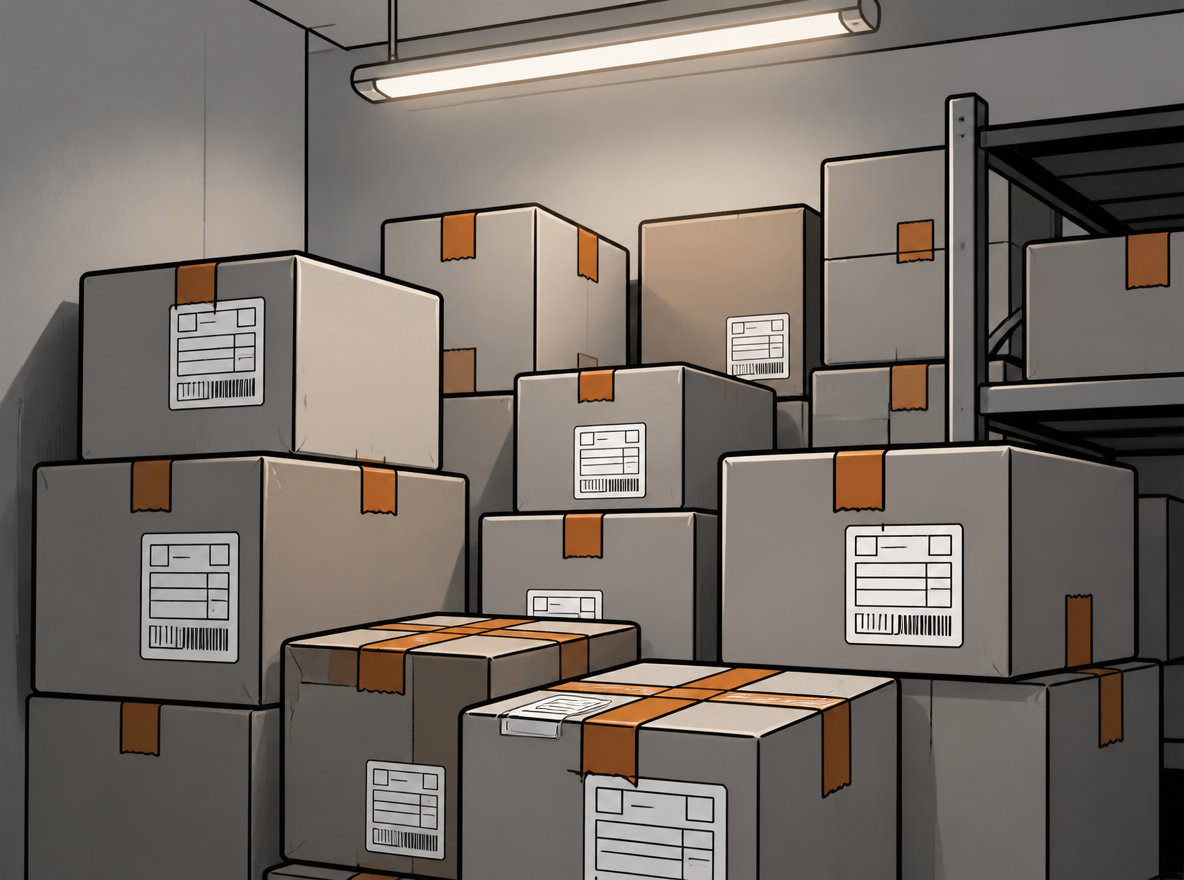
仓库一角堆满贴有海关单据的退货纸箱,几只箱子被胶带重新封存,日光灯昏暗,氛围略带压力
拒收与退货,是 2026 年两种术语下最贵的隐性成本Refusals and returns are the most expensive hidden cost under either term in 2026

坑 1:DDP 报价被关税吃掉利润。发货时按 25% 估算,清关时新税率已经生效,或者申报被查验后按更高价格计税,利润瞬间归零。应对:报价留缓冲、合同中写明税率变动条款、紧盯关税行政令动态。Pitfall 1: duty eats the DDP margin. You estimate 25% at dispatch; by clearance a new rate is in effect, or the entry is inspected and taxed at a higher value, and the margin is gone instantly. Fix: buffer the quote, put a rate-change clause in the contract, and watch tariff executive orders closely.

坑 2:DAP 买家拒收。货到美国,买家看到关税账单比货值还高,直接拒收,剩下的是弃货销毁、退运成本或滞港费,哪一条都不便宜。应对:发货前确认买家知情并书面确认关税自理,高关税品类建议先收部分保证金。Pitfall 2: the DAP buyer refuses. The goods reach the US, the buyer sees a duty bill higher than the value of the goods, and refuses. What remains is abandonment, return costs, or demurrage, none of it cheap. Fix: confirm the buyer understands and accepts duty responsibility in writing before shipping, and consider a deposit for high-duty categories.

坑 3:低报被查。把货值写低一半以少缴税,一旦被 CBP 查验,罚款按货值倍数计算,货物可能被扣押,卖家还会进查验黑名单。应对:如实申报,DDP 报价里本来就应该包含真实关税。Pitfall 3: under-declaration gets caught. Declaring half the value to cut the duty is a gamble. If CBP inspects, penalties are multiples of the value, the goods can be seized, and the seller lands on the inspection watchlist. Fix: declare truthfully. A DDP quote is supposed to include the real duty anyway.

坑 4:术语混用。DDU(Delivered Duty Unpaid)早在 Incoterms 2010 版就被删除,至今仍有人写进合同;DAP 与 DDP 一字之差,合同里写「卖方可选 DDP 但不含税」这种自相矛盾的条款也时有发生。应对:合同明确采用 Incoterms 2020,写全术语名称与指定地点,例如「DDP 至买方美国仓库」,不留解释空间。Pitfall 4: mixed-up terms. DDU (Delivered Duty Unpaid) was deleted back in Incoterms 2010, yet it still shows up in contracts. DAP and DDP differ by one letter, and self-contradictory clauses like "seller may choose DDP but duty not included" still appear. Fix: state Incoterms 2020 in the contract, write the full term name and the named place, for example "DDP to the buyer's US warehouse," and leave no room for interpretation.

2026 决策速查表The 2026 Decision Quick-Reference

把上面的分析压缩成一张速查表。All of the above, compressed into one quick-reference table.

场景Scenario建议Recommendation理由Why
小包、买家图省事Small parcel, buyer wants convenienceDDPDDP包税到门体验好,但报价要留关税缓冲Duty paid to the door is a great experience, but buffer the duty in the quote
小包、买家愿意自理Small parcel, buyer willing to self-handleDAPDAP省去卖方关税垫付与风险No duty fronting or duty risk for the seller
大货、整柜拼箱Bulk, FCL or LCLDAPDAP关税金额大,卖方不垫资Duty is large; the seller should not pre-fund it
买方有成熟进口资质Buyer has mature import credentialsDAPDAP买方自清关更便宜、更可控Buyer self-clears cheaper and with more control
高关税品类High-duty category谨慎 DDPDDP with caution税可能吃掉利润,报价留足缓冲Duty can eat the margin; leave a generous buffer
新手买家、无进口经验First-time buyer, no import experienceDDP 或代清关DDP or assisted clearance买家无力自理,但卖家要控风险Buyer cannot self-handle, but the seller must control risk

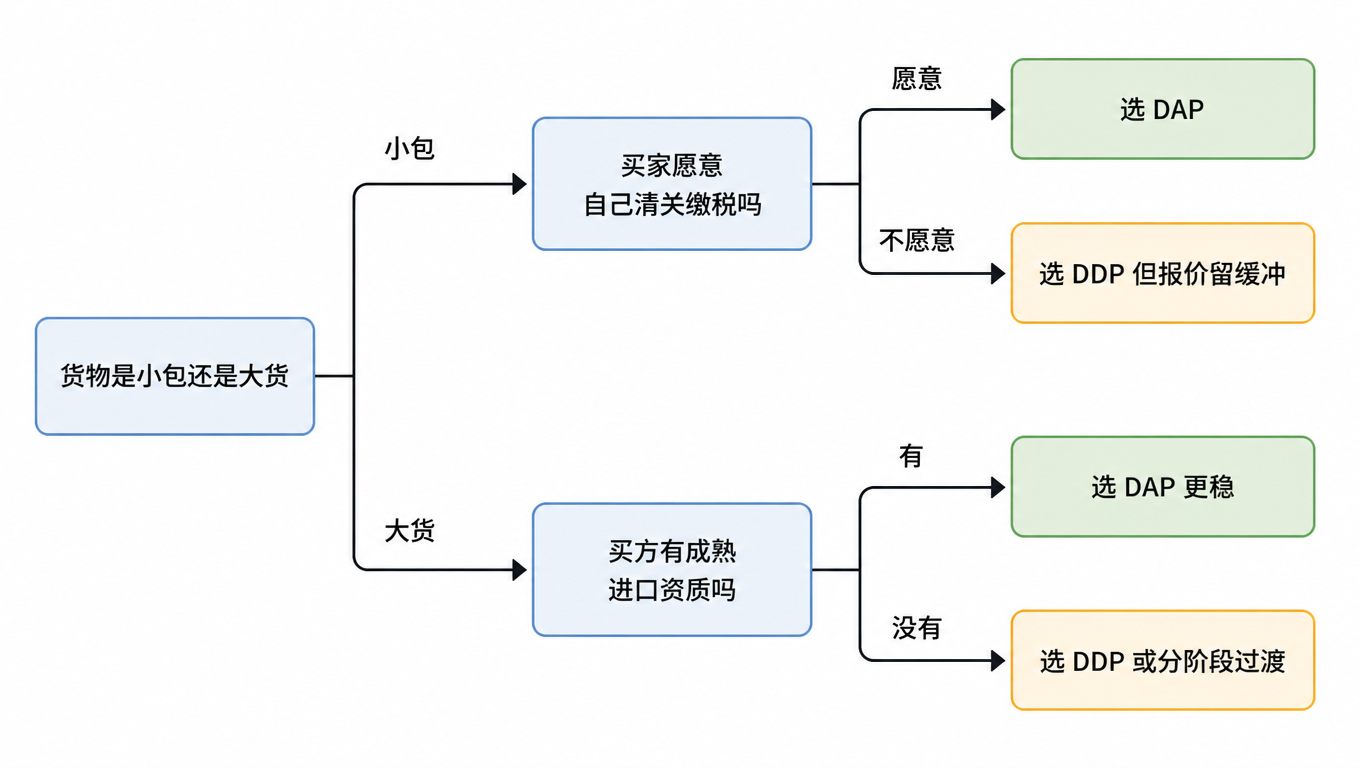
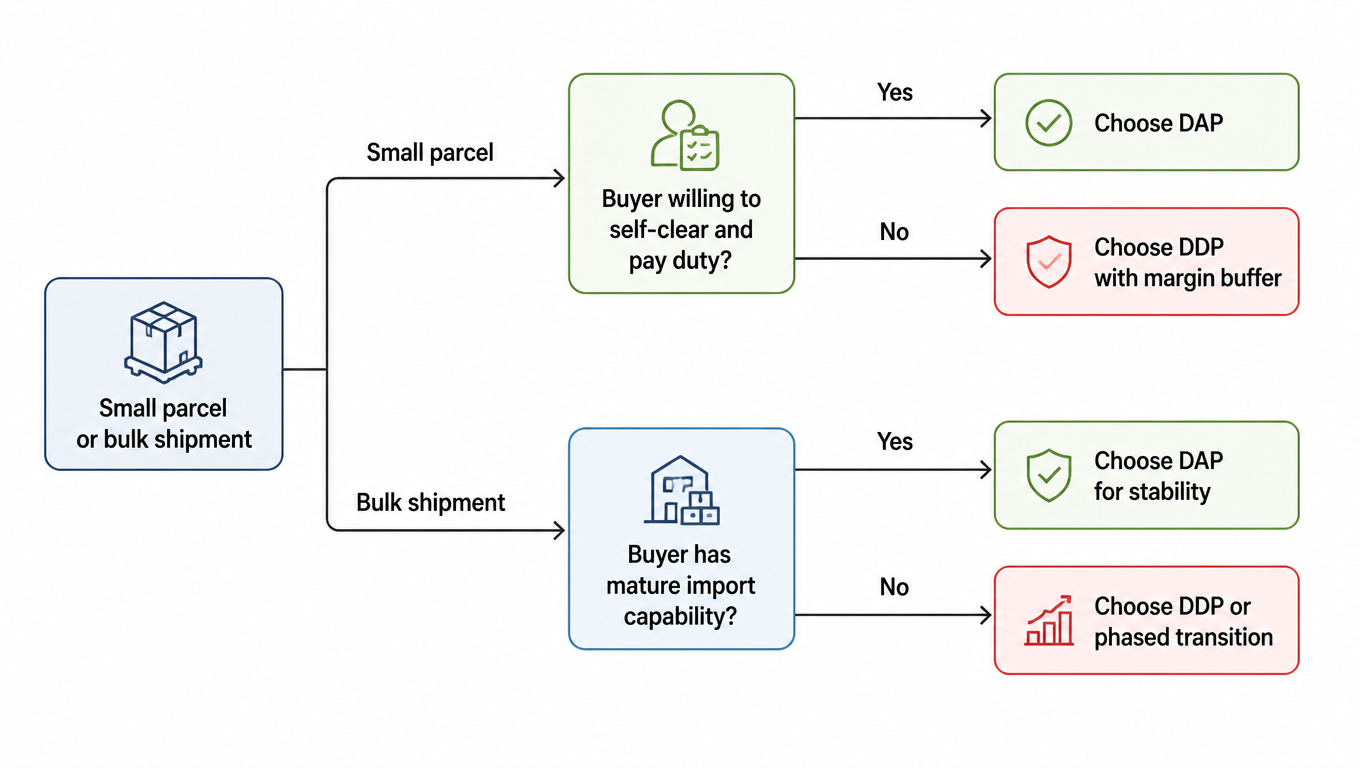
拿不准时,用下面这个决策树走一遍。When in doubt, run the decision tree below.

决策树:小包还是大货;小包看买家是否愿意自己清关缴税,愿意选 DAP,不愿意选 DDP 留缓冲;大货看买方是否有成熟进口资质,有选 DAP 更稳,没有选 DDP 或分阶段过渡Decision tree: small parcel or bulk; small parcel asks whether the buyer will self-clear and pay duty, yes DAP, no DDP with buffer; bulk asks whether the buyer has mature import capability, yes DAP, no DDP or phased transition
两问定 DDP 还是 DAPTwo questions settle DDP or DAP

2026 年没有放之四海皆准的标准答案。DDP 与 DAP 的选择,取决于品类税率、单票货值、买家的进口能力与你的资金状况。唯一确定的是:只有把关税算进成本的报价,才经得起 2026 年的清关现实。把术语写清楚、把税算明白、把缓冲留足,剩下的交给执行。There is no one-size-fits-all answer in 2026. The choice between DDP and DAP depends on the category's duty rate, the value per shipment, the buyer's import capability, and your own cash position. The one certainty: only a quote that builds duty into the cost will survive the 2026 clearance reality. Write the term clearly, calculate the duty properly, leave the buffer, and let execution handle the rest.

常见问题FAQ

两者都要求卖方把货送到指定地点并承担途中风险,唯一的区别是进口清关和关税:DDP 下卖方负责清关、预付关税,买方到手即完税;DAP 下买方自己清关、自己缴税。在 2026 年,这一个环节恰恰是成本最高、变化最快的环节。Both require the seller to deliver to the named place and bear the transit risk. The only difference is import clearance and duty: under DDP the seller clears and pre-pays the duty so the buyer receives the goods duty-paid; under DAP the buyer clears and pays the tax. In 2026 that one step happens to be the most expensive and fastest-changing step.
基本不能。de minimis 800 美元免税通道已在 6 月被无限期暂停,配套的 T86 简化清关机制 5 月 2 日被废除。2026 年的小包转入正式报关流程,别再默认 800 美元以下的包裹免税,DDP 报价必须把关税算进去。Basically no. The de minimis $800 duty-free lane was suspended indefinitely in June, and the companion T86 simplified entry was abolished on May 2. Small parcels now go through formal entry in 2026, so stop assuming packages under $800 are duty-free, and a DDP quote must include the duty.
用 HS 编码查适用税率,把基础关税、301 关税和强制劳动关税逐项叠加,以货值加运费为计税基础,再加上清关费、尾程派送和利润缓冲。缓冲建议按关税估算的 10% 到 15% 预留,因为税率与汇率在发货到清关之间可能变化。Look up the rate by HS code, stack base tariff, Section 301, and the forced-labor tariff, use value plus freight as the tax base, then add clearance fees, last-mile delivery, and a margin buffer. Reserve a buffer of 10% to 15% of the duty estimate, because rates and exchange rates can shift between dispatch and clearance.
DAP 下货物尚未缴税,处理链条比 DDP 短:可以安排退运、转卖或改派,不涉及已缴关税的退税流程。更根本的预防是发货前让买家书面确认关税自理,高关税品类先收部分保证金,避免「看到税单比货值还高就拒收」的局面。Under DAP the goods have not been taxed yet, so the chain is shorter than DDP: you can arrange return, resale, or diversion without a duty-refund process. More fundamentally, prevent it: get written confirmation that the buyer accepts duty responsibility before shipping, and take a deposit for high-duty categories so you never face a "the tax bill is higher than the goods" refusal.
明确采用 Incoterms 2020,写全术语名称与指定地点,例如「DDP 至买方美国仓库」;不要再写 Incoterms 2010 已删除的 DDU;报价单写明关税估算的生效日期与税率版本,并约定关税超出估算一定比例(如 10%)时的补差或重议机制。State Incoterms 2020 explicitly, write the full term name and the named place, for example "DDP to the buyer's US warehouse." Stop using DDU, which was deleted in Incoterms 2010. Put the effective date and rate version of the duty estimate on the quote, and agree on a top-up or renegotiation mechanism when duty exceeds the estimate by a set percentage, say 10%.
Get Rate Comparison
Get Rate Comparison