电商物流指南Ecommerce Shipping Guide

电商平台该不该提供预付面单?单位经济与自建-采购决策框架Should Your Ecommerce Marketplace Offer Prepaid Shipping Labels? A Unit Economics and Build-vs-Buy Framework

每个电商平台迟早都会收到同一个请求:卖家想直接在平台里买面单,用折扣价,不用跳到第三方工具去。这听起来像一条功能需求,一个 PM 在一个 sprint 里就能估完。它不是。问题不是要不要接一个面单 API,而是选择哪种 shipping 运营形态。一共三种:卖家自行管理(seller-managed shipping),卖家自己处理面单、平台完全不介入;托管面单(hosted labels),平台通过白标物流 API 供应商转售面单;嵌入式多承运商 API(embedded multi-carrier API),平台自建面单技术栈、跨承运商比价、端到端持有追踪与账单。Every marketplace eventually hears the same request. Sellers want to buy shipping labels inside the platform, at discounted rates, without tab-hopping to third-party tools. It sounds like a feature request a PM can size in a sprint. It is not that. The question is not whether to integrate a label API. It is which shipping operating model to run. There are three: seller-managed shipping, where sellers handle labels themselves and the platform stays out of it; facilitated or hosted labels, where the platform resells labels through a white-label shipping API provider; and an embedded multi-carrier API, where the platform runs its own label stack, shops rates across carriers, and owns tracking and billing end to end.

这篇文章给平台 GM、产品经理、运营、财务和工程负责人,以及垂直平台和 resale 平台的创始人一套决策框架:三种形态的六维度评分表、逐项拆解到位的贡献公式,以及一套完全用你自己数据跑的四步决策流程。这里不会给你一个放之四海皆准的订单量门槛,因为你没亲手测量的门槛,就是你将在董事会上辩护、然后后悔的那个数字。This article gives marketplace GMs, product managers, operations, finance, and engineering leads, plus founders of vertical and resale marketplaces, a framework for that decision: a six-dimension scorecard across the three models, a contribution formula with every term spelled out, and a four-step decision process you run on your own data. There is no universal order-volume threshold here, because a threshold you did not measure is a number you will defend in a board meeting and regret.

编辑风插画:履约工作台,成摞的包裹、正在吐出面单的热敏面单打印机,以及显示着多承运商比价看板的笔记本电脑
问题不是接哪个面单 API,而是选择哪种运营形态The question is not which label API, but which operating model

三种运营形态,六维度评分Three Operating Models, Scored on Six Dimensions

卖家自行管理是默认状态。卖家从自己的工具买面单,平台只提供订单数据、别的什么都不提供,每一次发货失败都是卖家的问题。平台不赚毛利、不拿数据,但也不承担任何风险。Seller-managed shipping is the default. Sellers buy labels from their own tools, the platform provides order data and nothing else, and every shipping failure is the seller's problem. The platform captures no margin and no data, but it also owns no risk.

托管面单在中间。平台通过白标物流 API 供应商,在卖家流程里提供面单。供应商持有承运商合约和运营机器;平台保留毛利,并把体验包装成自己的。上线快,控制薄。Facilitated or hosted labels sit in the middle. The platform offers labels inside the seller flow through a white-label shipping API provider. The provider holds the carrier contracts and the operational machinery; the platform keeps a margin and presents the experience as its own. Fast to launch, thin control.

嵌入式多承运商 API 是最深的选项。平台直接集成承运商,按线路比价,垫付现金流,跑账单与客服,把调整记在自己账上。毛利最大、所有权最大,包括对每一次失败的所有权。An embedded multi-carrier API is the deepest option. The platform integrates carriers directly, shops rates per lane, fronts the float, runs billing and support, and takes adjustments on its own books. Maximum margin and maximum ownership, including ownership of every failure.

属性Attribute卖家自行管理Seller-managed托管面单Facilitated / hosted labels嵌入式多承运商 APIEmbedded multi-carrier API
产品控制Product controlLowMediumHigh
工程投入Engineering effortLowMediumHigh
追踪完整度Tracking completenessLowMediumHigh
支持控制Support controlLowMediumHigh

上面的表是所有权视角:平台投入什么、控制什么。下面的计分卡是价值视角:在决定商业论证的六个维度上,每个形态对平台有多有利。这些评分是对典型平台的相对评估,不是行业事实;第 5 节会告诉你如何用你自己的测量替换它们。The table above is the ownership view: what the platform puts in, and what it controls. The scorecard below is the value view: how favorable each model is to the platform on the six dimensions that decide the business case. The scores are relative assessments for a typical marketplace, not industry facts; Section 5 tells you how to replace them with your own measurements.

维度(对平台的有利程度)Dimension (favorability to the platform)卖家自行管理Seller-managed托管面单Hosted labels嵌入式 APIEmbedded API
单位经济Unit economicsLowMediumHigh
卖家摩擦Seller frictionLowMediumHigh
配送与追踪控制Delivery and tracking controlLowMediumHigh
支持责任归属Support ownershipLowMediumHigh
承运商覆盖与降级Carrier coverage and fallbackLowMediumHigh
工程与运营负担(越低越好)Engineering and operational burden (lower is better)LowMediumHigh

在把这张表当圣旨之前,先记住两点。第一,前五个维度越高越好,负担维度越低越好,所以没有哪一列能全面胜出。第二,某个维度的「高」只有在能撬动第 2 节贡献公式时才有价值。没人测量的配送追踪控制权,是成本,不是能力。Two notes before the scorecard gets read as gospel. First, the first five dimensions are higher-is-better and the burden dimension is lower-is-better, so no single column wins outright. Second, "high" on a dimension is only worth something if it moves the contribution formula in Section 2. Full control of delivery tracking that nobody measures is a cost, not a capability.
单位经济:贡献公式与公式里的每一项Unit Economics: The Contribution Formula and Every Term In It

整个决策可以归结为一个公式,这一类里几乎每一个错误都来自漏掉某一项:The whole decision reduces to one formula, and every mistake in this category comes from leaving a term out:

每笔平台订单的运费贡献 = 收取的运费收入
- 面单与承运商费用
- 调整与退款
- 运费支持成本
- 分摊的工程与运营成本
Shipping contribution per marketplace order = Shipping revenue collected
- label and carrier charges
- adjustments and refunds
- shipping support cost
- allocated engineering and operating cost

每一行都是一套测量程序,不是表格里的一个格子。Each line is a measurement program, not a cell in a spreadsheet.

收取的运费收入来自你的费率策略。面单加价随价格同比例变动,但暴露在费率通胀之下;固定费率可预测,却会为重型包裹错误定价;完全吸收成本,则把每一单都变成对卖家的补贴。Shipping revenue collected is what the fee strategy brings in. A markup on the label scales with price but exposes you to rate inflation; a flat fee is predictable but misprices heavy parcels; absorbing the cost turns every shipped order into a subsidy to the seller.

面单与承运商费用是面单的真实成本:基础费率加 DIM 体积重加附加费,再加上费率本身的支付处理费,美国卡约为 2.9% 加 $0.30 [^1]。包裹画像(parcel profile)就在这里。平台的订单不是一个「平均包裹」,而是重量、尺寸、分区、订单类型的分布,决定费率卡的是这个分布,不是均值。通过 API 渠道的 USPS 商业费率没有最低量门槛 [^2],区域承运商在覆盖区内比全国承运商便宜最多 30% [^3],这正是多承运商技术栈优于单一谈判费率的原因。Label and carrier charges are the actual cost of the label: base rate plus DIM weight plus surcharges, and the payment processing on the fee, around 2.9 percent plus $0.30 on US cards [^1]. This is where the parcel profile lives. A marketplace's orders are not one average parcel; they are a distribution of weights, dimensions, zones, and order types, and that distribution, not the mean, decides the rate card. USPS commercial rates through an API channel carry no minimum volume [^2], and regional carriers can run up to 30 percent cheaper than national carriers inside their coverage zones [^3], which is exactly why a multi-carrier stack beats a single negotiated rate.

调整与退款是泄漏项:作废、DIM 修正、地址更正、索赔。它们在售出数周后才落地,是规划文档里惯常被四舍五入成零的每单成本。Adjustments and refunds are the leakage term: voids, DIM corrections, address corrections, and claims. They arrive weeks after the sale, and they are per-order costs that planning documents routinely round down to zero.

运费支持成本 = 每 1,000 单的工单数 × 每张工单的分钟数 × 客服人时的满载成本。它必须待在公式里,因为它是最可能把贡献翻成负数的项。Shipping support cost is tickets per 1,000 shipped orders times minutes per ticket times the loaded cost of an agent hour. It belongs inside the formula, because it is the term most likely to flip the contribution negative.

分摊的工程与运营成本,是建造成本按预期面单量摊销,再加上第 4 节说的永久维护合约:承运商接入、API 变更、降级逻辑、对账工具。Allocated engineering and operating cost is the build amortized over expected label volume plus the permanent maintenance contract of Section 4: carrier onboarding, API changes, fallback logic, reconciliation tooling.

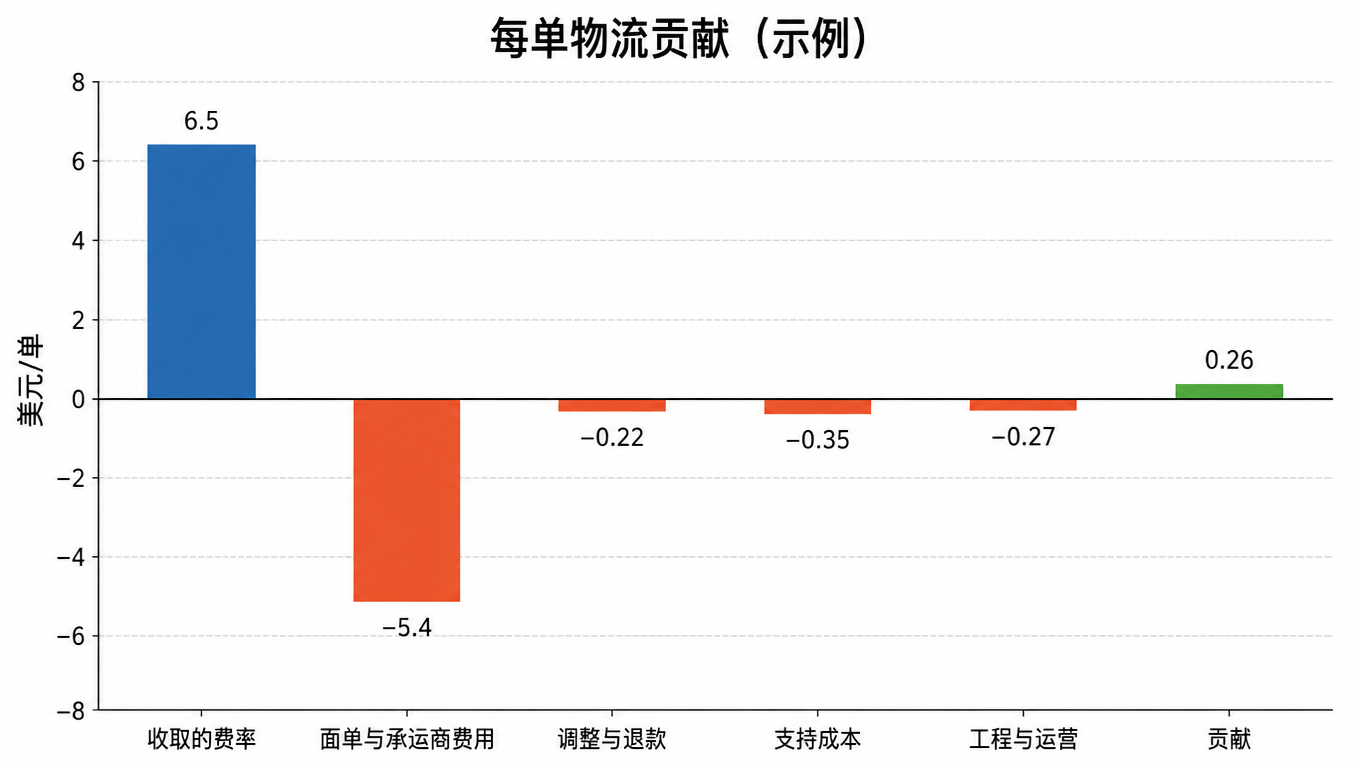
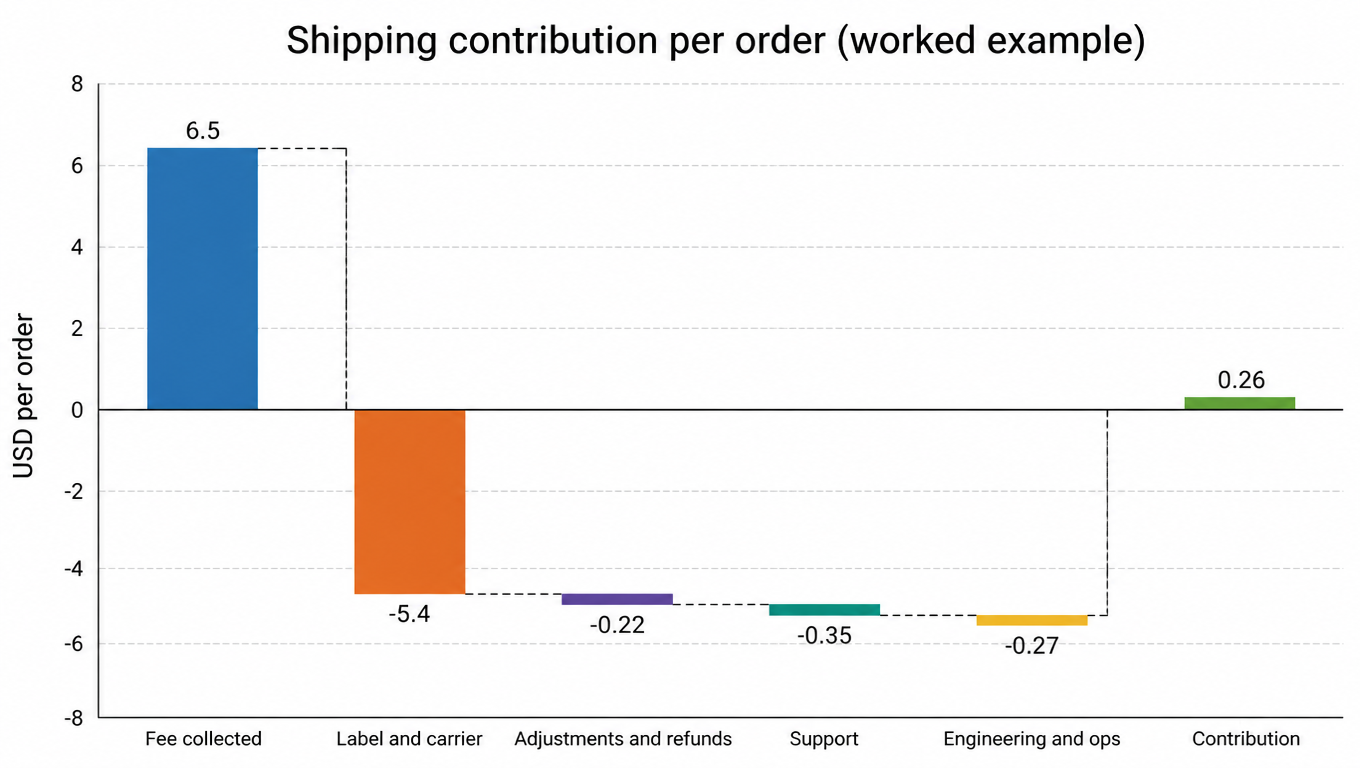
用一个明确标注为示意数字的算例让模型不抽象。假设平均面单与承运商费用 $5.40,你收固定 $6.50 费率,调整与退款每单 $0.22,支持成本分摊每单 $0.35,工程与运营成本分摊每单 $0.27。每单贡献 $0.26。A worked example keeps the model concrete, with clearly illustrative numbers. Say the average label and carrier charge is $5.40, you collect a flat $6.50 fee, adjustments and refunds run $0.22 per order, support allocates to $0.35 per shipped order, and engineering and operating cost allocates to $0.27. Contribution is $0.26 per order.

柱状图:每单运费贡献(算例),收取的运费 6.5,面单与承运商费用负 5.4,调整与退款负 0.22,支持成本负 0.35,工程与运营负 0.27,贡献 0.26 美元Bar chart: shipping contribution per order (worked example), fee collected 6.5, label and carrier -5.4, adjustments and refunds -0.22, support -0.35, engineering and ops -0.27, contribution 0.26 USD
每单运费贡献(算例)Shipping contribution per order (worked example)

有两个乘数在公式外面、又同时藏在每一行里。采用率决定公式作用于多少订单;采用率低,全世界最好的毛利也一分钱赚不到。包裹画像决定面单成本这一行本身。先测量这两者,再信任任何输出。Two multipliers sit outside the formula and inside every line of it. Adoption rate decides how many orders the formula applies to; at low adoption, the best margin in the world earns nothing. Parcel profile decides the label cost line itself. Measure both before you trust any output.

这也是这篇文章拒绝给出统一订单量门槛的原因。保本量 =(固定成本 + 建造成本摊销)÷(每单贡献 × 采用率)。这个分式里的每一个数字都要你自己测量,发 3 磅服装的垂直平台和发轻小件的 resale 平台,算出来必然不同。This is also why this article refuses to offer a universal order-volume threshold. Break-even volume is your fixed costs plus amortized build, divided by contribution per order times adoption rate. Every number in that fraction is yours to measure, and it will differ between a vertical marketplace shipping 3 lb apparel and a resale platform shipping lightweight media.

配送、追踪与支持:面单费率之下的成本Delivery, Tracking, and Support: The Costs Below the Label Rate

面单费率是看得见的价格。三种形态真正拉开差距的,是那些看不见的成本。The label rate is the visible price. The invisible costs are what the three models actually diverge on.

成功送达率是第一道过滤器。不是每张面单都以妥投收尾。失败和退回的货件成本翻倍:面单本身,再加上退款、重发或争议。真正该用的成本模型是「每成功送达订单」的成本,而不是「每张已售面单」的成本;而卖家自行管理把这项成本完全藏在了平台视野之外,直到买家怒气冲冲地找上门。Successful delivery rate is the first filter. Not every label ends in a delivered parcel. Failed and returned shipments cost twice: the label, and then the refund, the reshipment, or the dispute. The cost model that matters is per successfully delivered order, not per label issued, and seller-managed shipping hides this cost from the platform entirely until the buyer arrives angry.

追踪完整度是第二道过滤器。平台出面单,平台就拥有追踪数据。91% 的消费者会主动追踪自己的包裹,19% 一天查好几次 [^4]。一次缺失的扫描或一个失效的追踪链接,买家不会把它读成承运商问题,而是平台问题,它会直接变成「我的订单到哪了」工单。WISMO 工单量是面单量与追踪质量的函数,这就是为什么它在计分卡里叫配送与追踪控制。Tracking completeness is the second filter. When the platform issues the label, the platform owns the tracking data. 91 percent of consumers actively track their packages, and 19 percent check multiple times a day [^4]. A missing scan or a broken tracking link does not read as a carrier problem to the buyer; it reads as a platform problem, and it converts directly into where-is-my-order tickets. WISMO volume is a function of label volume and tracking quality, which is why it shows up in the scorecard as delivery and tracking control.

每单支持成本是两个测量值的和:每 1,000 单的工单数,和每单的支持分钟数。这是三种形态之间诚实的比较基准,因为卖家自行管理把支持推给卖家的渠道,你看不见,直到它变成平台争议;而托管与嵌入式形态把它拉进你的队列。面单一上线,工单结构就可预测:费率争议、地址更正、索赔、作废与退款问题。Support cost per shipped order is the sum of two measured numbers: tickets per 1,000 shipped orders, and support minutes per shipped order. These are the honest comparison across the three models, because seller-managed shipping pushes support into the seller's channel, invisible to you until it becomes a marketplace dispute, while hosted and embedded models pull it into your queue. The mix is predictable once labels are live: rate disputes, address corrections, claims, and void and refund questions.

DIM 体积重与附加费是面单成本里最被低估的一行。UPS 和 FedEx 从 2026 年 1 月起调整了 DIM 舍入与立方体积规则 [^5],附加费还叠在基础费率之上:长件重件的额外操作费、住宅派送费、旺季附加费。只按基础费率报价的平台,会在三个月后的调整行里发现真实成本。DIM weight and surcharges are the most underestimated line in the label cost. UPS and FedEx changed DIM rounding and cubic volume rules effective January 2026 [^5], and surcharges stack on top of base rates: additional handling for long or heavy parcels, residential delivery fees, and peak surcharges. A marketplace that quotes rates on base rates alone will discover the true cost in the adjustment line, three months late.

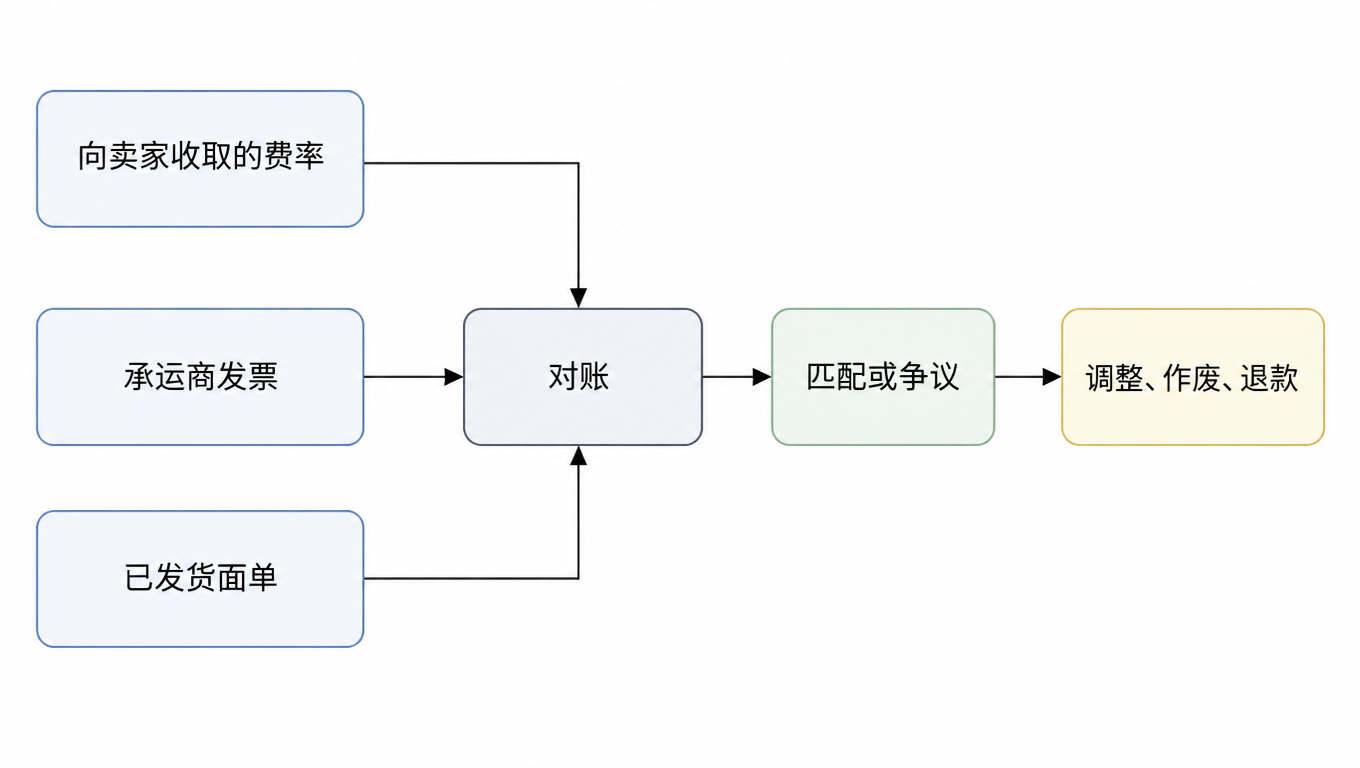
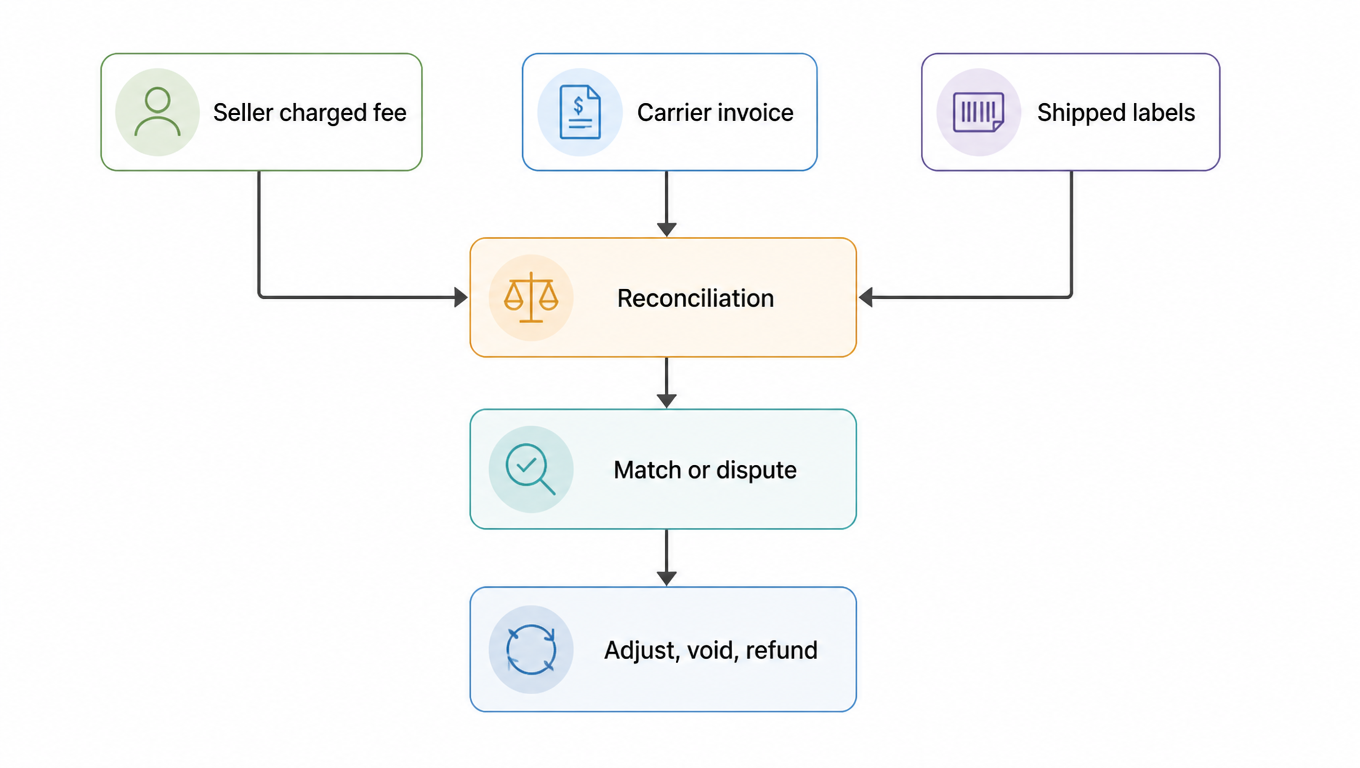
后台才是模型真正变难的地方。每张面单产生三条必须一致的记录:你向卖家收了多少、承运商向你开了多少发票、实际发货并追踪的是什么。行业工作基准是 5% 到 10% 的货运与包裹发票带某种错误 [^6],所以对账不是角落案例,而是一个永久职能。The back office is where the model gets genuinely hard. Every label generates three records that must agree: what you charged the seller, what the carrier invoiced you, and what actually shipped and tracked. The working benchmark is that 5 to 10 percent of freight and parcel invoices carry some kind of error [^6], so reconciliation is not a corner case; it is a permanent function.

流程图:向卖家收费、承运商账单、已发货面单三条记录汇入对账,进入匹配或争议,再到调整、作废、退款Flowchart: seller fee, carrier invoice, and shipped labels feed into reconciliation, then match or dispute, then adjust, void, refund
每张面单背后,三条记录必须对得上Every label generates three records that must agree

作废与退款泄漏值得单独一行,因为它是纯粹的毛利流失:一张买了又作废的面单,仍然占用了垫资、一次对账接触,有时还有手续费。在贡献公式里它属于调整与退款,也是项目在达到规模之前最可能为负的项。Void and refund leakage deserves its own line because it is pure margin drain: a label purchased and voided still cost the float, the reconciliation touch, and sometimes the fee. In the contribution formula it lives inside adjustments and refunds, and it is the term most likely to be negative before the program reaches scale.

工程与运营:一份永久的维护合约Engineering and Operations: The Permanent Maintenance Contract

承运商接入时间是第一道现实检查。每个承运商都是一份合约、一次 API 集成、一个测试周期、一张费率表导入、一本支持手册。嵌入式形态要把这一切乘以你跑的每一个承运商。托管面单把它压缩成一段供应商关系。卖家自行管理把它压缩成零,代价是零控制。Carrier onboarding time is the first reality check. Each carrier is a contract, an API integration, a test cycle, rate table ingestion, and a support playbook. An embedded model multiplies that by every carrier you run. Hosted labels compress it to one provider relationship. Seller-managed compresses it to zero, at the cost of zero control.

API 故障恢复是第二道现实检查。承运商宕机是「何时」而非「是否」;未计划的 API 停机是多承运商技术栈里的日常运营事件 [^7],三种形态的差别在于下午 4 点承运商 API 停止响应时会发生什么。卖家自行管理:卖家的工具挂了,你看不见。托管:你的供应商有一个降级方案,大部分时候。嵌入式:降级逻辑、队列、人工模式、值班传呼,全是你的。API failure recovery is the second reality check. Carrier outages are a when, not an if; unplanned API downtime is a routine event in any multi-carrier stack [^7], and the difference between models is what happens at 4 pm when a carrier's API stops answering. Seller-managed: the seller's tool is down, invisible to you. Hosted: your provider has a fallback story, mostly. Embedded: you own the fallback logic, the queuing, the manual modes, and the pager.

平台宕机连带风险是大多数团队漏掉的部分。你的面单服务挂了,卖家那天就发不了货,订单停滞、争议上升、卖家流失。坏掉的推荐组件损失的是互动;坏掉的面单流程停掉的是现实世界的物流,以及挂在它上面的收入。所以面单的工程成本不是一个构建 sprint,而是一份贴着 SLA 形状价签的永久维护合约。Marketplace downtime exposure is the contagion most teams miss. When your label service is down, sellers cannot ship that day, orders stall, disputes rise, and sellers churn. A broken recommendation widget costs engagement; a broken label flow stops real-world logistics and the revenue attached to it. The engineering cost of labels is therefore not a build sprint; it is a permanent maintenance contract with an SLA-shaped price tag.

四步决策框架A Four-Step Decision Framework

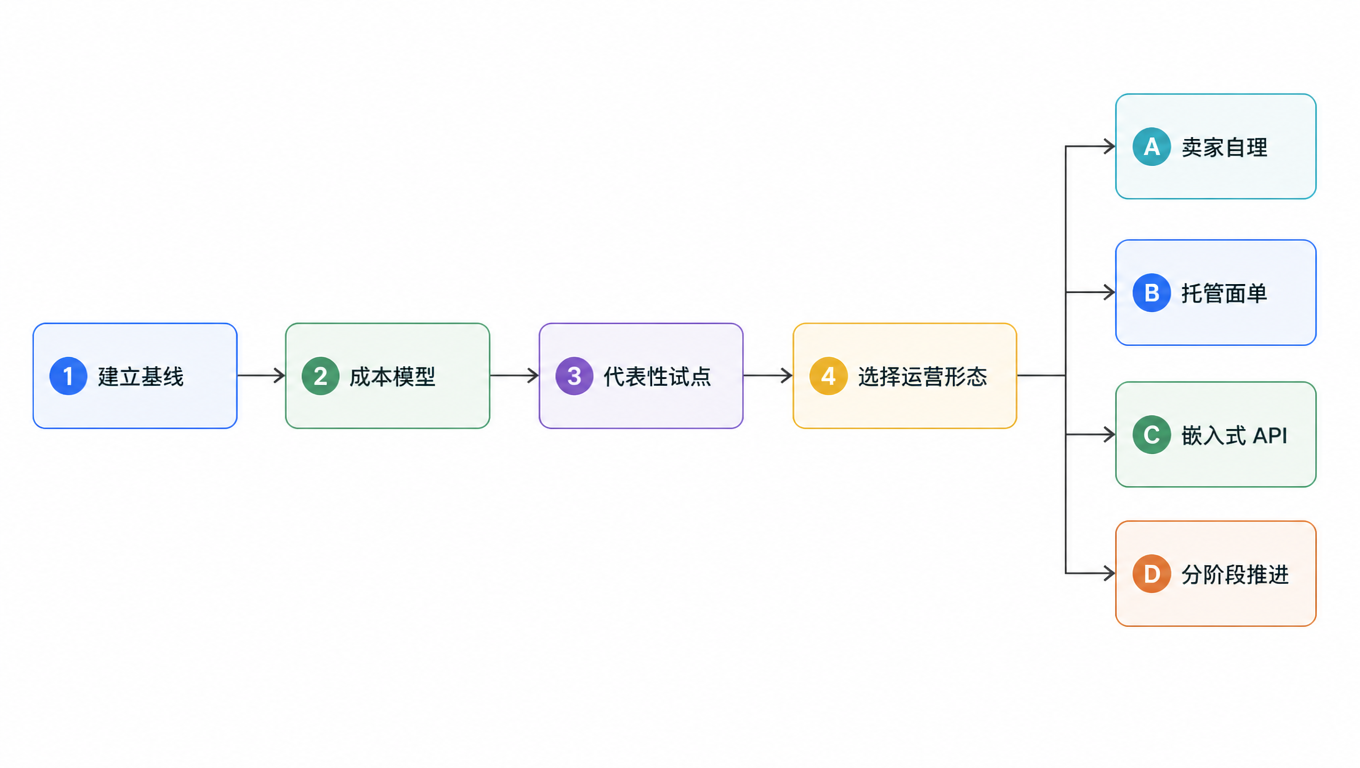
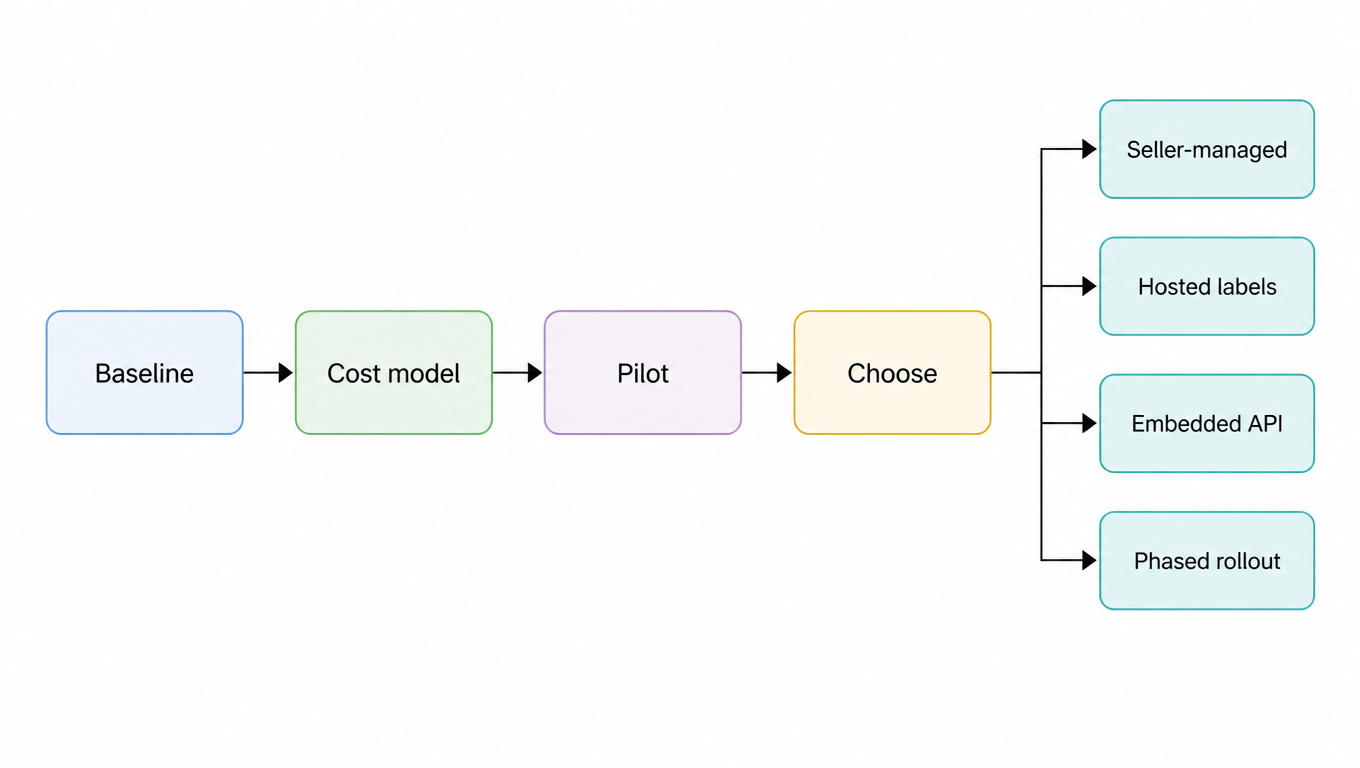
第 1 步:建立当前基线。在卖家自行管理状态下,测量追踪完整度(多少比例的订单端到端有可用追踪)、支持负担(每 1,000 单的工单数和每单分钟数,包括到达你这里的争议)、配送失败率(按承运商和分区的不妥投率与退回率)、工程投入(你已经在物流周边工具上花了多少)。这四个数字锚定之后的所有比较。Step 1: establish the current baseline. Under seller-managed shipping, measure tracking completeness (what share of orders have usable tracking end to end), support burden (tickets per 1,000 orders and minutes per order, including disputes that reach you), delivery failures (undeliverable and return rates per carrier and zone), and engineering spend (what you already sink into shipping-adjacent tooling). These four numbers anchor every comparison that follows.

第 2 步:为三种形态建立成本模型。不要比面单费率;用第 2 节的公式比「每成功送达订单」的总成本,用你测量的基线喂给支持与调整项。托管面单往往在这里先赢一轮,即使嵌入式形态的毛利看起来更高,因为工程与运营这一项是真实的。Step 2: build the cost model for all three models. Do not compare label rates; compare total cost per successfully delivered order, using the formula from Section 2 with your measured baseline feeding the support and adjustment terms. This is where hosted labels often win the first pass even when embedded margins look higher, because the engineering and operations term is real.

第 3 步:跑一个代表性试点。用你真实订单结构里的真实重量、尺寸、ZIP、承运商和订单类型。一个「典型包裹」会误导你,因为 DIM 体积重和分区经济在分布的尾部咬人,而尾部正是调整行来源的地方。试点要覆盖极端,而不是均值。Step 3: run a representative pilot. Use real weights, dimensions, ZIPs, carriers, and order types from your actual order mix. A single "typical parcel" will mislead you, because DIM weight and zone economics bite on the tails of the distribution, and the tails are where the adjustment line comes from. The pilot should span the extremes, not the mean.

第 4 步:选择运营形态。如果基线显示问题很小、平台介入不增加任何价值,就维持卖家自行管理。要验证采用率与单位经济、同时责任有边界,就上托管面单。量价足以支撑永久维护合约时,再上嵌入式 API。或者做分阶段上线:先给头部包裹品类或最大的卖家开放面单,只要贡献公式保持为正就持续扩展。Step 4: choose the operating model. Stay seller-managed if the baseline shows the problem is small and the platform adds nothing by intermediating. Move to hosted labels to validate adoption and unit economics with bounded liability. Move to an embedded API once volume and margin justify the permanent maintenance contract. Or run a phased rollout: labels for the top parcel categories or the largest sellers first, expanding as the contribution formula stays positive.

流程图:基线、成本模型、试点、选择四步,选择分支出卖家自行管理、托管面单、嵌入式 API、分阶段上线Flowchart: baseline, cost model, pilot, choose, branching into seller-managed, hosted labels, embedded API, phased rollout
测量、建模、试点、选择Measure, model, pilot, choose

这个框架刻意不设统一量门槛。门槛就是你的固定成本加建造成本摊销,除以每单贡献乘采用率。用你的试点数据算出来,再决定。如果数字说在你这个规模上项目会亏钱,正确答案就是卖家自行管理,这是一个决定,不是一次失败。The framework deliberately has no universal volume threshold. The threshold is your fixed costs plus amortized build, divided by contribution per order times adoption rate. Compute it from your pilot data, then decide. If the number says the program loses money at your scale, the correct answer is seller-managed, and that is a decision, not a failure.

多承运商物流 API 的位置:评估供应商Where a Multi-Carrier Shipping API Fits: Evaluating Providers

选择运营形态的同一套框架,也用来给供应商打分,四个能力维度与框架一一对应。The same framework that chooses the operating model also scores providers, on four capability dimensions that map one to one onto it.

多承运商比价对应第 1 节的承运商覆盖与降级、以及第 2 节的面单成本行:一个能按线路比较 USPS、区域承运商和其他承运商的供应商,在做的是单一合约做不到的持续比价。物流 API 成熟度对应第 4 节的工程与运营合约:API 越健壮、背后的承运商越多,你的维护面越小、宕机故事越好。追踪完整度对应第 3 节:回流到订单体验的扫描数据与配送事件,在 WISMO 发生之前就减少追踪缺口与工单。账单可追溯性,也就是调整、作废、退款与对账能回溯到单一记录,对应第 3 节的后台风险,而且它是大多数供应商最弱的一个维度。Multi-carrier rate shopping maps to carrier coverage and fallback in Section 1 and to the label cost line in Section 2: a provider that compares USPS, regional, and other carriers per lane is doing the continuous rate comparison a single contract cannot. Shipping API maturity maps to the engineering and operations contract in Section 4: the more robust the API and the more carriers behind it, the smaller your maintenance surface and the better your outage story. Tracking completeness maps to Section 3: scan data and delivery events that flow back into your order experience reduce tracking gaps and WISMO volume before they happen. Billing traceability, meaning adjustments, voids, refunds, and reconciliation that reconcile back to a single record, maps to the back-office risk in Section 3, and it is the dimension most providers are weakest on.

供应商匹配应该用框架打分,而不是对照功能清单。问题不是供应商能不能打印一张面单,而是它能不能在你的规模、你的线路上、你的旺季里让你的每单贡献保持为正。EasyShippingX 正是为这四个维度而构建的:多承运商费率比较、为平台工作负载设计的物流 API、追踪事件,以及面向调整与对账的账单级可追溯性。把它放进框架的第 3 步,用你的真实订单结构跑一个代表性试点,让贡献公式来做决定。Provider fit should be scored against the framework, not against feature checklists. The question is not whether a provider can print a label. It is whether that provider keeps your contribution per order positive at your scale, across your lanes, and through your peak season. EasyShippingX is built to be evaluated on exactly those four dimensions: multi-carrier rate comparison, a shipping API designed for marketplace workloads, tracking events, and bill-level traceability for adjustments and reconciliation. Run it through Step 3 of the framework, a representative pilot on your real order mix, and let the contribution formula decide.

结论Conclusion

决策是一个序列,不是一场辩论。在卖家自行管理状态下建立基线,按「每成功送达订单」的总成本为三种运营形态建模,用你的真实包裹结构跑代表性试点,然后选择形态,包括原地不动的选项。The decision is a sequence, not a debate. Establish the baseline under seller-managed shipping, model all three operating models on total cost per successfully delivered order, run a representative pilot on your real parcel mix, then choose the model, including the option to stay put.

所有权应该随被验证的经济性增长,而不是随热情增长。托管面单不是野心的失败;它是了解贡献公式在你规模上能否保持为正的最便宜方式。如果能,试点数据会准确告诉你嵌入式多承运商 API 值多少钱。如果不能,卖家自行管理本来就是正确答案。Ownership should scale with proven economics, not enthusiasm. Hosted labels are not a failure of ambition; they are the cheapest way to learn whether the contribution formula stays positive at your scale. If it does, the pilot data tells you exactly what an embedded multi-carrier API is worth. If it does not, seller-managed shipping was the right answer all along.

无论你运营垂直平台还是 resale 平台,框架都适用。承运商不同、毛利不同、卖家不同。序列不变:测量、建模、试点、选择。The framework applies whether you run a vertical marketplace or a resale platform. The carriers differ, the margins differ, and the sellers differ. The sequence does not: measure, model, pilot, choose.

常见问题FAQ

意味着选择一个 shipping 运营形态。一共有三种。卖家自行管理:卖家从自己的工具买面单,平台完全不介入,不赚毛利也不担风险。托管面单:平台通过白标物流 API 供应商转售面单,供应商持有承运商合约,平台保留毛利。嵌入式多承运商 API:平台直接集成承运商,按线路比价、垫付现金流,端到端持有追踪、账单与调整。真正的问题不是接哪个 API,而是选择哪种运营形态。It means choosing a shipping operating model. There are three. Seller-managed: sellers buy labels from their own tools and the platform stays out of it, capturing no margin and owning no risk. Hosted labels: the platform resells labels through a white-label shipping API provider who holds the carrier contracts, and the platform keeps a margin. Embedded multi-carrier API: the platform integrates carriers directly, shops rates per lane, fronts the float, and owns tracking, billing, and adjustments end to end. The real question is not which API to integrate but which operating model to run.
每单运费贡献 = 收取的运费收入 − 面单与承运商费用 − 调整与退款 − 运费支持成本 − 分摊的工程与运营成本。每一项都是一套测量程序。面单与承运商费用包括 DIM 体积重和附加费,不只是基础费率。支持成本是每 1,000 单的工单数 × 每张工单的分钟数 × 客服人时满载成本。调整与退款是售出数周后才落地的作废、DIM 修正、地址更正与索赔。保本量 =(固定成本 + 建造成本摊销)÷(每单贡献 × 采用率),用你自己的数据计算。Shipping contribution per order = shipping revenue collected − label and carrier charges − adjustments and refunds − shipping support cost − allocated engineering and operating cost. Every term is a measurement program. Label and carrier charges include DIM weight and surcharges, not just the base rate. Support cost is tickets per 1,000 shipped orders times minutes per ticket times loaded agent-hour cost. Adjustments and refunds are voids, DIM corrections, address corrections, and claims that arrive weeks after the sale. Break-even volume is fixed costs plus amortized build, divided by contribution per order times adoption rate, computed from your own data.
四个。第一,DIM 体积重与附加费:UPS 和 FedEx 从 2026 年 1 月起调整了 DIM 舍入与立方体积规则,附加费还叠在基础费率之上。第二,每单支持成本:费率争议、地址更正、索赔占大头。第三,对账:每张面单产生三条必须一致的记录(收取的费用、承运商发票、已发货面单),5% 到 10% 的发票带错误。第四,工程维护合约:承运商接入、API 变更、降级逻辑,以及宕机连带,面单流程一挂,卖家当天就发不了货。Four. First, DIM weight and surcharges: UPS and FedEx changed DIM rounding and cubic volume rules effective January 2026, and surcharges stack on top of base rates. Second, support cost per shipped order, dominated by rate disputes, address corrections, and claims. Third, reconciliation: every label generates three records (charged fee, carrier invoice, shipped labels) that must agree, and 5 to 10 percent of invoices carry errors. Fourth, the engineering maintenance contract: carrier onboarding, API changes, fallback logic, and outage contagion, where a broken label flow stops sellers from shipping that day.
第 1 步,在卖家自行管理状态下建立基线:追踪完整度、支持负担、配送失败率、工程投入。第 2 步,为三种形态建立成本模型,比「每成功送达订单」的总成本,而不是面单费率。第 3 步,用真实重量、尺寸、ZIP、承运商和订单类型跑代表性试点,覆盖分布的极端,而不是单个典型包裹。第 4 步,选型:维持卖家自行管理、上托管面单在责任有边界的前提下验证采用率、量价足以支撑时上嵌入式 API,或分阶段上线。没有统一量门槛,保本点用你自己的试点数据计算。Step 1, establish the baseline under seller-managed shipping: tracking completeness, support burden, delivery failures, and engineering spend. Step 2, build the cost model for all three models, comparing total cost per successfully delivered order, not label rates. Step 3, run a representative pilot with real weights, dimensions, ZIPs, carriers, and order types, spanning the extremes of your distribution, not a single typical parcel. Step 4, choose: stay seller-managed, move to hosted labels to validate adoption with bounded liability, move to an embedded API once volume and margin justify it, or run a phased rollout. There is no universal volume threshold; compute break-even from your own pilot data.
用框架的四个能力维度打分:多承运商比价(能否按线路持续比较 USPS、区域承运商和其他承运商)、物流 API 成熟度(API 越健壮、承运商越多,你的维护面越小、宕机故事越好)、追踪完整度(回流到订单体验的扫描数据减少 WISMO 工单)、账单可追溯性(调整、作废、退款与对账能否回溯到单一记录,这是大多数供应商最弱的一环)。把供应商放进第 3 步,用你的真实订单结构跑代表性试点,让贡献公式做决定。Score the same four capability dimensions the framework uses: multi-carrier rate shopping (does it compare USPS, regional, and other carriers per lane), shipping API maturity (the more robust the API and the more carriers behind it, the smaller your maintenance surface and the better your outage story), tracking completeness (scan data flowing back into the order experience reduces WISMO tickets), and billing traceability (do adjustments, voids, refunds, and reconciliation reconcile back to a single record; this is the dimension most providers are weakest on). Run the provider through Step 3, a representative pilot on your real order mix, and let the contribution formula decide.

想让平台的面单项目建立在可信的多承运商费率与账单可追溯性上?Want a marketplace label program grounded in trustworthy multi-carrier rates and billing traceability?

EasyShippingX 在承运商执行层(费率、面单、追踪)工作。你的团队决定运营形态和定价策略;EasyShippingX 保证多个承运商的实时费率、面单生成、追踪事件与账单记录准确、及时、可追溯地工作,让每一张面单都建立在真实的费率上,而不是靠手工抄录的价目表。EasyShippingX operates in the carrier execution layer (rates, labels, tracking). Your team decides the operating model and pricing strategy; EasyShippingX makes sure live rates across multiple carriers, label generation, tracking events, and billing records work accurately, in real time, and traceably, so every label is grounded in real rates instead of hand-copied rate cards.

Get Rate Comparison
Get Rate Comparison