3PL 指南3PL Guide

3PL 如何在不自建每个集成的情况下接入更多承运商How 3PLs Can Add More Shipping Carriers Without Building Every Integration In-House

过去,3PL 能接哪些承运商只是一个安静的运营细节;今天,它是一句销售话术。零售商规定供应商只能用哪些承运商,平台把订单路由到指定承运商,DTC 品牌带着自己的尾程网络找上门,期待你直接接上。当潜在客户问"你们能发 X 承运商吗",答案决定你赢不赢得下这个客户,而不是要不要多做一点工程。The carriers a 3PL can ship with used to be a quiet operational detail. Today it is a sales conversation. Retailers mandate which carriers their vendors can use. Marketplaces route orders through preferred partners. Drop-shippers show up with their own last-mile networks and expect you to plug in. When a prospect asks, "Can you ship with carrier X?", the answer decides whether you win the account, not whether you do a little extra engineering.

问题在于,过去每多接一个承运商,就意味着多一个自建项目:自己的 API 文档、沙箱、认证和测试周期。一个集成的全周期成本在 3 万到 8 万美元之间,时间要 3 到 6 个月,之后还要永久维护。这篇文章把成本、速度、风险三笔账算清楚,再给一个 6 道题的评分卡,帮你决定哪些承运商值得自己建、哪些应该交给现成的多承运商层。The problem is that every extra carrier used to mean an extra in-house project: its own API docs, sandbox, certification, and test cycle. An all-in integration costs $30,000 to $80,000 and takes three to six months, plus permanent maintenance afterwards. This guide lays out the cost, speed, and risk math, then gives you a six-question scorecard for deciding which carriers are worth building yourself and which should go to a ready-made multi-carrier layer.

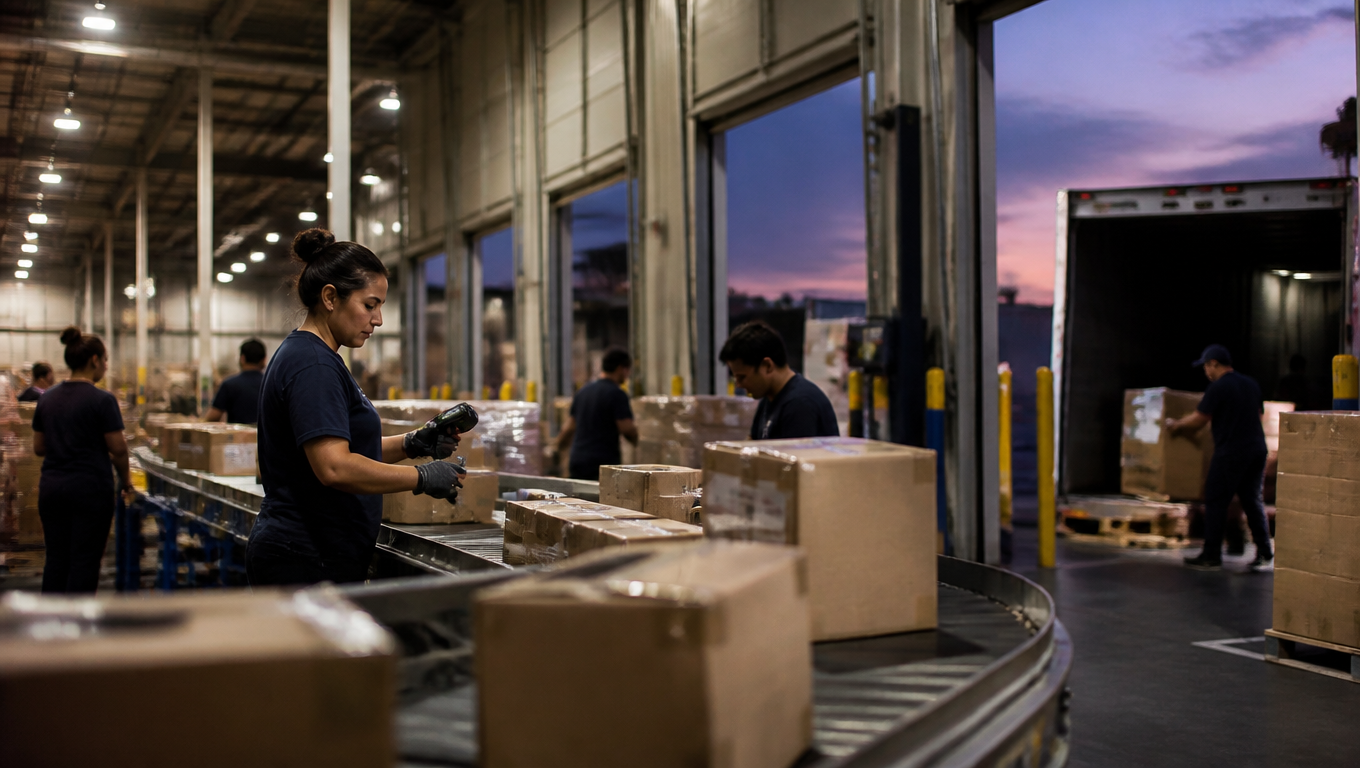
A busy 3PL warehouse floor at dusk, workers scanning and loading parcels onto conveyor belts
仓库里多接一个承运商,不该等于开发团队多接一个项目One more carrier in the warehouse should not mean one more project for the dev team

一、为什么承运商数量现在成了增长问题1. Why Carrier Count Is Now a Growth Problem

3PL 能发哪些承运商,过去只是一个安静的运营细节,今天它是销售对话的核心。零售商规定供应商只能用哪些承运商,电商平台把订单路由到自己的合作承运商,DTC 品牌带着自己的尾程网络上门,期待你直接接入。当潜在客户问"你们能发 X 承运商吗",这个答案决定你赢不赢得下这个客户,而不只是要不要多做一点工程。The carriers a 3PL can ship with used to be a quiet operational detail. Today it is a sales conversation. Retailers mandate which carriers their vendors can use. Marketplaces route orders through preferred partners. Drop-shippers show up with their own last-mile networks and expect you to plug in. When a prospect asks, "Can you ship with carrier X?", the answer decides whether you win the account, not whether you do a little extra engineering.

说"不能"是有代价的。一个接不了客户现有承运商的 3PL,等于要求客户改变自己的业务来迁就 3PL。很少会有客户愿意这么做。这个需求会转向名单上的下一家 3PL,生意也跟着走了。Saying no has a price. A 3PL that cannot support the carrier a shipper already uses is asking that shipper to change its business to fit the 3PL. Few shippers will. The request goes to the next 3PL on the list, and the deal goes with it.

更多的承运商曾经意味着更多的工程。每接一个新承运商都是一个独立项目:自己的 API 文档、沙箱、认证和测试周期。销售团队可以靠服务赢单,但交付管道的速度取决于开发排期。这才是真正的瓶颈:不是找不到想要更多承运商的客户,而是集成建得不够快,没法对客户说"能"。More carriers used to mean more engineering. Every new carrier was its own project: its own API docs, sandbox, certification, and test cycle. The sales team could win on service, but the delivery pipeline moved at the speed of the dev backlog. That is the real bottleneck now. It is no longer finding customers who want more carriers; it is building the integrations fast enough to say yes.

二、自建一个集成的真实成本2. The Real Cost of One In-House Integration

先从前期工作算起。工程师要读承运商的 API 文档、搭沙箱账号、写运价解析、面单生成、跟踪钩子和异常处理,再用真实货物测试。这里面没有一步是轻松的,而且质量门槛很高,因为面单和运价直接进入面向客户的操作。Start with the upfront work. An engineer needs to read the carrier's API documentation, set up a sandbox account, build rate parsing, label generation, tracking hooks, and exception handling, then test against real shipments. Nothing about this is trivial, and the quality bar is high because labels and rates feed directly into customer-facing operations.

然后是认证。很多承运商要求先通过审批流程才能拿到生产权限,而这个流程按承运商的时间表走,不是按你的。[^3][^4] 几周是常态,几个月也常见。Then comes certification. Many carriers require an approval process before production access, and that process runs on the carrier's calendar, not yours.[^3][^4] Weeks is normal; months happens.

最让经营者意外的是长期成本。承运商 API 会变。端点被弃用、认证流程更新、面单格式变化,每一次都意味着监控、回归测试、重新部署,而且是对你接过的每一个承运商,永远如此。[^5] 这是一笔反复发生的工程支出,永远不会出现在最初的立项预算里。The cost that surprises most operators is the ongoing one. Carrier APIs change. Endpoints get deprecated, authentication flows get updated, label formats shift. Every change means monitoring, re-testing, and redeploying, forever, for every carrier you have ever integrated.[^5] That is recurring engineering spend that never appears on the original project budget.

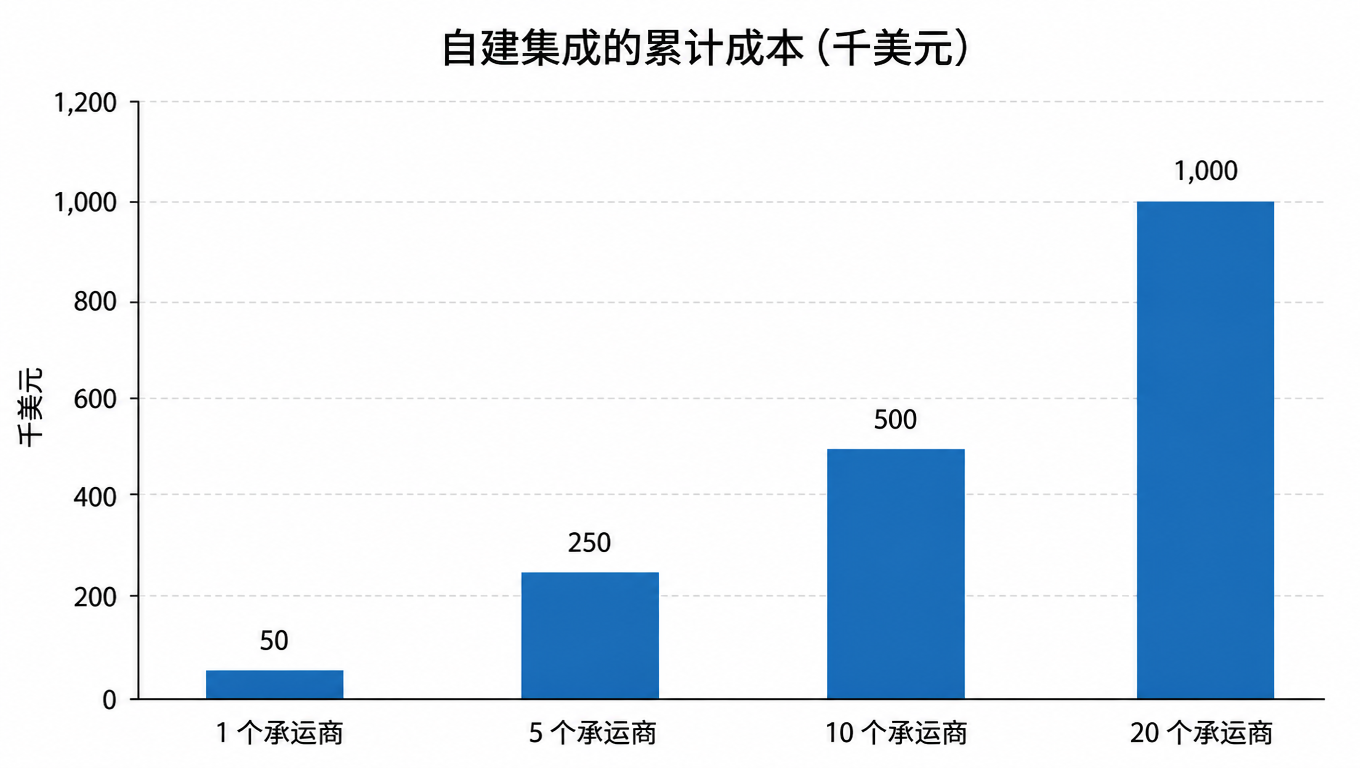
一个承运商集成的现实全周期成本,包括开发、认证和第一年维护,落在 3 万到 8 万美元之间,日历时间要 3 到 6 个月。[^1][^2] 乘上一个有竞争力的 3PL 想提供的 10 到 20 个承运商,这笔账就解释了为什么那么多 3PL 停在个位数。A realistic all-in figure for one carrier integration, including development, certification, and the first year of maintenance, lands between $30,000 and $80,000, with three to six months of calendar time.[^1][^2] Multiply by the ten to twenty carriers a competitive 3PL wants to offer, and the math explains why so many 3PLs stall at a handful.

自建集成的累计成本柱状图:1 个承运商 5 万美元,5 个 25 万,10 个 50 万,20 个 100 万美元(千美元)Bar chart of cumulative in-house integration cost: $50K for 1 carrier, $250K for 5, $500K for 10, $1M for 20 (USD thousands)
承运商越多,自建的成本曲线越陡The more carriers, the steeper the in-house cost curve

三、速度:销售时钟与 onboarding 瓶颈3. Speed: The Sales Clock and Onboarding Bottleneck

承运商需求是在销售周期中出现的,不是之后。潜在客户在谈判第二周提出要某个承运商。如果答案是"我们可以开始开发",这笔交易就进入一个竞争对手可以打破的停滞期。每等一周,就是发货方被某个已经能说"能"的人多追求一周。Carrier requests arrive during the sales cycle, not after it. A prospect asks for a specific carrier in week two of negotiations. If the answer is "we can start development," the deal enters a holding pattern that competitors can break. Every week of waiting is a week the shipper is being courted by someone who can already say yes.

同一个时钟也在 onboarding 上走。当新签约的客户本来就用承运商 X 发货,3PL 要等集成上线才能正式开跑。这个延迟把收入推向未来,在本来应该建立信任的时刻绷紧了客户关系,让新客户看起来像是个错误决定。The same clock runs on onboarding. When a signed shipper already ships with carrier X, the 3PL cannot go live until the integration ships. That delay pushes revenue into the future, strains the relationship at the exact moment it should be building trust, and makes the new account look like a bad decision.

自建是线性扩张的。[^6] 每个新承运商都是一个新项目,排在所有其他项目后面。手上有两个集成的 3PL 是两个项目在排队;有十个集成的 3PL 就是一家恰好还开着仓库的小软件公司。竞争差距很简单:能说"能,下周就行"的 3PL,赢过说"我们开始开发"的 3PL。Self-build scales linearly.[^6] Each new carrier is a new project with its own queue position behind every other project. A 3PL with two integrations in flight is two projects deep; a 3PL with ten is a small software company that happens to run a warehouse. The competitive gap is simple: the 3PL that can say "yes, next week" beats the one that says "we'll start development."

四、风险:每次承运商 API 变更都是一场救火4. Risk: Every Carrier API Change Is a Fire Drill

承运商按自己的节奏改 API。[^8] 端点迁移、认证流程变化、面单格式调整,而且通知往往很仓促。对自建维护集成的 3PL 来说,每次变更都是一次事故:工程师放下手头的一切,复现故障、打补丁、重新部署。Carriers change their APIs on their own schedule.[^8] Endpoints move, authentication flows change, label formats shift, and the notice is often short. For a 3PL that maintains integrations in-house, each change is an incident: an engineer drops everything, reproduces the failure, patches the code, and redeploys.

故障总在最糟的时机出现。一次在一天结束时悄悄失败的运价请求,或旺季里的一张面单报错,都发生在运营毫无余量的时候。这些就是 12 月晚上 9 点没人想接的那种电话。The failures surface at the worst moments. A rate request that silently fails at end of day, or a label error during peak season, hits when there is no slack in the operation. These are the calls nobody wants to take at 9 p.m. in December.

认证和沙箱变更还叠加了一层更安静的风险:集成可能在没有任何可见事件的情况下坏掉,直到客户的包裹停在月台上。累积效应是,自建团队把精力花在扑灭承运商管道的火,而不是改善真正让 3PL 与众不同的服务。Certification and sandbox changes add a quieter risk: integrations can break without a visible event, until a shipper's package sits on the dock. The cumulative effect is that in-house teams spend their cycles firefighting carrier plumbing instead of improving the service that actually differentiates the 3PL.

A logistics manager on the phone at night, staring at a screen showing a failed carrier rate request during peak season
旺季的深夜电话,往往不是客户打来的,是承运商 API 打来的The late-night peak-season call is often not from a client, it is from a carrier API

五、自建 vs 采购,并排对比5. Build vs Buy, Side by Side

诚实的决策方式,是把两个选项放在同一张表上,逐维度对比。下表就是这张表。The honest way to choose is to put both options on the same sheet and compare them dimension by dimension. The table below does exactly that.

维度Dimension 自建Build in-house 多承运商层Multi-carrier layer
第一个承运商的上线时间Time to first carrier3 到 6 个月3 to 6 months几天到一周Days to a week
每多一个承运商的时间Time per additional carrier数月,排在所有项目后面Months, queued behind other projects配置,不是写代码Configuration, not code
每个承运商的前期成本Upfront cost per carrier3 万到 8 万美元$30,000 to $80,000一次集成,成本分摊One integration, shared cost
长期维护Ongoing maintenance你的团队,永远Your team, forever由层负责Handled by the layer
承运商覆盖Carrier coverage你建了多少就有多少Whatever you have built已经接好的网络Already-connected network
控制与定制Control and customization完全控制,完全负担Full control, full burden在关键处控制Control where it matters
所需团队带宽Team bandwidth needed专职集成团队Dedicated integration team几乎不需要Minimal

关键洞察:采购不等于失去控制。它是用维护负担换灵活性。3PL 仍然选择提供哪些承运商,仍然定自己的运价,仍然拥有客户关系。放弃的,是让几十条承运商连接保持存活的反复成本。The key insight: buying does not mean losing control. It means trading the maintenance burden for flexibility. The 3PL still chooses which carriers to offer, still sets its own rates, and still owns the client relationship. What it gives up is the recurring cost of keeping dozens of carrier connections alive.

六、评分卡:6 个问题决定自建还是采购6. The Scorecard: 6 Questions That Decide Build or Buy

评分卡把权衡变成决策。给下面 6 个问题各打 1 到 3 分,加起来,看总分。A scorecard turns the trade-off into a decision. Score each of the six questions from 1 to 3, add the points, and read the total.

  1. 你计划提供多少个承运商?1 到 2 个(1 分),3 到 10 个(2 分),超过 10 个(3 分)。How many carriers do you plan to offer? 1 to 2 (1 point), 3 to 10 (2 points), more than 10 (3 points).
  2. 承运商 API 多久变一次,每个集成要多少维护?低(1 分),中(2 分),高(3 分)。How often do carrier APIs change, and how much maintenance does each integration need? Low (1), moderate (2), high (3).
  3. 你能腾出多少工程带宽做集成?很充裕(1 分),有一些(2 分),一点都没有(3 分)。How much engineering bandwidth can you spare for integrations? Plenty (1), some (2), none to spare (3).
  4. onboarding 需要多快?慢(1 分),中(2 分),快(3 分)。How fast does onboarding need to be? Slow (1), moderate (2), fast (3).
  5. 你需要多深的按承运商定制?很深(1 分),有一些(2 分),很少(3 分)。How much deep per-carrier customization do you need? High (1), some (2), little (3).
  6. 预算对长期维护的承受度如何?没问题(1 分),偏紧(2 分),没有空间(3 分)。How comfortable is the budget with ongoing maintenance? Comfortable (1), tight (2), no room (3).

总分 6 到 9 分:自建你需要的。总分 10 到 14 分:混合,自建那一两个让你与众不同的承运商,其余采购。总分 15 到 18 分:广泛采购;工程应该用来改进你的产品,而不是维护承运商管道。Total of 6 to 9: build what you need. Total of 10 to 14: hybrid, build the one or two carriers that differentiate you and buy the rest. Total of 15 to 18: buy broadly; engineering should improve your product, not maintain carrier plumbing.

大多数 3PL 落在混合区。那些是战略差异化点的承运商,那些客户因为你而选择你的承运商,值得自建。其余都是广度,而广度正是多承运商层存在的意义。Most 3PLs land in the hybrid zone. The carriers that are strategic differentiators, the ones clients choose you for, are worth building. Everything else is breadth, and breadth is exactly what a multi-carrier layer is built to provide.

七、"采购"实际是什么样7. What "Buying" Actually Looks Like

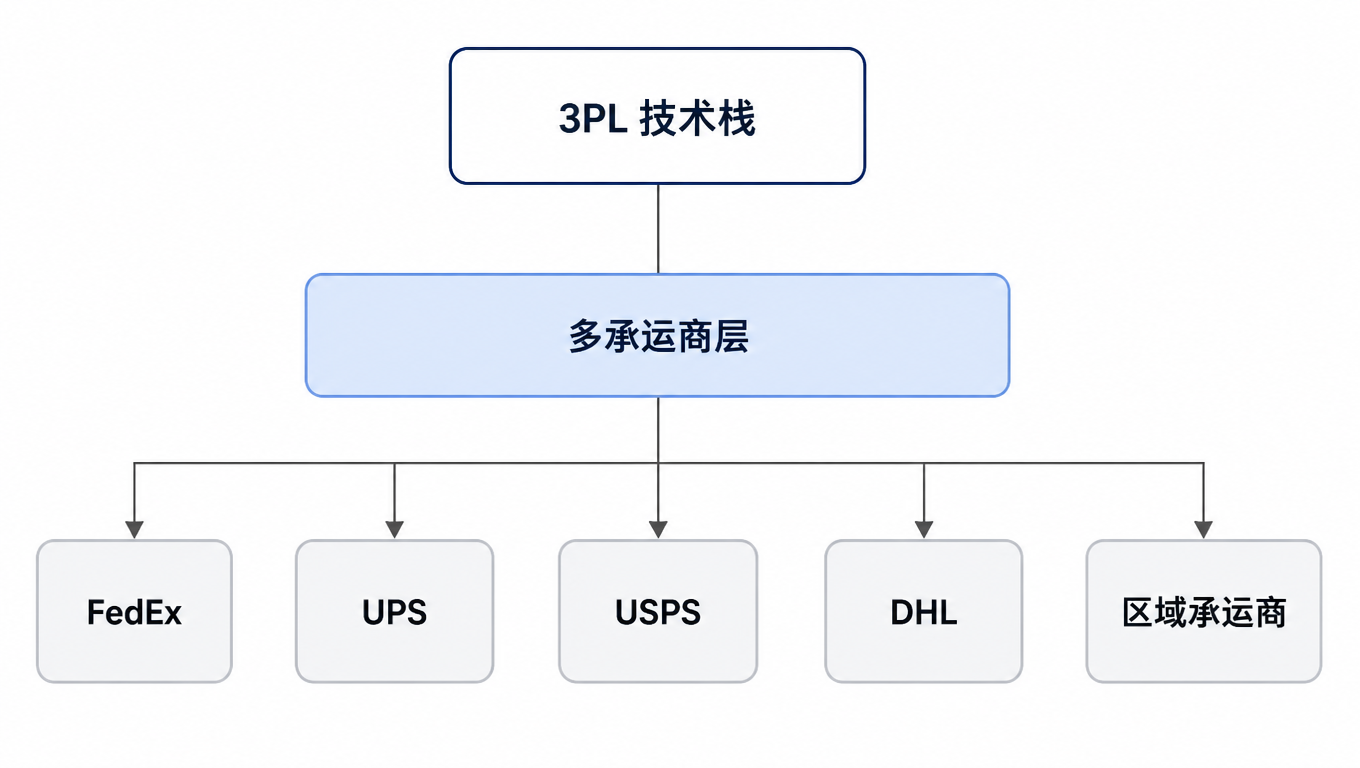
采购多承运商层,意味着你的技术栈只对接一次。从那以后,增加承运商就是配置:选承运商、填你的凭证、开始发货。不用读 API 文档,不用追认证,不用排测试周期。Buying a multi-carrier layer means connecting your tech stack once. From then on, adding a carrier is configuration: you pick the carrier, add your credentials, and start shipping. No API docs to read, no certification to chase, no test cycle to schedule.

重要的承运商已经在那里了。FedEx、UPS、USPS、DHL,以及一长串区域和尾程承运商,都由层接好并维护着,[^7] 意味着每一次 API 变更和认证续期都由它替你吸收。The carriers that matter are already there. FedEx, UPS, USPS, DHL, and a long tail of regional and last-mile carriers are connected and maintained by the layer,[^7] which means they absorb every API change and certification renewal on your behalf.

你的自有账号运价照样直通。层通过你已经有的凭证和谈判价格路由,所以 3PL 的定价优势、利润率和承运商关系都不变。Your own-account rates still pass through. The layer routes through the credentials and negotiated pricing you already have, so the 3PL keeps its pricing edge, its margins, and its carrier relationships intact.

架构流程图:3PL 技术栈连接到多承运商层,多承运商层再连接到 FedEx、UPS、USPS、DHL 和区域承运商Architecture diagram: 3PL tech stack connects to a multi-carrier layer, which connects to FedEx, UPS, USPS, DHL, and regional carriers
技术栈只对接一次,承运商网络由层维护Connect your tech stack once; the layer maintains the carrier network

八、一句话决策8. The Decision, in One Paragraph

成本、速度、风险,对大多数 3PL 来说都指向同一个方向。自建集成每个承运商都贵、交付都慢,还是一笔永久的维护承诺。多承运商层把固定成本变成分摊成本,把几个月变成几天。Cost, speed, and risk all point the same direction for most 3PLs. In-house integration is expensive per carrier, slow to deliver, and a permanent maintenance commitment. A multi-carrier layer converts that fixed cost into a shared one and turns months into days.

决策框架用一句话概括:自建那一两个让你与众不同的承运商,其余全部采购。The framework, in one sentence: build the one or two carriers that differentiate you, and buy the rest.

承运商广度是一件销售武器。每一个你能说"能"的承运商,都是一个你能赢下的客户、一个能更快 onboarding 的账户。让"能"变得容易。Carrier breadth is a sales weapon. Every carrier you can say yes to is a deal you can win and an account you can onboard faster. Make it easy to say yes.

常见问题FAQ

包括开发、认证和第一年维护,一个承运商集成的现实全周期成本在 3 万到 8 万美元之间,日历时间要 3 到 6 个月。之后还有永久维护:承运商 API 每次变更,你都要为每一个已接承运商做监控、回归测试和重新部署。乘上 10 到 20 个承运商,这笔账会迅速膨胀。Including development, certification, and the first year of maintenance, a realistic all-in figure for one carrier integration is $30,000 to $80,000, with three to six months of calendar time. On top of that comes permanent maintenance: every carrier API change means monitoring, regression testing, and redeployment for every carrier you have ever integrated. Multiply by 10 to 20 carriers and the math grows fast.
自建是线性扩张的:每个新承运商都是一个新项目,排在所有其他项目后面,而且每个都要永久维护。对小团队来说,这等于把工程资源从改善服务挪去维护承运商管道。评分卡通常会把小团队推向混合方案:自建那一两个让你与众不同的承运商,其余交给现成的多承运商层。Self-build scales linearly: each new carrier is a new project queued behind every other, and each one needs permanent maintenance. For a small team that means pulling engineering resources away from improving the service and into maintaining carrier plumbing. The scorecard usually pushes small teams to a hybrid: build the one or two carriers that differentiate you, and buy the rest from a ready-made multi-carrier layer.
能。多承运商层通过你已经有的凭证和谈判价格路由,自有账号运价照样直通。3PL 仍然选择提供哪些承运商、仍然定自己的运价、仍然拥有客户关系。采购换来的是不用自己维护几十条承运商连接,而不是放弃定价权。Yes. A multi-carrier layer routes through the credentials and negotiated pricing you already have, so your own-account rates pass straight through. The 3PL still chooses which carriers to offer, still sets its own rates, and still owns the client relationship. What buying buys you is not having to maintain dozens of carrier connections yourself, not giving up pricing power.

想让"能"成为默认答案?Ready to make "yes" the default answer?

EasyShippingX 用现成的多承运商层帮你一次接入、多承运商开跑:自有账号运价直通,FedEx、UPS、USPS、DHL 与区域承运商随时可用,新增承运商只是配置而不是项目。EasyShippingX connects your tech stack once and lets you ship with multiple carriers right away: your own-account rates pass through, FedEx, UPS, USPS, DHL, and regional carriers are ready to go, and adding a carrier is configuration instead of a project.

Get Rate Comparison
Get Rate Comparison