亚马逊 FBM · 3PL 选型Amazon FBM · Choosing a 3PL

为亚马逊 FBM 挑选 3PL:签约前要问的 15 个问题Choosing a 3PL for Amazon FBM: 15 Questions to Ask Before You Sign

如果你还在自家餐桌边发 FBM 订单,这个取舍你早就清楚:每花一小时打包贴单,就少一小时做选品、优化 listing 和那些只有你能做的生意。把发货交给 3PL 表面上看很简单,但签错一家,赔进去的可能不只是钱:账号健康、利润,甚至整个季度的销量都会受影响。If you are shipping FBM orders from your kitchen table, you already know the trade-off: every hour spent packing and labeling is an hour not spent on sourcing, listing optimization, or the parts of the business only you can do. Moving to a 3PL looks simple from the outside, but signing with the wrong one can cost you your account health, your margins, and a quarter of sales.

本文给你一份可以在一场会议里问完的清单:15 个问题分五组,每个问题都带「为什么问」「追问」「危险信号」三层,另附现场参观核对清单,以及一套把候选 3PL 横向对比的加权打分表。问完、看完、打完分,再做决定。This article gives you 15 questions in five groups, organized so you can ask them in a single meeting, plus a site-visit checklist and a weighted scorecard for comparing candidates side by side. Ask them all, walk the floor, score the candidates, then decide.

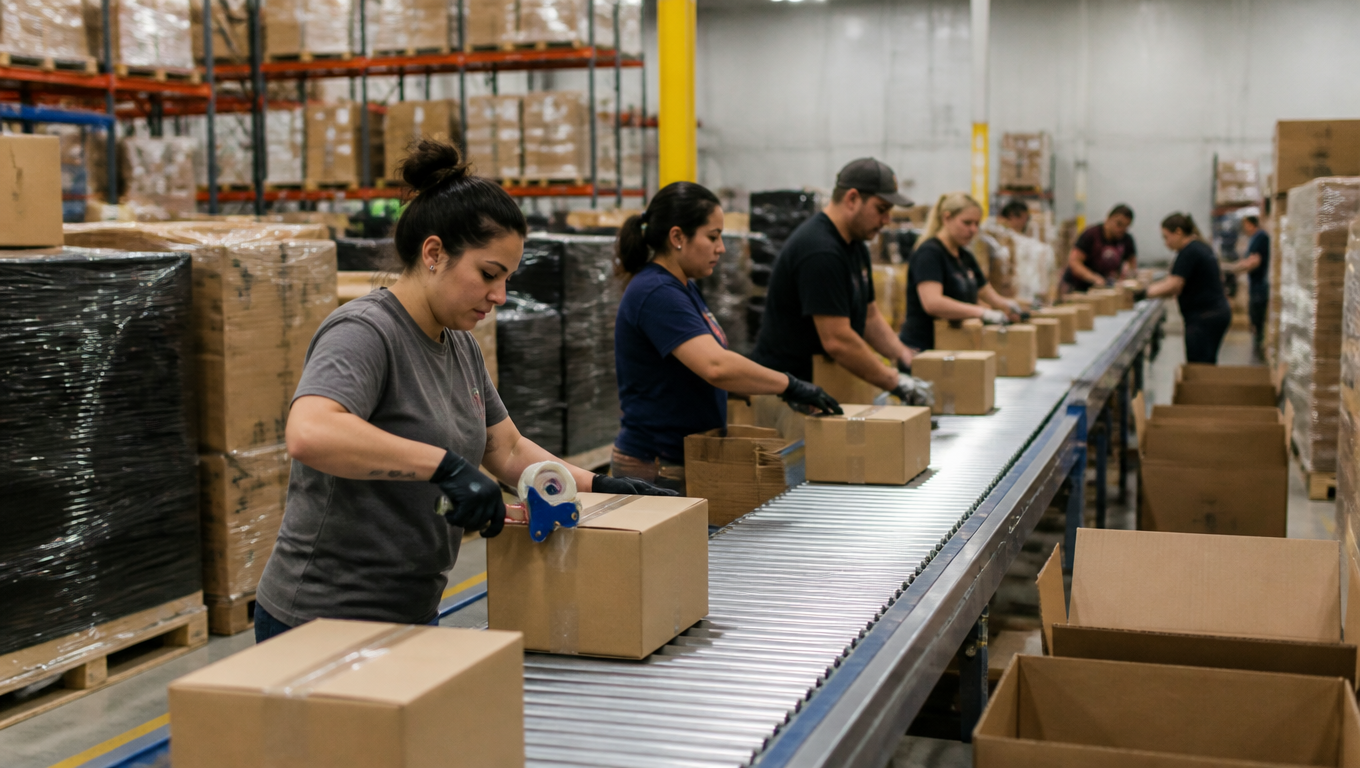
繁忙的亚马逊 FBM 履约中心内,工人在长长的传送带上打包贴单,身后是堆叠的库存托盘
从自家餐桌搬到 3PL 仓库,改变的远不止打包这件事Moving from the kitchen table to a 3PL warehouse changes far more than where the packing happens

四个信号:你该从自发货升级了Four Signals That It's Time to Move Off Self-Fulfillment

第一个信号是时间。如果打包、贴单、跑邮局每天吃掉两到四个小时,每个月还要搭上一个完整的周末,那这些时间正在从能让生意增长的工作里被偷走。做个简单测试:翻翻最近两周,数一数你有几天因为要发货,而跳过了 listing 优化、供应商跟进或创意工作。The first signal is time. If packing, labeling, and drop-offs eat two to four hours a day, plus a full weekend day every month, that time is being stolen from the work that grows the business. A simple test: look at the last two weeks and count how many days you skipped listing work, supplier follow-ups, or creative tasks because orders needed to go out.

第二个信号是旺季。从黑五到新年,一个平常每天 30 单的店铺可以变成 300 单。自发货在这种倍数下扛不住:迟发、错过承诺送达日,迟发率一路拖累账号健康。亚马逊对卖家自发货的公开目标是迟发率低于 4%[^1]。如果上一个 Q4 你被迫暂停了 offer 或挨个向买家道歉,你已经越线了。The second signal is peak season. From Black Friday through New Year, a normal 30-order day can become a 300-order day. Self-ship operations break under that multiple: late shipments, missed promise dates, and a late-shipment rate that drags on your account health. Amazon's public target for seller-fulfilled orders is under 4 percent[^1]. If last Q4 forced you to pause offers or apologize to buyers, you have already crossed the line.

第三个信号是成本。当你连「履约一单到底花多少钱」都没法精确到一美元地说出来时,你没法自信地定价、促销或做规划。用零售承运商费率、零售包装和毫无规划的退货处理来自发货,单均成本通常比一家把谈判价让利给你的 3PL 更高。第四个信号是规模化。上架一个新 SKU 本该让人兴奋,而不是变成把打包时间翻倍、错误率抬高的苦差。如果增长让你感觉像受罚,SKU 一多履约质量就掉,那问题就出在运营本身,它已经成了瓶颈。The third signal is cost. When you cannot state, within a dollar, what it costs to fulfill one order, you cannot price, promote, or plan with any confidence. Self-shipping with retail carrier rates, retail packaging, and unplanned returns usually costs more per order than a 3PL that passes through negotiated volume rates. The fourth signal is scale. Adding a new SKU should be exciting, not a chore that multiplies your packing time and your error rate. If growth feels like punishment and fulfillment quality dips as SKUs multiply, the operation itself has become the bottleneck.

每个信号配一句判断标准:时间,你经常为了打包而跳过高价值工作;旺季,上个 Q4 你错过了承诺送达日或暂停了 offer;成本,你说不出精确到一美元的单均履约成本;规模,新 SKU 让你觉得是负担而不是机会。四个里中任何一个,都值得约一场 3PL 的谈话。One-line tests for each signal: time, you regularly skip high-value work to pack orders; peak, last Q4 you missed promise dates or paused offers; cost, you cannot say your cost per order within a dollar; scale, new SKUs feel like a burden rather than an opportunity. Hit any one of these, and a 3PL conversation is worth having.

3PL 到底帮你解决什么(以及不解决什么)What a 3PL Actually Does for You (and What It Doesn't)

3PL 把履约从你家的桌子搬进仓库。你把整批库存发到它的场地,它负责存储、入库,当订单落到 Seller Central,它拣货、打包、贴单、交给承运商,再把追踪号推回亚马逊。你的工作变成按正确数量补货、复盘表现,而不是打包。A 3PL shifts fulfillment from your table to a warehouse. You send bulk inventory to their facility; they store it, receive it into their system, and when an order lands in Seller Central they pick, pack, label, and hand it to a carrier, then push the tracking number back to Amazon. Your job becomes sending inventory in the right quantities and reviewing performance, instead of packing boxes.

哪些仍然留在你手上,这一点重要且常被误解:账号健康、绩效指标、选品、定价、营销,都是你的。3PL 只执行履约,它不会修复一个弱势的产品、糟糕的 listing 或没有竞争力的价格。面向买家的客服通常也是你的,除非你明确购买客服加购服务。签约前,务必确认每一件事落在分界线的哪一边。What stays with you is important and often misunderstood. Account health, performance metrics, sourcing, selection, pricing, and marketing remain yours. A 3PL executes fulfillment; it does not fix a weak product, a bad listing, or an uncompetitive price. Customer service for buyers is also typically yours unless you explicitly buy a CS add-on. Make sure you know which side of that line each task falls on before you sign.

也有些时候,用 3PL 是错的。如果你稳定地每天发货不足约 20 到 30 单,固定费用可能超过省下的钱。如果你的产品需要手工感包装,或有合规重的需求,比如危险品、食品、保健品,你需要的是专业服务商而不是通用型。如果本地同日达是你真实的竞争优势,一家遥远的仓库会亲手毁掉它。开始比价前,先诚实判断自己属于哪一类。There are also times when a 3PL is the wrong move. If you consistently ship fewer than roughly 20 to 30 orders a day, the fixed fees may outweigh the savings. If your product needs handcrafted packaging or has compliance-heavy requirements such as hazmat, food, or supplements, you need a specialist, not a generalist. And if your local same-day speed is a real competitive advantage, a distant warehouse can destroy it. Be honest about which category you are in before shopping.

第一组:履约能力与运营(Q1-Q4)Group 1: Fulfillment Capability and Operations (Q1-Q4)

这四问确认 3PL 能不能真正做对亚马逊 FBM,而不只是会寄盒子。亚马逊对卖家自发货订单有明确要求[^2],通用电商履约会忽略这些,差异最终会以缺陷的形式记在你的账号上。These four questions establish whether the 3PL can actually do Amazon FBM correctly, not just ship boxes. Amazon has specific requirements for seller-fulfilled orders[^2] that generic ecommerce fulfillment ignores, and the difference shows up as defects on your account.

Q1. 你们有专门的 FBM 流程吗? FBM 要求箱子尺寸重量与你在 Seller Central 申报的一致、准时确认发货,以及每件商品上有可扫描的商品条码(FBA 库存用的 FNSKU 标签则不需要[^3])。把 FBM 当普通电商订单处理的 3PL,会悄悄给你制造缺陷。Q1. Do you have a dedicated FBM workflow? FBM requires correct box dimensions and weight thresholds that match what you declared in Seller Central, on-time shipping confirmation, and a scannable product barcode on every unit, though not the FNSKU labels that FBA inventory uses[^3]. A 3PL that treats FBM like any other ecommerce order will quietly generate defects for you.

追问:可扫描商品条码由谁贴,入库时还是拣货时?他们收到货会校验标签吗?需要重新贴标才能再售的退货怎么处理?危险信号:回答是「我们天天做 Shopify」,却没有任何针对亚马逊的具体说法。Follow up on who applies the scannable product barcode, at receiving or at pick time, whether they validate labels on arrival, and what happens to customer returns that need re-labeling before resale. Red flag: the answer is "we do Shopify all the time" with nothing specific about Amazon.

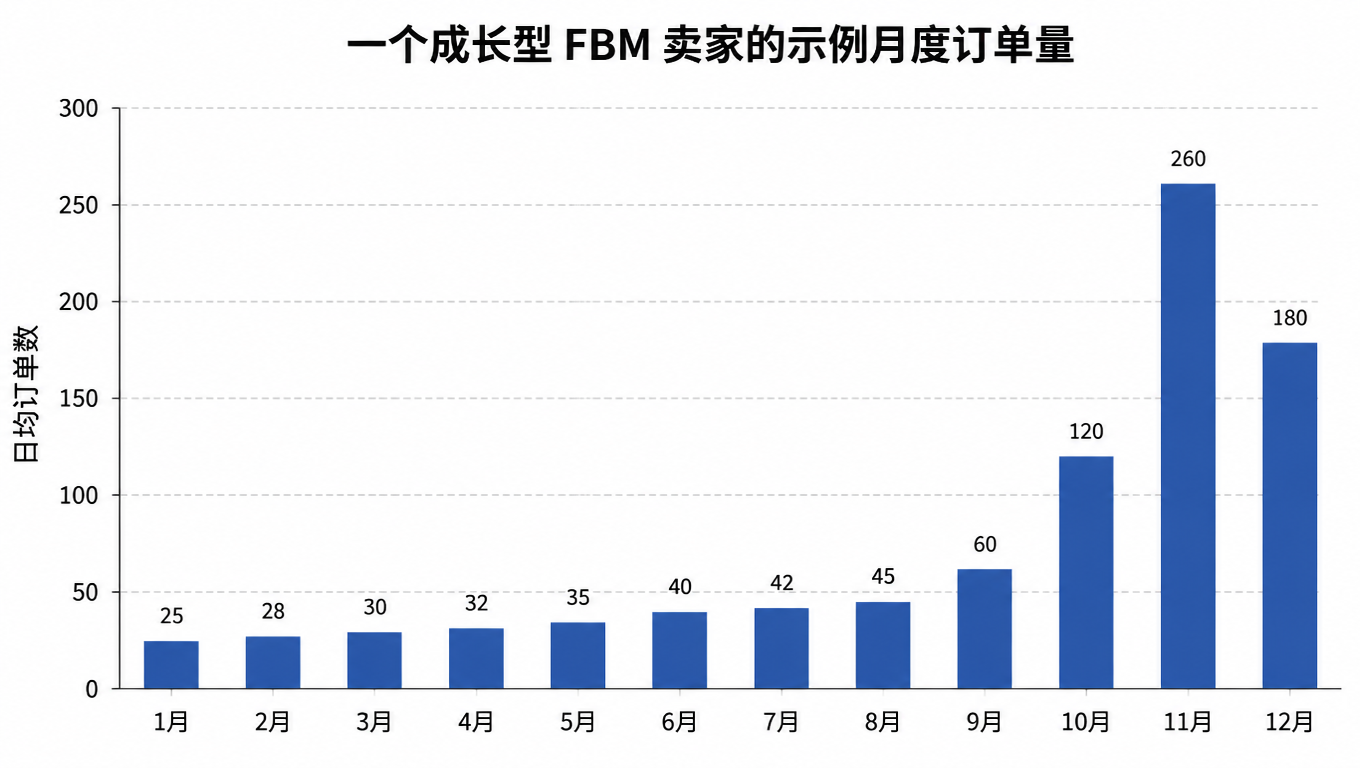
Q2. 你们的日均单量和峰值产能是多少? 用峰值而不是平均值去匹配 3PL 的产能。一家每天 200 单跑得顺的仓库,到 800 单可能就卡壳,而 Q4 恰恰是你最不能卡的时候。一个典型的成长型例子:夏季每天约 25 到 45 单,9 月 60 单,10 月 120 单,11 月 260 单,12 月 180 单。Q2. What are your daily order volume and peak capacity? Match the 3PL's capacity to your peaks, not your average. A facility that runs smoothly at 200 orders a day can choke at 800, and Q4 is exactly when you cannot afford a choke. A typical growth example looks like this: roughly 25 to 45 orders per day through the summer, 60 in September, then 120 in October, 260 in November, and 180 in December.

一个成长型 FBM 卖家的示例月度日均订单量柱状图:夏季 25 到 45 单,9 月 60 单,10 月 120 单,11 月峰值 260 单Example monthly order volume for a growing FBM seller: 25 to 45 per day in summer, 60 in September, 120 in October, 260 peak in November
峰值是 11 月的约 260 单/天,用这个数字去压 3PL 的产能The peak is roughly 260 orders per day in November, use that number to stress-test capacity

追问他们处理过的最大单日货量是多少,以及你达到这个量时他们的计划是什么。危险信号:产能被描述成「我们什么都能接」这种含糊话。Ask what the largest single-day volume they have ever handled is, and what their plan is when you hit it. Red flag: capacity described in vague terms such as "we can handle anything."

Q3. 库存怎么管理? FBM 成也库存、败也库存。问库存是通过集成实时同步,还是活在某人手更新的表格里。再问你能不能实时看到可售数量、他们多久对一次账、断货时会发生什么:他们会在订单开始漏发之前提醒你吗?危险信号:「我们每天更新表格。」Q3. How is inventory managed? FBM lives or dies on accurate inventory. Ask whether inventory syncs in real time through the integration or lives in a spreadsheet someone updates by hand. Then ask whether you can see live sellable units, how often they reconcile counts, and what happens on a stockout: do they warn you before orders start missing? Red flag: "we update our spreadsheet daily."

Q4. 你们的入库验收标准是什么? 入库是错误和损耗高发的地方。要一份书面标准:货怎么拆箱、点数、质检、上架,破损怎么计量和记录。入库货件他们会拍照留档吗?他们认为可接受的破损率是多少,货到即损时谁承担损失?危险信号:没有书面的入库 SOP,或者问到争议如何处理时只是耸耸肩。Q4. What is your receiving standard? Receiving is where errors and shrinkage happen. Ask for the written standard: how units are unboxed, counted, inspected, and placed on shelves, and how damage is measured and recorded. Do they photo-document inbound shipments? What damage rate do they consider acceptable, and who absorbs the loss when units arrive damaged? Red flag: no written receiving SOP, or a shrug when you ask how disputes are resolved.

第二组:技术与集成(Q5-Q7)Group 2: Technology and Integration (Q5-Q7)

集成是「用起来像自动化」和「用起来像额外记账」的 3PL 之间的分界线。这三问把两者分开。The integration is the difference between a 3PL that feels automatic and one that feels like extra bookkeeping. These three questions separate the two.

Q5. 你们怎么和 Seller Central 集成?API 还是 CSV? 正规的 API 集成自动拉单、把追踪号推回亚马逊、近实时同步库存。CSV 上传意味着人工步骤、人为错误和延迟。问哪些订单字段会同步、追踪号是否自动上传、亚马逊 API 故障时会发生什么。危险信号:「我们发你一个表格,你自己上传。」Q5. How do you integrate with Seller Central? API or CSV? A proper API integration pulls orders automatically, pushes tracking numbers back to Amazon, and syncs inventory in near real time. CSV uploads mean manual steps, human error, and delay. Ask which order fields sync, whether tracking numbers upload automatically, and what happens during an Amazon API outage. Red flag: "we email you a spreadsheet to upload."

Q6. 订单路由和库存同步多快?截单时间是什么时候? 你的承诺送达日和迟发率,取决于订单从 Seller Central 进入 3PL 系统、再交到承运商手里的速度。问当日发货的截单时间(比如美东下午 4 点)、截单后到达的订单怎么处理、发货 SLA 是几小时。危险信号:截单时间和你 listing 上设置的备货时间对不上。Q6. How fast do orders route and inventory sync? What are the cut-off times? Your promise dates and late-shipment rate depend on how quickly an order moves from Seller Central into the 3PL's system and onto a carrier. Ask for the cut-off time for same-day dispatch, for example 4 pm ET, what happens when an order arrives after cut-off, and the dispatch SLA in hours. Red flag: cut-off times that do not match the handling time you set on your listings.

Q7. 我能拿到哪些数据和报表? 经营生意需要订单、库存和成本的可视性。问哪些报表是自动的、哪些要申请、原始数据能不能导出、有没有每单成本明细(运费加履约费)。危险信号:「你要的话我们可以发你一份报表」,却没有任何自动产出。Q7. What data and reports do I get? You need order, inventory, and cost visibility to run the business. Ask which reports are automatic, which require a request, whether you can export the raw data, and whether you get per-order cost detail such as shipping plus fulfillment fees. Red flag: "we can send you a report if you ask," with nothing standing on its own.

第三组:定价与合同(Q8-Q10)Group 3: Pricing and Contracts (Q8-Q10)

定价谈话是 3PL 赢得信任或失去信任的地方。规则很简单:一切落到书面,包括例外。Pricing conversations are where 3PLs earn trust or lose it. The rule is simple: everything in writing, including the exceptions.

Q8. 完整价目表长什么样? 3PL 定价有三层:每单拣货打包费、每件运费(或承运商成本转嫁)、按立方英尺或托盘计的仓储费。要一份完整书面价目表,并问:运费是按成本转嫁还是加价、有没有每月最低消费、有没有一次性设置费、有没有货量阶梯价。危险信号:「价格我们好商量。」Q8. What does the full rate card look like? 3PL pricing has three layers: a per-order pick-and-pack fee, a per-unit shipping cost (or carrier pass-through), and storage charged per cubic foot or per pallet. Ask for the complete rate card in writing, including whether shipping rates are passed through at cost or marked up, whether there is a minimum monthly fee, whether there are setup fees, and whether volume tiers exist. Red flag: pricing quoted as "we'll work something out."

Q9. 有哪些隐藏费用? 价目表覆盖顺境,费用藏在例外里。明确问:长期存储、退货处理、超规格件、重新贴标、组装(kitting)、销毁、改地址。处理一件退货要多少钱?库存存放超过六个月会怎样?有超规格附加费吗?危险信号:每当你提到一种例外,对方就说「别担心,我们到时候想办法」。Q9. What hidden fees exist? The rate card covers the happy path; the fees live in the exceptions. Ask explicitly about long-term storage, returns handling, oversized items, re-labeling, kitting, disposal, and address changes. What does a returned item cost to process? What happens to inventory stored past six months? Are there oversized surcharges? Red flag: "don't worry, we'll figure it out" whenever you mention an exception.

Q10. 合同锁多久?退出要付什么? 你不希望运营让人失望时自己还被锁死。问合同是按月还是 12 个月、有没有提前终止费、退出交接要多久、库存退回或销毁怎么收费。危险信号:没有书面退出条款,或者退出费只在被问到时才浮出水面。Q10. How long is the contract locked in? What does exit cost? You do not want to be locked in when the operation disappoints. Ask whether the contract is month to month or 12 months, whether an early-termination fee exists, how long offboarding takes, and what inventory return or disposal fees look like. Red flag: no written exit terms, or exit fees that only surface when you ask.

第四组:绩效与 SLA(Q11-Q13)Group 4: Performance and SLAs (Q11-Q13)

你的 FBM 健康指标来自 3PL 履约的快与准。要数字,并且要书面数字。Your FBM health metrics come from how fast and how accurately the 3PL fulfills. Ask for numbers, and ask for them in writing.

Q11. 你们承诺什么 SLA? 要数字化的发货 SLA,比如 95% 的订单 24 小时内发出,以及拣货准确率目标,比如 99.5%,这处于 99.5% 到 99.9% 行业基准[^4]的低端。再问这些数字怎么测量、怎么汇报、你多久能看到一次。危险信号:「我们尽力」而不是一个数字。Q11. What SLAs do you commit to? Ask for the dispatch SLA in numbers, for example 95 percent of orders shipped within 24 hours, and a pick accuracy target such as 99.5 percent, which sits at the low end of the 99.5 to 99.9 percent industry benchmark[^4]. Then ask how those numbers are measured and reported, and how often you will see them. Red flag: "we do our best" instead of a number.

Q12. 晚发、丢失、破损怎么赔偿? 3PL 犯错时,亚马逊的缺陷记在你头上,所以赔偿政策很重要。问丢失或破损件的赔付结构、谁向承运商索赔、退款要多久到账。危险信号:「承运商索赔要 30 到 60 天,我们也没办法。」Q12. How are late, lost, and damaged shipments compensated? When the 3PL makes an error, you still absorb the Amazon defect, so the compensation policy matters. Ask about the credit structure for lost or damaged units, who files claims with carriers, and how long reimbursement takes. Red flag: "carrier claims take 30 to 60 days, nothing we can do."

Q13. 旺季你们怎么扩产能?写进合同了吗? Q4 是 3PL 证明自己的地方。要书面的旺季承诺:增派人手、延长班次、保证仓储位、沟通节奏。再问他们现有客户上个 Q4 过得怎么样,并要求和其中一位通话。危险信号:「需要的时候我们会加人」,却没有任何书面承诺。Q13. How do you scale for peak season? Is it in writing? Q4 is where 3PLs prove themselves. Ask for written peak commitments: additional staff, extended shifts, guaranteed storage allocation, and a communication cadence. Then ask what happened last Q4 for their existing clients, and ask to speak to one. Red flag: "we'll add people as needed," with nothing in writing.

第五组:支持、客户推荐与退出(Q14-Q15)Group 5: Support, References and Exit (Q14-Q15)

最后两问关心签约之后的事,而大多数 3PL 关系正是在这里悄悄变坏的。The last two questions are about what happens after you sign, which is where most 3PL relationships quietly sour.

Q14. 客服和客户经理响应多快? 库存或货件出问题时,响应时间就是钱。问客服时段、是工单系统还是直连、有没有指定的客户经理、紧急问题的承诺响应时间(比如一个工作小时内)。危险信号:只能邮件联系,没有指定联系人。Q14. How fast do support and your account manager respond? When inventory or a shipment goes wrong, response time is money. Ask for support hours, whether it is a ticket system or a direct line, whether you get a named account manager, and the committed response time for urgent issues, for example within one business hour. Red flag: support reachable only by email, with no named contact.

Q15. 我能看现有客户推荐吗?退出怎么走? 客户推荐能揭示销售材料藏起来的东西。要求和两三位与你品类、货量相近的现有客户通话,问他们旺季、错误率、沟通和退出体验。然后把退出流程拿到书面:通知期、库存退回、数据导出。危险信号:每个推荐人都「太忙」,或者销售坚持要给每通电话做中间人。Q15. Can I see current client references? How does offboarding work? References reveal what the sales deck does not. Ask to talk to two or three current clients in your category and volume range, and ask them about peak season, error rates, communication, and exit. Then get the offboarding process in writing: notice period, inventory return, and data export. Red flag: every reference is "too busy," or the salesperson insists on brokering every call.

现场参观:光问不够,还要去看Site Visit: Asking Is Not Enough, Go Look

一家认真的 3PL 应该欢迎你参观,而你也应该在签约前去一次。看入库区:入库货件在逐箱清点质检,还是堆进角落?走一遍拣货路径和打包工位:标签打印机在工作吗?亚马逊贴标库存和其他客户的货有物理隔离吗?现场整洁到丢一件货能找出来吗?再看退货怎么暂存、多快重新回到可售库存。Any serious 3PL should welcome a walkthrough, and you should take one before signing. Watch the receiving area: are inbound shipments being counted and inspected, or stacked into a corner? Walk the pick paths and packing stations: are label printers working, is Amazon-labeled stock segregated from other clients' inventory, and is the housekeeping good enough that a misplaced unit would be found? Check how returns are staged and how quickly they re-enter sellable stock.

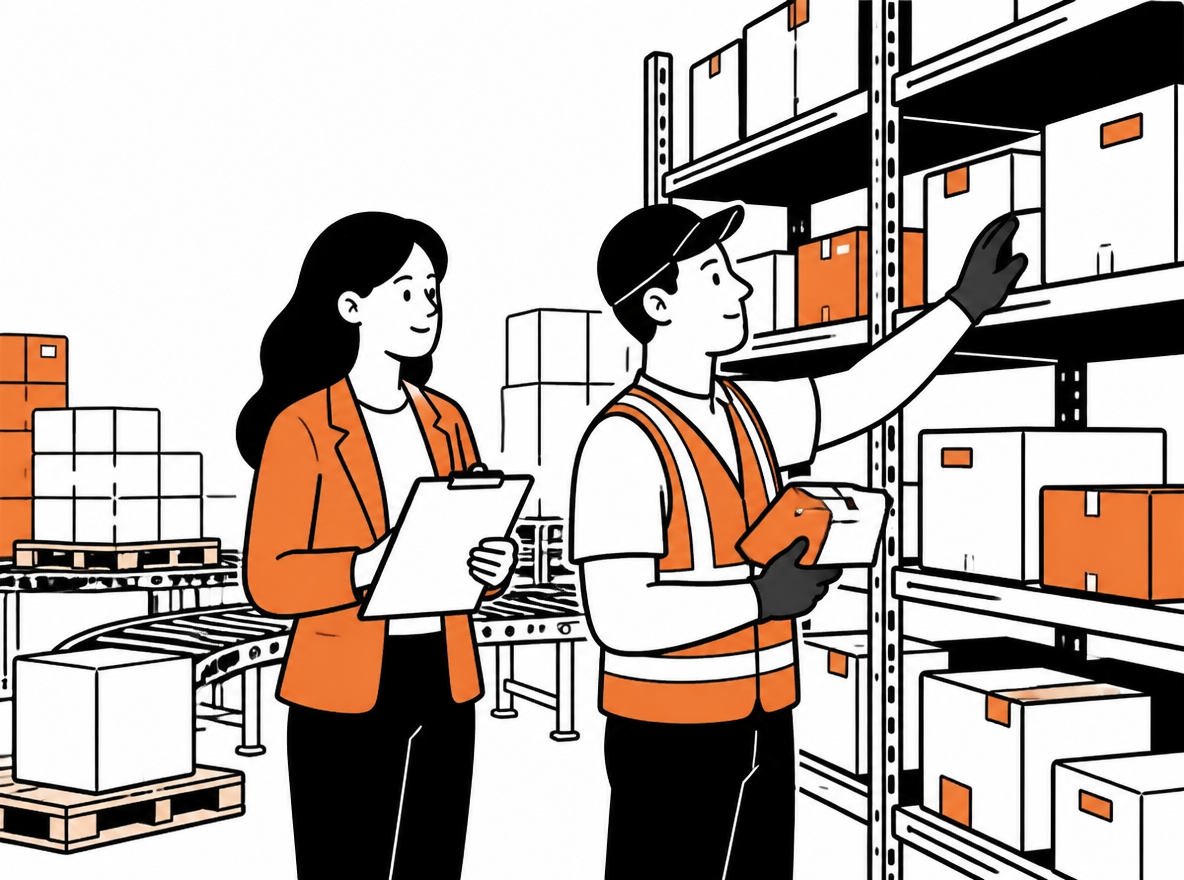
卖家在仓库参观中拿着写字板,看着工人从高大的货架拣货,背景是托盘和传送带
在合同上签字之前,先用自己的眼睛验证每一条回答Before you put pen to paper, verify every answer with your own eyes

用这次参观逐组验证问题。完整看一遍 FBM 订单从拣到发的全过程,要求现场看集成界面,检查将要存放你慢动销库存的仓位是否真实可用。只有到现场才暴露的红旗:半空的仓库、销售区比操作区人还多、看不到任何标准作业流程、破损货品长期无人对账,或者对方根本不愿意让你上操作区。Use the visit to verify each question group on site. Watch an FBM order picked and packed end to end, ask to see the integration screen live, and check whether the storage areas that will hold your slow movers are actually available. Red flags that only show up in person: a half-empty warehouse, a sales floor staffed better than the operations floor, no visible standard operating procedures, damaged goods sitting unreconciled, or any reluctance to let you see the floor at all.

对比打分表:把 15 个问题变成 1-5 分Comparison Scorecard: Turn the 15 Questions into a 1-5 Score

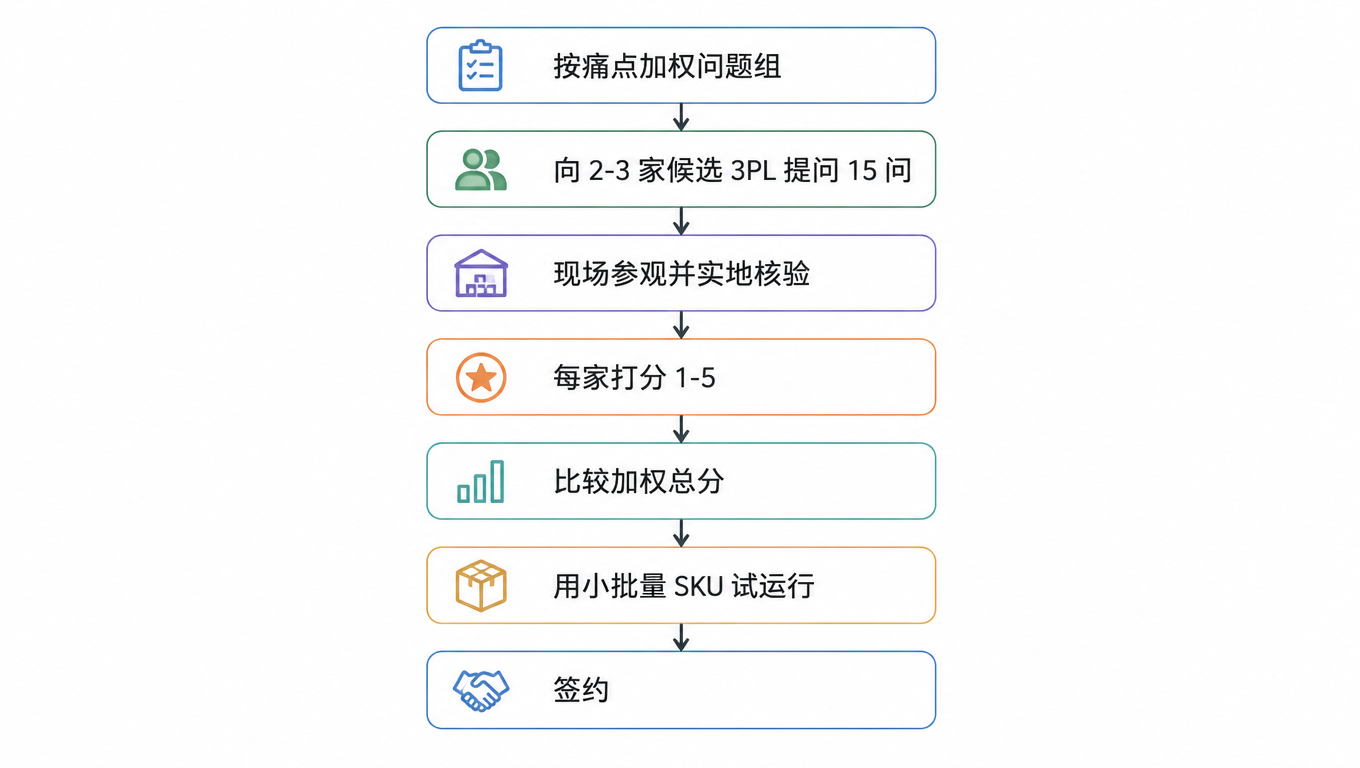
用同一套标准给每位候选者打分,让决策变成一个数字而不是一种感觉。先把文章开头四个信号对应的痛点按「最痛」排序:时间、旺季、成本、规模。再据此给五组问题加权:如果去年旺季差点要了你的命,第四组权重就高;如果你的危机是成本,第三组权重就高。每组给 3PL 打 1 到 5 分,乘上权重,加总。Score every candidate on the same scale so the decision is a number, not a feeling. First, rank your own pain points from the four signals at the top of this article, time, peak, cost, and scale, in order of what hurts most. Then weight the five question groups to match: if peak season nearly killed you last year, Group 4 carries more weight; if cost is your crisis, Group 3 does. Score each 3PL from 1 to 5 on every group, multiply by the weight, and add it up.

3PL 选型流程图:按痛点加权问题组,向 2-3 家候选提问 15 问,现场参观实地核验,每家打 1-5 分,比较加权总分,用小批量 SKU 试运行,最后签约3PL selection flow: weight groups by pain points, ask the 15 questions at 2-3 candidates, site visit and verify, score each candidate 1-5, compare weighted totals, run a pilot with a small SKU batch, sign
从加权到试运行再到签约的完整决策路径The full decision path from weighting to pilot to signature

读分很简单:任何一家在你高权重组里平均分低于 3.5,就是一票否决,销售话术再漂亮也没用。一家可能在 SLA 数字上胜出,却在支持上输掉,加权总分说了算。别让一个惊艳的回答撑起一个虚弱的整体分。Reading the score is straightforward: any candidate averaging under 3.5 in a group you weight high is a deal-breaker, no matter how strong the sales pitch. A candidate can win on SLA numbers and still lose on support; the weighted total is what decides. Do not let a single impressive answer carry a weak overall score.

签字前,跑最后三项检查。第一,把完整价目表、合同和退出条款拿到书面,并对照上面的危险信号通读一遍。第二,试运行:先发一小批慢动销 SKU,跟踪拣货准确率、发货速度和沟通质量两到四周,再决定是否投入主力库存。第三,独立核实客户推荐,不让销售在场,把你实际体验到的数据重新对照 SLA 数字。一家通过了 15 问、扛得住现场参观、在你加权打分表上拿高分的 3PL,才是值得签约的伙伴。Before you sign, run three final checks. First, get the full rate card, the contract, and the exit terms in writing, and read them for the red flags above. Second, run a pilot: send a small batch of slow-moving SKUs and track pick accuracy, dispatch speed, and communication for two to four weeks before committing your main inventory. Third, verify the references independently, without the salesperson on the call, and re-read the SLA numbers against what you actually experienced. A 3PL that passes the 15 questions, survives the site visit, and scores well on your weighted scorecard is a partner worth signing with.

常见问题FAQ

粗略分水岭是每天约 20 到 30 单:低于它,固定费用可能超过省下的钱。但量不是唯一因素。如果打包已经挤占了选品和运营时间、旺季扛不住、或者单均成本算不清,哪怕没到这个量,也值得谈一轮。反过来,如果本地同日达是你真实的竞争优势,量再大也要先算清楚距离代价。The rough threshold is about 20 to 30 orders per day: below it, fixed fees can exceed the savings. But volume is not the only factor. If packing already crowds out sourcing and operations, peak season breaks you, or you cannot state your per-order cost, a conversation is worth having even below that volume. Conversely, if local same-day delivery is your real edge, price the distance cost first no matter your volume.
不会。账号健康、绩效指标、选品、定价、营销都是你的,3PL 只执行履约。它每犯一个错,亚马逊的缺陷记在你头上,所以签约前必须把 SLA、赔付和旺季承诺拿到书面。面向买家的客服通常也是你的,除非你明确购买客服加购服务。No. Account health, performance metrics, sourcing, pricing, and marketing remain yours; the 3PL only executes fulfillment. Every error they make shows up as a defect on your account, which is why SLA, compensation, and peak commitments must be in writing before you sign. Buyer-facing customer service is also typically yours unless you explicitly buy a CS add-on.
按你的痛点加权来决定。但对所有 FBM 卖家,Q5 集成方式(API 还是 CSV)和 Q11 SLA 数字是硬底线:集成决定追踪号能不能自动回传、库存准不准,SLA 决定迟发率和账号健康。回答是「发你一个表格自己上传」或「我们尽力」的候选者,可以直接划掉。其余问题用于在你留下的两三家之间分出高下。It depends on how you weight your pain points. But for every FBM seller, Q5 on integration (API or CSV) and Q11 on SLA numbers are hard floors: the integration decides whether tracking auto-uploads and inventory stays accurate, and the SLA decides your late-shipment rate and account health. A candidate answering "we email you a spreadsheet" or "we do our best" can be crossed off immediately. The rest of the questions separate the two or three that remain.
常见的是按月或 12 个月两种。问清楚提前终止费、退出交接要多久、库存退回或销毁怎么收费。退出体验最能暴露一家 3PL 的真实底色:销售时大方承诺、退出时百般设卡,是最典型的红旗。要求把退出流程写成书面条款,而不是口头「放心」。Month to month and 12 months are the common structures. Ask about the early-termination fee, how long offboarding takes, and what inventory return or disposal costs. Exit is where a 3PL's true colors show: generous promises in sales, roadblocks at departure, is the classic red flag. Insist on exit terms in writing rather than verbal reassurance.
第一,把完整价目表、合同和退出条款拿到书面并通读。第二,试运行:先发一小批慢动销 SKU,用两到四周跟踪拣货准确率、发货速度和沟通质量。第三,独立核实客户推荐,不让销售在场。一家通过了 15 问、扛得住现场参观、在加权打分表上拿高分的 3PL,才值得签约。First, get the full rate card, the contract, and the exit terms in writing and read them. Second, run a pilot: send a small batch of slow-moving SKUs and track pick accuracy, dispatch speed, and communication for two to four weeks. Third, verify references independently, without the salesperson on the call. Only a 3PL that passes the 15 questions, survives the site visit, and scores well on your weighted scorecard is worth signing with.
Get Rate Comparison
Get Rate Comparison