四层状态模型The four-layer status model
把状态想象成四层堆叠,每一层由不同的系统拥有。弄清楚每一层归谁拥有、由什么事件更新,是理解后面一切内容的地基。Think of status as four stacked layers, each owned by a different system. Knowing who owns each layer, and what updates it, is the foundation for everything else in this article.
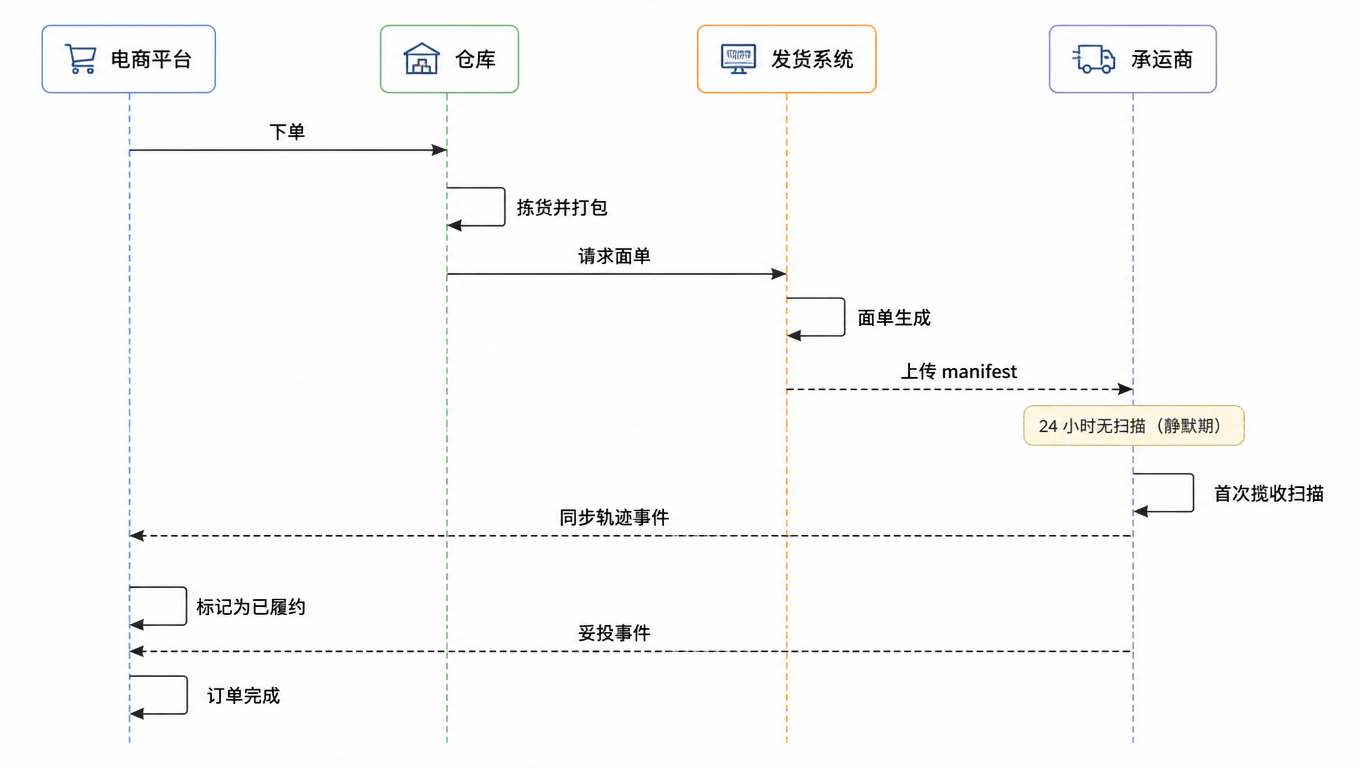
第 1 层,订单状态(commerce order status),归平台或 OMS 所有:Shopify、Amazon、eBay、Etsy、ERP,或无头电商后端。典型状态是 unfulfilled、partially fulfilled、fulfilled、refunded。[^4] 当下层同步回履约和追踪事件时,它才更新。客户在订单历史里看到的就是这一层,市场平台做绩效评分用的也是这一层。Layer 1, commerce order status, is owned by the platform or OMS: Shopify, Amazon, eBay, Etsy, an ERP, or a headless commerce backend. Its states are things like unfulfilled, partially fulfilled, fulfilled, and refunded.[^4] It updates when fulfillment and tracking events sync back from the layers below. This is the layer customers see in their order history, and the layer marketplaces use for performance scoring.
第 2 层,仓库履约状态(warehouse/fulfillment status),归 WMS 或 3PL 所有。典型状态是 received、allocated、picked、packed、shipped。它在仓库扫描和人工操作时更新,驱动拣货单、打包台和 3PL 自己的报表。客户很少看到这一层,所以它的不准之处一直隐身,直到出事才暴露。Layer 2, warehouse/fulfillment status, is owned by the WMS or the 3PL. Its states are things like received, allocated, picked, packed, and shipped. It updates on warehouse scans and user actions, and it drives pick lists, packing stations, and the 3PL's own reporting. Customers rarely see it, which is why its inaccuracies stay invisible until something goes wrong.
第 3 层,发货交易状态(shipping transaction status),归发货集成所有:面单 API、多承运商平台,或承运商自己的发货门户。典型状态是 label created、manifested、in carrier possession。它在面单购买、manifest 上传或取件确认时更新。「已发货」这个词在这一层用得最随意,因为面单可以比包裹真正移动早很久就存在。Layer 3, shipping transaction status, is owned by the shipping integration: the label API, the multi-carrier platform, or the carrier's own shipping portal. Its states are things like label created, manifested, and in carrier possession. It updates when a label is purchased, a manifest is transmitted, or a pickup is confirmed. This is where the word "shipped" is used most loosely, because a label can exist long before a package moves.
第 4 层,承运商追踪状态(carrier tracking status),归承运商的追踪系统所有。典型状态是 acceptance scan、in transit、out for delivery、delivered。它在收件点、分拣中心和门前的扫描时更新。[^6] 这是唯一能证明包裹物理移动过的层,因此它是「移动」这个事实的基准。Layer 4, carrier tracking status, is owned by the carrier's tracking system. Its states are things like acceptance scan, in transit, out for delivery, and delivered. It updates on scans at drop-off points, sort facilities, and doorsteps.[^6] This is the only layer that proves a package physically changed location, which makes it the ground truth for movement.
| 层级Layer |
谁更新Who updates it |
何时变化When it changes |
典型状态Example states |
客户可见?Customer-visible? |
| 1 订单状态1 Commerce order status | 平台 / OMSPlatform / OMS | 订单与履约事件On order and fulfillment events | unfulfilled、fulfilled、refundedunfulfilled, fulfilled, refunded | 是(订单历史)Yes (order history) |
| 2 仓库履约状态2 Warehouse/fulfillment status | WMS / 3PLWMS / 3PL | 仓库扫描与操作On warehouse scans and actions | picked、packed、shippedpicked, packed, shipped | 否No |
| 3 发货交易状态3 Shipping transaction status | 发货集成Shipping integration | 面单、manifest、取件事件On label, manifest, pickup events | label created、manifested、in carrier possessionlabel created, manifested, in carrier possession | 有时(通过门户)Sometimes (via portal) |
| 4 承运商追踪状态4 Carrier tracking status | 承运商系统Carrier systems | 物理扫描On physical scans | accepted、in transit、deliveredaccepted, in transit, delivered | 是(追踪页)Yes (tracking page) |
核心洞察是:事件才是真相,状态只是投影。状态字段不过是「最近已知事件」渲染成的一个简短标签。系统之所以对不上,是因为每个系统投影了不同的事件切片,或者在同一事件上接收的时间不同。这篇文章里的每一条对账策略,都从这一句话推出来。The core insight is that an event is the truth and a status is just a projection. A status field is nothing more than the latest known event rendered as a short label. Systems disagree because each one has projected a different slice of events, or received the same events at a different time. Every reconciliation strategy in this article follows from that one sentence.