为什么单一承运商依赖是你承担不起的风险Why Single-Carrier Dependency Is a Risk You Can't Afford
只由一家承运商服务的线路,就是一条存在单点故障的线路。当这家承运商在旺季遭遇运力挤兑、重组网络或出现服务故障时,这条线路上 100% 的货量会同时受影响。你没有备用选项,你只有一通电话和一份排队名单。A lane served by one carrier is a lane with a single point of failure. When that carrier hits a capacity crunch in peak season, re-routes its network, or suffers a service breakdown, 100% of your volume on that lane is affected at once. You do not have a backup option; you have a phone call and a waitlist.
集中度会放大风险。当一家承运商扛着一条线路的大部分货量时,它的麻烦就是你的麻烦,它的涨价就是你利润的流失。这些故障模式一点都不罕见:区域性天气事件、枢纽停运、司机短缺、每年一次的旺季挤压,受伤最重的都是货量高度集中的线路。Concentration amplifies this. When one carrier carries the majority of a lane's volume, its problems become your problems, and its rate increases become your margin erosion. The failure modes are not exotic: regional weather events, hub closures, driver shortages, and the annual peak-season squeeze all hit concentrated lanes hardest.
第一条经验法则:任何单一承运商在一条线路上的货量占比,不要超过约 60%-70%。超过这个份额,从风险角度看你就等于单一承运商,无论发票上写着几家。The first rule of thumb: cap any single carrier at no more than roughly 60-70% of a lane's volume. Beyond that share, you are effectively single-carrier in risk terms, whatever your invoice count says.
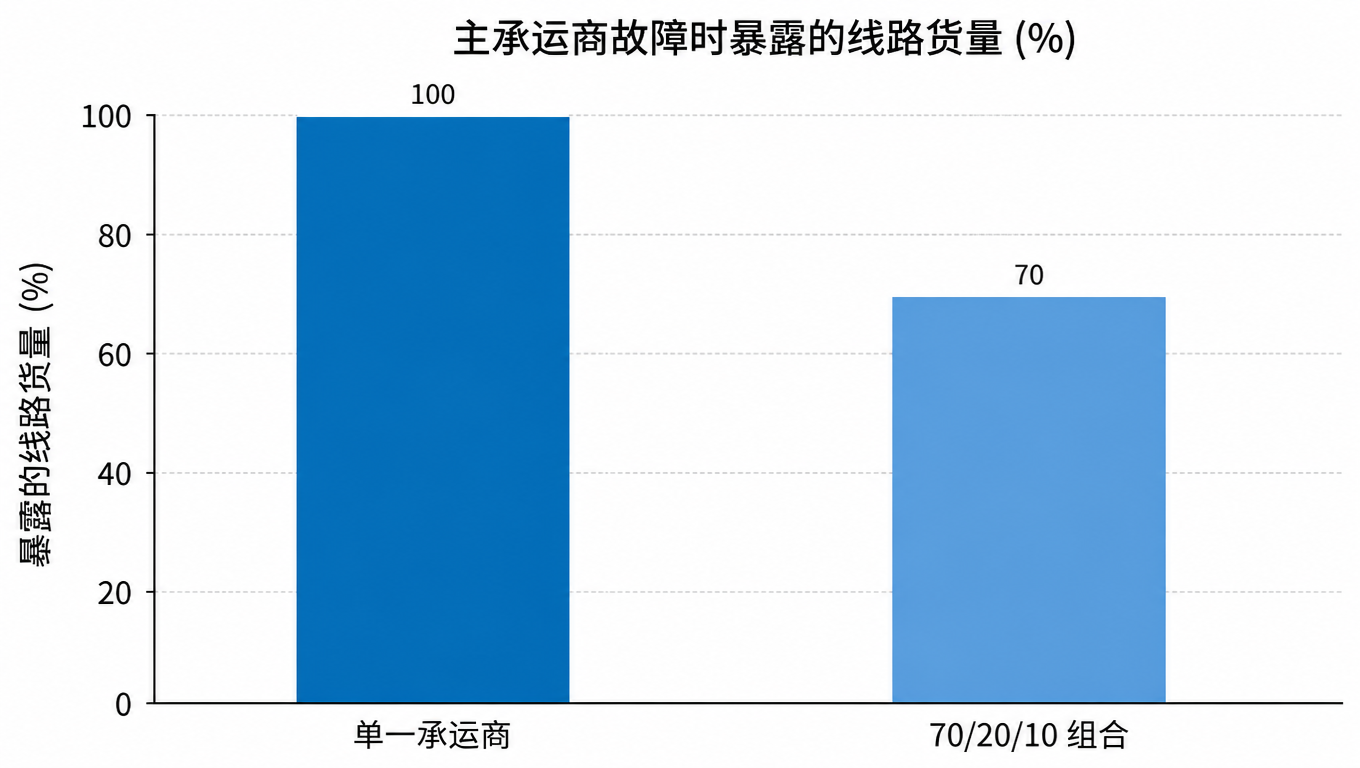
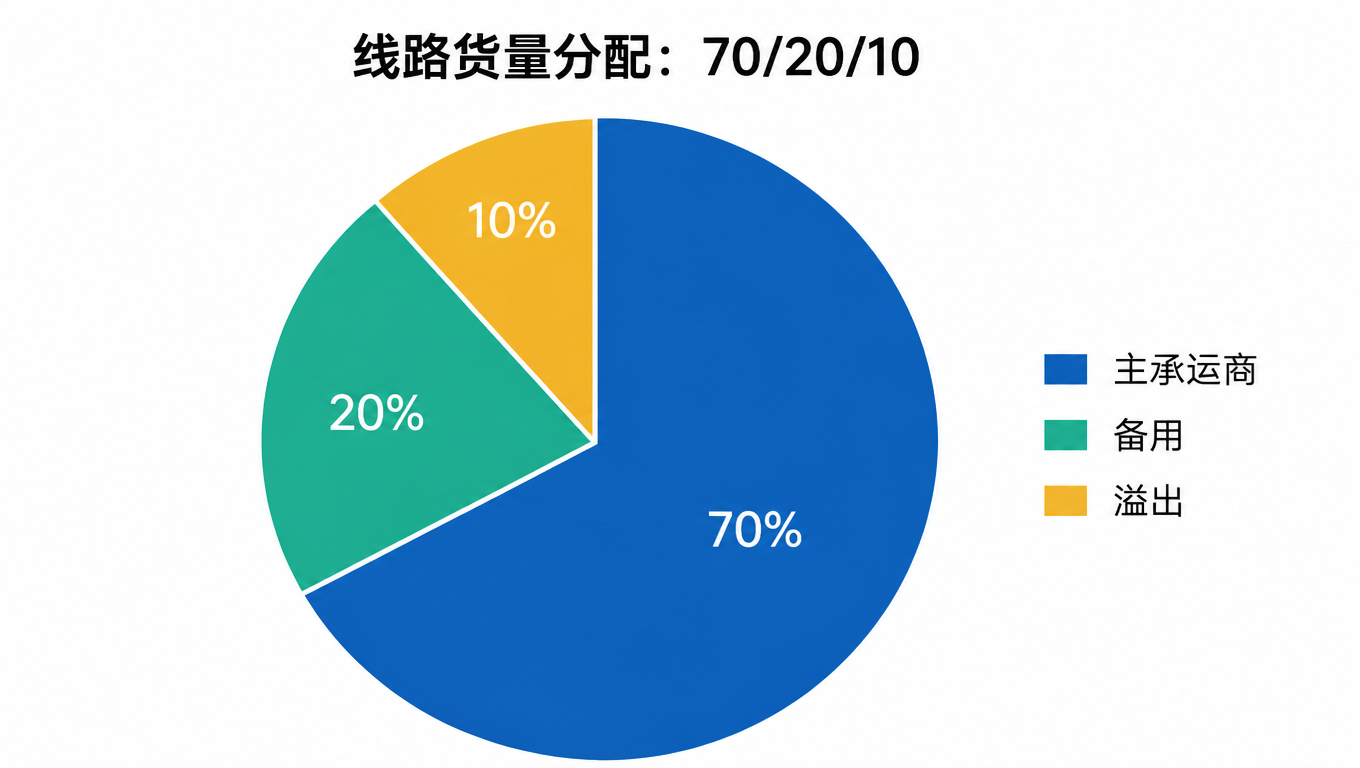
一个具体例子说明这个上限为什么重要。假设一条线路本周发 100 票。只有一家承运商时,一次故障让 100 票全部暴露。把同一条线路按 70/20/10 拆分(主、备、溢出)后,同样的故障只暴露 70 票,另外 30 票在你调拨运力时继续流动。A concrete example shows why the cap matters. Say a lane moves 100 shipments this week. With one carrier, a failure exposes all 100. Split the same lane 70/20/10 (primary, backup, overflow) and the same failure exposes 70; the other 30 keeps moving while you shift volume.