eBay Overseas Warehouse Compliance

eBay Overseas Warehouse Block Policy: The 2026 Fix

Overseas warehouse sellers on eBay are discovering that a listing can disappear overnight. The listing is not just delisted; it is blocked by a compliance system that checks where the item really is, how it ships, and what the tracking says. For sellers running inventory through US, UK, or German warehouses, the overseas warehouse block policy on eBay is the most common reason a healthy store suddenly stops selling.

This guide explains why eBay blocks these listings, what the 2026 rules actually require, and the exact fix that gets a blocked listing back online. The good news: most blocks are fixable, and most of them were preventable.

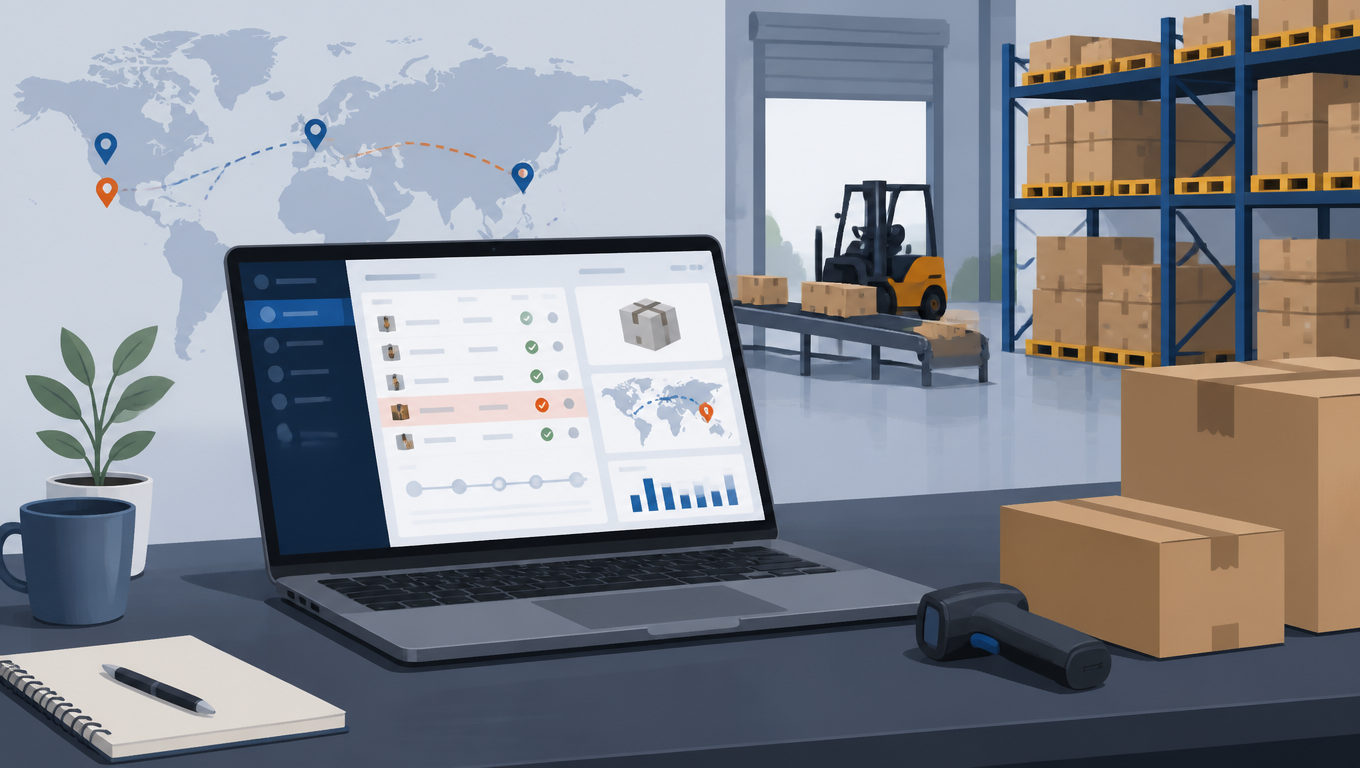
Cross-border seller workstation with shipping alerts on a laptop beside boxes and warehouse shelves.
A blocked listing is not a glitch; it is the item location failing to match the real ship-from point

Why eBay Blocks Overseas Warehouse Sellers

eBay's marketplace promise is delivery speed. When a listing says the item is located in the US and the parcel actually ships from a warehouse in Shenzhen, delivery takes 10 to 20 days instead of the 3 to 5 shown at checkout. Buyers open item not received (INR) cases, leave negative feedback, and the seller's service metrics collapse. From eBay's point of view, the seller is not breaking one rule; they are breaking the trust model that search ranking and buyer protection are built on.

The block is the enforcement mechanism. After the compliance campaigns of 2024 and 2025, eBay automated checks that previously ran only after a buyer complained. The system compares the item location on the listing with the first tracking scan, checks whether the warehouse address can be verified, and blocks listings that fail. Sellers receive a policy violation notice, the listing disappears from search, and repeat violations escalate to account restrictions.

For Chinese cross-border sellers this hits hardest, because many accounts list inventory they do not physically hold at the stated location. eBay's position is simple: the item location must match the ship-from warehouse, and that warehouse must be real, registered, and provable.
What Actually Triggers a Listing Block

Most blocks trace back to one of five triggers. The first is an unregistered or unverifiable warehouse address on the account. The second is an item location mismatch: the listing says US, the first tracking scan is in China. The third is missing or late tracking uploads, so eBay cannot see the item move within the stated handling time. The fourth is a spike in INR cases, which drags service metrics below eBay's thresholds. The fifth is a business policy that references a warehouse eBay cannot verify.

The number one trigger is the item location mismatch. eBay's item location policy requires the location shown on the listing to be where the item actually ships from, down to the city and country. The system compares the listing location with the first scan point of the tracking number. When a parcel's first carrier scan happens in Shenzhen while the listing claims Los Angeles, the mismatch is flagged automatically and the listing is blocked without a human ever looking at it.

The second most common trigger is the warehouse proof requirement. eBay's cross-border compliance teams ask overseas warehouse sellers to apply for the overseas warehouse sales qualification and submit proof that the warehouse exists, such as a contract with an eBay certified warehouse provider. Sellers who cannot produce valid proof get listings blocked until the paperwork is accepted. This is where most 2025 and 2026 account restrictions start.

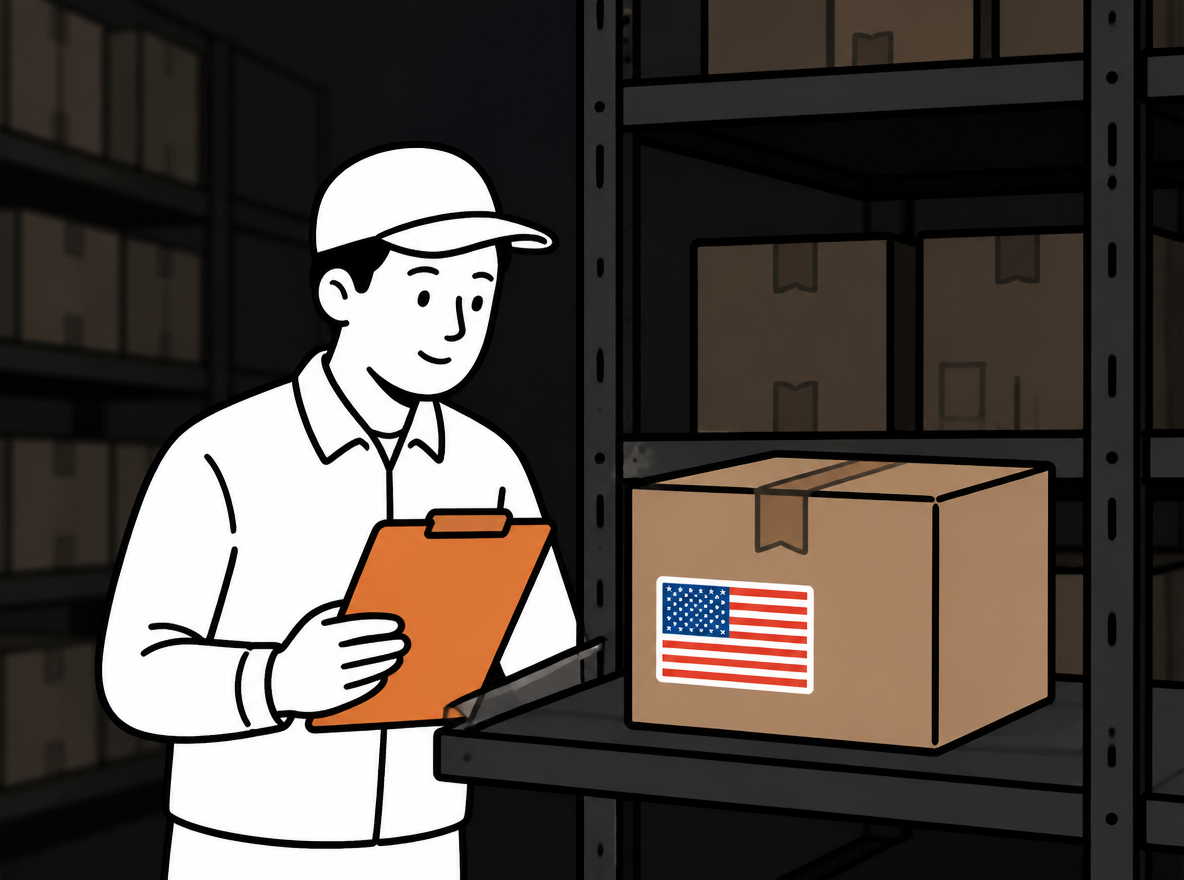
Inspector with a clipboard watches a parcel bearing a U.S. flag sticker being packed in a warehouse.
Warehouse proof is the admission ticket; without it, listings stay blocked

The 2026 eBay Overseas Warehouse Rules

Registration and proof come first. Overseas warehouse sellers must hold an approved overseas warehouse sales qualification, and the warehouse behind it must be verifiable. The application requires proof such as a contract with an eBay certified warehouse provider, and accounts without a dedicated eBay account manager cannot even apply. If you use a third-party fulfillment center, the signed agreement plus a confirmation letter from the provider stating that your inventory is stored there is the standard evidence package.

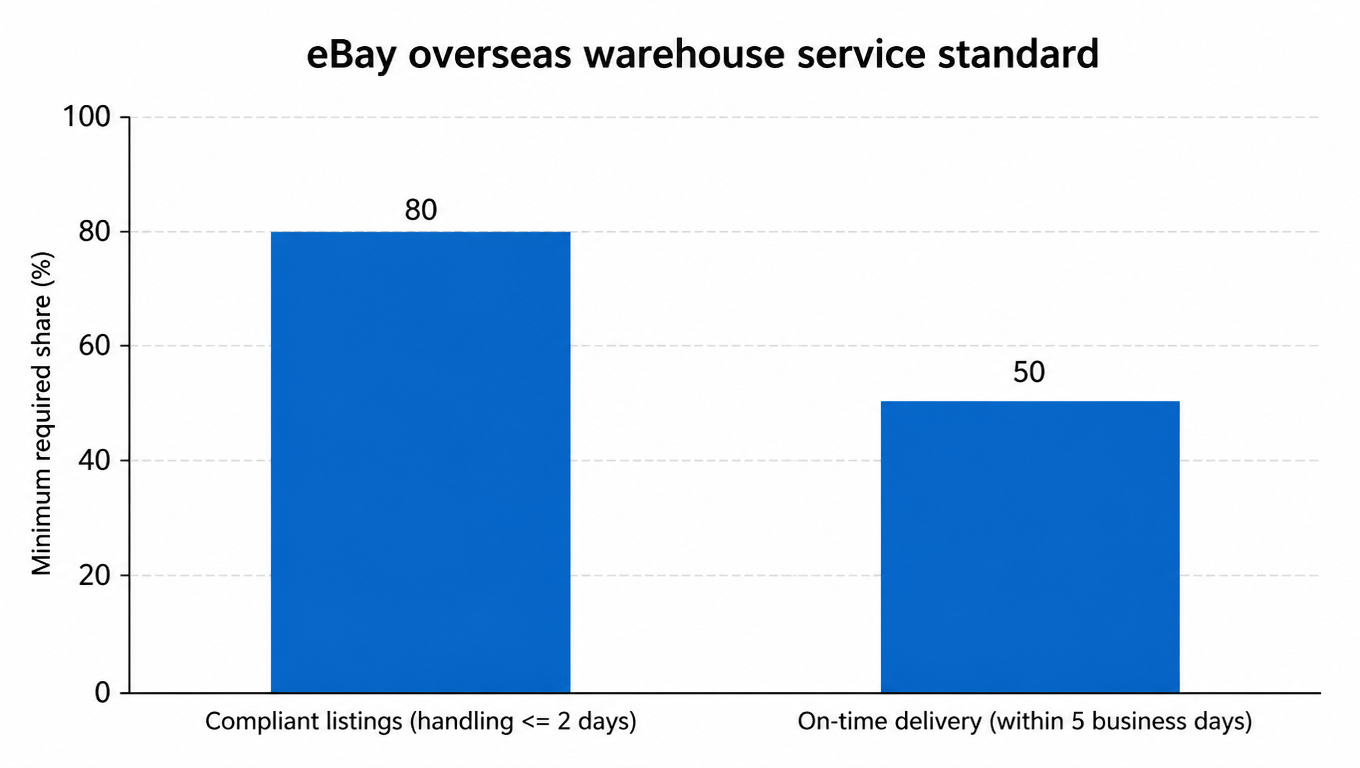
Service standards come second. Under the eBay overseas warehouse service standard policy, at least 80% of overseas warehouse listings must set handling time of 2 business days or less with promised delivery of 3 days or less, and at least 50% of orders must receive a delivery scan within 5 business days of payment.

Bar chart of the eBay overseas warehouse service standard: at least 80% of listings with handling time of 2 business days or less, and at least 50% of orders delivered within 5 business days of payment
The overseas warehouse service standard: 80% of listings at 2-day handling or less, 50% of orders scanned delivered within 5 business days

Item location and tracking come third. The item location must show the real ship-from city and country, and the tracking number must be uploaded within the stated handling time using a carrier integrated with eBay; doing so also protects you if a buyer opens an INR case. The tracking number uploaded must match the shipping location shown on the listing, so a tracking number whose first scan is in another country is itself evidence of misrepresentation.

Performance standards and enforcement round it out. Beyond the overseas warehouse service standard, eBay evaluates every seller on transaction defect rate, cases closed without seller resolution, and late shipment rate. Sellers who fall Below Standard face higher final value fees and limitations on selling activity until performance improves. For overseas warehouse sellers, the practical 2026 consequence is tighter: since December 2024, last-mile services such as USPS Parcel Select, UPS Mail Innovations, and Amazon Shipping used through eBay certified US warehouses are back under normal assessment, and continued use without meeting the standard risks listing removal and revocation of the overseas warehouse permission.

How to Fix a Blocked Listing or Restricted Account

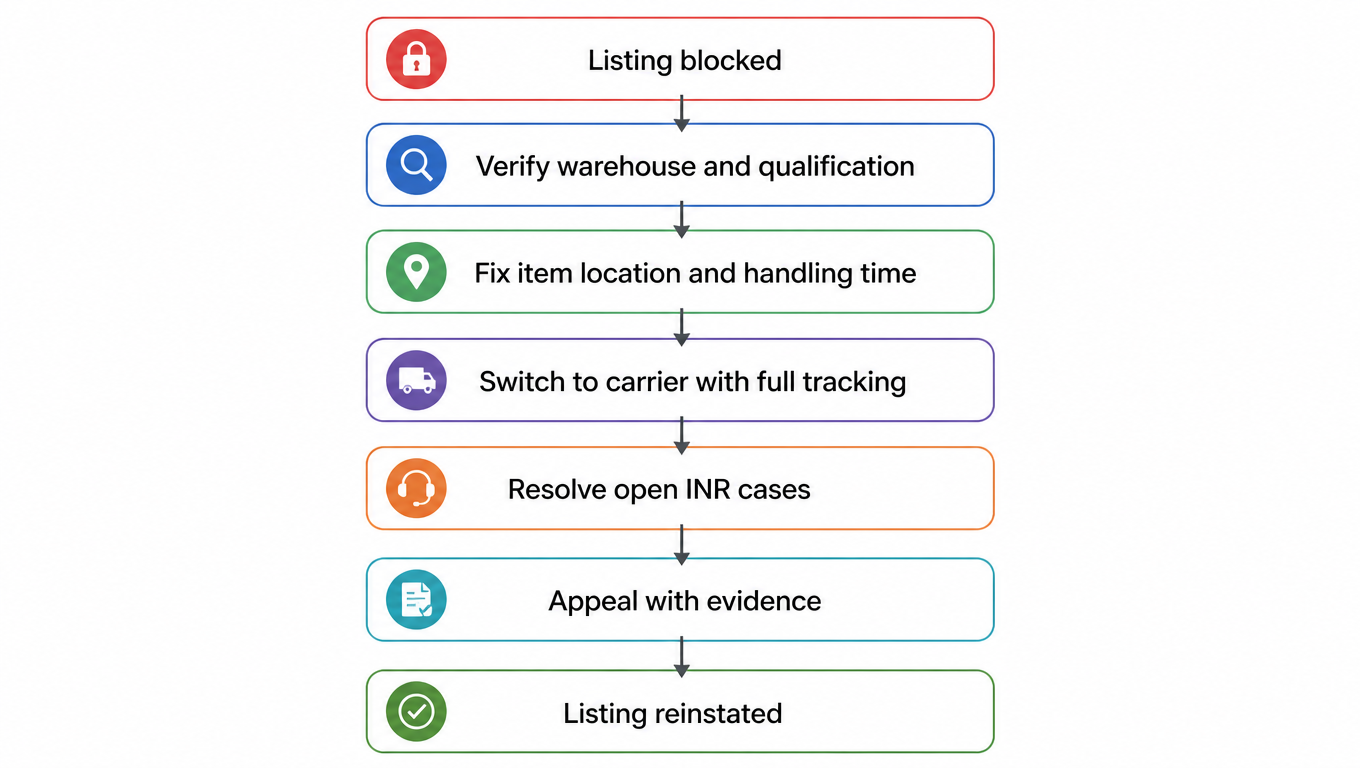
Fix the root cause before appealing; an appeal without proof will be rejected. Start with the warehouse. Open Seller Hub, confirm the warehouse address on file, and if the account never completed the overseas warehouse qualification, apply now with the proof documents. Then correct every affected listing: set the item location to the real ship-from city and country, and adjust handling time so it matches actual dispatch speed.

Next, move the order flow to a compliant carrier. Use carriers integrated with eBay so tracking uploads automatically, and make sure the first carrier scan happens at the warehouse, not days later. Then work down any open INR cases: refund or reship promptly, because cases closed within policy improve your metrics faster than any appeal argument.

Finally, appeal with evidence. eBay's reinstatement process accepts listing-level appeals for policy violations and account-level appeals for restrictions. Attach the warehouse proof, the corrected listings, and a summary of the fixes. Listings blocked purely on location mismatch are usually reinstated within days once the mismatch is gone.

Unblock flow diagram: listing blocked, verify warehouse and overseas warehouse qualification, fix item location and handling time, switch to an eBay-integrated carrier with full tracking, resolve open INR cases, appeal with evidence, listing reinstated
The six-step unblock flow: verify, fix, switch, resolve, appeal, reinstate

Compliance Checklist: Never Get Blocked Again

Keep the paperwork current. Warehouse proof documents should be rechecked every quarter: leases expire, contracts lapse, and an outdated certified warehouse contract is the same as no proof at all. Store a copy of every document so a compliance request never catches you without evidence.

Audit the listings on a schedule. Item location, handling time, and the carrier on each listing should be reviewed quarterly, not after a warning. A single old listing that still claims the previous warehouse address is enough to trigger a block.

Watch the numbers monthly. The seller dashboard shows defect rate, INR rate, and late shipment rate; check them at the start of every month and act when a metric moves toward a threshold, rather than after the policy notice arrives. And follow eBay's cross-border seller announcements, because the verification and assessment campaigns are announced in waves, and the sellers who read them first are the ones who never get blocked.

FAQ

Yes. Listing-level blocks for location or tracking violations can be appealed with corrected listings and warehouse proof, and most are reinstated within days once the violation is fixed.
A contract with an eBay certified warehouse provider, a lease agreement in the seller's name, or a business registration showing the warehouse address. The document must be current and match the address on the account.
Yes. A signed agreement plus a confirmation letter from the provider that your inventory is stored there is accepted as proof.
Listing-level appeals typically resolve in a few days. Account-level restrictions take longer, often one to two weeks, because eBay reviews the full history.
You get blocked when the claimed location does not match the real one, regardless of who handles the parcels. If the first tracking scan happens at the ship-from location shown on the listing, the listing is compliant.