How to Build a Shipping Team
The first mistake most owners make is hiring a manager before they have a team worth managing. The rule of thumb: if you personally do the same task more than twice a week for a month, that task is a job, and the job should not be yours. Missed cutoffs because you are stuck packing, customers emailing you directly, and carrier claims eating your margin are all signs that the next hire is an operator, not a boss.
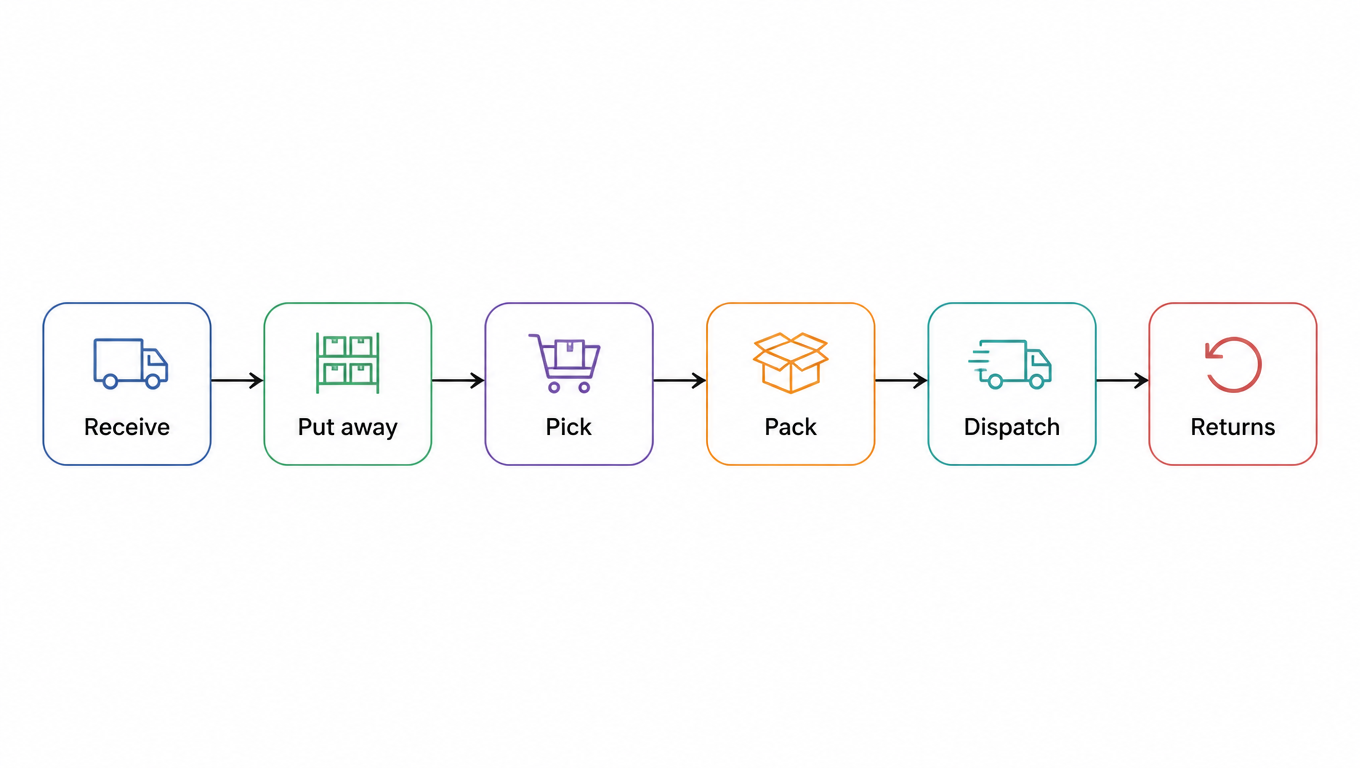
Tie team responsibilities to the shared records in the 3PL shipping operating model. Use the warehouse shipping control points to translate those responsibilities into pack-station, manifest, and dock handoff checks.
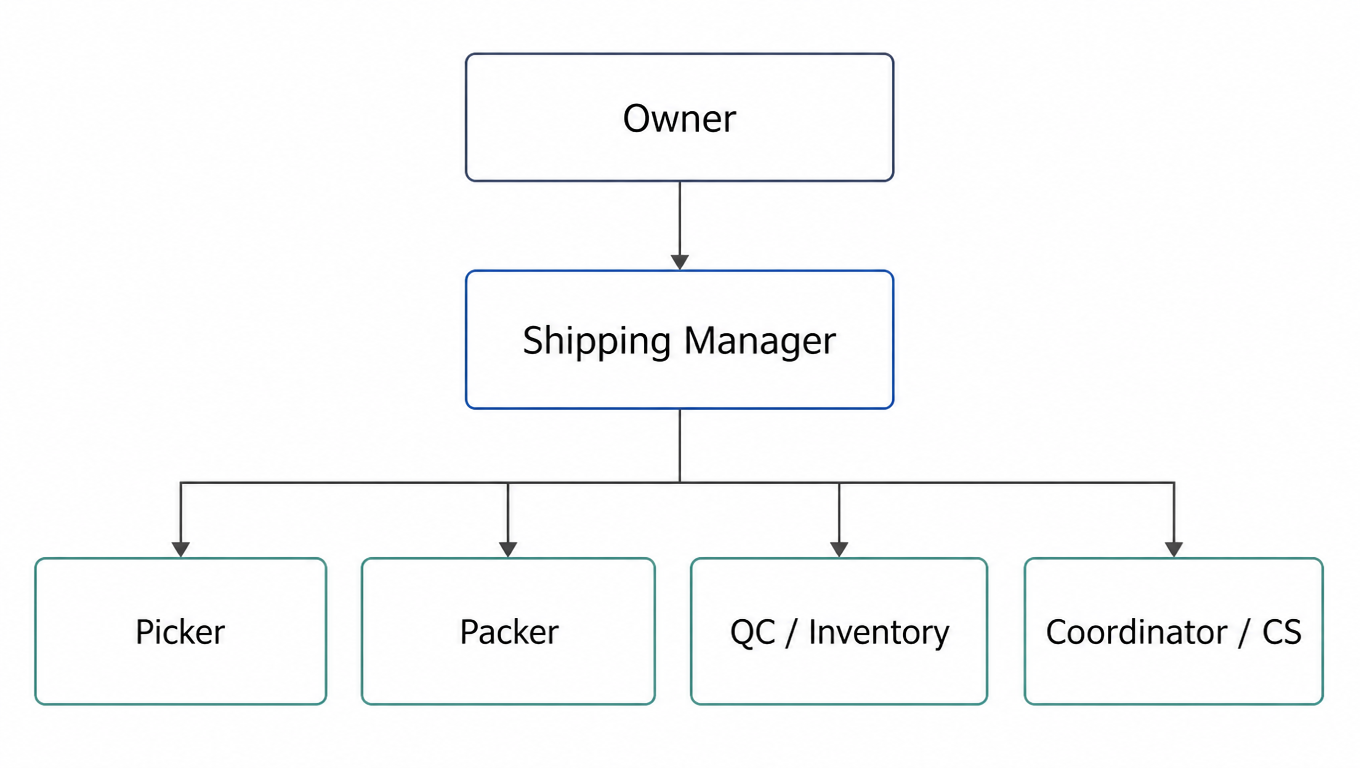
The first three hires come in a deliberate order. First, a lead operator, an all-rounder who can pick, pack, and navigate the carrier portals without hand-holding. Second, another operator to cover the second shift or the volume peaks, so the operation survives when one person is out. Third, a coordinator who owns inbound, inventory counts, and admin, which is the work quietly strangling you. A dedicated shipping manager only makes sense once you are past roughly six or eight people, because until then a strong lead operator does the manager's job at operator pay.
Finding reliable pickers and packers is a local game: job boards, local immigrant communities, and above all referrals from your current staff, whose reputation is on the line. For warehouse roles, hire for signals that predict week 20, not week 1. Punctuality at the interview, honesty about what they do not know, and a reference who says "reliable, shows up" are worth more than a resume full of warehouse apps they have never touched. At this scale, reliability beats speed, because one mispick costs you the order and the customer.
Onboarding and cross-training are how you stay small-proof. Every critical function needs a second trained person: there is no single point of failure in a 3PL, or the failure is a client's Q4. Cross-train picking, packing, and label printing from day one, and use your SOPs as the training document, so a new hire learns the process exactly as written, not as the person teaching them remembers it.