Three Operating Models, Scored on Six Dimensions
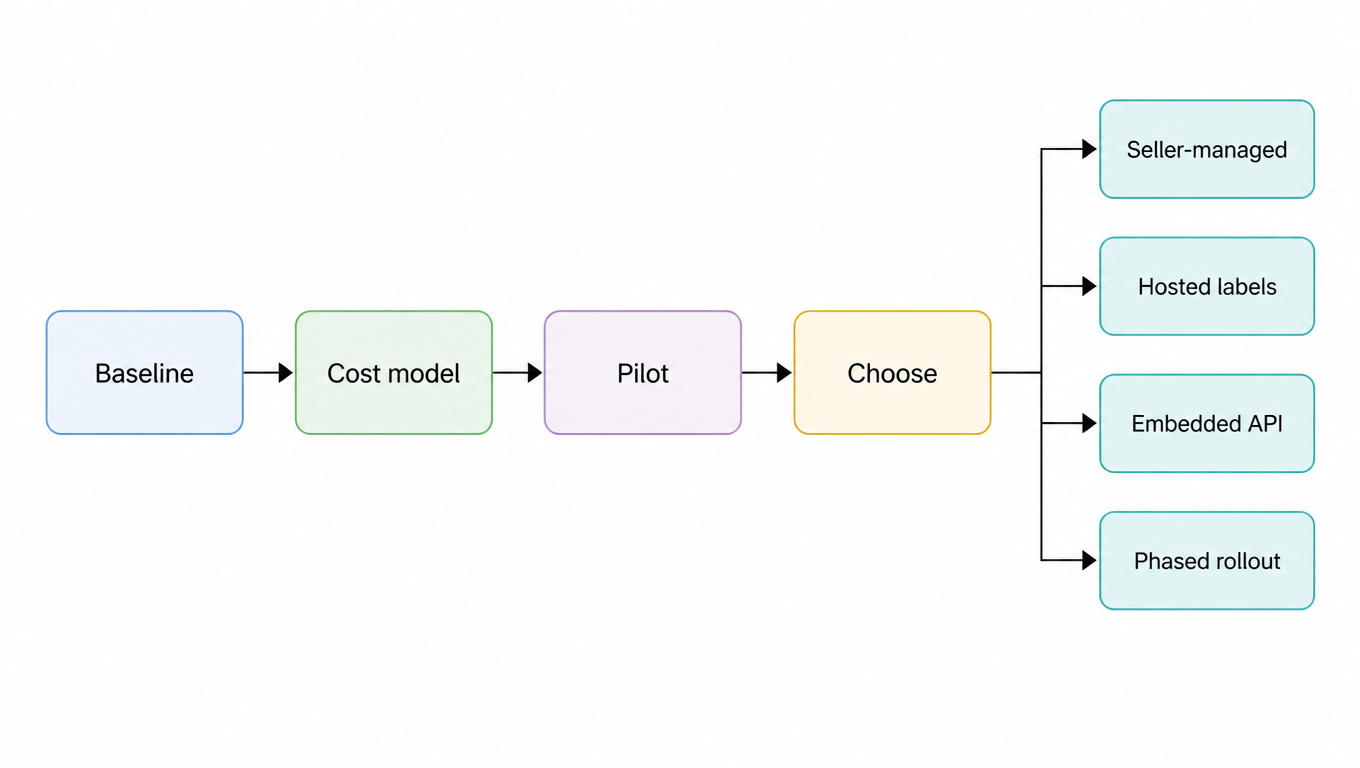
Seller-managed shipping is the default. Sellers buy labels from their own tools, the platform provides order data and nothing else, and every shipping failure is the seller's problem. The platform captures no margin and no data, but it also owns no risk.
Facilitated or hosted labels sit in the middle. The platform offers labels inside the seller flow through a white-label shipping API provider. The provider holds the carrier contracts and the operational machinery; the platform keeps a margin and presents the experience as its own. Fast to launch, thin control.
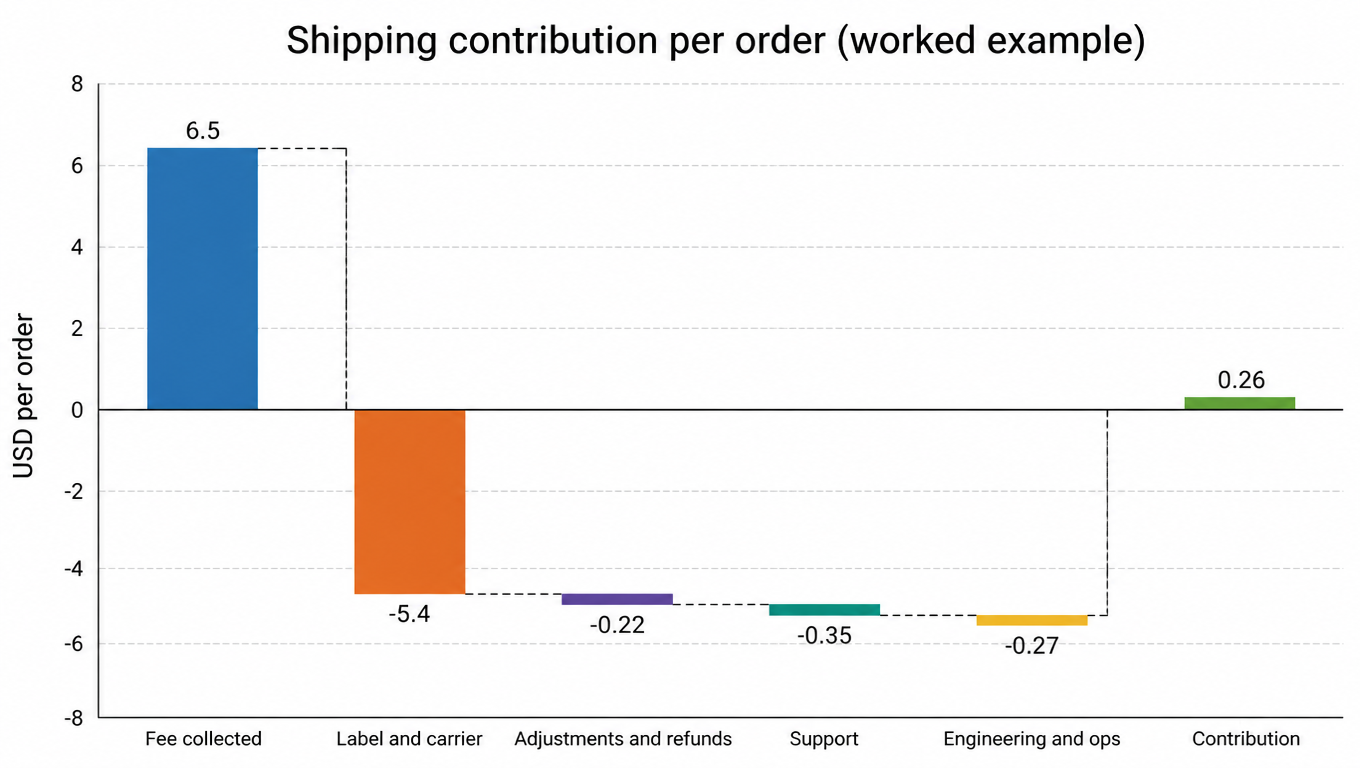
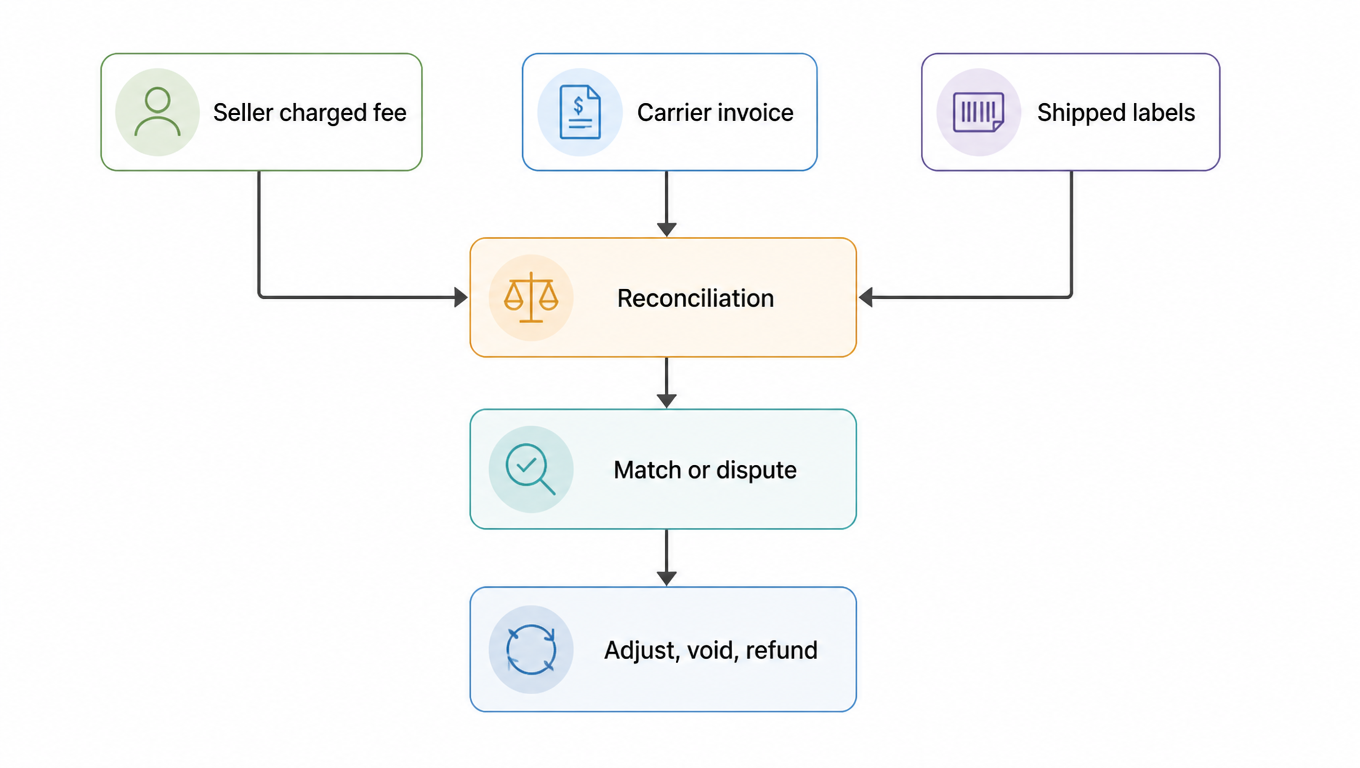
An embedded multi-carrier API is the deepest option. The platform integrates carriers directly, shops rates per lane, fronts the float, runs billing and support, and takes adjustments on its own books. Maximum margin and maximum ownership, including ownership of every failure.
| Attribute | Seller-managed | Facilitated / hosted labels | Embedded multi-carrier API |
|---|---|---|---|
| Product control | Low | Medium | High |
| Engineering effort | Low | Medium | High |
| Tracking completeness | Low | Medium | High |
| Support control | Low | Medium | High |
The table above is the ownership view: what the platform puts in, and what it controls. The scorecard below is the value view: how favorable each model is to the platform on the six dimensions that decide the business case. The scores are relative assessments for a typical marketplace, not industry facts; Section 5 tells you how to replace them with your own measurements.
| Dimension (favorability to the platform) | Seller-managed | Hosted labels | Embedded API |
|---|---|---|---|
| Unit economics | Low | Medium | High |
| Seller friction | Low | Medium | High |
| Delivery and tracking control | Low | Medium | High |
| Support ownership | Low | Medium | High |
| Carrier coverage and fallback | Low | Medium | High |
| Engineering and operational burden (lower is better) | Low | Medium | High |
Two notes before the scorecard gets read as gospel. First, the first five dimensions are higher-is-better and the burden dimension is lower-is-better, so no single column wins outright. Second, "high" on a dimension is only worth something if it moves the contribution formula in Section 2. Full control of delivery tracking that nobody measures is a cost, not a capability.