1. Why White-Label Shipping Is on Every 3PL's Roadmap
Your clients' customers never see your warehouse. What they do see is the tracking page, the delivery notifications, and the support emails after checkout. Today those surfaces are increasingly expected to carry the 3PL's own brand, not the software vendor's logo.[^3] When a merchant picks a 3PL, branded tracking is a tangible promise: "this company owns my customer experience end to end." A generic page from an unknown vendor quietly undermines that promise.
Define client-facing responsibilities through the 3PL shipping operating model before comparing branding options. Use the 3PL API procurement guide to verify which requirements need explicit account and integration acceptance.
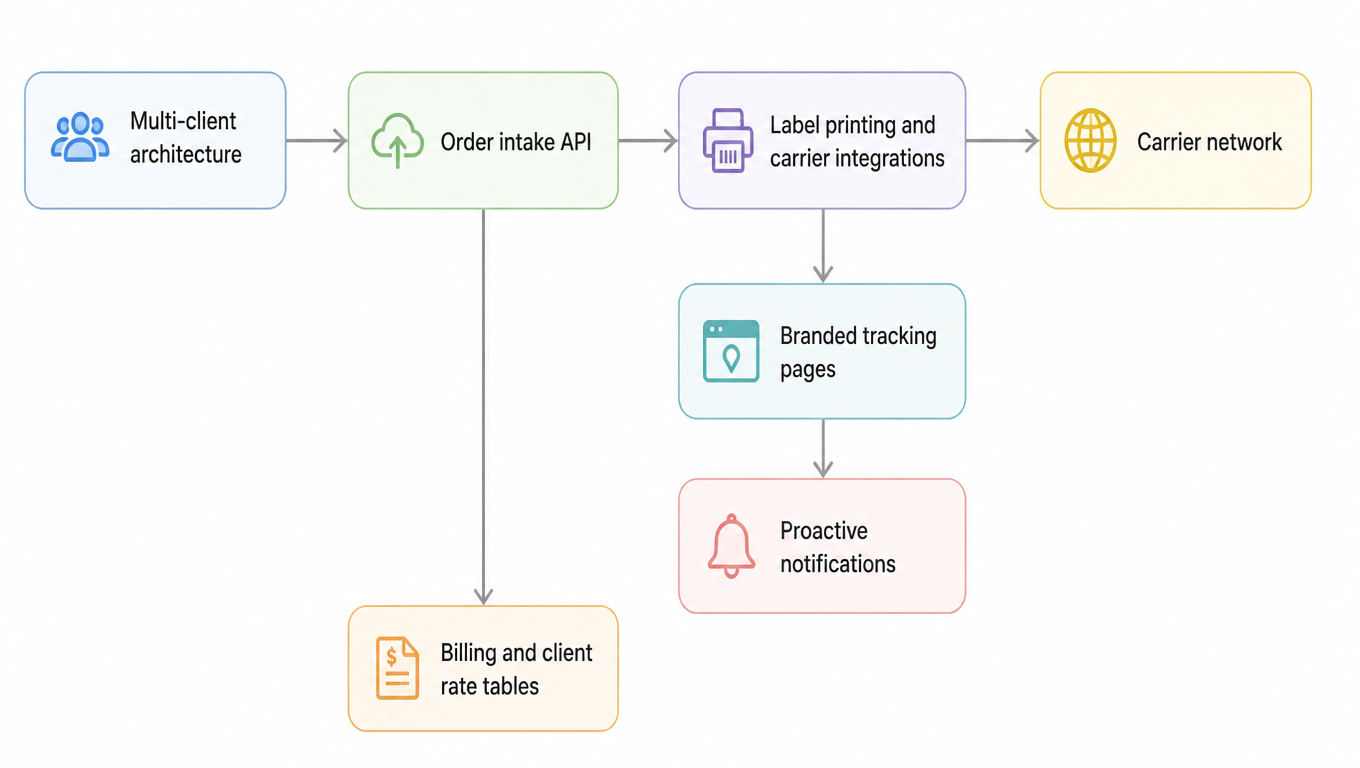
At the same time, the commodity layer of fulfillment has converged. Rates and transit times across carriers are close enough that few merchants switch 3PLs on price alone. The differentiator has moved up the stack, to how the experience feels: branded pages, proactive notifications, clean APIs for the merchant's own storefront. That is exactly the layer white-label shipping technology sits on.
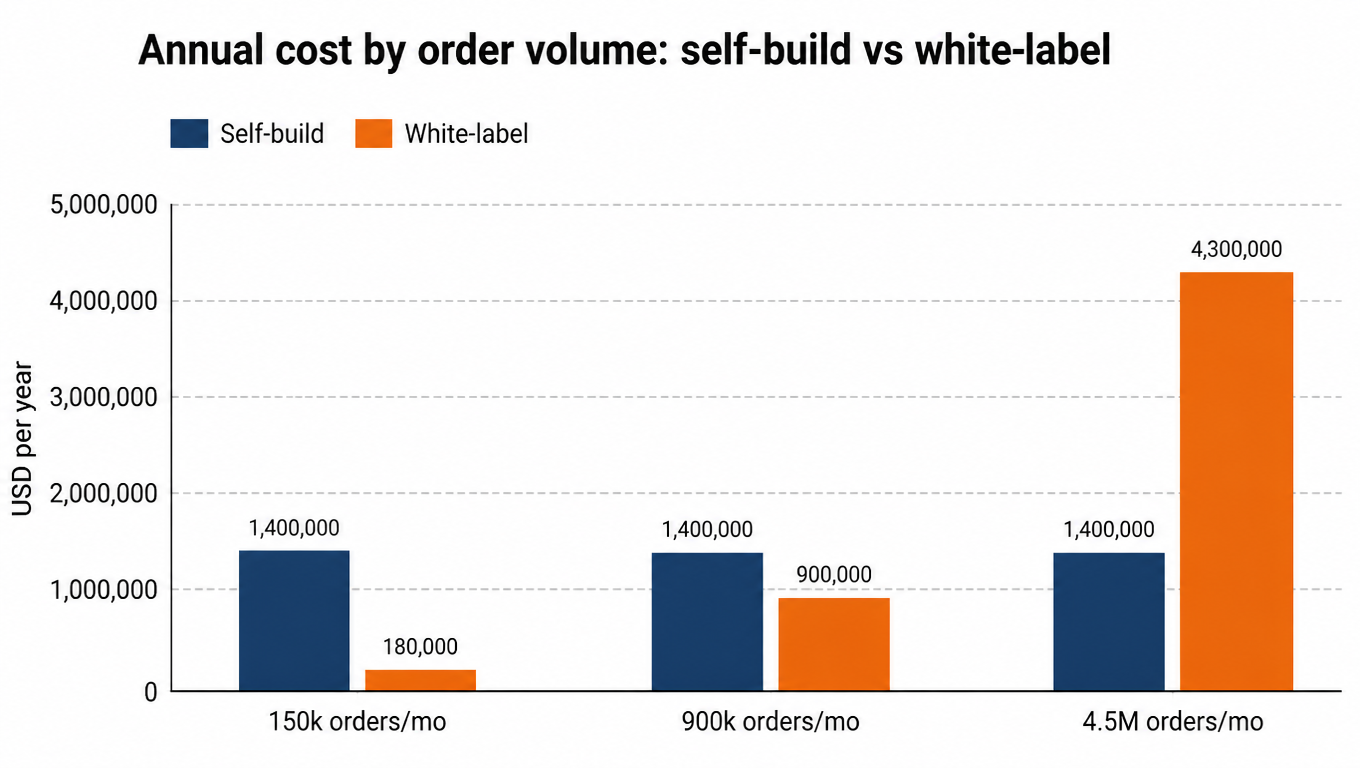
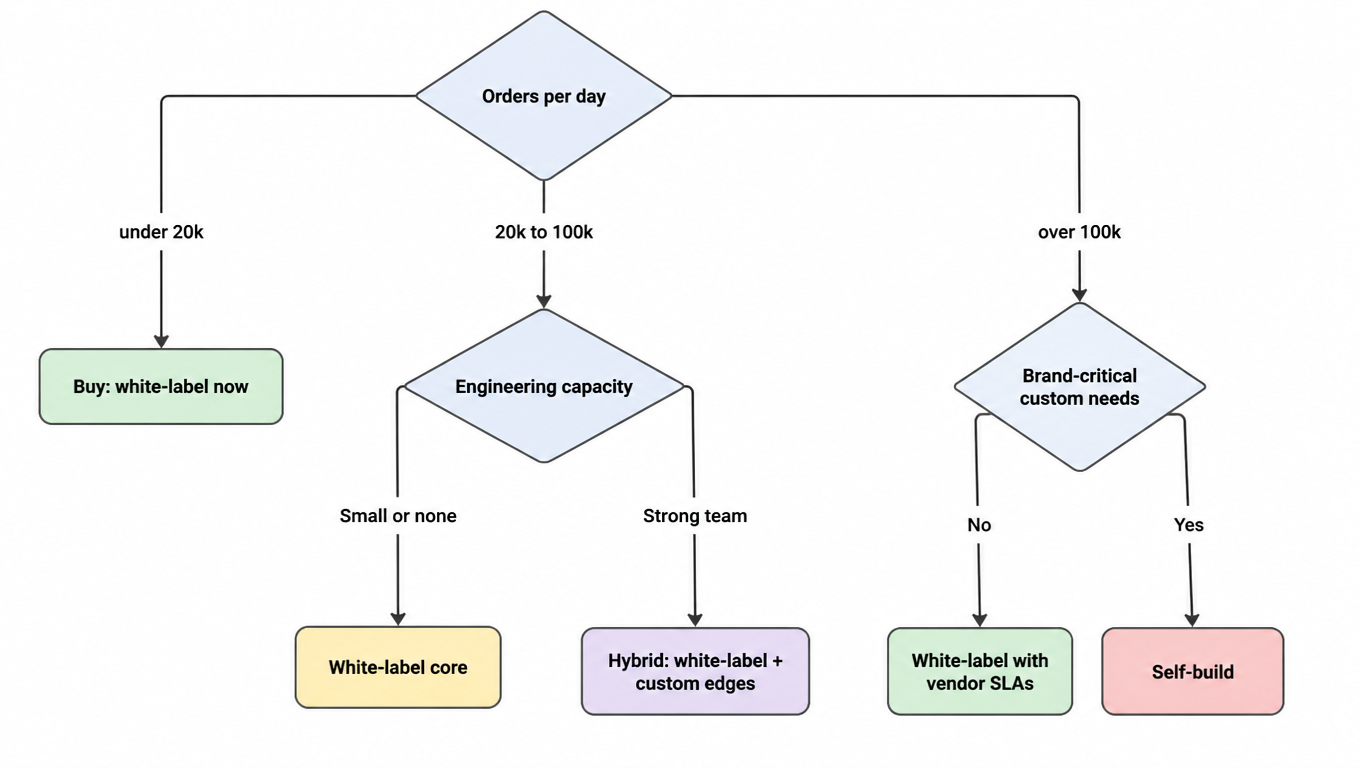
This is also why the decision is roadmap-level rather than feature-level. Choosing build or buy commits engineering capacity, sales positioning, and multi-year contracts. It changes what your client-facing product can promise next quarter and next year. Treating it as a quick procurement or a side project is how teams end up with a half-maintained system and a stalled roadmap.