3PL 指南3PL Guide

3PL 挑选多承运商物流 API 该看什么?What Should a 3PL Look for in a Multi-Carrier Shipping API?

每一家做大的 3PL,最后都会撞上同一堵墙。运营团队用浏览器加电子表格,一天处理一百个包裹绰绰有余;但一天一千个包裹就必须自动化,而自动化的起点就是物流 API。Every growing 3PL eventually hits the same wall. The operations team can handle a hundred shipments a day with a browser and a spreadsheet, but a thousand a day requires automation, and automation starts with the shipping API.

多承运商物流 API 处在 3PL 一切业务的正中央。它返回各家承运商的实时报价,把跟踪事件推送给客户,喂给计费系统。选对了,团队发货更快、出错更少;选错了,你接手的是一个为别人家生意设计的平台,然后花几个月在它周围打补丁。A multi-carrier shipping API sits at the center of everything a 3PL does. It returns live rates across carriers, pushes tracking events to clients, and feeds the billing system. Pick the right one and your team ships faster with fewer errors. Pick the wrong one and you inherit a platform built for someone else's business, then spend months patching around it.

这篇文章给出对 3PL 真正重要的评估标准,分两层:业务层看承运商覆盖、费率管理、多客户支持、计费和合规;技术层看 API 设计、鉴权、webhook、错误处理和 SLA。我们还会演示怎么用两套标准给候选供应商打分,以及主流 API 各自的做法有什么不同。This guide lays out the criteria that actually matter for a 3PL, in two layers. The business layer covers carrier coverage, rate management, multi-client support, billing, and compliance. The technical layer covers API design, authentication, webhooks, error handling, and SLA. We also show how to score a shortlist against both sets, and what the leading APIs do differently.

A busy 3PL fulfillment warehouse with tall shelves, staff packing parcels at shipping stations, and boxes moving along a conveyor belt under bright industrial lighting
多承运商 API 是 3PL 的报价、出单与跟踪枢纽A multi-carrier API is a 3PL's quoting, labeling, and tracking backbone

一、为什么 3PL 不能直接套用电商物流 API1. Why 3PLs Can't Just Use a Retail Shipping API

市面上最流行的物流 API 大多是按电商卖家设计的。EasyPost、Shippo、ShipEngine 都是从服务一个商家起家:一个账号、一张费率表、面单打卖家的品牌、跟踪页挂卖家的 logo。这套模型在你自己开店、发自己的订单时没有问题。Most popular shipping APIs were designed for online retailers. EasyPost, Shippo, and ShipEngine all grew up serving one merchant, one account, one rate table, labels in the merchant's brand, and a tracking page with the merchant's logo. That model works when you are shipping your own orders from your own store.

3PL 在三个维度上结构性地不同:货量、客户、费率。3PL 是批量发货,不是一单一单地发;它服务很多客户账号,每一个客户都希望这票货看起来、算起来都像客户自己直发的;它用的是谈出来的合约费率,和零售 API 返回的公开费率不一样,而且往往每个客户一套。A 3PL is structurally different in three ways: volume, clients, and rates. A 3PL ships in high volume and in batches, not order by order. It serves many client accounts, each of which expects the shipment to look and cost as if the client shipped it directly. And it operates on negotiated carrier rates that differ from the published rates a retail API returns, often differently for every client.

这个差异就是 3PL 语境里「多租户」的含义。费率、面单品牌、跟踪页、账单必须按客户拆分。客户 A 的货永远不能暴露客户 B 的合约价;一张发票必须按客户逐项列出费用。当 API 假设只有一个租户时,隔离层、计费层、品牌层都得你的团队自己在平台上搭,而这个平台当初根本没打算承载这些。That difference is what "multi-tenant" means in a 3PL context. Rates, label branding, tracking pages, and billing must be split per client. A shipment for client A must never expose client B's negotiated rate. An invoice must itemize charges per client. When an API assumes a single tenant, your team ends up building the isolation layer, the billing layer, and the branding layer yourself, on top of a platform that was never designed to hold them.

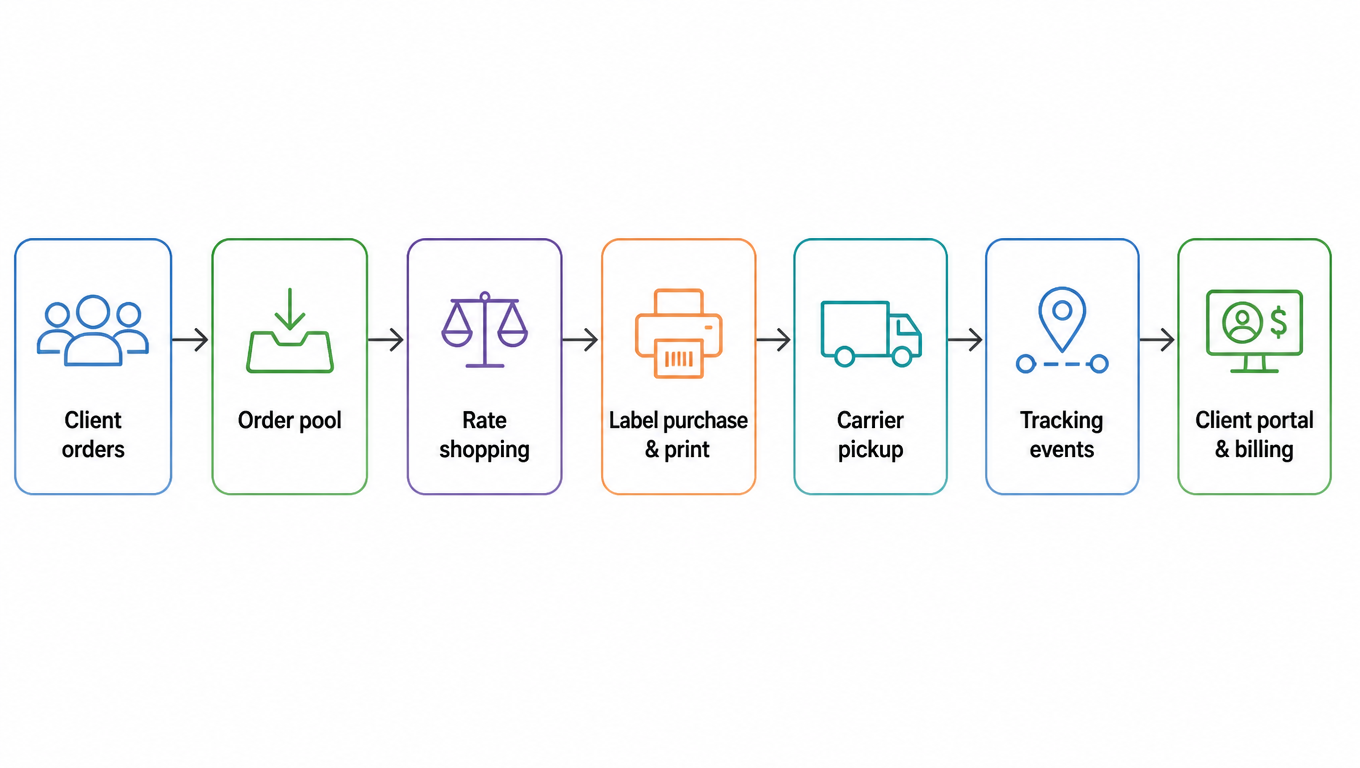
3PL 的工作流长这样:The 3PL workflow looks like this:

流程图:客户订单汇入订单池,比价询价,购买并打印面单,承运商揽收,跟踪事件,最后回到客户端门户与计费Flowchart: client orders land in an order pool, rate shopping, label purchase and print, carrier pickup, tracking events, then back to the client portal and billing
从订单池到比价、出单、派送、跟踪,最后回到客户端门户与计费From the order pool through rate shopping, labeling, delivery, and tracking, back to the client portal and billing

很多客户的订单汇入同一个订单池,跨承运商比价、打印面单,再以客户品牌的跟踪页和按客户计费的形式流回各自客户。这条链上的每一步,都是电商向 API 漏水的地方。Orders from many clients land in one pool, get rated across carriers, print labels, and flow back to each client as branded tracking and per-client billing. Every step in that chain is a place where a retail-oriented API leaks.

二、业务层清单2. The Business-Layer Checklist

先看 API 必须为你的生意做到什么,再去看端点和 SDK。下面这五项决定这个平台到底适不适合 3PL 的运营。Start with what the API must do for your business before you look at endpoints and SDKs. These five items decide whether the platform fits a 3PL operation at all.

承运商覆盖。哪些承运商真的接好了,接得好不好?美国 3PL 至少需要 USPS、UPS、FedEx 和 DHL。要拿到有竞争力的成本,越来越多还要接上区域尾程网络,比如 UniUni 和 GOFO Express,它们在都会区线路上比三大全国承运商更便宜,发货方也在把货量分散到全国承运商之外[^4]。跨境货还要加国际线路和清关支持。对每个承运商,要看的不只是供应商名单上有它,而是 API 能不能返回准确的合约价、符合实际的时效,以及你客户实际在用的那些服务的有效面单。Carrier coverage. Which carriers are actually connected, and how well? At minimum a US 3PL needs USPS, UPS, FedEx, and DHL. Cost-competitive delivery increasingly also means regional last-mile networks such as UniUni and GOFO Express, which undercut the big three on metro routes as shippers diversify beyond national carriers.[^4] Cross-border shipments add international lines and customs support. For each carrier, check not just that it exists in the provider's list, but that the API returns accurate negotiated rates, realistic transit times, and valid labels for the services your clients actually use.

费率引擎。零售 API 返回公开价。3PL 靠合约价活着,而且常常每个客户一套。问三个问题:API 能不能存合约费率、出单时直接套用?能不能实时跨承运商比价,让团队每票都选最便宜的合格选项?合约价缺失时,能不能干净地回退到公开价,而不是让这票货失败?Rate engine. Retail APIs return published rates. A 3PL lives on negotiated rates, and often a different set per client. Ask three questions. Can the API store contract rates and apply them at label time? Can it compare carriers in real time so your team picks the cheapest valid option per shipment? And does it fall back to published rates cleanly when a contract rate is missing, instead of failing the shipment?

多客户支持。一个 API key 能不能服务多个客户账号,每个账号有自己的费率表、面单品牌和跟踪页?能不能在不重新集成的情况下开通新客户、停用旧客户?这是 3PL 平台和零售工具之间最大的分水岭,也是演示只展示单个账号时最容易漏掉的一点。Multi-client support. Can one API key serve many client accounts, each with its own rate table, label branding, and tracking page? Can you provision a new client account and suspend an old one without re-integrating? This is the single biggest differentiator between a 3PL platform and a retail tool, and the easiest thing to miss in a demo that shows one account.

计费与对账。每一张面单都应该带回成本明细,让你的发票能和承运商账单对得上。按客户汇总出账、费用拆分、国际件的关税和税费处理,都应该在业务层里完成,而不是靠团队手工维护电子表格。Billing and invoicing. Every label should come back with its cost broken down, so your invoices reconcile with carrier statements. Aggregated per-client invoices, split charges, and clear handling of duties and taxes on international shipments all belong in the business layer, not in a spreadsheet your team maintains by hand.

合规。禁运品和危险品规则、报关单据、受制裁方筛查。要问 API 会不会校验地址、出单时拦截受限商品、生成目的国需要的报关单。平台把合规推给你,就是把真实的合规责任推给你的运营。Compliance. Prohibited and dangerous goods rules, customs documentation, and denied-party screening. Ask whether the API validates addresses, blocks restricted items at label time, and generates the customs forms your destinations require. A platform that pushes compliance onto you shifts real liability onto your operation.

三、技术层清单3. The Technical-Layer Checklist

业务层告诉你 API 能做什么;技术层告诉你,你的团队能不能在生产的货量下把它跑起来,而不用整天盯着它。The business layer tells you what the API can do. The technical layer tells you whether your team can run it in production, at your volume, without babysitting it.

API 设计与文档。REST 规范、带可直接复制的示例的完整文档、你团队所用语言的 SDK。干净的 API 能把集成时间从几周压到几天,也让集成在供应商迭代时保持可维护。API design and documentation. REST conventions, complete docs with examples you can copy, and SDKs in the languages your team uses. A clean API cuts integration time from weeks to days and keeps the integration maintainable as the provider ships changes.

鉴权与密钥管理。生产环境和测试环境分开的作用域 API key、无停机密钥轮换、沙箱环境足够接近生产,让 staging 测试真正有意义。限流要写清楚,而且要足够宽裕,容得下批量流程,比如几秒内连发几十张面单。Authentication and key management. Scoped API keys for production and test, key rotation without downtime, and a sandbox that mirrors production behavior closely enough that staging tests mean something. Rate limits should be documented and generous enough for batch flows, where you may fire dozens of label purchases in seconds.

Webhook,而不是轮询。跟踪更新应该推给你,而不是等你去拉。要问供应商怎么保证送达:重试、顺序、漏掉事件的补发。如果 API 只提供轮询,队列要你自建、请求费要你出、延迟要你自己扛。Webhooks, not polling. Tracking updates should push to you, not wait for you to pull. Ask how the provider guarantees delivery: retries, ordering, replay of missed events. If the API only offers polling, your team builds the queue, pays for the requests, and owns the latency.

错误处理与幂等。出单是唯一一次重试不当就要真金白银的调用。API 应该接受幂等键、返回清晰错误码、以你的代码能响应而不是崩掉的方式处理限流。Error handling and idempotency. Label purchase is the one call where a non-idempotent retry costs real money. The API should accept an idempotency key, return clear error codes, and handle rate limits in a way your code can respond to instead of crash on.

性能与 SLA。要问的是高峰负载下的出单延迟,而不是某个平静周二的数字。你的峰值时 p95 是多少?可用性 SLA 是多少,违约了怎么办?面单故障堵住出货码头时,你能得到多快的支持响应?Performance and SLA. Ask for label purchase latency under load, not on a quiet Tuesday. What is the p95 at your peak? What availability SLA is offered, and what happens when it is breached? What support response time can you expect when a label outage is blocking your shipping dock?

四、怎么给候选名单打分4. How to Score Your Shortlist

在跟销售谈之前,先把两套清单变成一张评分卡。先定权重,再让每家供应商在同一张表上打分,并且给每一层设一个最低及格线。业务层不及格的供应商,就算 API 再漂亮也要出局,反过来也一样。Turn both checklists into a scorecard before you talk to salespeople. Decide the weights first, then score every vendor against the same grid, and set a minimum pass for each layer. A vendor that fails the business layer should be disqualified even if its API is beautiful, and vice versa.

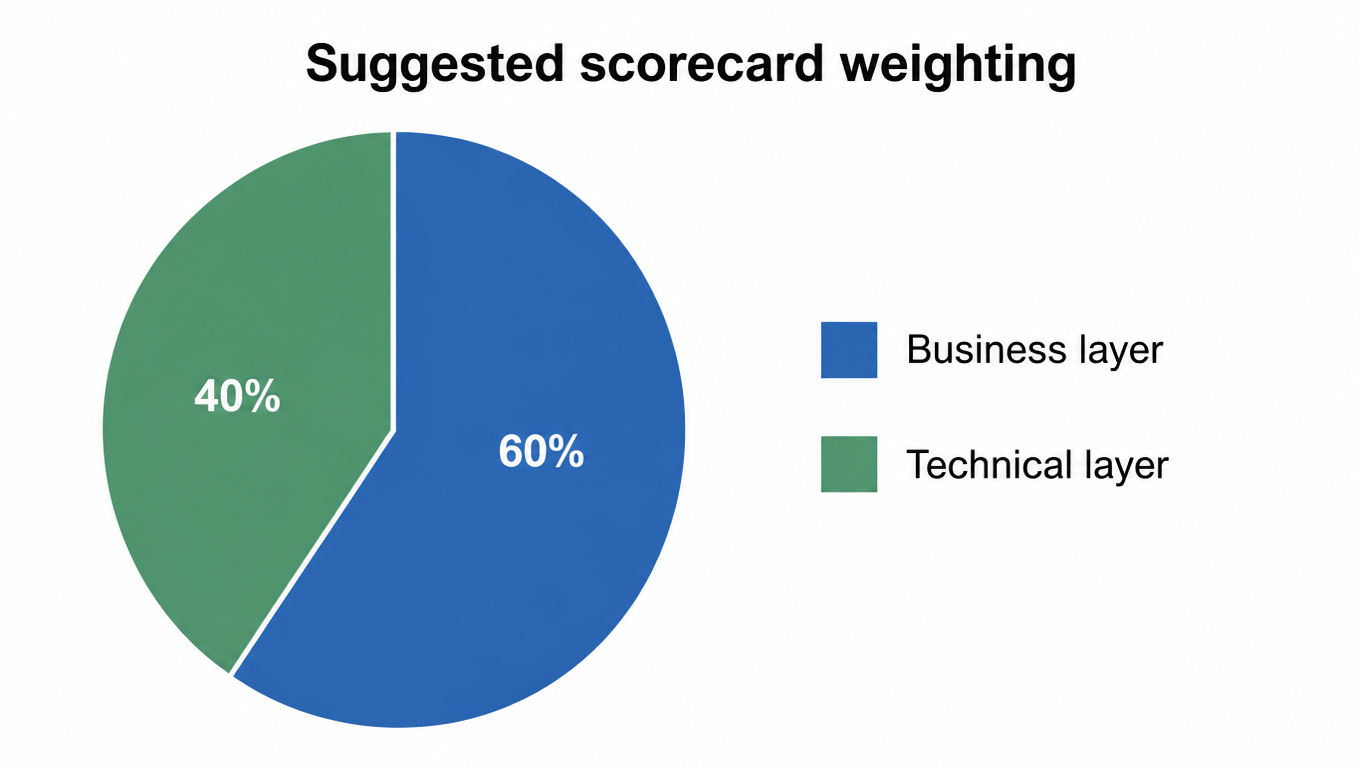
一个合理的起点是业务层 60%、技术层 40%。业务层决定平台到底适不适合你的运营;技术层决定它要花掉多少工程时间。按你的情况调整:一个月内就要开跑的小团队应该给技术层更高权重,因为集成速度更重要。A reasonable starting split is 60% business, 40% technical. The business layer decides whether the platform fits your operation at all. The technical layer decides how much engineering time it costs to run. Adjust the split to your situation: a small team that needs to ship in a month should weight the technical layer higher, because integration speed matters more.

饼图:建议的评分权重,业务层 60%,技术层 40%Pie chart: suggested scorecard weighting, business layer 60%, technical layer 40%
建议的评分权重:业务层 60%,技术层 40%Suggested weighting: 60% business, 40% technical

可以直接复制的空白模板:A blank template to copy:

标准Standard 权重Weight 得分(1-5)Score (1-5) 加权分Weighted
承运商覆盖Carrier coverage15%
费率引擎Rate engine15%
多客户支持Multi-client support15%
计费与对账Billing and invoicing8%
合规Compliance7%
API 设计与文档API design and docs10%
鉴权与密钥管理Auth and key management8%
WebhookWebhooks10%
错误处理与幂等Error handling and idempotency7%
性能与 SLAPerformance and SLA5%
合计Total100%

五、主流 API 各自的做法有什么不同5. What the Leading APIs Do Differently

主流多承运商 API 在基本功上都做得不错:比价、出单、跟踪。差别在于它们为谁而建,而这正是你要筛查的东西。The major multi-carrier APIs are all competent at the basics: rate shopping, label purchase, and tracking. Where they differ is who they were built for, and that is exactly what you are screening for.

A clean flat illustration of a logistics analyst comparing shipping software options on two monitors, with cardboard boxes and a tape dispenser on the desk
选型不是比功能清单,而是比平台为谁而建Selection is not a feature list contest; it is about who the platform was built for

EasyPost 把自己定位成承运商无关的物流基础设施,也确实对开发者友好,文档干净、API 设计扎实。[^1] 对 3PL 的坑在于,它的功能集偏向零售的单租户模型。多租户隔离、按客户费率表、品牌跟踪页,这些都得你自己拼。EasyPost positions itself as carrier-agnostic shipping infrastructure and is genuinely developer-friendly, with clean docs and a strong API design.[^1] The catch for 3PLs is that its feature set leans toward the retail single-tenant model. Multi-tenant isolation, per-client rate tables, and branded tracking are things you assemble yourself.

Shippo 面向中小电商卖家,是从注册到打出第一张面单最快的路径。[^2] 这种易用性是真实优势,但批量操作和多客户工作流不是它的主场,3PL 通常要在它周围自己搭面向客户的那一层。Shippo is aimed at SMB ecommerce and is the fastest path from signup to first label.[^2] That ease of use is a real strength, but batch operations and multi-client workflows are not its home turf, and 3PLs typically end up building the client-facing layers around it.

ShipEngine 功能面广,支持跨承运商比价,企业销售打法瞄准高货量发货方。[^3] 对大型运营是强有力的候选,只是定价和包含范围要到销售周期深处才看得清。ShipEngine brings a broad feature set and rate comparison across carriers, with an enterprise sales motion aimed at high-volume shippers.[^3] It is a strong contender for a large operation, though pricing and the scope of what is included can be opaque until you are deep in a sales cycle.

easyshippingx 以跨境原生为起点,把 3PL 多租户当成设计目标而不是附加功能:按客户映射费率、客户品牌面单与跟踪、按客户计费,内置费率引擎支持合约运价,包括区域尾程网络。作为新进入者,它的生态今天还比较小,但如果你直接集成而不是走市场,这点影响不大。easyshippingx is built cross-border first with 3PL multi-tenancy as a design goal rather than an add-on: per-client rate mapping, client-branded labels and tracking, per-client billing, and an embedded rate engine that handles negotiated carrier rates including regional last-mile networks. Its newer entrant status means a smaller ecosystem today, which matters less if you are integrating directly rather than through a marketplace.

六、要警惕的红旗6. Red Flags to Watch For

下面几个模式应该让对话快速结束。A few patterns should end a conversation fast.

费率里藏着加价。有些供应商在每张面单上抽成,却不暴露承运商的实际收费。对向客户转售运费的 3PL 来说,这笔隐藏成本要么吃掉你的毛利,要么在客户审计账单时以某种方式浮出水面。Markups hidden in rates. Some providers take a margin on every label and do not expose the carrier's actual charge. For a 3PL that resells shipping to clients, that hidden cost either eats your margin or gets passed on in ways that will surface when clients audit their bills.

用轮询代替 webhook。没有 webhook,你的跟踪数据要么永远迟到,要么永远很贵。两种都是你扛。Polling instead of webhooks. No webhooks means your tracking data is always late or always expensive. Either way, you own the problem.

单租户假设。一个品牌、一张费率表、一个跟踪页。如果演示只展示一个账号,供应商对按客户隔离没有说法,你就是在签一份自己动手建 3PL 层的合同。Single-tenant assumptions. One brand, one rate table, one tracking page. If the demo shows a single account and the provider has no story for per-client isolation, you are signing up to build the 3PL layer yourself.

支持薄弱、没有 3PL onboarding 经验。一张面单故障就能堵住你的出货码头。如果供应商说不清支持 SLA,或者从来没 onboard 过 3PL,这就是真实风险。Weak support and no 3PL onboarding. A label outage stops your shipping dock. If the provider cannot tell you its support SLA, or has never onboarded a 3PL before, treat that as a real risk.

沙箱和生产脱节。测试环境行为和生产不一样,你跑的每一个测试都是演戏。A sandbox that diverges from production. If the test environment behaves differently from production, every test you run is theater.

七、怎么开始7. How to Start

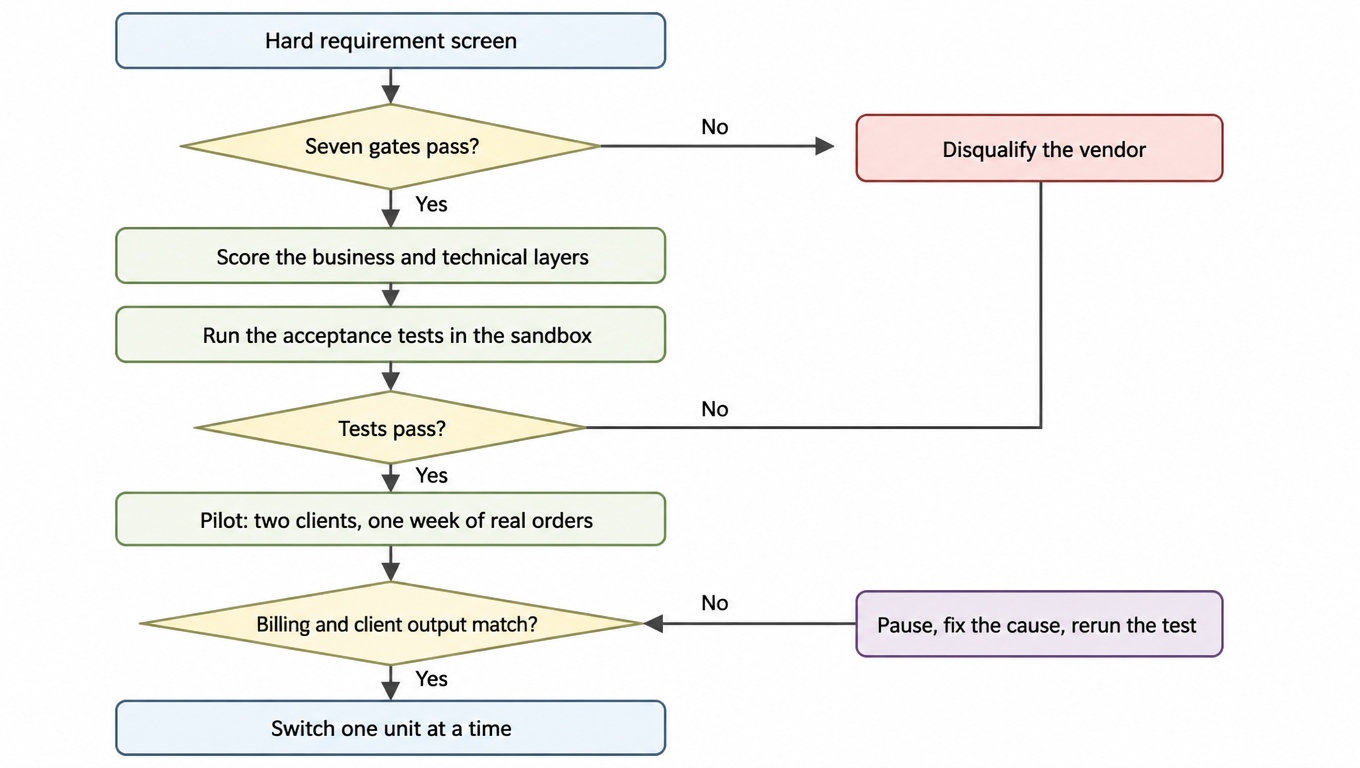
先跑概念验证再签约。拿一周的真实订单数据灌进供应商的沙箱:上传订单、比价、买面单、收 webhook。关键是跑你自己的真实工作流,而不是供应商的演示。Run a proof of concept before you commit. Take a week's worth of real order data and push it through the vendor's sandbox: upload orders, rate shop, buy labels, receive webhooks. The point is to run your real workflow, not the vendor's demo.

然后在你的峰值货量下压测。把你最忙一个小时的货量压缩在一个窗口里打向 API,量出单延迟和 webhook 送达。这个数字才是旺季时你的码头真正感受到的东西。Then load test at your peak volume. Measure label purchase latency and webhook delivery when you fire your busiest hour's worth of shipments at the API in a compressed window. That number is what your dock will actually feel at peak season.

最后,把迁移计划成按承运商逐个切换,而不是一次性大爆炸。让新 API 和现有系统并行跑,在重叠期对账,一次只切一个承运商,这样问题只局限在一条工作流里,而不是整个运营。Finally, plan the migration as a carrier-by-carrier switch rather than a big bang. Run the new API in parallel with your existing system, reconcile billing in the overlap period, and move carriers one at a time so a problem is contained to one workflow instead of the whole operation.

常见问题FAQ

零售 API 假设只有一个租户:一个商家、一张费率表、一个品牌。3PL 需要多租户隔离:按客户的费率表、按客户的面单品牌和跟踪页、按客户计费。当 API 假设单一租户时,隔离层、计费层、品牌层都得你自己搭。Retail APIs assume a single tenant: one merchant, one rate table, one brand. A 3PL needs multi-tenant isolation: per-client rate tables, per-client label branding and tracking pages, and per-client billing. When the API assumes a single tenant, you build the isolation, billing, and branding layers yourself.
这是最该问的问题。要问 API 能不能存合约费率、出单时直接套用,能不能实时跨承运商比价,合约价缺失时能不能干净回退到公开价。3PL 靠合约价活着,而且往往每个客户一套。That is the key question. Ask whether the API can store contract rates and apply them at label time, compare carriers in real time, and fall back to published rates cleanly when a contract rate is missing. A 3PL lives on negotiated rates, often a different set per client.
跟踪更新应该推给你,而不是等你去拉。要问供应商怎么保证送达:重试、顺序、漏掉事件的补发。如果 API 只提供轮询,队列要你自建、请求费要你出、延迟要你自己扛。Tracking updates should push to you, not wait for you to pull. Ask how the provider guarantees delivery: retries, ordering, replay of missed events. If the API only offers polling, your team builds the queue, pays for the requests, and owns the latency.
合理的起点是业务层 60%、技术层 40%。业务层决定平台到底适不适合你的运营;技术层决定它要花掉多少工程时间。按你的情况调整:一个月内就要开跑的小团队应该给技术层更高权重,因为集成速度更重要。A reasonable starting split is 60% business, 40% technical. The business layer decides whether the platform fits your operation at all; the technical layer decides how much engineering time it costs to run. Adjust to your situation: a small team that needs to ship in a month should weight the technical layer higher, because integration speed matters more.

想用一个真正按 3PL 工作流设计的 API 来评估?Ready to evaluate a multi-carrier API against your real 3PL workflow?

EasyShippingX 以跨境原生为起点,把 3PL 多租户当成设计目标而不是附加功能:按客户映射费率、客户品牌面单与跟踪、按客户计费,内置费率引擎支持合约运价,包括区域尾程网络。EasyShippingX is built cross-border first with 3PL multi-tenancy as a design goal rather than an add-on: per-client rate mapping, client-branded labels and tracking, per-client billing, and an embedded rate engine that handles negotiated carrier rates including regional last-mile networks.

Get Rate Comparison
Get Rate Comparison