Logistics Guide

AI for 3PL Operations: From Industry Trends to a Working Playbook

The third-party logistics (3PL) industry has never been a place for the faint of heart. Margins hover in the single digits, warehouses run on tight labor schedules, and every carrier, every SKU, and every customer adds a layer of complexity. For years, "AI for 3PL" sounded like a vendor slide deck. Today it is the operating reality for the operators who win contracts and keep them.

This article is written for two readers at once. Decision-makers get the business case: where AI actually earns its keep, what it costs, and how to measure the return. Operators get the playbook: how to scope a pilot, what to integrate, and which pitfalls sink most programs. Along the way we look at real deployments at companies like DHL, Walmart, and Amazon, and at what a mid-size 3PL can realistically expect.

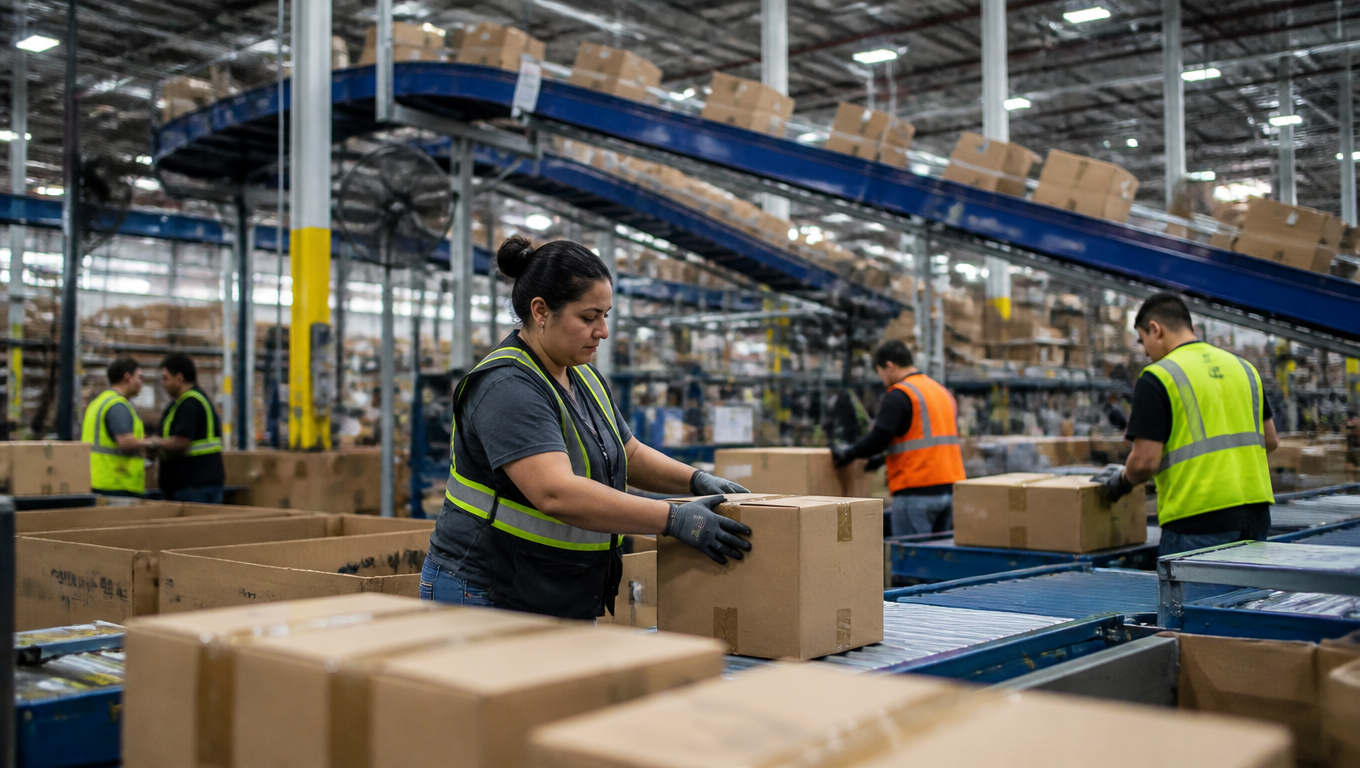
Workers beside conveyors in a busy modern fulfillment center, with parcels on overhead tracks.
AI is no longer a nice-to-have; it is the necessity the ledger forces

Why AI Moved from Optional to Table Stakes

The economics of 3PL have never been forgiving. Net margins for most third-party logistics providers sit in the 3 to 6 percent range, and labor typically accounts for 60 to 65 percent of a warehouse's operating cost. Add chronic labor shortages, rising industrial rents, and customers who demand more for less, and the squeeze compounds every quarter. In this environment, a few points of operational efficiency are not a nice-to-have; they are the difference between winning and losing a contract renewal.

E-commerce has made the timing problem worse. Two-day and next-day delivery windows compress the time between order and ship, which means labor and inventory have to be in the right place at the right moment, not just most of the time. The pressure is structural: e-commerce's share of US retail sales climbed from 11.4 percent in 2019 to more than 16 percent in 2024, according to US Census Bureau data. More orders, smaller average orders, faster promises. Every one of those orders flows through a warehouse that has to predict, staff, slot, pick, pack, and ship on a tighter clock than ever.
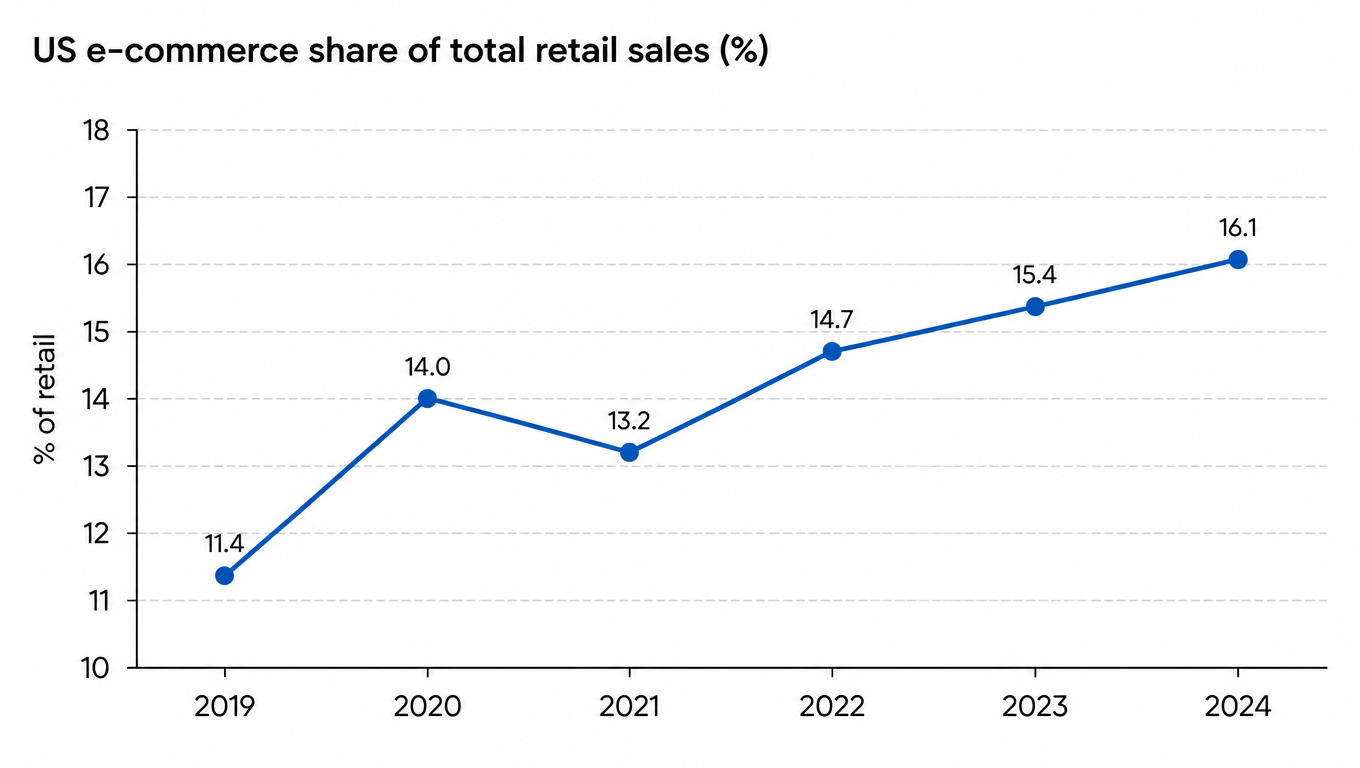
Line chart of US e-commerce share of total retail sales: 11.4% in 2019 rising to 16.1% in 2024
US e-commerce share of total retail sales (%): 11.4% in 2019 to 16.1% in 2024

This is where AI changes the conversation. A 3PL already owns the raw material: years of order data, scan events, labor hours, carrier performance, dwell times. Traditional reporting tells you what happened last week. Machine learning tells you what is about to happen next, and what to do about it. The timing is finally right. Compute costs have collapsed, open-source and cloud ML tooling has matured, and modern WMS and TMS platforms produce clean, structured data with APIs that make integration practical for companies far smaller than Amazon.
Where AI Actually Earns Its Keep in 3PL Ops

The useful way to think about AI in a warehouse is not one big brain running the building, but a set of narrow, measurable improvements, each attacking a specific cost or error. Demand forecasting is the classic starting point. Machine learning models trained on historical order curves, seasonality, and customer signals predict inbound volume far more accurately than spreadsheets, so you can right-size labor and space before orders arrive instead of reacting to them.

Slotting and pick path optimization attack the biggest silent cost in any warehouse: travel time. Velocity-based slotting uses AI to place fast-moving SKUs in the most reachable locations, and pick path algorithms sequence picks into the shortest possible route through the building. Together they can cut walking time per order by double-digit percentages. The same logic extends to labor scheduling, where shift plans match predicted volume curves, and to outbound route optimization, where consolidation logic trims miles and carrier costs.

Beyond the core flow, anomaly detection catches problems early: inventory counts that drift from system records, shipments that stall with a carrier, temperature or compliance flags on sensitive goods. And because customers feel delays before operators do, AI-powered customer communication sends proactive status updates and exception alerts, turning a surprise into a managed message. None of this requires general intelligence. Each is a narrow ML task running on data the operation already produces, with a measurable outcome attached.

Rollout Playbook: From Pilot to Production

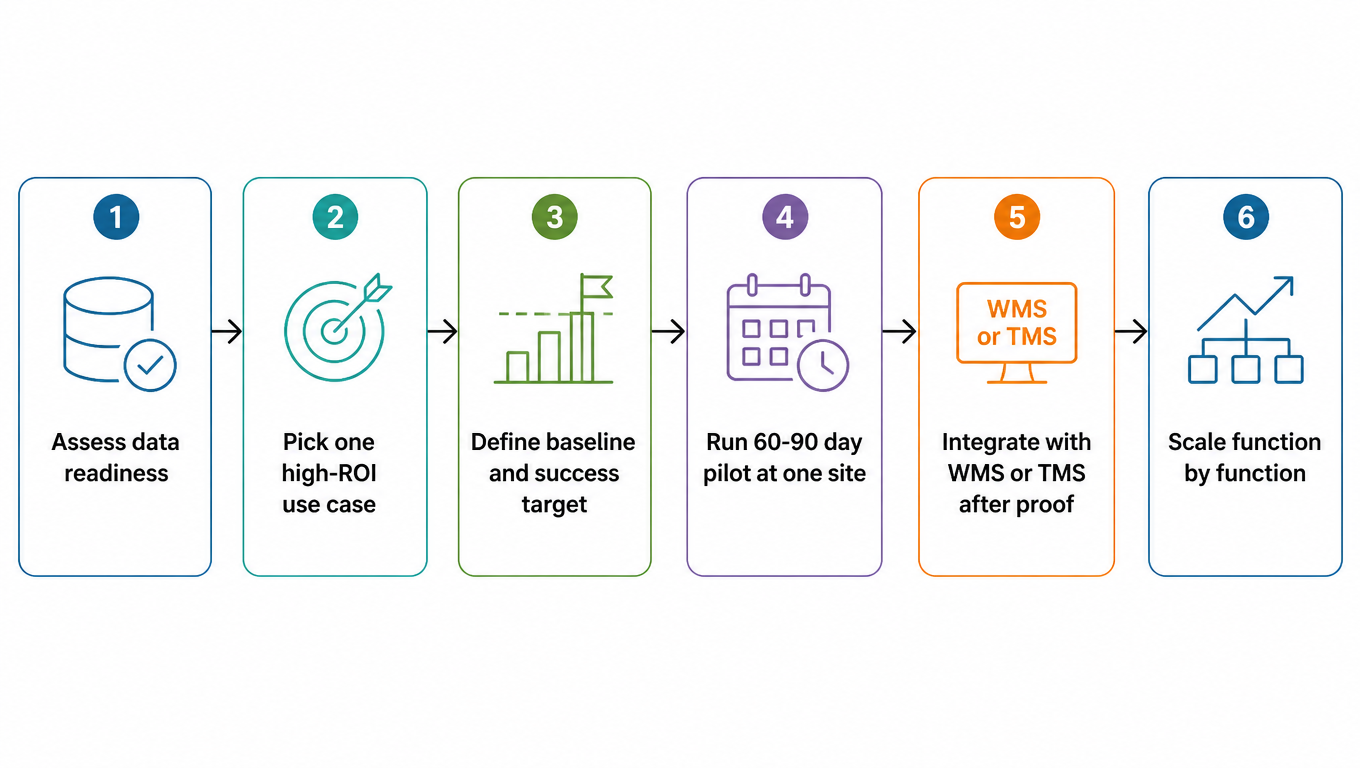
The fastest way to fail at AI is to try to do too much at once. The playbook that works starts narrow and proves value before it scales. Step one is data readiness. Before any model, audit your data: are order, inventory, and labor records clean, complete, and accessible through your WMS or TMS? Most failed AI programs fail here, not at the modeling stage. Step two is picking one use case with high ROI and low risk, ideally the demand forecast or slotting improvement described above.

Step three is defining the baseline and the success target before anything runs. What is cost per order today? What is pick accuracy? Write the numbers down. Step four is a contained pilot: one site, one function, 60 to 90 days, with the model running alongside the existing process so results are comparable, not speculative.

Step five is integration. Only after the model proves out in the pilot do you wire it into the WMS or TMS, and even then behind a human decision point at first. Step six is scaling function by function, site by site, rather than flipping a switch across the network. Each expansion reuses the playbook: baseline, pilot, prove, integrate, scale.

Flowchart of the rollout playbook: assess data readiness, pick a high-ROI use case, define baseline, run a 60-90 day pilot at one site, integrate with WMS/TMS after proof, scale function by function
Six steps: start narrow, prove value, then scale

Measuring What Matters: The ROI Math

ROI on warehouse AI is only as credible as the baseline it is measured against. Before any pilot, capture current cost per order, labor hours per unit, error rates, and on-time performance. If you cannot measure the before state, you cannot claim the after. The comparison itself should be clean: pilot site versus a control site doing the same work, or pilot period versus the same period a year earlier, adjusted for volume.

The metrics that matter most in 3PL are few and familiar: cost per order, units per labor hour, pick accuracy, on-time delivery rate, and inventory dwell time. Notice what is not on the list: model accuracy, prediction confidence, or any technical metric that does not touch money. An accurate model that does not move cost per order is a research project, not an investment.

Set realistic expectations about time. A 60 to 90 day pilot tells you whether the approach works. Meaningful payback typically shows up within 6 to 12 months of production rollout, and only after you account for the hidden costs: data engineering, integration work, change management with floor staff, and ongoing model maintenance. Budget for those from day one and the ROI story stays honest.

Real-World Examples

DHL has made predictive analytics a pillar of its operations strategy, using machine learning to forecast shipment volumes and plan workforce needs across its network. The logic is the same one described above, applied at global scale: predict the load before it arrives, staff against the prediction, and absorb the peaks that used to cost overtime and missed service-level agreements.

Walmart has built AI into the demand forecasting and replenishment layer of its fulfillment operations, and paired it with dense warehouse automation. Its use of robotic systems to move goods through distribution centers shows what happens when AI planning and physical automation are designed together, rather than bolted on separately.

Amazon remains the benchmark nobody should copy directly. The company operates hundreds of thousands of robots in its fulfillment centers and runs machine learning across forecasting, slotting, and pick sequencing. But Amazon's scale, capital, and data history are not replicable. The transferable lesson is the pattern: narrow problems, clean data, relentless measurement, and automation that expands only after each step proves out.

The pattern holds at a more realistic scale. A regional 3PL with a few facilities can apply the same two use cases, forecasting and slotting, and feel the effects in staffing plans, pick paths, and expedite spend, without needing a data science team of its own. What all of these examples share is discipline: narrow scope, clean data, and clear KPIs. The companies that succeed do not buy AI wholesale. They buy one capability, prove it, and build from there.

Pitfalls and How to Avoid Them

Garbage data is the number one killer. Models are unforgiving: they learn the errors in your records as faithfully as they learn the patterns. Fix the data layer before you fund the model, or you are paying to automate your mistakes.

Scope creep is the second. Three pilots in three functions in three months sounds ambitious and is usually just unfocused. One pilot, measured properly, beats three pilots measured poorly, every time.

Staff resistance and black-box trust are two sides of the same human problem. Warehouse teams have seen technology used against them, and a model that changes how they work will be quietly sabotaged if it is not explained. Position AI as augmentation: the system handles the predictable parts, people handle judgment and exceptions, and floor staff who know the operation should help shape how the tool is used. If operators cannot understand why the system recommends a different pick path or a different shift plan, they will stop acting on it, and the ROI evaporates. Insist on explainable outputs and a human decision point during rollout.

Finally, vendor hype. Every WMS and TMS vendor now sells AI, and the feature lists all look impressive. Demand proof on your own data, with your own baseline, before you sign. A vendor who resists a pilot on your data is telling you something.

What's Next: The Road Ahead

The next phase is predictive fulfillment: AI that recommends where inventory should sit before demand materializes, so the right goods are already near the right customers when orders spike. Forecasting stops being a report and becomes a continuous input to placement, labor, and carrier decisions.

Agentic AI is the buzziest frontier and the hardest to trust: systems that not only flag an exception but act on it, rerouting a stalled shipment or renegotiating a carrier slot without a human in the loop. Expect this to arrive gradually, in low-risk corners of the operation, with human oversight baked in until the confidence is proven.

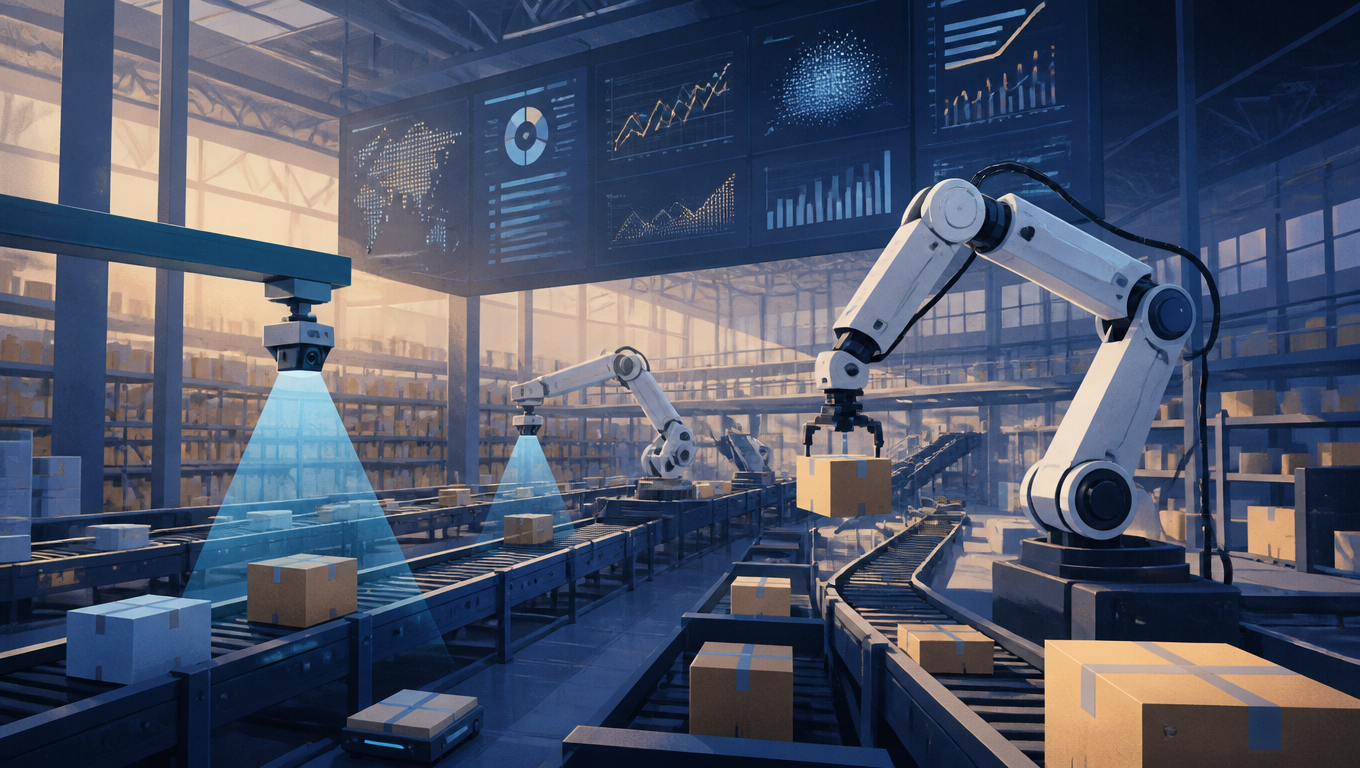
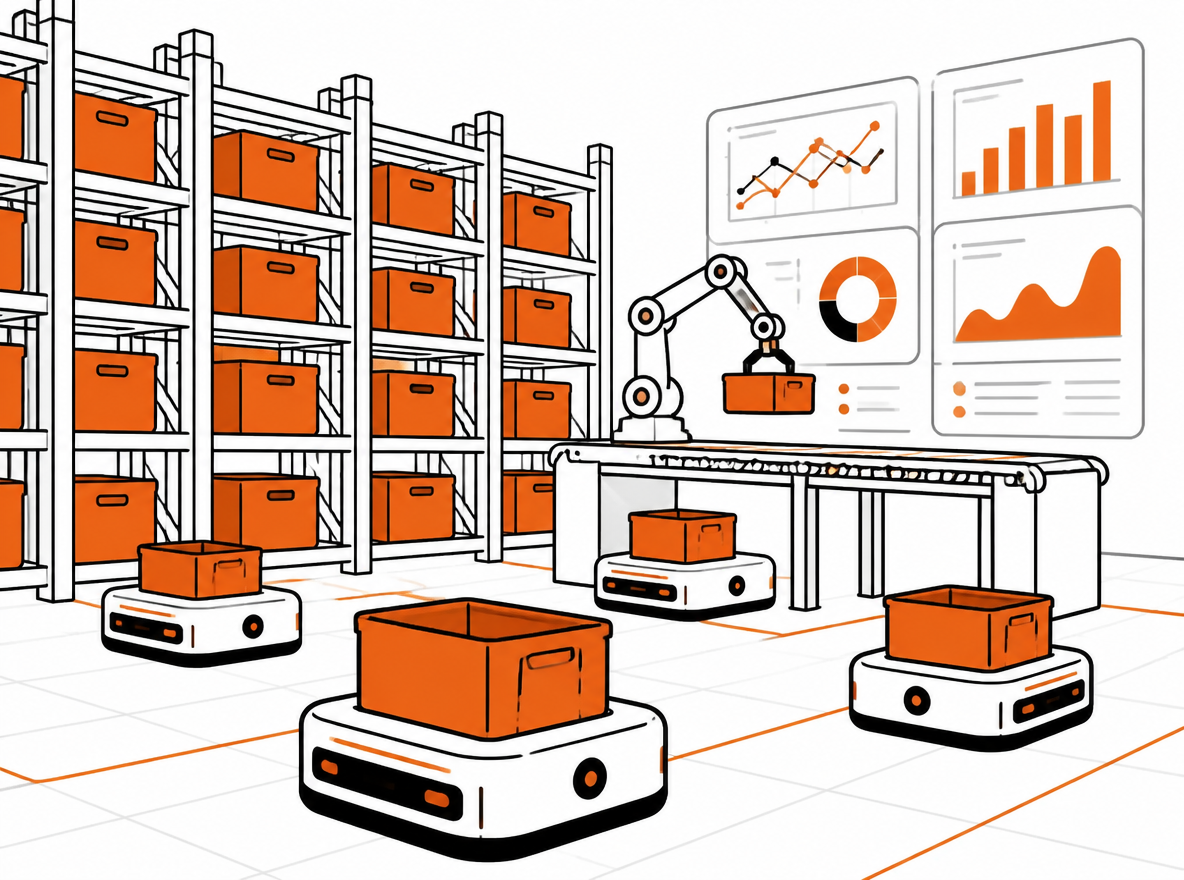
Autonomous warehouse robots move bins through racks beside a predictive analytics display.
The warehouse of 2030 will not be empty, but it will be different

The warehouse of 2030 will not be empty, but it will be different: a smaller human footprint, AI-native WMS platforms, robots handling the repetitive moves, and people focused on exceptions, quality, and customers. The winning operators will be the ones who orchestrate the handoff between automated systems and human judgment.

None of this requires a giant leap today. Start with one narrow use case, measure it relentlessly against a real baseline, and build your data muscle now, because every future AI capability will run on the data you are collecting today. The companies that treat AI as a discipline, not a purchase, are the ones that will still be winning contracts in 2030.

FAQ

Start with a single point like demand forecasting or slotting: one high-ROI, low-risk use case, a 60 to 90 day pilot at one site, measured against a baseline you can capture today (cost per order, pick accuracy). Integrate with the WMS or TMS only after it proves out, then scale site by site. Do not run three pilots at once.
A 60 to 90 day pilot tells you whether the approach works; meaningful payback typically shows up within 6 to 12 months of production rollout. That only holds once you budget for the hidden costs from day one: data engineering, integration, change management with floor staff, and ongoing model maintenance.
No. The most valuable AI in a 3PL is narrow, running on data the operation already produces: forecasting, slotting, pick paths, scheduling. Mature WMS/TMS platforms and vendors package these as purchasable capabilities, so demand a pilot on your own data before signing. The real prerequisite is cleaning up your data first.
The warehouse of 2030 will not be empty. AI handles the predictable parts, forecasting, scheduling suggestions, path recommendations, while people handle judgment and exceptions. The right posture is augmentation, not replacement: insist on explainable outputs and a human decision point, and let floor staff help shape how the tool is used.

Ready to put these capabilities into your shipping workflow?

EasyShippingX bakes real-time multi-carrier comparison, intelligent routing, and freight verification into your shipping flow, so every label is priced by the rules and quoting power becomes your product.