Shipping App Deep-Dive

The 6 Best Shipping Apps for Shopify Stores in 2026 (Deep-Dive Reviews)

This comparison is for Shopify store owners choosing shipping software. For Chinese operations teams, U.S. fulfillment, and cross-border integration requirements, use the cross-border Shopify evaluation.

Shipping is the second-largest line item on most Shopify profit-and-loss statements after product cost, yet most sellers overpay by accepting retail rates. This article deep-dives the six shipping apps worth considering in 2026: Shippo, ShipStation, Easyship, Sendcloud, Starshipit, and easyshippingx, scored on pricing, carrier coverage, automation depth, cross-border capability, ease of use, and scalability, ending with scenario-based recommendations.

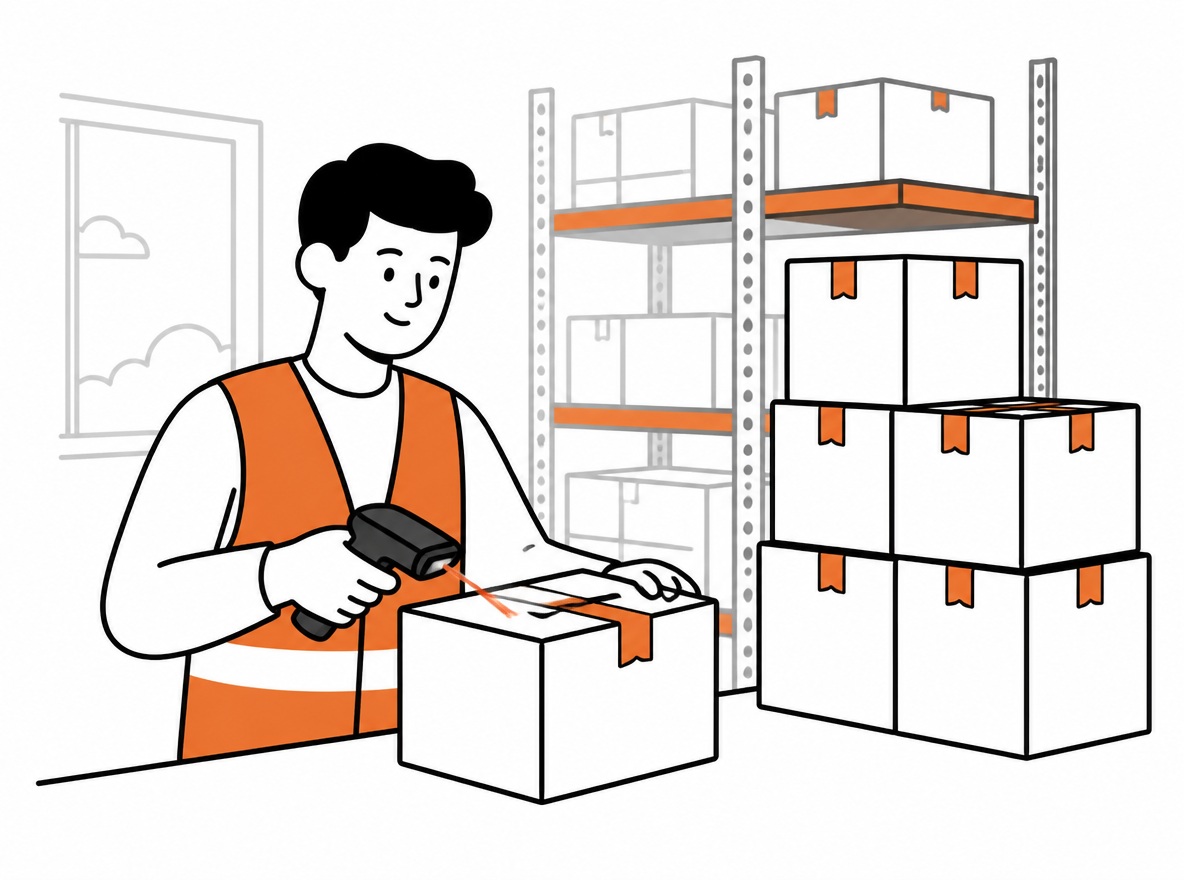
A bright small fulfillment warehouse where a worker scans a parcel with a handheld scanner beside stacks of boxes waiting to ship

Why the Right Shipping App Matters

Shipping is quietly one of the biggest line items on a Shopify store's profit-and-loss statement. After product sourcing, freight is often the second-largest cost you pay, and most sellers overpay because they accept the retail rates quoted at checkout. Every order you ship at retail postage is money you are handing to the carrier out of habit, not out of necessity.

A shipping app exists to fix exactly that. It plugs into your Shopify store, pulls in orders automatically, and lets you buy labels at discounted commercial rates from USPS, UPS, FedEx, and DHL. Those discounts are the same ones big retailers get, but negotiated in bulk by the app so that a solo seller can access them without signing a single carrier contract. For a store shipping a few hundred orders a month, the savings alone usually cover the app's cost several times over.

Time is the other cost, and it grows faster than you expect. Printing labels one by one, filling customs forms by hand, and re-keying tracking numbers into order notes eats hours every week, and those hours scale with volume. A shop doing twenty orders a day can limp along with copy-paste; a warehouse doing five hundred cannot. The right tool turns that whole ritual into a queue you approve and a button you press.

There is a ripple effect beyond the back office. A misprinted label means a late parcel, a late parcel means a frustrated customer, and a frustrated customer means a review that follows your store for years. The shipping layer connects orders, inventory, and fulfillment, so mistakes here travel all the way to your repeat-purchase rate. The difference between a 20-order-a-day shop and a 500-order warehouse is not just volume, it is which tools can keep up.
How We Picked These 6 Apps

We judged every app on the same six criteria: pricing and fees, carrier coverage (domestic and international), automation depth, cross-border capability, ease of use, and how well it scales from a solo seller to a warehouse team. A tool that wins on price but drowns you in setup work is not a win, and a tool with every feature under the sun is useless if it cannot print a label without a support ticket.

We limited the field to apps that actually live in the Shopify ecosystem and that US sellers and 3PLs genuinely use. That excludes enterprise platforms aimed at brands doing millions of parcels a month, and it excludes raw carrier portals that expect you to manage everything yourself.

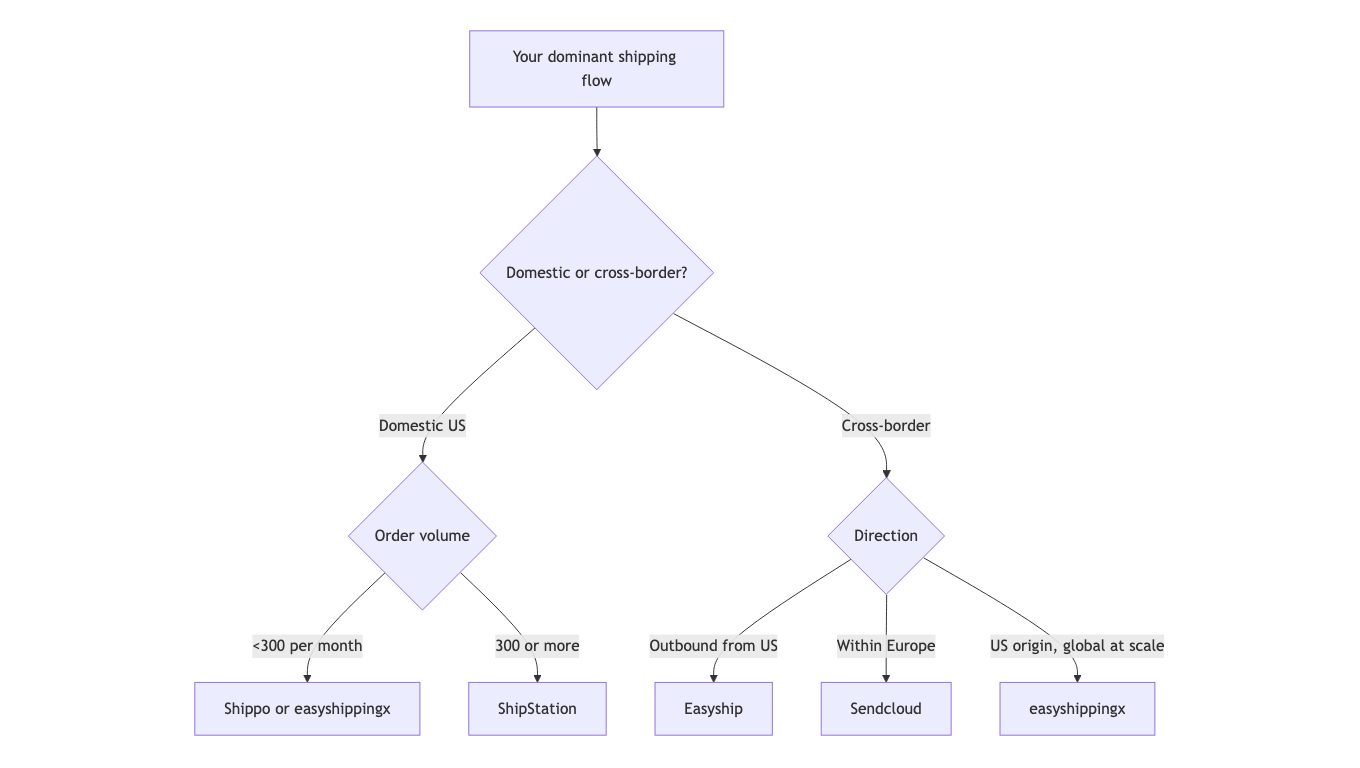
The six apps below each lead in a distinct scenario: Shippo for small US sellers, ShipStation for domestic volume, Easyship for US-origin international, Sendcloud for Europe, Starshipit for merchants with their own carrier contracts, and easyshippingx as a Shippo-style all-rounder with deeper cross-border tools. No single app wins every category, and the flowchart below is the quick way to find yours.

Shipping app selection flowchart: domestic or cross-border, by volume and direction

Read the flowchart loosely. It points you at a starting candidate, not a verdict. If your mix is split, read the scenario section at the end, which handles the messy real-world cases.

The 6 Apps at a Glance

Here is the whole field on one page. Pricing figures are approximate as of mid-2026 and change often, so treat the table as a shortlist, then confirm the current numbers on each app's pricing page.

App Best for Pricing Carrier coverage Automation International strength Shopify rating (approx.)
Shippo Solo sellers, small teams Free plan, then per-label fees USPS, UPS, FedEx, DHL Good: rules, batch labels, address validation Moderate: rates and labels, lighter on duties ~4.8
ShipStation High-volume domestic Tiered monthly plans by label volume Dozens of carriers plus marketplaces Excellent: automation rules, batch printing Good: basic international labels and forms ~4.5
Easyship US sellers with a big international mix Free plan plus per-shipment fees 550+ courier solutions worldwide Good: routing rules, bulk labels Excellent: duties, taxes, landed-cost checkout ~4.6
Sendcloud European stores Tiered plans with per-label pricing DHL, DPD, PostNL and national posts Good: automation, branded tracking Excellent within Europe and the UK ~4.6
Starshipit Merchants with own carrier contracts, 3PLs Fixed monthly fee, no per-label surcharge Connects your own UPS, FedEx, Australia Post accounts Excellent: dispatch rules, packing slips Good: AU and UK routes, lighter on US-origin ~4.7
easyshippingx Shippo-style all-rounder with cross-border depth No subscription, pay per label with large discounts US-origin carriers, real-time comparison Excellent: one-click customs docs, bulk workflow Excellent for US-origin parcels to the world Newer, growing reviews

One reading note: "best" depends on your mix of domestic versus cross-border volume and your team size. A great app for a solo seller can be the wrong tool for a five-person warehouse, and vice versa.

Shippo: Best All-Around for Small US Sellers

Shippo is the default answer for most solo Shopify sellers, and for good reason. It is a multi-carrier label platform with a clean interface that gets you from a fresh store to your first discounted label in under an hour. You connect your store, orders flow in, you compare live rates side by side, and you print. There is no minimum volume and no long-term contract.

The pricing model stays friendly at small scale: a free plan covers a monthly label allowance, and beyond that you pay a modest per-label fee. The carrier discounts are the real value, with Shippo advertising discounts of up to 89 percent off USPS retail rates, plus discounted UPS, FedEx, and DHL. Address validation catches typos before they become returned parcels, and the returns flow is simple enough that small teams actually use it.

Where Shippo thins out is at volume and across borders. Its automation rules and bulk tools are solid but shallow compared with the workhorses in this list, so a store pushing several hundred orders a day will feel the friction. International shipping is handled through rate comparison and labels, but duty and tax handling is lighter than what specialists offer. If you ship mostly within the US and your volume fits under a few hundred orders a month, Shippo is the safest pick on this list.

ShipStation: Best for High-Volume Domestic Shipping

ShipStation is the workhorse of US domestic fulfillment, and it has earned that reputation over more than a decade of batch shipping. It was built around the daily rhythm of a busy operation: orders pile up across channels, and ShipStation pulls them into one queue where you filter, batch, and print in bulk. For a store doing hundreds of domestic orders a day, this is the app the team opens first in the morning.

The automation layer is its deepest feature. You can build rules that assign carriers by weight, destination, or order value, add packing slips, and route orders through the exact workflow your warehouse already follows. It connects to dozens of carriers and most sales channels and marketplaces, so a brand selling on Shopify, Amazon, and Etsy can manage every order from one screen. Plans are tiered by monthly label volume, which keeps pricing predictable as you grow.

The trade-offs are the UI and the learning curve. The interface is dense and dated compared with Shippo or Easyship, and new users typically need a week to feel fluent. The per-label plan math also gets expensive at the top end, so very large shippers sometimes graduate to enterprise quoting. For an established store or a small fulfillment team shipping hundreds to thousands of domestic orders, ShipStation is the reliable engine room of this list.

Easyship: Best for Sellers Shipping from the US Abroad

Easyship is the international-first option. Where most shipping apps treat cross-border as an afterthought, Easyship treats it as the entire product: it compares courier routes to your destination, picks the cheapest or fastest option, calculates duties and taxes up front, and generates the customs paperwork automatically. If a meaningful share of your orders crosses a border, this is the app that removes the most friction.

The network is its headline number: more than 550 courier solutions worldwide, which means a US store can offer delivery options to nearly any country without negotiating with a single courier. At checkout, customers see the landed cost, the total including duties and taxes, so they are not surprised by a customs bill at the door. That transparency measurably reduces cart abandonment and the support tickets that follow international orders.

The weaknesses are the flip side of its specialization. Domestic US rates are less competitive than apps whose whole game is USPS and UPS, so if most of your orders stay inside the country, Easyship is the wrong default. Per-shipment fees also stack up on high-volume, low-margin parcels. It is the right call for US stores where international orders are a meaningful share of revenue, and a niche pick for purely domestic sellers.

Sendcloud: Best for European Shopify Stores

Sendcloud is the European counterpart to this list, and the strongest choice for stores based in Europe or selling heavily into EU countries and the UK. Its carrier network is built for the continent, with DHL, DPD, PostNL, and a range of national postal services, so a store in Germany shipping to France, Italy, or the UK gets multiple competitive routes without hunting for them.

Two features stand out for European sellers. The first is a branded tracking page that keeps customers inside your store's experience instead of dumping them on a carrier site. The second is a returns portal, which matters disproportionately in Europe, where consumer return rights are generous and returns are a routine part of doing business. The interface supports multiple languages, and the app handles the VAT and customs paperwork that cross-border EU shipping involves.

Where Sendcloud falls short is the US. Its American carrier coverage is thinner, and the backend is shaped around European business habits, so a US-only seller will find little reason to choose it. It is also a heavier setup than Shippo for a small team. If your store lives in Europe or ships a large share of orders there, Sendcloud is the natural fit; if you only ship within the US, skip it.

Starshipit: Best When You Already Have Carrier Contracts

Starshipit is a different kind of tool. Instead of reselling discounted rates, it plugs into the carrier accounts you already negotiated, connects your own UPS, FedEx, and Australia Post contracts, and gives you operational control over how orders dispatch. If you are an established merchant or a 3PL that has signed real carrier agreements, the savings you already secured are exactly what this app is built to manage.

Its strengths are operational. Dispatch rules decide which carrier handles which order based on your own logic, packing slips print in your format, and multi-store management lets one team run several brands from a single queue. The pricing model is also distinctive: a fixed monthly fee with no per-label surcharge, which matters for high-volume shippers who would rather pay a predictable subscription than watch per-label fees compound.

The catch is that its value depends on you having contracts in the first place. A new seller with no negotiated rates gets none of the discount benefit, and the cross-border depth is concentrated on Australia, the UK, and New Zealand routes, with fewer options for US-origin international parcels. For merchants and 3PLs who already hold carrier contracts and want operational control, Starshipit is excellent; for everyone else it is a tool looking for a problem.

easyshippingx: A Shippo-Style All-Rounder with Cross-Border Depth

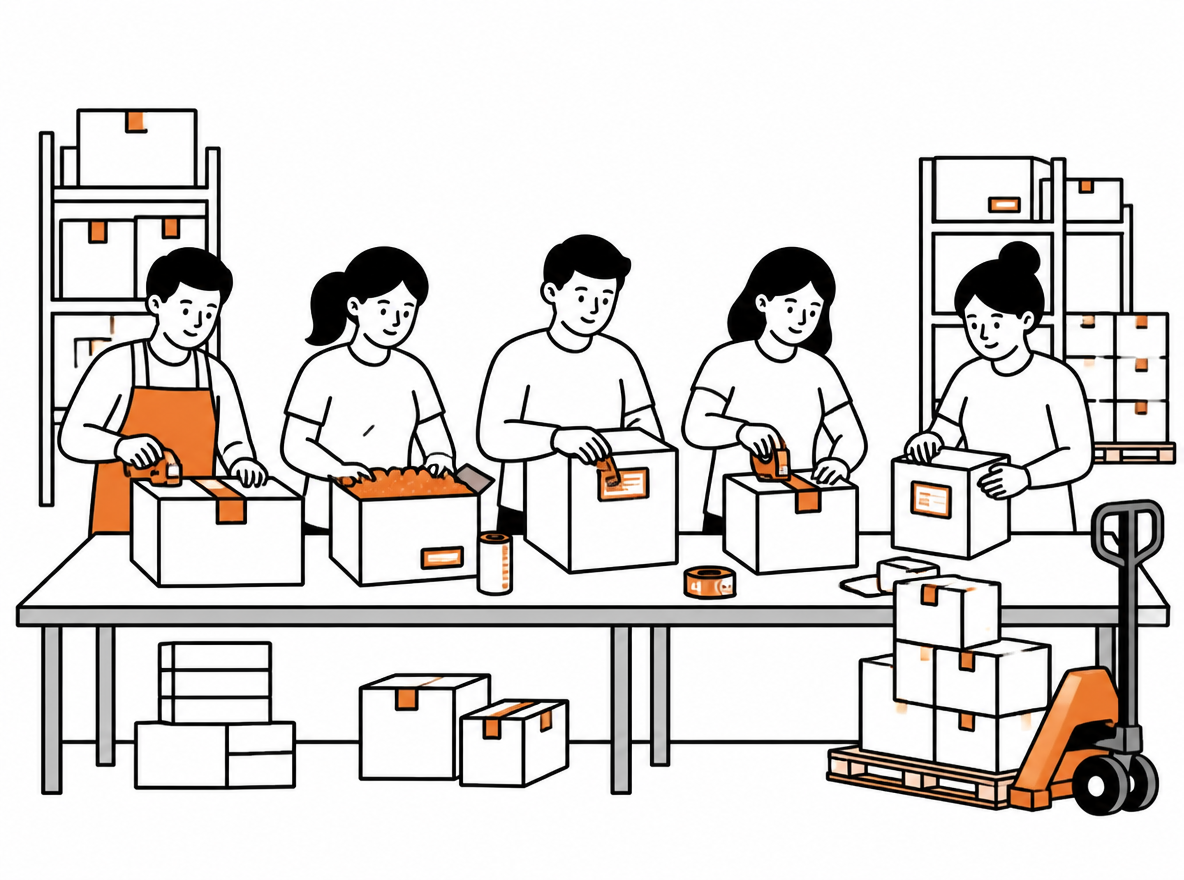
A compact five-person warehouse team packing and labeling parcels at a long table, boxes stacked and ready for international dispatch

easyshippingx looks a lot like Shippo, and that is the point. It is a multi-carrier shipping platform for Shopify stores: you connect your store, orders flow in, you compare live rates side by side, and you print labels. There is no subscription and no minimum volume: you pay per label as you go, and the carrier discounts are large enough to compete with the bigger names. Underneath that familiar surface, though, it is built for more. It is a cloud logistics platform for the US-origin small-parcel ecosystem that connects stores, warehouses, 3PLs, and freight forwarders in one system, so the same tool that handles your first fifty orders can keep up when you reach hundreds or thousands of parcels a day.

Its core strengths are the three things that burn the most time in fulfillment, whether your orders stay domestic or cross a border. Real-time price comparison across carriers replaces the habit of opening six carrier websites to find the cheapest route. One-click customs document generation turns the most error-prone part of international shipping, the paperwork, into a formality. And multi-user team collaboration means a warehouse manager, a forwarder, and a store owner can watch the same parcel's status without chasing each other in group chats. The platform is designed so that a five-person warehouse can move about two thousand parcels a day without adding headcount.

The honest caveat is track record. It is newer than Shippo, so its review base and community are still growing, and a purely domestic US store will find Shippo's decade of polish the safer default. But this is not a niche tool for warehouses only. It covers the same everyday ground as Shippo, and the moment your mix starts crossing borders, its customs automation and team collaboration give it an edge that Shippo does not offer.

The Right Pick for Your Scenario

Here is the field mapped onto real situations, from a solo seller to a warehouse team.

Your situation Best pick Runner-up
Solo US seller, mostly domestic, under ~300 orders/month Shippo easyshippingx
US store scaling domestic volume past ~300 orders/month ShipStation Shippo or easyshippingx
US seller where a big share of orders ships internationally Easyship easyshippingx
Store based in Europe or selling heavily into the EU/UK Sendcloud Easyship for non-EU destinations
Merchant or 3PL with your own negotiated carrier contracts Starshipit ShipStation for domestic volume
Warehouse or 3PL shipping US-origin parcels globally at scale easyshippingx Easyship for duty-heavy routes

If you are a small US seller shipping mostly domestically, the decision is really just volume: under a few hundred orders a month, Shippo's simplicity wins, with easyshippingx a close sibling if you want cross-border headroom built in; past that, ShipStation's batch engine earns its learning curve.

If cross-border is your story, direction decides it. A US store sending orders abroad benefits from Easyship's duty and tax automation. A warehouse or forwarder whose whole operation is US-origin parcels at scale should look hard at easyshippingx, especially if customs paperwork and team coordination are your daily bottlenecks.

If you already hold carrier contracts, Starshipit stops you paying twice for rates you negotiated yourself. And if your store lives in Europe, Sendcloud's carrier network and returns portal are built for exactly your customers. Every app on this list beats Shopify's default checkout rates; the differentiator is which workflow it automates for you.

Frequently Asked Questions

Is a shipping app worth it for a small Shopify store?

Usually yes. If you ship more than about thirty orders a month, the discounted carrier rates alone typically cover the app's cost, and the time saved on labels and tracking pays for the rest. Most apps on this list have a free tier or a low entry plan, so the risk of trying one is small.

Do shipping apps get you cheaper rates than the Shopify checkout default?

Yes. Shopify's built-in rates are convenient, but a dedicated shipping app buys labels at commercial discounted rates negotiated in bulk. The typical gap is significant enough that high-volume stores treat the app as a profit center, not an expense.

Can I use a shipping app for international orders without paying customs on behalf of the customer?

Yes, in two ways. Apps like Easyship show the landed cost, including duties and taxes, at checkout so the customer pays at purchase time. With other apps you can ship DDU (delivery duty unpaid) and let the customer settle customs at delivery, though that risks surprise fees and a worse delivery experience.

Do these apps work with the Shopify POS or multiple sales channels?

All six sync with Shopify online orders, and most handle POS and other channels through Shopify's order data. ShipStation and Starshipit go further with direct marketplace integrations for Amazon, Etsy, and eBay, which matters if you sell across multiple channels.

What is the difference between a shipping app and a fulfillment service (3PL)?

A shipping app is software: it buys labels, prints them, and manages dispatch from your own warehouse. A 3PL is a company: it stores your inventory, picks and packs orders, and ships them for you, often using a shipping app on its own side. You use a shipping app to run fulfillment yourself, and you hire a 3PL when you want to outsource it.

Bottom Line

Match the tool to your dominant shipping flow, domestic versus cross-border, solo seller versus warehouse team, and the right choice becomes obvious. For most small US sellers, Shippo is the lowest-risk start, with easyshippingx the close sibling: the same everyday multi-carrier workflow, plus cross-border tools Shippo does not match. For domestic volume, ShipStation is the engine room. For US stores selling abroad, Easyship takes the pain out of duties and customs. European stores get their best fit in Sendcloud, and merchants with their own carrier contracts belong on Starshipit. And easyshippingx covers both ends of the spectrum: Shippo-style labels with no subscription for small sellers, and the cross-border automation warehouses need when volume scales.

Every app on this list beats Shopify's default checkout rates. The real question is not which one is cheapest, it is which one automates the workflow you actually run, so the labels print, the customs forms fill themselves, and your team stops doing by hand what software does better.

Ready to See What Discounted Rates Could Save You?

Use the free shipping cost calculator for a quick US delivery estimate, and talk to easyshippingx for discounted multi-carrier shipping rates.