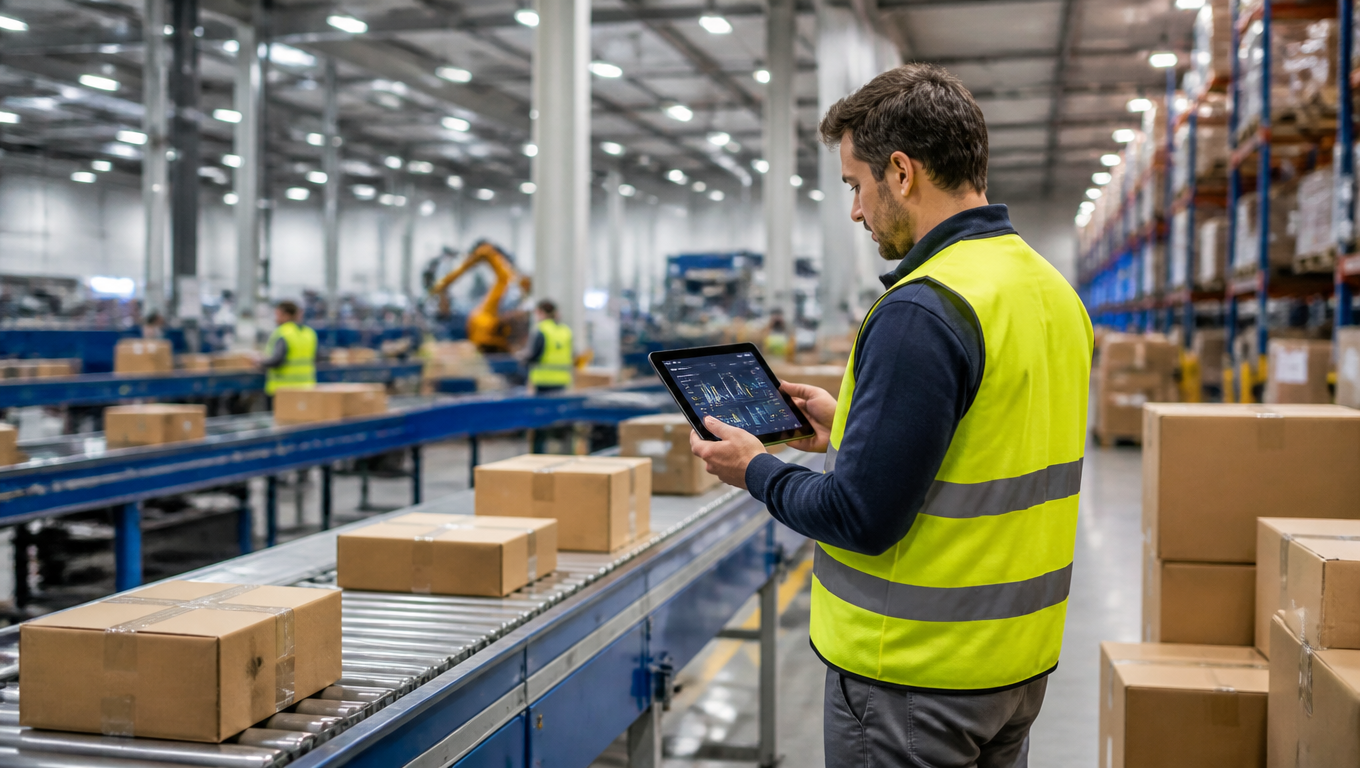
发货自动化Shipping Automation

发货自动化软件:2026 年每月省下 50+ 小时Shipping Automation Software: Save 50+ Hours Monthly in 2026

发货有一个大家都在谈的价格问题,和一个几乎没人量过的工时问题。费率卡告诉你运费是多少,却对你的团队把时间花在哪只字不提:往承运商系统里喂订单、在三个浏览器标签页之间比价、追查跟踪号、回复一封封「我的订单到哪了」。对大多数中等规模的运营来说,这笔隐藏的人工账单,比任何一单的毛利都大。Shipping has a pricing problem that everyone negotiates, and a labor problem that almost nobody measures. The rate card tells you what the freight costs. It says nothing about the hours your team spends feeding orders into carrier portals, comparing rates in three browser tabs, chasing tracking numbers, and answering "where is my order" emails. For most mid-size operators, that hidden labor bill is bigger than the margin on any single shipment.

下面这份月度时间账来自两种典型运营:一个每天大约 500 单的 3PL 仓库,和一个每月大约 1,500 单的多渠道卖家。所有数字都是对「手工、可重复」那部分工作的保守估算:两列都超过了每月 50 小时,摊到 22 个工作日,等于每天都花掉两小时以上,也就是一个全职员工三分之一的月度工时。Here is the monthly ledger for two typical operations: a 3PL warehouse moving about 500 orders a day, and a multi-channel seller shipping about 1,500 orders a month. The hours are estimates for the manual, repeatable part of the work, and they are deliberately conservative. Both columns clear 50 hours. Spread across a 22-working-day month, that is more than two hours every single day, or roughly a third of a full-time employee's month.

和运费不同,运费谈一次价就能定下来,这是每个月都会回来的重复人工,什么货量都躲不掉。这篇文章先按仓库、再按卖家两个场景逐行拆这张账,讲自动化在各自场景里实操长什么样;后半段转向落地:一份 2026 年选型核对清单,和一条下周一就能开始的 30 天路径。And unlike freight cost, which you negotiate once, this is recurring labor that shows up month after month, at every volume. The guide walks through the ledger lane by lane: first the warehouse scenario, then the seller scenario, with what automation actually looks like in each. The second half turns practical: a 2026 buyer's checklist, and a 30-day rollout path you can start next Monday.
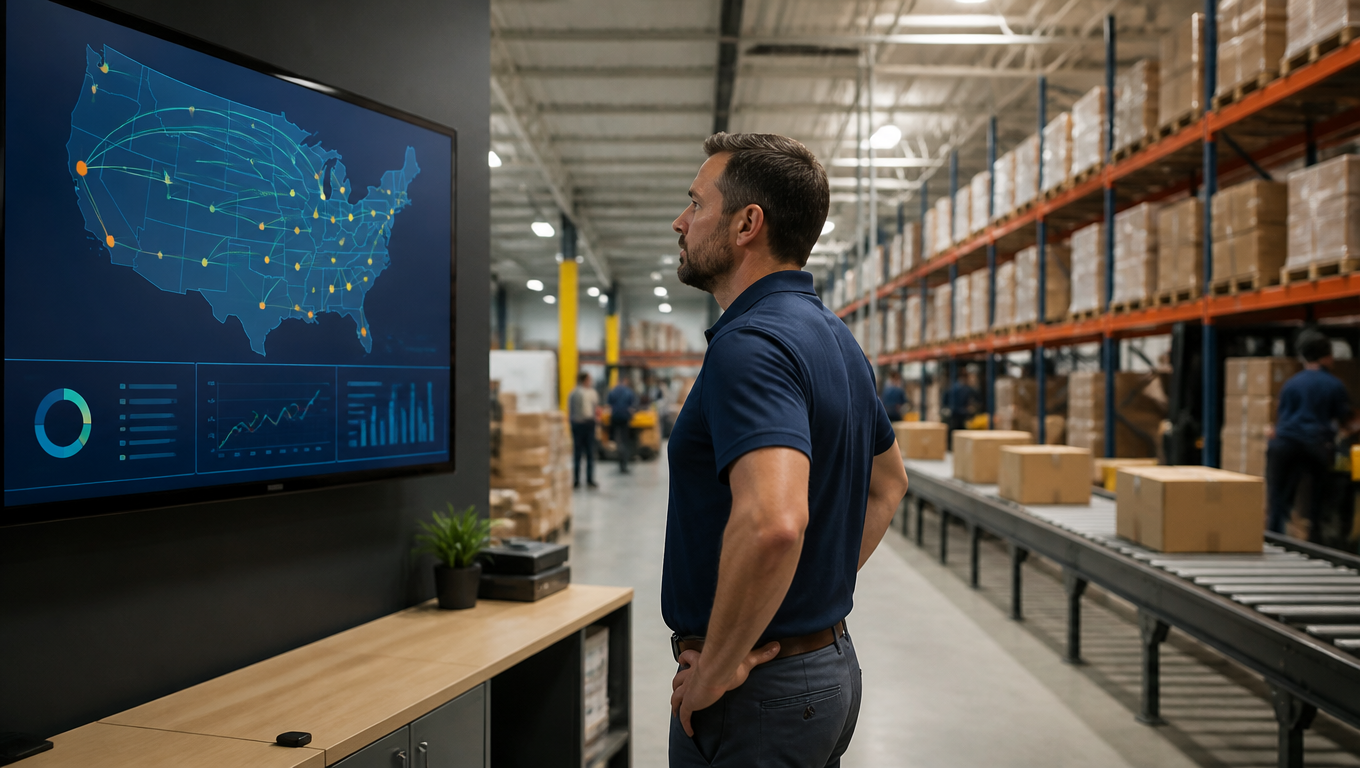
海外仓运营经理站在一块大屏幕前,屏幕上显示着发货自动化看板和地图上的包裹路线,明亮现代的物流设施里货架堆满纸箱
真正的成本不在费率卡上,在没人测量的工时里The real cost is not on the rate card; it is in the hours nobody measures

这 50+ 小时到底花在哪Where the 50+ Hours Actually Go

下面是两张典型的月度时间账:一张是每天约 500 单的 3PL 仓库,一张是每月约 1,500 单的多渠道卖家。每一行都只算「手工、可重复」的部分,并且刻意往保守了估。Here is the monthly ledger for two typical operations: a 3PL warehouse moving about 500 orders a day, and a multi-channel seller shipping about 1,500 orders a month. The hours cover only the manual, repeatable part of the work, and they are deliberately conservative.

手工环节Manual task 仓库列(小时/月)Warehouse lane (hrs/mo) 卖家列(小时/月)Seller lane (hrs/mo)
订单录入 / 渠道同步Order entry / channel sync 12 8
打单出标 / 门户数据录入Label creation & portal data entry 10 6
比价 / 选承运商Rate comparison / carrier selection 8 6
把跟踪号回填到店铺Tracking backfill into storefronts - 8
异常跟踪(丢失 / 延误)Exception tracking (lost / delayed) 10 -
回复 WISMO 邮件WISMO replies - 12
生成退货标签(RMA)Return label generation (RMA) - 6
跨境单证(发票、HS 编码)Cross-border paperwork (invoice, HS) - 10
运费账单核对与对账Freight bill audit & reconciliation 12 -
合计Total 52 50

两列都超过了 50 小时。摊到 22 个工作日,等于每天两小时以上,也就是一个全职员工三分之一的月度工时。运费你可以谈一次价就定下来,这是每个月都会回来的重复人工,什么货量都躲不掉。Both columns clear 50 hours. Spread across a 22-working-day month, that is more than two hours every single day, or roughly a third of a full-time employee's month. And unlike freight cost, which you negotiate once, this is recurring labor that shows up month after month, at every volume.

这篇文章接下来逐行拆这张账:先仓库场景,再卖家场景,讲自动化在各自场景里实操长什么样。后半段转向落地:一份 2026 年选型核对清单,和一条下周一就能开始的 30 天路径。The rest of this guide walks through the ledger lane by lane. First the warehouse scenario, then the seller scenario, with what automation actually looks like in each. The second half turns practical: a 2026 buyer's checklist, and a 30-day rollout path you can start next Monday.
仓库场景:3PL / 海外仓的月度时间账Warehouse Scenario: The 3PL / Fulfillment Monthly Ledger

对 3PL 或海外仓来说,最大的单一吞时点是订单录入。订单从邮件、电子表格、或十几个客户发来的半解析 EDI 文件里涌进来,每一单都是一次复制粘贴:找到订单、抄下地址、祈祷邮编没错。每天 500 单,光这一项就是每月约 12 小时,还一张面单都没打。For a 3PL or fulfillment warehouse, the biggest single sink is order entry. Orders arrive by email, in spreadsheets, or as half-parsed EDI files from a dozen different customers. Each one is a copy-paste session: find the order, transcribe the address, hope the ZIP code is right. At 500 orders a day that is roughly 12 hours a month, before a single label is printed.

打单出标和门户数据录入又占 10 小时。每一票都要登录承运商门户、重新输入地址、选服务、买面单。再算上每月 8 小时的逐件比价,你就得到了大多数仓库烂熟于心的仪式:打开两三个承运商标签页,比价,选最便宜的,然后重复五百次。Label creation and portal data entry run another 10 hours. Every shipment means logging into the carrier's portal, re-entering the address, choosing the service, and buying the label. Add per-shipment rate comparison at 8 hours a month and you get the ritual most warehouses know by heart: open two or three carrier tabs, compare, pick the cheapest, and repeat five hundred times.

然后是两件没人做预算的工作。异常跟踪:在承运商门户和客户邮件之间跟进丢失、延误、无法派送的包裹,每月约 10 小时。运费账单核对是最安静的一项:把发票和承运商当初的报价逐行核对、抓出体积重和分区错误,每月约 12 小时。Then come the two jobs nobody budgets for. Exception tracking, following up on lost, delayed, and undeliverable parcels across carrier portals and customer emails, runs about 10 hours a month. Freight bill audit is the quiet one: reconciling invoices against what the carriers quoted, catching DIM weight errors and zone mistakes, around 12 hours a month.

这些数字单看哪一个都不夸张,加在一起是每月 52 小时。每一小时省下来,都会直接回到真正重要的活上:拣货、客服、对账。None of these numbers is dramatic on its own. Together they are 52 hours a month, and every hour reclaimed goes straight back to work that actually matters: picking, customer service, and reconciliation.

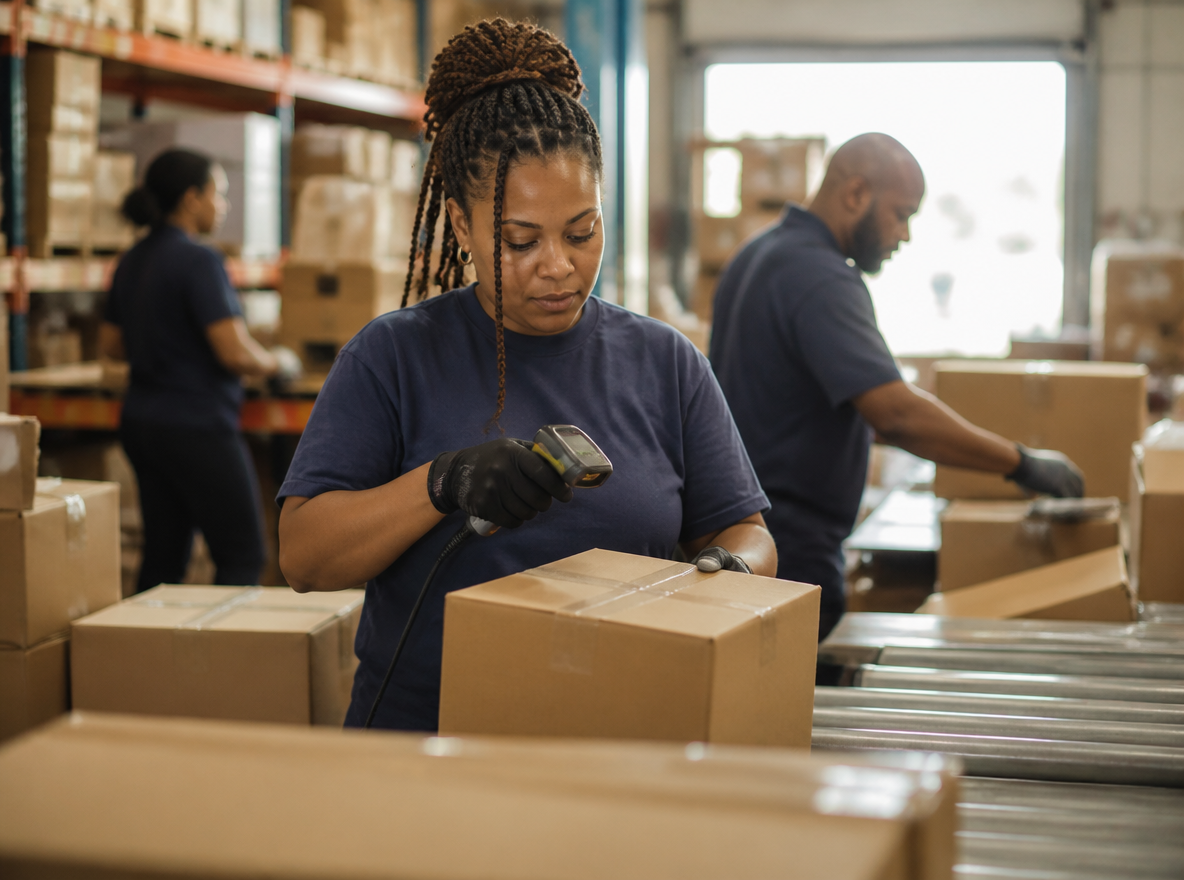
繁忙的仓库月台上,工人打包纸箱,其中一人用手持条码扫描枪扫箱,纸箱堆叠、货架在温暖的日光下
省出来的工时,回到拣货、客服和对账这些真正重要的活上Reclaimed hours go back to what actually matters: picking, customer service, and reconciliation

仓库场景:自动化在实操中长什么样Warehouse Scenario: What Automation Looks Like in Practice

这里的自动化是一条四段式管线,比听起来简单:订单通过 API 或 EDI 接入,而不是躺在收件箱里;地址校验在面单生成之前就把脏数据拦下;规则引擎把每张订单路由到正确的承运商和服务;任何不满足规则的单子落进异常队列交给人工,而不是悄悄发错。Automation here is a four-piece pipeline, and it is simpler than it sounds. Orders come in through API or EDI connections instead of inboxes. Address validation scrubs them before they reach a label. A rules engine routes each order to the right carrier and service. Anything that does not fit the rules drops into an exception queue for a human, instead of silently shipping wrong.

运费审计值得单独说,因为它是发货这件事里最接近「白捡的钱」的东西。审计工具把每一行发票和报价费率、以及这一票的真实尺寸和分区逐项比对,自动标出不一致。过去溜过去的延误和计费错误,现在浮出水面变成退款申请,对中型仓库来说一年就是几千美元。The freight audit piece deserves special mention, because it is the closest thing shipping has to found money. Audit tooling compares every invoice line against the quoted rate and the shipment's actual dimensions and zone, then flags mismatches automatically. Late deliveries and carrier billing errors that used to slip past now surface as credit requests, which for a mid-size warehouse can be thousands of dollars a year.

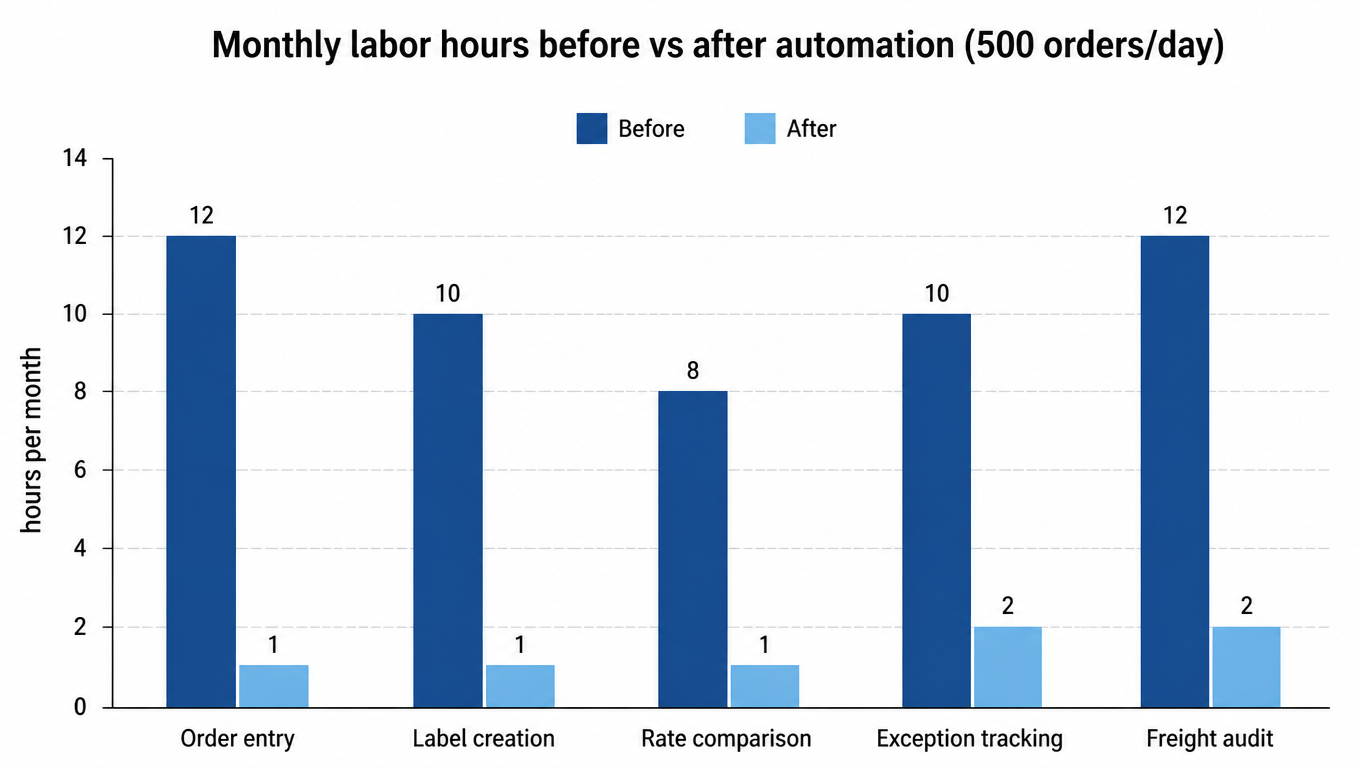
套回上面的账本,按每天 500 单算,数字是这样的:订单录入从 12 小时降到约 1 小时,因为员工只碰真正的异常;打单从 10 降到 1,通过承运商 API 批量生成;比价从 8 小时降到 1 小时,每周扫一眼路由报告,而不是五百次手工挑选;异常跟踪从 10 降到 2;运费审计从 12 降到 2。合计:每月 52 小时降到约 7 小时。Applied to the ledger above, at 500 orders a day, the math looks like this. Order entry drops from 12 hours to about 1, because staff only touch genuine exceptions. Label creation goes from 10 to 1, generated in batches through the carrier API. Rate comparison falls from 8 hours to 1, a weekly skim of the routing report instead of five hundred manual picks. Exception tracking goes from 10 to 2, and freight audit from 12 to 2. Total: 52 hours a month down to about 7.

柱状图:自动化前后每月工时时长对比,订单录入 12 降到 1,打单 10 降到 1,比价 8 降到 1,异常跟踪 10 降到 2,运费对账 12 降到 2Bar chart of monthly labor hours before vs after automation: order entry 12 to 1, label creation 10 to 1, rate comparison 8 to 1, exception tracking 10 to 2, freight audit 12 to 2
自动化前后每月工时时长(按每天 500 单估算)Monthly labor hours before vs after automation (estimated at 500 orders per day)

而且这个份额只会随规模变大。到每天 800 单时,同样的运营通常每月能清出超过 50 小时的人工,因为固定的搭建成本摊到了更多单量上。The share only improves with scale. At 800 orders a day, the same operation routinely clears 50 hours a month in reclaimed labor, because the fixed setup cost is spread over more shipments.

卖家场景:DTC / Shopify 的月度时间账Seller Scenario: The DTC / Shopify Monthly Ledger

卖家这边,账本从店铺开始,而不是从月台开始。如果你在 Shopify 之外还开着一个平台店或独立站,每一单都是一次对账的杂活:确认它同步过来了、选承运商、买面单、再把跟踪号复制回每个渠道。同步和数据录入每月约 8 小时;选承运商再加 6 小时。On the seller side, the ledger starts with the store, not the dock. If you sell on Shopify plus a marketplace or a standalone site, every order is a reconciliation chore: make sure it synced, pick the carrier, buy the label, and copy the tracking number back into each channel. That sync and data-entry work runs about 8 hours a month; carrier selection adds 6 more.

跟踪号回填是卖家最恨的活,而且恨得有道理。把跟踪号从承运商门户复制出来,粘进 Shopify,粘进平台店,粘进邮件。每月 1,500 单,就是约 8 小时纯复制粘贴。然后后果来了:看不到跟踪信息的客户开始写信来问。「我的订单到哪了」(WISMO)邮件每月约吃掉 12 小时。Tracking backfill is the task sellers hate most, and with good reason. Copy the tracking number from the carrier portal, paste it into Shopify, paste it into the marketplace, paste it into the email. At 1,500 orders a month that is roughly 8 hours of pure copy-paste. Then the consequences arrive: customers who cannot see tracking write in. WISMO, "where is my order", emails run about 12 hours a month.

跨境卖家还背着一本第二账本。商业发票、HS 编码、报关单要逐票生成,一位数错了包裹就卡在海关,买家还在问它到哪了。这份单证每月约 10 小时,还得算上失败后返工的时间。退货标签要手动去承运商门户生成,再加 6 小时。Cross-border sellers carry a second hidden ledger. Commercial invoices, HS codes, and customs forms have to be generated per shipment, and one wrong digit means the parcel sits in customs while the buyer asks where it is. That paperwork runs about 10 hours a month, plus the redo time when it fails. Return labels, generated by hand through the carrier portal, add another 6.

加起来,卖家这一列是每月 50 小时。多渠道卖家看到的数字是随渠道叠加的:每多一个店铺,同步、回填、WISMO 这几行是按渠道成倍增长,而不是线性相加。Add it up and the seller lane is 50 hours a month. Multi-channel sellers see the same numbers stack per channel: each extra storefront multiplies the sync, backfill, and WISMO line items rather than adding to them.

卖家场景:自动化在实操中长什么样Seller Scenario: What Automation Looks Like in Practice

卖家侧自动化的核心,是仓库用的那套规则引擎,只是把枪口对准你的店铺。一条「1 公斤以下发美国用 USPS,超过 1 公斤用 UPS,申报价值超过 500 美元就加保险」的规则,把每单六分钟的思考和点击,替换成零次手工挑选。面单和跟踪号通过 API 自动回来。The core of seller-side automation is the same rules engine the warehouse uses, pointed at your store. A rule like "under 1 kg to the US, use USPS; over 1 kg, use UPS; declared value over $500, add insurance" replaces the six minutes of thinking and clicking per order with zero manual picks. The label and tracking number come back through the API automatically.

跟踪号回填直接消失了,因为被集成本身取代:面单一打印,跟踪号就流进店铺和平台店。主动通知替你做了 WISMO 的活。买家在想到要问之前就收到了跟踪邮件,客服收件箱就不再被同一个问题灌满。Tracking backfill disappears because it is replaced by the integration itself: the tracking number flows into the storefront and the marketplace the moment the label prints. Proactive notifications do the WISMO work for you. When the buyer gets a tracking email before they think to ask, the support inbox stops filling with the same question.

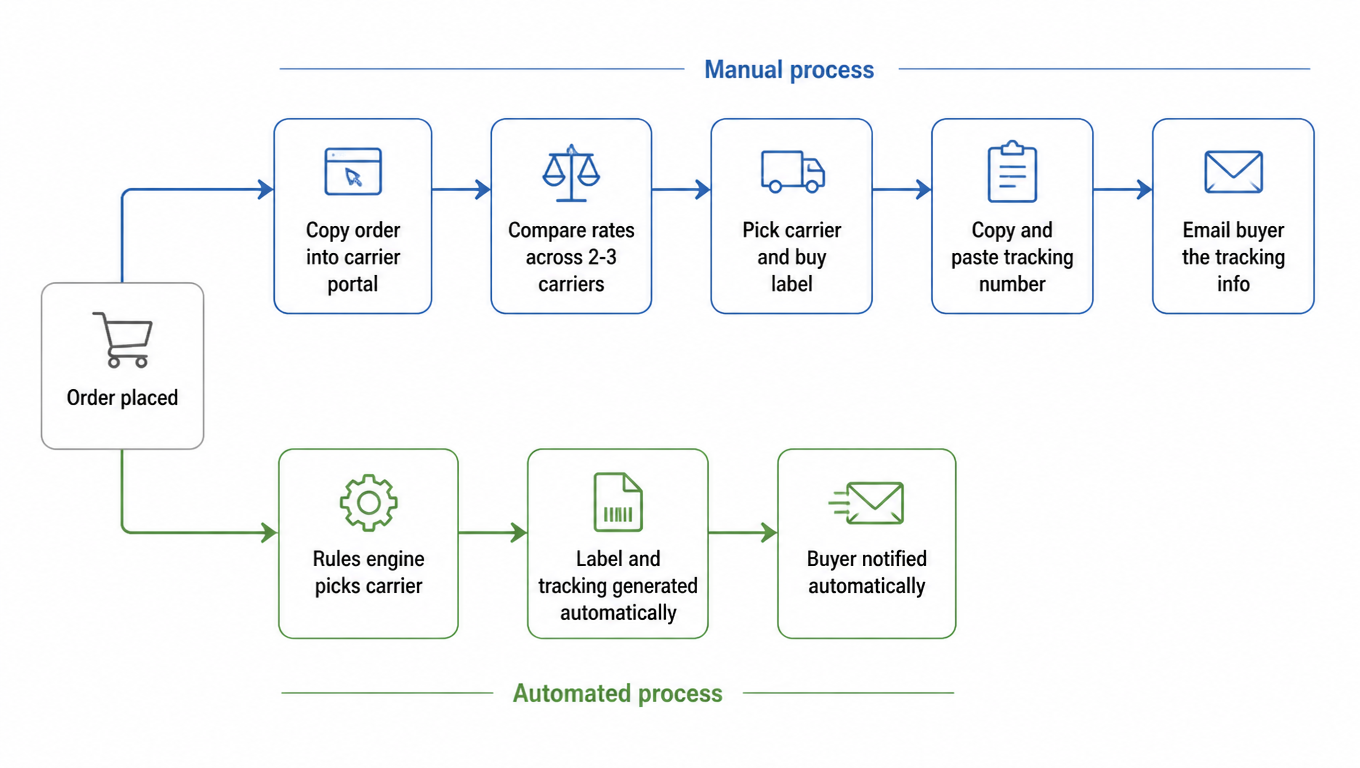
退货得到同样的待遇。一张 RMA 申请自动触发一张带正确承运商和地址的退货标签,而不是员工每次都在承运商门户里重做一遍。下面的图展示了两种世界里,一单从下单到发出的完整流转。Returns get the same treatment. An RMA request triggers an auto-generated return label with the correct carrier and address, instead of a staff member rebuilding it in the carrier portal every time. The diagram below shows how one order moves from placement to dispatch in both worlds.

流程图:人工路径是下单后把订单抄进承运商系统、在两三家承运商之间比价、选承运商买面单、复制粘贴跟踪号、邮件告知买家;自动化路径是规则引擎选承运商、自动生成面单和跟踪号、自动通知买家Flow diagram: the manual path copies the order into the carrier portal, compares rates across 2-3 carriers, picks a carrier and buys a label, copies and pastes the tracking number, then emails the buyer; the automated path has the rules engine pick the carrier, generate the label and tracking automatically, and notify the buyer automatically
人工路径触碰六个界面,自动化路径零触碰The manual path touches six screens; the automated path touches zero

人工路径触碰六个界面,每一步都可能出错;自动化路径零触碰。这就是全部卖点,也是为什么规则一旦就位,50 小时的账本缩水得这么快。The manual path touches six screens and invites a mistake at every step. The automated path touches zero. That is the entire pitch, and it is also why the 50-hour ledger shrinks so fast once the rules are in place.

一位小型电商创始人坐在明亮的家庭工作台前打包订单,旁边是一台正在出标签的紧凑型标签打印机,纸箱邮件整齐叠放
规则写好的那一刻,就是 50 小时账本开始缩水的那一刻The moment the rules are in place is the moment the 50-hour ledger starts shrinking

2026 选型:一份务实的核对清单2026 Buyer's Checklist: A Pragmatic Shortlist

一旦开始看发货软件,每个厂商给你看的都是同一张功能表。诀窍是知道哪些行对你的运营真正要紧。这份八项清单,覆盖的就是真正能移动账本的那几行:Once you start looking at shipping software, every vendor shows you the same feature table. The trick is knowing which rows matter for your operation. This eight-point checklist covers the rows that actually move the ledger:

  • 集成深度:是原生连你的 WMS、电商店铺和平台店,还是靠脆弱的 CSV 导出?Integration depth: does it connect to your WMS, ecommerce storefronts, and marketplaces natively, or through fragile CSV exports?
  • 多承运商路由:真正跨承运商、跨服务比价,而不是一个签死的单一合约。Multi-carrier routing: real rate shopping across carriers and services, not a single pre-negotiated contract.
  • 规则引擎:你的路由逻辑(重量、目的地、申报价值)能不能不靠厂商支持自己配?Rules engine: can you express your routing logic (weight, destination, declared value) without vendor support?
  • 批量能力:成百上千单同时生成面单、回填跟踪号、同步状态。Batch capabilities: label generation, tracking backfill, and status sync for hundreds of orders at once.
  • 异常处理:有一个看得见的队列装那些不满足规则的订单,并且能在工具里直接改路由。Exception handling: a visible queue for orders that break the rules, with re-routing from inside the tool.
  • 跨境单证与合规:国际线路的商业发票、HS 编码查询和关税处理。Cross-border docs and compliance: commercial invoices, HS code lookup, and duty handling for international lanes.
  • API 与无头能力:你的开发能不能用代码推送和拉取订单、面单、跟踪信息?API and headless capability: can your developers push and pull orders, labels, and tracking programmatically?
  • 计费模式:按面单、按订单还是平台费,货量涨上去之后成本会变成什么样。Pricing model: per-label, per-order, or platform fee, and what happens to the cost as volume grows.

三个坑比任何授权费都贵。按功能表选型:为永远不会用到的行付钱,却跳过真正要紧的那一行。按「谁家便宜」选型:通常意味着最薄的集成和最手工的粘合。还有最常见的一个:买了不配规则,软件装好了,路由逻辑从来没建过,团队继续全部手工。Three pitfalls cost more than any licensing fee. Choosing by feature table, where you pay for rows you will never use and skip the one that matters. Choosing by cheapest price, which usually means the thinnest integrations and the most manual glue. And buying without configuring rules, the most common one of all: the software is installed, the routing logic was never set up, and the team keeps doing everything by hand.

想要一套完整的加权打分框架,拿自己的运营去给厂商排名,姊妹篇《How to Compare Shipping Software》一步步带你走完。If you want a full weighted scoring framework to rank vendors against your own operation, the companion guide How to Compare Shipping Software walks through it step by step.

30 天落地路径(按你的场景选一条)A 30-Day Rollout Path (Pick Your Lane)

只要把范围收紧,自动化是按周落地、不是按季度落地的。仓库路径:第 1 周接通订单接入和地址校验,量一下进单错误率;第 2 周给你最重的线路建第一批路由规则,打开批量打单;第 3、4 周搭起异常队列、连上运费审计,每一步都盯住「每千单工时时长」这个指标。Automation lands in weeks, not quarters, if you keep the scope tight. For warehouse operators: week 1, wire order ingestion and address validation, and measure the error rate on incoming orders. Week 2, build the first routing rules for your top lanes and turn on batch label generation. Weeks 3 and 4, stand up the exception queue and connect freight audit, tracking hours per thousand orders at each step.

卖家在自己的道上得到同样的待遇。第 1 周接通店铺、自动同步订单;第 2 周给最重的三条线路写路由规则;第 3 周打开自动回填跟踪号和买家通知,盯住 WISMO 占客服工单的比例;第 4 周自动化退货标签。每个阶段都挂着一个数字:错误率、每千单工时,或 WISMO 占比,而且每一项都只要几个小时就能搭好。Sellers get the same treatment in their own lane. Week 1, connect the store and sync orders automatically. Week 2, write routing rules for the top three lanes. Week 3, turn on automatic tracking backfill and buyer notifications, and watch the WISMO share of incoming support tickets. Week 4, automate return labels. Each stage has one number attached: error rate, hours per thousand orders, or WISMO share, and none of them takes more than a few hours to set up.

最后一点,是比软件活得更久的那一点。自动化是一个会复利的习惯:每写一条规则,就移除一个曾经消耗团队时间的决策,而账本永远不会把它加回来。从符合你运营的那条道开始,让指标保持可见,每月 50 小时的故事会自己写出来。想深挖仓库场景具体从哪里起步,见《What Should a 3PL Automate First?》。The final point is the one that outlasts the software. Automation is a compounding habit: every rule you write removes a decision that used to cost your team time, and the ledger never adds it back. Start with the lane that matches your operation, keep the metrics visible, and the 50 hours a month story writes itself. For a deeper dive on where to start in a warehouse specifically, see What Should a 3PL Automate First?

常见问题FAQ

可以,前提是算得保守。账本里的每一行都是「手工、可重复」的活:订单录入、打单、比价、跟踪回填、WISMO、跨境单证、运费对账。每天 500 单的仓库按保守估是 52 小时,自动化后降到约 7 小时;每月 1,500 单的卖家是 50 小时。货量越大,这个数字只会越好看。Yes, on deliberately conservative numbers. Every row in the ledger is manual, repeatable work: order entry, label creation, rate comparison, tracking backfill, WISMO, cross-border paperwork, and freight audit. A 500-order-per-day warehouse comes to 52 hours a month by conservative estimates and drops to about 7 with automation; a 1,500-order-per-month seller comes to 50. The number only improves with volume.
从订单接入和地址校验开始,它们是配置级改动,触达每一张订单,ROI 最干净。仓库先做订单接入、地址校验,再建路由规则和运费审计;卖家先接单同步,再写路由规则、开跟踪回填和主动通知。每个阶段盯一个指标,指标不动就深挖修复本身。Start with order ingestion and address validation. They are configuration-level changes that touch every order and have the cleanest ROI. Warehouses wire order ingestion and address validation first, then routing rules and freight audit; sellers connect order sync first, then routing rules, tracking backfill, and proactive notifications. Track one metric per stage, and if a metric does not move, dig into the fix.
值得,它是发货里最接近「白捡的钱」的东西。行业审计发现 3% 到 7% 的运费发票上有错误,从不审计的运营每年多付运费支出的 3% 到 5%。审计工具自动把发票每一行和报价费率、实际尺寸和分区比对,标出不一致。对中型仓库来说,一年追回几千美元很正常,而且几乎不花人工。Yes, it is the closest thing shipping has to found money. Industry audits find errors on 3 to 7 percent of freight invoices, and operations that never audit overpay 3 to 5 percent of annual freight spend. Audit tooling compares every invoice line against the quoted rate and the shipment's actual dimensions and zone automatically, then flags mismatches. For a mid-size warehouse, thousands of dollars a year in recoveries is normal, with almost no labor.
按 30 天路径走:第 1 周订单接入(仓库)或店铺同步(卖家),第 2 周路由规则,第 3 周异常队列与运费审计(仓库)或跟踪回填与通知(卖家),第 4 周收尾。每项都只要几个小时就能搭好,第一个月就能看到工时指标开始下降。Follow the 30-day path: week 1 for order ingestion (warehouse) or store sync (seller), week 2 for routing rules, week 3 for the exception queue and freight audit (warehouse) or tracking backfill and notifications (seller), week 4 to finish. Each stage takes a few hours to set up, and the hour metrics start moving within the first month.
不是选错了厂商,而是买了不配规则:软件装好了,路由逻辑从来没建过,团队继续全部手工。其次是按功能表选型和按最便宜的价格选型。用八项核对清单(集成深度、多承运商路由、规则引擎、批量、异常处理、跨境单证、API、计费模式)逐项过,再拿自己的运营去打分。Not picking the wrong vendor, but buying without configuring rules: the software is installed, the routing logic was never set up, and the team keeps doing everything by hand. Feature-table selection and lowest-price selection come next. Run the eight-point checklist (integration depth, multi-carrier routing, rules engine, batch, exception handling, cross-border docs, API, pricing model) and score vendors against your own operation.
Get Rate Comparison
Get Rate Comparison