Shipping Guide

US Proof of Delivery (POD) Complete Guide: Carrier Formats, Fees, and the “Proof Photo” Package Scams

You order something online, the page says “Delivered,” and nothing is at your door. In moments like this, proof of delivery (POD) is the only referee. For sellers it is the shield against “I never got it” disputes. For buyers it can be hard proof that a package really did reach your doorstep, or it can be a photo that gets abused.

A proper proof of delivery usually includes delivery time, delivery location, recipient name, a signature or photo, and GPS coordinates. Every carrier presents POD differently: some give you a single scan record, some throw in a porch photo, some keep the recipient's electronic signature. This guide walks through the major US carriers one by one: what each one supports, what its POD looks like, and whether it costs money. Then it breaks down the four scam patterns that have grown up around delivery photos, and closes with separate protection checklists for sellers and buyers.

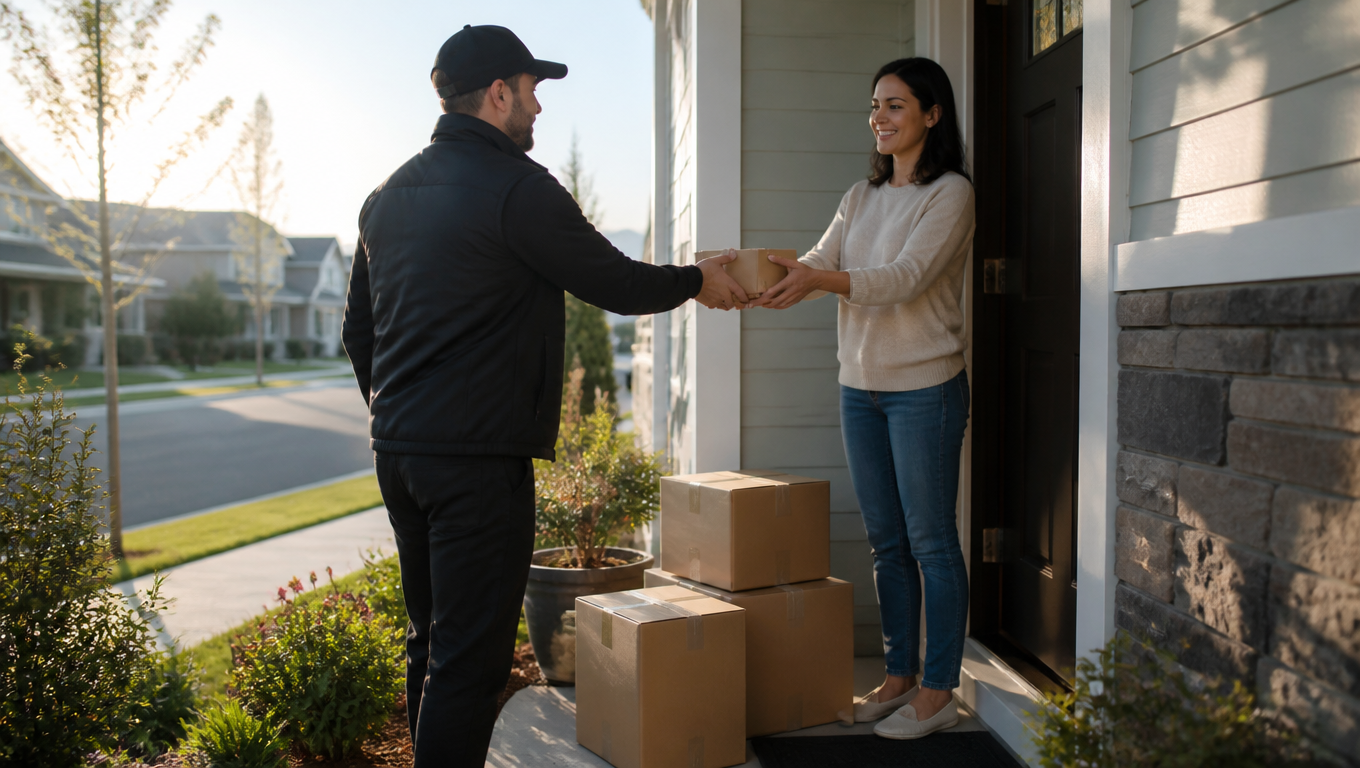
A delivery driver setting a cardboard box on a suburban US porch while photographing it with a phone

1. USPS: No Signature, No “Proof of Delivery”

Most USPS packages have no signature and no photo. For ordinary First-Class, Priority, and Ground parcels, “Delivered” is just a scan the carrier makes on a handheld device, with a set of GPS coordinates attached. USPS says those coordinates are accurate to within 6 feet (about 1.8 meters), which can show whether the package was left at the front door, the back door, or the side porch. What it cannot show is a recipient signature or a photo of the delivery.

If you want an actual signature record, you pay for it. Signature Confirmation is the base option, about $3.95 online or $4.95 at the counter. The carrier asks the recipient to sign on the spot and keeps the signature in the system, per the USPS official page. Restricted Delivery goes a step further: only the named recipient or their authorized designee can sign. For high-value parcels that must be handed to an adult in person, Adult Signature Required runs about $9.70. Those are 2025 rates, and the USPS website's current quote wins on any given day.

One common mix-up is worth flagging: Informed Delivery gets mistaken for proof of delivery all the time. It emails you a preview photo of your mail each day, but that is a “your mail is coming” notice, not a “signed for and delivered” record, and it carries no weight in a dispute.

No signature, no photo, means a USPS POD is a scan timestamp plus a set of coordinates. That is exactly why disputes pile up here. There is a classic Reddit thread: the buyer swore the package never arrived, and the seller pulled the GPS record to find the carrier had scanned “Delivered” at 7:41 AM but only showed up at the building at 1 PM, and the signature in the system was the carrier's own. The coordinates and the timestamps did not line up, and the fake scan fell apart on the spot.
2. UPS: Delivery Record by Default, Signature as an Option

UPS's default is different from USPS. Even without any signature service, UPS records the exact delivery time and the GPS drop point for every delivery, with a location label such as front door, back door, garage, or mailroom. Enter a tracking number on the website and you can see the precise “Delivered” timestamp and where it was placed.

When you need a signature, UPS sells two add-ons: Signature Required (about $7.70) for any signature at all, and Adult Signature Required (about $9.35) for a recipient 21 or older who shows ID, meant for alcohol, tobacco, and other restricted goods.

The UPS Proof of Delivery report is the fullest tier. Business accounts can pull it from the portal or via API, and it includes the signature image, delivery time, address, and drop-point label. Individual users see a good chunk of it on the tracking page too.

On the receiving side, UPS My Choice is free to sign up for. You get delivery notifications and can redirect a package to a nearby access point or a chosen time window, which removes a whole class of “nobody was home, package sat outside” disputes before they start.

3. FedEx: Delivery Manager and Three Signature Tiers

FedEx splits signatures into three tiers, and understanding them is most of what there is to understand about US signature delivery. Tier one is Indirect Signature: the driver may leave the package at the door, but someone has to confirm receipt, effectively a porch proxy signature. Tier two is Direct Signature: the recipient or an authorized person must sign in person and the driver checks the name. Tier three is Adult Signature: the recipient must be 21 or older and show a photo ID.

On fees, direct and indirect signatures both run about $7.60 in 2026, and Adult Signature about $10. Here is the rule many sellers miss: FedEx automatically includes Direct Signature at no extra charge on any shipment with a declared value of $500 or more, per the FedEx declared value page. So when you ship something expensive with FedEx, you already have a signature tier for free, as long as you declare the value honestly.

FedEx Delivery Manager is the free recipient-side tool where photo, signature, GPS location, and exact time all show on one screen. Business accounts can also pull full POD reports and trace the signature evidence for every shipment.

In one line: FedEx gives the richest POD of the big three, the most transparent default data, and it is the only carrier that ties declared value to signature protection.

4. Amazon: The Double-Edged Sword of Flex Photo Delivery

Amazon's own delivery network (Amazon Logistics, driven by Amazon Flex) proves delivery with a photo: the driver sets the package down at the door, snaps a picture, uploads it, and the system marks the order delivered. The buyer sees the photo in the app.

For third-party sellers, that photo is the strongest “delivered” evidence any carrier produces: it directly shows the package at the delivery address, so when a buyer claims non-receipt, the seller can answer with the picture. The other edge of the blade is driver quality. Flex drivers vary, and complaints about blurry photos, photos of the neighbor's porch, or packages flung onto the doorstep are common enough that the photo sometimes becomes evidence for “my package was thrown” complaints instead.

For buyers, the photo-plus-porch combination means the risk has shifted: the system considers the order received, Amazon's payout posture on lost, stolen, or damaged items gets noticeably stingier, and there are fewer complaint channels than with UPS or FedEx.

One more information gap to note: Amazon does not give third-party sellers a POD report like UPS or FedEx does. The evidence chain in a dispute is whatever screenshots you kept, so make “save the tracking screenshot the moment it shows delivered” a habit.

5. Regional Carriers: OnTrac, Veho, and Others

Regional carriers are the third pole of the US market that the big three would rather you forget. Prices are generally lower, and the delivery proof is usually “photo plus GPS” as well.

OnTrac is the best-known regional network in the West (it has merged with East Coast carrier LaserShip). It focuses on e-commerce last mile, delivers without requiring signatures, photographs every delivery, records GPS, and costs less than the big three, which suits high-frequency, low-order-value e-commerce parcels on the West Coast.

Veho is the face of the new generation of regional carriers, positioning on experience: photo delivery, plus a recipient-name confirmation, real-time progress visible to the recipient in the app, and scheduled time windows. Its POD standards are on par with UPS and FedEx, but its footprint is limited, mostly concentrated in metro areas on the East and West Coasts.

Cross-border sellers will also run into carriers like UniUni (US and Canada domestic network) and GOFO (West Coast / California regional delivery). Their POD looks like OnTrac's: photo, GPS, no signature. When you evaluate a regional carrier, check first whether its coverage includes your main receiving states, then compare POD discipline and rates. Do not pick on sticker price alone.

6. Fees and the Decision Framework

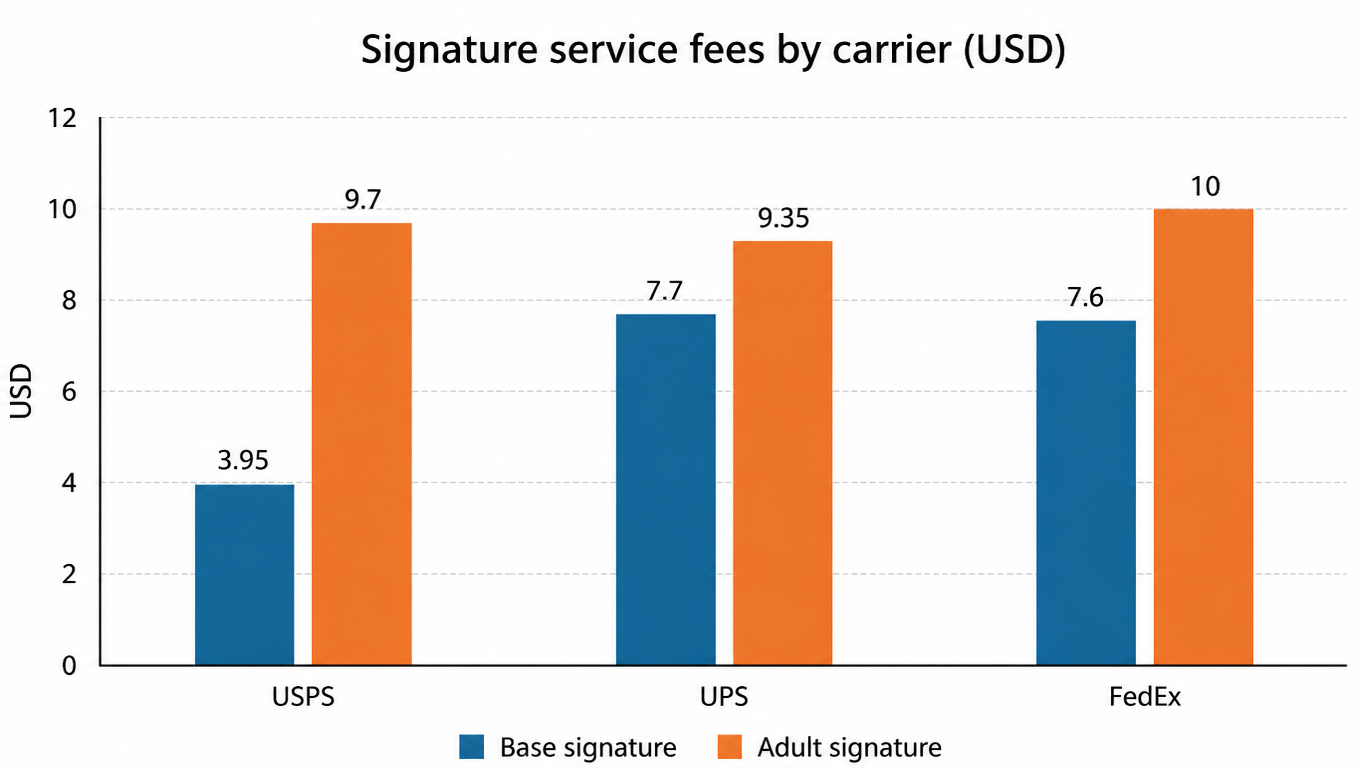
Here is the quick reference: USPS base signature from $3.95 (counter $4.95, adult about $9.70); UPS Signature Required $7.70 and Adult Signature $9.35; FedEx direct/indirect signature $7.60 and Adult Signature $10. USPS's base signature is the cheapest, but it is also the weakest form (signature only, no photo). FedEx tops out at $10, but it brings the fullest Delivery Manager and POD report package.

Carrier Base signature Adult signature
USPSFrom $3.95 ($4.95 counter)About $9.70
UPSSignature Required about $7.70About $9.35
FedExIndirect/Direct about $7.60About $10
Signature service fees by carrier (USD): USPS base 3.95 adult 9.7, UPS base 7.7 adult 9.35, FedEx base 7.6 adult 10

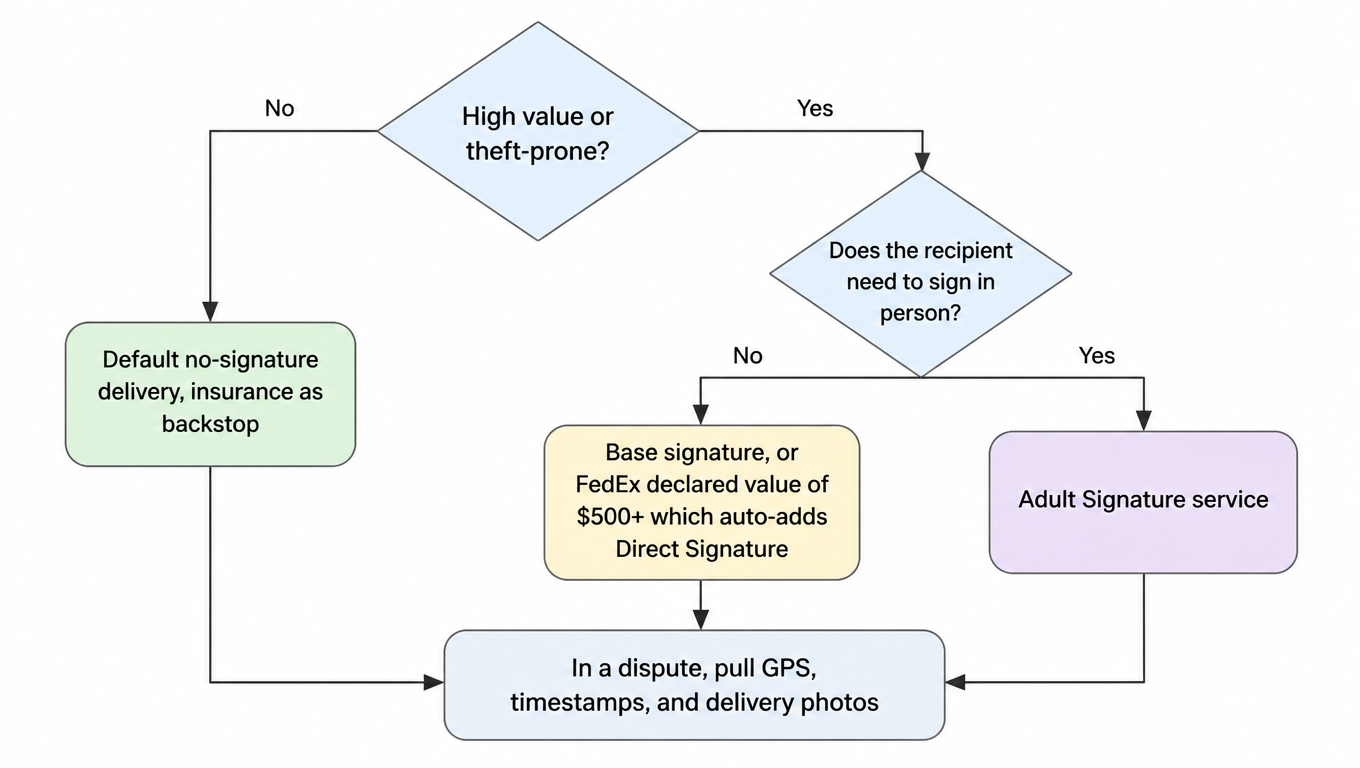
So which shipments are worth paying for a signature? There are only two tests: is the value high, and is it likely to be stolen or disputed? High-value electronics, luxury goods, and limited drops almost always earn back the few dollars a signature costs. Cheap small items do not need it; the default GPS record from UPS or FedEx is enough. The logic runs through the decision tree below:

Signature decision tree: high value or theft-prone? No: default no-signature delivery plus insurance. Yes: does the recipient need to sign in person? No: base signature or FedEx declared value of $500+ adds Direct Signature free. Yes: Adult Signature

If you skip signatures, you still have three cards to play. One is carrier insurance: for high-value goods, buy transit insurance and file a claim directly for damage or loss. Two is platform policy: Amazon A-to-Z and eBay's seller protection lean toward the seller when tracking shows delivered. Three is telling the buyer in advance: put “delivery may be left at the door, note if you require a signature” on the product page and hand the choice to the customer.

One background number to close this section: Security.org reports that about 58 million Americans experienced package theft in 2024, and the share of people hit within the past year rose from 21% in 2022 to 25% in 2024. Porch theft is becoming the norm, which is exactly why proof of delivery matters more every year.

7. The “Proof Photo” Package Scams: Four Patterns

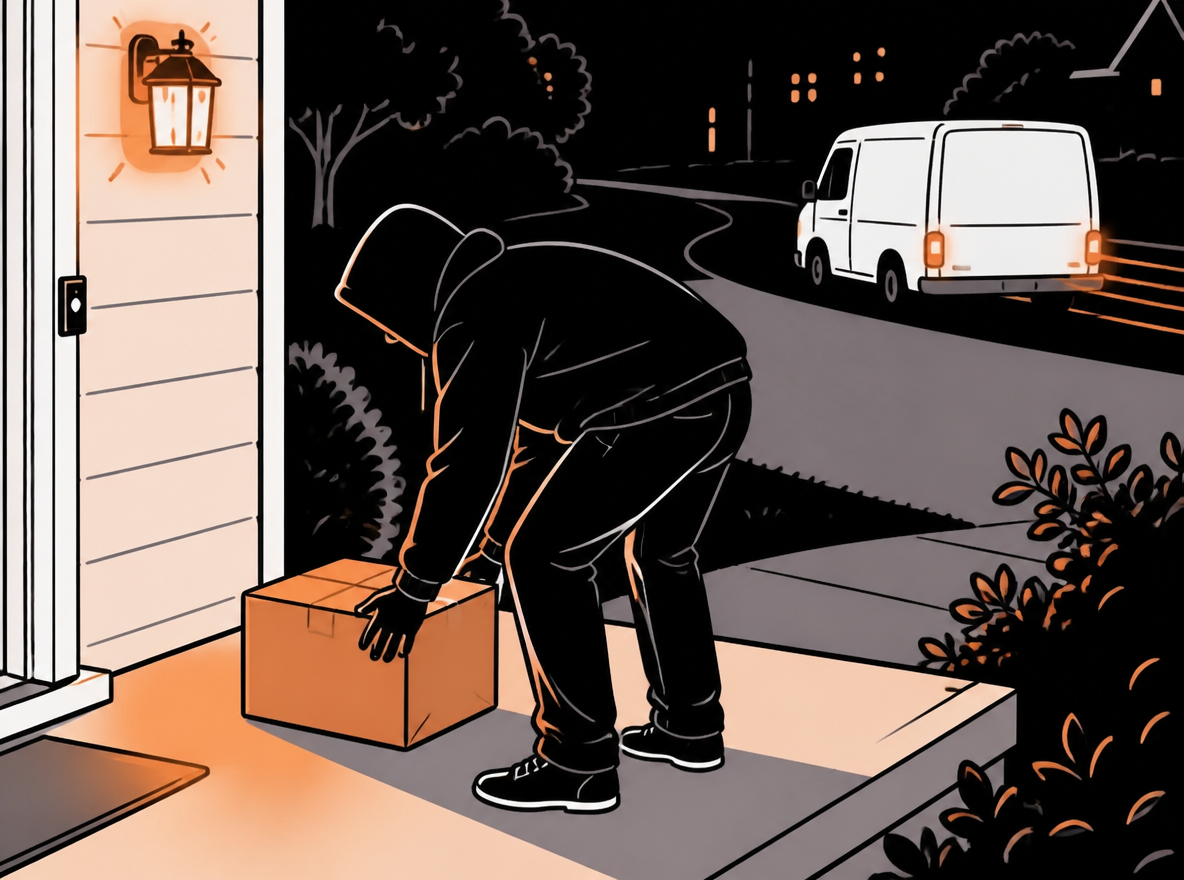
A hooded figure taking a cardboard box from a suburban porch at night as a delivery van pulls away

Now to the most important part of this guide: the four scam patterns built around the delivery photo, or “proof photo.” They all share one trick, creating a gray zone between “delivered” and “never received” so that the photo stops being evidence and becomes the dispute itself.

Pattern A: Photo on file, claim of non-receipt anyway (the big one). This is what sellers hit most: the buyer did receive the package, the porch photo is clear, and the buyer still files an Item Not Received (INR) complaint or a credit card chargeback, and platforms often refund to make it go away. This is not an edge case. Industry data puts friendly fraud (fraudulent chargebacks filed by the buyer themselves) at about 36% of e-commerce fraud, and INR is one of the biggest chargeback drivers. How to spot it: a fresh buyer account, a complaint filed immediately after delivery, or a chargeback reason that clearly contradicts the facts. How to answer it: submit the timestamped delivery photo and GPS record to the platform the moment the claim appears.

Pattern B: Fake photos / misdelivery photos (the big one). The photo is real evidence, but the photo itself is wrong: it shows the neighbor's porch, the house number in the picture does not match the address, the driver tossed the package and photographed a corner of it, or the signature in the system was signed by the driver (remember the 7:41 AM case in Section 1). Here the victim is usually the buyer, the seller gets refunded, and the fault sits with the driver. How to spot it: compare the house number, doormat color, and plants in the photo against your own front door, and check whether the signature matches your handwriting.

Pattern C: Porch piracy. The photo proves the package was delivered, and a porch pirate took it minutes later. Who is at fault? The carrier completed its delivery obligation, the seller did nothing wrong, and the buyer never signed, so the loss usually lands on the seller unless a claim is filed quickly. How to spot it: the photo timestamp and the “package is gone” moment line up closely, and a neighbor's camera often captures the whole thing.

Pattern D: Phishing texts and emails. This is the only pattern with no real package at all. Scammers impersonate UPS, FedEx, or USPS and send “your package was signed for, click to view the delivery photo” or “delivery exception, click to reschedule” messages. The link leads to a phishing page that harvests account passwords or credit card numbers. How to spot it: a legitimate carrier notification never asks you to click a link and enter sensitive information. Suspicious domain, urgent tone, and a sender number that is a +1 personal mobile number are all red flags.

8. Protection Playbooks for Sellers and Buyers

For sellers: Pick a signature tier by parcel value, and add at least the base signature for expensive goods. If you ship FedEx, declare value honestly, and shipments of $500 or more get Direct Signature free. Verify the address before shipping, and upgrade the signature tier proactively for apartments and exposed-porch addresses that attract disputes. When a dispute hits, pull the POD first: UPS and FedEx business accounts can pull the report with the signature image online, while USPS leaves you with scan timestamps and GPS coordinates. Submit the shipping record, package weight, and tracking screenshots to the platform in one batch. For cases with a delivery photo, line up the photo's time and location against every hole in the buyer's claim. For cases without one, lean on GPS coordinate accuracy and the carrier's official scan record. If the driver misdelivered or signed for the parcel, open a case with the carrier and pursue a claim rather than quietly refunding.

For buyers: Learn the five signals of a fake delivery: the house number in the photo is not yours, the signature does not match your handwriting, the delivery time was a moment you were not home, the parcel in the photo does not match what you ordered, or tracking says delivered and nothing is at the door. A doorbell camera is the best counter-weapon: it refutes a mistaken non-delivery and catches the porch pirate's face when a package is stolen. If a package really is stolen, file a police report for the case number first, then claim through the seller or platform, and go after the carrier for high-value items. For phishing texts or emails, screenshot and report them to the FTC. And keep one distinction straight: “never actually delivered” is the seller's or carrier's responsibility, while “driver violated the rules” (misdelivery, fake signature, tossed package) is grounds to demand the carrier open an investigation and pay out.

FAQ

First check the delivery photo, GPS location, and timestamp, ask neighbors, and review your doorbell camera. If it truly did not arrive, file a non-receipt claim with the seller or platform. If the photo shows a misdelivery or the driver signed for it, that is a carrier violation, so open a case with the carrier and claim. Doorbell camera footage is the strongest evidence you can produce.
For ordinary parcels, “Delivered” is just a scan record with GPS coordinates, with no signature or photo. For an actual signature record, buy Signature Confirmation (from about $3.95) or Adult Signature Required (about $9.70). Informed Delivery's mail preview photo is a notice, not proof of delivery.
USPS base signature from $3.95 ($4.95 at the counter) and Adult Signature about $9.70; UPS Signature Required about $7.70 and Adult Signature about $9.35; FedEx Indirect/Direct Signature about $7.60 and Adult Signature about $10. FedEx includes Direct Signature free on any shipment with a declared value of $500 or more.
Yes, and that is the core of the “proof photo” scam: a buyer receives the package and still files an INR complaint or credit card chargeback. Friendly fraud already accounts for about 36% of e-commerce fraud. The seller's answer is to submit the timestamped delivery photo and GPS record immediately and keep a complete tracking screenshot trail.
Technically yes, but that does not make the scan proper. A signature-released parcel needs no person-to-person handoff: delivery is complete once the driver leaves it at an authorized location and records the event. A “delivered” scan made before the drop, or away from the destination, is premature or improper. USPS policy requires its stop-the-clock scan at the actual delivery point, and the USPS Office of Inspector General has documented improper scans made at delivery units. Rule out time-zone display, notification lag, and household receipt, then ask the carrier to review the raw event type, timestamp, and scan geolocation. A public tracking line proves that an event was recorded; by itself, it does not prove physical handoff.
Separate the data closeout from the physical handoff. Shipping software can mark a label manifested when it closes the day or transmits an electronic file; that is a data state. With USPS, for example, one SCAN Form master barcode links many labels, and scanning that form generates an acceptance event for every linked label, as the USPS SCAN Forms documentation explains. If a label was included by mistake, its carton missed the cage, or the parcel remained on a pack bench, it can inherit the batch event without reaching pickup. Reconcile the manifest version and label list against the warehouse's last item-level scan, cage or trailer loading record, pickup receipt, and any later item-level origin or facility scan. A later physical scan of the individual barcode is the stronger evidence that the parcel actually entered the carrier network.
Do not classify the loss from one artifact; align carrier and premises evidence on one timeline. A scan geolocated at the delivery unit or the wrong address, a photo of a different doorway, a mismatched signer, and continuous doorbell footage showing no driver around the scan time support a phantom scan or misdelivery. Theft after delivery is supported when the photo matches the address and parcel, the scan location and time cohere, and doorbell video or building-access records first show the drop and then a different person removing it. A photo proves only that a parcel appeared in a frame; a signature proves only that someone signed. Cross-check both against geolocation, timestamps, access logs, and continuous video. If the chain lacks evidence of either the drop or the removal, record the outcome as undetermined rather than forcing a theft or fraud conclusion.