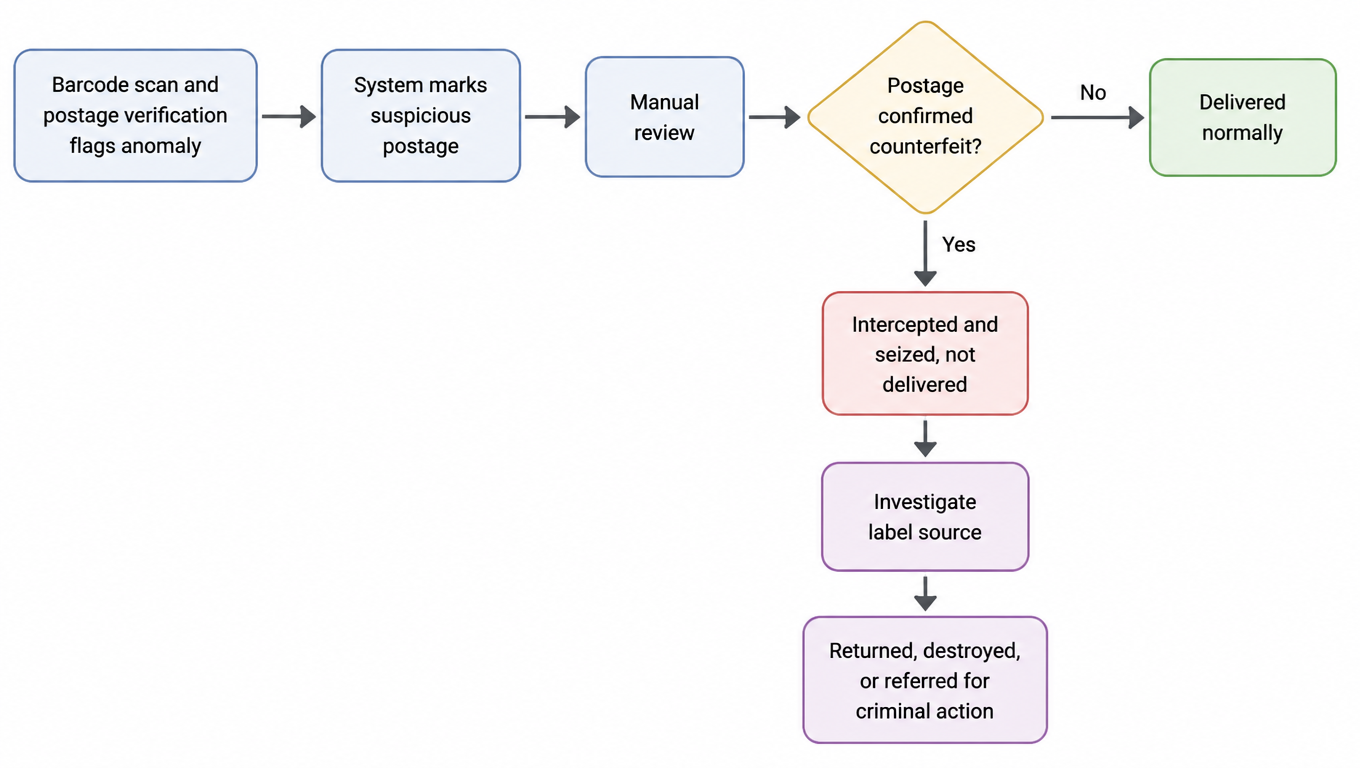
1. What Is Counterfeit Postage and Why Is USPS Cracking Down Now?
Counterfeit postage is any postage evidence that was never authorized by USPS and for which postage was never actually paid. For cross-border sellers, three forms matter.
The first is the counterfeit label: labels printed from someone else's stolen USPS account, forged Click-N-Ship or IMpb labels, or "official-looking" electronic labels generated through illegal discount channels. This is the biggest problem area for cross-border small parcels. The second is counterfeit stamps: forged replicas of USPS stamps, complete with fake fluorescence, perforations, and print quality, stuck onto parcels and letters. The third is the unpaid label: a label that was genuinely generated, but whose postage was never paid, through account loopholes or fraud in the payment step.
How big is the damage? USPS OIG audits estimate counterfeit postage may cost USPS up to $400 million a year. And by volume, the problem is accelerating:
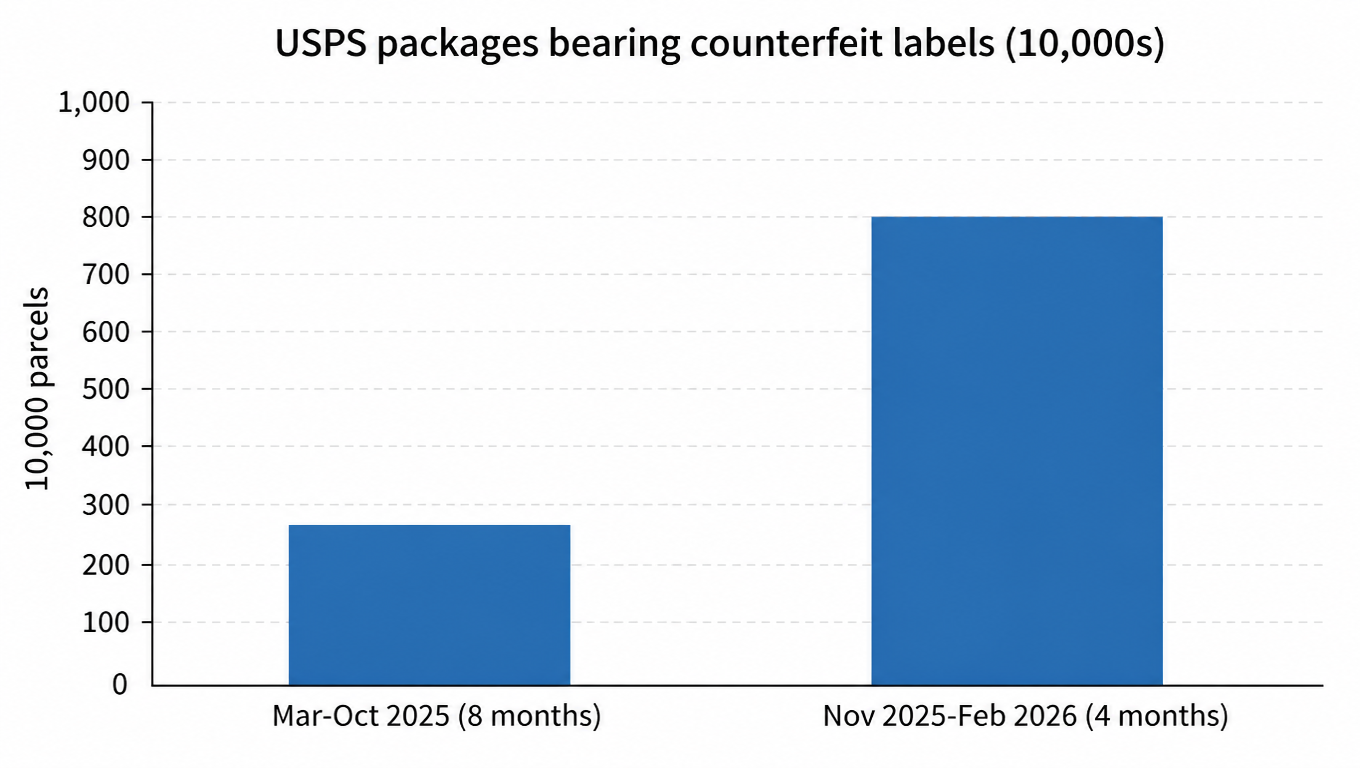
Roughly 2.7 million parcels in the first eight months, then 8 million in the last four. That means counterfeit labels are not a legacy problem but a growing one, and USPS enforcement will only get tougher.
The escalation timeline is equally clear:
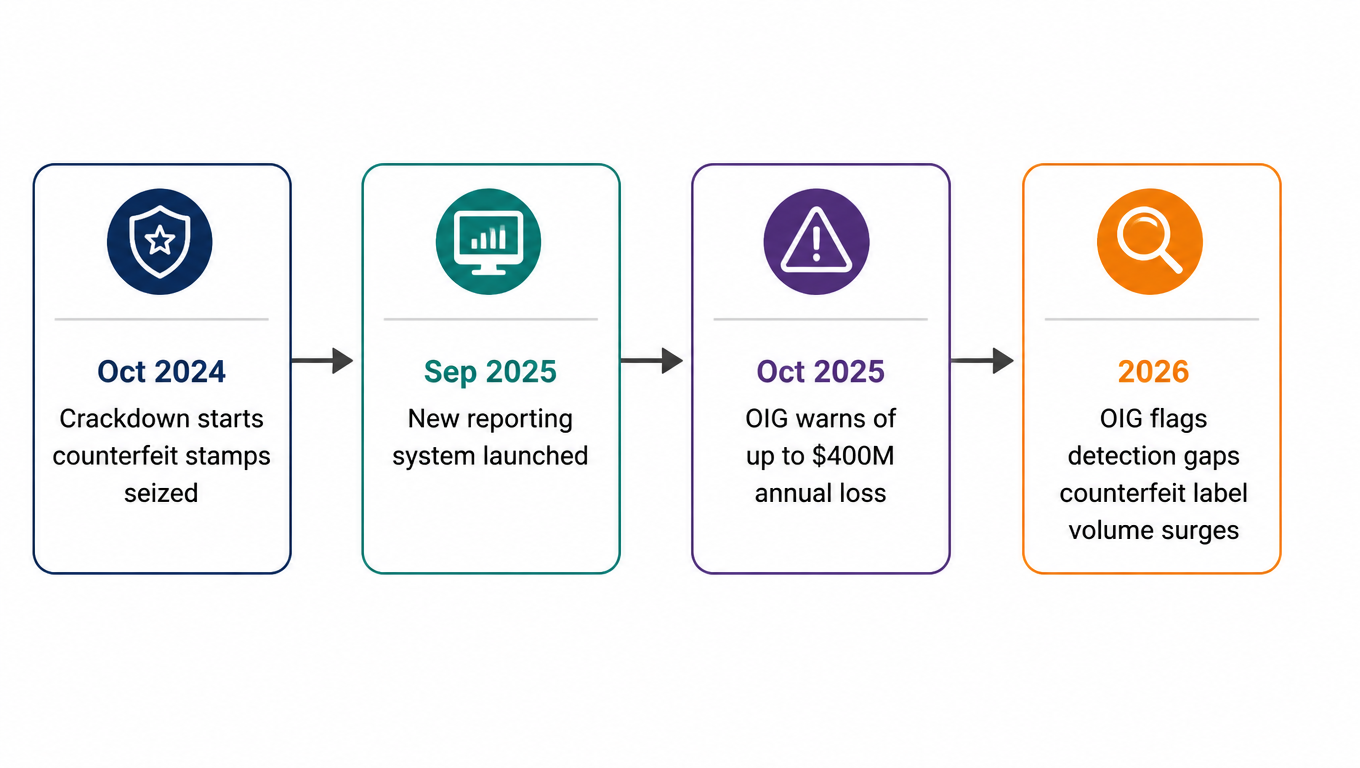
Since October 2024, USPS Postal Inspection Service (USPIS) inspectors have seized $16.2 million in counterfeit stamps and issued 358 voluntary discontinuance orders.
Why are cross-border sellers the biggest victims? Because the source of the fake label is not in the seller's hands, it is in the hands of the freight forwarder and the label supplier. Sellers ship in bulk, label provenance is opaque, and pursuing recourse from abroad is hard, so when something goes wrong they usually have to swallow the loss.