Why Static Promise Mapping Breaks
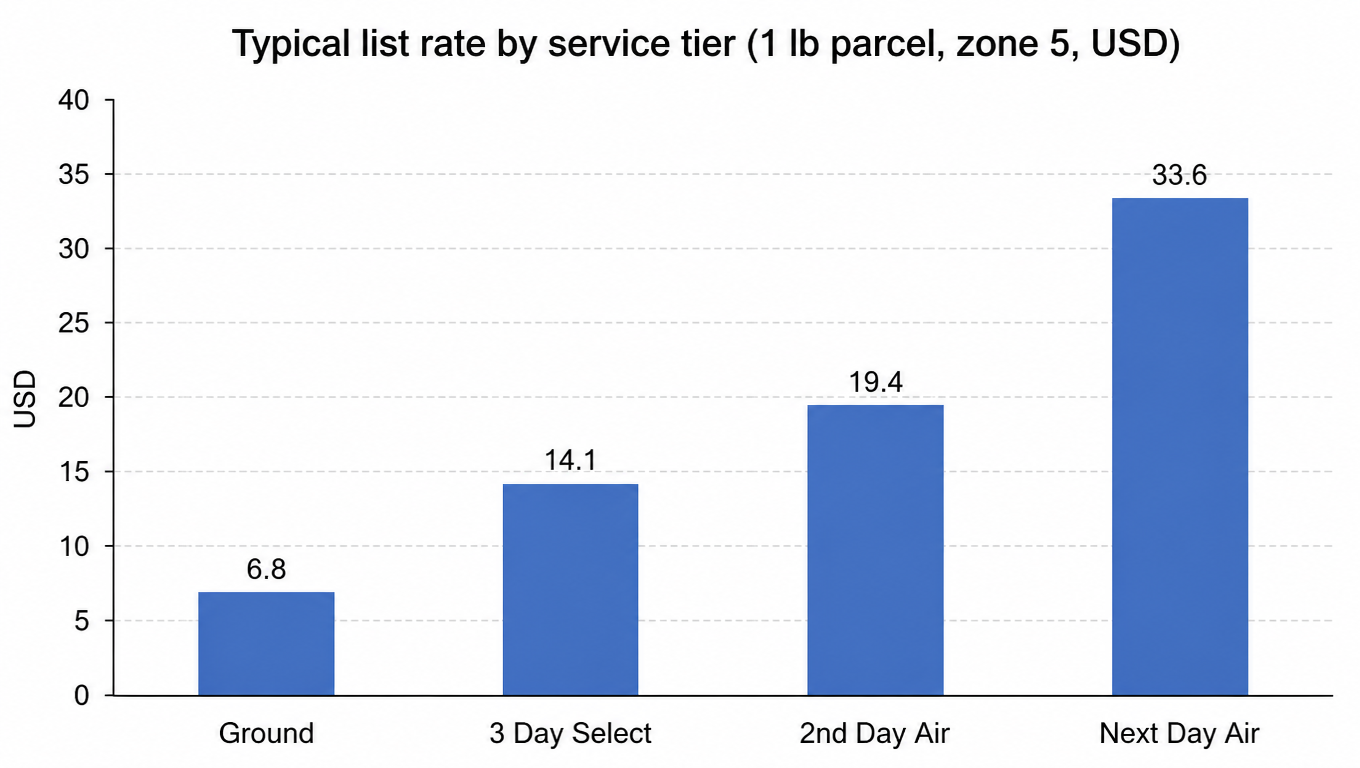
"Economy means we ship Ground" is the most common shipping rule in e-commerce, and the most fragile. The checkout vocabulary (Economy, Standard, Expedited) describes what the customer should feel. Carrier services (Ground, 3 Day Select, 2nd Day Air, Next Day Air) describe what the network actually does. A static one-to-one map between the two assumes every order is the same. It is not, and the mismatch shows up in five recurring failure modes:
- Cross-zone drift. The same promise date needs different services for different destination ZIPs. A Standard promise of 3 days is Ground for a zone 3 customer, but for zone 6 it needs 3 Day Select or 2nd Day Air. Static mapping ships Ground everywhere and misses the far zones.
- Cutoff time. An order placed at 7:02 pm after the carrier pickup cutoff silently inherits the next day's pickup, moving the delivery date by a full day. The promise shown at checkout does not move with it.
- Weekends and holidays. Ground picked up on a Friday sits in the network until Monday. A promise computed in calendar days collapses on the first holiday weekend.
- Multi-warehouse inventory. The stock location that actually fulfills the order may be far from the customer. If inventory sits in the west while the customer is in the east, Ground cannot make a 3-day promise even though the storefront said it could.
- Carrier performance drift. Catalog SLA is not the same as delivered on-time rate. A service that promises 2 business days may only hit that 88% of the time on a specific lane. Static mapping has no memory of this.
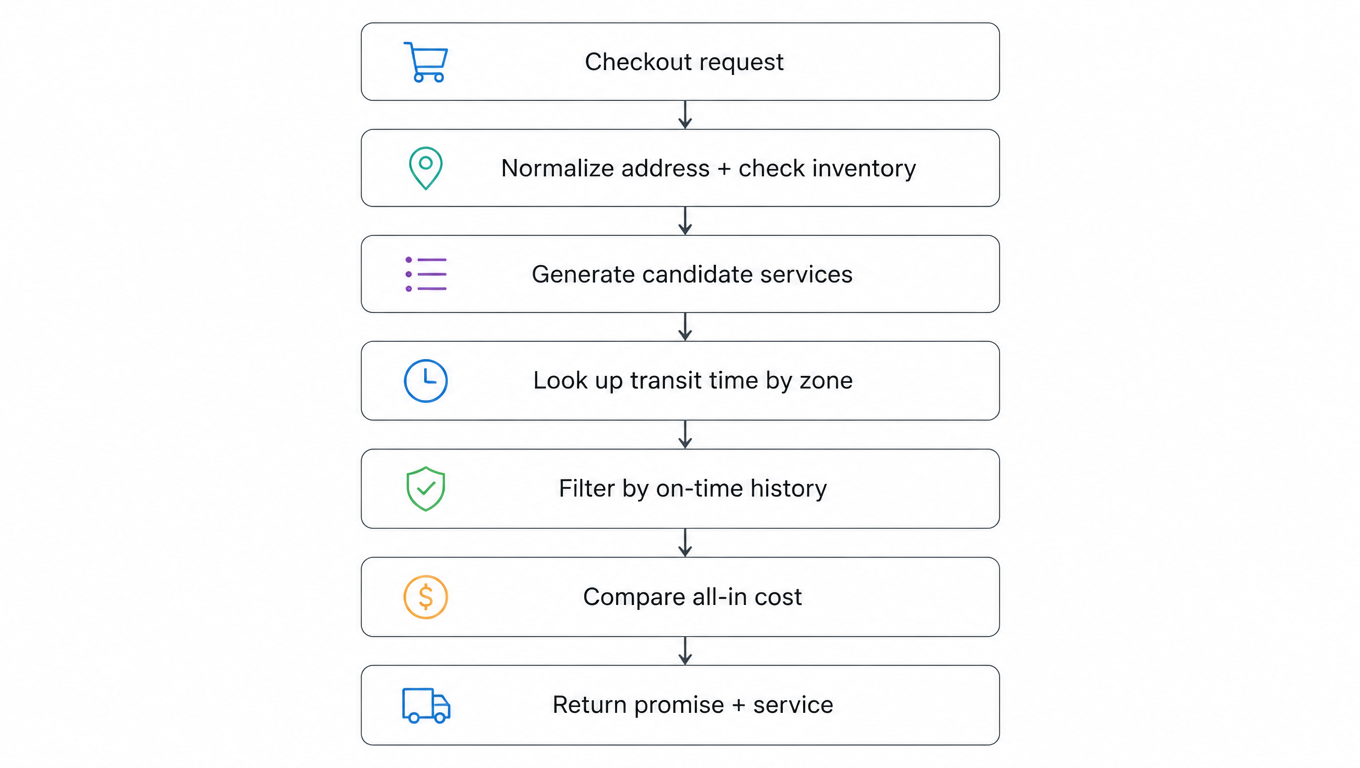
The core thesis of this article: the goal is never the cheapest label. It is the lowest-cost path that can actually deliver by the promised date. Cost minimization is a constrained optimization, and the constraint is the promise. Static mapping treats the promise as a fixed tier bolted onto an order. A dynamic promise treats it as a function of product category, ship-from warehouse, destination address, inventory availability, and carrier service. The rest of this guide builds that function.