安全发货Safe Shipping

如何安全打包发货:避免货损与退货的完整指南How to Ship Packages Safely Without Damage or Returns

你交给承运商的每一个包裹,在送到客户手里之前,都会被摔、被压、被叠在别的箱子下面、在分拣机上滚上几轮。这不是运气不好,这是包裹运输的日常物理。箱子是完好到达,还是变成一张退款申请,在你离开打包台之前就已经决定了。这篇指南带你走完完整流程:选箱、缓冲、封箱、贴单、最终检查,最后附一张可以打印的核对清单。Every package you hand to a carrier will be dropped, squeezed, stacked under other boxes, and bounced through sorting machines before it reaches your customer. That is not bad luck, it is the normal physics of parcel delivery. Whether the box arrives intact or arrives as a refund request is decided before it leaves your packing table. This guide walks through the full process: choosing the box, cushioning the contents, sealing, labeling, and the final checks, with a printable checklist at the end.

美国境内卖家看主体内容:选箱、缓冲、封箱、贴单四件套,加上开箱体验和退货预防。跨境卖家在此基础上多读一节专门说明,处理长途、潮湿、清关和体积重这些额外的风险。仓库和 3PL 的批量视角会穿插在选箱、封箱和核对清单里。Domestic US sellers get the core playbook: box selection, cushioning, sealing, and labeling, plus the unboxing experience and return prevention. Cross-border shippers read one dedicated section on top, covering long hauls, moisture, customs, and dimensional weight. The warehouse and 3PL batch perspective is woven into box selection, sealing, and the checklist.

全文的立场很直白:运输过程中的粗暴是常态,你能控制的是离开你手之前的那一步。把这六步做成习惯,货损索赔就会从预期变成例外。The stance throughout is blunt: rough handling is the norm, and the only step you control is the one before the box leaves your hands. Turn these six steps into routine and the damage claim becomes the exception instead of the expectation.

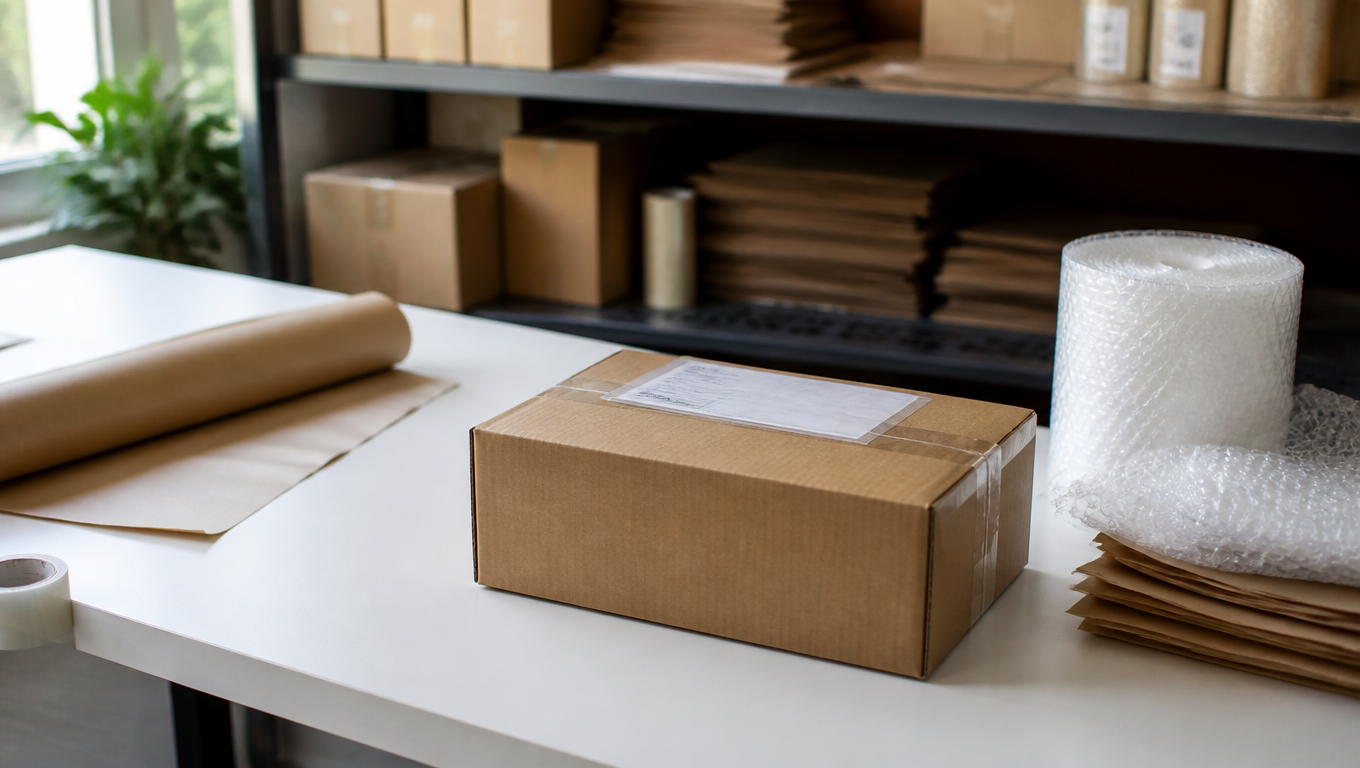
整洁的牛皮纸瓦楞纸箱上贴着透明胶带和白色面单,放在干净的打包台上,旁边是气泡膜卷和牛皮纸,自然光
包裹的命运,在离开打包台之前就已注定A package's fate is decided before it leaves the packing table

为什么货损和退货如此常见Why Damage and Returns Are So Common

包裹网络是为速度而建的,不是为温柔而建的。一件普通小包裹会经过好几个分拣中心,上传输带、掉下溜槽、被人工装卸多次。行业经验和物流保险数据一致指向货损索赔的头号原因:包装不当,而不是承运商粗暴。箱子太大、太软、或者没填满,结果是可以预见的。Parcel networks are built for speed, not gentleness. A typical small package passes through several sorting facilities, rides conveyor belts, drops down chutes, and is loaded and unloaded by hand multiple times. Industry experience and shipping-insurance data consistently point to one leading cause of damage claims: inadequate packaging, not rough carriers. When a box is too big, too weak, or under-filled, the outcome is predictable.

一单损坏的订单,损失远不止商品本身。你丢掉货、已经付过的运费、要退的钱或重发的货,还可能承担退货运费。然后真正的成本才到:不满意的客户更可能留下差评,而每一次糟糕的体验,都会在之后几个月里悄悄抬高你的退货率。A single damaged order costs far more than the product itself. You lose the goods, the outbound shipping you already paid, and the refund or replacement you owe, and you may still eat the return freight. Then the real cost arrives: an unhappy customer is more likely to leave a negative review, and every bad experience quietly raises your return rate for months afterward.

对仓库和 3PL 来说,这笔账会放大。同一个包装错误重复一千次,就变成可测量的索赔率和一条反复出现的成本线。所以规范的打包不是软技能,而是单均经济学的杠杆。好消息是下面这些修法都很便宜,主要是习惯问题,每天十单还是每天一万单都适用。For warehouses and 3PLs the arithmetic scales. The same packaging mistake repeated across a thousand orders becomes a measurable claim rate and a recurring cost line. That is why disciplined packing is not a soft skill; it is a unit-economics lever. The good news is that the fixes below are cheap, mostly about routine, and apply whether you pack ten orders a day or ten thousand.
选对箱子:尺寸和强度是第一道防线Pick the Right Box: Size and Strength Are the First Line of Defense

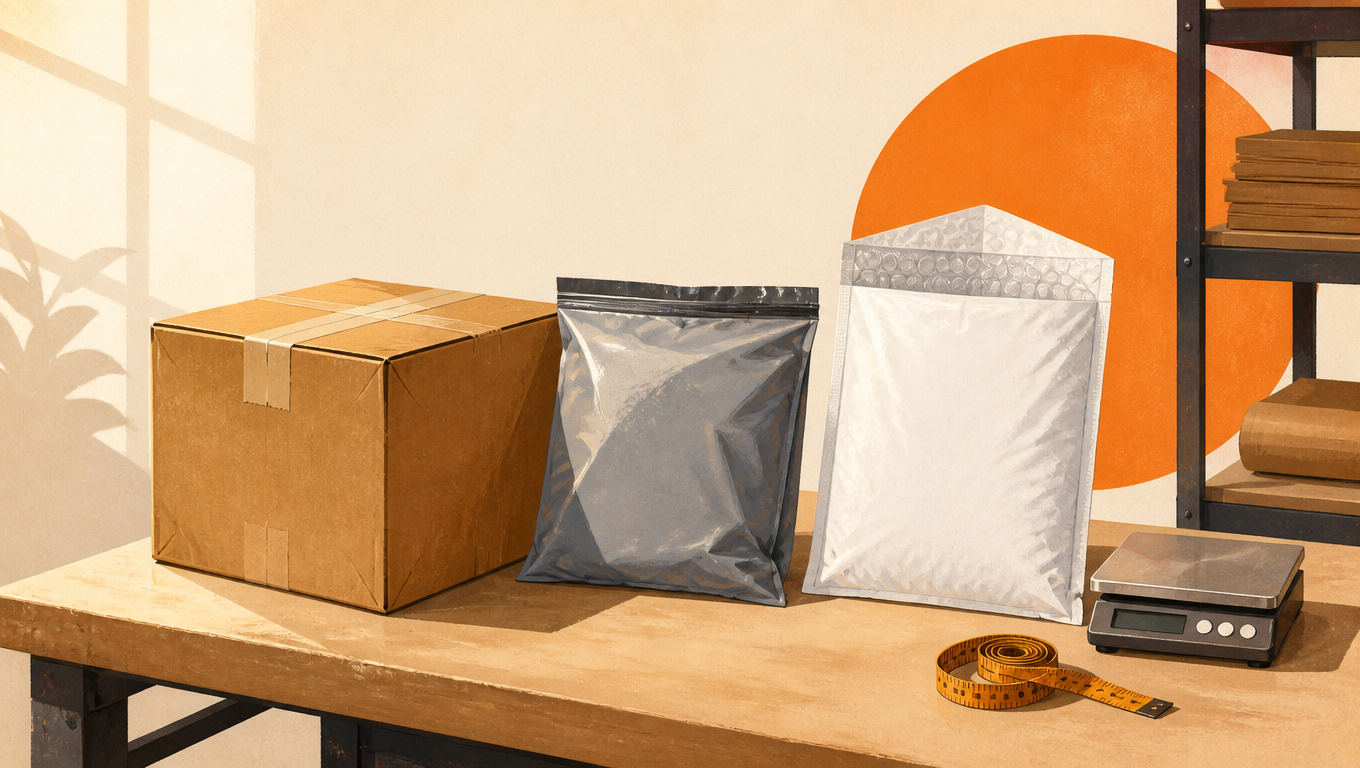
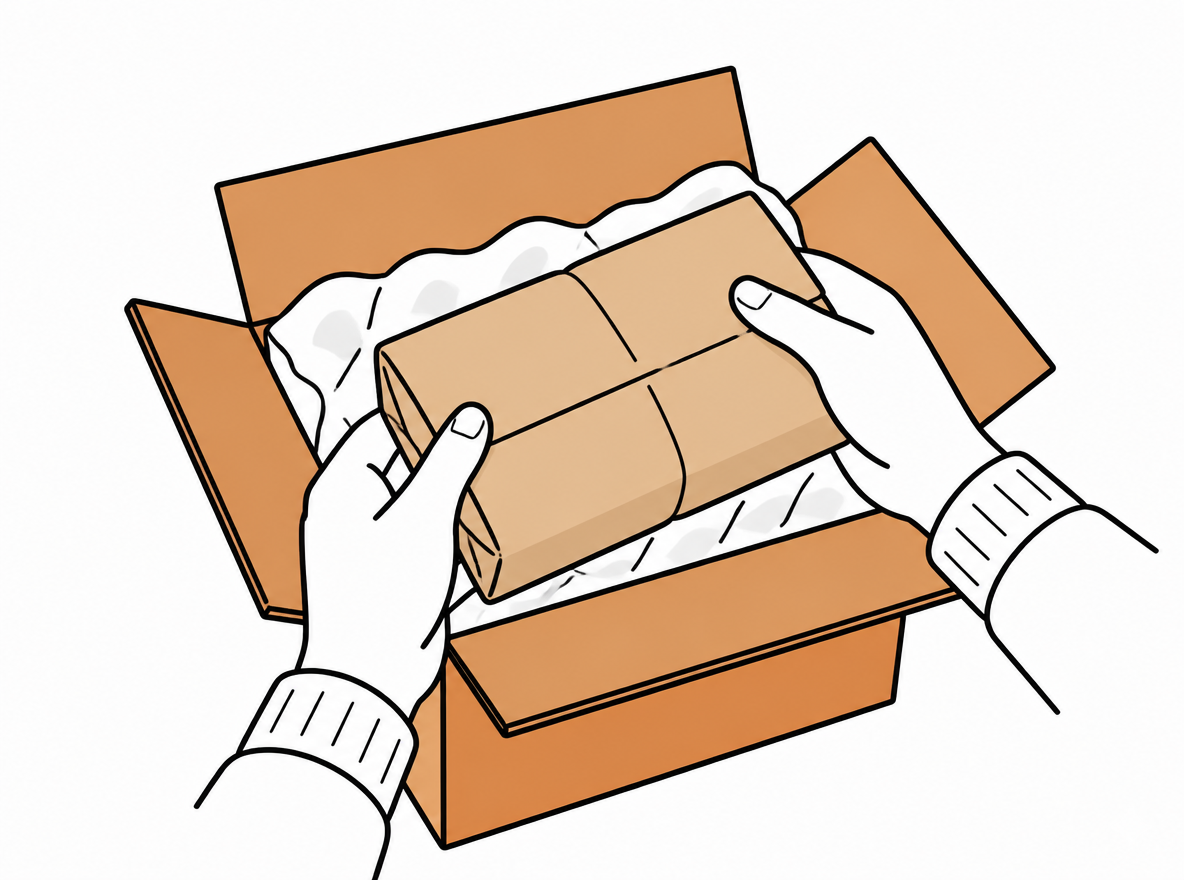
最常见的打包错误是箱子太大。箱子里每一寸空位,都是商品在运输中滑动、移位、碰撞的空间。选对尺寸意味着选能装下商品、留足缓冲空间的最小箱子,仅此而已。这还能省钱:承运商按体积重计费,大箱子可能比更重但更贴合的箱子更贵。The most common packaging mistake is the box that is too big. Every inch of empty space inside a box is an inch the product can slide, shift, and collide during transit. Right-sizing means choosing the smallest box the item fits into with room for cushioning, no more. It also saves money: carriers bill by dimensional weight, so a bigger box can cost more than a heavier, tighter one.

强度来自瓦楞结构,经验法则很简单。单瓦楞(两层纸板之间夹一层楞)适合几磅以内的轻件。双瓦楞(两层楞)抗压更强,重物、易碎品、长途运输都应该默认用双瓦楞。拿不准就升一档,箱子是你这一周能买到的最便宜的保险。Strength comes from the corrugated structure, and the rule of thumb is simple. Single-wall corrugated (one fluted layer between two liner boards) is fine for lightweight items up to a few pounds. Double-wall (two fluted layers) resists crushing and should be the default for anything heavy, fragile, or shipped long distances. When in doubt, step up a grade; the box is the cheapest insurance you will buy all week.

二次利用的箱子是个陷阱。每一次运输都会压扁楞、削弱边角,有时还留下你看不见的折痕。复用前检查四角是否压扁、有无刺穿和受潮,并撕掉或盖住旧标签,免得条码扫描仪读到错误的地址。对仓库来说,一套标准化箱型库(6 到 10 个固定尺寸)能缩短打包时间、减少填充料用量,也让破损率更容易审计。Reused boxes are a trap. Every previous trip has crushed flutes, weakened corners, and sometimes left creases you cannot see. Before reusing a box, check it for crushed corners, punctures, and damp spots, and remove or cover old labels so barcode scanners do not read the wrong destination. For warehouses, a standardized box library (a set of 6 to 10 fixed sizes) cuts packing time, reduces fill material use, and makes damage rates easier to audit.

缓冲填充的四个原则Four Principles of Protective Cushioning

缓冲失效有四种典型方式,每种都有对应的修法。Cushioning fails in four predictable ways, and each has a fix.

第一,六面保护。新手只在上下垫缓冲,忘了侧面,于是商品在第一次侧向跌落时直接撞上箱壁。商品应该「悬浮」:在商品和六个内壁之间都垫上缓冲。First, protect all six faces. Beginners cushion top and bottom and forget the sides, so the product slams into the box walls on the first sideways drop. The product should float: cushion between the item and every one of the six inner surfaces.

第二,填满空隙。箱内的空位就是移动,移动就是损坏。用气泡膜、牛皮纸、蜂窝纸或纸质填充料把空隙填满,直到摇晃封好的箱子时没有任何动静。一个好测试:封箱后摇一摇,听到任何响声就继续加填充。Second, fill the voids. Empty space inside a box is movement, and movement is damage. Fill gaps with bubble wrap, kraft paper, honeycomb paper, or paper void fill until nothing shifts when you shake the sealed box. A good test: close the box and shake it, if you hear anything move, add fill.

第三,易碎品单独包裹。两个玻璃制品放在同一个箱子里,运输中一定会找到彼此。每一件易碎品都要单独包裹、单独隔离,彼此不接触、也不碰箱壁。Third, wrap fragile items individually. Two glass items touching inside one box will find each other in transit. Each fragile piece gets its own wrap and its own layer of separation, so pieces never contact each other or the box wall.

第四,分清减震和抗压。气柱袋和气泡膜吸收冲击,适合轻而脆的商品,但对上面压着的箱子重量几乎无能为力。重物和堆叠载荷需要刚性支撑:纸板隔层、泡沫内衬或角块来承担压力。选对工具。Fourth, understand the difference between shock absorption and crush resistance. Air pillows and bubble wrap absorb impact and are excellent for light, fragile goods, but they do little against the weight of the boxes stacked on top. Heavy items and stacked loads need rigid support: cardboard dividers, foam inserts, or corner blocks that carry the compressive load. Use the right tool for each job.

封箱与加固Sealing and Reinforcing the Box

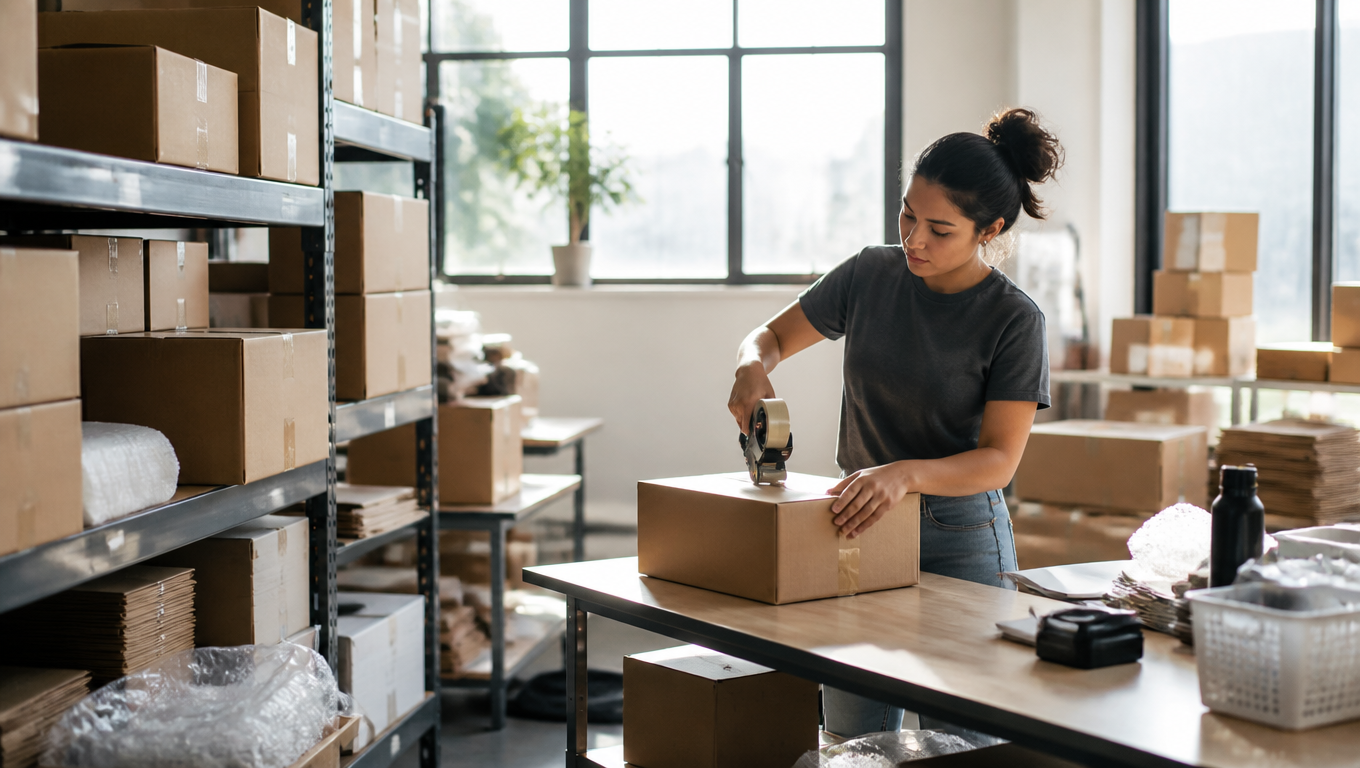
封箱是最容易被偷工减料的环节。标准是 H 型封箱法:沿中缝贴一条,再沿上下盖两条边缘各贴一条,形成 H 形,底面同样操作。一个普通箱子一共六条胶带。跳过边缘胶带是最常见的偷懒,而边缘恰恰是箱子在堆压下最容易爆开的地方。Sealing is where most boxes are underdone. The standard is the H-tape method: run tape along the center seam and down both edges of the top flaps, forming an H shape, then repeat on the bottom. That is six strips total for a normal box. Skipping the edge strips is the most common shortcut, and the edges are exactly where boxes pop open under stack pressure.

胶带质量比看起来更重要。用 2 英寸或更宽的、为瓦楞纸设计的封箱胶带,别为省五毛钱买最便宜的。窄胶带或弱胶带不省钱,省的是保护,然后悄悄变成货损索赔。重箱还要加固边角:在每个角上额外加一条胶带,防止箱子滑动时与其他箱体摩擦刺穿。Tape quality matters more than it seems. Use 2-inch or wider packing tape designed for corrugated, and do not buy the cheapest roll to save fifty cents. Narrow or weak tape does not save money; it saves protection and quietly converts into damage claims. For heavy boxes, add corner reinforcement: an extra strip of tape over each corner of the box guards against punctures when the box slides against others.

两条大家常犯的封箱错误。胶带只粘干净纸板,不粘旧胶带,所以绝不要贴在旧胶带或破损表面上。还要把盖板完全封死,不要只封中缝、两边露着。没有完全封死的箱子可能卡在传送设备上被撕开。Two sealing rules people break constantly. Tape sticks to clean cardboard, not to old tape, so never seal over a previous box's tape or a torn surface. And always tape the flaps closed fully, never just the center seam with the edges gaping. A box that is not fully sealed can catch on conveyor equipment and tear open.

贴单与标签Shipping Labels and Handling Marks

一张扫不出来的面单,就是一颗等待爆发的丢件炸弹。把面单平整地贴在箱子最大的一面,避开盖缝和边角,那里的折痕和凸起会让条码无法读取。如果复用箱子,确保任何旧标签和旧条码都不存在,扫描仪读的是它看到的第一个东西。A shipping label that cannot be scanned reliably is a lost package waiting to happen. Apply the label flat and smooth on the largest face of the box, away from the flap seams and corners, where creases and ridges can make barcodes unreadable. If you reuse a box, make sure no old label or barcode remains anywhere on it, scanners read the first thing they see.

操作标识只有放在操作员真正看得到的地方才起作用。「易碎」和「此面向上」贴纸贴在侧面,最好贴两个相邻侧面,不要贴在顶面,因为分拣员和司机从侧面看箱子,而易碎品恰恰应该底面朝下摆放。说实话:这些贴纸只是请求信号,不是保证,所以永远不要用它替代扎实的缓冲。Handling marks only work when placed where handlers actually look. "Fragile" and "This Side Up" stickers go on the side panels and ideally on two adjacent sides, not on the top face, because sorters and drivers read the box from the side, and a fragile item resting on its bottom face is exactly what the label is supposed to protect. Note honestly: these stickers are request signals, not guarantees, so never rely on them instead of proper cushioning.

保护面单不受天气影响。普通纸打印的面单在雨里、冷凝环境或雪堆派送中会洇开或模糊,一张看不清的面单意味着延误或退件。长途运输或会在户外等待的包裹,用面单袋或防水面单纸。仓库可以用一个小技巧大幅减少贴错箱子:在箱子上印一个贴单位置的框,让每个打包员每次都把面单贴在同一个位置。Protect the label from weather. A label printed on plain paper can smear or run in rain, condensation, or a snowbank delivery, and an unreadable label means a delayed or returned package. Use label pouches or weatherproof label stock for anything that will travel far or wait outdoors. Warehouses can cut mislabeled boxes dramatically with a simple trick: mark the label position with a printed frame on the box, so every packer sticks the label in the same spot every time.

跨境发货的额外考量Extra Care for Cross-Border Shipments

跨境包裹值得更高的包装标准,因为路途更长、更颠簸。境内地面件可能只有一两次交接;国际件要经过货代、海关和好几个区域网络,每一段都增加跌落和延误。易碎品出境的正确默认配置是双瓦楞箱,或者把产品盒装进外层运输箱。Cross-border parcels earn a higher packaging standard because the journey is longer and rougher. A domestic ground shipment may see one or two handoffs; an international shipment can pass through a freight forwarder, customs, and several regional networks, each adding drops and delays. Double-wall boxes, or boxing the product box inside an outer shipper, are the right default for fragile goods leaving the country.

潮湿是境内卖家很少想到的跨境风险。海运和长途卡车让箱子暴露在湿度、温差和箱内冷凝中。干燥剂保护电子产品和其他怕潮的货物,塑料袋或收缩膜让织物和纸张在入箱前保持干燥。Moisture is a cross-border hazard that domestic shippers rarely think about. Sea freight and long truck routes expose boxes to humidity, temperature swings, and condensation inside the package. Silica gel packs protect electronics and other moisture-sensitive goods, and poly bags or shrink wrap keep fabrics and papers dry before they go in the box.

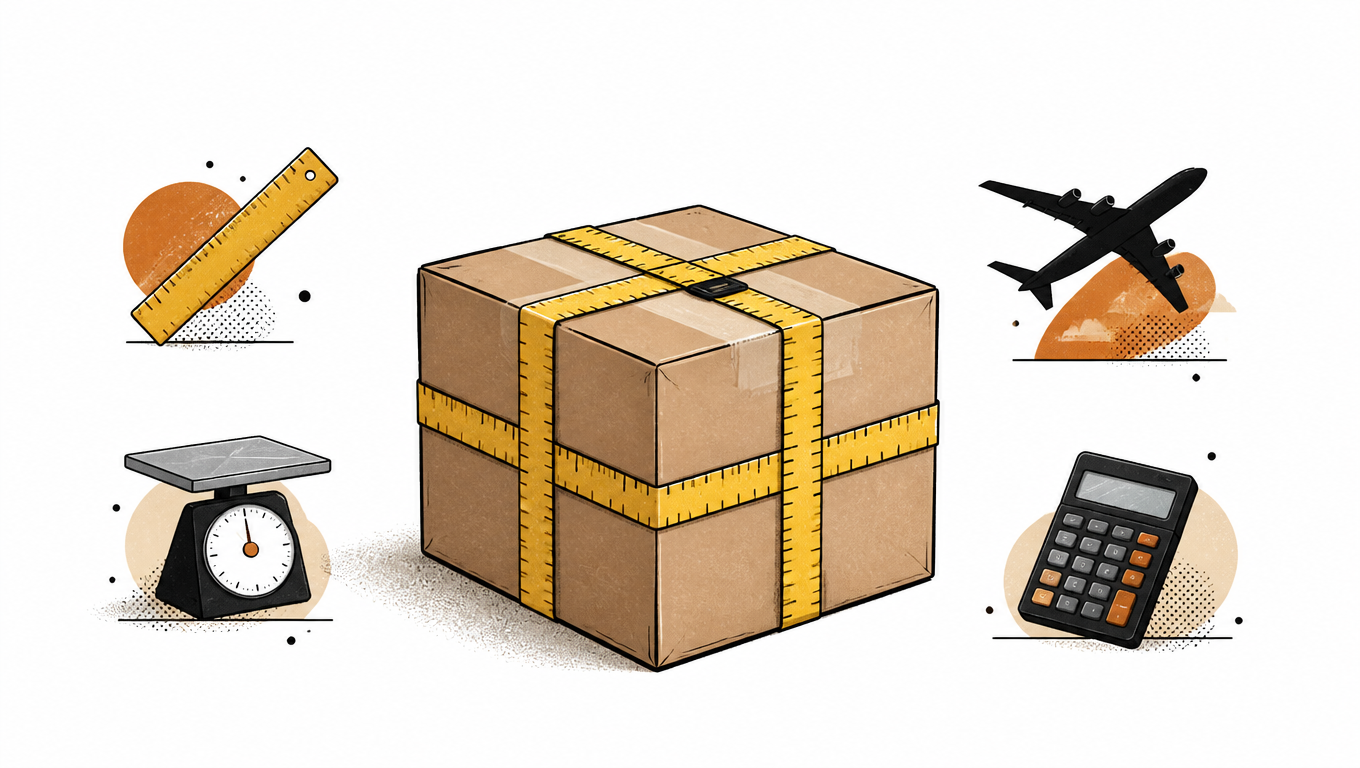
国际费率让箱子尺寸贵上加贵。承运商按实际重量和体积重中的较大者计费,而且国际每段线路这个差距都在扩大。一个「只是稍微大一点」的箱子,每单可能贵出不少,货量一大就是真金白银。选对尺寸对跨境卖家不是可选项,而是最快的包装省钱法。International rates make box size expensive twice over. Carriers charge the greater of actual weight and dimensional weight, and the gap between them grows on every international leg. A box that is "just a little big" can cost noticeably more per shipment, and at volume that is real money. Right-sizing is not optional for cross-border sellers; it is the fastest packaging saving available.

单证也是安全发货的一部分。完整的商业发票、正确的 HS 编码、准确的申报价值,让包裹顺利过海关而不是停在扣留区,货损和退货恰恰发生在那里。贵重或易碎的国际件,还要考虑申报价值保障或物流保险是否配得上这单的毛利,因为一次国际退件的成本可能是境内退件的几倍。就按箱子会被粗暴对待来打包,因为它确实会被。Paperwork is part of safe shipping. A complete commercial invoice, correct HS codes, and accurate declared values keep packages moving through customs instead of sitting in a hold, which is where damage and returns actually happen. For expensive or fragile international shipments, consider whether declared-value coverage or shipping insurance fits the order's margin, because an international return can cost several times a domestic one. Pack as if the box will be handled poorly, because it will be.

开箱体验与退货预防Unboxing Experience and Preventing Returns

包装是客户摸到的第一件实物,它决定了客户对箱内产品的第一印象。尺寸合适、干净、容易打开的箱子,传达的是用心和品质。一个被压扁、缠满胶带、或塞了四倍填充料的箱子,传达的是敷衍,还会让客户下意识地挑剔产品本身。Packaging is the first physical thing your customer touches, and it sets the tone for the product inside. A box that is well sized, clean, and easy to open reads as care and quality. A box that arrives crushed, taped to death, or stuffed with four times the fill it needed reads as carelessness, and it primes the customer to find fault with the product itself.

客户在家打开一个包装整齐的纸箱,从牛皮纸包裹中取出商品,箱内整洁明亮,神情满意
开箱体验决定了客户对产品的第一印象The unboxing moment sets the tone for the product

过度包装是真实且越来越常见的抱怨。小物件配大箱子、需要剪刀的层层塑料、撒一地的填充料,都会招来差评,尤其被看重包装浪费的年轻客户。目标是「被保护」,不是「被包成喜剧」:合适的箱子、够用的缓冲、然后什么都没有。Overpackaging is a real and growing complaint. Giant boxes for small items, layers of plastic that need scissors, and fill that explodes across the floor all generate negative reviews, especially from younger customers who judge packaging waste. The goal is protected, not padded into absurdity: right-sized box, enough cushion to survive the trip, and nothing more.

尺寸合适的包装还会让退货行为向对你有利的方向倾斜。客户更愿意收下并留下一个和预期完全一致、箱子看起来就该属于这个产品的商品,而不是一个在大鞋盒里晃荡、角还撞瘪了的东西。一张小卡片也很有用:箱内放一张养护卡、设置说明或使用提示,能拦住那些「客户用错了产品然后怪它」造成的退货。Right-sized packaging also nudges return behavior in your favor. Customers are more likely to accept and keep an item that arrives exactly as expected, in a box that looks like it belongs to the product, than one that arrives rattling around in a shoebox with a dented corner. And a small insert goes a long way: a care card, setup note, or usage tip inside the box prevents the returns that happen because a customer used the product wrong and blamed it.

一张完整的安全发货核对清单A Complete Safe-Shipping Checklist

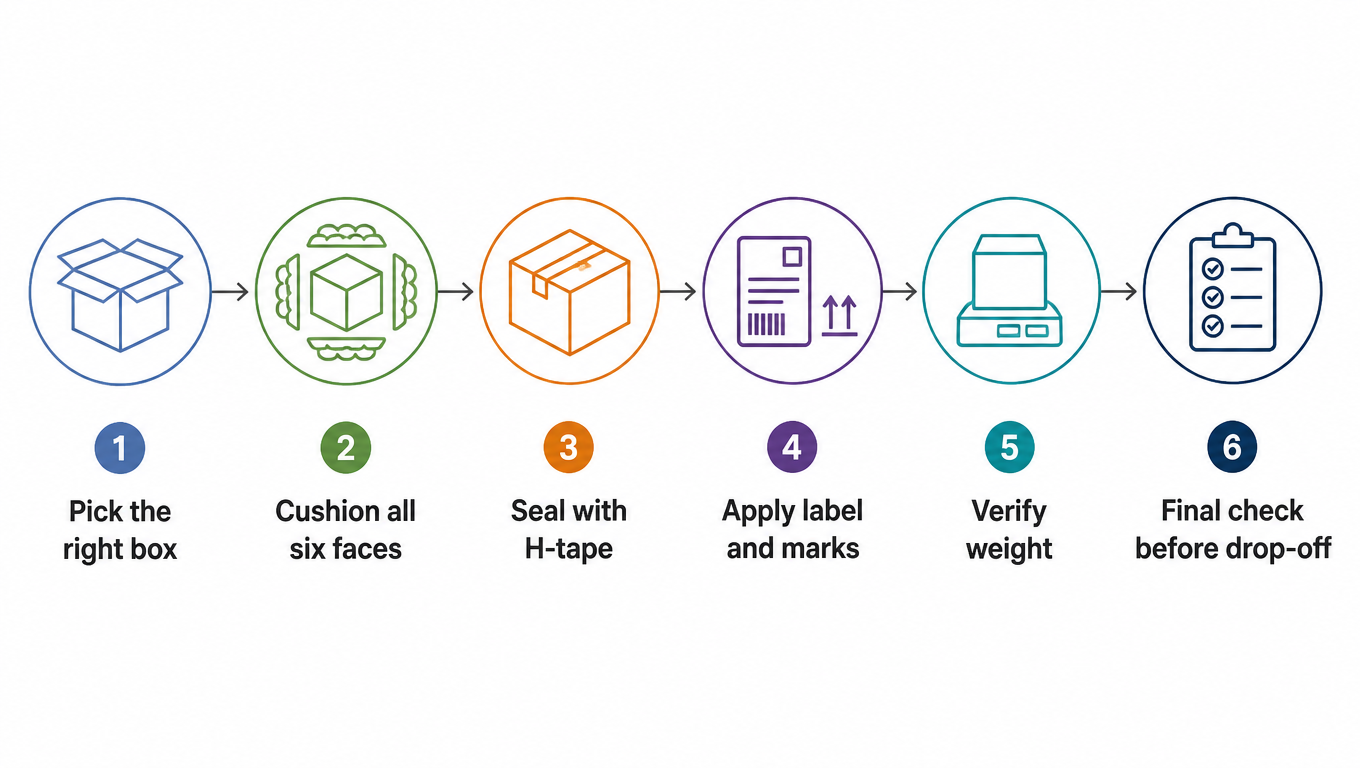
完整方法浓缩成一个流程:每个箱子都按顺序走完这六步,每一次都如此。The whole method in one flow: every box passes through these six steps, in order, every time.

流程图:选对箱子、六面缓冲、H 型胶带封箱、贴面单与标识、核对重量、交运前终检Flow diagram: pick the right box, cushion all six faces, seal with H-tape, apply label and marks, verify weight, final check before drop-off
每个箱子都按这六步走,顺序不变Every box goes through these six steps, in the same order
  • 选箱:尺寸适合商品加缓冲、瓦楞强度匹配重量、四角无压扁、无旧标签、无受潮。Pick the box: right size for the product plus cushioning, correct corrugated strength for the weight, no crushed corners, no old labels, no damp spots.
  • 缓冲:六面保护、空隙填满直到晃动无声、易碎品单独包裹、重物加刚性支撑。Cushion: six-face protection, voids filled until nothing shifts, fragile items wrapped individually, rigid support for heavy items.
  • 封箱:上下都用 H 型封箱法、盖板完全封死、2 英寸胶带、重箱加固边角、只粘干净纸板。Seal: H-tape method on top and bottom, full-flap closure, 2-inch tape, corner reinforcement for heavy boxes, tape on clean cardboard only.
  • 贴单:平整贴在最大面、避开盖缝;「易碎」和「此面向上」贴侧面;用防水面单或面单袋。Label: flat and smooth on the largest face, away from seams; "Fragile" and "This Side Up" on side panels; waterproof labels or pouches.
  • 核对重量:确认箱重和面单一致,避免承运商退回调价或追加意外附加费。Verify weight: confirm the box matches the weight on the label, so the carrier does not return it for adjustment or bill a surprise surcharge.
  • 终检:地址与订单一致、面单可读、封箱完好、通过摇晃测试:安静即合格。Final check: address matches the order, label is readable, seals are intact, and the box passes the shake test: silence means it is ready.

这样发货,货损索赔就从「预期」变成「例外」。核对清单每个箱子只要三十秒,是你跑过的最便宜的退货率下降计划。Ship that way and the damage claim becomes the exception instead of the expectation. The checklist takes thirty seconds per box, and it is the cheapest return-reduction program you will ever run.

常见问题FAQ

箱子太大有两个代价:商品在空隙里滑动碰撞造成货损;承运商按体积重计费,大箱子更贵。选能装下商品加缓冲的最小箱子,是省钱和防损同时落地的一件事。An oversized box costs you twice: the product slides and collides in the void, and carriers bill by dimensional weight, so a bigger box is more expensive. Choosing the smallest box that fits the product plus cushioning is the rare fix that saves money and prevents damage at the same time.
每一件易碎品单独包裹、单独隔离,保证彼此不接触、不碰箱壁;六面都垫缓冲,让商品悬浮;再用气柱或气泡膜吸收冲击。贴「易碎」标签只是请求信号,永远不能替代缓冲。Wrap each fragile piece individually with its own layer of separation so pieces never touch each other or the box wall. Cushion all six faces so the item floats, and use air pillows or bubble wrap to absorb impact. A "Fragile" sticker is a request, not a guarantee, and never a substitute for cushioning.
沿盖板中缝贴一条胶带,再沿两条边缘各贴一条,形成 H 形,上下两面都这样做,一共六条。边缘胶带最容易被人省略,而边缘恰恰是堆压下最先爆开的地方。Run one strip down the center seam and one strip down each edge of the flaps, forming an H, then repeat on the bottom: six strips total. The edge strips are the ones people skip, and the edges are exactly where boxes pop open under stack pressure.
用双瓦楞箱或外层运输箱,防潮(干燥剂、塑料袋),把箱子尺寸压到最小,因为国际体积重更贵;确保商业发票、HS 编码和申报价值完整准确,贵重件评估物流保险。国际件的路程更长,每段都在增加跌落和延误的风险。Use double-wall boxes or an outer shipper, protect against moisture with silica gel and poly bags, and minimize box size because international dimensional weight costs more. Keep the commercial invoice, HS codes, and declared values complete and accurate, and evaluate shipping insurance for expensive items. The journey is longer and every leg adds drops and delays.
用摇晃测试:封箱后摇一摇,听不到任何动静说明空隙已填满。再按六步清单过一遍:选箱、缓冲、封箱、贴单、核对重量、终检。每个箱子三十秒,就能把货损从预期变成例外。Run the shake test: close the box, shake it, and if you hear nothing move, the voids are filled. Then walk the six-step checklist: pick the box, cushion, seal, label, verify weight, and final check. Thirty seconds per box turns damage from the expectation into the exception.
Get Rate Comparison
Get Rate Comparison