What Is Dimensional Weight and Why Carriers Use It
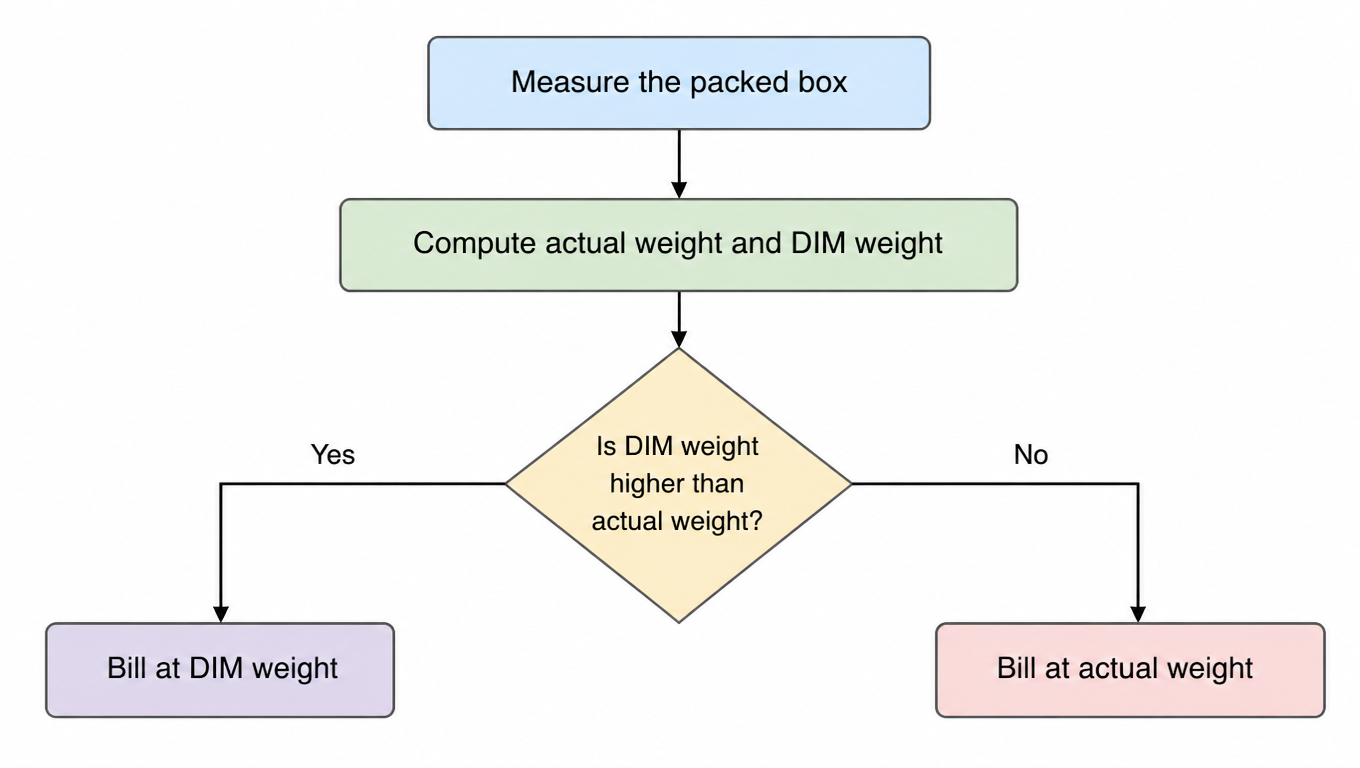
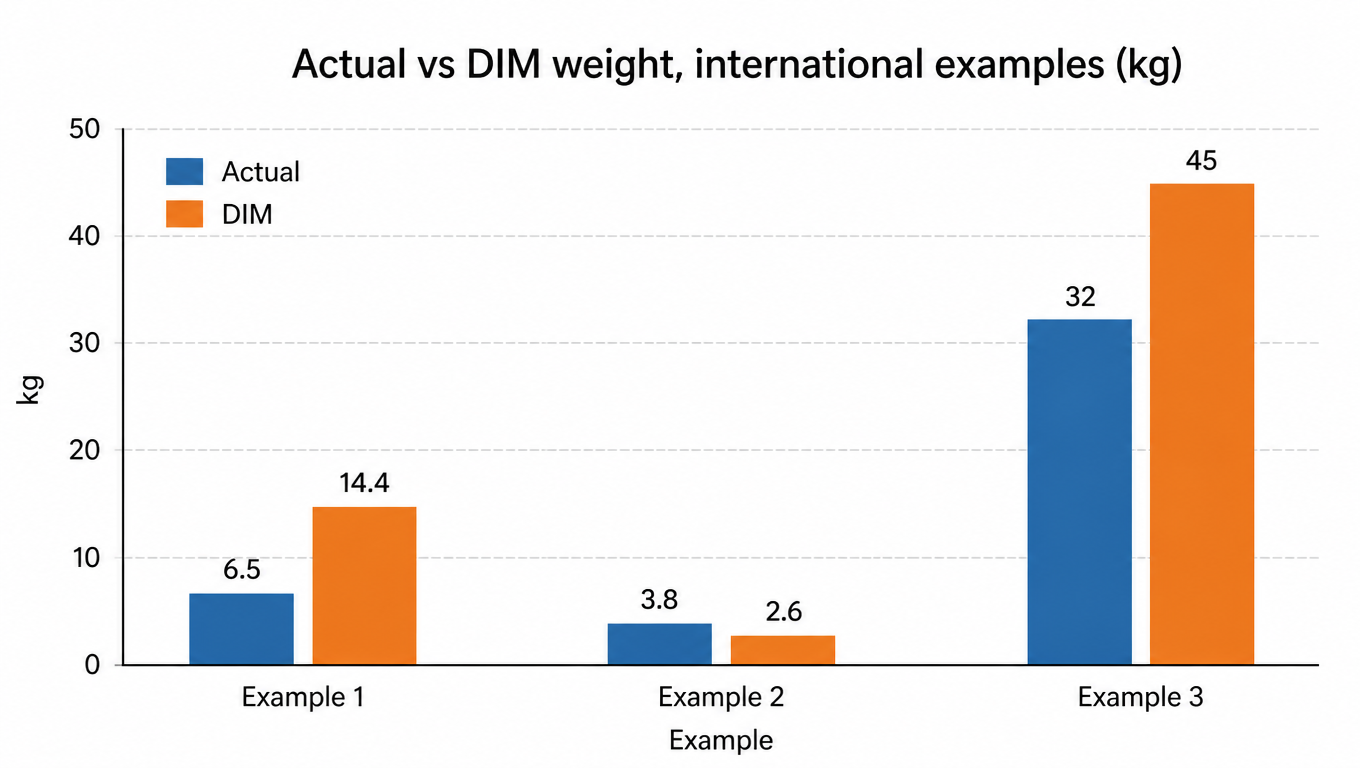
Dimensional weight is a pricing method based on volume rather than physical weight. Carriers compute a hypothetical weight from the package's outer dimensions, then compare it with the actual scale weight. The larger of the two is the billable weight, the number your invoice is built on. A package that weighs 6.5 kg but occupies the volume of a 14 kg box is billed as 14 kg, because the carrier cannot sell that space to anyone else.
Carriers introduced DIM pricing to align rates with cost. A truck, a cargo plane, and a shipping container all have fixed volume. A lightweight but bulky item displaces volume that could otherwise carry dense, revenue-generating cargo, so carriers price the space as well as the weight. The name comes from the accounting habit of counting the dimensional kilograms a shipment occupies: a shipment is billed for so many kilos of space, whether or not those kilos exist on a scale.
DIM weight applies wherever volume is the scarce resource: air freight, express couriers such as USPS, FedEx, UPS, and DHL, and e-commerce fulfillment programs like Amazon FBA. For China-to-US shipments you will meet two unit systems in practice. International carriers and freight forwarders quote in centimeters and kilograms (cm/kg), with a divisor of 5000 or 6000. Domestic US carriers quote in inches and pounds (in/lb), with a divisor of 139. Same logic, different arithmetic.
The billing decision is a simple comparison.