1. The Big Picture: Why Last Mile Eats Half Your Shipping Spend
Last mile is the moment your parcel stops being part of a trailer full of freight and becomes one person, one truck, one doorstep. That person-to-person economics is why it is so expensive: every stop carries fixed costs for labor, vehicle, fuel, and route time that no amount of consolidation can smooth away. Independent studies have put last mile at 40% to 53% of total delivery cost for years [^1], and ecommerce has only pushed the share up, because ecommerce is overwhelmingly residential delivery, and residential delivery is the most expensive delivery there is.
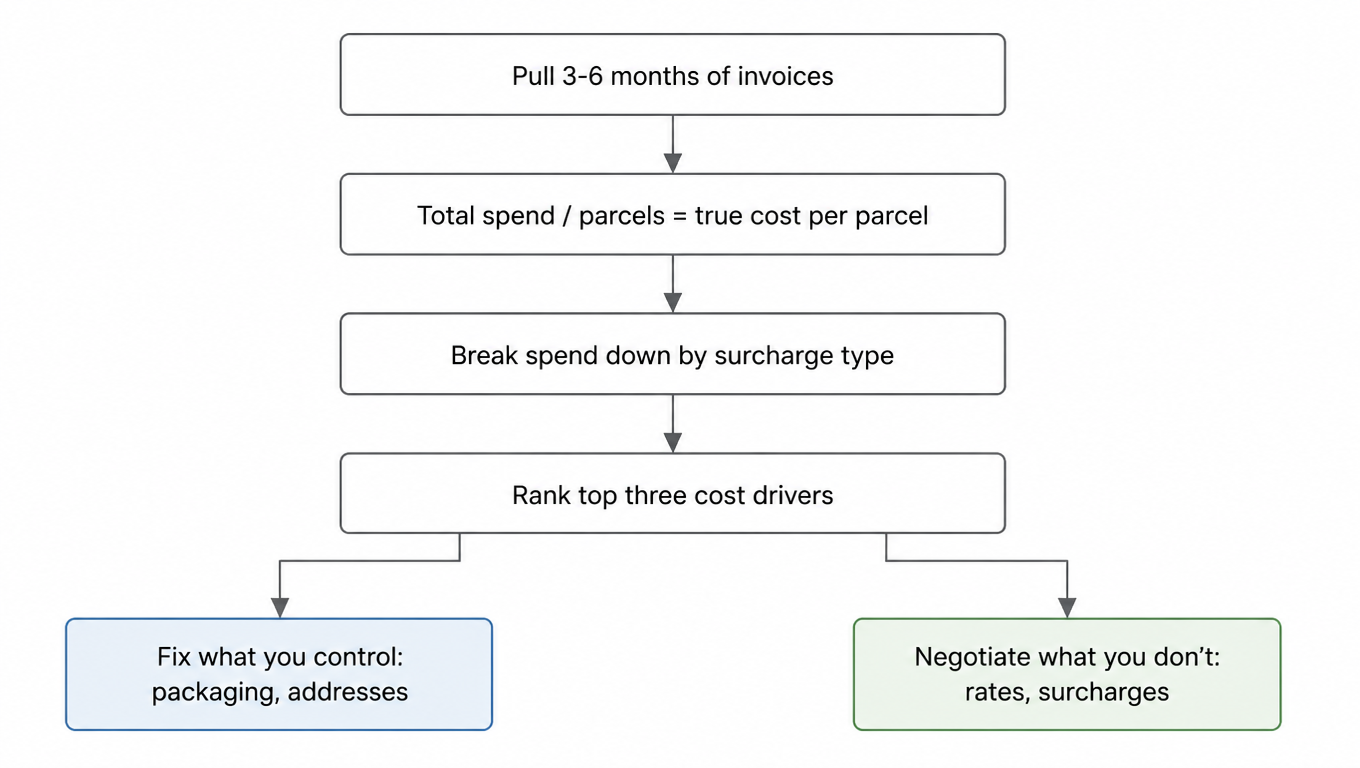
Use the shipping-cost optimization overview to choose which part of the invoice to improve first. The shipping-cost variance analysis helps determine whether a later bill changed because of rates, shipment mix, or operating exceptions.
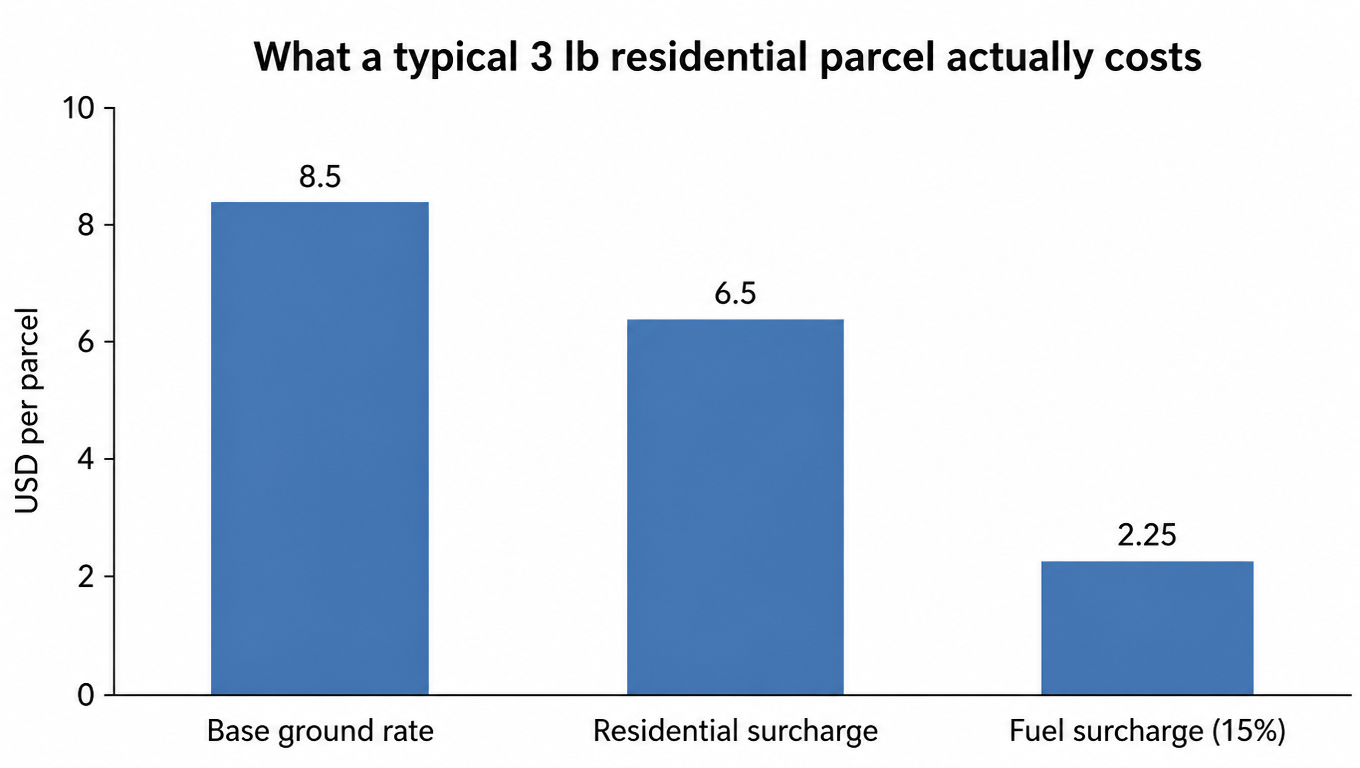
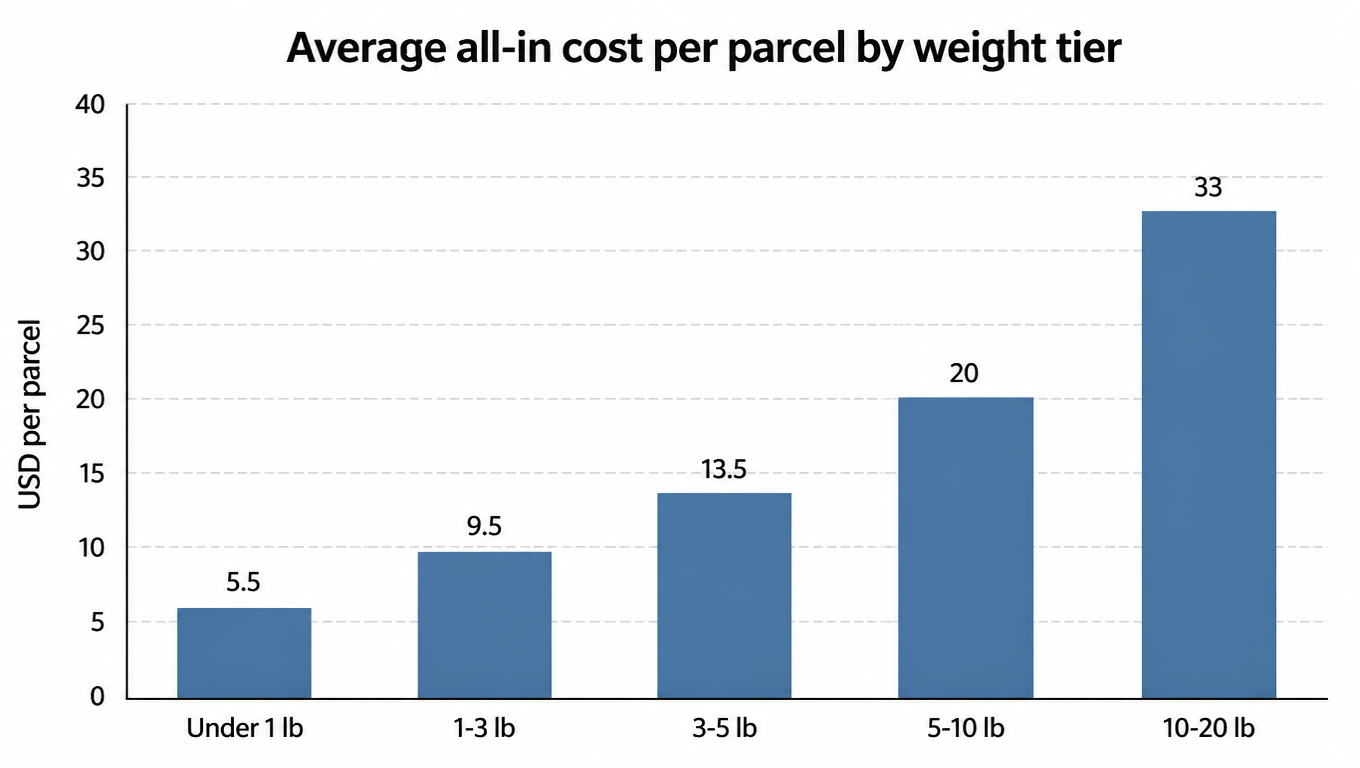
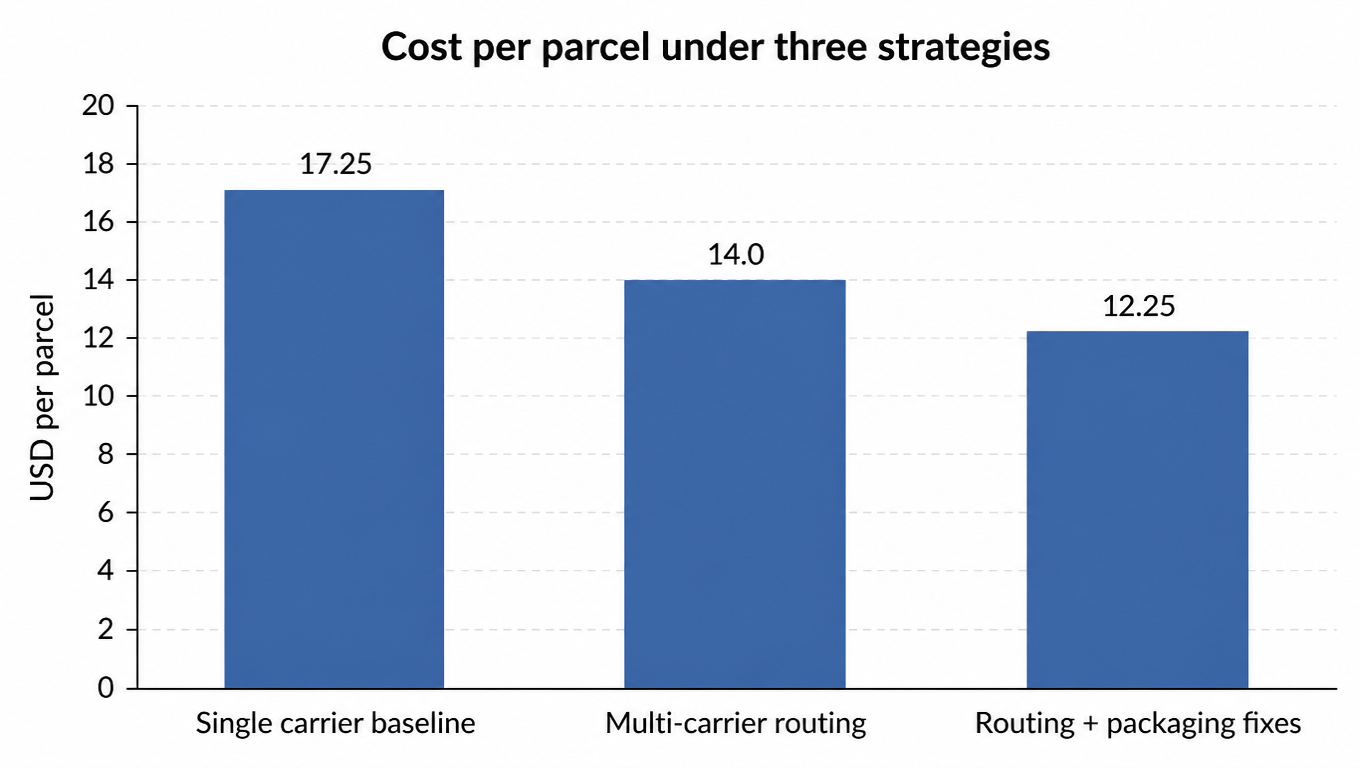
The advertised number is a fiction. When a carrier publishes "from $6.50" for a 3 lb ground parcel, that price assumes a commercial address, a close zone, and nothing attached. Your real order is residential, so you pay the residential surcharge of roughly $6.50 [^2]. It travels at a zone that is rarely the cheapest, and it carries a fuel surcharge that floats at 15% to 25% of the base rate depending on the week [^3]. Add a rural ZIP and the delivery area surcharge lands at $4.80 to $17 [^4]. Most DTC brands end up paying $10 to $15 or more per parcel all-in, and during November and December, peak surcharges of $1.55 to $8.75 per package land on top [^5].
This is also the only segment of the chain that loses money on failure. A missed first delivery means the truck comes back, which roughly doubles the cost of that stop [^6]. A return means the parcel makes the trip twice. And the surcharges are structured so that the brands with the least negotiating leverage, the small and mid-size shippers, pay the highest effective rates. Understanding that structure is the first step to fixing it.