Why Auto Parts Parcel Costs Run Hot
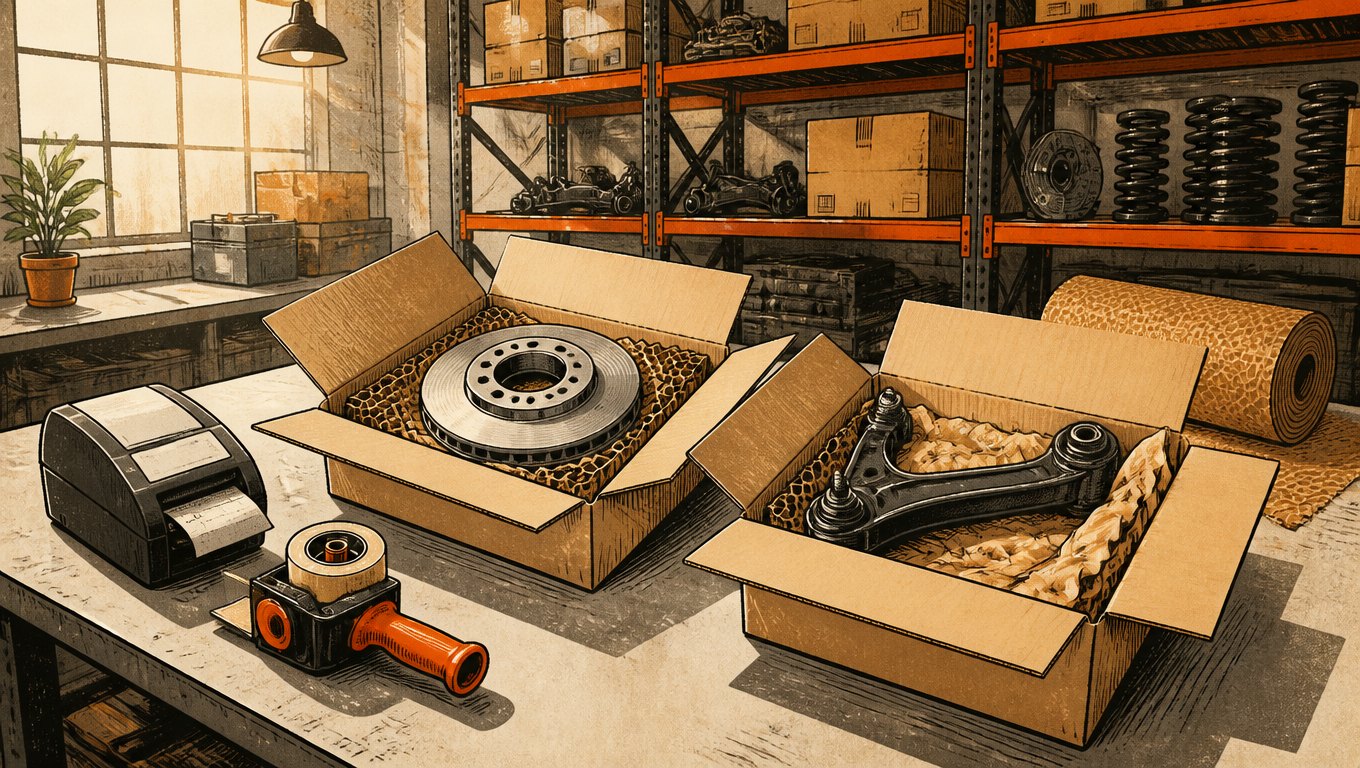
High-density parts pay by the pound. Cast iron rotors, steel control arms, and suspension knuckles are heavy for their footprint, and their bill is dominated by actual weight. When a part is dense, the box barely matters and the carrier's per-pound rate is the whole game.
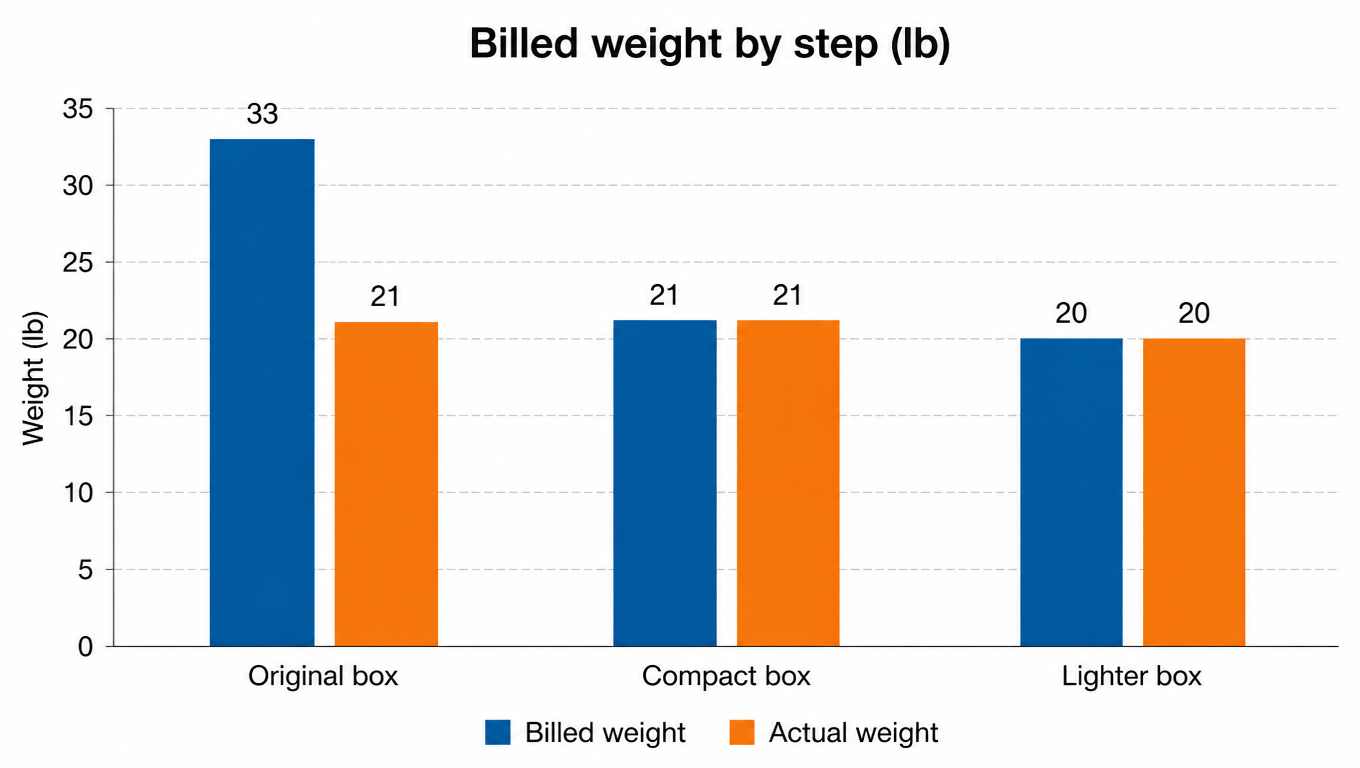
Low-density parts pay by the air. Air filters, interior trim, plastic housings, and boxed light kits ship light but eat volume, and their bill is dominated by DIM weight. These are the parcels where a box two sizes too big is a genuine pricing error, not a minor inefficiency.
Irregular parts pay both ways. Control arms, exhausts, and bumpers are long, and a long part forces a long box, which trips DIM weight and often a long-package fee on top. Fragile parts add a third cost: sensors, radiators, and headlights need protective packaging, and the padding that protects them also inflates the box. Protection and DIM weight pull in opposite directions, and the easy answer (wrap everything, everywhere) taxes every shipment.
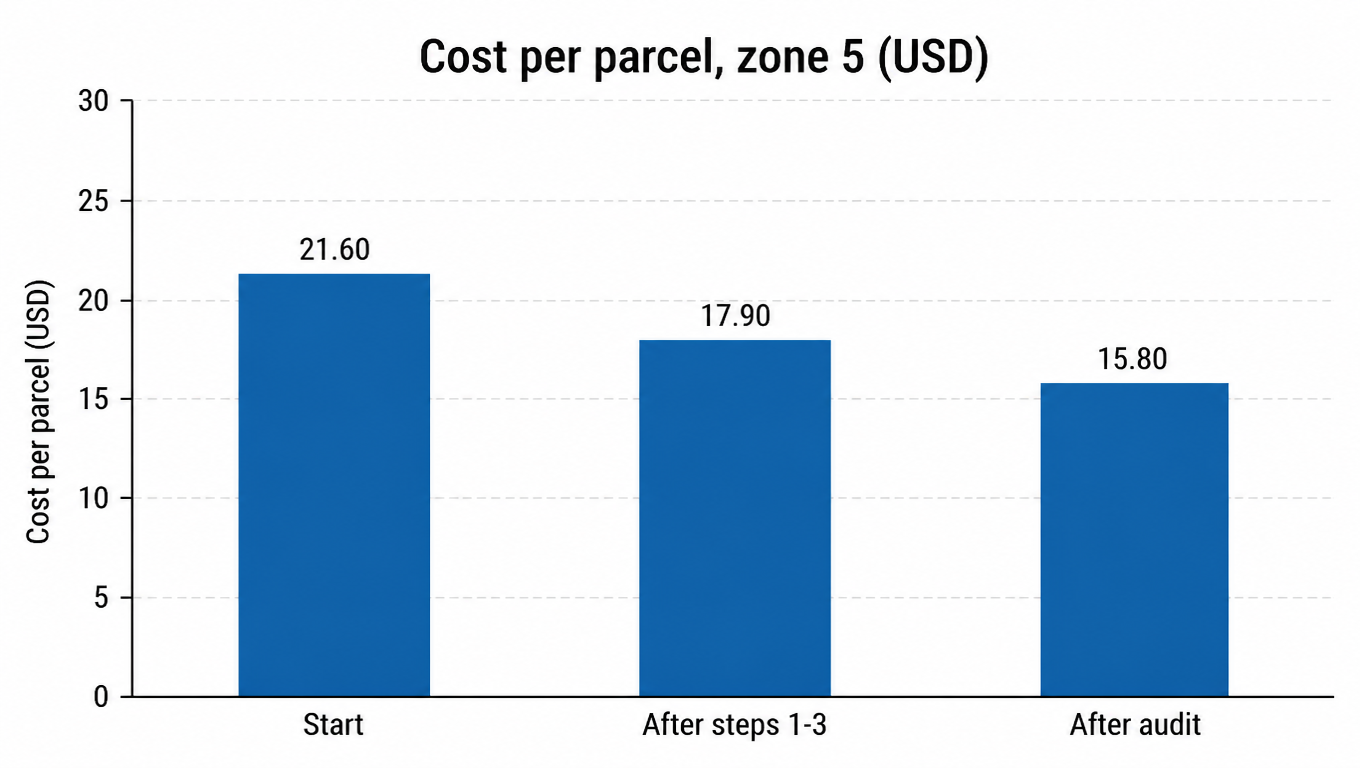
Then returns. Auto parts return at a higher rate than most categories[2], and a return is two trips: the customer's return leg and the reshipment. Round-trip freight on a 20 lb parcel at zone 5 is not a rounding error; it is a second invoice.
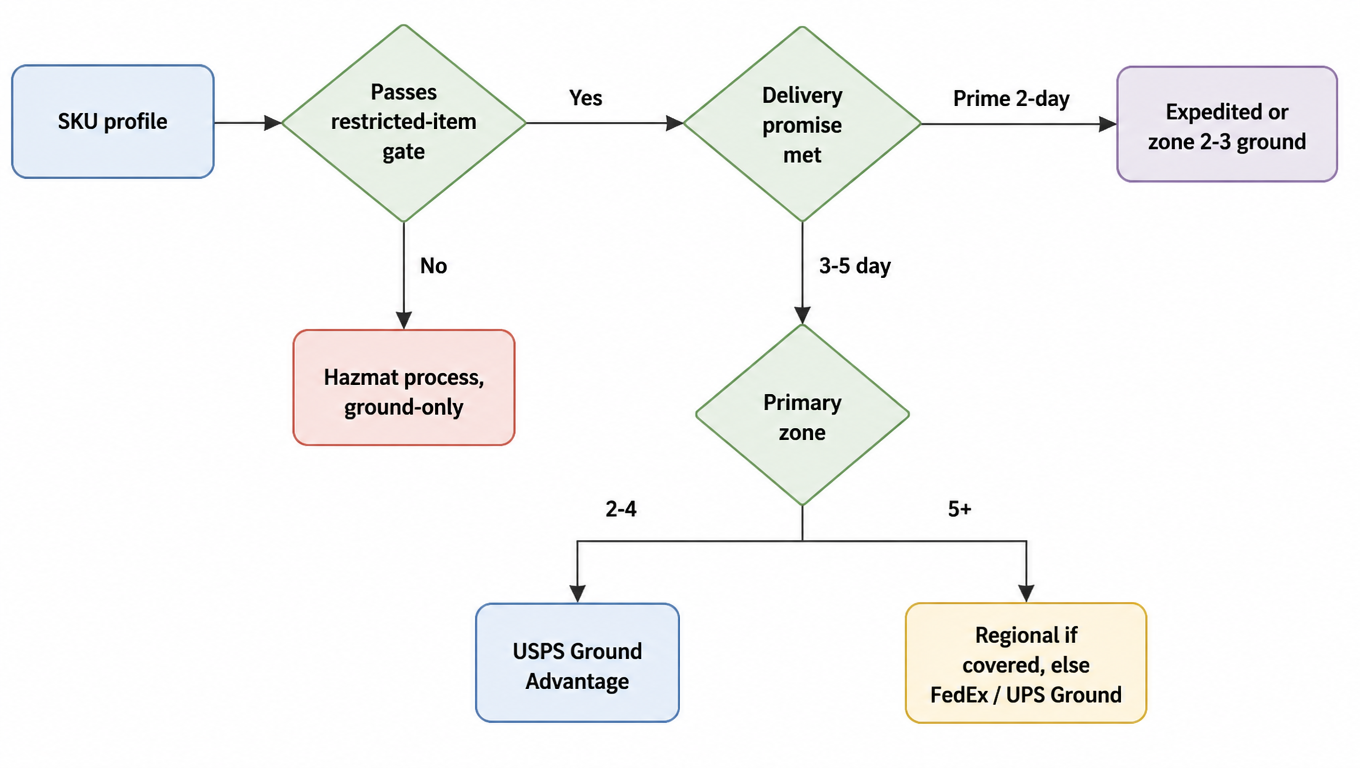
That is why the cost runs hot: four distinct problems, each pulling a different lever. The four levers are box size, DIM calculation, carrier routing, and bill audit. Step zero, the parcel profile, tells you which lever applies to which SKU instead of guessing. If your cost problem runs deeper than one category, our guide to why your shipping cost is so high walks through the whole bill, and our guide to lowering shipping costs is the umbrella framework this article plugs into.