1. Why This Comparison Matters Now
Three forces have converged to make the USPS-versus-regional decision worth re-examining.
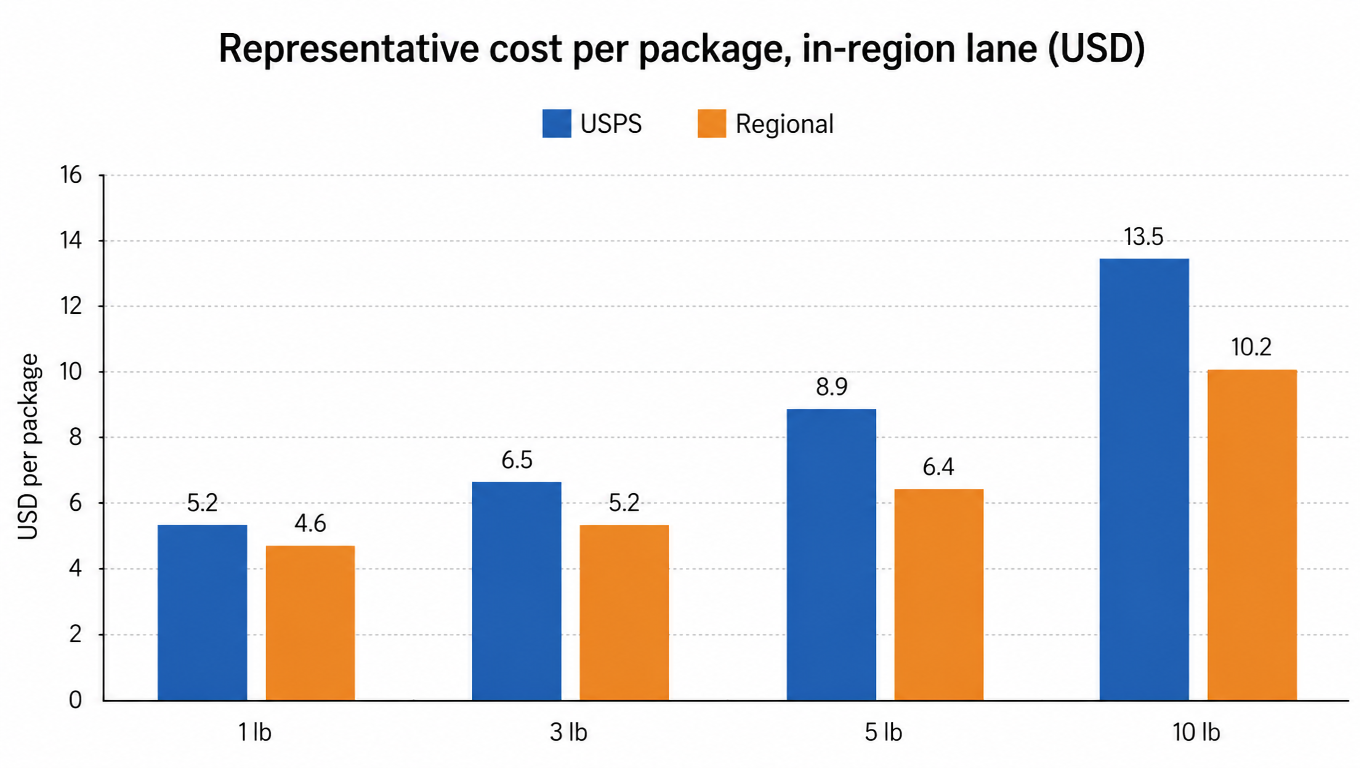
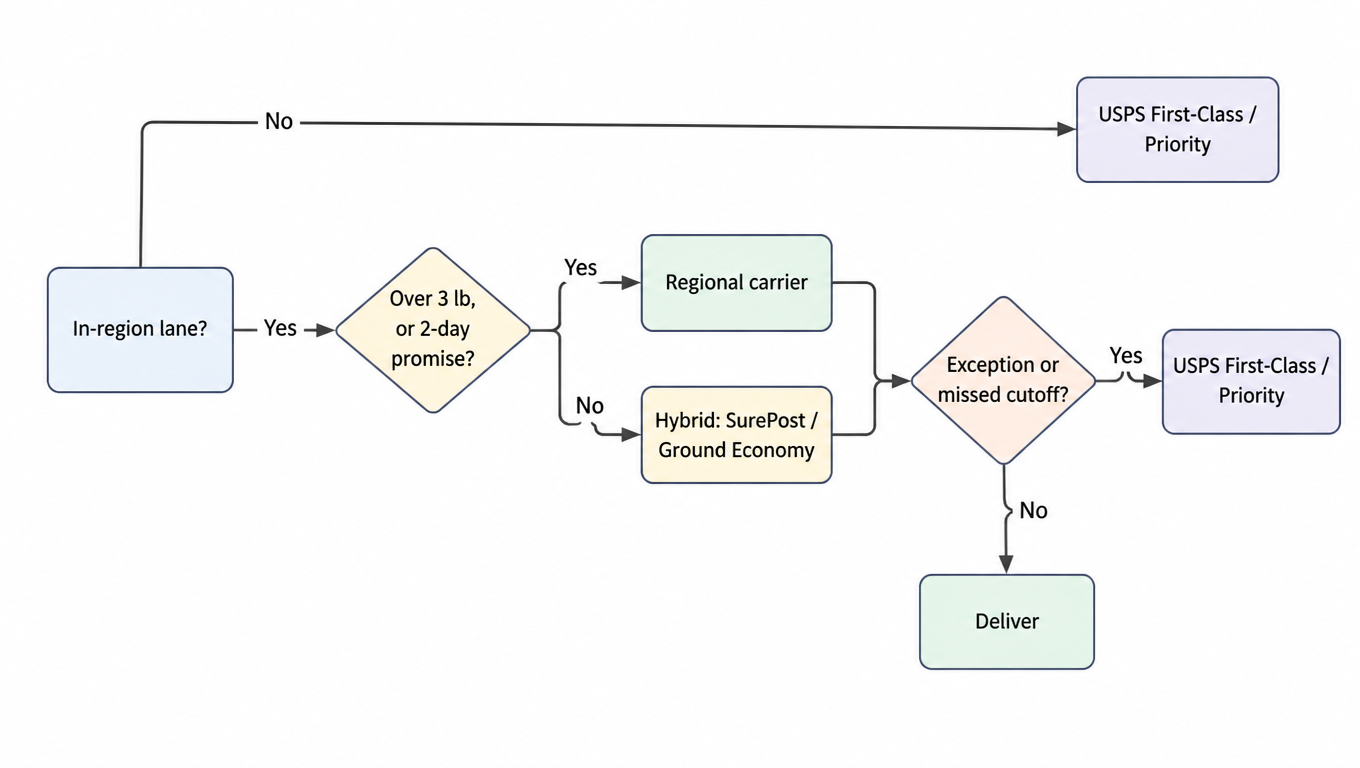
Use the multi-carrier strategy overview to decide which parcel segments need another carrier. Compare the eligible segments with the regional-carrier savings framework before changing the allocation.
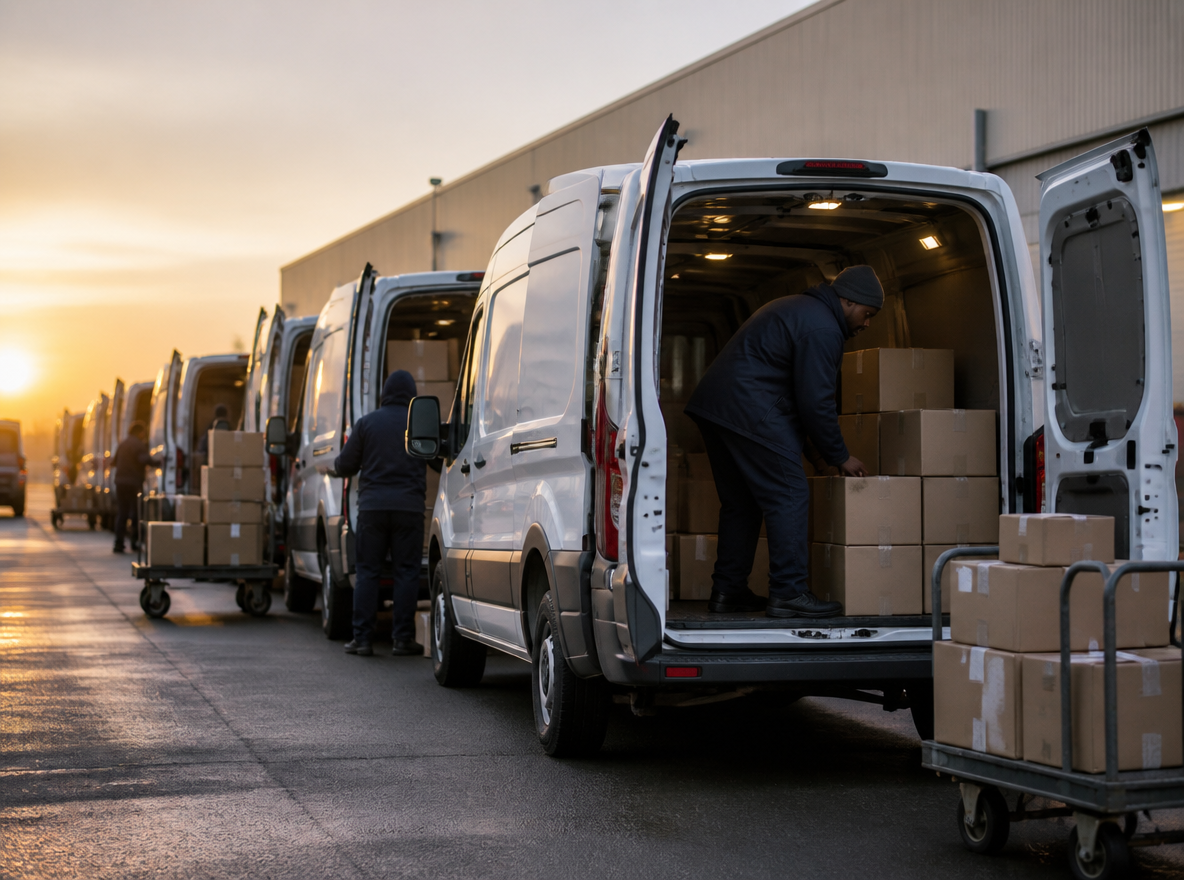
First, regional carriers are taking real share. As ecommerce volume grew through the 2020s, OnTrac, Veho (formerly LaserShip), and a new wave of tech-forward networks built density in high-population corridors and started winning parcels that used to default to USPS. When a carrier's per-package cost drops with density, the in-region lane becomes a price battleground.
Second, USPS pricing keeps moving up. The Postal Service has raised commercial rates year after year, and each peak season brings a new round of holiday surcharges on commercial parcels. For a 3PL running thin margins, a per-parcel surcharge across tens of thousands of packages is not noise. It is a line item worth routing around.
Third, the menu got bigger. A 3PL today can choose between USPS core products, hybrid services (UPS SurePost, FedEx Ground Economy, DHL eCommerce), traditional regionals (OnTrac, Veho), and next-generation regionals (UniUni, GOFO, SwiftX Express, SpeedX). More options means the decision is no longer binary. The winners are the 3PLs that mix modes per lane rather than committing to a single carrier.