Amazon FBM Scaling Guide

How to Scale Amazon FBM from 100 Orders to 10,000 Orders per Day

At 100 orders a day, gut instinct is enough: you pack yourself, you know your carriers, you track everything in Excel, and you clear the day's orders before you close your eyes. That playbook still works under 500 orders. Head toward 10,000 and the same experienced operator becomes the bottleneck: processes live in people's heads, inventory is restocked by feel, there is only one carrier, and the cost of a mistake climbs from a few dollars to tens of thousands.

FBM's moat was never scale itself. It is speed and flexibility: you control ship times, peak capacity has room to stretch, inventory ties up less cash, and SKUs and packaging can change at will. The real difficulty of scaling is not how to get more orders. It is how to build the business on systems without losing the speed and flexibility that made it worth building. This article walks four stages, from 100 to 10,000 orders a day, with milestones, key actions, and a checkable list for each stage. Five capability modules, logistics, inventory, team, data, and cash, run through all of it, and 3PL operators can follow along to see where they fit in and what to offer at each point.

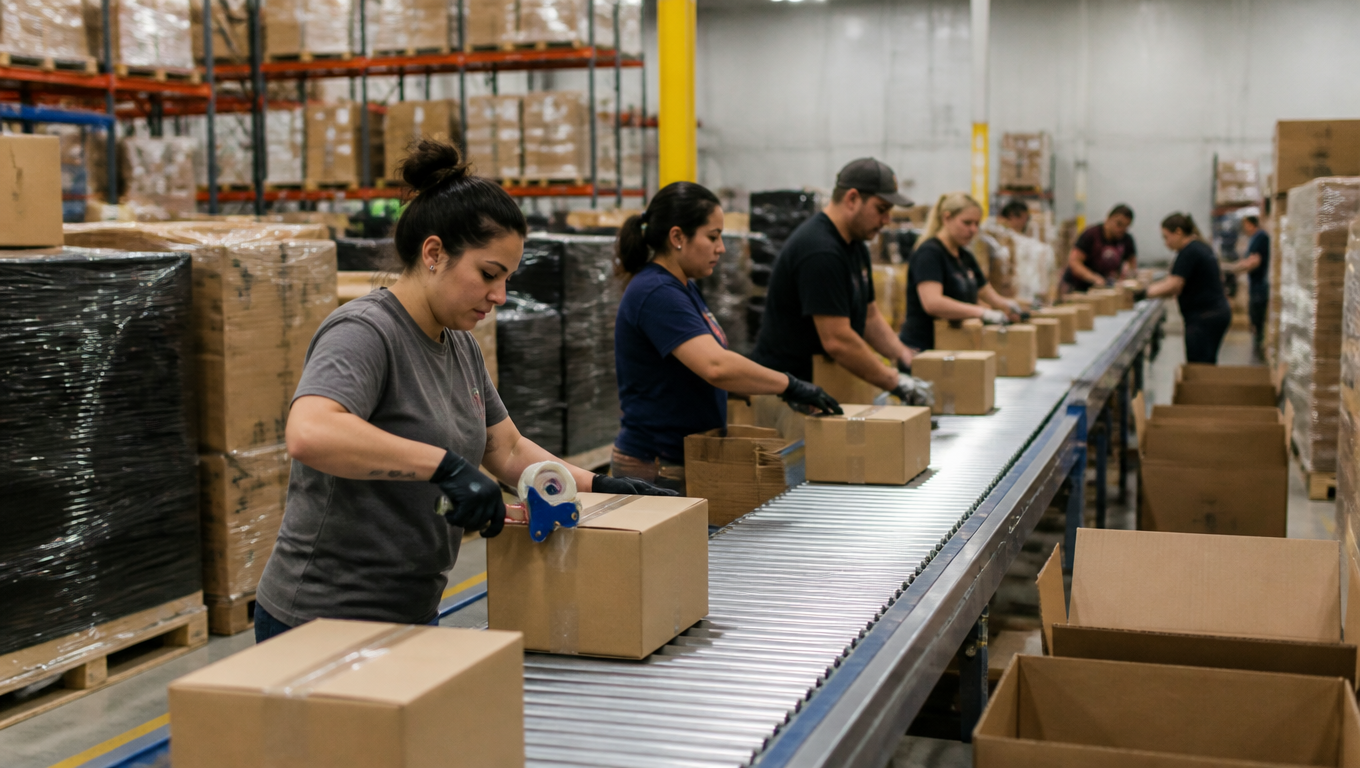
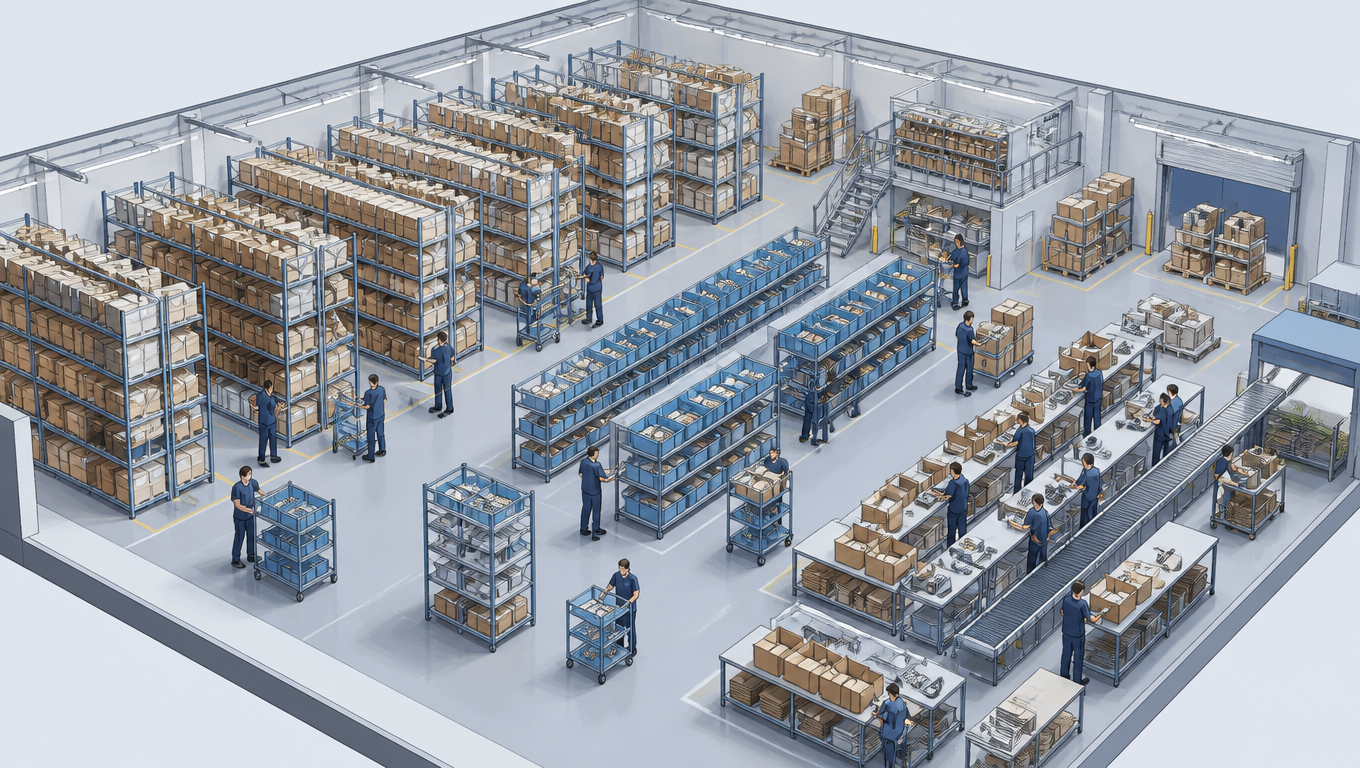
Organized FBM warehouse with shelving, picking carts and packing stations.
The point of scaling is not to lose the speed and flexibility

Why Scaling FBM Is a War of Speed and Flexibility

Third-party sellers account for roughly 60 percent of Amazon's sales[^1], and more than one in three of them fulfills at least part of their volume with FBM[^2]. So going from 100 to 10,000 orders a day is not a niche problem, it is the shared growth question of millions of sellers. FBM's moat versus FBA is structural: ship times are in your hands and you can intercept an order the day a customer is chasing it; peak capacity has room to stretch without locking down warehouse space months ahead; inventory ties up less cash and can be priced down and cleared when it stops moving; SKUs and packaging stay flexible, so changing a product, adding a freebie, or switching box sizes does not require going through the platform. These advantages are instinct at 100 orders a day. At 5,000 they only survive by design.

The hidden cost of scaling sits on the flip side of these advantages. More processes slow decisions down. More SKUs mean inventory mismatches. One carrier becomes three, and a single point of dependency becomes multi-vendor management. A team of 3 becomes a team of 30, and the founder goes from packing boxes to putting out fires. Every step of growth consumes speed, and speed is exactly what separates you from FBA sellers and from brand-owned stores.

So the core judgment is one sentence: scaling means turning gut calls into a predictable system, but the system must not come at the cost of speed. The four stages look like this:
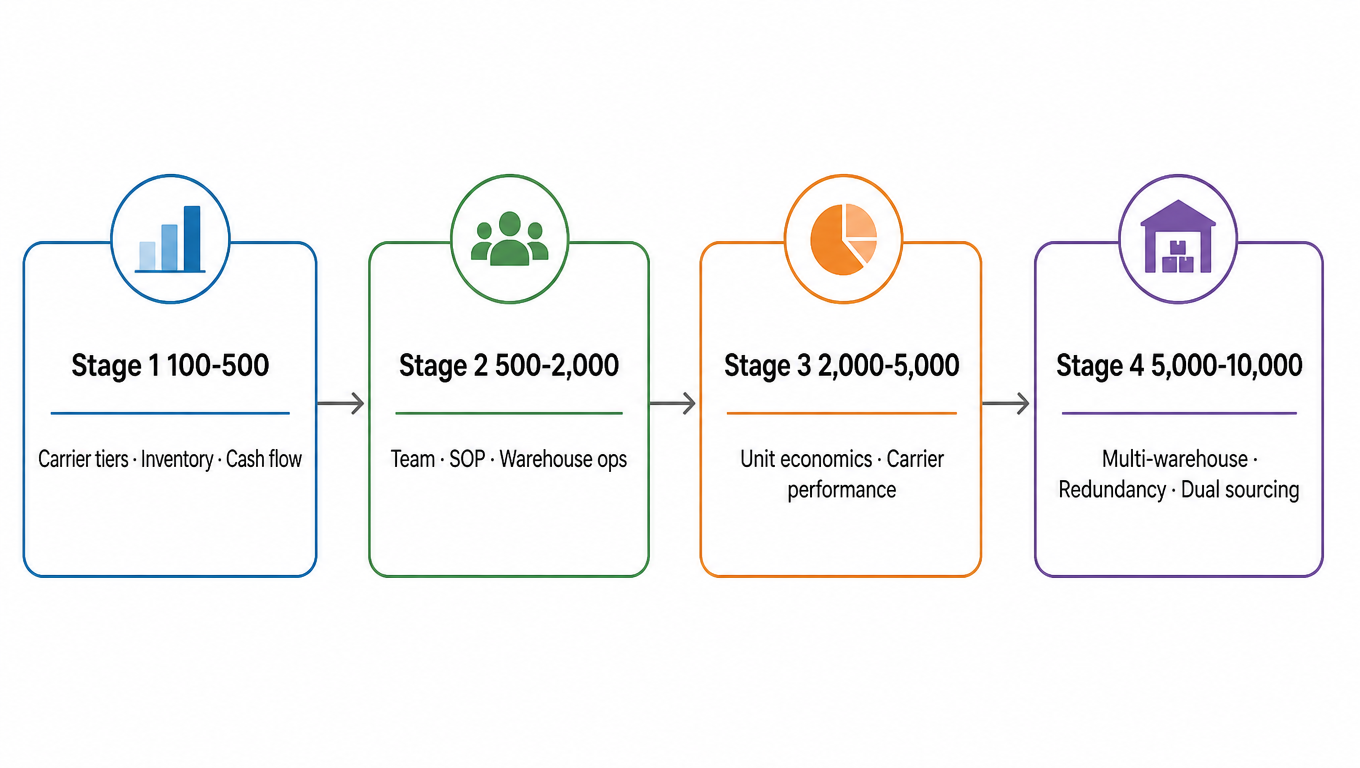
Four-stage progression: Stage 1 100-500 build the foundation (carrier tiers, inventory, cash flow), Stage 2 500-2,000 standardize (team, SOP, warehouse ops), Stage 3 2,000-5,000 data-driven (unit economics, carrier performance), Stage 4 5,000-10,000 multi-warehouse and redundancy
From 100 to 10,000 orders, each stage solves a different problem

Stage 1: 100 to 500 Orders per Day, Build the Foundation

The milestones here are unglamorous: no stockouts, stable ship times, positive cash flow, and trackable returns. If any of the four is out of control, the foundation is not ready, and growing volume will only amplify the problem.

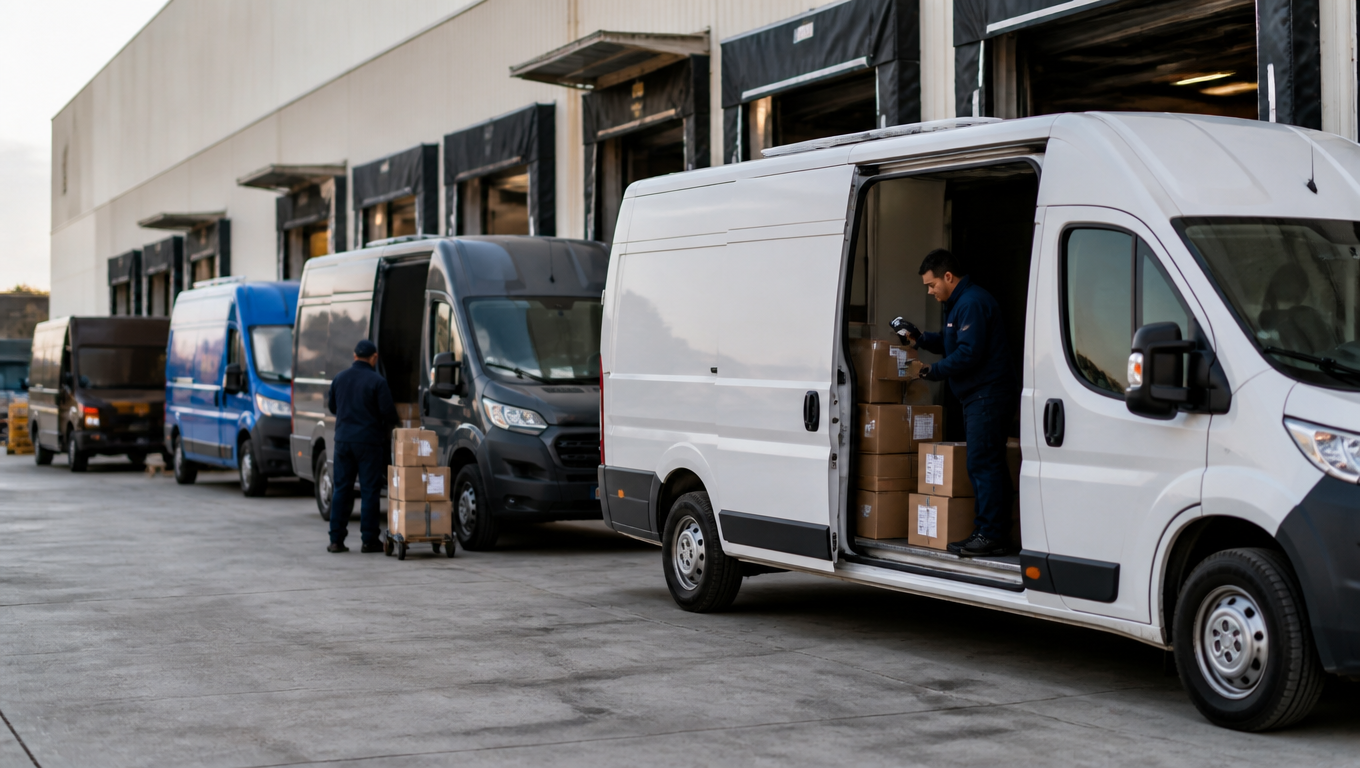
Logistics infrastructure comes down to three things. First, tier your carriers: manage express (USPS, UPS, FedEx), economy, and heavy-freight lanes separately, and never let one carrier carry every type of parcel. Second, lock a daily shipping rhythm: switch from "ship when there is time" to "ship at a fixed time," write the cutoff into the process, and roll anything missed into the next batch. Third, prepare your negotiation ammunition: monthly volume, regional distribution, and the dimensional-weight mix are the three numbers you walk into a carrier meeting with. From a 3PL's view, the way to judge a small seller in this stage is not order count but growth signals: is the SKU lineup focused, is shipping regular, are the books clear? Those decide whether the account is worth taking.

Inventory and purchasing start with Excel and that is fine. Track each SKU's weekly sales, trend, and seasonality factor, then compute a safety stock line with daily sales times (procurement lead time plus replenishment cycle) times a volatility factor, and trigger a reorder whenever a SKU dips below it. The point is not to hide forecasting problems behind extra inventory: stockouts cost you sales and ranking, holding stock ties up cash and storage, and the balance between the two is a data decision, not a feel decision.

Cash flow is where this stage tips over most often. Build the unit economics model first: packaging, freight, and labor, know the true per-order fulfillment cost before you trust the margin. Negotiate payment terms with suppliers, never bet all of your buying budget on one SKU, cap the capital per SKU, and go slow rather than gamble.

  • Pull 3 months of weekly sales and trends for every active SKU
  • Tier carriers by express / economy / heavy freight and set a daily cutoff
  • Compute per-order fulfillment cost (packaging + freight + labor) per SKU
  • Build a safety stock formula and set a reorder line per SKU
  • Track order-to-carrier-pickup time for 4 straight weeks and confirm it stays on target

Stage 2: 500 to 2,000 Orders per Day, Standardize the Process

The milestones here: order handling has an SLA, packaging is consistent, picking errors drop, and customer service response follows a standard. You can no longer guarantee quality by watching everything yourself. The process has to run without you.

The first SOP is the dividing line. Write down every step from order in to delivery out so a new hire can follow it, and that is the start of "the process keeps running when the person steps away." Split the work into five stations: picking, checking, packing, labeling, and handoff, each with a clear owner, so single-point bottlenecks are visible at a glance. Shift handover sheets, role charts, and an exception escalation path feel like trivia, but they are the only thing that keeps 2,000 orders a day error-free.

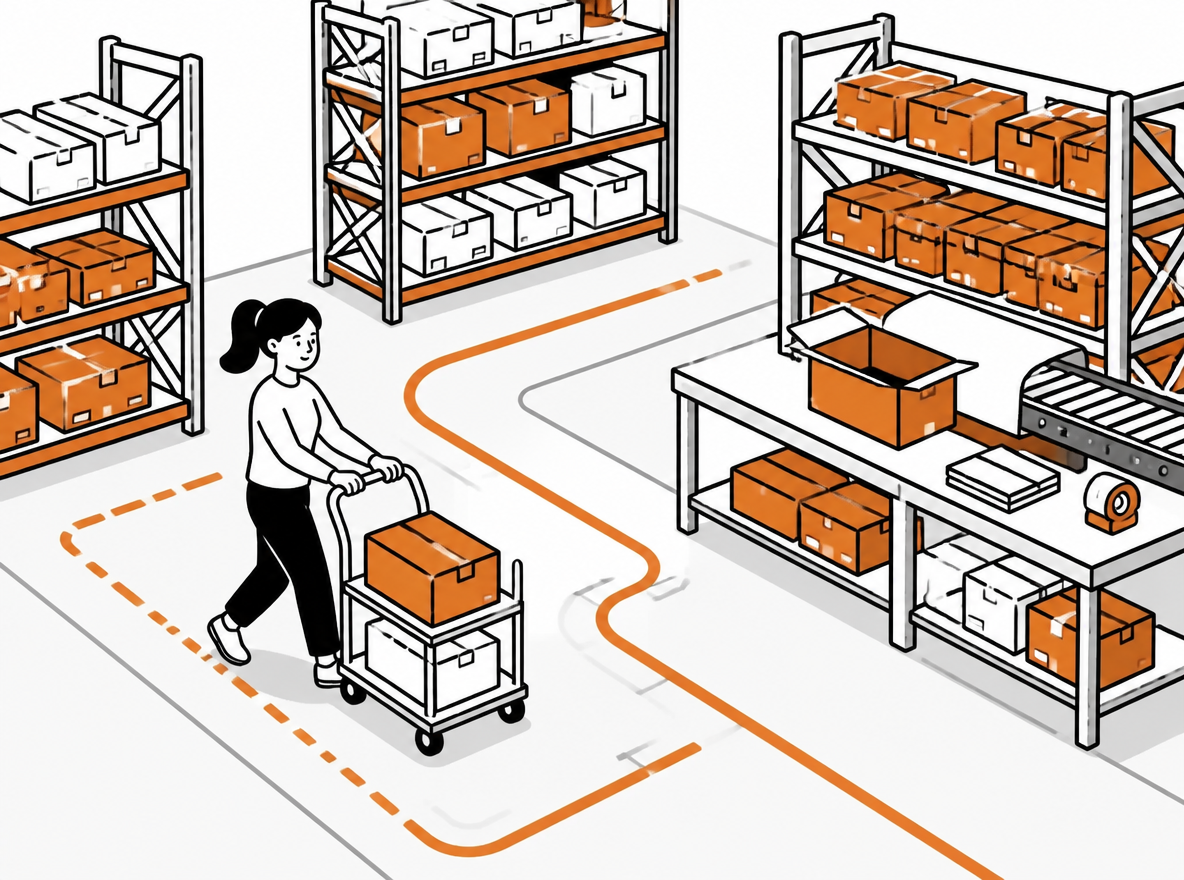
Warehouse operations start with locations. Fixed bins plus ABC zoning: A-class fast movers sit next to the packing station, B-class behind them, C-class in the far zone, and pick paths follow the zones to cut wasted walking. Move from quarterly counts to cycle counting, covering the high-turnover zones every week, so inventory accuracy stops being "we find out in December" and becomes "corrected every day."

ABC warehouse layout places bestsellers near the packing station, with marked picking routes.
ABC zoning routes pick paths through fast movers instead of around the warehouse

When should you consider a 3PL? Three signals: peak season volume you cannot absorb yourself, warehouse space and labor costs out of balance, and returns handling dragging down your core operation. The first things to outsource are also the most conservative: peak overflow, returns processing, and heavy bulky items. Outsourcing is not passing the buck, it is handing the non-core parts to people who do them professionally, on the condition that you defined your processes and standards in Stage 2, otherwise the 3PL inherits a tangle.

  • Finish the first SOP and have a new hire follow it end to end on their own
  • Assign an owner to picking / checking / packing / labeling / handoff and surface bottlenecks
  • Complete ABC zoning with fixed bins for A-class fast movers
  • Launch cycle counting with weekly coverage of high-turnover zones
  • Write a one-pager of backup 3PL candidates and trigger conditions for peak season

Stage 3: 2,000 to 5,000 Orders per Day, Let Data Drive

The milestones here: dashboards move from weekly to daily, forecasting moves from Excel to tools, and you walk into carrier negotiations with leverage. Intuition formally retires at this stage, every decision sits on a set of numbers.

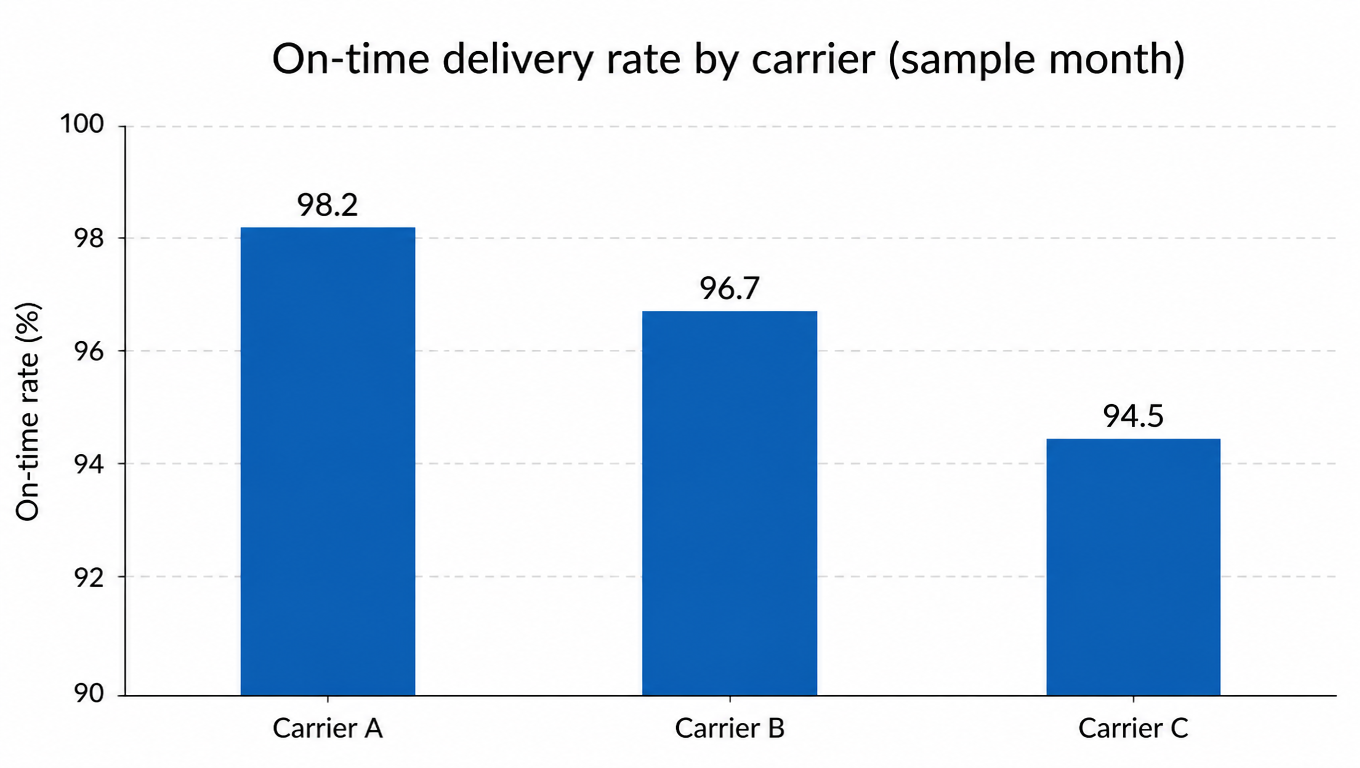
The data module starts with three things. Refine the unit economics model: break per-order fulfillment cost down by carrier, SKU, and region, and you will find SKUs that are simply not profitable in certain regions. Compare carrier performance monthly: on-time rate, damage rate, and claim rate in one table, and that table is your negotiation leverage. Amazon also enforces a 4 percent late shipment rate limit on FBM orders, and crossing it risks account suspension[^3], so this table is first a survival tool and only second a negotiation tool. Attribute exception orders: late, mis-ship, damaged, each type gets traced to a specific step instead of living in a customer service spreadsheet. In a sample month three carriers posted on-time rates of 98.2, 96.7, and 94.5 percent with damage rates of 0.12, 0.18, and 0.31 percent. The same "on-time rate" line is tens of thousands of orders of experience gap in peak season:

On-time delivery rate by carrier bar chart (sample month): Carrier A 98.2%, Carrier B 96.7%, Carrier C 94.5%
The same on-time metric, a 3.7-point gap is tens of thousands of orders of experience in peak season

Cash and working capital need to be planned ahead. Peak-season buying should be scheduled 3 to 4 months out, do not wait until Q4 to borrow money for inventory. Rank financing options by cost: bank credit lines, inventory financing, platform lending, and every tier needs a stated use and a repayment source.

Working with a 3PL moves from "helping out" to "managing." SLAs belong in the contract: cutoff time, outbound ship time, and inventory accuracy, none of them optional. The test for opening a second warehouse is a single one: can one location cover your buyer distribution within the SLA? If not, open the second. A 3PL's carrier network and rate leverage feeds back to you, but only if you have data to verify the discounts they claim are real.

  • Make the dashboard daily: orders, ship time, errors, and cost
  • Break unit economics down by carrier, SKU, and region
  • Build a monthly carrier scorecard (on-time / damage / claims) and negotiate from it
  • Set up a peak-season buying capital plan 3 to 4 months ahead
  • Sign a 3PL agreement with SLA terms in the contract

Stage 4: 5,000 to 10,000 Orders per Day, Organizational and Supply Chain Resilience

The milestones here: multi-warehouse operations, carrier redundancy, dual-sourced supply, and a real management layer. The first three stages trained you not to make mistakes. This stage trains you to keep running when something big goes wrong.

The hardest organizational move is delegation. The founder shifts from doing the work to leading people who do it, giving each manager a clear mandate and decision boundary instead of hoarding every approval on their own desk. Training follows: SOPs get a quarterly update mechanism, new hires get an onboarding checklist, and KPIs condense into four dashboards, ship time, errors, cost, and cash flow, that management reviews weekly and nothing else.

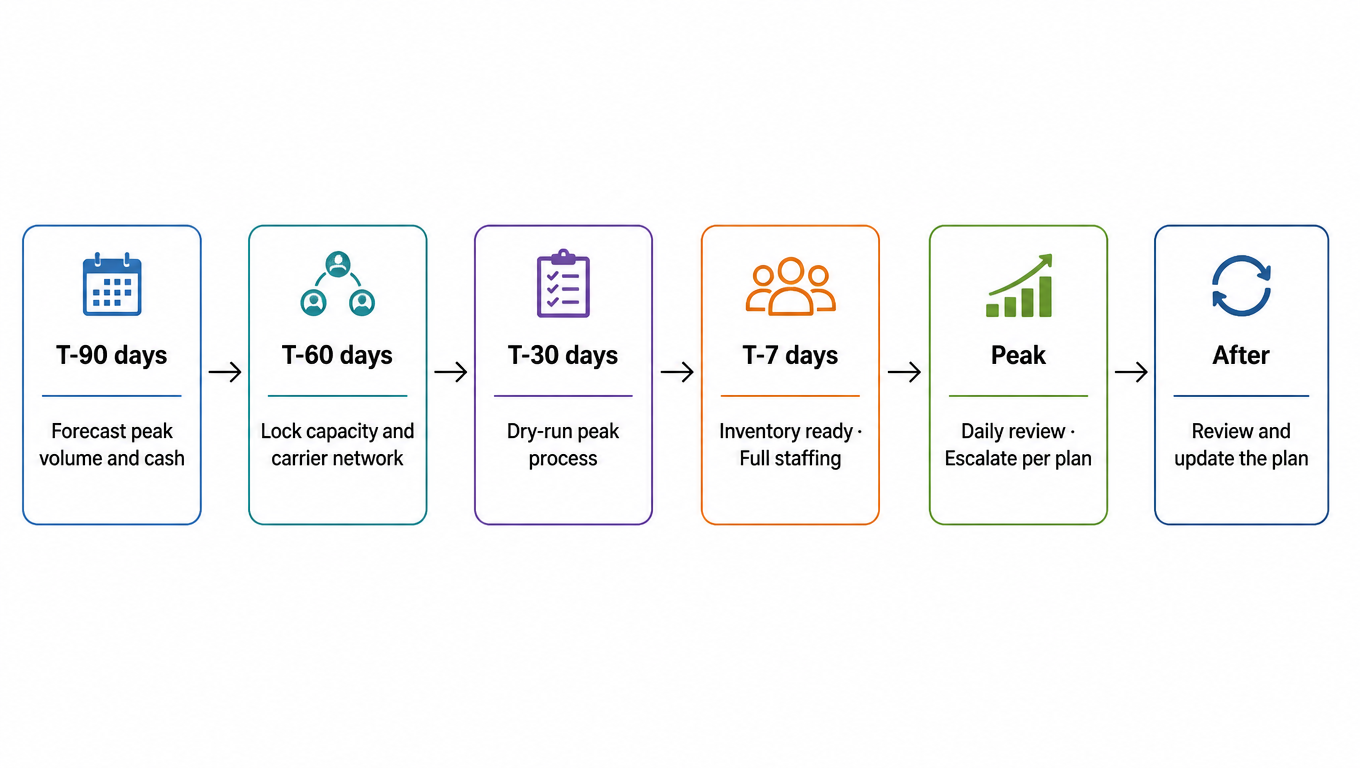
Supply chain resilience is the theme of this stage. A single warehouse and a single carrier in peak season is the classic single point of failure. Keep at least two carriers as redundancy and stress-test them before big promotions; every carrier adds peak surcharges and tightens capacity in the holidays[^4], so redundancy is not optional in peak season, it is the default configuration. Regional warehouse placement is decided by where buyers actually receive, let the data speak. Rehearse the peak-season plan 90 days out:

Peak-season plan 90-day timeline: T-90 forecast peak volume and cash, T-60 lock warehouse space and capacity, T-30 dry-run the peak process, T-7 inventory ready and full staffing, during peak daily review and escalate per plan, after peak review and update the plan
Peak season is not cramming, it is a rehearsal that starts 90 days out

The 3PL relationship reaches the strategic layer: long-term agreements, joint forecasting, shared data, moving from "client and vendor" to "joint operation." Inventory allocation across warehouses and carriers has to be explicit: what each warehouse stocks, how replenishment cadence is set, who triggers inter-warehouse transfers, written into the agreement so peak season never becomes firefighting over the phone.

  • Give every manager a clear mandate and decision boundary; the founder stops approving order by order
  • Stand up the training system: new-hire onboarding checklist plus quarterly SOP updates
  • Run at least two redundant carriers through peak season and stress-test them
  • Decide regional warehouse placement from buyer delivery-address data
  • Complete the peak-volume drill 90 days before peak and write up the plan

The Five Capability Modules Across All Stages

Collapse the four stages by capability module and one table shows what to do in each stage:

Module Stage 1 Stage 2 Stage 3 Stage 4
LogisticsCarrier tiers + fixed shipping rhythmPick paths and bin optimizationCarrier scorecards and negotiationCarrier redundancy + multi-warehouse network
InventoryExcel forecasting + safety stockABC zoning + cycle countingTool-based forecasting + accuracy SLAMulti-warehouse allocation + dual sourcing
TeamYou + temporary helpRoles + handoffs + first SOPTeam leads and data ownersManagement layer + training system
DataUnit economics modelShip-time and error recordsDaily dashboard + exception attributionKPI dashboards
CashPositive cash flow + supplier termsPeak capital reservePeak buying financing planLong-term capital plan + joint forecasting

The three things that matter most in each stage:

Stage Three things
100 to 500Compute per-order cost, lock the daily shipping rhythm, build safety stock lines
500 to 2,000Finish the first SOP, complete ABC zoning, define 3PL trigger conditions
2,000 to 5,000Daily dashboard, monthly carrier scorecard and negotiation, peak capital plan
5,000 to 10,000Carrier dual-redundancy, regional warehouse placement, management delegation

Combine the four stage checklists and tick each item, flagging what you already do. If a stage has fewer than 3 of 5 items checked, do not rush into the next stage yet. Building a floor on a weak foundation costs far more in rework than it saves in time. To find where you should start, read the Stage 1 and Stage 2 checklists first, most sellers moving from 100 toward 1,000 orders a day are stuck on process standardization.

Common Failure Modes and How to Avoid Them

Five classic wrecks, and almost every seller who failed to scale hit at least one. Overbuilding the warehouse: orders barely grew but the space doubled, and fixed costs ate the margin. Single-carrier dependency: the carrier blew up in peak season and the seller shut down with it. Peak-season cash breakage: buying stalled halfway because cash ran dry and payment terms would not budge. Headcount ahead of process: the team went from 5 to 20 people still running on verbal handoffs, and the error rate grew with the headcount. Forecasting by gut: sales estimates came from feel, and peak season was either a stockout or a mountain of dead inventory.

Build or outsource comes down to three questions: does your core value depend on owned warehousing (custom packaging, same-day delivery), does the cost of owning decline as you scale, and can you carry the management complexity? Say yes to two of the three before building. Otherwise outsource first and leave the capital and attention for growth.

Finally, pace. The speed of scaling should not be set by ambition but by system stability: move to the next stage only when the current stage's milestones are all consistently met. Scaling for the number is betting future cash flow on current ego, and FBM sellers cannot afford that bet.

Conclusion: Back to Speed and Flexibility

10,000 orders is not a finish line, it is a byproduct of being systematized. The metric worth watching is whether you can still respond as fast at 10,000 orders as you could at 100: change packaging, reroute lanes, switch carriers, rescue a stuck batch of inventory. Keep the speed, keep the flexibility, and scale means something.

Three things you can do today. First, compute your per-order fulfillment cost and squeeze the water out of your margin. Second, lock a daily shipping rhythm and set a cutoff starting tomorrow. Third, write your first SOP, even if it is one page. None of the three costs a cent, and all of them are the first step from running on instinct to running on system.

FAQ

Compute your true per-order fulfillment cost: packaging, freight, and labor, and squeeze the water out of your margin. Most sellers do not actually know how much they make per order, and every scaling decision, buying, negotiation, hiring, sits on unit economics. Second, lock a daily shipping rhythm and set a cutoff. Third, write your first SOP. None of the three costs money, and they are the first step from instinct to system.
Three signals: peak volume you cannot absorb, warehouse space and labor out of balance, and returns dragging down the core. The first things to outsource are also the most conservative: peak overflow, returns processing, and heavy bulky items. The precondition is that you have defined your processes and standards (the Stage 2 first SOP), otherwise the 3PL inherits a tangle. Put SLAs in the contract: cutoff time, outbound ship time, and inventory accuracy, none optional.
Three questions decide it: does your core value depend on owned warehousing (custom packaging, same-day delivery), does the cost of owning decline as you scale, and can you carry the management complexity? Say yes to two of three before building; otherwise outsource and leave capital and attention for growth. Most sellers overestimate the marginal benefit of owning and underestimate the management complexity.
Amazon enforces a 4 percent late shipment rate limit on FBM orders, and crossing it risks account suspension[^3]. That is why the monthly carrier scorecard is first a survival tool and only second a negotiation tool: on-time rate, damage rate, and claim rate in one monthly table, replace whoever drags it down, and watch it hardest before peak season.
A single warehouse and a single carrier is the classic peak-season single point of failure. Run at least two redundant carriers and stress-test them before big promotions; every carrier adds peak surcharges and tightens capacity[^4], so redundancy is the default, not an option. Place regional warehouses from buyer delivery-address data and rehearse the peak plan 90 days out: forecast volume and cash, lock space and capacity, dry-run the process, prep inventory and staffing, review and escalate daily.
There is no fixed answer, but the pace is set by system stability, not ambition: move on only when the current stage's milestones are all consistently met. If fewer than 3 of 5 checklist items are ticked, do not rush forward, rework costs far more than catching up. Most sellers get stuck between Stage 1 and Stage 2 on process standardization, not on their ability to generate orders.