FBM 发货策略FBM Shipping Strategy

亚马逊 FBM 多承运商策略:从 1 主 2 备到订单自动路由How to Build a Multi-Carrier Strategy for Amazon FBM

FBM 和 FBA 最大的区别在于:配送责任在卖家自己手里。FBA 卖家把货交给亚马逊,从出库到签收都由亚马逊兜底;FBM 卖家发货之后,从首次扫描到最终签收,每一环的表现都记在卖家账上。亚马逊用迟发率、有效追踪率、准时送达率这些指标考核卖家,直接关联账号健康[^1]。很多卖家把全部订单押在唯一一个承运商身上,等于把自己的账号绩效押在别人的运力上。The biggest difference between FBM and FBA is that the delivery responsibility sits with the seller. FBA sellers hand inventory to Amazon and Amazon covers everything from pick to signature. FBM sellers ship on their own, and every step from first scan to final delivery is recorded against the seller's account. Amazon measures sellers on metrics like late shipment rate, valid tracking rate, and on-time delivery rate, all of which feed directly into account health[^1]. Too many sellers put every order on a single carrier, which is effectively betting their account performance on someone else's capacity.

这篇文章讲清楚一件事:怎么用一套多承运商策略,让配送成本更低、绩效更稳、旺季不掉链子。This article covers one thing: how to build a multi-carrier strategy that lowers delivery cost, keeps performance stable, and survives peak season without breaking.

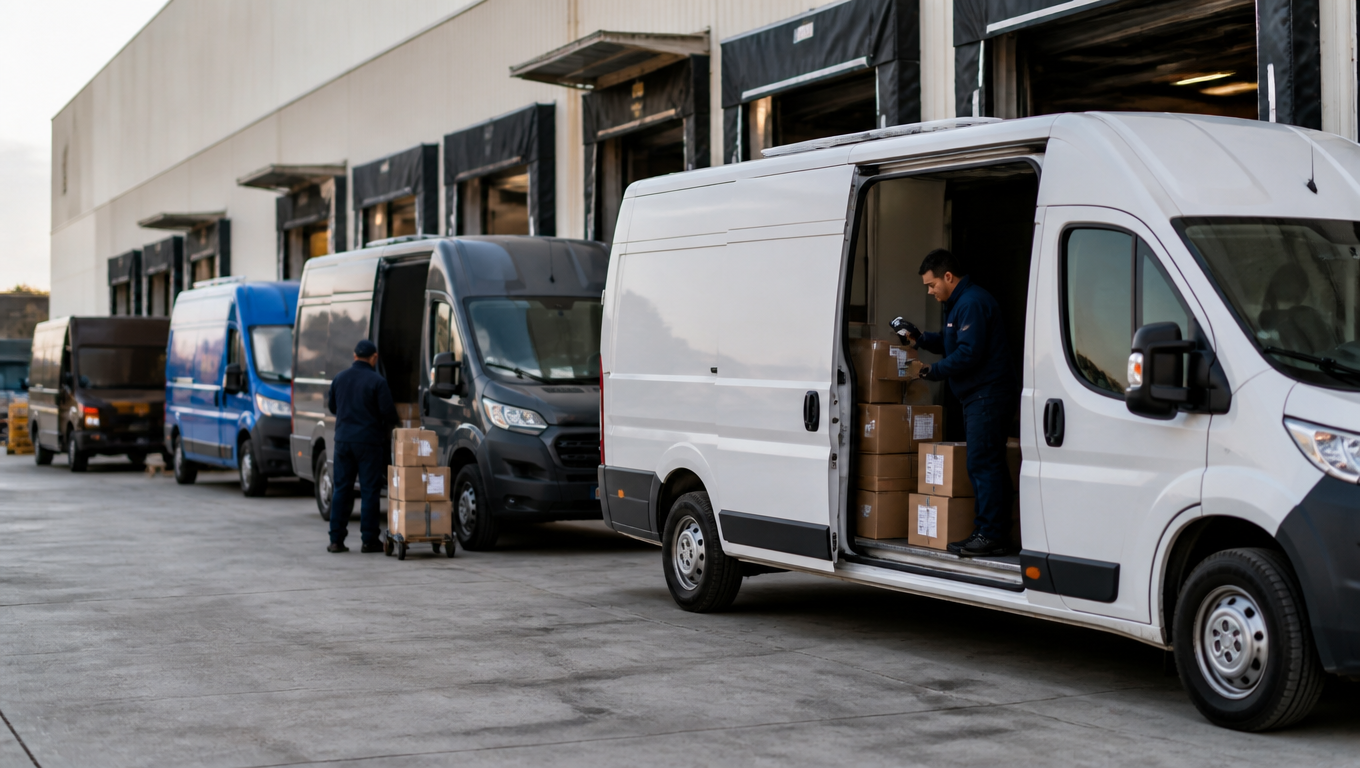
美国仓储装卸区,几辆不同涂装的中性快递货车排队停在月台前,工人在装货口用扫描枪核对包裹
配送责任在卖家手里,承运商组合就是你的履约能力Delivery is on you, so your carrier mix is your fulfillment capability

为什么要多承运商(单承运商的风险)Why Multi-Carrier? The Risk of a Single Carrier

FBM 卖家对配送表现负直接责任。订单发出后,承运商的扫描是否及时、包裹是否按时送达、追踪信息是否完整,都会反映到亚马逊的卖家绩效指标里,进而影响账号健康,严重时会被限流甚至停售。而承运商的运力,恰恰是卖家控制不了的部分。FBM sellers are directly responsible for delivery performance. After an order ships, whether the carrier scans on time, whether the package arrives on schedule, and whether tracking is complete all show up in Amazon's seller performance metrics, which affect account health and, in serious cases, lead to listing suppression or suspension. Carrier capacity is exactly the part the seller cannot control.

单承运商意味着单点故障。旺季爆仓是每年都会上演的场景:UPS、FedEx 在高峰期加收附加费,USPS 假日季件量激增,转运时间被拉长[^2];更别提区域性天气停运、承运商内部服务波动这类突发状况。当唯一的承运商掉链子,代价是全方位的:绩效扣分、客诉上升、退款增加,而这些损失远大于换一个承运商省下的那点运费。A single carrier means a single point of failure. Peak-season congestion plays out every year: UPS and FedEx add surcharges during the holidays, USPS volume spikes and transit times stretch[^2], not to mention regional weather shutdowns and internal carrier disruptions. When your only carrier stumbles, the cost is everywhere: performance hits, rising complaints, more refunds. Those losses dwarf the few dollars a single carrier saved you.

3PL 代发货场景下,问题还要再放大一层。一个海外仓同时服务几十个 FBM 卖家,每个客户的合同里 SLA、账单方式、标签品牌都不一样。单一承运商不可能同时满足所有客户的时效承诺和成本要求,比如有的客户要求全美 2 天达,有的客户只在乎便宜。对 3PL 来说,多承运商不是优化选项,是服务能力的基础设施。For a 3PL fulfilling on behalf of sellers, the problem scales up another level. One warehouse serves dozens of FBM sellers at once, each with different SLAs, billing setups, and label branding in their contracts. No single carrier can satisfy every client's transit promise and cost requirement at the same time. One client wants 2-day delivery nationwide; another only cares about cheap. For a 3PL, multi-carrier is not an optimization option, it is the infrastructure of its service capability.

需要澄清的是,多承运商不等于「到处开户」。开五六个账户、订单量被摊薄,结果是谁都不给你好价,管理成本却翻倍。真正的多承运商策略是有取舍的冗余:每一层承运商都有明确角色,合在一起才构成完整的配送能力。To be clear, multi-carrier is not the same as opening accounts everywhere. If you open five or six accounts, your volume gets diluted, nobody gives you a good rate, and management costs double. A real multi-carrier strategy is deliberate redundancy: every tier has a clear role, and together they form complete delivery capability.
多承运商策略的分层架构The Tiered Architecture of a Multi-Carrier Strategy

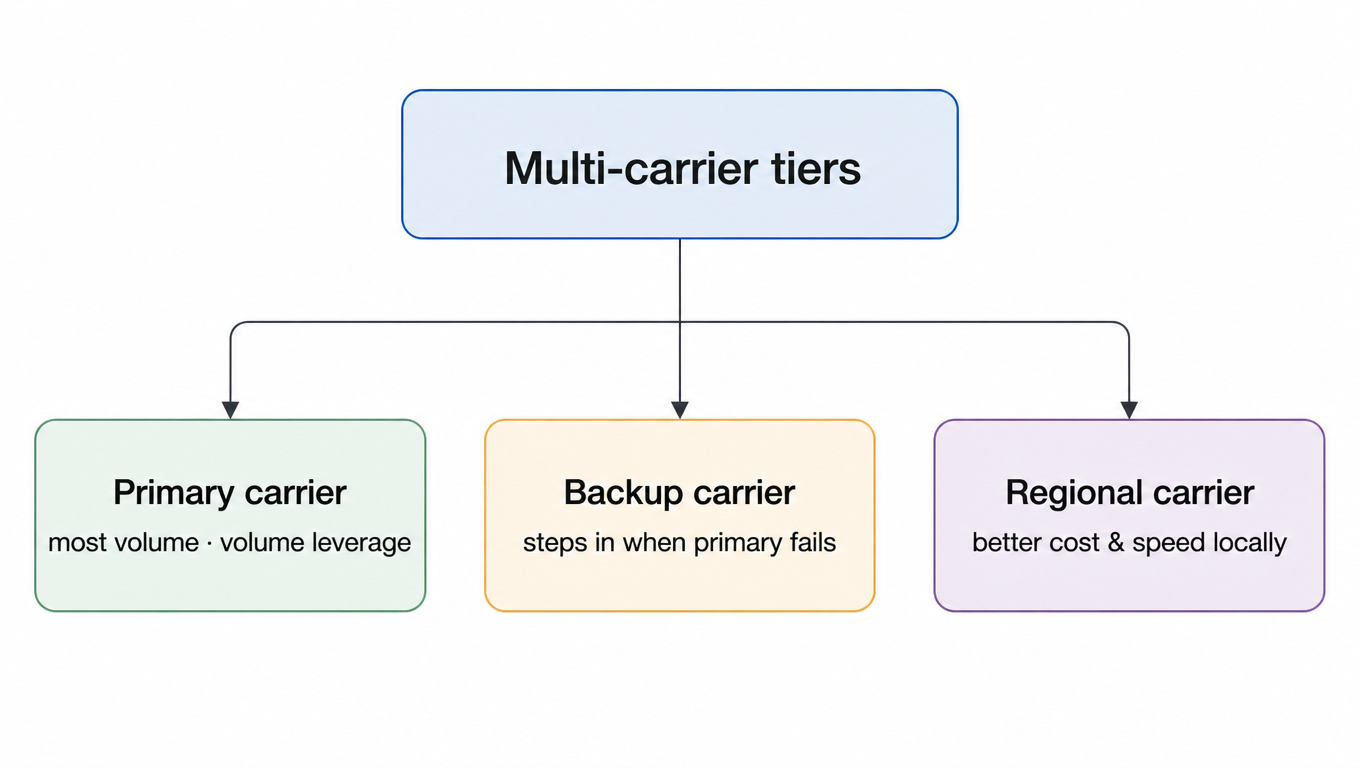
第一层是主承运商,承担大部分订单。小轻件走 USPS 的 First-Class 或 Priority 成本最优[^3],大重件走 UPS Ground 或 FedEx Ground 更稳[^5]。把量稳定地给到一个主承运商,是费率谈判的基本筹码:承运商愿意为可预期的量让价。The first tier is the primary carrier, which handles most orders. Small, light parcels are cheapest on USPS First-Class or Priority[^3]; large, heavy parcels are more reliable on UPS Ground or FedEx Ground[^5]. Giving a stable volume to one primary carrier is the basic leverage in rate negotiation: carriers will discount for predictable volume.

第二层是备用承运商,主承运商爆仓、涨价、停运时顶上。备用的量平时不需要刻意喂,但账户要保持活跃、合同要保持有效,确保关键时刻能立刻切换,而不是临时开户、临时议价。The second tier is the backup carrier, which steps in when the primary carrier is congested, raises prices, or goes down. You do not need to feed the backup much volume day to day, but the account must stay active and the contract must stay valid, so you can switch instantly when it matters, instead of opening an account and negotiating a rate under pressure.

第三层是区域承运商,比如 OnTrac、LSO 这类区域网络。它们在覆盖区域内(美西、加州、德州等地)的成本和时效比全国性承运商更优[^4]。对目的地集中在某一区域的卖家,区域承运商是主承运商的有力补充;对 3PL 而言,接入多个区域网络,还能满足客户对「本地次日达」这类 SLA 的诉求。The third tier is regional carriers such as OnTrac and LSO. Inside their coverage zones, such as the West Coast, California, and Texas, they beat national carriers on both cost and speed[^4]. For sellers whose destinations concentrate in one region, a regional carrier is a strong complement to the primary. For 3PLs, plugging into several regional networks also lets them meet client SLAs like next-day delivery within a region.

要注意,分层不是静态的。主、备、区域只是一个基线划分,真正决定每张订单走哪家的是路由规则,也就是下一节的核心框架。Note that the tiers are not static. Primary, backup, and regional are just a baseline. What really decides which carrier gets each order is the routing logic, the core framework of the next section.

流程图:多承运商分层架构,分为主承运商(承担多数订单、以量换价)、备用承运商(主承运商异常时顶替)、区域承运商(本地区域成本时效更优)三层Flowchart: the multi-carrier tier architecture splits into primary carrier (most volume, volume leverage), backup carrier (steps in when the primary fails), and regional carrier (better cost and speed locally)
三层架构:主、备、区域各有角色Three tiers: primary, backup, and regional each have a role

按订单特征路由(核心框架)Routing by Order Attributes (The Core Framework)

路由的核心思想很简单:同一张订单,在不同承运商手里的成本和时效是不一样的。把「这单走谁」从拍脑袋变成一条条可测试的规则,就是多承运商策略的骨架。The core idea of routing is simple: the same order costs differently and moves at different speeds in different carriers' hands. Turning which carrier gets this one from guesswork into testable rules is the skeleton of a multi-carrier strategy.

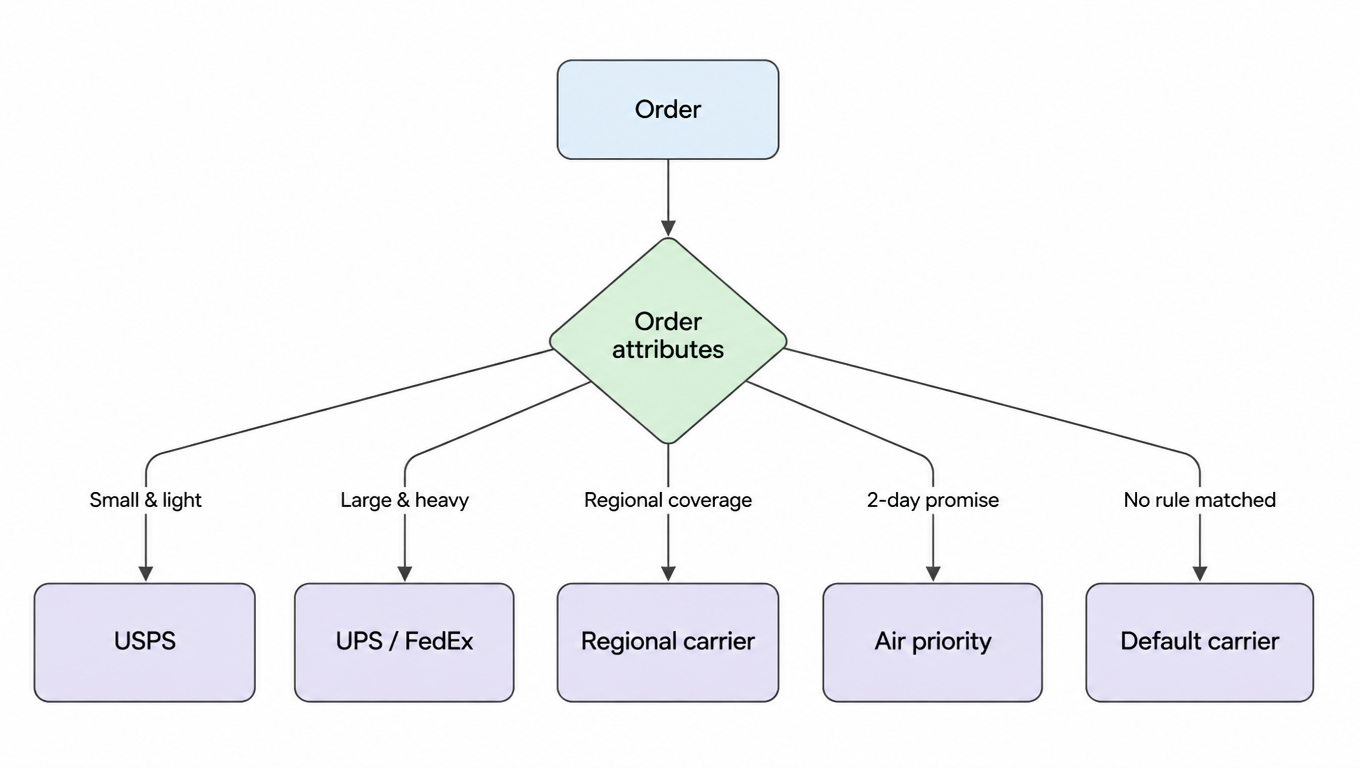
路由的第一层维度是订单特征。重量和尺寸是首要分桶条件:小轻件走 USPS 优先件,大重件走 UPS、FedEx Ground。其次是目的地:目的地落在区域承运商的网络内,优先给区域承运商。再次是时效要求:有 2 天送达承诺的订单走空运优先,普通订单走经济路线。最后是成本优先级:低价值、不赶时间的订单,选最便宜且不违约的路线。The first dimension of routing is order attributes. Weight and size are the primary bucketing condition: small and light goes to USPS first-class mail, large and heavy goes to UPS or FedEx Ground. Next is destination: if the destination falls inside a regional carrier's network, the regional carrier gets priority. Then comes the transit promise: orders with a 2-day delivery commitment go air priority, ordinary orders take the economical route. Finally, cost priority: low-value orders that are not time-sensitive take the cheapest route that does not break the promise.

3PL 多客户场景下,路由规则之上还要再叠一层客户合同。每个客户的 SLA、账单归属、标签品牌不同,规则按客户叠加:同一个重量段、同一个目的地,A 客户和 B 客户可能走不同的承运商。这一步如果靠人工在表格里配,订单量一上来就会失控,这也是 3PL 需要平台统一配置的原因,像 easyshippingx 这类多承运商平台就是把客户级规则和承运商路由放在一起管。In a multi-client 3PL scenario, client contracts sit on top of routing rules. Each client has different SLAs, billing ownership, and label branding, so rules stack per client: the same weight band and destination can route to different carriers for client A and client B. If this is configured by hand in spreadsheets, it falls apart as volume grows. That is why 3PLs need a platform that centralizes the configuration: a multi-carrier platform like easyshippingx manages client-level rules and carrier routing in one place.

规则的形态是「优先级列表 + 兜底规则」:订单按优先级逐个匹配条件,命中即走;全部未命中,落到兜底承运商。规则可测试、可回滚,改规则不碰订单数据,出问题随时退回上一版。Rules take the form of a priority list plus a fallback rule: each order is matched against conditions in priority order and ships with the first hit; if nothing matches, it falls to the default carrier. Rules are testable and rollback-able. Changing a rule never touches order data, and you can revert to the previous version at any time.

流程图:订单进入路由,按订单特征分桶:小轻件走 USPS,大重件走 UPS/FedEx,区域覆盖走区域承运商,2 天承诺走空运优先,未命中走默认承运商Flowchart: an order enters routing and is bucketed by attributes: small and light goes to USPS, large and heavy to UPS/FedEx, regional coverage to a regional carrier, 2-day promise to air priority, and no rule matched to the default carrier
订单特征决定路由,未命中规则必须落到兜底承运商Order attributes drive routing, and unmatched orders must fall to the default carrier

数据与指标:用什么衡量承运商表现Data and Metrics: How to Measure Carrier Performance

衡量承运商表现,先盯五个指标:单均成本、准时率(OTD)、转运时间、丢失损坏率、扫描可见性(首扫时间、全程追踪节点是否完整)。这五个指标覆盖了成本、时效、体验三个维度,缺一不可。To measure carrier performance, watch five metrics: average cost per shipment, on-time delivery (OTD), transit time, loss and damage rate, and scan visibility (time to first scan, completeness of tracking events). These five cover cost, speed, and experience, and none of them can be skipped.

数据来源要交叉核对。承运商自己出的报告是一面,平台归因数据是另一面:后者是订单级的,能精确知道每一单实际走了谁、实际花了多少钱、实际几天送达。两边对不上时,以订单级数据为准,不要凭感觉判断「谁快谁慢」。Cross-check your data sources. The carrier's own report is one side; platform attribution data is the other. The latter is order-level: it tells you exactly which carrier each order actually used, what it actually cost, and how many days it actually took. When the two disagree, trust the order-level data. Do not judge who is faster by gut feel.

复盘要有固定节奏。每月看一次成本趋势和准时率趋势,每季度做一次承运商组合的整体评估:哪些路线可以谈价、哪些承运商该换掉、哪些区域可以加深合作。费率谈判有了数据支撑,才有底气,而不是靠感情牌。Review on a fixed cadence. Look at cost trends and OTD trends monthly; do a full portfolio review quarterly: which lanes can be renegotiated, which carriers should be replaced, which regions deserve deeper partnerships. With data behind you, rate negotiation has leverage instead of relying on goodwill.

落地步骤:从现状到多承运商Rollout Steps: From Where You Are to Multi-Carrier

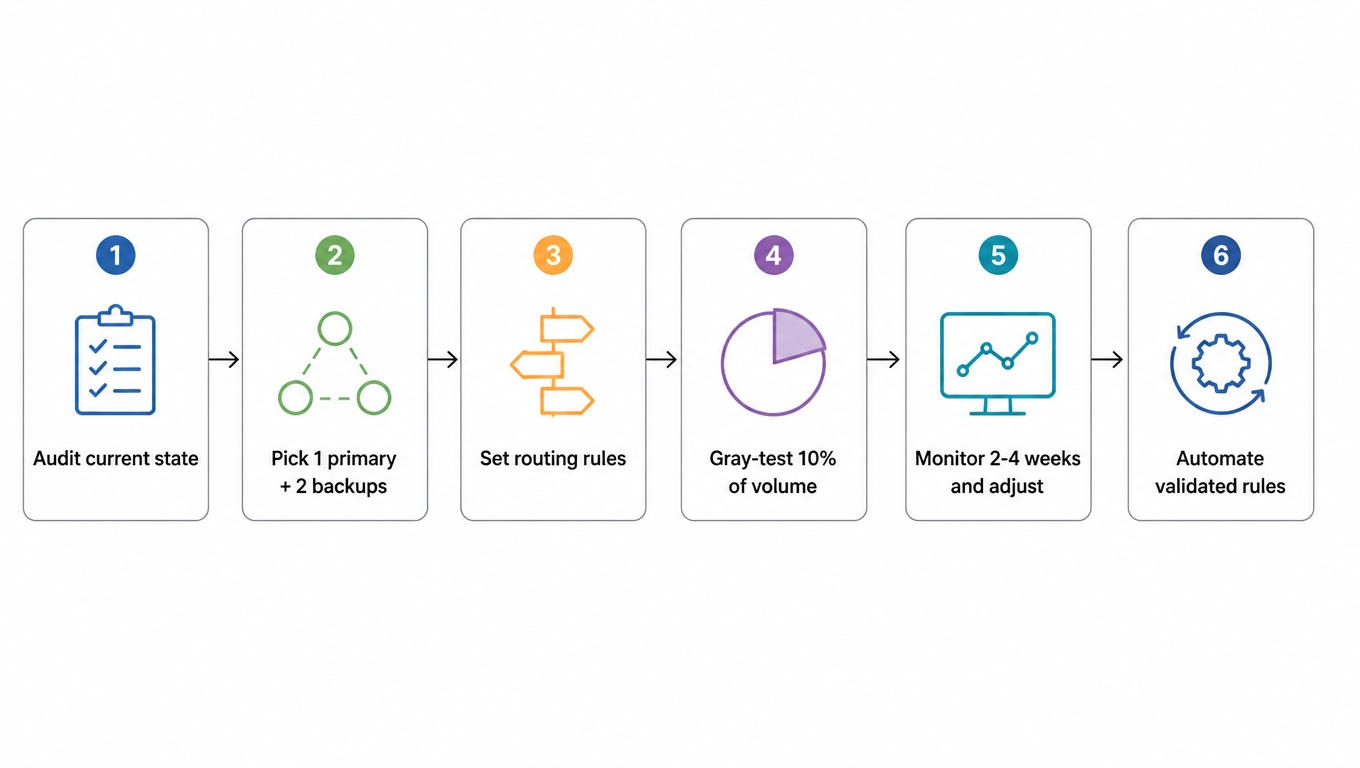
第一步是盘点现状。把近 3 个月的订单量、重量分布、目的地分布(哪些州最集中)、现有承运商合同和费率账单拉出来,先搞清楚自己每天要发什么货、发到哪里、现在花多少钱。没有这个底数,后面所有决策都是空中楼阁。Step one is to audit where you are. Pull the last 3 months of order volume, weight distribution, destination distribution (which states dominate), existing carrier contracts, and rate bills. Understand what you ship daily, where it goes, and what it currently costs. Without this baseline, every decision after this is built on air.

第二步是确定组合,1 个主承运商加 2 个备用或区域承运商,不要贪多。然后基于盘点结果设定路由规则:重量分桶、目的地分桶、时效分桶,配好兜底。规则先灰度:拿 10% 的流量跑新规则,和旧方式并行对比,观察有没有异常。Step two is to fix the mix: one primary carrier plus two backup or regional carriers, no more. Then set the routing rules from the audit: weight buckets, destination buckets, and transit buckets, with a fallback configured. Gray-test the rules first: run 10% of traffic on the new rules in parallel with the old way and watch for anomalies.

第三步是监控。灰度期跑 2 到 4 周,每天看准时率和成本,每周看一次客诉和丢失损坏数据。哪条规则有问题,单独回滚,不牵连整组规则。数据稳定后,把灰度流量逐步放大到 50%、100%。Step three is monitoring. Run the gray period for 2 to 4 weeks, checking OTD and cost daily and complaint and loss/damage data weekly. If one rule misbehaves, roll it back alone without touching the rest. Once the numbers stabilize, scale the gray traffic up to 50% and then 100%.

第四步是固化自动化。验证过的规则写进平台配置,变成系统自动执行的路由,不再依赖人工选承运商。对 3PL 来说这一步是批量管理的关键:多客户、多承运商在一个配置中心里统一管理,新客户接入时复制规则模板即可,这正是 easyshippingx 这类平台解决的场景。Step four is to lock it in as automation. Write the validated rules into the platform config so routing runs automatically and nobody picks carriers by hand. For 3PLs this step is the key to batch management: many clients and many carriers managed in one config center, and onboarding a new client is just copying a rule template. That is exactly the scenario a platform like easyshippingx solves.

流程图:盘点现状、定 1 主 2 备、设定路由规则、灰度测试 10% 流量、监控 2-4 周并调整、固化为自动化Flowchart: audit current state, pick one primary and two backups, set routing rules, gray-test 10% of volume, monitor for 2-4 weeks and adjust, then automate the validated rules
四步落地:盘点、定组合、灰度、固化Four steps: audit, fix the mix, gray-test, automate

常见错误与避坑Common Mistakes and How to Avoid Them

错误 1:承运商太多。账户开了一堆,量被摊薄,谁都不把你当大客户,费率拿不到、支持也跟不上。冗余的度是「够用加有备」:1 主 2 备起步,跑顺了再扩,而不是一上来就铺满。Mistake 1: too many carriers. You open a pile of accounts, volume gets diluted, nobody treats you like a big customer, and you get neither rates nor support. The right degree of redundancy is enough plus a backup: start with one primary and two backups, expand only after it runs smoothly, and never carpet-bomb from day one.

错误 2:只看单价。便宜的路线往往转运时间长,准时率掉下去,绩效扣分、客诉、退款加在一起,成本远超省下的那几美元运费。比价要比「总成本」:运费加上绩效风险,才是真实的单均成本。Mistake 2: comparing unit price only. Cheap lanes usually mean longer transit, and when OTD drops, performance hits, complaints, and refunds add up to far more than the few dollars you saved. Compare total cost: freight plus performance risk is the real cost per shipment.

错误 3:路由规则没有兜底。规则匹配失败时订单会滞留,仓库里压单、超时发货,比走贵一点的路更伤。任何规则集都必须以兜底承运商收尾,保证每一单都出得去。Mistake 3: routing rules without a fallback. When no rule matches, orders stall, the warehouse holds them, and dispatch goes late, which hurts more than a slightly more expensive lane. Every rule set must end in a default carrier so every order can go out.

错误 4:忽视区域承运商。平时用不上,旺季全国性承运商集体爆仓时,区域网络反而是最稳定的出口。提前接入、提前测试,不要在旺季当天才去找救兵。Mistake 4: ignoring regional carriers. You may not use them on a normal day, but when every national carrier is congested in peak season, regional networks are the most stable outlet. Onboard and test them early, and do not go looking for a savior on the first day of peak season.

结论Conclusion

多承运商策略的核心是三件事:冗余、路由、数据。分层架构保证配送不中断,路由规则保证每张订单走对承运商,数据复盘保证组合持续优化。三者缺一,策略就不完整。A multi-carrier strategy comes down to three things: redundancy, routing, and data. Tiered architecture keeps delivery running, routing rules send every order to the right carrier, and data reviews keep the mix improving. Miss any one and the strategy is incomplete.

起步建议很简单:从 1 主 2 备开始,灰度测试验证规则,跑顺了再逐步扩展。多承运商不是越复杂越好,而是越可控越好。The starting advice is simple: begin with one primary and two backups, gray-test the rules, and expand only after it runs smoothly. Multi-carrier is not about maximum complexity; it is about maximum control.

对 3PL 来说,多承运商是服务能力的一部分,不是可选项。客户提出什么 SLA,你就要有对应的承运商和规则去接住,接不住,客户就会去找能接住的竞争对手。For 3PLs, multi-carrier is part of service capability, not an option. Whatever SLA a client asks for, you need the carriers and rules to meet it. If you cannot, the client will find a competitor who can.

常见问题FAQ

真正的多承运商策略是分层设计:主承运商承担大部分订单,备用承运商在异常时顶上,区域承运商在覆盖区域内提供成本与时效优势。每一层都有明确角色,量集中才能拿到好费率。到处开户只会摊薄订单量,谁都不给你好价,管理成本反而翻倍。A real multi-carrier strategy is a layered design: the primary carrier takes most orders, the backup steps in during disruptions, and regional carriers deliver cost and speed advantages inside their coverage zones. Every tier has a clear role, and concentrated volume is what earns good rates. Opening accounts everywhere just dilutes your volume, gets you no good rates, and doubles your management cost.
建议从 1 个主承运商加 2 个备用或区域承运商开始。主承运商承担大部分订单以保证议价筹码,备用承运商账户保持活跃以备切换,区域承运商覆盖目的地集中的区域。跑顺之后再逐步扩展,不要一上来就铺满。Start with one primary carrier plus two backup or regional carriers. The primary takes most of the volume to keep your negotiating leverage, the backup stays active for quick switching, and the regional covers the destinations that concentrate in its zone. Expand only after it runs smoothly, and never carpet-bomb from day one.
规则按客户叠加:每个客户的 SLA、账单归属、标签品牌不同,同一个重量段和目的地可能路由到不同承运商。靠人工表格配置在订单量上来后会失控,需要用平台统一管理客户级规则和承运商路由,新客户接入时复制规则模板即可。Rules stack per client: each client has different SLAs, billing ownership, and label branding, so the same weight band and destination can route to different carriers. Manual spreadsheet configuration falls apart as volume grows. Use a platform that centralizes client-level rules and carrier routing, and onboarding a new client is just copying a rule template.
灰度测试拿 10% 的流量先跑新规则,与旧方式并行对比,观察准时率和成本是否有异常。哪条规则有问题就单独回滚,不牵连整组规则。数据稳定后再逐步放大到 50%、100%,避免一次性切换带来的风险。A gray test runs 10% of traffic on the new rules in parallel with the old way, so you can watch OTD and cost for anomalies. A misbehaving rule rolls back alone without touching the rest. Once the numbers stabilize, scale up to 50% and then 100%, which avoids the risk of a one-shot switch.
便宜的路线往往转运时间长,准时率掉下去之后,绩效扣分、客诉、退款加在一起,成本远超省下的运费。比价要比总成本:运费加上绩效风险,才是真实的单均成本。Cheap lanes usually mean longer transit, and when OTD drops, performance hits, complaints, and refunds add up to far more than the freight you saved. Compare total cost: freight plus performance risk is the real cost per shipment.
Get Rate Comparison
Get Rate Comparison