1. Why Texas? The Geographic Advantage
Texas sits close to the geographic center of the contiguous United States, and the state's logistics infrastructure is built around that fact. Three interstate corridors, I-35, I-10, and I-20, cross the state and connect it to the Midwest, the West Coast, the Gulf, and the Southeast. Dallas-Fort Worth alone is a national railroad crossroads and a major international air-cargo hub, which means a Texas fulfillment center can move parcels, LTL, full truckload, and expedited air freight without switching logistics ecosystems. That infrastructure is why a centrally located Texas warehouse can reach roughly 93% of the U.S. population within two days by ground.[^1]
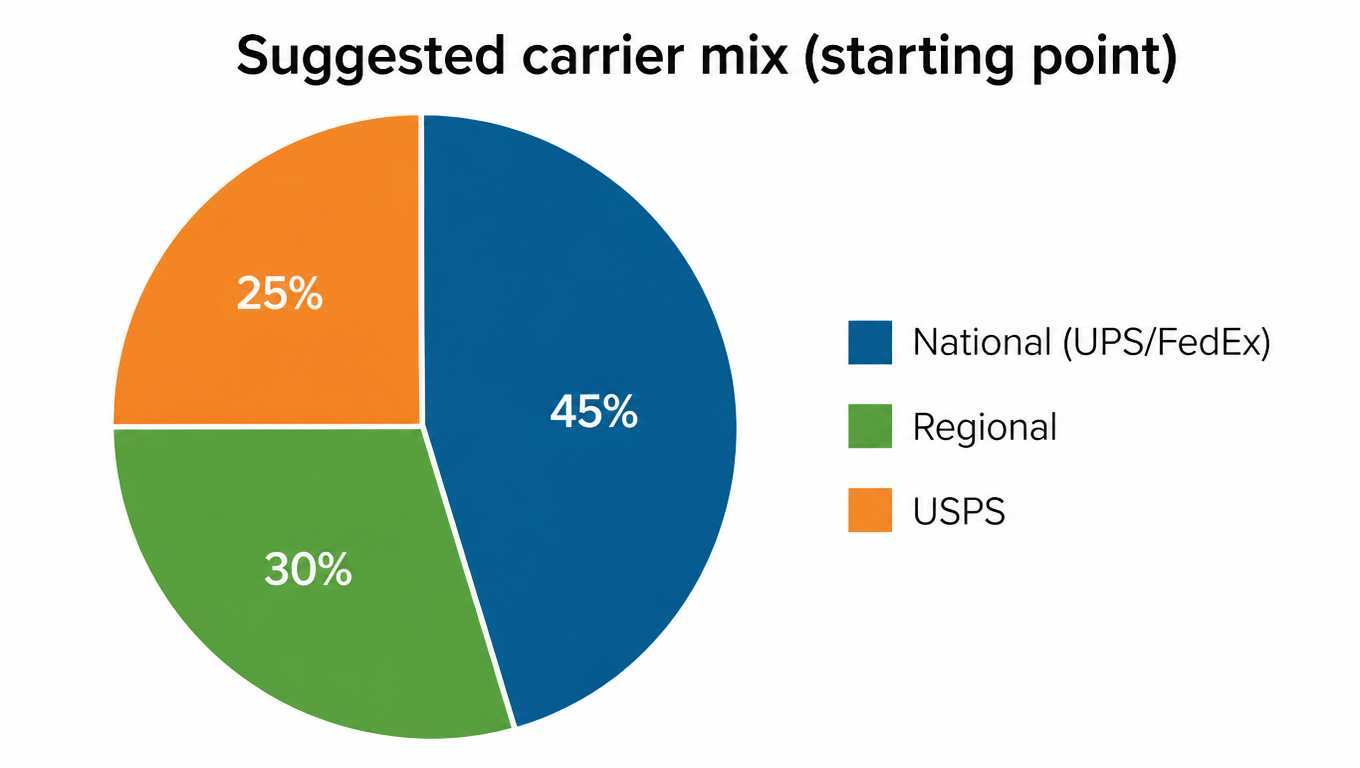
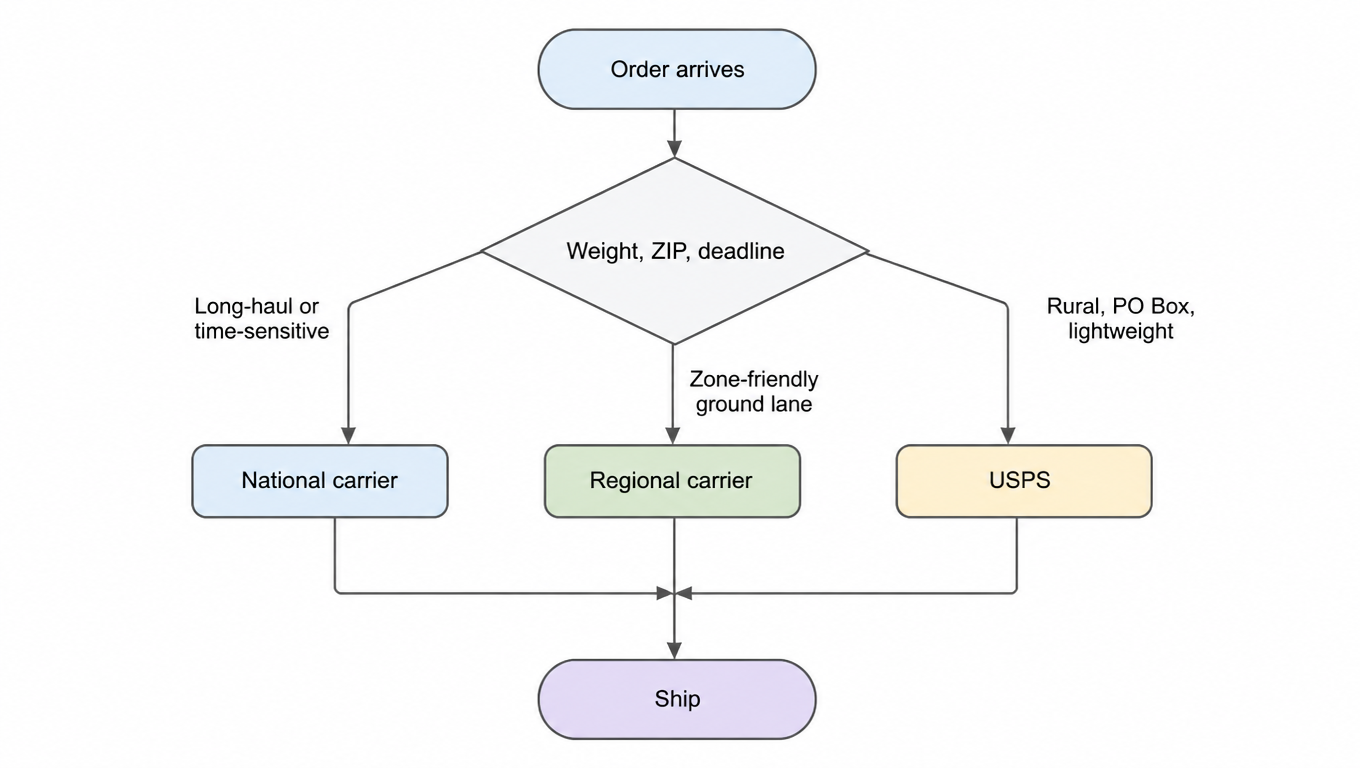
Use the multi-carrier strategy overview to define the role of each Texas origin and parcel segment. Validate the resulting ZIP and service rules with the carrier serviceability checks before testing a route.
The second advantage is zone distribution, and this is where the money is. Shipping zones are concentric distance bands around the origin ZIP code, and every zone step adds cost. From a Texas origin, the country's biggest consumer states sit in surprisingly friendly zones: Texas-to-California is a zone 5-6 route, not the zone 8 that a coast-to-coast shipment would earn.[^2] One widely cited example puts numbers on it: a business moving its fulfillment from Los Angeles to Dallas shifts its average zone from about 5.5 down to 3.8, which translates to roughly $2 to $4 saved per package.[^3] That is not a rounding error. On 10,000 packages a month, it is $20,000 to $40,000 a month in zone savings alone.
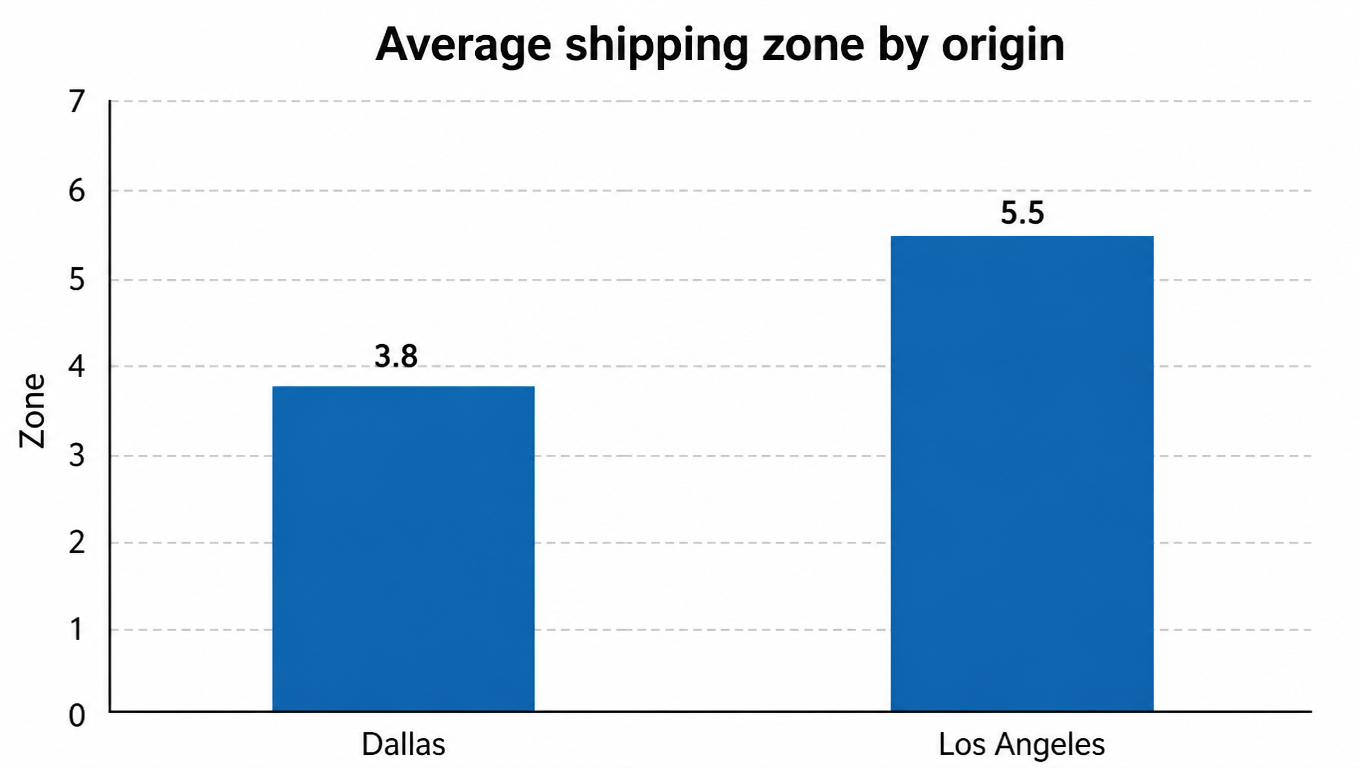
The third advantage follows from the first two: coast-to-coast reach without coast-to-coast cost. From Texas, the West Coast, the Midwest, and the Southeast are all within a workable zone band, and none of them is an extreme zone 8 haul. Chicago and Denver are one to two days by ground, California lands in zone 5-6, and the Eastern Seaboard stays in the mid zones.[^2] A single Texas location can therefore serve the whole country at an average zone cost that a single East Coast or West Coast location cannot match.
That is the good news, and it is exactly why the rest of this guide matters. Texas's size cuts both ways. The same sprawl that gives you zone 2 to Chicago gives you ZIP codes where a national carrier's transit promise stretches to a week and the rate per pound balloons. The geographic advantage only pays off if the carrier mix is engineered around it, which is what the next sections are about.