The Six-Phase Framework at a Glance
The six phases map to the six questions an operations team actually asks during an outage. Detect: is this the carrier, or is this us? Classify: which of our flows are hurt, and how badly? Contain: what do we stop doing right now so we do not make things worse? Continue: how do we keep the warehouse moving without the normal API? Recover: how do we drain the backlog safely when the API returns? Reconcile: how do we prove that every label, every manifest, and every invoice lines up?
Map the affected steps against the Shipping API workflow overview before deciding which work to hold or move. Apply the controlled rollout method when validating a temporary execution path and the return to normal processing.
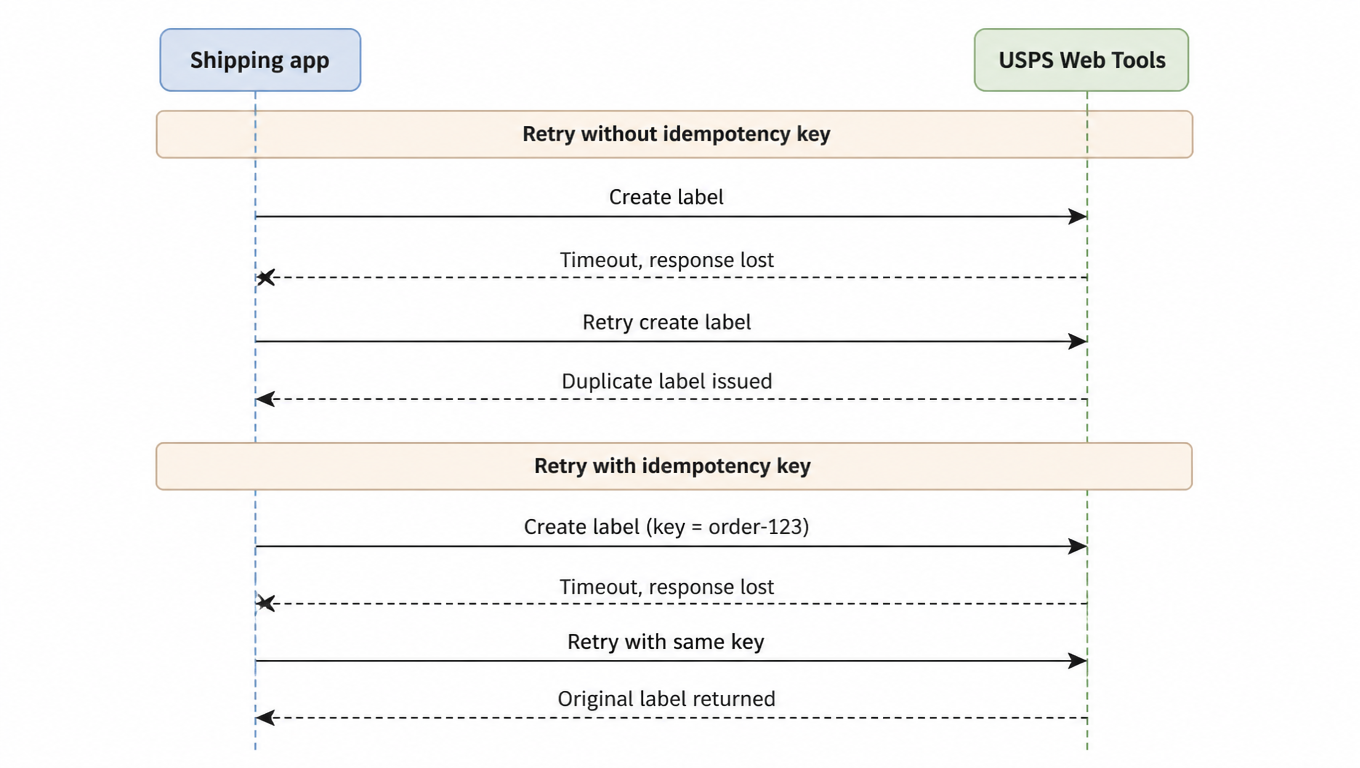
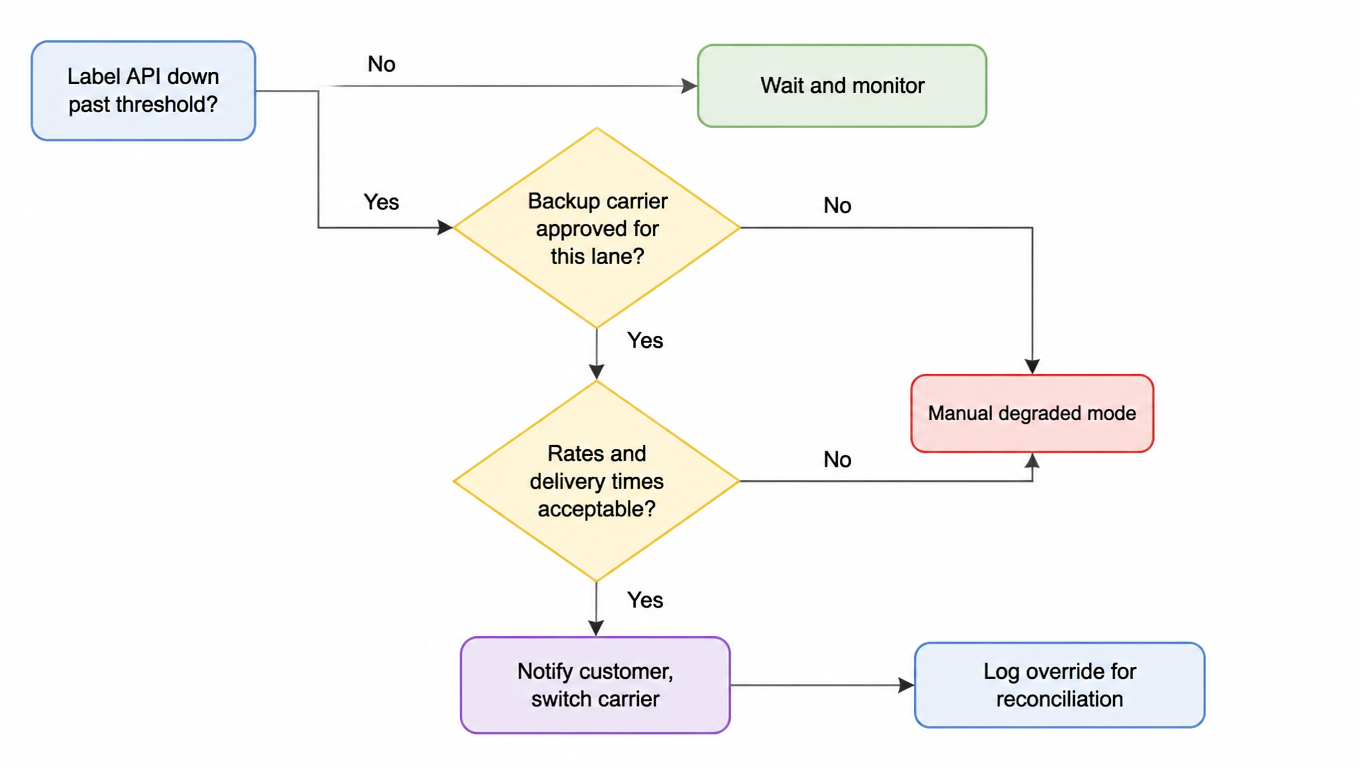
The four decision exits appear where the team's judgment lives. Wait is the default answer when the outage is narrow or short. Retry is the answer when failures are transient and idempotency makes it safe. Manual handling is the answer when throughput matters more than automation. Switch carrier is the answer when the outage looks long and a backup lane is ready. The diagram below shows where each exit sits in the chain.
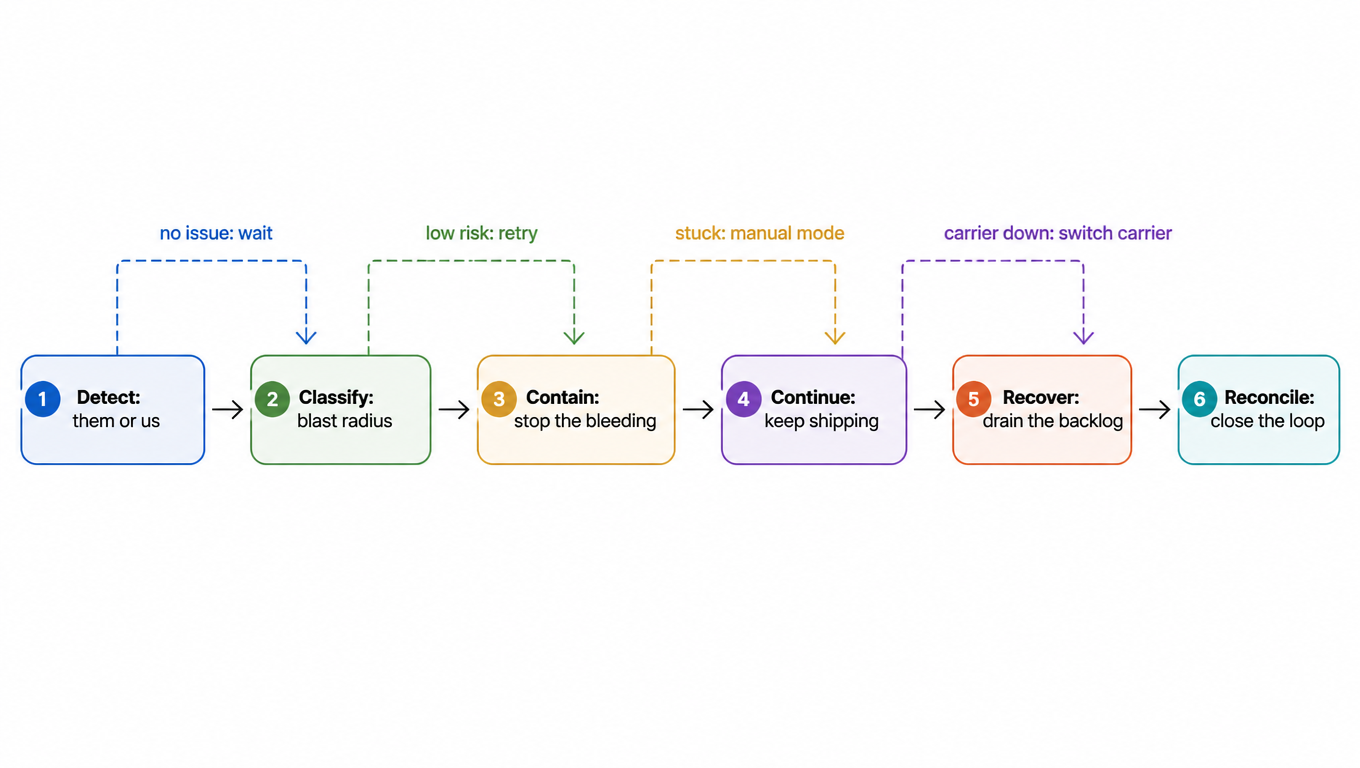
Read the diagram as a chain with escapes. Most incidents never leave the first two boxes: you detect a timeout, you classify it as low risk, and you wait or retry your way through. The expensive exits, manual handling and carrier switching, are reserved for the incidents where waiting would stall the warehouse.