USPS Guide

How USPS Ground Advantage pricing works: four steps from zones to surcharges (July 2026 rate card)

Ground Advantage is the default ground shipping service for most lightweight ecommerce parcels in the United States, yet most sellers cannot explain why a given shipment costs what it costs. This guide breaks the price down into four steps: zones, weight, dimensions, and surcharges. Walk through them once and you will be able to reverse-engineer any USPS bill. All figures follow the rate card that took effect July 12, 2026.

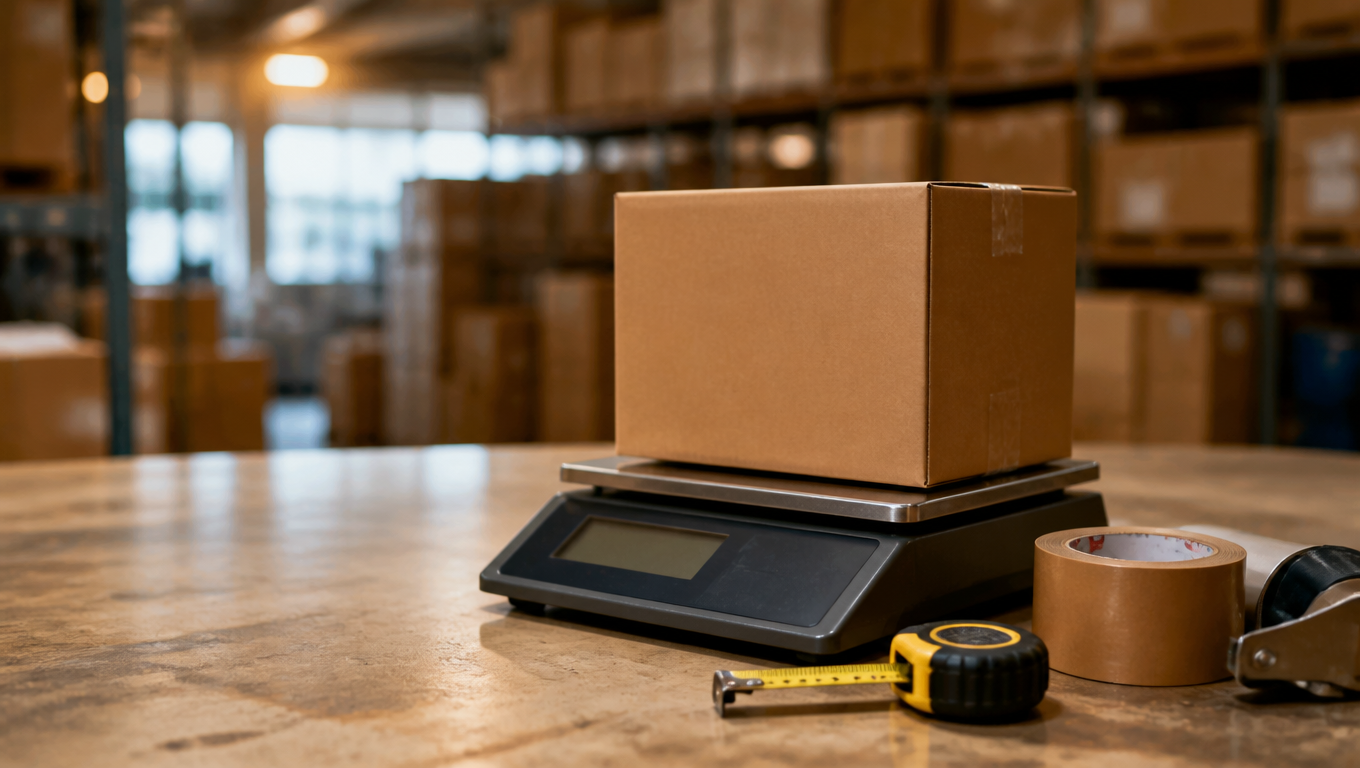
A kraft shipping box being weighed on a scale at a warehouse workbench, with a tape measure and packing tape nearby
From scale to label: every ounce and every inch decides the price

The service at a glance: know what you are paying for

On July 9, 2023, the United States Postal Service merged three ground parcel products into one: USPS Ground Advantage, replacing First-Class Package Service, Parcel Select Ground, and Retail Ground. For independent store owners this was one of the biggest changes in a decade. Previously you had to track three different rule sets and three rate cards; today nearly every lightweight ground parcel falls under one service with one set of rules.

According to the official USPS service page, Ground Advantage reaches all 50 states, has expected delivery in 2 to 5 business days, accepts parcels up to 70 lb, and includes tracking plus up to $100 insurance. It fits nonurgent, ground-eligible parcels; compare cost and expected transit with Priority Mail for the specific origin, destination, weight, and dimensions.

To understand the price, start from one formula: total = base price (zone × weight tier) + dimensional adjustment + nonstandard or oversized fees + optional services. USPS pricing is never complicated; it just stacks five variables. The next four sections unpack them one at a time: zones set the baseline, weight sets the tier, dimensions decide whether you get penalized, and surcharges decide what is added at the end.

One timeliness note first: USPS raised prices repeatedly in 2026. January 18 brought an average increase of 7.8%, April 26 added a temporary 8% fuel surcharge on Ground Advantage and other products (running through January 17, 2027), and the new Notice 123 that took effect July 12 changed two core rules: commercial rates dropped ounce tiers under 1 lb, and the dimensional weight divisor fell from 166 to 139. Every number in this article was checked against Notice 123 effective July 12, 2026 and final USPS price files. Check the effective date before using figures from another article.
Step 1: zones 1-9, distance sets the baseline

USPS divides the country into nine zones (Zone 1 through Zone 9). Zones are based not on cities but on the first three digits of the origin and destination ZIP codes, looked up in the official Zone Chart. Shipments within the same state usually fall in Zones 1 to 3; a coast-to-coast shipment such as New York to Los Angeles can reach Zone 8 or 9.

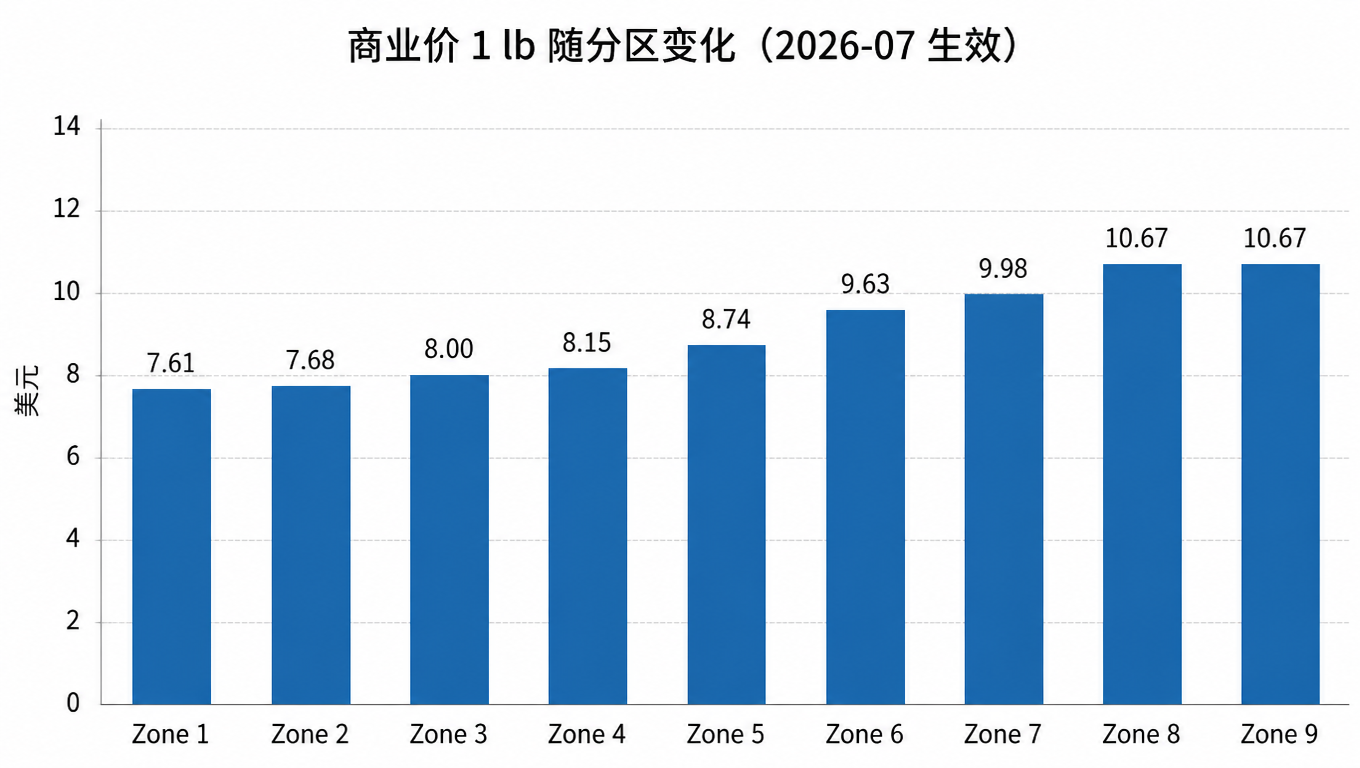
How much does the zone matter? Take a 1 lb parcel at commercial rates: $7.61 in Zone 1, $7.68 in Zone 2, $8.00 in Zone 3, $8.74 in Zone 5, and $10.67 coast-to-coast in Zone 8/9. The same box at the same weight costs about 40% more simply because it travels farther.

Bar chart of USPS Ground Advantage commercial rates for a 1 lb parcel rising from Zone 1 to Zone 9
Commercial rates for a 1 lb parcel climb with the zone (effective July 2026)

Two things are worth noting about zones. First, a zone only changes the base price; it never changes the weight or dimension rules, which apply identically in every zone. Second, the zone is the one variable you do not fully control, but it is not out of control either: your origin determines your zone matrix, which is why many sellers split inventory across 3PL warehouses and ship from the location closest to the customer, turning a Zone 8-9 into a Zone 2-3. That single move saves more than any label trick.

Step 2: weight, how pounds round up (retail vs commercial)

Under 1 lb is the first divide. Retail rates use four ounce tiers: 4, 8, 12, and 15.999 oz, and passing a tier means paying for the next one. The official USPS FAQ uses a 4.2 oz parcel as the example: you pay the 8 oz tier. Anything over 15.999 oz rounds up to 1 lb and switches to pound pricing.

From July 12, 2026, commercial rates dropped the ounce tiers: under 1 lb, every parcel in the same zone pays one flat price. Per the official USPS commercial price CSV, that flat price runs from $6.93 in Zone 1 to $8.40 in Zone 8/9. For stores selling light items, this is the most practical rule change of the year: a 2 oz accessory and a 14 oz garment now cost exactly the same to ship.

Above 1 lb the rule is blunt: round up to the next full pound, so 8.3 lb pays the 9 lb price. Dimensional weight rounds the same way (see the next step). A 2.1 lb parcel and a 2.9 lb parcel therefore cost the same, which means squeezing a box under 2.0 lb is pointless; the lines worth managing are the whole-pound breaks.

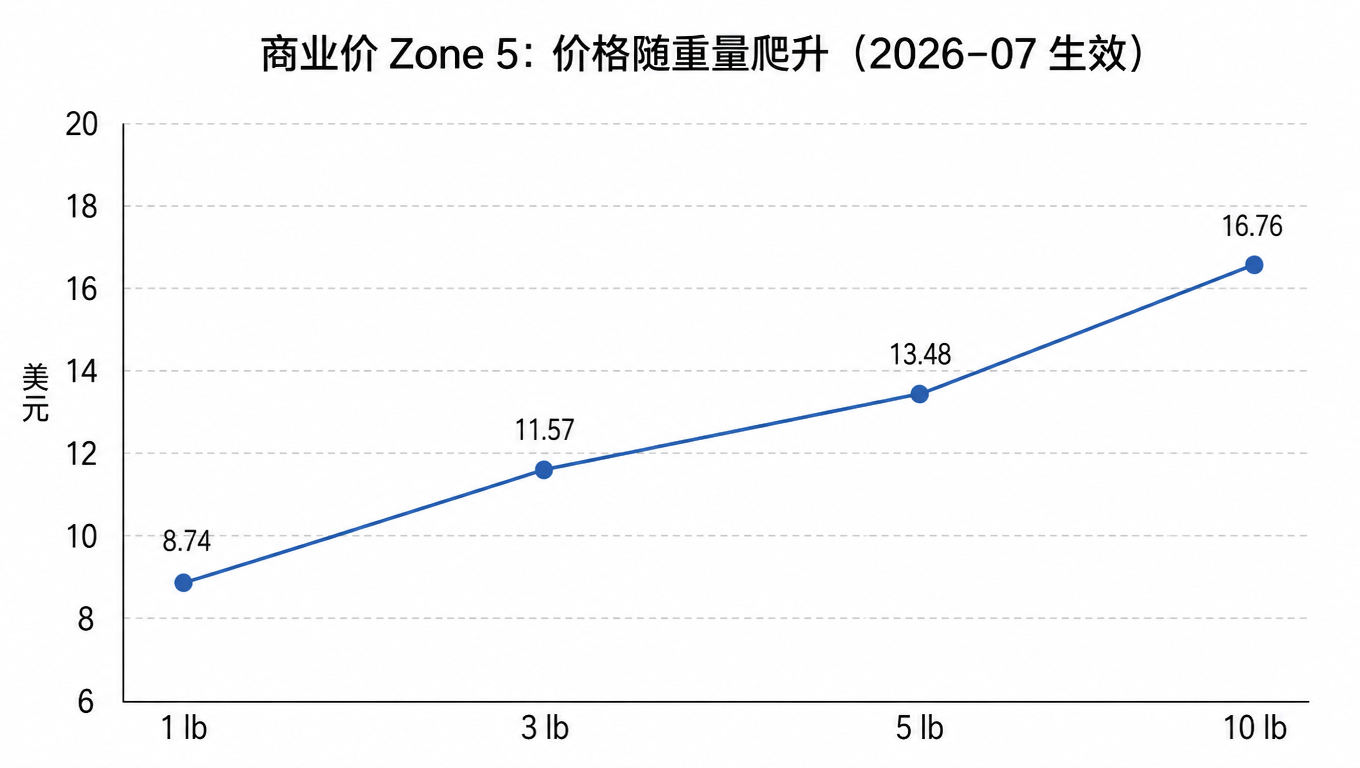
Retail and commercial are two completely different rate cards, and the gap is too large to ignore. Take a light parcel in Zone 5 (within 15.999 oz): $10.95 at retail versus $7.69 commercial, roughly 30% cheaper. The lighter the parcel, the wider the gap, and that is exactly what label tools exist for. Commercial pricing is not reserved for big customers; any shipping platform (Pirate Ship, Shippo, ShipStation, and others) can issue commercial labels. Counter pricing is for the occasional sender. The chart below shows the Zone 5 commercial curve: $8.74 at 1 lb, $11.57 at 3 lb, $13.48 at 5 lb, $16.76 at 10 lb. Price does not rise linearly with weight: 1 to 2 lb costs $9.95, only about 14% more, and 5 to 10 lb adds just 24%. Doubling the weight adds roughly 20%; what really eats money is dimensions, not weight.

Line chart of Zone 5 commercial rates rising with weight from 1 lb to 10 lb
Zone 5 commercial rates climbing with weight (effective July 2026)

Step 3: dimensions, dimensional weight, nonstandard and oversized fees

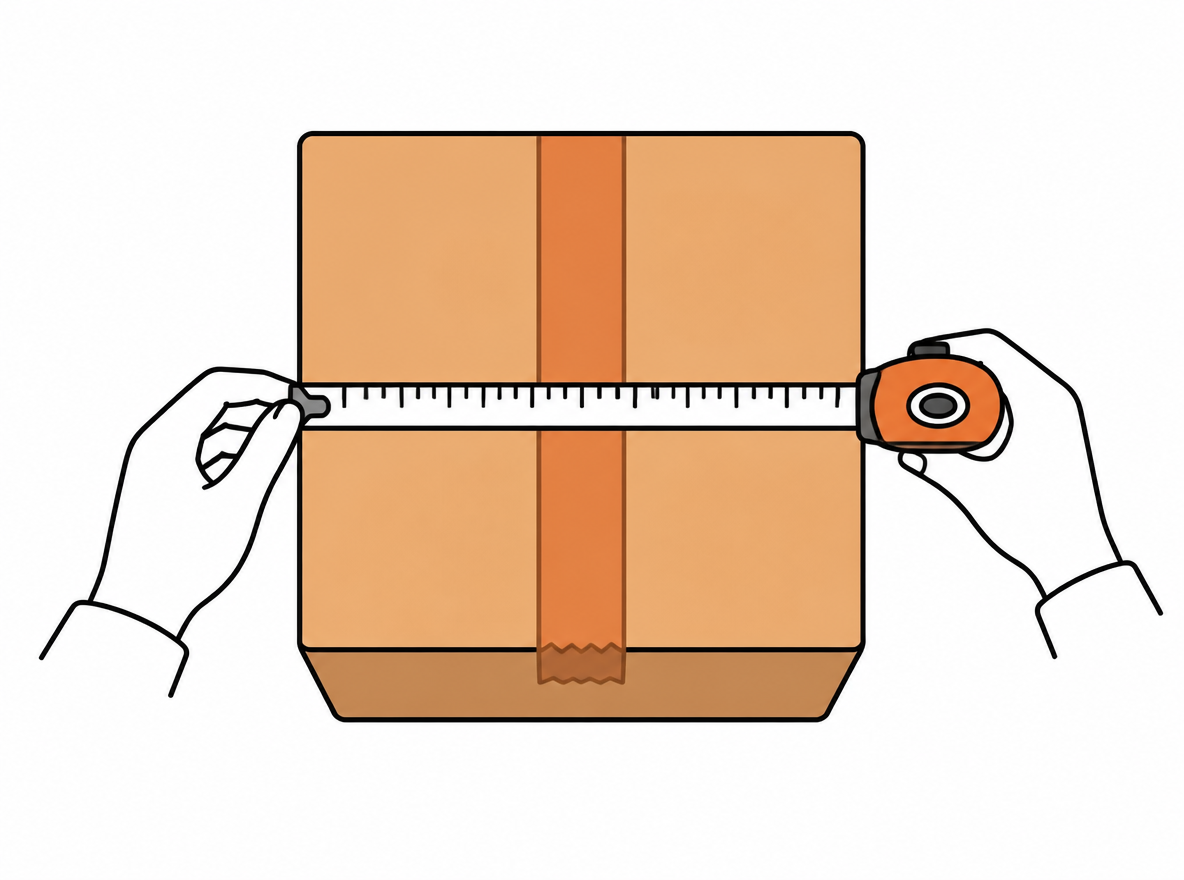
Top-down illustration of measuring a box length, width, and height with a tape measure
Every side rounds up to the next inch: 12.3 in counts as 13 in

Dimensions are where sellers trip most often, because the penalties stack. Rule one is dimensional (DIM) weight: when a parcel exceeds 1 cubic foot (1,728 cubic inches), DIM weight equals length × width × height ÷ 139, and you are billed on the greater of actual and DIM weight. Before July 12, 2026, the divisor was 166; it is now 139, aligned with UPS and FedEx, which makes the same box about 19% heavier by DIM. Each side also rounds up to the next full inch, so 12.3 in counts as 13 in, and the resulting DIM weight rounds up to the next pound.

How harsh is this rule? Run one box through it: a 13×13×13 in box is 2,197 cubic inches, giving a DIM weight of 15.8 lb, billed at 16 lb after rounding. Inside sits a 2 lb product, and you pay the 16 lb price. This is not a math exercise; it is a real "tax on empty box." The bigger the packaging, the more you pay for air.

Rule two is the length and shape fee. A longest side between 22 and 30 in adds $4.50; above 30 in, commercial pricing adds $10.00; an irregular, non-machinable shape adds another $4.50. The length and shape fees do not stack, only the higher one applies. Rule three does stack: a parcel over 2 cubic feet (3,456 cubic inches) is charged extra regardless of anything else, $35 at retail and $21 commercial.

Rule four is oversized parcels. When length plus girth exceeds 108 in (up to the 130 in maximum), the parcel stops being priced by weight and takes a flat oversized rate by zone, from $103.80 in Zone 1 to $272.45 in Zone 8/9. Which common box sizes trigger fees and which stay safe, see the table:

Box (inches)Volume (cu in)Triggers DIM?DIM weight (÷139)Billed as
8×6×4192NoN/AActual weight
12×9×6648NoN/AActual weight
13×13×132,197Yes15.8 → 16 lb16 lb
16×12×101,920Yes13.8 → 14 lb14 lb
18×18×103,240Yes23.3 → 24 lb24 lb
24×18×125,184Yes (and over 2 cu ft)37.3 → 38 lb38 lb + surcharge

Step 4: surcharges and hidden costs

Once the base price is done, a few charges can still be added. Address correction: if USPS has to fix a wrong address, you are charged per occurrence. Insurance: free up to $100, extra beyond that. Signature service: additional cost when the recipient must sign. All of these are clearly priced optional services; whether to use them depends on your product value and order size.

The real hidden cost is the gap between retail and commercial pricing. It appears on no line item, yet it can inflate your freight by 20 to 40%. The same parcel costs retail at the counter or on USPS.com and commercial through a label tool, and the two rate cards never meet. A store still shipping at counter prices is leaving a fifth to a third of its freight budget on the table every month.

The fuel surcharge is the comparison point that is currently changing. For years USPS was the only one of the three major carriers without a fuel surcharge, while UPS and FedEx add one monthly based on fuel indices. In 2026 that long-standing advantage was temporarily interrupted: to cover rising transportation and fuel costs, USPS added an 8% temporary fuel surcharge on Ground Advantage, Priority Mail, and others starting April 26, running through January 17, 2027. In practice, add 8% on top of the Ground Advantage rate your label tool shows today, and confirm the final price before buying. USPS says the rate is less than a third of what competitors charge for fuel, but when comparing carriers, factor in all three fuel policies before deciding.

Finally, there is the hidden cost of measuring wrong. One inch can flip a parcel from "no DIM" to "DIM applies," or from under 22 in to nonstandard length, and each flip is a tens-of-dollars event. Light bulky goods are the worst case: the DIM rule exists precisely to penalize them, so the first packing principle is always "use the smallest box that fits."

Hazardous materials: no price change, but it decides whether you can ship at all

Many bestsellers sit on the hazardous materials list: perfume, nail polish, aerosols, and small appliances with lithium batteries. USPS regulates these in a separate rulebook, Publication 52 (Hazardous, Restricted, and Perishable Mail), together with DOT's 49 CFR. Hazmat rules do not change the price formula, but they decide whether you can ship at all, how much, and how it must be packaged, and the cost of getting it wrong dwarfs any surcharge.

Start with a fact that works in the reader's favor: Ground Advantage is ground transportation, which makes it the compliant option for several restricted goods. USPS rules say alcohol-based perfume cannot travel by domestic air, and loose (uninstalled) lithium batteries are ground-only. Both ship legally via Ground Advantage, while Priority Mail by air would violate the rules.

Hazmat falls into three tiers by mailability. Tier one is fully prohibited: mercury, explosives, nothing ships under any circumstances. Tier two is limited quantity: flammable liquids such as nail polish, aerosols, and alcohol-based perfume can ship within quantity, capacity, and concentration limits, using specified packaging and a limited quantity mark. Tier three is specific rules: lithium batteries installed in devices (phones, small appliances) can travel by air and ground under Packaging Instruction 9D; loose batteries are ground-only with a 5 lb per package limit. Common products map to tiers like this:

Common productMailabilityKey limits
Alcohol-based perfume/cologneGround only (OK on Ground Advantage)No domestic air; limited quantity + specified packaging
Nail polishLimited quantityClass 3 flammable liquid, within capacity/concentration limits
Aerosols (hairspray, sunscreen spray, etc.)Limited quantityCapacity and quantity limits
Devices with lithium batteries (phones, small appliances)Shippable (air + ground)Package and declare per Packaging Instruction 9D
Loose lithium batteriesGround only5 lb per package
Mercury, explosives, etc.ProhibitedNever mailable

HAZMAT fees vary by service. Under the current USPS Notice 123, compliant Priority Mail Express and Priority Mail HAZMAT pieces carry a $7.50 per-piece handling fee, while the current handling fee for Ground Advantage and Parcel Select is $0. Incorrect declarations, barcode data, or markings can also trigger noncompliance fees; serious violations are subject to separate statutory civil penalties, cleanup costs, and damages.

Three practical tips for sellers. First, check mailability before you list: confirm in Publication 52 and the Hazardous Materials Table on Postal Explorer whether your product can ship, with what limits and markings, instead of discovering it cannot ship when the first order arrives. Second, declare honestly in your label tool: Pirate Ship, Shippo, and similar platforms ask whether a shipment contains hazmat when you buy a label, and choosing the right category lets the tool block noncompliant orders for you. Third, follow the Packaging Instruction, and when in doubt bring the parcel to the counter and ask, since one question costs far less than one penalty.

Seller walkthrough: calculate a rate in four steps

Now run all four steps together on a full example. A parcel weighs 2.4 lb actual, box is 12×9×6 in, shipped from Zone 5. Step one, dimensions: 648 cubic inches, well under 1,728, so no DIM weight. Step two, rounding: 2.4 lb bills as 3 lb. Step three, lookup: Zone 5 commercial 3 lb is $11.57. Step four, surcharges: no nonstandard size, no oversized, so the total is $11.57. The same parcel at counter retail costs roughly 20 to 30% more.

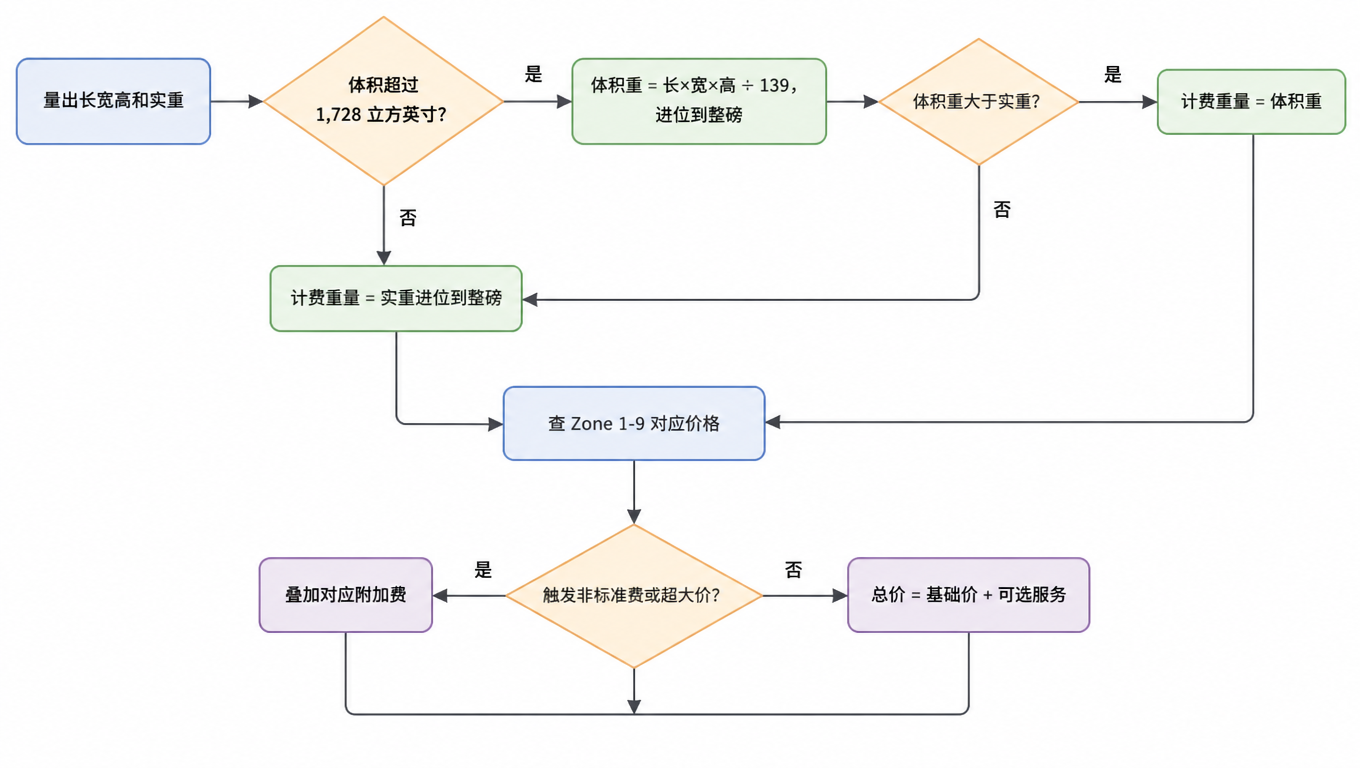
The whole decision can be fixed into one flowchart to run for every parcel from now on:

Flowchart for calculating USPS Ground Advantage billable weight: measure, check 1728 cubic inch threshold, compute DIM weight, round, look up zone price, add surcharges
Four steps to billable weight and total price

Three checkpoints deserve their own callout. First, when DIM weight is beating you, switch to a smaller box or split the shipment: a 13×13×13 box replaced by 12×12×10 is only 1,440 cubic inches, no longer triggers DIM, and the billable weight returns to actual, making the 16 lb bill disappear on the spot. Second, for light bulky goods, look at commercial Cubic pricing: parcels with a longest side at or under 22 in and volume at or under 1 cubic foot price per 0.1 cubic foot, so a 10×8×6 box holding 3 lb runs about $9.20 Cubic versus $11.57 standard commercial, saving over $2. Third, above a certain weight and size, compare UPS Ground and FedEx Ground, whose per-pound curves often overtake USPS in the large parcel range, so check all three in your comparison tool before deciding.

Summary: one table and three iron rules

VariableRuleSeller control?
ZoneLooked up by first 3 ZIP digits, Zones 1-9Partly (change origin)
WeightUnder 1 lb: retail tiers, commercial flat; over 1 lb: round up to the poundYes (control product weight)
DimensionsOver 1 cu ft triggers DIM ÷139; 22/30 in nonstandard fees; over 2 cu ft surcharge; 108 in oversizedYes (choose the box)
SurchargesRetail vs commercial gap of 20-40%; temporary 8% fuel surcharge from 2026-04-26 to 2027-01-17Yes (use commercial labels)
HazmatDetermines mailability first; handling fees vary by service (currently $0 for Ground Advantage)Yes (follow rules, declare truthfully)

Three iron rules. First, always buy commercial labels; counter pricing is for the occasional sender, and the 20 to 30% you save each month covers a label tool's annual fee. Second, once a parcel exceeds 1 cubic foot, compute DIM weight before packing, and for light bulky goods the first principle is a smaller box. Third, 22 in, 2 cubic feet, and 108 in are the three red lines, and crossing any of them means surcharges starting in the tens of dollars, so measure before you pack; it is far cheaper than reading the bill later.

One reminder beyond the iron rules: HAZMAT classification determines mailability first and the applicable handling fee second. Check Publication 52 before listing perfume, nail polish, aerosols, or lithium-battery products. The current compliant HAZMAT handling fee for Ground Advantage is $0, but incorrect declaration, packaging, barcode data, or markings can still create fees and legal exposure.

Shipping is not an uncontrollable cost; it is simply four variables stacked together. Zones decide how much you can save, and weight, dimensions, and surcharges decide whether you can save it. Walk through the four steps once and you will be able to look at any USPS bill and reconstruct why it costs what it costs.

FAQ

For years USPS was the only major carrier without one. A temporary 8% surcharge applies from April 26, 2026 through January 17, 2027, so confirm the final price before buying labels.
When a parcel exceeds 1 cubic foot (1,728 cubic inches), DIM weight = length × width × height ÷ 139, and you pay on the greater of actual or DIM weight. The divisor dropped from 166 to 139 on July 12, 2026.
The counter and USPS.com charge retail; label tools charge commercial. Same service, usually 20 to 40% cheaper. Any label tool qualifies, no volume required.
Alcohol-based perfume is ground-only: fine on Ground Advantage, while Priority Mail by air would violate the rules. Lithium batteries installed in devices can travel by air and ground under Packaging Instruction 9D; loose batteries are ground-only with a 5 lb per package limit.

Ready to put these rules into your label workflow?

EasyShippingX bakes USPS commercial pricing, zone logic, and dimensional weight into your order flow, so every parcel is priced by the rules automatically.