Walmart US seller-fulfilled returns

Walmart Keep It Rules for Sellers: How to Set Refund Limits and Know When to Expect a Return

In this fictional order, a shopper asks to return a $12 organizer pouch. The agent starts typing, “Would you keep it for 30% back?” Leave that reply in drafts. Check that the order is on Walmart’s US marketplace, that the seller fulfilled it, which rule was in place when the shopper purchased, and which options Walmart shows for this particular return.

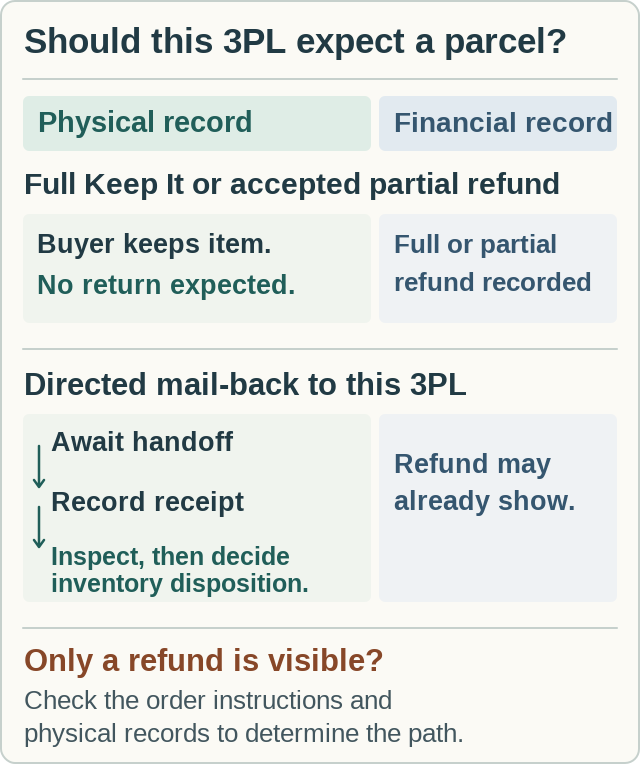
With a confirmed full Keep It, the buyer keeps the item and receives a full refund. With an accepted Partial Keep It, the buyer keeps the item for the offered partial refund. A regular return follows the instructions shown for the transaction. Before asking a 3PL to expect the bag, check where it is going and what evidence shows it has moved. Walmart’s Keep It rule guide (checked November 25, 2026).

Test the three orders · Calculate the return-cost threshold · Open the warehouse handoff sheet

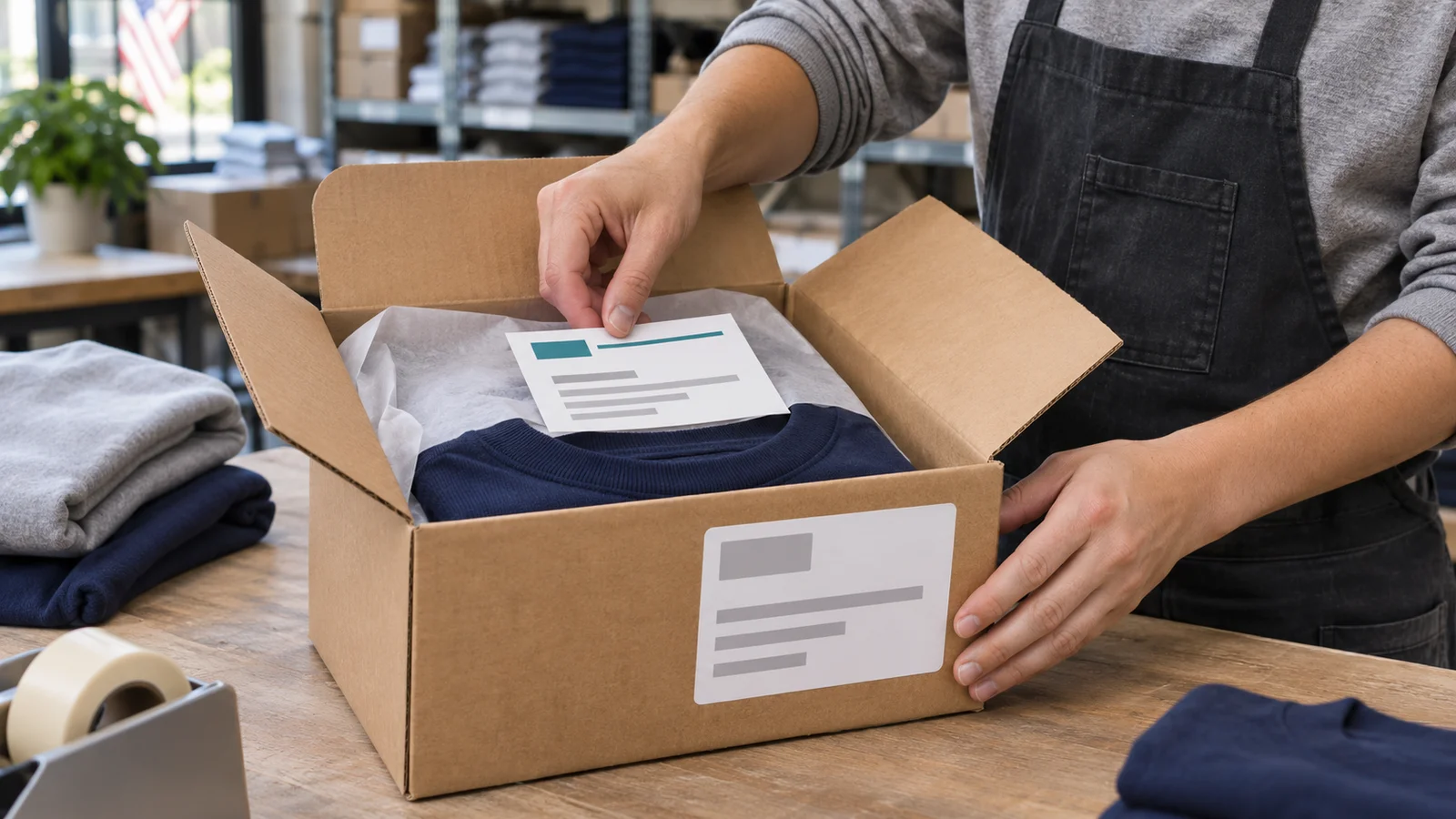
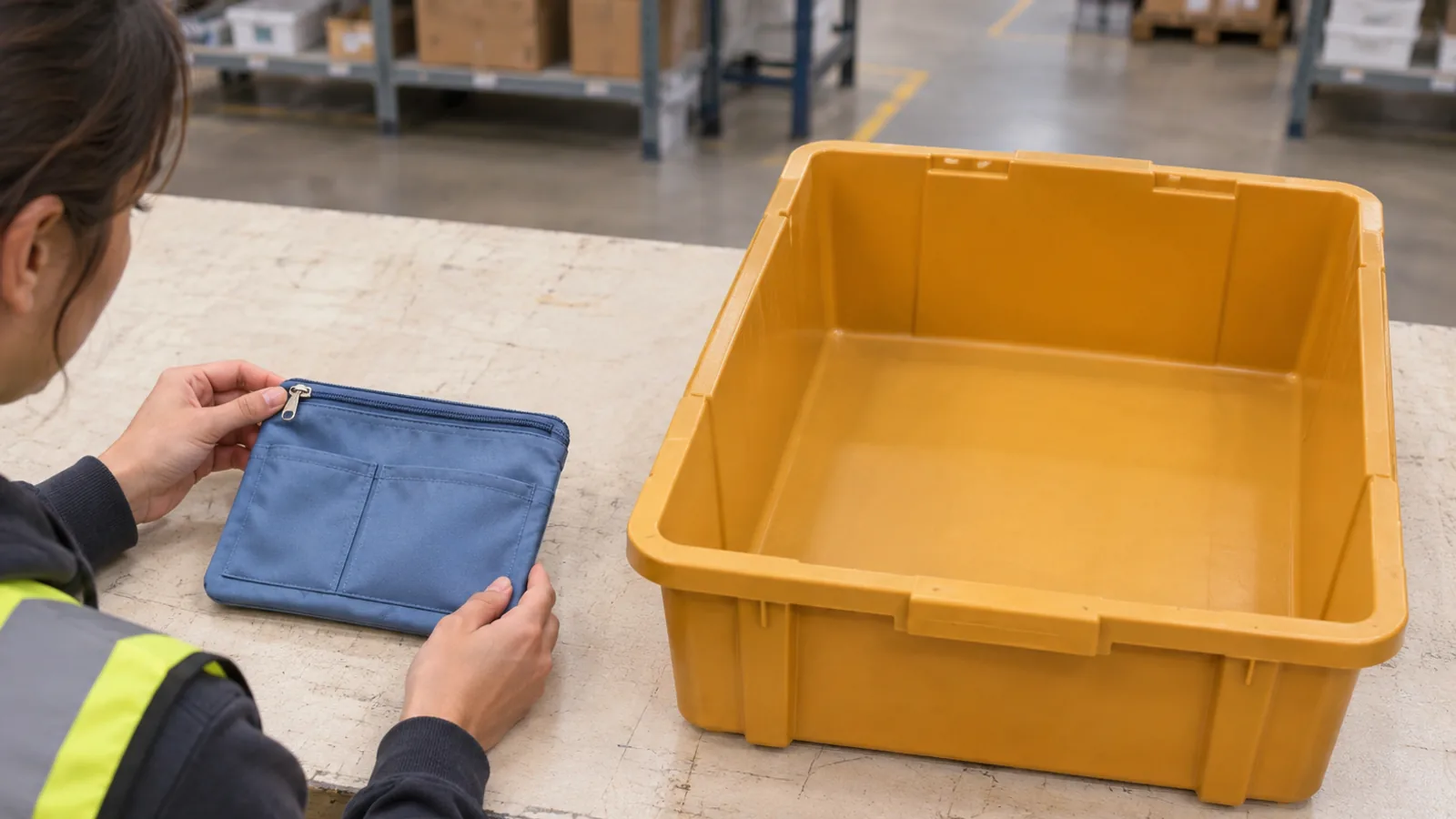
A warehouse associate inspects a blue fabric organizer pouch beside an empty yellow returns bin.
Both orders show a refund. Which item belongs on this table?

Which $12 bags pass the full Keep It price limits?

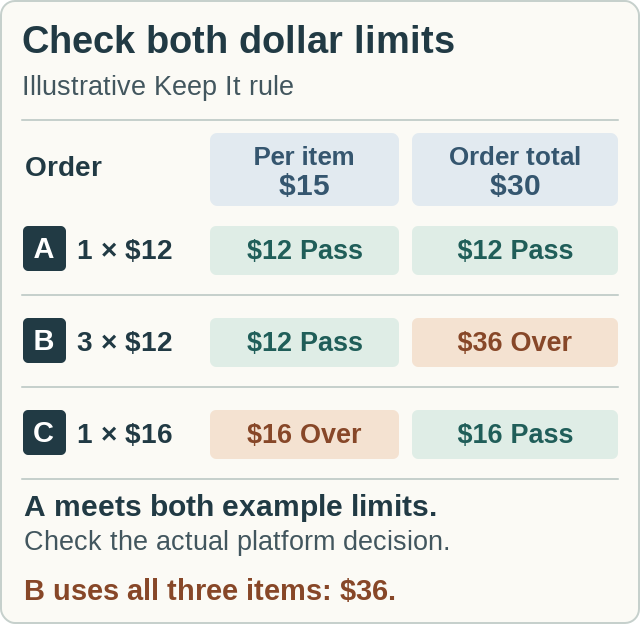
Start with one US seller-fulfilled department and a rule you can explain to a new agent. In this fictional example, a bag can qualify for full Keep It when its price is within a $15 item limit and the total order is within a $30 return order limit. The shopper has purchased only the bags shown, all in that department, and requests a return of all of them. The amounts contain no discounts, tax or other charges. These are example settings chosen by the seller. Walmart does not prescribe those two dollar limits or a percentage for a $12 bag.

Does checking the price tag on each bag get the answer?

Three separate purchases tested against the same full Keep It rule
PurchaseItem test · $15Order test · $30What can the agent conclude?
A · one $12 bag$12 passes.$12 passes.Passes both price tests. Check the applicable rule and the resolution Walmart gives this transaction.
B · three $12 bagsEach $12 bag passes.3 × $12 = $36. Fails.This purchase fails the order test. The table gives no authority to let the shopper keep the first two bags.
C · one $16 bag$16 fails.$16 passes.This bag fails the item test. Check the actual return instructions and any separately applicable rule.
Example limits: $15 per item and $30 per order. A: one $12 item, $12 total, passes both amount tests. B: three $12 items, $36 total, passes the item test but exceeds the order cap for all three. C: one $16 item, $16 total, exceeds the item cap and passes the order test. A still needs the actual platform outcome.
Only A passes both example dollar tests. B’s three items make a $36 order. C exceeds the $15 item limit. Check Walmart’s decision on the transaction before giving the warehouse instructions.

Walmart describes the item limit as the price up to which a shopper may keep an item. Its return order limit applies to the total order amount for keeping multiple items from the department. That makes the second calculation meaningful even when every individual bag is cheap. A shopper who bought three paid for one $36 order. Breaking an agent’s notes into three $12 rows does not create three purchases. The published setup and FAQ support the two tests above. Walmart Marketplace Learn, Add Keep It Rules, checked November 25, 2026.

What still needs checking on the actual order?

For A, open the order line and see which department and SKU were sold, who fulfilled it and what Walmart has recorded for this request. A price match alone says nothing about whether the shopper has received a full refund, accepted a partial offer or handed over a parcel. B and C fail this example rule for different reasons, and neither failure tells the agent to offer 30%. A different department, an eligible item-level rule or a different return resolution could change what the order shows. Follow the resolution on that purchase.

Now imagine only one of B’s three bags is in the request, or the order also contains an item from another department. A coupon, tax or a line-level discount may leave several plausible dollar figures on the screen. Walmart’s public explanation does not give a calculation for every combination. Keep the original order total and requested items visible. Check the amounts and eligibility Seller Center actually applies. If you cannot reproduce the outcome, retain the order reference and ask Seller Support to clarify that case before extending the rule to similar orders.

Price testing answers the setup question. The next two decisions belong to different people. Customer support can explain the available resolution and act on a shopper’s choice. The returns desk needs a parcel reference, destination and evidence of movement before it can plan a receipt. Recording those decisions separately prevents an agent from opening a warehouse return for A just because Walmart issued a refund, or closing B because the $12 printed on its first line looked familiar.

What should you enter in Seller Center, and when?

Open the Returns page in Seller Center. Start with the kind of resolution the brand has authorized. Under full Keep It, a qualifying transaction can result in a full refund while the shopper keeps the item. Under Partial Keep It, an eligible shopper can choose a specified partial refund and retain the item. An ordinary authorized return directs the shopper through the return steps. These paths give support different messages to send and give the warehouse different work. A shopper’s question about returning something supplies none of the missing permissions.

What belongs in a full rule, and what belongs in a partial rule?

For full Keep It, enter the department, item price limit and return order limit under Keep It Rules, then save. Record the department as Seller Center identifies it. A store collection called “Everyday bags” can include products classified in more than one marketplace department. Check the department on an actual listing you intend to cover before putting the rule into your support notes. In the example above, $15 belongs on the item line and $30 on the order line. Neither field is a refund percentage.

For a partial rule, the official guide lists Department, Return Reason, % Refund Off and Max Amount. Select the eligible department and reason, enter the percentage and maximum amount, and verify how the saved rule applies to the item in Seller Center. Keep the amounts and field names together in your records. The public wording does not support using the full rule’s order limit as a substitute for the partial rule’s maximum, or assuming what a shopper will see after discounts. Partial Keep It is unavailable for items with return exemptions. Walmart’s setup instructions and eligibility note, checked November 25, 2026.

Record what the seller approved, when the rule was saved and what evidence confirms it was effective. A dated internal name such as F1 for a full rule or P1 for a partial rule is enough if the team can recover the underlying settings. These are example names, not required Seller Center identifiers. Retain the earlier version when you change a threshold. Someone reviewing an October purchase in November needs to know which conditions applied at purchase, even if a newer rule now appears on the settings page.

When handing a new rule to support, open two records side by side. Use the settings page to confirm the seller’s intended scope. Use the purchase and return history to establish what happened on an individual line. Keep the effective date and any superseded settings in the handoff. If today's page shows P1 and the purchase predates your earliest P1 evidence, mark the historical match unverified. Ask the account owner for the dated approval or setting history before using that offer in a reply.

Can support add 30% after the shopper asks for a return?

Walmart requires an applicable Partial Keep It threshold to have been set before purchase if the seller wants to offer that discounted keep-the-item option. An agent cannot invent a percentage, change the return reason to find a matching offer, or create a rule today to justify an offer on yesterday’s purchase. Walmart permits its authorized partial rule or other expressly pre-approved resolutions. When the shopper declines an eligible partial refund, process the return request. Walmart no haggling policy, checked November 25, 2026.

In practice, look up the purchase time, match the historical department and reason, and verify the amount actually shown for this transaction. Set aside a screenshot or order event with its timestamp where your team can recover it. If those checks fail, follow the resolution Walmart actually authorizes on the order. Offering 20% after the shopper declines 30%, proposing store credit, or suggesting a different product to prevent a return puts the agent back into a negotiation. The shopper should be able to continue the eligible return without discussing the seller’s shipping cost.

For eligible SKUs outside the chosen department or above the applicable item limit, Walmart also documents an item-level Keep It route using its Bulk Return Rules template. Allow up to four hours for that submission to process, then check the result before relying on it. That timing belongs to the bulk upload. A file on someone’s desktop or an upload in progress establishes no rule for a past transaction. Walmart’s item-level rule note, checked November 25, 2026.

How much can you spend to get the $12 bag back?

Put the support ticket aside and compare two future choices for this SKU. In both paths the shopper receives a full refund. In one, the shopper keeps the bag and the seller spends nothing to bring it back. In the other, the bag is returned to the designated US warehouse, inspected and recovered for resale or a lower-value use. Because the refund amount is identical, it cancels when comparing these two paths. The original outbound shipment already took place under both, so its cost also drops out of this incremental decision.

What is a returned bag actually worth to the seller?

Suppose the warehouse’s historical condition mix for comparable bags is 70% recoverable at $9 each and 30% recoverable at $1 each. Those are net proceeds after the costs of the later resale or recovery. Neither includes return transport or the receiving and inspection charge. The $12 listing price does not belong in either recovery bucket. A bag that can be sold again may require discounted pricing and still incur selling expenses. The $1 outcome gives the second group some recovery without treating it as fresh, full-price stock.

For one expected return, the weighted recovery is 0.70 × $9 + 0.30 × $1 = $6.60. The warehouse charges a further $1.75 per returned unit for receiving and quality checks. That leaves $4.85 for return transport before the expected gain reaches zero. This ceiling is specific to the assumed condition mix and handling charge. It is neither the maximum to put into the Partial Keep It field nor a suggestion to change how much the shopper is due.

Illustrative gain from recovering one bag, compared with full refund and no return
Return transportExpected recovery less transport and receiving/QCEconomic result
$4.25$6.60 − $4.25 − $1.75+$0.60. A completed physical return adds modest expected value.
$5.50$6.60 − $5.50 − $1.75−$0.65. Recovering the bag costs more than its expected proceeds.

At exactly $4.85 for transport, the comparison breaks even before any additional costs outside this example. A $4.25 return label looks inexpensive beside a $12 retail price. The sixty cents remaining after inspection is a more useful figure when the brand decides whether it wants a department rule. A single bad batch can change that answer. These are fictitious lane costs for planning. They neither quote a carrier nor imply the full or partial rule in Seller Center can be switched on by destination ZIP.

How would you replace those assumptions with your own numbers?

Take a recent group of physically received bags from the same department, separating materially different products and return reasons. Ask the returns desk how many passed inspection and what became of the rest. Ask finance for net proceeds from comparable resale or disposal events, the actual label charges and the 3PL’s receiving charge. If finance has already deducted the inspection fee from a recovery figure, add it back before using the formula above, or leave it out of the next subtraction. Charging it twice can reverse a small positive result.

Write down which expenses change if a parcel comes back. A charge for opening and grading that parcel belongs here. Original packaging, already shipped to the shopper on both paths, normally has no new cash cost at this decision point. Customer-paid return postage would make these examples look better for the seller, but Walmart prohibits charging shoppers the return shipping fee. A partial refund changes the amount retained on the sale, so it needs a separate comparison and an independently authorized offer. Walmart seller-fulfilled returns policy, checked November 25, 2026.

Also check which returns your warehouse figures describe. A resale report containing only sellable units excludes the bags routed to lower-value recovery. A carrier invoice can contain a label correction that came in after the receiving report closed. Link the return charge and the condition outcome to the same original line wherever possible, then mark the cases still in transit. It is easier to defend a narrow estimate with identified missing outcomes than to count every open return as another $9 recovery.

Use this work to choose a prospective rule you can administer across the department. If products sharing the department have widely different condition outcomes, examine that spread before adopting one threshold. The seller can decide which future eligible cases are worth recovering. That analysis gives an agent no discretion to reopen an already accepted resolution or press the shopper to save the business $0.65. For a broader comparison that includes exchanges and replacement outbound shipping, see the guide to exchanges, refunds and shipping profit.

The order says “refunded.” Should the 3PL expect a parcel?

Read the reason for the refund alongside the return resolution. A full Keep It transaction can credit the shopper and end with the item still in the shopper’s home. A normal physical return may show a full refund while the item is on a carrier’s truck. Treat “refunded” as a financial event. The two orders may look identical in a payout report, but only one has a supported inbound shipment for the warehouse.

What should support say when a real partial offer is accepted or declined?

The $12 organizer from the opening is line P202-1 in the handoff sheet. The shopper bought it after the applicable P1 partial rule took effect. The shopper’s department and return reason match. The platform shows a 30% partial refund of $3.60 for this item. The example has no tax, discounts or fees. The agent can confirm the offer the platform displays and record what the shopper chose. The arithmetic, $12 × 0.30, checks this example. It cannot establish that another shopper qualifies for the same offer. If the customer declines, process the requested return without making another offer. Walmart no haggling policy, checked November 25, 2026.

Customer accepts the displayed amount
“You chose the $3.60 partial refund shown for this item. You can keep the bag. No return shipment is needed.”
Customer declines
“I’ll continue your return request. Please follow the return instructions in your Walmart order.”
No applicable partial offer or other approved keep-the-item resolution
“There’s no partial Keep It offer on this order. I’ll help you continue with the return instructions shown in your Walmart account.”

In the opening case the shopper declined. The agent sent the second reply and processed the regular return. Its first carrier scan later supported an incoming parcel for the designated 3PL. For an accepted offer, leave the item with the shopper and record the actual partial amount and refund event when it appears. For a declined offer or an ordinary eligible request with no authorized keep-the-item resolution, continue the normal return. Record any return authorization and the destination Walmart specifies, then watch for a carrier scan or store handover. A message saying “I’d like to return it” records intent. It does not tell receiving that the bag is in the mail.

Which events prove movement, and which prove receipt?

Full Keep It, or an accepted partial refund with the buyer keeping the item: no parcel is expected. If the platform directs a mail-back to this 3PL, await handoff, record warehouse receipt, then inspect and decide inventory disposition. A refund can appear on either path. If only the refund is known, check the order instructions and physical evidence.
On a keep-it resolution the item stays with the buyer. On a directed mail-back, the 3PL checks handoff, receipt and inspection separately from the refund.

For eligible in-store returns, Walmart’s seller-fulfilled policy puts the refund at receipt in the store. For physical returns through Walmart.com or Walmart Customer Care, it describes the first carrier scan as the refund event. The scan shows the carrier took the parcel. A store handover establishes receipt by the store. Neither establishes receipt at the seller’s 3PL. Customer Care may also issue a refund on the seller’s behalf. For a mail-back, match the address on the actual return instructions or label to the 3PL’s receiving address. Walmart generally routes returns to the center closest to the customer unless item-level rules specify otherwise. Distance alone cannot identify this parcel’s destination. Walmart seller-fulfilled returns policy, return centers and refund timing, checked November 25, 2026.

Compare two lines that both have a full refund. On F101-1, the historical F1 full rule matched and full Keep It was confirmed for the $12 bag. The shopper keeps it. There is no seller-bound parcel, carrier handoff or inbound receipt due. On P202-1, the shopper declined the previously eligible P1 partial offer and proceeded with a normal return. Tracking DEMO-R02 has a first carrier scan and specifies the designated 3PL. That parcel is in transit. Record an expected inbound for P202-1 and leave the warehouse receipt and inspection fields open.

One complication matters at the support desk. Walmart says that if the shopper does not want to keep the item, or Walmart determines that transaction is ineligible for Keep It, Walmart has discretion over disposition, which can include donation, liquidation or disposal. This is a different decision from declining the percentage on a partial offer, which requires the seller to process the return request. In either case, use the actual next instruction and destination. A refused full Keep It outcome does not automatically send one bag to your 3PL. For Walmart-fulfilled merchandise taken directly to a store without initiating a return online first, Walmart says Keep It Rules do not apply. The examples here concern seller fulfillment. Walmart Keep It FAQ, checked November 25, 2026.

At the dock, the receiving scan and inspection can also be separate events. Match the parcel first, count the units and identify the actual SKU. If a parcel authorized for one bag contains a different item, record what arrived and open a discrepancy against the original line. The warehouse can acknowledge custody of the parcel while holding the inventory decision for the person who checks condition and identity.

A third line, U303-1, contains only the $16 amount and evidence of a refund. The applicable historical rule and physical outcome have yet to be established. Leave movement unknown and assign the order to someone who can retrieve its resolution. A tracking number is worth recording once found. A label by itself still needs a handoff event. A parcel delivery scan at the designated building warrants a receiving check. Only a matched warehouse receipt and the inspection result can support changing that unit’s inventory disposition.

How do you hand the open returns to the warehouse and test your first rule?

Put one order line on each worksheet row. Keep its purchase date, department, SKU, item price and total order value beside its reason for return. Record the rule version that applied at purchase and the resolution actually shown. Give the shopper’s choice its own field when there was a choice. The support lead should be able to answer whether any offer existed without using the refund amount to guess what the shopper said.

The next fields follow the item. Record whether the case calls for a seller-bound parcel, who currently has it, the authorized destination and any real handoff or tracking evidence. Leave an unknown value visibly unresolved. The 3PL supplies its own receipt reference, SKU and quantity checked, condition and final disposition when applicable. Keep the person responsible for the next action beside the open field. That stops the returns desk from waiting for information only the seller can see.

Three fictitious seller-fulfilled cases for a US finance and warehouse handoff. The line keys, F1, P1 and DEMO-R02 are local example references. Prices are USD and purchase times are US Eastern.

Copy order details, actual refund or offer outcome, return instructions and available tracking from the source records. Finance verifies the refund transaction. The carrier supplies handoff events and the 3PL records its own receipt and inspection. The team maintains rule-version references, the Yes/No/Unknown physical-return decision, assignments and follow-up actions. Where available, retain the platform’s return ID and line number behind your local key. Walmart return record field examples

Download the return handoff sheet for Excel (.tsv)

F101-1 · Confirmed Full Keep It
Order line reference
F101-1
Fulfillment
US seller-fulfilled
Purchase time (US Eastern time)
2026-10-05 10:00 ET
Archived rule reference (team)
F1: Full Keep It, confirmed against the purchase-time archive.
Item price (USD)
12.00
Whole order amount (USD)
12.00
Actual Walmart outcome
Full Keep It confirmed for this line. Customer keeps the item.
Finance: refund posted?
Yes. Full merchandise refund recorded.
Physical return expected? (team)
No
Return tracking reference
N/A
Carrier handoff evidence
N/A
3PL receipt
N/A
QC / next action
Close the handoff. No receiving task or stock entry.
Responsible team
Seller returns operations and finance.
P202-1 · Partial offer declined, parcel in transit
Order line reference
P202-1
Fulfillment
US seller-fulfilled
Purchase time (US Eastern time)
2026-11-04 10:00 ET
Archived rule reference (team)
P1: 30% Partial Keep It offer, active before purchase.
Item price (USD)
12.00
Whole order amount (USD)
12.00
Actual Walmart outcome
Buyer declined the 30% offer. Standard online return opened. Full refund recorded at first carrier scan.
Finance: refund posted?
Yes. Full merchandise refund recorded.
Physical return expected? (team)
Yes
Return tracking reference
DEMO-R02 (fictional)
Carrier handoff evidence
First carrier scan recorded. Return in transit to designated 3PL.
3PL receipt
Pending physical receipt.
QC / next action
Expect one parcel. Match the line and tracking reference at receipt, inspect the item, then record its disposition.
Responsible team
3PL receiving. Finance retains the refund record.
U303-1 · Refunded, physical return unresolved
Order line reference
U303-1
Fulfillment
US seller-fulfilled
Purchase time (US Eastern time)
2026-11-06 10:00 ET
Archived rule reference (team)
Purchase-time rule not yet located.
Item price (USD)
16.00
Whole order amount (USD)
16.00
Actual Walmart outcome
Walmart issued a refund. Return channel and instructions for this line remain unconfirmed.
Finance: refund posted?
Yes. Walmart refund recorded.
Physical return expected? (team)
Unknown
Return tracking reference
Unconfirmed
Carrier handoff evidence
Unconfirmed
3PL receipt
Unconfirmed
QC / next action
Check the return channel, affected line and confirmation before creating any expected receipt. Add sellable stock only after physical receipt and QC clearance.
Responsible team
Seller returns operations resolves the missing evidence with finance and the 3PL.
Copy all three handoff records into Excel

Select the tab-separated text and paste it into cell A1. The download contains the same fourteen columns and three order lines.

Order line reference	Fulfillment	Purchase time (US Eastern time)	Archived rule reference (team)	Item price (USD)	Whole order amount (USD)	Actual Walmart outcome	Finance: refund posted?	Physical return expected? (team)	Return tracking reference	Carrier handoff evidence	3PL receipt	QC / next action	Responsible team
F101-1	US seller-fulfilled	2026-10-05 10:00 ET	F1: Full Keep It, confirmed against the purchase-time archive.	12.00	12.00	Full Keep It confirmed for this line. Customer keeps the item.	Yes. Full merchandise refund recorded.	No	N/A	N/A	N/A	Close the handoff. No receiving task or stock entry.	Seller returns operations and finance.
P202-1	US seller-fulfilled	2026-11-04 10:00 ET	P1: 30% Partial Keep It offer, active before purchase.	12.00	12.00	Buyer declined the 30% offer. Standard online return opened. Full refund recorded at first carrier scan.	Yes. Full merchandise refund recorded.	Yes	DEMO-R02 (fictional)	First carrier scan recorded. Return in transit to designated 3PL.	Pending physical receipt.	Expect one parcel. Match the line and tracking reference at receipt, inspect the item, then record its disposition.	3PL receiving. Finance retains the refund record.
U303-1	US seller-fulfilled	2026-11-06 10:00 ET	Purchase-time rule not yet located.	16.00	16.00	Walmart issued a refund. Return channel and instructions for this line remain unconfirmed.	Yes. Walmart refund recorded.	Unknown	Unconfirmed	Unconfirmed	Unconfirmed	Check the return channel, affected line and confirmation before creating any expected receipt. Add sellable stock only after physical receipt and QC clearance.	Seller returns operations resolves the missing evidence with finance and the 3PL.

Read the three sample rows as a handoff between shifts. F101-1 was bought on October 5, 2026, at $12 on a $12 order. Support confirmed full Keep It under F1. Close its inbound expectation and retain the full refund record. P202-1 was bought on November 4, also at $12 on a $12 order. P1 predated the purchase, the shopper declined its 30% offer, and the normal return produced a full refund at first carrier scan. Give the warehouse DEMO-R02 and the designated 3PL destination. Its shelf count stays unchanged while the parcel is traveling.

U303-1 was bought on November 6 for $16 on a $16 order. Its case has a refund entry and no verified historical rule, handoff, destination or warehouse receipt. Have the support owner check the original order and the return history, then bring back the missing evidence or document why the destination remains unknown. These three rows describe operational cases. A, B and C earlier in the guide were independent price tests. Applying today’s $15 and $30 examples backward cannot fill a missing historical record.

Which two errors should a one-department pilot find?

Before expanding to more departments, replay historical order lines from the department you know best. Include single units, orders with several inexpensive items, and requests around both proposed limits. Compare the actual saved rule at the time of each purchase with the outcome the shopper received. Then apply your proposed limits in a separate planning column. Leave the historical result intact. Count how many older requests would pass the price tests and how many still need a transaction-level check, and price recoverable returns with that department’s own handling charges and lanes.

Find the boxes the warehouse has been waiting for. Start with aged open expected returns and trace each backward. A confirmed full Keep It with a phantom inbound belongs off that queue. A label created without carrier acceptance needs a handoff check. A carrier scan for a different return center belongs with the owner of that destination. For movers such as DEMO-R02, compare the latest actual scan with the designated address and ask receiving for the matching parcel reference if tracking shows delivery. An elapsed estimate alone cannot establish that a package is lost or received.

Find stock credited on a refund alone. Work the other way from inventory increases tied to those refund lines. Match each unit to a physical receipt at the right location and the condition check required for its disposition. A refund and proof of carrier acceptance still leave P202-1 on the road. Even a received unit may need to remain in inspection or damaged stock. If saleable stock increased without evidence, send the mismatch to the inventory owner and reconcile or correct it through the warehouse’s normal stock-control process.

Use the results to decide whether the prospective rule should go live, which cases support can handle directly and which need a seller-side review. At shift change, give receiving the references it can actually match and send unresolved policy questions to the person with access to the order. The warehouse can then answer “What are we expecting?” without treating a payout report as a packing list. For the outbound order and fulfillment records that establish the original seller-fulfilled shipment, see the Walmart Marketplace shipping guide.
Frequently asked questions

No. Full Keep It and Partial Keep It are separate settings. For the partial option, verify the applicable pre-purchase rule, department, return reason and platform-shown offer. A $12 price alone does not authorize a partial refund. Walmart policy guidance (checked November 25, 2026).

Each item passes the $15 test, but the example order totals $36 and fails the $30 test. These purchases contain only the stated items, all in the same department. Check the actual order when discounts, taxes, mixed departments or partial returns complicate the amounts.

Process the return request and follow the instructions shown for that transaction. Do not negotiate another percentage. Give the 3PL an expected inbound only when there is evidence of a seller-bound return and a designated destination. Walmart policy guidance (checked November 25, 2026).

For a physical Walmart.com or Walmart Customer Care return, the first carrier scan can trigger the refund. Check the tracking and designated return center separately. The warehouse needs its matched receipt and condition check before it can place a unit into saleable stock. Walmart policy guidance (checked November 25, 2026).

Compare the expected net recovery with the return transport and receiving costs on the same full-refund basis. At $6.60 expected recovery and $1.75 receiving and inspection, transport breaks even at $4.85. Use observed condition, resale proceeds and charges from your own department.

If your team regularly ships US parcels for both Walmart and a DTC store, use recent anonymized origin and destination ZIPs, actual packed weights and outer dimensions, and actual shipping invoices to compare US parcel services with EasyShippingX.