The Promise Is a Promise, Not a Handoff
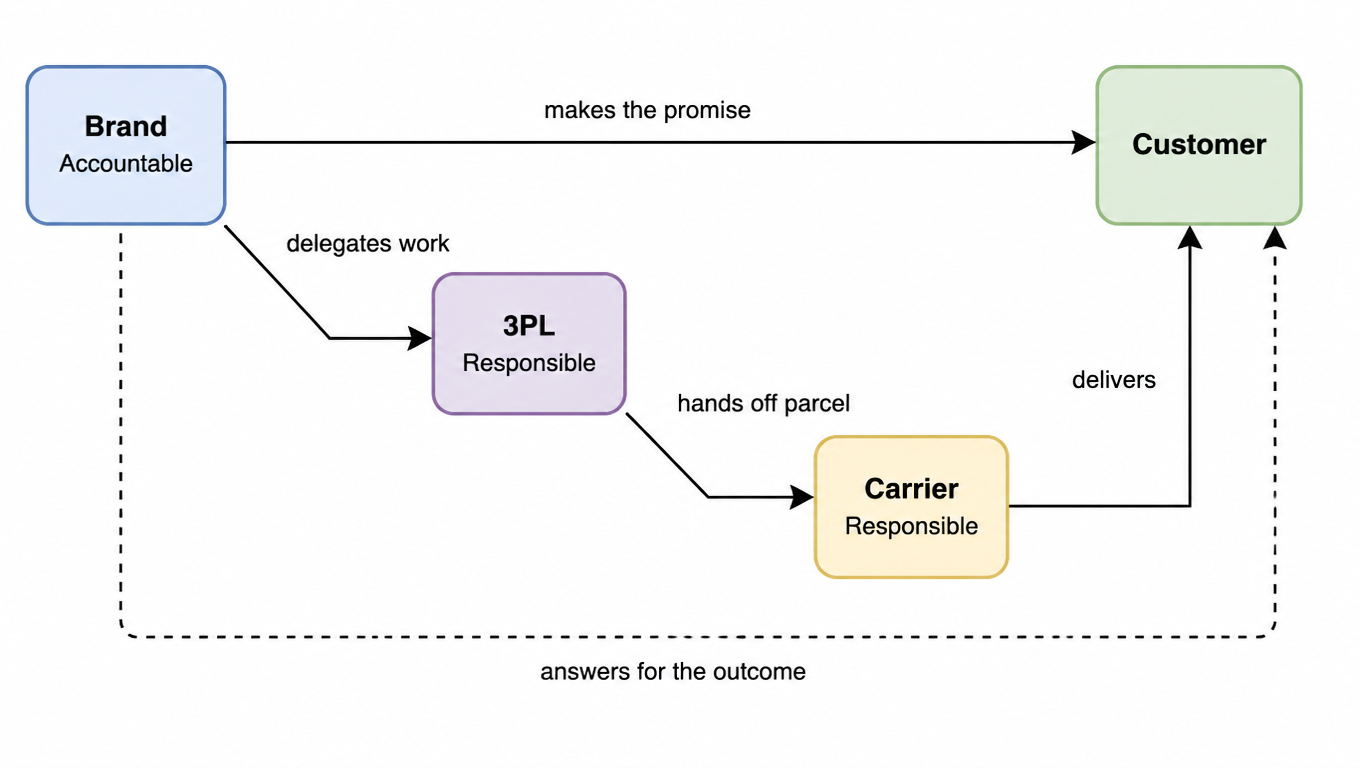
Checkout closes the sale. What happens next is a series of handoffs: the order moves to the warehouse, the warehouse hands the parcel to a carrier, and the carrier hands it to the customer's door. Every handoff transfers work. None of them transfer the promise. The brand made a commitment to a customer, and the customer has exactly one address for that commitment: the brand's inbox, chat widget, and support line. If you run a 3PL or a carrier, the brands you serve are accountable for the promises on their storefronts, which means your job is to give them the work product and the evidence, not to absorb their accountability.
RACI gives the four players a common language. Responsible does the work. Accountable answers for the outcome, and there is exactly one A per row.[1] Consulted gives input before the decision is made. Informed gets notified after the fact. The rule that makes RACI useful for delivery is simple and worth writing on the ops wall: Accountable always stays with the brand. Responsible can be delegated to a 3PL or a carrier. Delegating the work is not delegating the relationship, and the delivery promise is part of the relationship. When a brand says "our 3PL owns fulfillment," what it can actually mean is "our 3PL owns the fulfillment work." The accountability stays in-house.
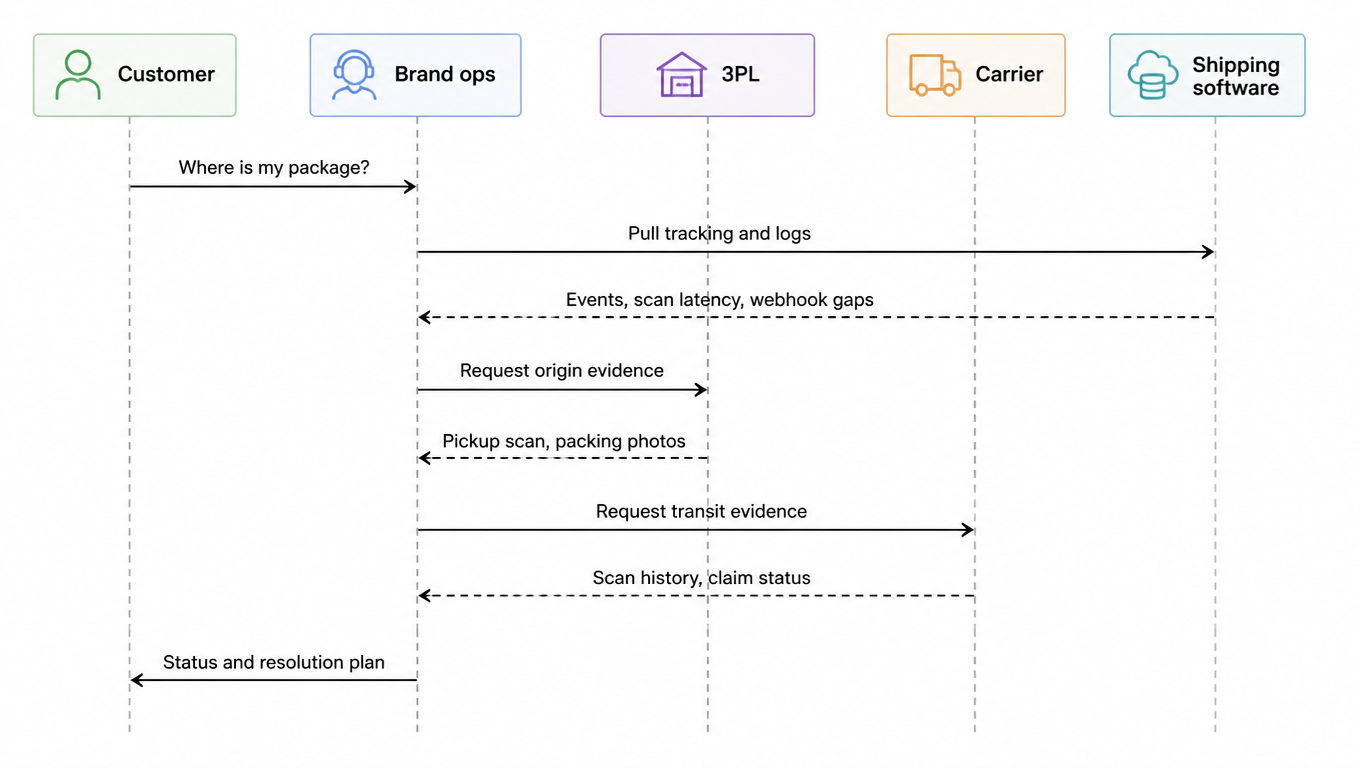
The reason this matters is economic. Blame games are expensive: the 3PL blames the carrier, the carrier blames the address, the software blames the API, and the customer waits for an answer that never comes. Every unresolved "where is my package" is a lost repeat purchase, and repeat revenue is where ecommerce margins live.[2] A signed RACI does not prevent delays. It prevents the delay from becoming a dispute, because at any moment there is exactly one party that answers for the outcome and a defined list of parties that must produce evidence.