承运商选择 · USPSCarrier Selection · USPS

USPS Ground Advantage vs Priority Mail vs Flat Rate:按包裹画像选服务,而不是选一个赢家USPS Ground Advantage vs. Priority Mail vs. Flat Rate: A Parcel-Profile Decision Guide

你是 DTC 品牌、Shopify 卖家、Amazon FBM 卖家,或者替他们打理履约的人。每天早上,你的仓库都在面对同一个不起眼的决定:这件包裹该走 USPS 的哪个服务?Ground Advantage、Priority Mail,还是 Flat Rate 盒子?答案看起来很简单,直到你发现:对某一单最便宜的选择,对下一单可能最贵。这篇指南给你一套可重复的决策方法:从自己的发货数据里建立包裹画像(parcel profile),逐服务对比全包成本,写出把每件包裹送到正确服务上的路由规则,而不是让所有包裹都挤在一个服务里。You are a DTC brand, a Shopify seller, an Amazon FBM seller, or the person who runs fulfillment for one. Every morning your warehouse faces the same quiet decision: which USPS service should this parcel go out on? Ground Advantage, Priority Mail, or a Flat Rate box. The answer looks simple, until you notice that the cheapest option for one order is the most expensive for the next one. This guide gives you a repeatable way to decide: build a parcel profile from your own shipment data, compare all-in cost per service, and write routing rules that send each parcel to the right product instead of forcing one service on everything.

编辑风照片:仓库台面上的一排包裹,每件贴着不同的 USPS 服务标签,柔和的自然光,浅景深
同一个仓库,不同的包裹,应该走到不同的服务上Same warehouse, different parcels, different services

一、为什么「选一个服务」的思路是错的1. Why "Pick One Service" Is the Wrong Frame

大多数仓库用一个默认值来解决 USPS 选择题:「全部走 Ground Advantage」,或者「重货走 Flat Rate」。默认值很舒服,因为它省掉了思考,但它会在每一件不符合假设的包裹上悄悄漏钱。另一个极端是每单人工选择服务,这既费人工,又取决于当天称重台前站着谁。两种做法都把选择当成一次性决定,而它实际上是逐单的决定。Most warehouses solve the USPS question with a default: "we ship everything Ground Advantage," or "heavy stuff goes Flat Rate." A default is comfortable because it removes thinking, but it quietly leaks money on every parcel that does not fit the assumption. The other extreme, picking the service by hand on every order, costs labor and depends on whoever is at the scale that day. Both approaches treat the choice as a one-time decision when it is really a per-parcel one.

这三种服务不是同一个产品的三个档次,而是三条不同的成本曲线,曲线在哪个点交叉,取决于重量、尺寸、分区、包装,以及你对客户许下的时效承诺。一件 8 盎司的轻件走 Ground Advantage 会便宜一大截;一件 15 磅的密实重货发远区,装得进 Flat Rate 盒就最便宜;一个大而轻的箱子可能触发体积重,运费瞬间涨到实重三倍包裹的水平。赢家随包裹而变,所以任何无视包裹画像的规则,从构造上就是错的。The three services are not three tiers of the same product. They are three different cost curves, and the curves cross depending on weight, dimensions, zone, packaging, and the promise you made to the customer. A light 8 oz parcel is cheapest on Ground Advantage by a wide margin. A 15 lb dense parcel to a far zone is cheapest in a Flat Rate box, if it fits. A big lightweight box can trigger dimensional weight and suddenly cost as much as a parcel three times its actual weight. The winning service changes with the parcel, which is why any rule that ignores the parcel profile is wrong by construction.

所以目标不是加冕一个永久赢家,而是把每件包裹路由到正确的服务。这篇指南建立的框架是:包裹画像 → 服务资格筛选 → 全包成本 → 交付风险 → 路由规则。每一步都在剔除选项、给幸存者定价,并把结果变成仓库可以不用思考就执行的规则。下文用 2026 年的真实费率走完整个框架。The goal is therefore not to crown a permanent winner. It is to route each parcel to the right service. The framework this guide builds is: Parcel Profile → Service Eligibility → All-in Cost → Delivery Risk → Routing Rule. Each step removes options, prices the survivors, and turns the result into a rule your warehouse can execute without thinking. The rest of this guide walks through the framework with real 2026 rates.
二、三种服务速览2. The Three Services at a Glance

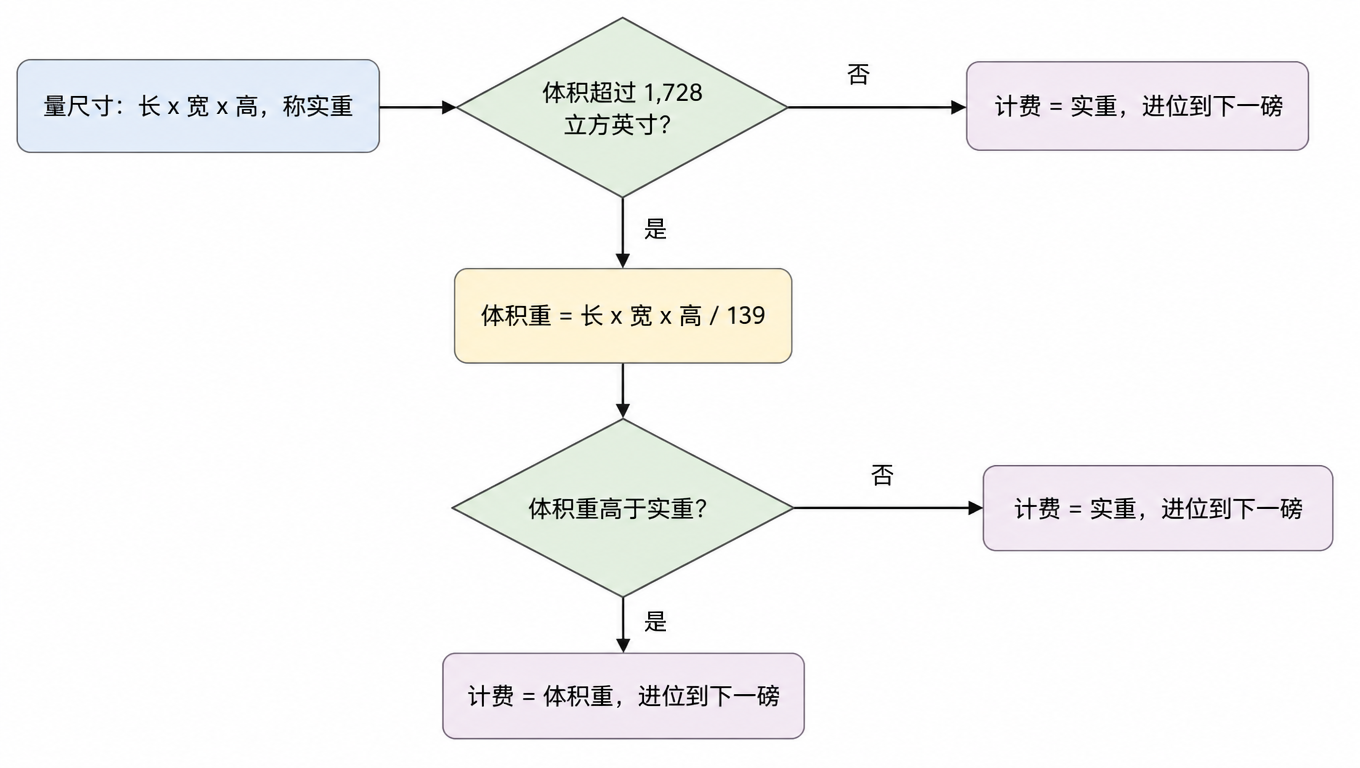
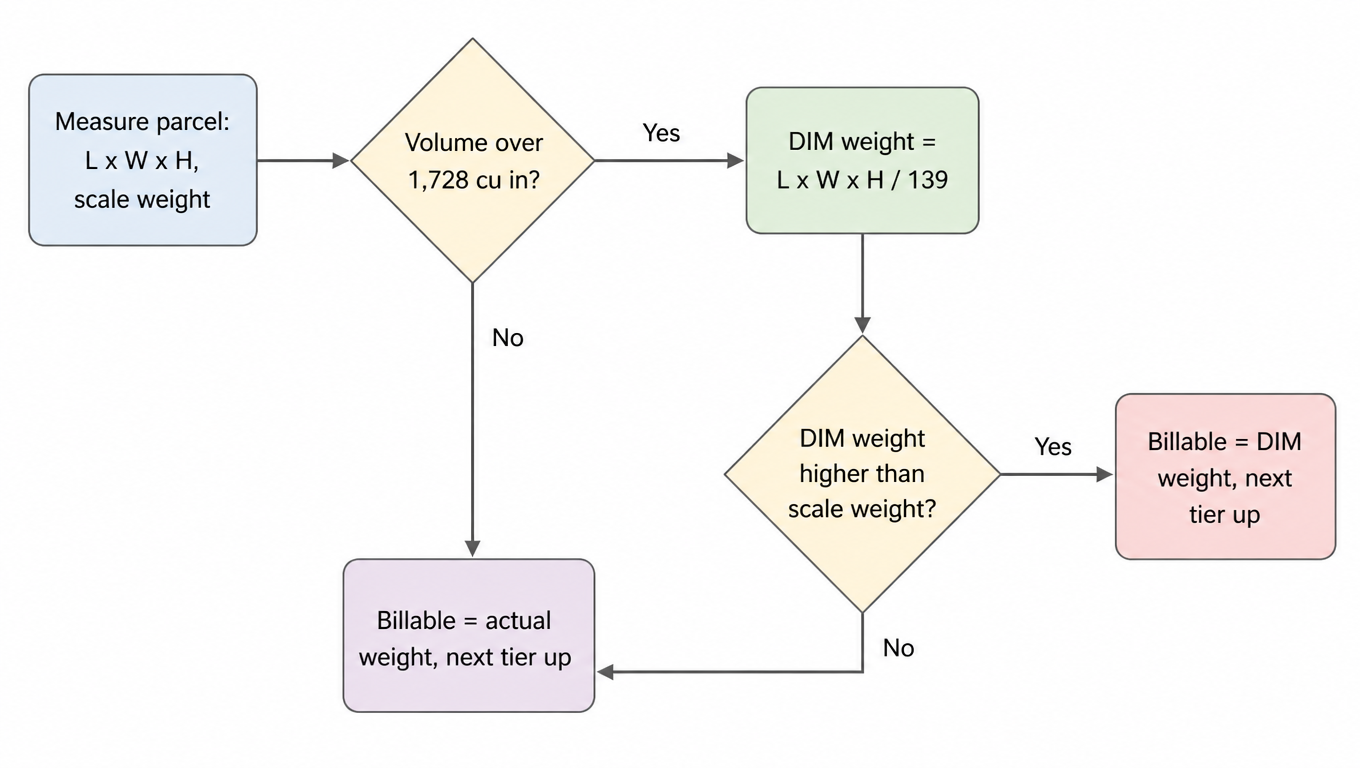
USPS Ground Advantage 是日常包裹产品:2 到 5 个工作日送达全美任何地址,上限 70 磅、长加围长 130 英寸,免费追踪,含 100 美元保险。[^1] 自 2026 年 7 月 12 日起,商业价不再按盎司分档:同一分区内所有 1 磅以下的包裹同价,无论它重 4 盎司还是 15.9 盎司。[^7] 体积超过 1,728 立方英寸(1 立方英尺)的包裹按体积重计费,计算方式是 长 × 宽 × 高 ÷ 139,当它超过实际重量时生效。USPS Ground Advantage is the everyday parcel product: 2 to 5 business days to any domestic address, up to 70 lb, up to 130 inches in length plus girth, free tracking, and $100 of insurance included. Since July 12, 2026, commercial pricing no longer charges by the ounce under 1 lb: every sub-pound parcel in a given zone costs the same, regardless of whether it weighs 4 oz or 15.9 oz. Packages over 1,728 cubic inches (one cubic foot) are billed on dimensional weight, calculated as length × width × height ÷ 139, when that number exceeds the actual weight.

Priority Mail 是更快的兄弟:1 到 3 个工作日,同样 70 磅上限、免费追踪、100 美元保险,以及同样的体积重规则。它在每个重量和分区上的价格都高于 Ground Advantage,所以选择它的理由只剩三个:时效承诺、部分线路的周末派送、或使用 Priority Mail 包装。商业价下 1 磅 Priority Mail 大约从 $9.04 起,[^4] 而同样的包裹走 Ground Advantage,在最便宜的分区只要约 $7.61。[^3]Priority Mail is the faster sibling: 1 to 3 business days, same 70 lb ceiling, free tracking, $100 insurance, and the same dimensional weight rule. It is priced above Ground Advantage at every weight and zone, so the only reasons to choose it are the transit-time promise, weekend delivery on some routes, or access to Priority Mail packaging. At commercial pricing a 1 lb Priority Mail parcel starts near $9.04, while the same parcel on Ground Advantage runs about $7.61 at its cheapest zones.

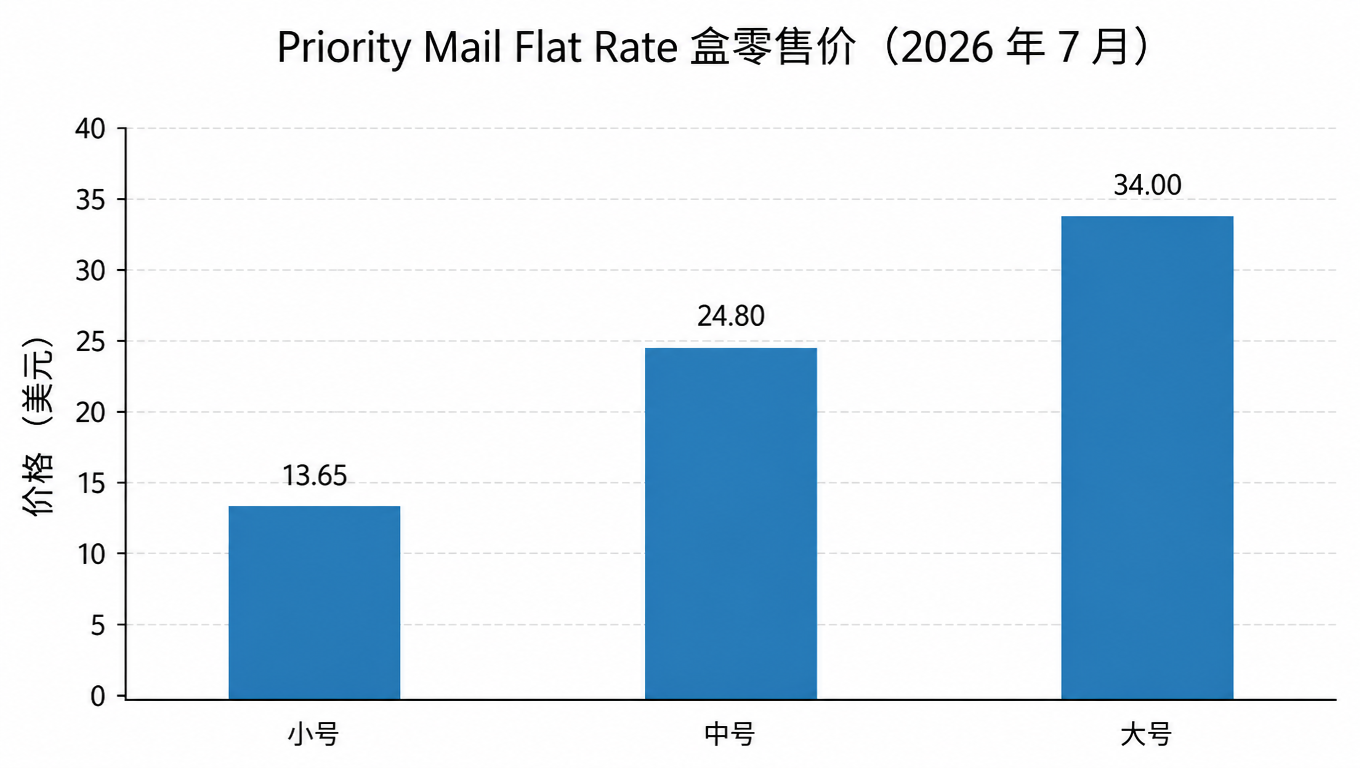
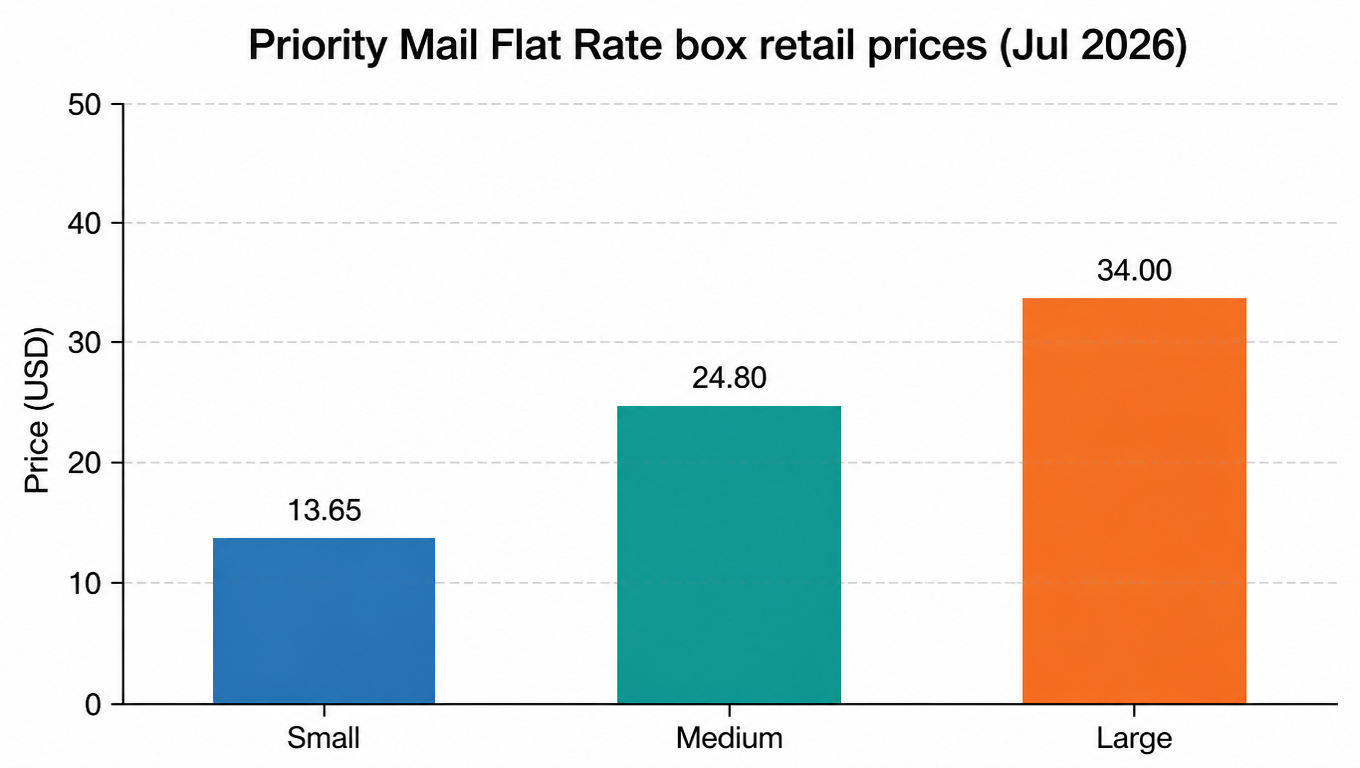
Priority Mail Flat Rate 保留 Priority Mail 的速度,但每个盒子一口价,完全无视重量(上限 70 磅)和分区。Flat Rate 包装没有体积重,因为价格由盒子本身决定。2026 年 7 月 12 日起邮局柜台的零售价是:小号 Flat Rate 盒 $13.65、中号 $24.80、大号 $34.00;[^5] 商业价更低。代价是:你的商品必须装得进这个盒子,而且这个盒子必须值这个价。Priority Mail Flat Rate keeps Priority Mail speed but charges a flat price per box, ignoring weight (up to 70 lb) and zone entirely. There is no dimensional weight on Flat Rate packaging because the box defines the price. Retail prices at the Post Office since July 12, 2026 are $13.65 for the Small Flat Rate Box, $24.80 for the Medium, and $34.00 for the Large; commercial pricing runs lower. The catch: your product has to fit in the box, and the box has to be worth the price.

服务Service时效Delivery最大重量Max weight体积重DIM pricing追踪与保险Tracking & insurance价格驱动Price driver
Ground AdvantageGround Advantage2-5 个工作日2-5 business days70 磅70 lb有,超过 1,728 立方英寸Yes, over 1,728 cu in免费追踪,含 $100 保险Free tracking, $100 insured重量 + 分区Weight + zone
Priority MailPriority Mail1-3 个工作日1-3 business days70 磅70 lb有,超过 1,728 立方英寸Yes, over 1,728 cu in免费追踪,含 $100 保险Free tracking, $100 insured重量 + 分区Weight + zone
Priority Mail Flat RatePriority Mail Flat Rate1-3 个工作日1-3 business days70 磅70 lbNo免费追踪,含 $100 保险Free tracking, $100 insured只看盒子Box type only

快速赢面图:轻小件走 Ground Advantage;又重又密实的远区件,装得进 Flat Rate 盒就装进去;中间地带全部取决于数字,而数字就是下一节的内容。A quick win map: light small parcels belong on Ground Advantage. Heavy dense parcels to far zones belong in a Flat Rate box if they fit. Everything in the middle depends on the numbers, and the numbers are the next section.

三、决定成本的七个变量3. The Seven Variables That Decide Cost

1. 实际重量与计费重量。USPS 向上进位到下一个重量档,所以 4.2 盎司付 8 盎司的价,超过 15.999 盎司就付 1 磅的价。[^1] 对大箱子来说,体积重可以完全压过秤上的数字。1. Actual vs. billed weight. USPS rounds up to the next weight tier, so a 4.2 oz parcel pays the 8 oz price and anything over 15.999 oz pays the 1 lb rate. Dimensional weight can override the scale entirely for large boxes.

2. 包裹尺寸与包装。你自己的箱子在和 Flat Rate 包装竞争。一个触发体积重的箱子,可能换成装得下的 Flat Rate 盒反而更便宜。2. Parcel dimensions and packaging. Your own box competes with Flat Rate packaging. A box that triggers DIM weight is a box that may have been cheaper in a Flat Rate alternative, if one fits.

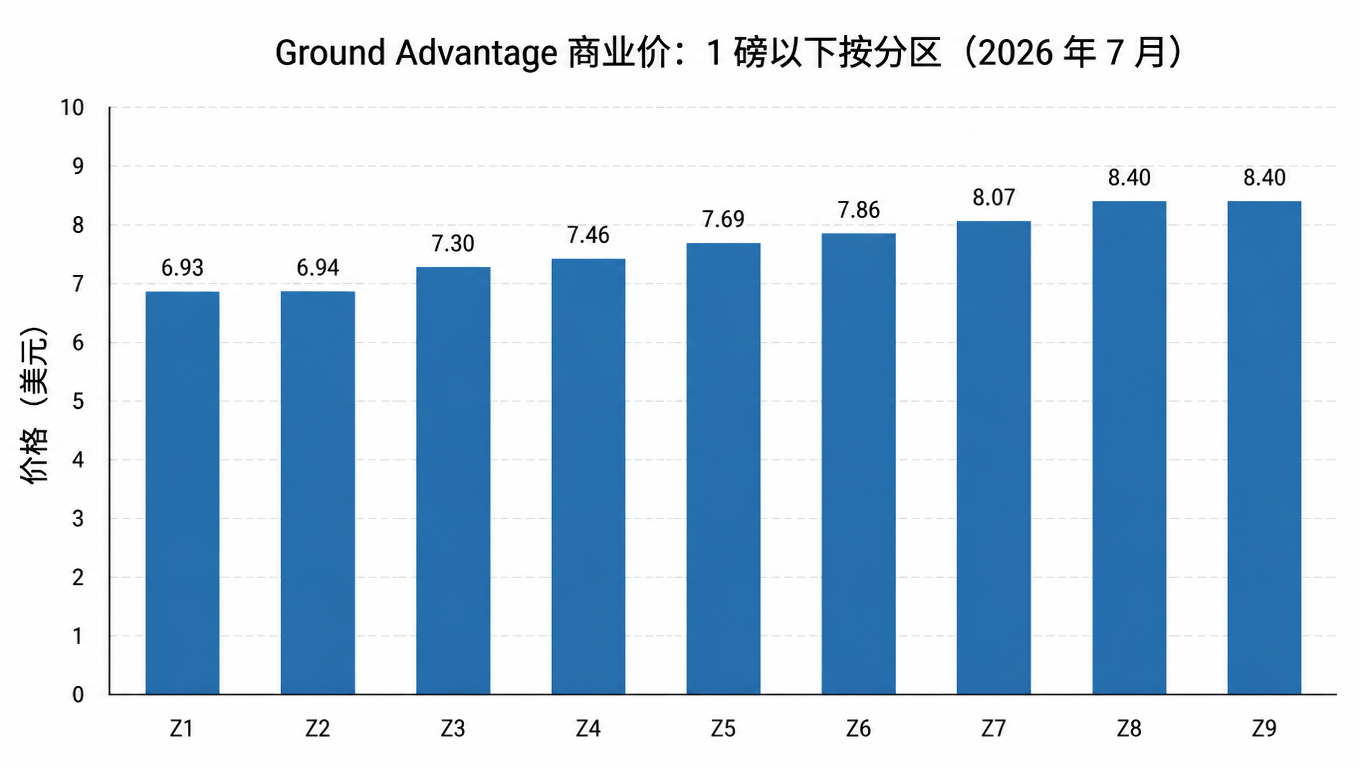
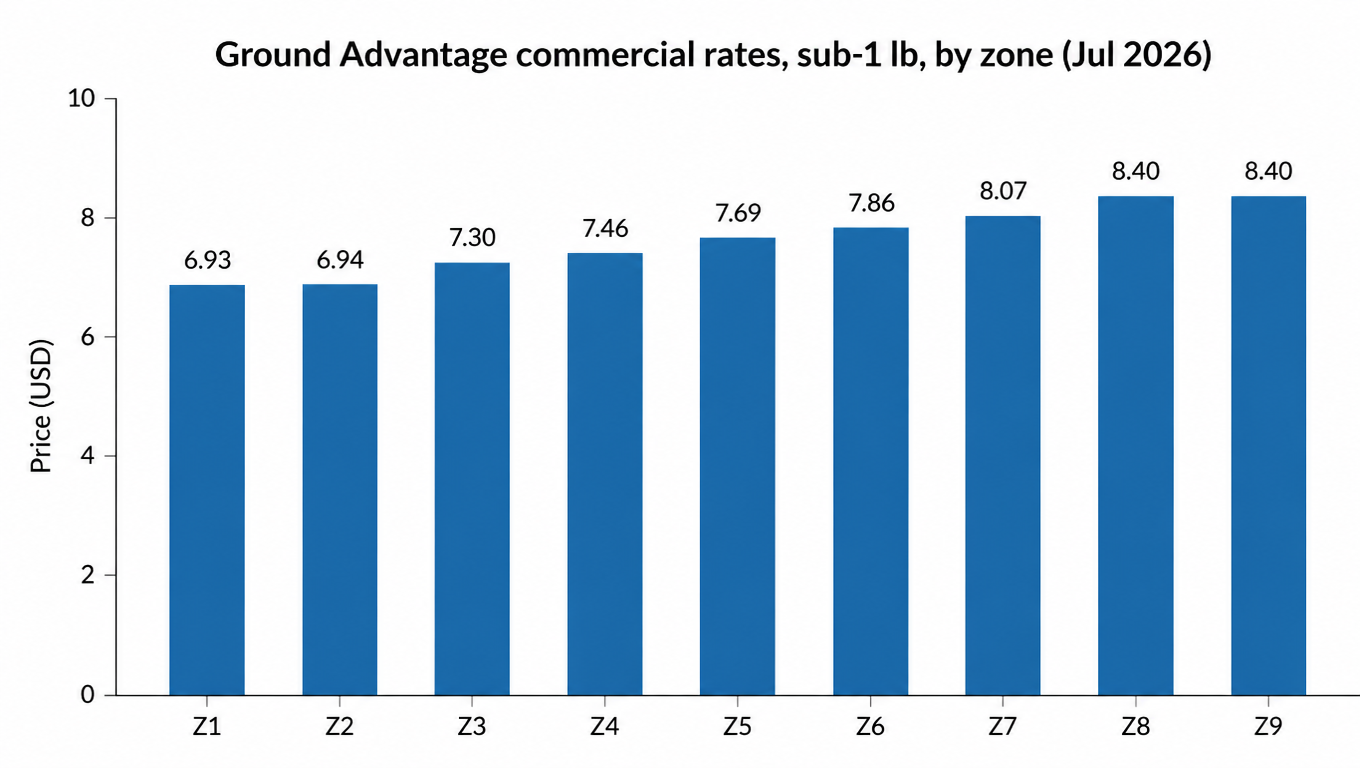
3. 寄出地与目的地的分区。九个国内分区(Zone 1-9)由距离决定。Ground Advantage 商业价 1 磅以下从 Zone 1 的 $6.93 到 Zone 8/9 的 $8.40。[^2] Flat Rate 无视分区,这正是它在长途重货上赢的原因。3. Origin and destination zone. The nine domestic zones (1-9) are driven by distance. Ground Advantage commercial pricing for a sub-pound parcel runs from $6.93 in Zone 1 to $8.40 in Zone 8 or 9. Flat Rate ignores zones, which is exactly why it wins on long-haul heavy parcels.

4. 服务可达性。每个服务都有尺寸重量上限。超重或超过 130 英寸的包裹,Ground Advantage 和 Priority Mail 都运不了;Flat Rate 只适用于装得进盒子的商品。资格筛选在成本之前,不在之后。4. Service reachability. Each service has size and weight limits. Oversize or over-70-lb parcels simply cannot go Ground Advantage or Priority Mail, and Flat Rate only works if the item fits the box. Eligibility comes before cost, not after.

5. 时效承诺 vs 客户承诺。你的结账页写下了客户的预期。如果你承诺 2 日达,Ground Advantage 最坏的 5 天就是一次退款加一张客服工单,这是费率表上永远不会出现的成本。5. Delivery promise vs. customer promise. Your checkout page sets an expectation. If you promise 2-day delivery, Ground Advantage's 5-day worst case is a refund and a support ticket, which is a cost the rate sheet never shows.

6. 订单价值与毛利。含 100 美元保险,但 $900 的订单需要申报价值保障,高价值订单可能值得加签收服务。额外费用和它们对冲的风险都应该进对比。6. Order value and margin. $100 of insurance is included, but a $900 order needs declared value coverage, and high-value orders may justify signature service. The extra fees and the risk they hedge belong in the comparison.

7. 地址与异常风险。错误地址、改址、无法妥投每次都要真金白银。长期有地址问题的分群可能值得换路由方式,或者至少值得在换服务之前先修数据。7. Address and exception risk. Bad addresses, reroutes, and undeliverables cost real money per incident. Segments with chronic address problems may be worth routing differently, or at least worth a data fix before a service change.

流程图:量尺寸与称重,体积是否超过 1728 立方英寸?否就按实重进位到下一磅;是则体积重 = 长 x 宽 x 高 / 139,再判断体积重是否高于实重,否按实重、是按体积重进位到下一磅Flowchart: measure parcel and weigh it, volume over 1728 cu in? no bills actual weight next tier, yes computes DIM weight = L x W x H / 139, then checks DIM vs scale weight, bills the greater
计费重量判定:先看体积,再看体积重和实重谁大Billable weight: volume first, then the greater of DIM and scale weight

四、从自己的数据建立包裹画像4. Building a Parcel Profile from Your Own Data

从你的打单软件或承运商 API 导出最近 30 到 90 天的发货数据。每单需要:所用服务、实际重量、尺寸、寄出与寄达邮编、分区、实付邮资、以及任何异常事件。这个阶段不要相信平均值;平均包裹是你从没发过的那种包裹。路由机会藏在分布里。Export the last 30 to 90 days of shipment data from your shipping software or carrier API. You need, per shipment: service used, actual weight, dimensions, origin and destination ZIPs, zone, postage paid, and any exception events. Do not trust averages at this stage; the average parcel is a parcel you never ship. The routing opportunity lives in the distribution.

按重量段、按尺寸画像(是否超过 1,728 立方英寸?)、按分区、按承诺时效把导出数据分群。大多数商品目录会塌缩成少数几个反复出现的分群:轻小件、标准中重箱、密实重货、体积重大的大箱、远区订单、需要 100 美元以上保险的高价值订单。把每个分群的月发货量写下来,因为量是决定一条路由规则值不值得建的乘数。Segment the export by weight bands, by dimension profile (does it exceed 1,728 cubic inches?), by zone, and by promised delivery speed. Most catalogs collapse into a handful of recurring segments: light small parcels, mid-weight standard boxes, heavy dense items, DIM-heavy big boxes, far-zone orders, and high-value orders that need insurance beyond $100. Write down each segment with its monthly volume, because volume is the multiplier that decides whether a routing rule is worth building.

分群很重要,因为平均值会藏起机会。一家平均包裹 1.4 磅的店可能得出结论「都是轻件」,却从没注意到 30% 的货量是发往 Zone 7-9、装 Flat Rate 盒正合适的 12 磅商品。分群视角把三个服务从拍脑袋变成一张电子表格。Segmenting matters because the average hides the opportunity. A store whose average parcel is 1.4 lb might conclude everything is "light" and never notice that 30 percent of volume is 12 lb flat-rate-eligible merchandise to Zones 7-9. The segment view is what turns the three services from a gut call into a spreadsheet.

五、全包成本:2026 年费率的实测对比5. All-in Cost: Worked Comparisons (2026 Rates)

下面的对比全部使用商业价,也就是 Pirate Ship、Shippo、ShipStation 等平台能拿到的费率,2026 年 7 月 12 日生效。柜台零售价更高,视产品和分区不同,大约高出商业价 10% 到 25%。All comparisons below use commercial pricing, the rates available through platforms like Pirate Ship, Shippo, and ShipStation, effective July 12, 2026. Retail counter rates run higher, roughly 10 to 25 percent above commercial depending on the product and zone.

算例 1:轻件,8 盎司,小盒,Zone 5。Ground Advantage 商业价 $7.69,即 Zone 5 的 1 磅以下统一价。[^2] Priority Mail 从 1 磅起算,要 $9.04 或更多。[^4] Flat Rate 信封商业价 $11.12,[^8] 小号 Flat Rate 盒 $13.65,[^5] 而且还没算你要装进去的东西。Ground Advantage 赢,而且赢的幅度大到任何把轻件路由到别处都是白扔钱。2026 年 7 月的调整取消了盎司分档,所以 8 盎司和 15.5 盎司的包裹到 Zone 5 现在同价;分群时不再需要比较盎司。Example 1: Light parcel, 8 oz, small box, Zone 5. Ground Advantage commercial is $7.69, the flat sub-pound price for Zone 5. Priority Mail starts at 1 lb and costs $9.04 or more. A Flat Rate envelope costs $11.12 at commercial pricing and a Small Flat Rate Box $13.65, before you even fill them. Ground Advantage wins, and it wins by enough that routing light parcels anywhere else is simply leaving money on the table. The July 2026 change removed ounce tiers, so an 8 oz parcel and a 15.5 oz parcel now cost the same to Zone 5; there is no longer a reason to compare ounce weights when segmenting.

柱状图:Ground Advantage 商业价 1 磅以下按分区,Z1 6.93 美元到 Z8/Z9 8.40 美元(2026 年 7 月)Bar chart: Ground Advantage commercial rates under 1 lb by zone, from $6.93 in Z1 to $8.40 in Z8/Z9 (Jul 2026)
1 磅以下商业价随分区爬升,最高只差约 $1.50Sub-1 lb commercial rates climb with the zone, a spread of about $1.50

算例 2:体积重大的包裹,实重 2 磅,装在 16 × 12 × 10 英寸的箱子里,Zone 8。体积 1,920 立方英寸,超过 1,728 的阈值。体积重 = 1,920 ÷ 139 ≈ 13.8 磅,按 14 磅档计费。[^1] 所以这个实重 2 磅的包裹,按 14 磅的价格付费。Flat Rate 盒子装不下 16 × 12 × 10 的箱子,Flat Rate 出局;剩下 Ground Advantage 对 Priority Mail 的 14 磅 Zone 8 价,Ground Advantage 依然赢。真正的教训在上游:一个反复用超大箱子发货的产品,每单都在交体积重税,换包装是一笔比任何议价都省钱的成本削减。Example 2: DIM-heavy parcel, 2 lb actual weight in a 16 × 12 × 10 in box, Zone 8. Volume is 1,920 cubic inches, over the 1,728 threshold. DIM weight is 1,920 ÷ 139 ≈ 13.8 lb, billed at the 14 lb tier. The parcel therefore pays like a 14 lb package despite weighing 2 lb. Neither Flat Rate box fits a 16 × 12 × 10 box, so Flat Rate is off the table; the choice is Ground Advantage versus Priority Mail at the 14 lb Zone 8 rate, and Ground Advantage wins there too. The real lesson is upstream: a product that repeatedly ships in an oversized box is paying DIM tax on every order, and repackaging is a cost cut that beats any rate negotiation.

算例 3:密实重货,15 磅,Zone 8,装得进中号 Flat Rate 盒。Ground Advantage 商业价 15 磅 Zone 8 落在当前费率曲线的高 20 多到低 30 多美元区间;[^9] Priority Mail 在每个重量上都更贵。中号 Flat Rate 盒零售 $24.80,商业价更低,而且完全无视分区。[^5] 装得下的话,Flat Rate 盒明显是最便宜的选项,而且发得越远越便宜。如果只能装大号盒($34.00),[^5] Flat Rate 在最远分区依然赢 Ground Advantage,但会在中距离分区输,这正是路由表该捕捉的边界。Example 3: Heavy dense parcel, 15 lb, Zone 8, fits in a Medium Flat Rate Box. Ground Advantage commercial at 15 lb to Zone 8 lands in the high-$20s to low-$30s range on the current rate curve; Priority Mail prices above it at every weight. The Medium Flat Rate Box is $24.80 retail, less at commercial pricing, and it ignores the zone entirely. If the product fits, the Flat Rate box is the cheapest option by a clear margin, and it gets cheaper relative to the alternatives the farther the parcel travels. If the product only fits the Large box at $34.00, Flat Rate still beats Ground Advantage on the longest zones but loses on mid-distance ones, which is exactly the kind of boundary a routing table should capture.

柱状图:Priority Mail Flat Rate 盒零售价,小号 13.65 美元、中号 24.80 美元、大号 34.00 美元(2026 年 7 月)Bar chart: Priority Mail Flat Rate box retail prices, Small $13.65, Medium $24.80, Large $34.00 (Jul 2026)
Flat Rate 价格由盒子决定,与重量和分区无关Flat Rate prices follow the box, not weight or zone

三个算例的规律:Ground Advantage 拥有任何分区的轻件和中重件;Flat Rate 拥有装得进盒子的重货,而且发得越远优势越大;Priority Mail 的溢价只有在客户承诺要求 1-3 日达时才值得付。其余都是你的路由表要处理的边界情况。The pattern across the three examples: Ground Advantage owns light and mid-weight parcels in any zone; Flat Rate owns heavy parcels that fit its boxes, increasingly so with distance; Priority Mail earns its premium only when the customer promise demands 1-3 day delivery. Everything else is a boundary case for your routing table.

六、交付风险与单次成功妥投成本6. Delivery Risk and Cost per Successful Delivery

费率表比的是价格,你的损益表比的是妥投结果。Ground Advantage 承诺 2 到 5 个工作日,而方差是问题所在:一件因天气或网络事件走了 6 天的包裹,可能违反结账页承诺、触发退款请求、生成一张客服工单。Priority Mail 收窄了方差,并在部分线路上延长了周末派送覆盖。你为 Priority Mail 付的溢价,有一部分就是给交付承诺买保险,它就该这样定价。Rate sheets compare price, but your P&L compares delivered outcomes. Ground Advantage promises 2 to 5 business days, and the variance matters: a parcel that takes 6 days because of a weather or network event may violate your checkout promise, trigger a refund request, and generate a support ticket. Priority Mail narrows the variance and extends the weekend-delivery coverage on some routes. The premium you pay for Priority Mail is, in part, an insurance policy on your delivery promise, and it should be priced that way.

把这一切都装进去的指标是单次成功妥投成本(cost per successful delivery):一个分群的总花费(邮资、包装、100 美元以上的保险、地址更正费、延误或丢件退款、以及由此产生的客服工时)除以按时、完好、无异常到达的包裹数。一张面单便宜 $0.80、但异常率高 2% 的服务,把退款和人工算进去之后,往往才是更贵的那一个。按分群算这个数,不要按服务算,因为异常率是分群特有的。The metric that captures all of this is cost per successful delivery: total spend on a segment (postage, packaging, insurance above $100, address correction fees, refunds for late or lost parcels, and the support hours they caused) divided by the number of parcels that arrived on time, in good condition, with no exception. A service that is $0.80 cheaper per label but produces 2 percent more exceptions can easily be the more expensive option once refunds and labor are counted. Run this number per segment, not per service, because the exception rate is segment-specific.

逐单人工选择隐藏着它自己的成本:决策的人工、班次之间的不一致、新员工猜错时的错误。一张路由表把决策从拣货线上完全移除。表格第一天不必完美;它必须显式到可以被审计的程度,因为一条明确的错误规则会被修掉,而一个隐性习惯永远不会被质疑。Manual per-order selection hides a cost of its own: the labor of deciding, the inconsistency between shifts, and the errors when a new hire guesses wrong. A routing table removes the decision from the pick line entirely. The table does not have to be perfect on day one; it has to be explicit enough to audit, because an explicit wrong rule gets fixed, while an implicit habit never gets questioned.

七、路由规则:把画像变成决策7. Routing Rules: Turning Profiles into Decisions

第 1 步:资格筛选。对每个包裹分群,划掉运不了它的服务:超过 70 磅或 130 英寸,这三个产品都运不了;超大箱子出局 Flat Rate;把每个分群对着三种 Flat Rate 盒尺寸逐一过一遍。Step 1: Eligibility filter. For each parcel segment, strike the services that cannot carry it: over 70 lb or over 130 inches goes nowhere on these products; oversized boxes eliminate Flat Rate; dimension-check every segment against the three Flat Rate box sizes.

第 2 步:成本对比。按分群的典型重量与分区组合,拉取每个剩余服务的当前商业价。把 100 美元以上保险、签收费、包装成本差都算进去。对比全包成本,再叠加上时效承诺:哪些分群真的需要 1-3 日达?Step 2: Cost comparison. Pull current commercial rates for each remaining service at the segment's typical weight and zone mix. Include insurance above $100, signature fees, and packaging cost deltas. Compare all-in cost, then overlay the delivery promise: which segments actually need 1-3 day service?

第 3 步:起草路由规则。每个分群写一条规则,做成查表。一条规则命名触发器(重量段、尺寸画像、分区范围、订单价值)和要用的服务。Step 3: Draft routing rules. Write one rule per segment as a lookup table. A rule names the trigger (weight band, dimension profile, zone range, order value) and the service to use.

包裹分群Parcel segment触发器Trigger路由到Route to
轻小件Light small parcel1 磅以下,任意盒子,任意分区Under 1 lb, fits any box, any zoneGround AdvantageGround Advantage
标准中重件Standard mid-weight1-10 磅,Zone 1-6,标准箱1-10 lb, Zone 1-6, standard boxGround AdvantageGround Advantage
长途中重件Long-haul mid-weight1-10 磅,Zone 7-91-10 lb, Zone 7-9Ground AdvantageGround Advantage
密实重货(装得进中号盒)Heavy dense, fits Medium box10-20 磅,任意分区10-20 lb, any zoneFlat Rate 中号Flat Rate Medium
密实重货(装得进大号盒)Heavy dense, fits Large box15-20 磅,Zone 8-915-20 lb, Zone 8-9Flat Rate 大号Flat Rate Large
体积重大的大箱DIM-heavy oversized box超过 1,728 立方英寸Over 1,728 cu inGround Advantage(然后修包装)Ground Advantage (then fix packaging)
客户承诺 1-3 日达Customer promise 1-3 days结账页承诺要求Checkout promise requires itPriority MailPriority Mail
高价值订单High value申报价值超 $500Declared value over $500Ground Advantage + 追加保险Ground Advantage + added insurance

第 4 步:小规模试点。全面铺开前,用真实货量跑两到四周。用单次成功妥投成本对比旧行为,盯异常率,别只盯平均面单价。试点显示两个服务差价在一美元内的边界行,据实调整。Step 4: Small pilot. Run the rules for two to four weeks on real volume before rolling out. Compare cost per successful delivery against the old behavior, and watch the exception rate, not just the average label price. Adjust the boundary rows (the ones where two services are within a dollar) based on what the pilot shows.

第 5 步:月度复核。费率会变、分区会移、产品结构会漂移。每月重跑一次分群成本对比,或者每当 USPS 宣布调价就跑一次(1 月和 7 月是常规节奏;2026 年分别在 1 月 18 日和 7 月 12 日生效[^10][^6])。把每个分群的成本、时效、异常率记在一张表上,边界移动的规则重新审视。Step 5: Monthly review. Rates change, zones shift, and your product mix drifts. Re-run the segment cost comparison monthly, or whenever USPS announces a rate change (January and July are the usual cadence; 2026 saw changes effective January 18 and July 12). Track cost, transit time, and exception rate per segment on a single sheet, and revisit any rule whose boundary moved.

落地方式没那么重要,重要的是这张表本身。带报价接口的承运商 API、带保存预设的打单软件、甚至拣货线上的一张打印查表,都能执行同样的规则。框架经得起工具更替,因为逻辑住在包裹画像里,不在面单打印机里。Implementation matters less than the table itself. A carrier API with rating calls, shipping software with saved presets, or even a printed lookup sheet at the pick line all execute the same rules. The framework survives tooling changes because the logic lives in the parcel profile, not in the label printer.

常见问题FAQ

先建包裹画像:导出 30-90 天发货数据,按重量、尺寸、分区、承诺时效分群,对每个分群比较合格服务的全包成本(邮资、保险、包装、退款、客服),再写成路由规则。轻小件几乎总走 Ground Advantage;重货装得进 Flat Rate 盒且发得远时走 Flat Rate;只有客户承诺要求 1-3 日达才付 Priority Mail 的溢价。Start with a parcel profile: export 30-90 days of shipment data, segment by weight, dimensions, zone, and promised speed, compare all-in cost per eligible service (postage, insurance, packaging, refunds, support), then write routing rules. Light parcels almost always go Ground Advantage; heavy parcels that fit a Flat Rate box and travel far go Flat Rate; only pay Priority Mail's premium when the customer promise demands 1-3 day delivery.
当商品装得进盒子、实重够重(通常 10 磅以上)、发得够远(Zone 7-9)的时候。Flat Rate 无视重量和分区,所以它在长途重货上赢;但装不进盒子或发近区时,按重计价的 Ground Advantage 通常更便宜。When the item fits the box, weighs enough (usually 10 lb or more), and travels far (Zones 7-9). Flat Rate ignores weight and zone, so it wins on long-haul heavy parcels; when the item does not fit a box or the zone is short, weight-based Ground Advantage is usually cheaper.
体积超过 1,728 立方英寸(1 立方英尺)的包裹按体积重计费:长 × 宽 × 高 ÷ 139(2026 年 7 月 12 日起除数从 166 降到 139),取实际重量与体积重较大者,再进位到整磅。大而轻的箱子会触发体积重,对策是换小箱子。Parcels over 1,728 cubic inches (one cubic foot) bill on dimensional weight: length × width × height ÷ 139 (the divisor dropped from 166 to 139 on July 12, 2026), charged on the greater of actual and DIM weight, rounded up to the next pound. Big lightweight boxes trigger DIM; the fix is a smaller box.
同一服务柜台价通常比商业价贵 10% 到 25%,轻件差距更大。打单工具(Pirate Ship、Shippo、ShipStation 等)都能出商业价面单,不需要发货量门槛。Counter retail typically runs 10 to 25 percent above commercial for the same service, with the widest gap on light parcels. Any label tool (Pirate Ship, Shippo, ShipStation, and others) issues commercial labels, no volume threshold required.
每月一次,或者每次 USPS 调价时(2026 年是 1 月 18 日和 7 月 12 日)。费率、分区和产品结构都会变,边界移动的规则要重新评估。用单次成功妥投成本做复核指标,别只看面单价。Monthly, or whenever USPS changes rates (January 18 and July 12 in 2026). Rates, zones, and product mix all drift, so revisit any rule whose boundary moved. Review against cost per successful delivery, not just the average label price.
Get Rate Comparison
Get Rate Comparison